Saved Bookmarks
This section includes 7 InterviewSolutions, each offering curated multiple-choice questions to sharpen your Current Affairs knowledge and support exam preparation. Choose a topic below to get started.
| 1. |
In which primitive unit cell the length of all sides are unequal and angles are unequal to 90^@ ? |
|
Answer» TETRAGONAL |
|
| 2. |
In which pair the first atom or ion is not larger than the second :- |
|
Answer» N, F |
|
| 3. |
In which pair, second atom is larger than the first : |
|
Answer» BR, Cl |
|
| 4. |
In which pair of ions both the species contain S-Sbond ? |
|
Answer» `S_(4)O_(6)^(2-), S_(2)O_(3)^(2-)` 
|
|
| 5. |
In which pair of ions both the species contain S-S bond ? |
|
Answer» `S_(4)O_(6)^(2-), S_(2)O_(3)^(2-)` 
|
|
| 6. |
In which pair most efficient packing is present? |
|
Answer» HCP and bcc |
|
| 7. |
In which pair most efficient packing is present ? |
|
Answer» HCP and BCC |
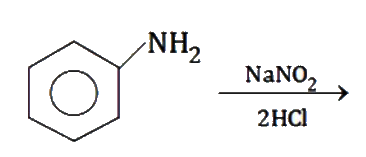
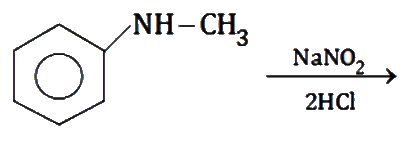
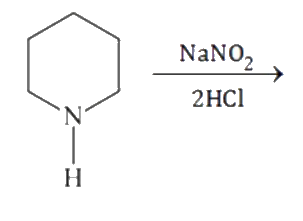
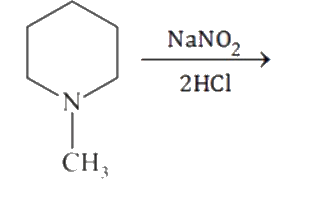
|
| 8. |
In which pair highest oxidation states of transition metals are found |
|
Answer» nitriles and CHLORIDES |
|
| 9. |
In which pair both are not isostructural :- |
|
Answer» `BH_(4)^(-) & AlH_(4)^(-)` |
|
| 10. |
In which ot the following Kharsch-Myo effect operate? |
|
Answer» `CH_(3)CH=CHCH_(3)+HBR` |
|
| 11. |
In Which order of reaction, rate of reaction becomes equal to specific reaction rate ? |
| Answer» Solution :Zero ORDER reaction `(DX)/(dt) = K`. | |
| 12. |
In which option ,properties of the given three complexes are correct ? [Ni(CN)_(4)]^(2-)""[Ni(Cl)_(4)]^(2-)""[Ni(CO)_(4)] |
|
Answer» Square PLANAR paramagnetic `mu=root_(8)B.M`. `[NiCl_(4)]^(2-) implies "paramagnetic, tetrahedral"` |
|
| 13. |
In which operations , the formula of NaCl remains same ? |
|
Answer» On passing one body-DIAGONAL plane in unit cell and all the ions are removed TOUCHING body-diagonal plane |
|
| 14. |
In which one of the two structures, NO_(2)^(+) and NO_(2)^(-) the bond angle has a higher value ? |
| Answer» SOLUTION :Bond angle has a higher value in` NO_2^+` because of the ABSENCE of LONE PAIR-bond pair REPULSION. | |
| 15. |
In which one of the two structures NO_(2)^(+) and NO_2^(-), the bond angle has a higher value ? |
| Answer» SOLUTION :BOND angle has a higher value in` NO_2^+` because of the absence of lone PAIR-bond pair repulsion. | |
| 16. |
In which one of the pairs of ion given, there is an ion that forms a co-ordination compound with bothaqueous sodium hydroxide and ammonia and an other ion that forms a co-ordination compound only with aqueous sodium hydroxide? |
|
Answer» `PB^(2+), CU^(2+)` `Zn^(2+)+4NaOH RARR [Zn(OH)_(4)]^(2-)+4Na^(+)` `Zn^(2+)+4NH_(3) rarr [Zn(NH_(3))_(4)]^(2+)` But, `Al^(3+)` ion reacts only with NaOH. `Al^(3)+4NaOH rarr [Al(OH)_(4)]^(-)+4Na^(+)` |
|
| 17. |
In which one of the following type of polymerization generally no initiator is required |
|
Answer» CATIONIC POLYMERIZATION |
|
| 18. |
In which one of the following two structures NO_2^(+) and NO_2^(-) the bond angle has a higher value ? |
| Answer» Solution : BOND angle has a HIGHER value in `NO_2^(+)` because of weaker lone PAIR-bond pair REPULSION. | |
| 19. |
In which one of the following the BOD (Biochemical OxygenDemand) of sewage (S), distillery effluent (DE), paper mill effluent (PE) and sugar mill effluent (SE) have been arranged in ascending order |
|
Answer» SE LT S lt PE lt DE |
|
| 20. |
In which one of the following species the central atom has the type of hybridization which is not the same as that present in the other three ? |
|
Answer» `SbCl_(5)^(2-)` |
|
| 21. |
In which one of the following reactions, nitrogen is not reduced? |
|
Answer» `NO_2to NO_(2)^(-)` `overset(+5)(NO_(3)^(-) )to overset( -3) (NH_4^( +)) , overset(-3) (NH_(4)^( +)to overset( 0 )N_2` |
|
| 22. |
In Which one of the followingpoly substitution otakes place? |
|
Answer»
|
|
| 23. |
In which one of the following reactions, 16 group element is precipitated |
|
Answer» `NA _(2) SO_(3) + Cl_(2) + H_(2)O to ` |
|
| 24. |
In which one of the following pairs the two species are both isoelectronic and isotopic (Atomic number : Ca = 20, Ar = 18, K = 19, Mg = 12, Fe = 26, Na = 11) |
|
Answer» `.^(40)Ca^(2+) and .^(40)AR` |
|
| 25. |
In which one of the following pairs the radius of the second species is greater than that of the first ? |
|
Answer» `O^(-2), N^(-3)` |
|
| 26. |
In which one of the following oxides carbon is not used as a reducing agent? |
|
Answer» `Fe_(2)O_(3)` |
|
| 27. |
In which one of the following one faraday of electricity liberates 1/2 gram atom of the metal ? |
|
Answer» `AuCl_(3)` |
|
| 28. |
In which one of the following gaseous equlibria K_(p) is less then K_(c) |
|
Answer» `N_(2)O_(4)hArr2NO_(2)` `Deltan=-"for reaction"2SO_(2)+O_(2)hArr2SO_(3)` So for this reation `K_(p)` is less than `K_(c).` |
|
| 29. |
In which one of the following halides, C_(sp^2) - X bond is present? |
|
Answer» Allyl halides |
|
| 30. |
In which one of the following equlibria, the increase of pressure over the equlibrium will favour the backward reaction |
|
Answer» Decomposition equlibrium of HI (a) `2HIhArrH_(2)+I_(2)` (b) `SO_(2)+1//2O_(2)hArrSO_(3)` (c) `2NH_(3)hArrN_(2)+3H_(2)` (d) `PCl_(3)+Cl_(2)hArrPCl_(5)` So, in reaction (c) the increase in pressure will favour backward reaction. |
|
| 31. |
In whichone of the following dpi - p pibond is present - |
|
Answer» <P>`NO_(3)^(-), NO_(2)^(-) , N^(3-), CN^(-)` |
|
| 32. |
In which one of the following conversions phosphorus pentachloride is used as a reagent |
|
Answer» `H_(2)C=CH_(2)toCH_(3)CH_(2)Cl` `CH_(3)CH_(2)OH+PCl_(5)toCH_(3)CH_(2)Cl+HCl+POCl_(3)` So, both reaction carried out by `PCl_(5)`. |
|
| 33. |
In which one of the following, does the given amount of chlorine exert the least pressure in a vessel of capacity 1" cm"^(3) at 273 K ? |
|
Answer» `0.0355` g Molecular weight of chlorine `=71` g `0.0355g=5xx10^(-4)` moles `0.071g=1xx10^(-3)` moles `6.023xx10^(21)` molecules `=0.01` moles `0.02` moles `=0.02` moles |
|
| 34. |
In which of the reactions, the enthalpy is the least |
|
Answer» `CH_(3)COOH + NaOHrArr CH_(3)COONa + H_(2)O` |
|
| 35. |
In which of these cyclic compounds you find the minimum angle strain? |
|
Answer» `C_3H_6` |
|
| 36. |
In which of the reactions ,tert-formed |
|
Answer» `C_6H_6+(CH_3)_2C=CH_2overset(HF//BF_3)to` |
|
| 37. |
In which of the reaction CO_(2) gas will evolve? |
|
Answer» `Ph-OVERSET(O)overset(||)(C)-CH_(2)-overset(O)overset(||)(C)-OH underset(Delta)to` |
|
| 38. |
In which of the reaction formation of Diazonium salt takes place ? |
|
Answer»
|
|
| 39. |
In which of the ion pairs, magnetic property depends on the strngth of ligand present in the complex ? |
|
Answer» `TI^(3+), V^(3+)` |
|
| 40. |
In which of the lanthanide elements, 5d elements does not shift to 4f orbita ls ? |
|
Answer» CE, Eu, Yb Gd (64) `to [Xe] 6s^2 5d^1 4f^7` `Lu (71) to [Xe ] 6s^2 5d^14f^14` |
|
| 41. |
In which of the given galvanic cells does the following reaction occuu - 2AgCl(s)+H_(2)(g)rarr 2Ag(s)+2HCl (aq) |
|
Answer» `Pt|H_(2)(G)|KCL(aq)|AGCL(s)|AG` |
|
| 42. |
In which of the given species, carbanion is sp^3 hybridised? |
|
Answer»
|
|
| 43. |
In which of the follwing cells net cell reaction is : |
|
Answer» ` Ag|AfCl(s)|KCl(AQ)||NH_4NO_3AgNO_3|Ag` SALT bridge LHE reaction : `Ag+Cl^- rarr AgCl(s) +e` RHE reaction : `Ag^+ +e rarr Ag` Net reaction :`Ag^+ + Cl^- rarr AgCl(s)`. |
|
| 44. |
In which of the following zones of atmosphere ozone layer is present ? |
|
Answer» Troposphere |
|
| 46. |
In which of the following will Kharasch effect operate: |
|
Answer» `CH_2CH_2CH=CH_2+HCI` |
|
| 47. |
In which of the following will the corrosion of iron be most rapid ? |
|
Answer» In PURE WATER |
|
| 48. |
In which of the following will the corrosion of iron be most rapid : |
|
Answer» In pure water |
|
| 49. |
In which of the following tyndal effect is observed ? |
|
Answer» solvent |
|
| 50. |
In which of the following Tyndall effect is not observed - |
|
Answer» Suspensions |
|