Saved Bookmarks
This section includes 7 InterviewSolutions, each offering curated multiple-choice questions to sharpen your Current Affairs knowledge and support exam preparation. Choose a topic below to get started.
| 1. |
In a conductivity cell the two platinum electrodes each of area 10 sq. cm are fixed 1.5 cm apart. The cell. Contained 0.05N solution of a salt. If the two electrodes are just half dipped into the solution which has a resistance of 50 ohms, find equivalent conductance of the salt solution. |
|
Answer» Solution :SINCE the electroces of the CELL are just half dipped, the effective area will be 5 sq cm. Cell constant `= (1)/(a) = (1.5)/(5) = 0.3 cm^(-1)`. Specific conductance = conductance `xx` cell constant `= (1)/("resistance") xx "cell constant"` `= (1)/(50) xx 0.3 = (3)/(500) = "mho cm"^(-1)`. Equivalent conductance = specific conductance `xx` volume `= (3)/(500) xx 20000 = 120 "mho cm"^(2)`. `(0.05 N = N//20 therefore V = 20,000 c c)` |
|
| 2. |
In a compound XY_(2)O_(4), oxide ions are arranged in CCP and cations X are present in octahedral voids. Cations Y are equally distributed between octahedral and tetrahedral voids. The fraction of the octahedral voids occupied is |
|
Answer» `1//2` |
|
| 3. |
In a concentration cell: |
|
Answer» Two electrodes are of different elements |
|
| 4. |
In a compound the central atom having sp^(3)d^(2) hybridisation . The excited state of that 17th group atom is |
Answer» 
|
|
| 5. |
In a compound, nitrogen atoms (N) make cubic close-packed lattice and metal atoms (M) occupy one-third of the tetrahedral voids present. Determine the formula of the compound formed by M and N? |
|
Answer» SOLUTION :Number of N atoms per unit CELL = 4 `therefore` Number of tetrahedral VOIDS `= 2 xx 4 = 8` `therefore`Tetrahedral voids occupied by `M = 1/3 (8)` The ratio of M-atoms to N-atoms. ` M:N = 8/3 :4=2/3:1 ` `therefore`Formula of COMPOUND = `M_2N_3`. |
|
| 6. |
In a compound of molecular formula A_(m)B_(n): |
|
Answer» number of EQUIVALENTS of A,B and `A_(m)B_(n)` are same |
|
| 7. |
In a compound, nitrogen atoms (N) make cubic close packed lattice and metal atoms (M) occupy one third of the tetrahedral voids present. Determine the formula of the compound formed by M and N. |
|
Answer» SOLUTION :LET the number of nitrogen atoms (N) be `= x` Then number of TETRAHEDRAL voids `= 2X` and number of metal atoms = `(2)/(3)x` `"Ratio of "N: M = x : (2)/(3)x=1(2)/(3)`. Or`"Ratio of "M: N = (2)/(3):1` `therefore` The FORMULA of the compound is `M_(2)N_(3)`. |
|
| 8. |
In a compound C,H and N atoms are present in the ratio of 9:1:3.5 by weight . If molecular weight of the compound is 108, then the molecular formula of the compound is |
|
Answer» `C_(2)H_(6)N_(2)` |
|
| 9. |
In a compound A_(x)B_(y) |
|
Answer» MOLES of A = moles of B = moles of `A_(X)B_(y)` |
|
| 10. |
In a compound , atoms of element Y is present in body centre and those of element X in all the corners. The formula of the compound will be |
|
Answer» `XY_4` |
|
| 11. |
In a compound A_x B_y, |
|
Answer» number of MOLES of A = number of moles of B = number of moles of `A_x B_y` |
|
| 12. |
In a compound, atoms of element Y form ccp lattice and those of X occupy 2//3 rd of tetrahedral voids. The formula of the compound will be : |
|
Answer» `X_(3) Y_(4)` No. of TETRAHEDRAL SITES = 8 No. of X atoms in a unit cell ` = 8 xx ( 2)/( 3) = ( 16)/( 3)` COMPOUND `: X_(16//3)Y_(4) ` or `X_(4) Y_(3)` |
|
| 13. |
In a compound AB_2O_4 oxide ions are arranged in ccp, cations A are present in octahedral voids and cations B are equallydistributed between tetrahedral and octahedral voids. What percentage of octahedral voids are occupied ? |
|
Answer» |
|
| 14. |
In a compound atoms of element 'Y' form C.C.P. lattice and those of element 'X' occupy 2/3rd of tetrahedral voids. The formula of the compound will be |
|
Answer» `X_(2)Y_(3)` |
|
| 15. |
In a compound, atoms of element Y form ccp lattice and those element X occupy 2/3 of tetrahedral voids. The formula of a compound will be ……. |
|
Answer» `X_4Y_3` Number of tetrahedral voids = 8 Number of X- atoms = `8 xx2/3` RATIO of X atoms to Y atoms. `X : Y= 16/3 : 4 = 4 : 3 implies X_4Y_3`. |
|
| 16. |
If the light waves pass through a nicol prism then all the oscillations occur only in one plane, such beam of light is called as |
|
Answer» Non-POLARISED LIGHT |
|
| 17. |
In a compound , atoms of element A is present in all the edges and those of element B in the face centres. The formula of the compound will be |
|
Answer» AB |
|
| 18. |
In a compound of sulphur, the sulphur atom is in second excited state. The possible hybridisation of sulphur is |
|
Answer» `SP^(2)` |
|
| 19. |
If the length of CO bond in carbon monoxide is 1.28 Å, then what is the value of CO bond length in Fe(CO)_(5) ? |
|
Answer» `1.15 Å` |
|
| 20. |
In a compound 'A' atoms are present at the corner and 'B' atoms are at the face centres. Calculate number of 'A' and 'B' atoms. |
|
Answer» SOLUTION :No. of ATOMS of A = 1 No. of atoms of B = 3. |
|
| 21. |
In a complex ion [Co(NH_(3))_(5)NO_(2)]Cl_(2), (i) Identify the ligand. (ii) Oxidation number of metal ion. |
|
Answer» SOLUTION :(i) `NH_(3)`, `NO_(2)` (II)+3 |
|
| 22. |
If the lanthanoid element with x'f electrons has a pink colour, then the lanthanoid with (14-x)f electrons will have the colour as |
|
Answer» Blue |
|
| 23. |
In a complex, the highest possible coordination number is |
|
Answer» 6 |
|
| 24. |
If the K_(p) for the equilibrium, M.5H_(2)O(s)hArrM.3H_(2)O(s)+2H_(2)O(g) is 1xx10^(-4). Then M.5H_(2)O(s) will show efflorescence when it is exposed to an atmosphere where vapour pressure of water is |
|
Answer» more than `10^(-2)` atm `P_(H_(2)O)` (at equilibrium) `=SQRT(K_(p))=10^(-2)` Forward reaction will occur if value of `P_(H_(2)O)` is LESS than `10^(-2)` atm. |
|
| 25. |
In a complex, [Co(NH_(3))_(3)Cl_(3)], |
|
Answer» C.N. is 6 and oxidation state is +3 |
|
| 26. |
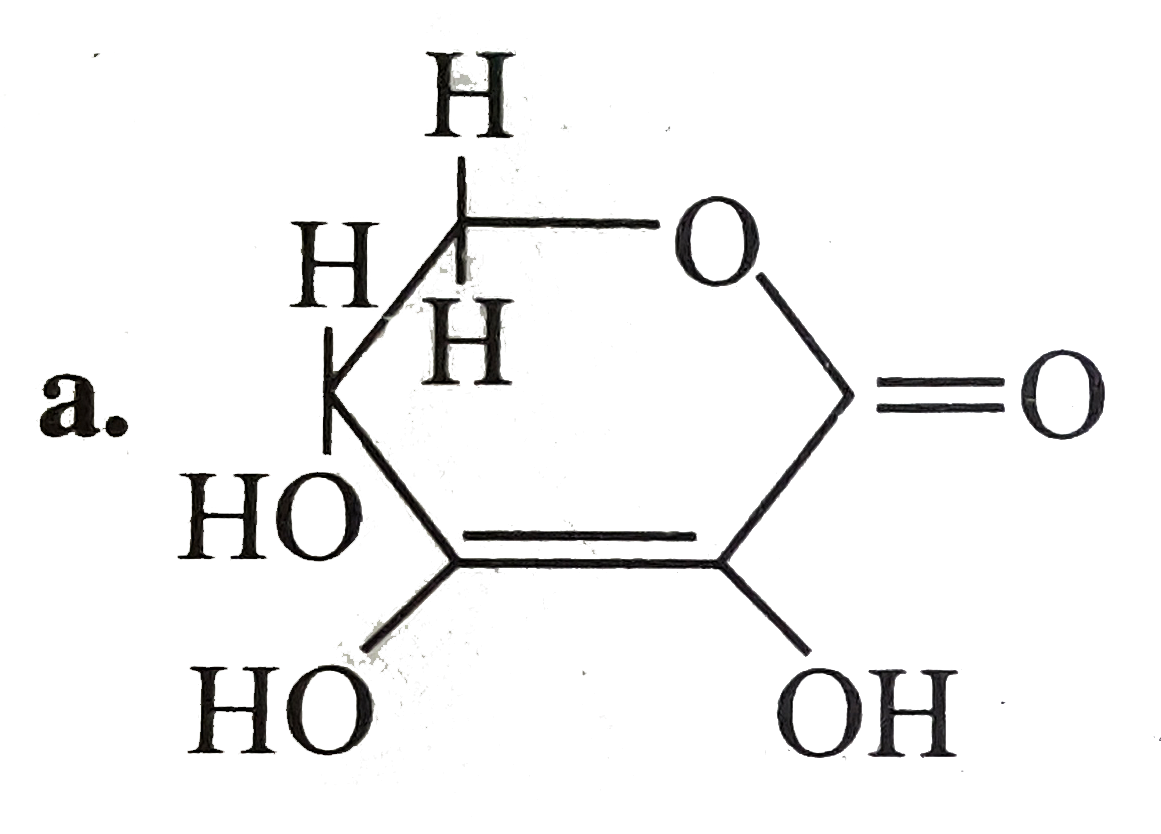
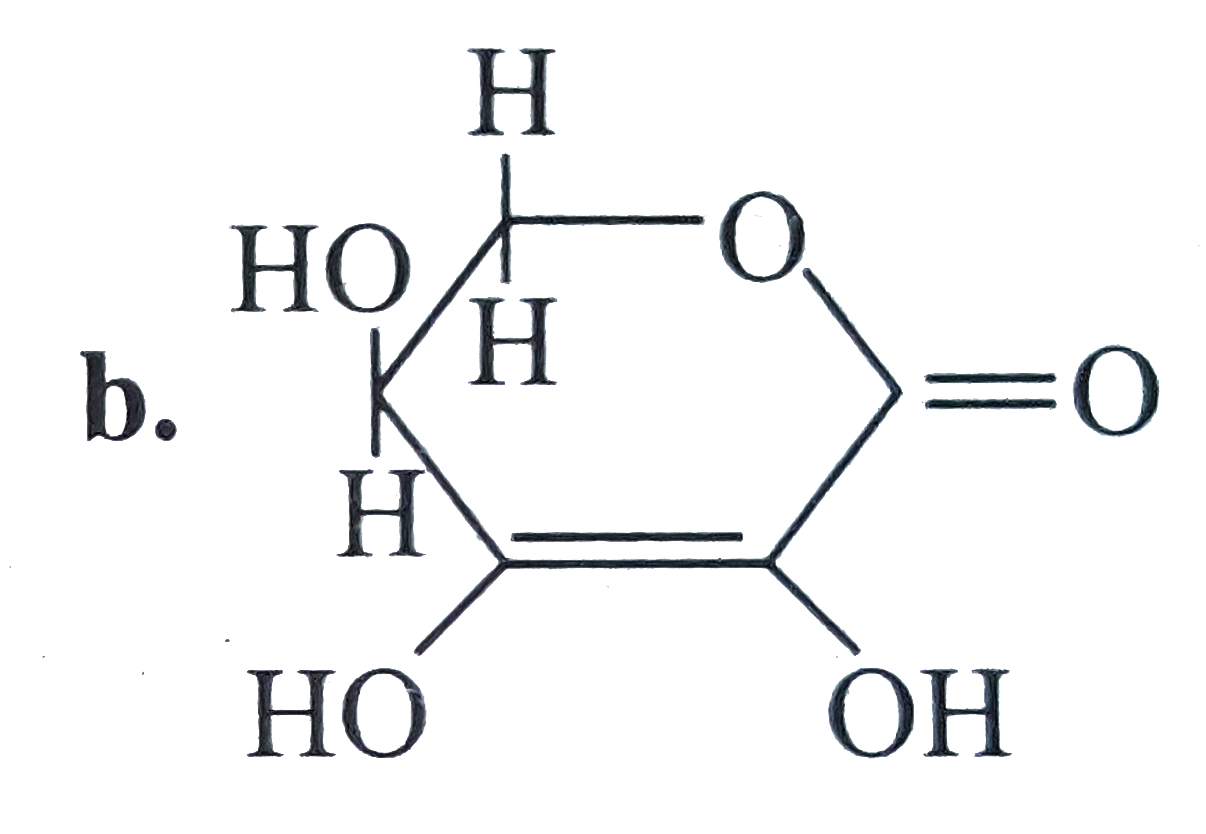
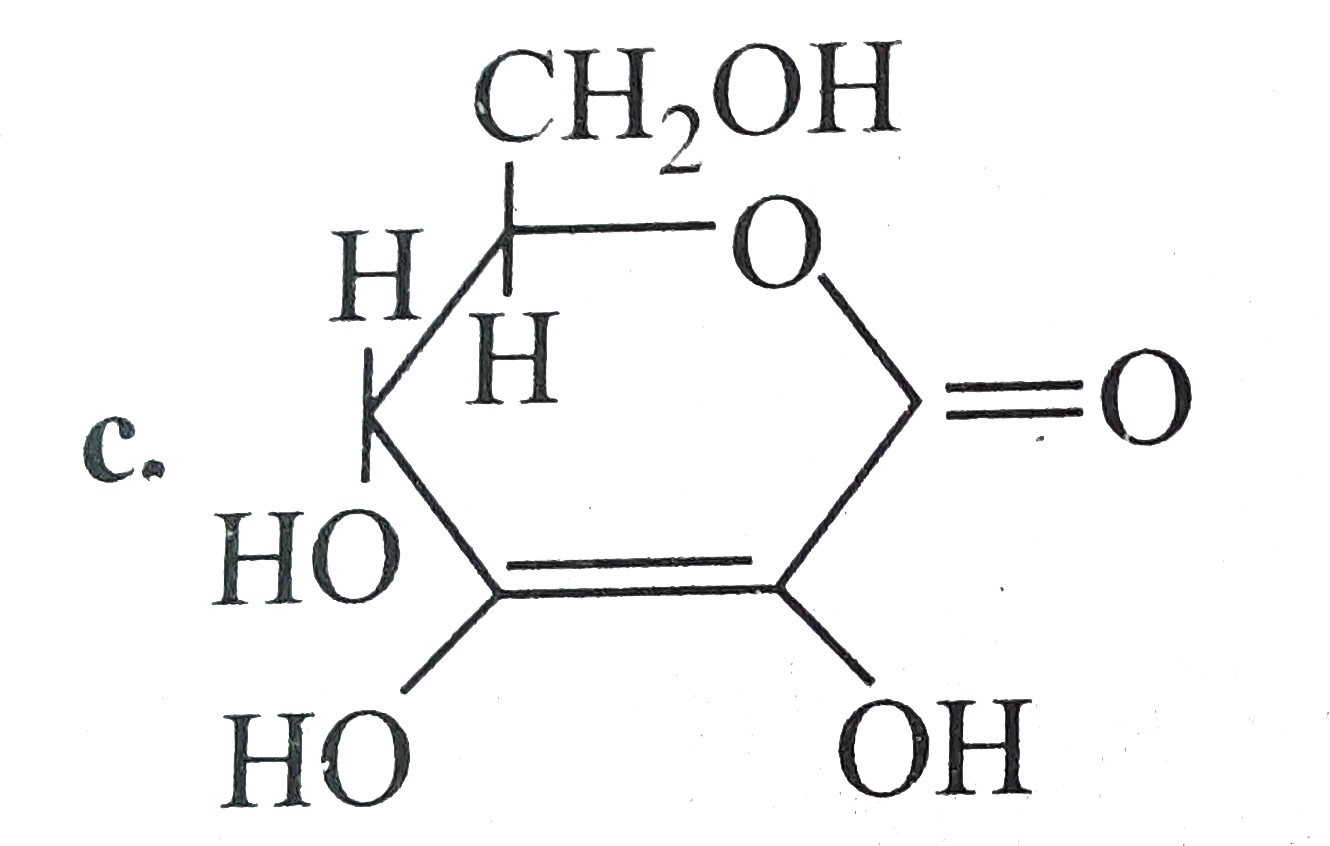
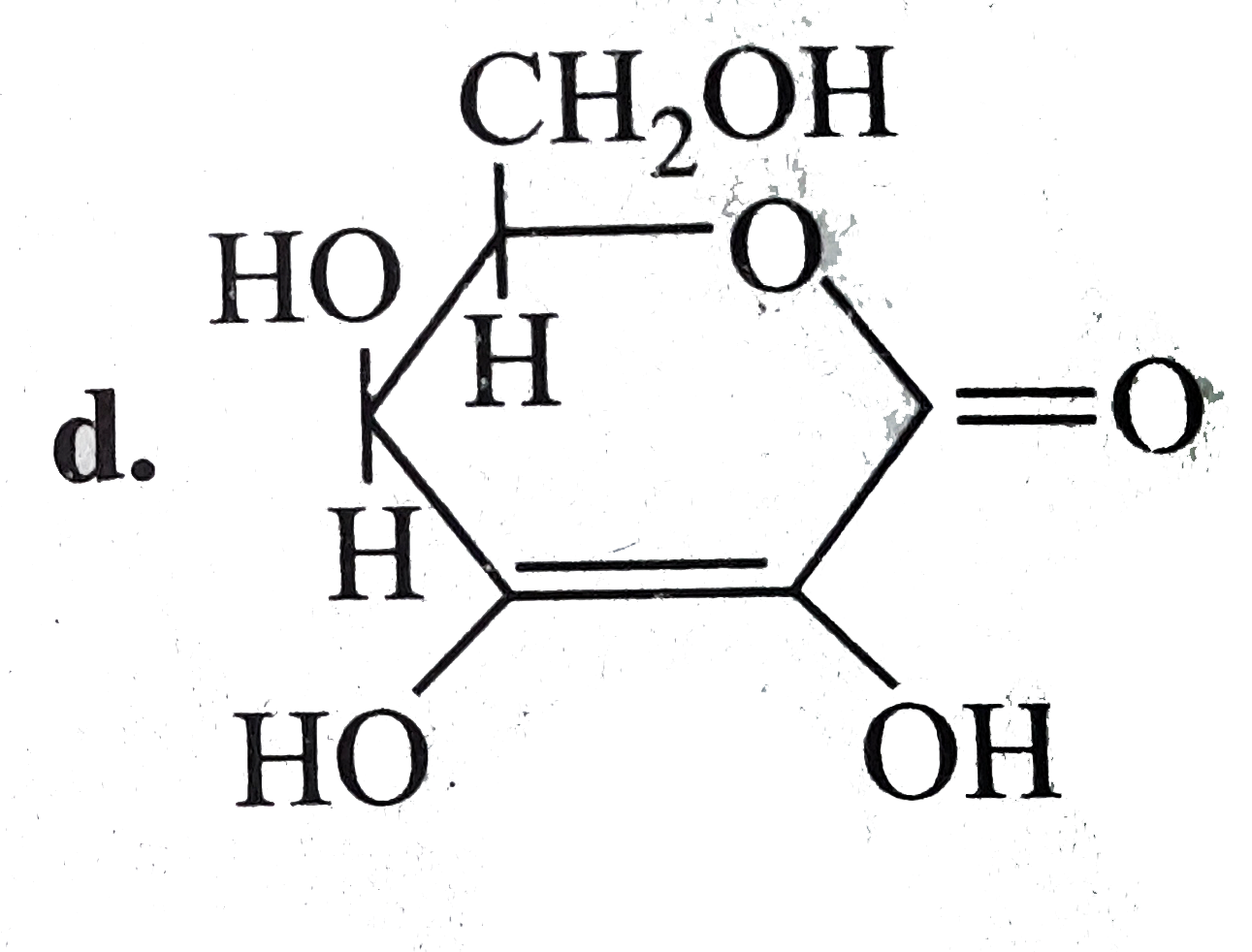
If the lacetone formation in compound (G) takes place between C-1 and C-5, then the structure of (G) can be represented as: |
|
Answer»
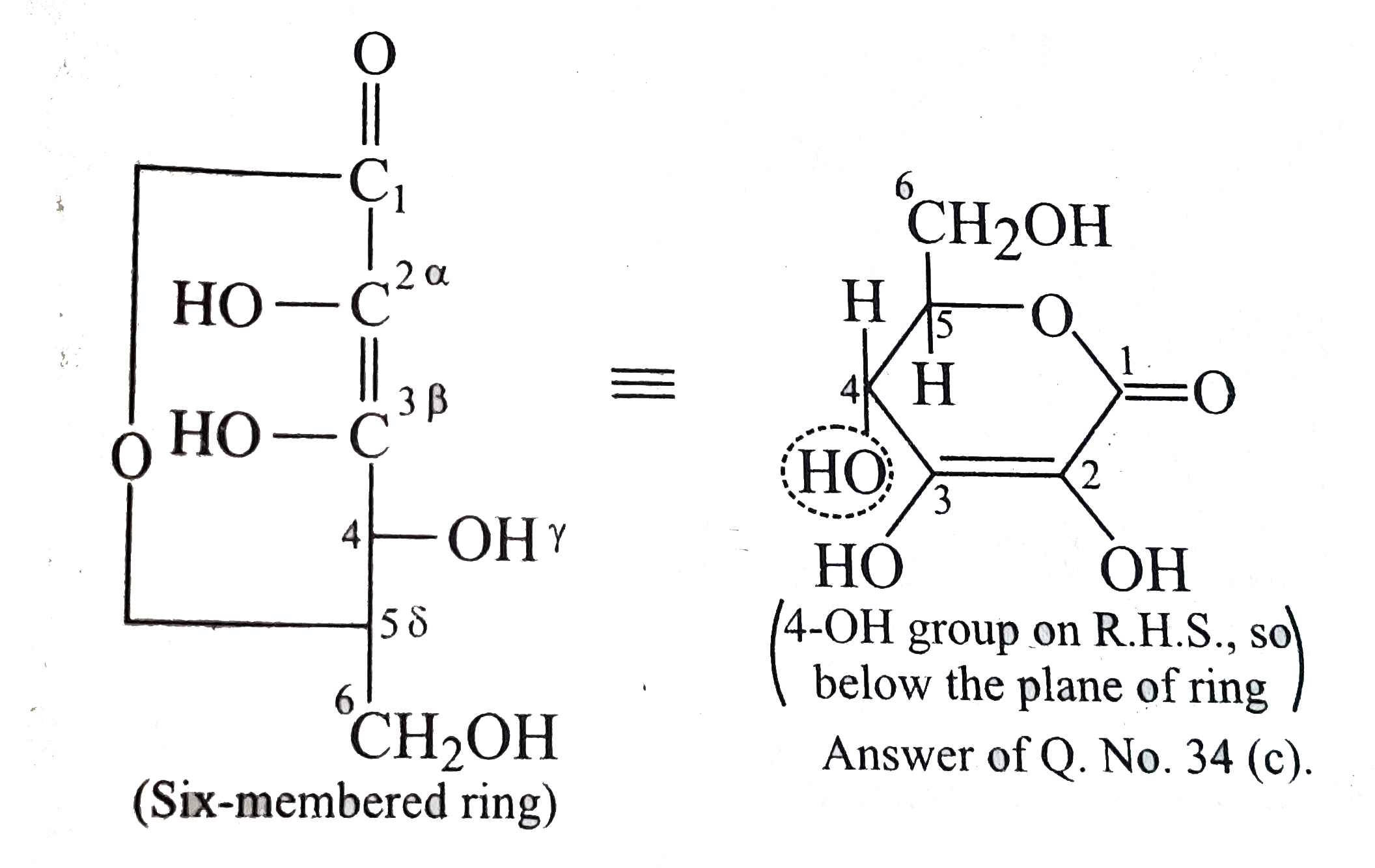
|
|
| 27. |
In a combination of NO_3, Br and I present in a mixture, Br and I interfere in the ring test for NO_3 . These are removed by adding a solution of |
|
Answer» `AgNO_3` `Ag_2 CO_3` does not DISSOLVE in water . |
|
| 28. |
If the K_(b) value in the hydrolysis reaction B^(+) + H_(2)O hArr BOH + H^(+) is 1.0 xx 10^(-6), then the hydrolysis constant of the salt would be |
|
Answer» `1.0 xx 10^(-6)` |
|
| 29. |
In a combination of NO_3^(-), Br^(-) and I^(-) present in a mixture, Br^(-) and I^(-) interfere in the ring test for NO_3^(-). These are removed by adding a solution of |
|
Answer» `AgNO_(3)` `2I^(-) +Ag_(2)SO_(4) to 2AgI darr+SO_(4)^(2-)` ADDING `AgNO_(3)`(A) will introduce `NO_(3)^(-)` ions in the solution. |
|
| 30. |
If the ionization energy of He^(+)is 54.4 eV then |
|
Answer» I.E of H is 13.6 eV and that of `LI^(+2) 122.4eV` |
|
| 31. |
In a cogulation experiment, 5 mL of As_(2)S_(3) is mixed with 0.1 M solution of electrolyte AB so that the thtal volume is 10 mL. It was found that all solution coagulates leaving AB equivaalent of 0.1 mL of 0.1 M in the solution. Calculate the flocculation value of AB for As_(2)S_(3) sol. |
|
Answer» Solution :Amount of `0.1` M AB solution ADDED `=(10-5)mL =5 mL` 0.1 M AB left behind in the solution `=0.1 mL` `therefore0.1` M AB used up for coagulation `=5-0.4 =4.6 mL` `4.6 mL` of 0.1 M AB CONTAINS `AB=(4.6)/(1000)xxx0.1` mole `=0.46` millimole At thtal volume of the SOL after mixing with electrolyte solution is 10 mL, amount of AB required for coagulation of 1 L, i.e., 1000 mL of the sol = 46 milimiles. `therefore` Flocculation VALUE `=46.` |
|
| 32. |
In a cold climate water gets frozen causing damage to the radiator of a car. Ethyleneglycol is used as antifreezing agent. Calculate the amount of ethylene glycol to be added to 4 kg of water to prevent it from freezing at -6^@C. K_f for H_2O is 1.85 K "mol"^(-1) kg. |
| Answer» SOLUTION :804.3 G | |
| 33. |
If the ionisation enthalpy and electron gain enthalpy of an element are 275 and 86 kcal mol^(-1) respectively, then the electronegativity of the element on the pauling scale is: |
|
Answer» 2.8 `=361xx4.184=1510.42kJ" "mol^(-1)` `therefore`ELECTRONEGATIVITY`=(1510.42)/(540)=2.797=2.8` |
|
| 34. |
Ina coagulationexperiment10 mlof acolloid(x )is mixedwithdistilledwateramd0.1Msolutionof an electrolyteABso thatthevolumeis 20ml.Itwasfoundthat allsolutioncontainingmore than6.6ml of ABcoagulatewith in 5minutes.Whatis theflocculationvaluesof ABfor sol (x) |
|
Answer» SOLUTION :A MINIMUMOF 6.6mlof Abis requredto coagulatethe sol Thismeansthat aminimumof 0.03 molesof 0.0033 `xx 100 = 3.3`milimolesare requiredfor coogulatingone litreof sol. Flocculationvalueof ABfor x=3 |
|
| 35. |
If the ionisation potential for hydrogen atom is 13.6 eV, then the wavelength of light required for the ionisation of hydrogen atom would be: |
|
Answer» 1911 nm |
|
| 36. |
In a coal fired power plant, electrostatic precipitators are installed to control emission of |
|
Answer» `SO_2` |
|
| 37. |
If the ionisation energy of hydrogen atom is 13.6 eV, the energy required to excite it from ground state to the next higher state is nearly |
|
Answer» Solution :`E_(N)=-(13.6)/(n^(2))eV,DeltaE=E_(2)-E_(1)` `=-13.6(1/(2^(2))-1/(1^(2)))=13.6xx3/4=10.2eV` |
|
| 38. |
If the ionic radii of K^(+) and F^(-) are nearly the same (i.e., 1.34 Å), then the atomic radii of K and F respectively are: |
|
Answer» 1.34 Å, 1.34 Å |
|
| 39. |
In a coagulation experiment , a sol of As_2S_3 is mixed with distilled water and 0.2m solution of an electrolyte, AB so that total volume is 20 mL. It was found that all solutions containing more than 4.5mL of AB get coagulated within two minutes.What is the flocculation value of AB for As_2S_3 ? |
|
Answer» Solution :Conc. of AB = 0.2 m VOLUME of AB required to coagulate 20 mL solution =4.5mL Amount of AB required to COAGULATED 20 mL solution `= (4.5 XX 0.2)/(1000) " moles " = (4.5 xx 0.2)/(1000) xx 1000` millimoles = 0.9 millimoles Millimoles of AB reqiured to coagulate 1 litre solution `= (0.9 xx 1000)/( 20 " for " As_2S_3) = 45` `:. ` FLOCCULATION value of AB =45 |
|
| 40. |
If the ionic product of water varies with temperature as follows and the density of water be nearly constant for this range of temperature the process H^(+) + OH^(-) hArrH_(2) O is |
|
Answer» Exothermic |
|
| 41. |
In a coagulation experiment 10 mL of a colloid (X) is mixed with distilled water and 0.1M solution of an electrolyte AB so that the volume is 20 mL. It was found that all solutions containing more than 6.6 mL of AB coagulate with in 5 minutes. What is the flocculation values of AB for sol (X)? |
|
Answer» SOLUTION : A MINIMUM of 6.6mL of AB is required to coagulate the sol. The moles of AB in the sol is `(6.6 xx 0.01)/(20) = 0.0033 moles This means that a minimum of 0.033 moles or `0.0033 xx 1000 = 3.3` MILLI moles are required for coagulating ONE litre of sol. Flocculation value of AB for X = 3.3 |
|
| 42. |
In a coagulation experiment, 10 mL of a colloid (X) is mixed with distilled water and 0.1M solution of an electrolyte AB so that the volume is 20 mL. It was found that all solutions containing more than 6.6 mL of AB coagulate within 5 minutes. What is the flocculation values of AB for sol (X)? |
|
Answer» Solution :A minimum of 6.6 ml of AB is required to coagulated the sol. The NUMBER of moles of AB in the sol is ` = (6.6 xx 0.1)/(20)` ` = 0.033` moles This means that minimum of 0.033 moles or 33 millimoles are required to coagulate 1 LITRE of sol. `therefore ` Flocculating VALUE of AB for sol = 33. |
|
| 43. |
If the initial concentration of the reactants is doubled in a zeroth order reaction, then rate |
|
Answer» REMAINS CONSTANT |
|
| 44. |
In a closest packed lattice, the number of tetrahedral voids formed will be |
|
Answer» EQUAL to the number of spheres in the lattice |
|
| 45. |
If the initial pH values are the same for titrations of separate 25 mL samples of weak and strong monoprotic acids, which other value(s) is (are) also the same? the pH at equivalence point the volume of base needed to reach the eq.point. |
|
Answer» <P>P only |
|
| 46. |
In a closed vessel, a gas is heated from 300 K to 600 K the kinetic energy becomes/remain |
|
Answer» Half |
|
| 47. |
If the initial concentration of the reactant is doubled , the time for half reaction is also doubled . Then the order of reaction is ....... |
|
Answer» zero `t_(1//2)prop1/([A_0]^(n-1))""...(1)` If `[A_0]=2[A_0]` , then n`t_(1//2) = 2 t_(1//2)` `2t_(1//2)PROP(1)/([2A_0]^(n-1))""...(2)` Dividing Eq. (2) by Eq.(1) Dividing Eq. by Eq. (1) `2=1/([2A_0]^(n-1))XX([A_0]^(n-1))/(1)=([A_0]^(n-1))/([2A_0]^(n-1))` `2=(1/2)^(n-1)=(2^(-1))^(n-1)` `2^1=(2^(-n+1))` n= 0 |
|
| 48. |
In a closed jar having water vapours in equilibrium with liquid suddenly all the vapours of the jar is transferred to another identical jar and is subjected to compression.Assume initial temperature to be the same and negligible volume occupied by the liquid water.Select the observation in the record jar. |
|
Answer» LIQUID water will start forming in the JAR |
|
| 49. |
In a closed insulated container a liquid is stirred with a paddle to increase the temperature which of the following is true? |
|
Answer» `Delta E = W ne 0 , q = 0` SINCE the SYSTEM is closed and insulated, q = 0 And as liquid is stirred with a paddle hence work is done on system ` THEREFORE W ne 0`. Temperature and internal energy of the system increases. ` therefore Delta E ne0` |
|
| 50. |
If the initial concentration of the reactant is doubled, the time for half reaction is also doubled. Then the order of the reaction is |
|
Answer» zero i.e., `N NE 1` , for such cases `t_(1//2)prop1/([A_0]^(n-1))""....(1)` If `[A_0]=2[A_0]`,then `t_(1//2)=2t_(1//2)` `2t_(1//2)prop1/([2A_0]^(n-1))""...(2)` Dividing Eq. (2) by Eq. (1) `2=1/([2A_0]^(n-1))xx([A_0]^(n-1))/1=([A_0]^(n-1))/([2A_0]^(n-1))` `2 = (1/2)^(n-1)=(2^(-1))^(n-1)` `2^1=(2^(-n+1))` n = 0 |
|