

Saved Bookmarks
This section includes 7 InterviewSolutions, each offering curated multiple-choice questions to sharpen your Current Affairs knowledge and support exam preparation. Choose a topic below to get started.
| 1. |
Give the reaction of hydroxyl group with chlorobenzene. |
Answer» Solution :Chlorobenzene can be converted into phenol by heating in aqueous sodium hydroxide solution at a temperature of 623 k and a pressure of 300 atmospheres.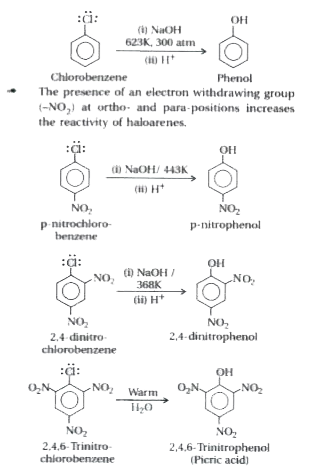 The EFFECT is pronounced when `(-NO_(2))` GROUP is introduced at ortho and para positions. HOWEVER, no effect on REACTIVITY of haloarenes is OBSERVED by the presence of electron with drawing group at meta - position. |
|
| 2. |
Glucose can't be classified as |
|
Answer» hexose |
|
| 3. |
Give the reaction for the preparation of phenol from cumene. |
Answer» SOLUTION :Phenol can be PREPARED from CUMENE in the following STEPS : 
|
|
| 4. |
Glucose contains : |
|
Answer» One-CHO group |
|
| 5. |
Give the properties of inter halogen compounds. |
|
Answer» Solution :PROPERTIES of inter halogen compounds: (i) The central atom will be the larger one. (II) It can be formed only between two halogen and not more than two halogens. (iii) Fluorine can.t act as a central metal atom being the smallest one. (iv) Due to HIGH ELECTRONEGATIVITY with small size fluorine helps the central atoms to attain high COORDINATION number v. They can undergo the auto ionization. vi. They are strong oxidizing agents. |
|
| 6. |
Give the products of the reaction : "Product of reaction (d)" underset(DMF)overset(NaCN)to |
Answer» SOLUTION :
|
|
| 7. |
Givethe products of thereactionof styreneoxidewith (a)NaSH (b)LiAID_(4) ( c) MeOH // H^(+) ( d) HBr(1 eq) |
Answer» SOLUTION :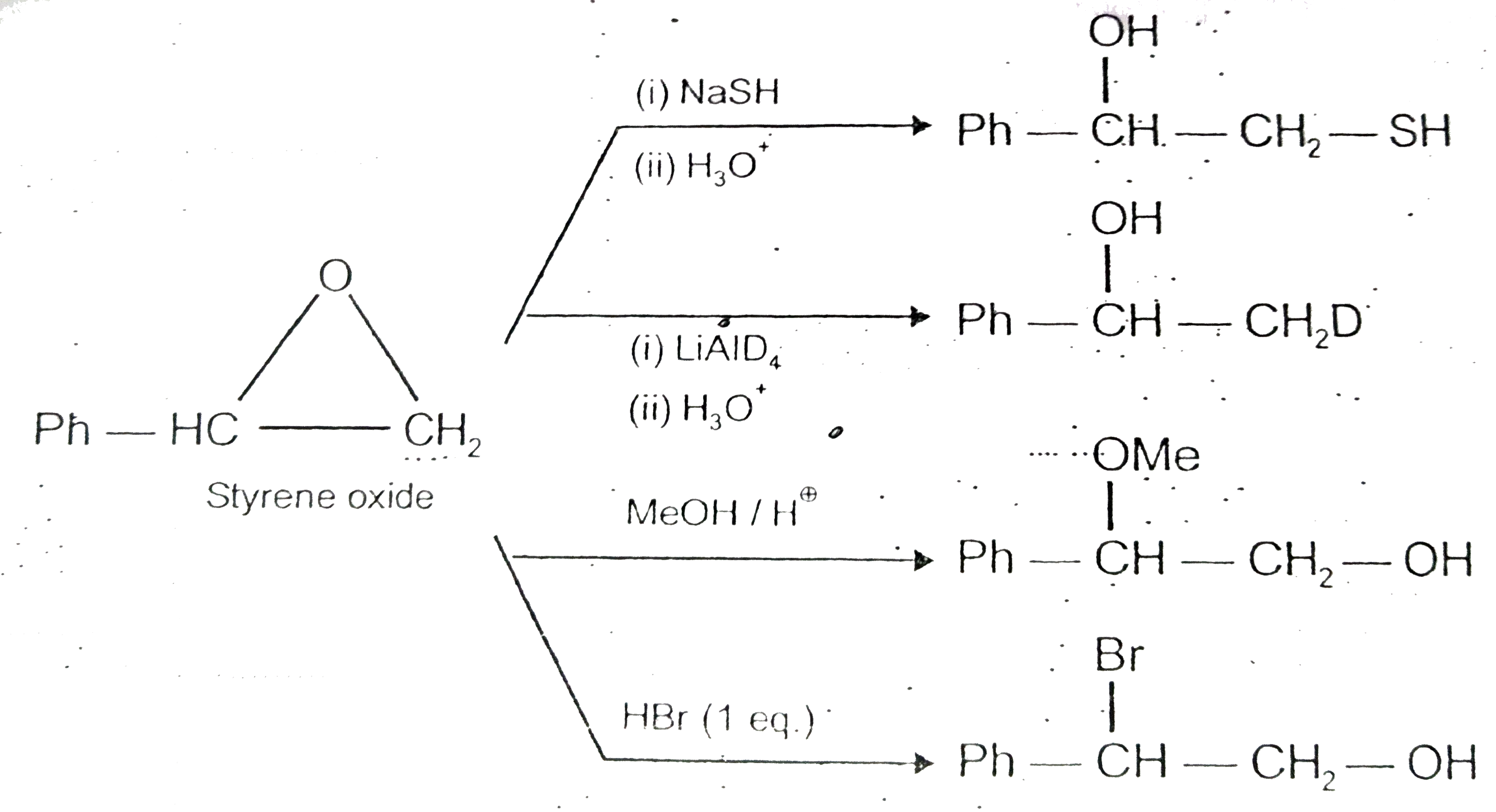
|
|
| 8. |
Glucose cannot be classified as: |
|
Answer» A hexone |
|
| 9. |
Give the products of the reaction : |
Answer» SOLUTION :
|
|
| 10. |
Glucose can be classified as |
|
Answer» aldohexose |
|
| 11. |
Give the products of the reaction : |
Answer» SOLUTION :
|
|
| 13. |
Give the products of the reaction : |
Answer» SOLUTION :
|
|
| 14. |
Glucose and sucrose can be distinguished by ..........or ..............solution. |
| Answer» SOLUTION :TOLLENS' REAGENT or FEHLING's solution | |
| 15. |
Give the products of the reaction : |
Answer» SOLUTION :
|
|
| 16. |
Glucose and Sucrose are soluble in water but cyclohexane or benzene are insoluble in water. Explain. |
|
Answer» SOLUTION :Glucose contain five -OH groups and SUCROSE contains eight -OH groups in their molecules. These -OH groups from HYDROGEN bonds with water. So glucose and sucrose are soluble in water. But CYCLOHEXANE and benzene do not contain -OH groups. So they cannot form hydrogen bonds with water and are insoluble. MOREOVER, cyclohexane and benzene are non-planar compounds and such compounds do not dissolve in polar solvents like water. |
|
| 17. |
Give the products of the reaction : |
| Answer» SOLUTION :no REACTION (or POSSIBLE DEHYDRATION) | |
| 18. |
Glucose and mannose are |
|
Answer» EPIMERS |
|
| 19. |
Give the products of the reaction : |
Answer» SOLUTION :
|
|
| 20. |
Glucose and mannose are…….. . |
|
Answer» epimers |
|
| 21. |
Give the products of the reaction : |
Answer» SOLUTION :
|
|
| 22. |
Glucose and mannose are : |
|
Answer» Keto-hexoses |
|
| 23. |
Give the products of the reaction : |
Answer» SOLUTION :
|
|
| 24. |
Glucose and fructose give the same osazone ? Explain. |
Answer» Solution :During osazone formation , the reaction OCCURS only at `C_1` and `C_2` while rest of the MOLECULE REMAINS intact, Since glucose and fructose differ from each other only in the ARRANGEMENT of ATOMS at `C_1` and `C_2`, therefore , they give the same osazone. 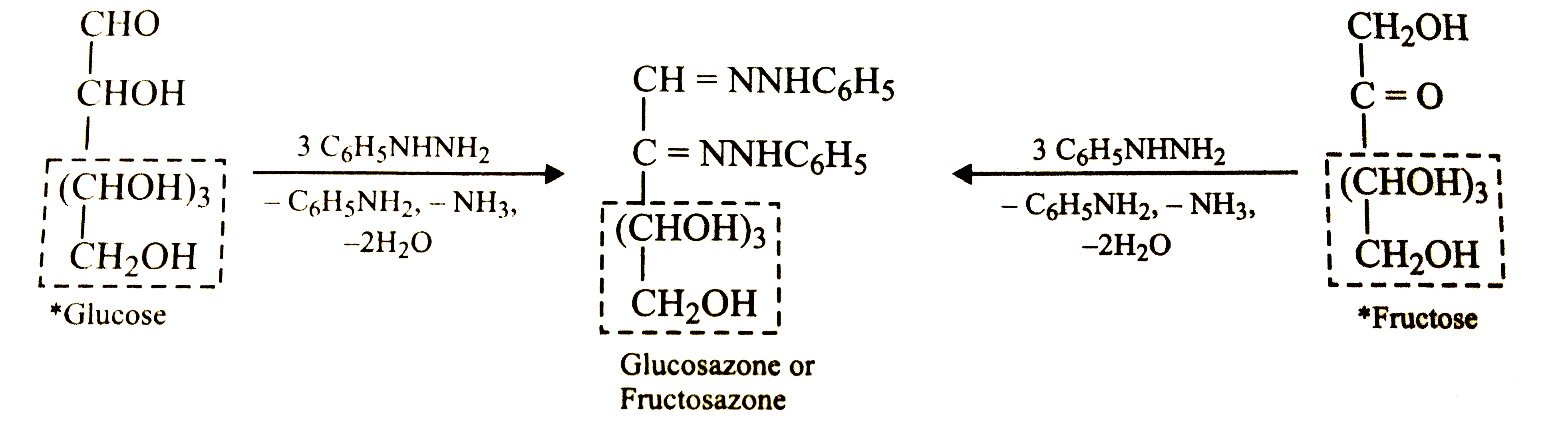
|
|
| 25. |
Give the products of the reaction : |
Answer» SOLUTION :
|
|
| 26. |
Glucose and glycine. |
|
Answer» |
|
| 27. |
Give the products of the reaction : |
Answer» SOLUTION :
|
|
| 28. |
Give the products of the following reactions HC-=C CH_(2)CH_(2)CH_(3)underset(Delta)overset(KMnO_(4))rarrZ |
|
Answer» Solution :`X:(CH_(3))_(2)CHCOOH+HOOC CH_(2)CH_(2)CH_(3)` `Y:2CH_(3)CH_(2)COOH`, SYMMETRICAL internal ALKYNES give one acid `Z:CH_(3)COOH+HOOC CH_(2)CH_(2)COOH+HOOC CH_(2)CH_(3)` |
|
| 29. |
Glucose and fructose differ in : |
|
Answer» Taste |
|
| 30. |
Give the products of the following reactions CH_(3)CH_(2)C-=C CH_(2)CH_(3)underset(Delta)overset(KMnO_(4))rarrY |
|
Answer» SOLUTION :`X:(CH_(3))_(2)CHCOOH+HOOC CH_(2)CH_(2)CH_(3)` `Y:2CH_(3)CH_(2)COOH`, symmetrical internal alkynes give one ACID `Z:CH_(3)COOH+HOOC CH_(2)CH_(2)COOH+HOOC CH_(2)CH_(3)` |
|
| 31. |
Glucose and fructose can be distinguished by |
|
Answer» Lucas TEST |
|
| 32. |
Give the products of the following reactions CH_(3)C-=C CH_(2)CH_(2)C-=C CH_(2)CH_(3)underset(Delta)overset(KMnO_(4))rarrW |
|
Answer» Solution :`X:(CH_(3))_(2)CHCOOH+HOOC CH_(2)CH_(2)CH_(3)` `Y:2CH_(3)CH_(2)COOH`, symmetrical INTERNAL ALKYNES give one acid `Z:CH_(3)COOH+HOOC CH_(2)CH_(2)COOH+HOOC CH_(2)CH_(3)` |
|
| 33. |
Glucose and fructose consists of aldehydic and ketonic functional groups respectively, yet fehlings reagent cannot be used to distinguish them, why? |
| Answer» Solution :Because in ALKALINE MEDIUM, FRUCTOSE isomerizes to glucose, thereby ANSWERING Fehling.s TEST. | |
| 34. |
Give the products of the reaction : |
Answer» SOLUTION :
|
|
| 35. |
Give the products of the reaction : |
Answer» SOLUTION :
|
|
| 36. |
Glucose and fructose are readily distinguished by using : |
|
Answer» MOLISCH test |
|
| 37. |
Give the products of the following reactions (CH_(3))_(2)CHC-=C CH_(2)CH_(2)CH_(3)underset(Delta)overset(KMnO_(4))rarrX |
|
Answer» Solution :`X:(CH_(3))_(2)CHCOOH+HOOC CH_(2)CH_(2)CH_(3)` `Y:2CH_(3)CH_(2)COOH`, symmetrical INTERNAL alkynes give ONE acid `Z:CH_(3)COOH+HOOC CH_(2)CH_(2)COOH+HOOC CH_(2)CH_(3)` |
|
| 38. |
Give the products of nitrobenzene when it is reacted with the following: a. Pd//H_(2) b. P//HI c. Fe//HCl d. PPh_(3) e. PhNH_(2) f. PhCH_(2)CN g. NH_(2)OH h. RMgBr//H_(2)O |
Answer» Solution :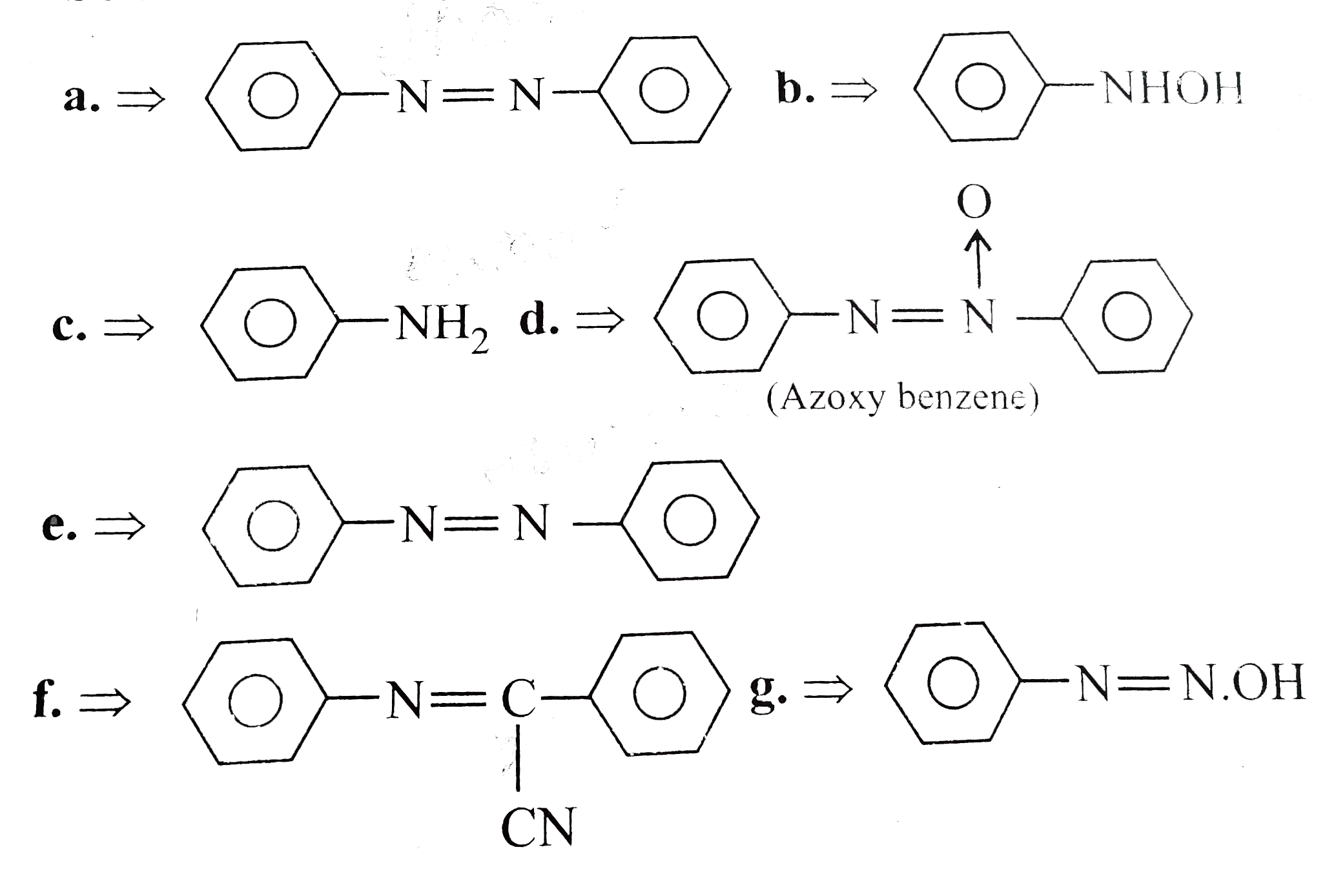 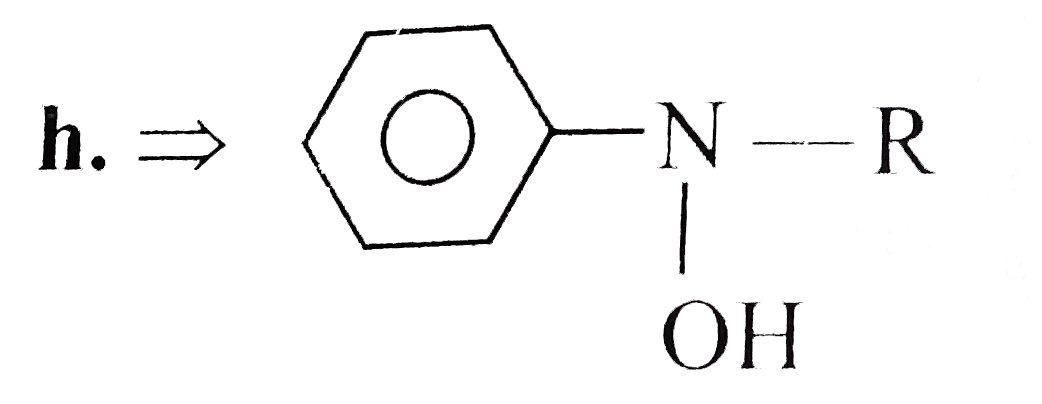 a,b,c and d are reduction produicts , e,f and H are congdentionproducts in which NITROSO group NO BEHAVE like CARBONYL group. 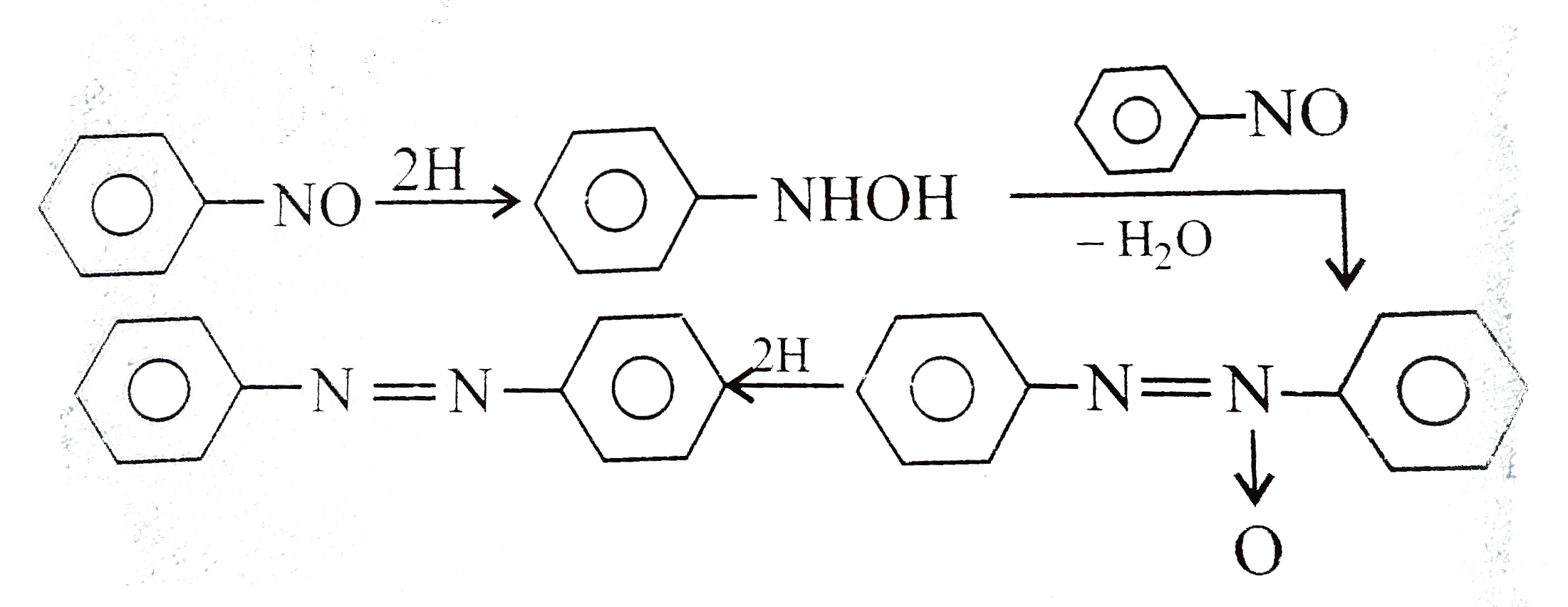
|
|
| 39. |
Glucose and fructose are chain isomers.TRUE/FALSE |
|
Answer» |
|
| 40. |
Give the products of the following: i. Benzene + Cylohexanol (BF_(3), 60^(@)C) ii. Benzene + CH_(2) = CHCH_(2)Cl (ZnCl_(2)) and H_(2)SO_(4) iii. Benzene + Ethylene oxide + AlCk_(3) iv. Benzene + CH_(2)Cl_(2) + alCl_(3) rarr (A) (B) overset(C_(6)H_(6) + AlCl_(3)|)(larr) v. Benzene + ClCH_(2)CH_(2)Cl + AlCl_(3) rarr (C) (D) overset(C_(6)H_(6)+ AlCl_(3)|)(larr) vi. Benzene + Phosgene (COCl_(2)) overset(AlCl_(3))(rarr) (E) overset(H_(3)O^(o+))(rarr) (F) vii. Toulene + Maloncianthydride overset(AlCL_(5)(rarr) (A) underset(H_(3)PO_(4))(rarr) (B) underset(HCl) overset(Zn-Hg)(rarr) (C) viii. Explain how alkyl benzene naphalene, anthracene and phenanthrene can bedistinguished form one another F.C. reaction ? |
Answer» Solution :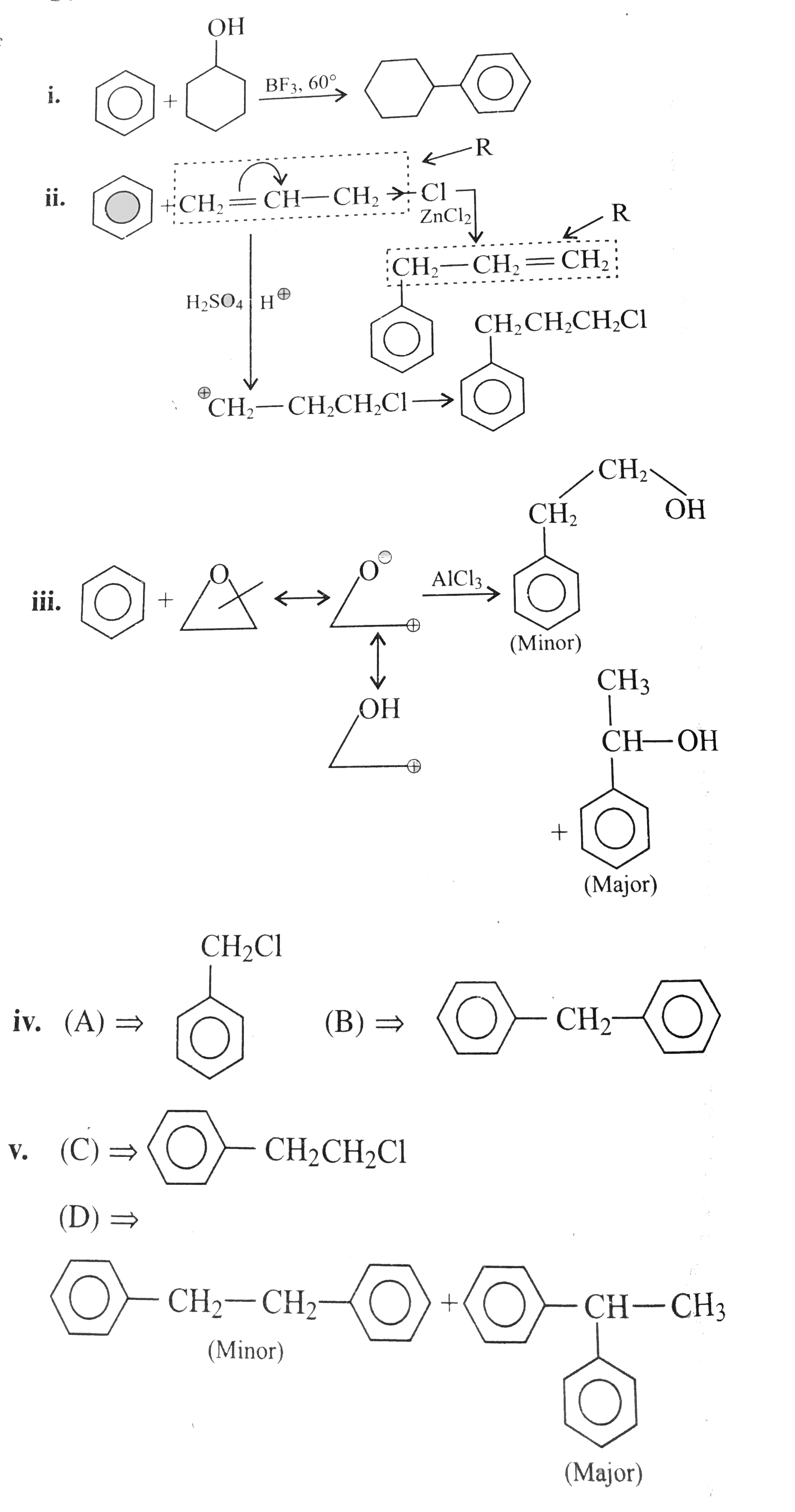 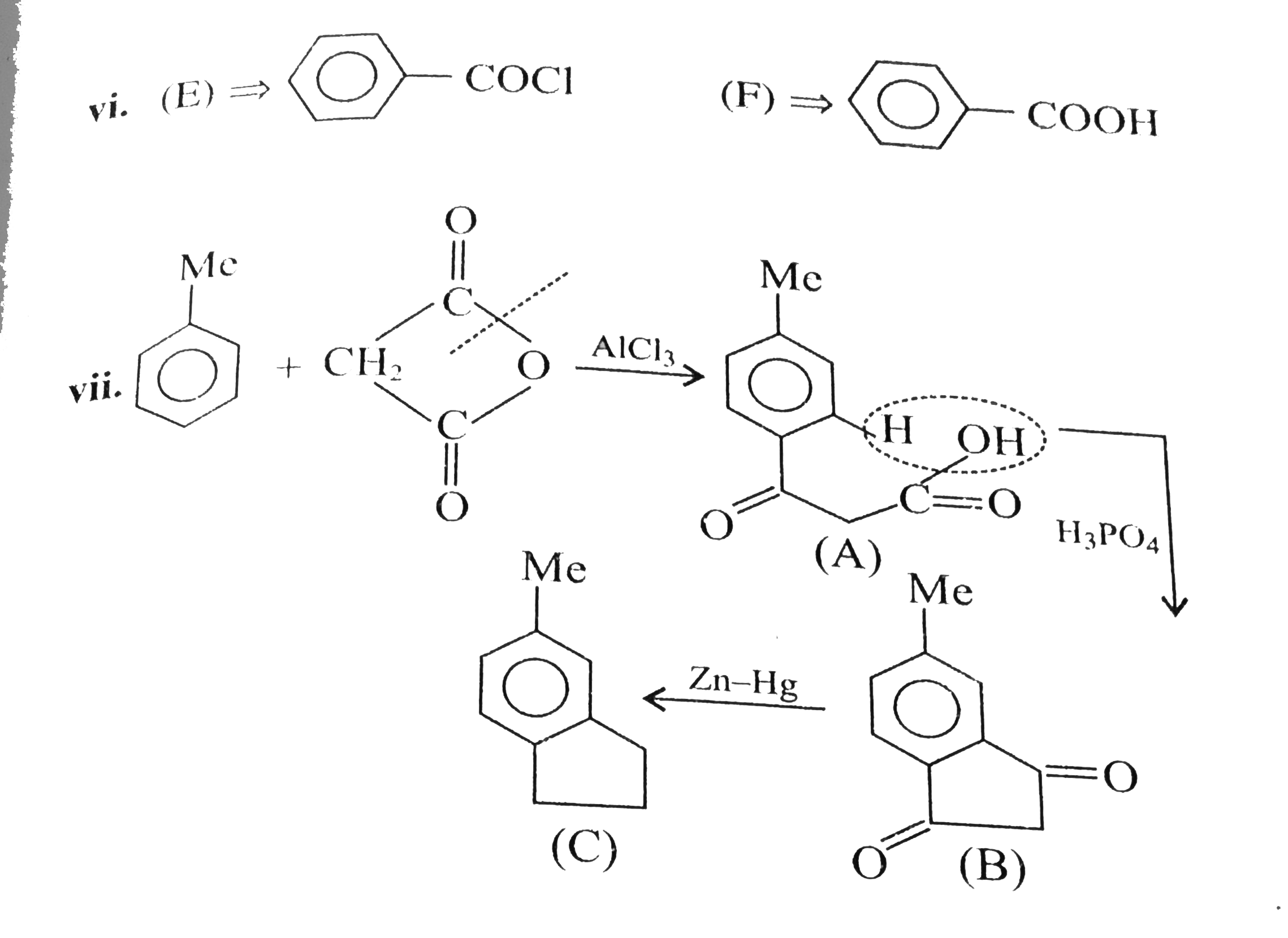 VIII. Any aromatic compound that can be alkylated in `F.C`. Reaction gives a DISTINCTIVE colour when treated with `CHCl_(3) + AlCl_(3)`. The colouris due to the formation of `Ar_(3)C^(o+)AlCl_(4)^(o+)`. as sjpwm. 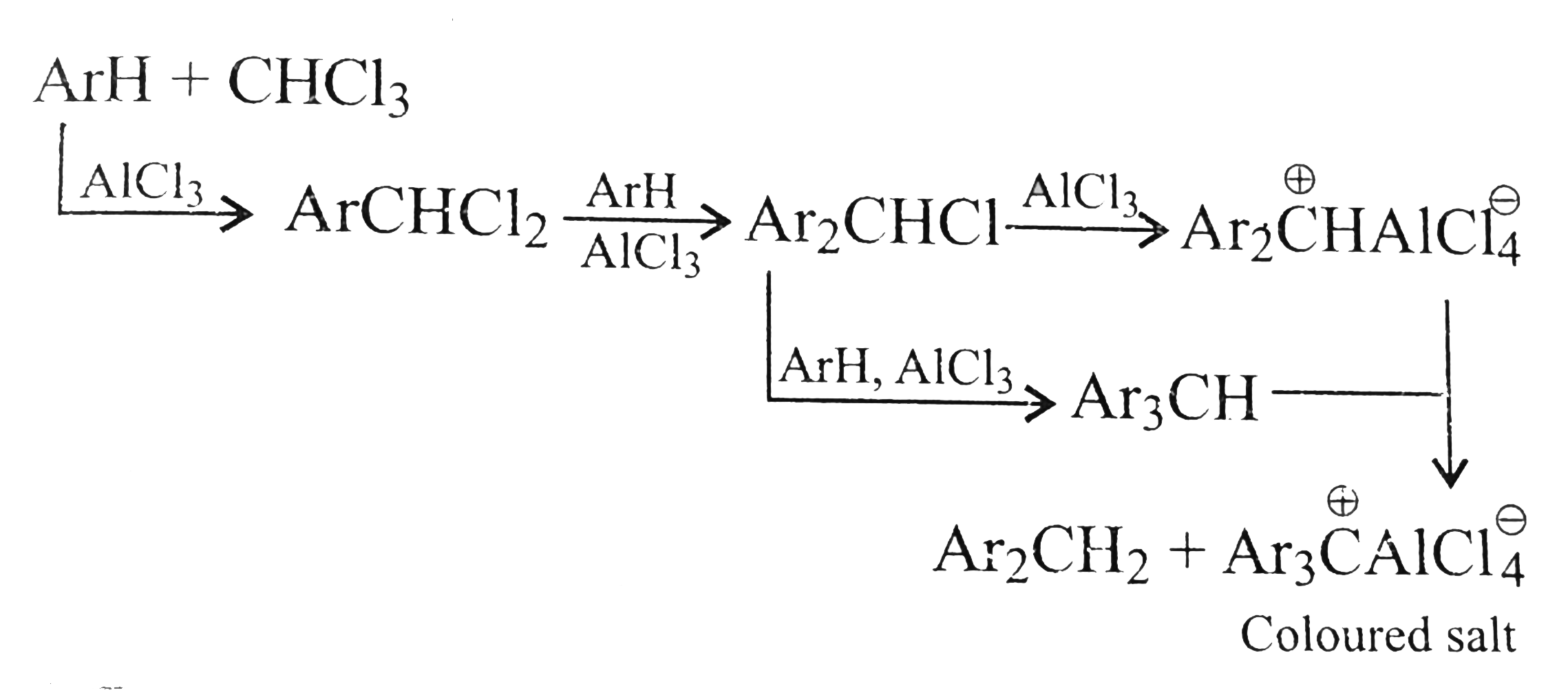 Benzene derivaties give an orange to RED colour, naphalenes give bluwe anthrancenes givegreen, and phenantheres give PURPLE. |
|
| 41. |
Glucose and fructose are : |
|
Answer» CHAIN isomers |
|
| 42. |
Give the products of the following: |
Answer» Solution :a. `LAH` reduce both the 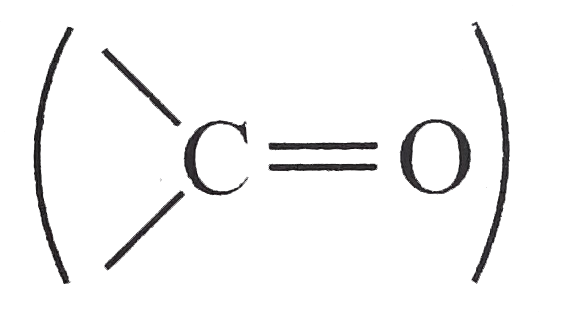 and `(-COOH)` GROUPS to ALCOHOL, while `NaBH_(4)` reduces only  (b) LAH reduces both the (-CH=O) and ester (-COOMe) groups to alcool, while `NaBH_(4)` reduces only the (-CH=O) group 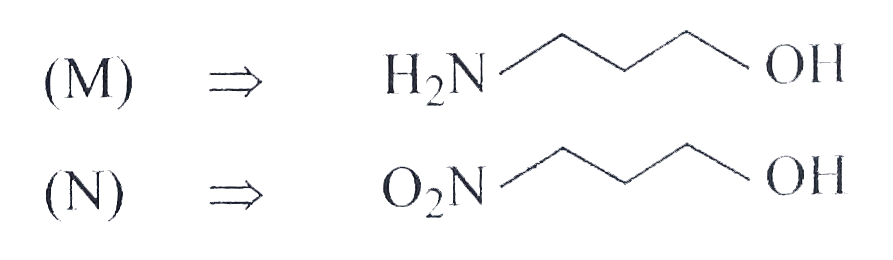
|
|
| 43. |
Glucose and fructose |
|
Answer» Fructose does not REACT with `Br_(2)` water. |
|
| 44. |
Give the products of the following and the name of the reactions: |
Answer» Solution :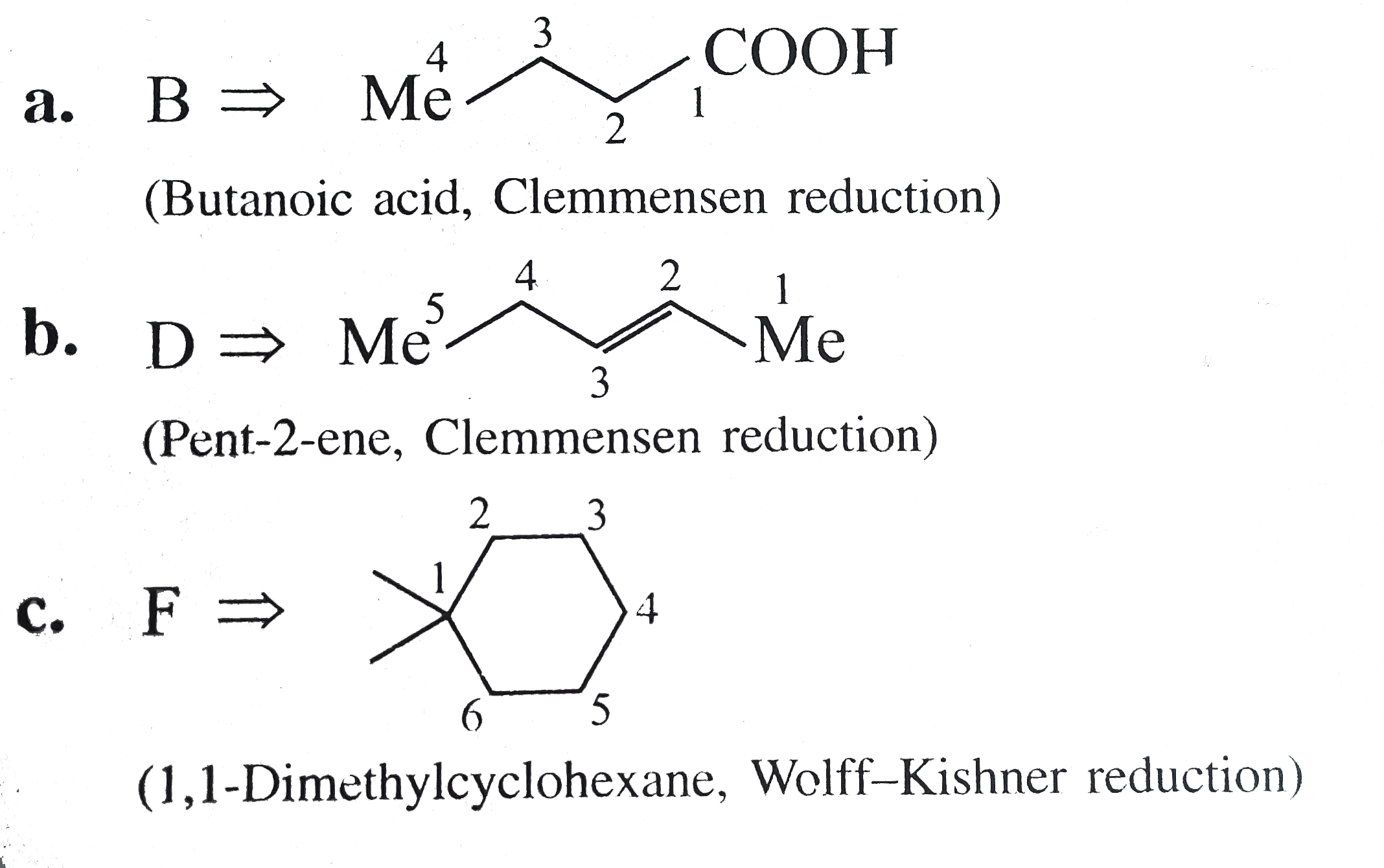 d. Clemmensen reduction is acid sensitive, so it would reduce `(C=O)` to `(-CH_(2))` GROUP and simultaneously dehydration of alcohol will OCCUR. 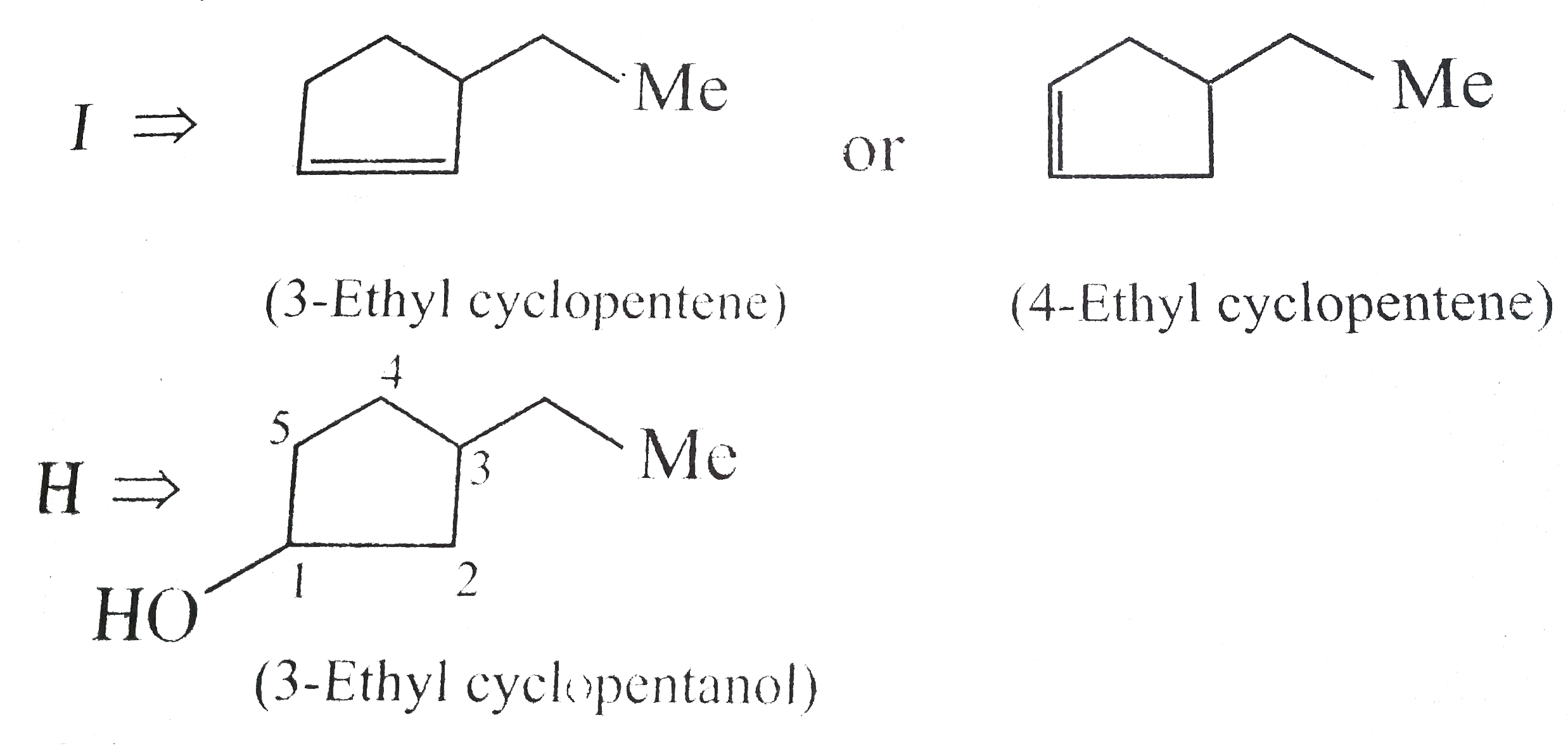 e. Wolff-Kishner reduction is base sensitive, so it would reduce `(C=O)` to `(-CH_(2)-)` group and simultaneously dehydrohalogenation of `RX` will occur. 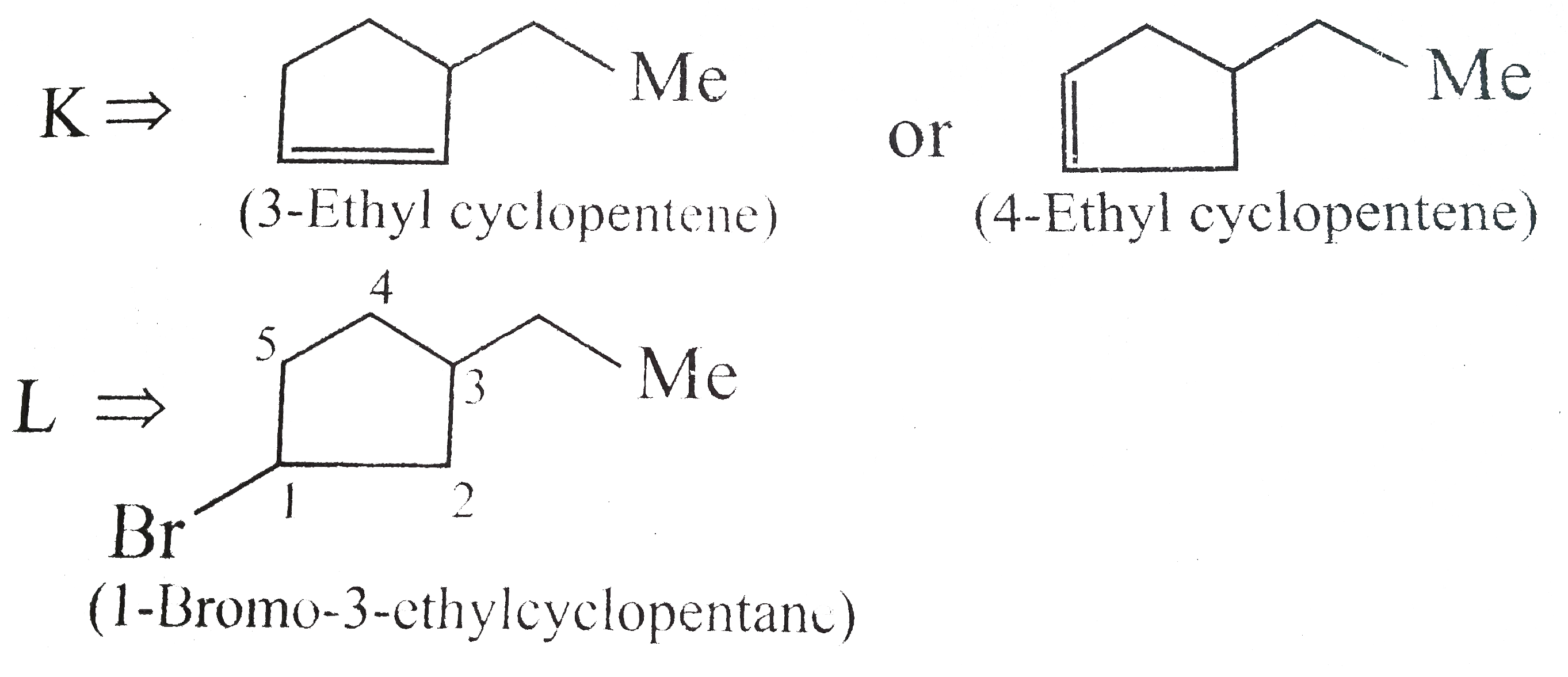 f. Both `LAH` and `NaBH_(4)` reduce `(-CH=O)` group tp `(-CH_(2)OH)` group. But `lAH` reduces `1^(@)` and `2^(@) RX` to `RH`, but `NaBH_(4)` does not reduce `1^(@) RX`, whereas both `LAH` and `NaBH_(4)` do not reduce `ArX`. 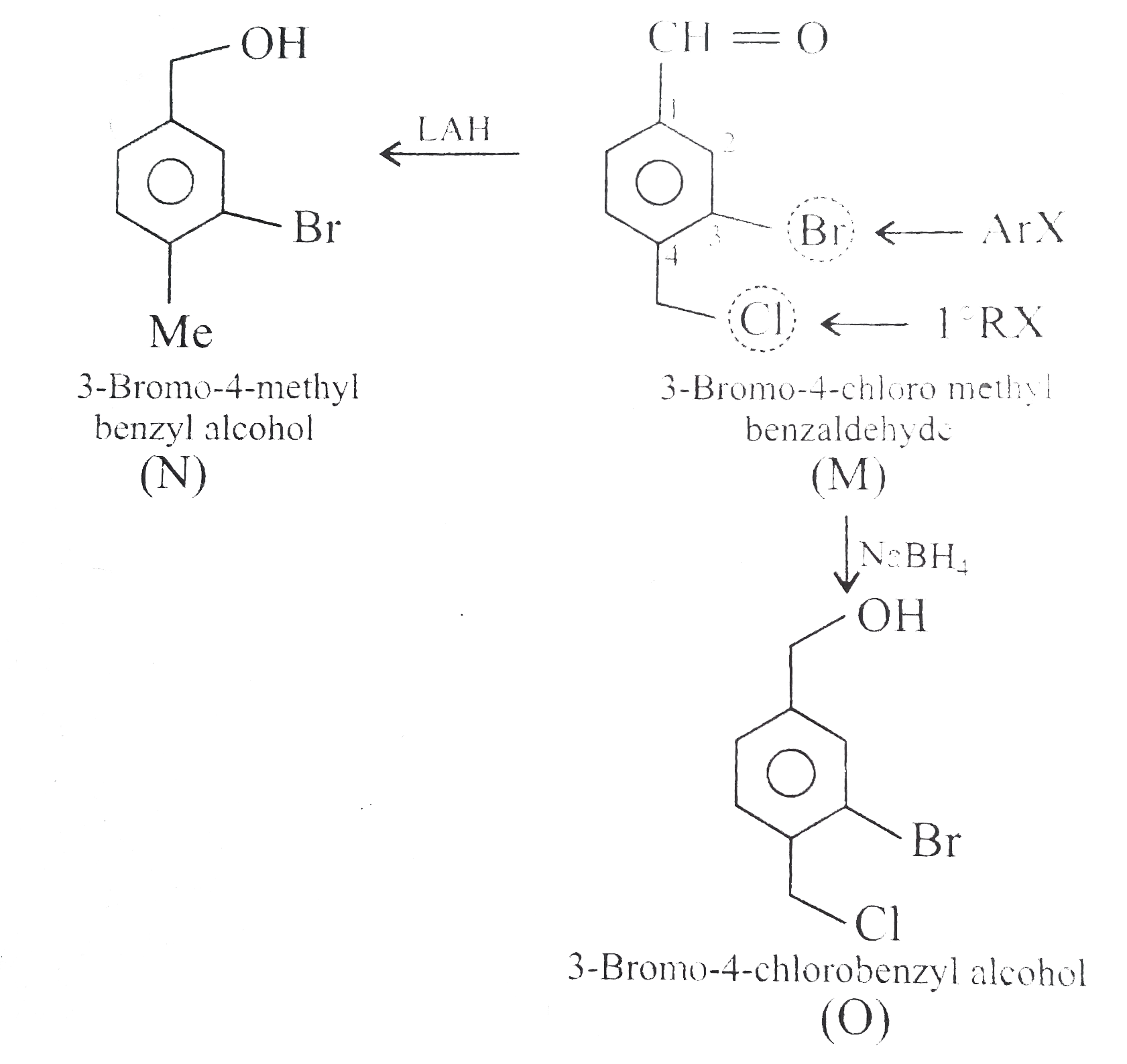 g. `LAH` reduces `R-NO_(2)` (aliphatic nitro group) to `R-NH_(2)`, and `Ar-NO_(2)`(aromatic nitro group) to `Ar-N=N-Ar` (azo group), whereas `NaBH_(4)` does not reduce either of them. 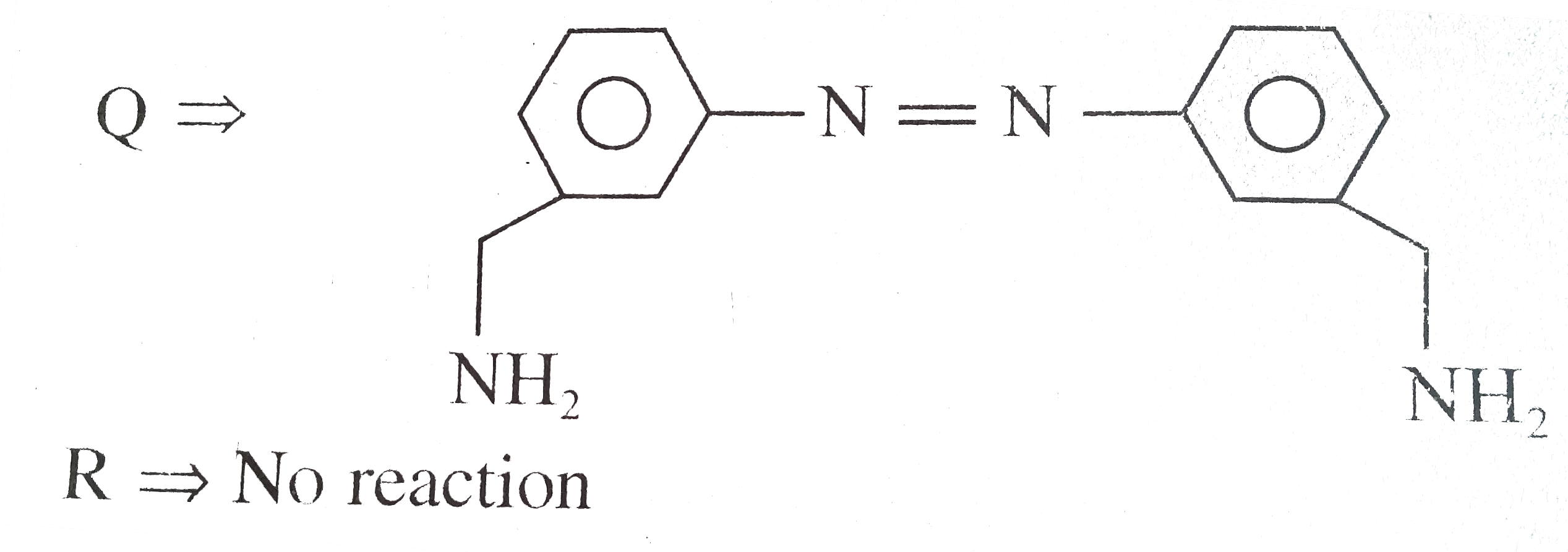 h. Ranet `Ni`, under high temperature and pressure, reduces all the double bonds of the benzene ring.  i. Under the given conditions, all the double bonds of the benzene are REDUCED.  j. It is a Birch reduction and reduces one double bond of the benzene ring to give a compound containing containing isolated diene. 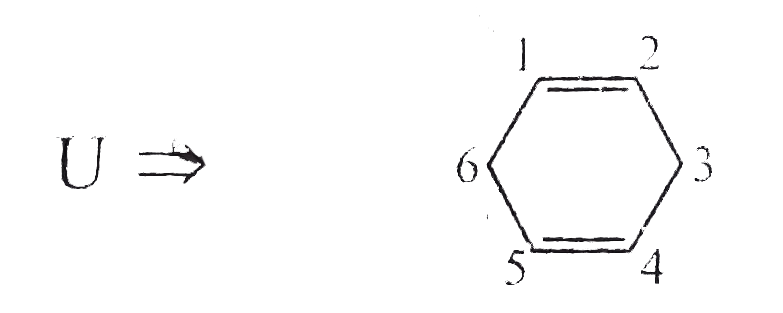 k. Lindlar's catalyst converts `(C=C)` to `(C=C)` bond to give cis-alkene `(syn-addition of H_(2))`, whereas Birch reduction `(Na+liq.NH_(3)+EtOH)` converts `(C-=C)` to `(C=C)` bond to give trans-alkene (anti-addition of `H_(2))` 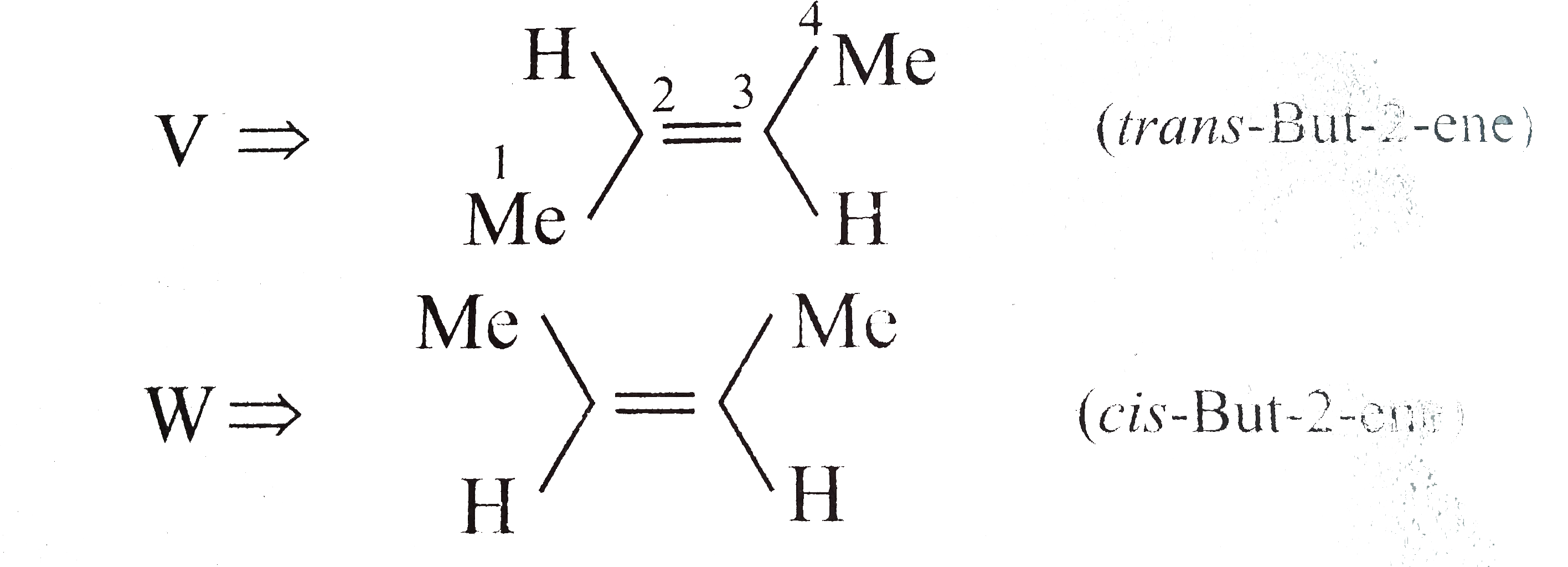
|
|
| 45. |
Give the products of a. p-Benzoquinone and b. PhCH=CH-CHO with i. H_(2)+Pt ii. H_(2)+Pd-C (1 atm) iii. LAH iv. NaBH_(4) v. Zn+HAc vi. NH_(2)NH_(2)+KOH+glycol+Delta vii. HI+P viii. LAH+AlCl_(3) ix. (Me_(2)CHO-)_(3) Al+Me_(2)CHOH x. Li or Na, liq. NH_(3)+EtOH xi. Na+EtOH |
Answer» Solution :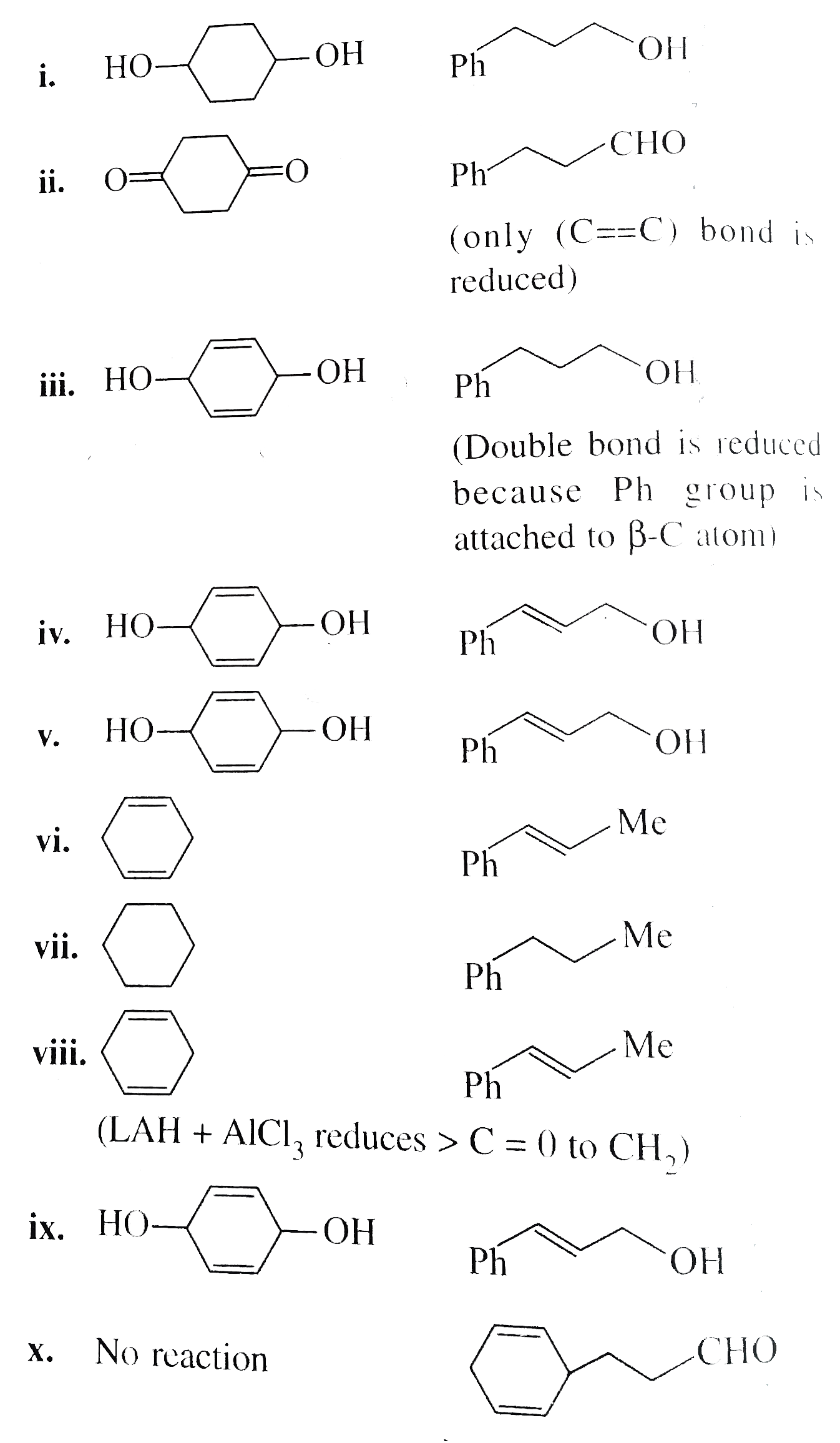 Birch reduction only TERMINAL `(==)` bond with `CHO` group, it is terminal `(=)` bond. (Birch reduction does not reduce ISOLATED double bond and ALSO `gt C=0` group.) 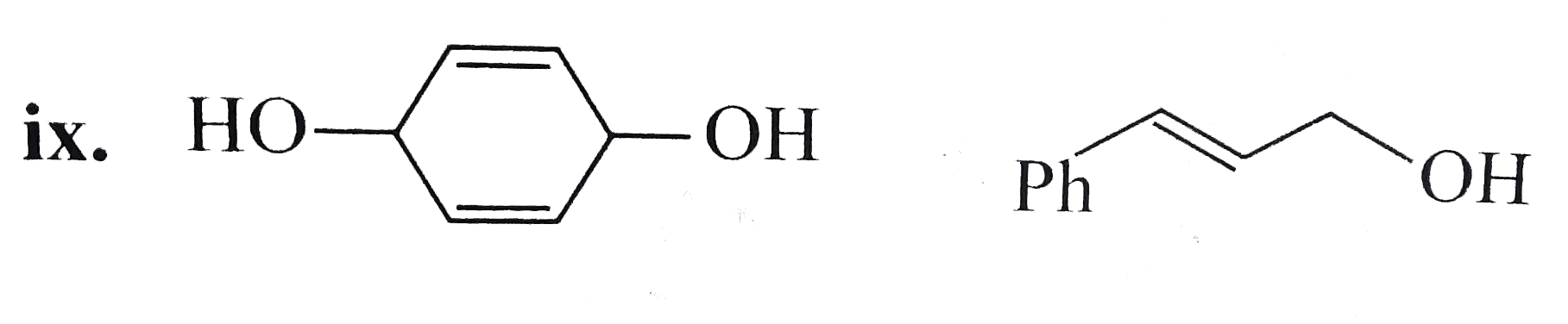
|
|
| 46. |
Glucose and fructose : |
|
Answer» Are ISOMERIC COMPOUNDS |
|
| 47. |
Give the products in the carbylamine reaction of ethylamine. |
|
Answer» SOLUTION :The REACTION is as follows : `CH_(3)-CH_(2)-NH_(2) OVERSET(CHCl_(2)) underset(KOHDelta)to(A) overset(H_(2)O)to(B)+C` `A=CH_(3)-CH_(2)-overset(+)N-=barC B=CH_(3)-CH_(2)-NH_(2)C=HCO_(2)H` |
|
| 48. |
Glucose and cane sugar can't be distinguished by |
|
Answer» FEHLING's solution |
|
| 49. |
Give the products expected(if any) when ethylbenzene reacts under the following conditions. (A) Br_(2) in C Cl_(4) (dark) (B) HNO_(3), H_(2)SO_(4) (C) conc. H_(2)SO_(4) (D) C_(2)H_(5)-overset(O)overset("||")(C)-Cl, AlCl_(3) (1.1 equiv.) then H_(2)O (E) CH_(3)Br, AlCl_(3) (F) Br_(2), FeBr_(3) |
|
Answer» |
|
| 50. |
Glucose and cane sugar can be distinguished by: |
|
Answer» Fehling.s solution |
|