Saved Bookmarks
This section includes 7 InterviewSolutions, each offering curated multiple-choice questions to sharpen your Current Affairs knowledge and support exam preparation. Choose a topic below to get started.
| 1. |
ForthereactionbetweenA andBA+Btoproductthefollowingratedatawereobtained . the reactionis |
|
Answer» Zeroorder forexpt, (1)`1.2xx10^(-2)=k[0.1]^(x)[0.2]^(y) ` `(2)3.6xx10^(-2)=k [ 0.3 ]^(x)[0.2]^(y)` `(3) 4.8xx10^(-2)=k[0.3]^(x)[0.2]^(y)` DividingII by`I,3=[3]^(x)thereforex=1` DividingIII by ,I ,4 `=[2]^(y) thereforey=2` orderofreaction`x+y=1+2=3` |
|
| 3. |
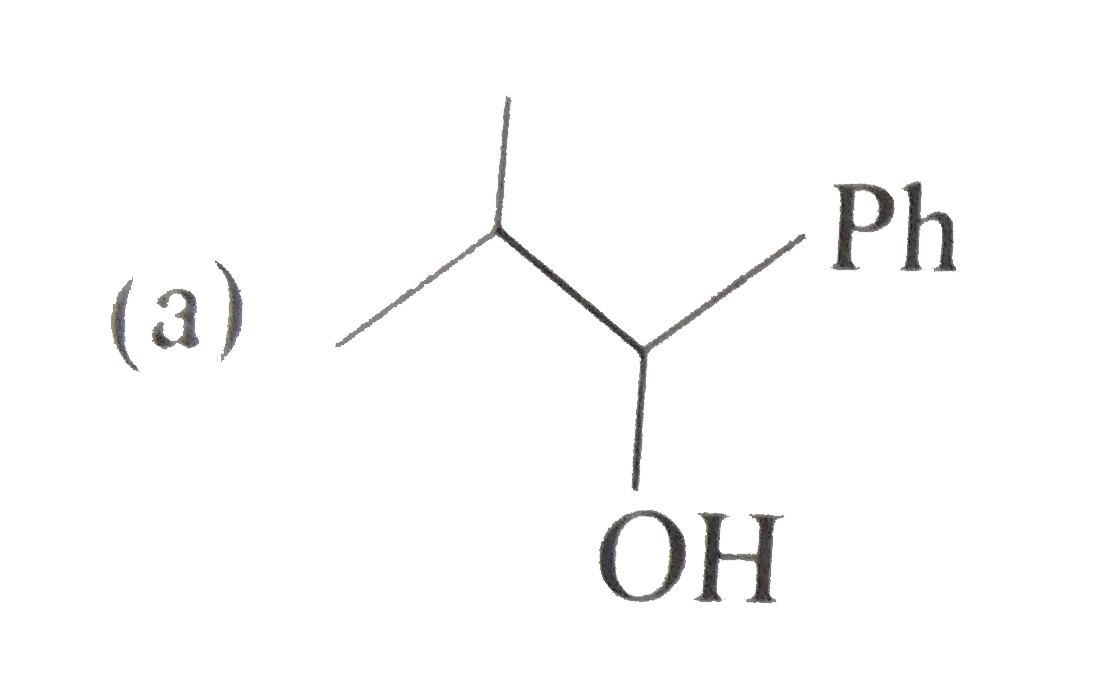
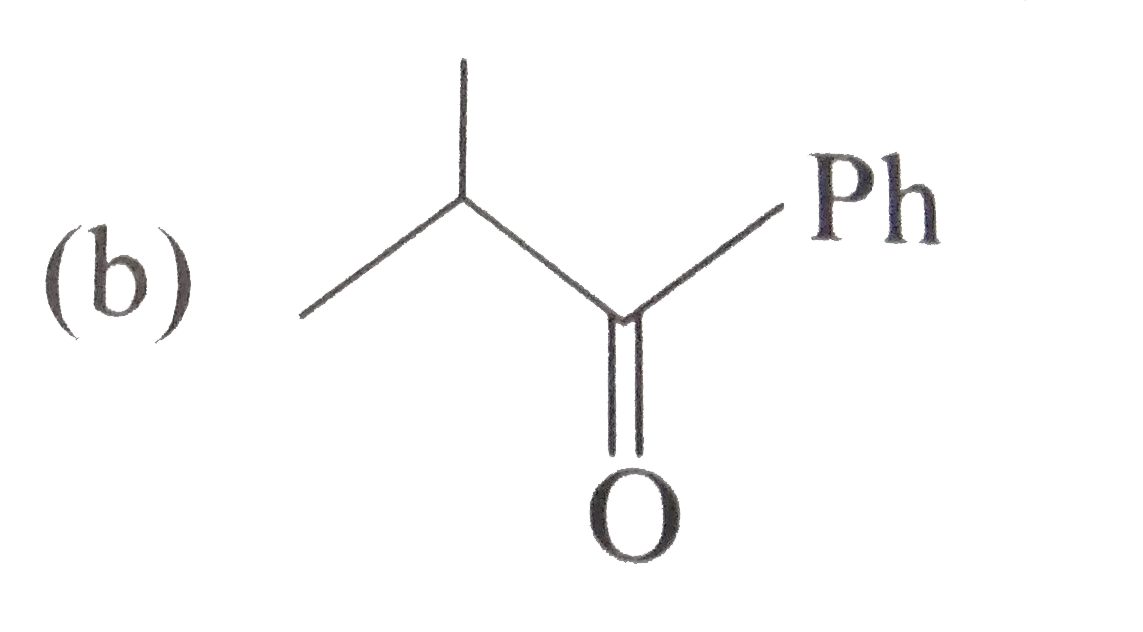
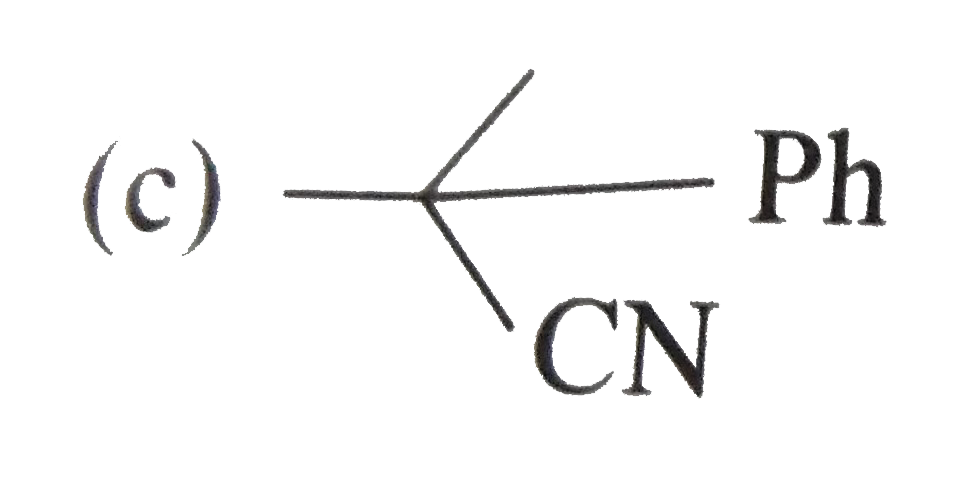
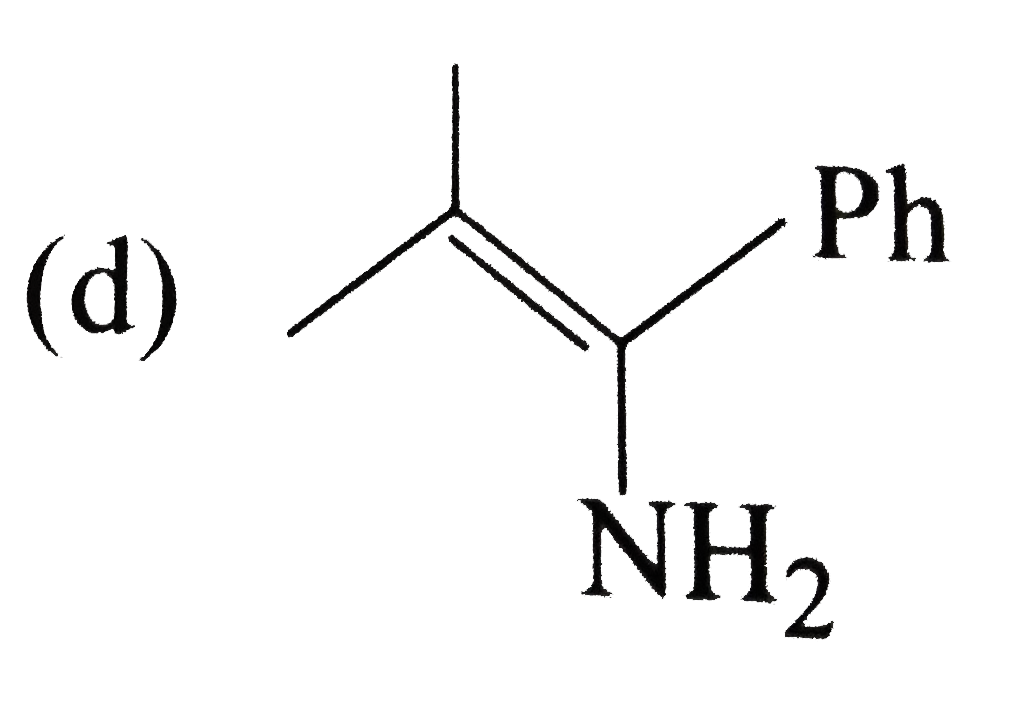
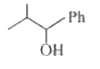
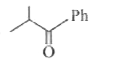
For the reaction below. the structure of the product Q is |
|
Answer»
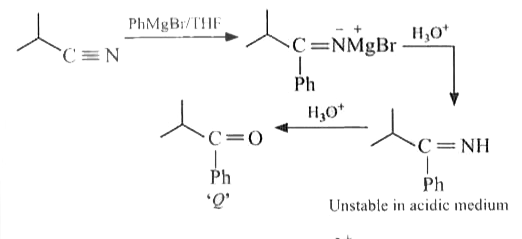
|
|
| 4. |
For the reaction Aunderset(k_(2)"sec"^(-1))overset(K_(1)"sec"^(-1))hArr B following graph is given, k_(1) =4 xx 10^(-@)"sec"^(-1). Which is/are correct statement (s) (In 2=0.7 , In 8/7 =0.14) |
|
Answer» EQUILIBRIUM constant is 4.0 |
|
| 5. |
Forthe reactionbelow , (##MOD_SPJ_CHE_XII_P2_C12_E07_083_Q01.png" width="80%"> The structureof theporduct Q is |
|
Answer»

|
|
| 6. |
For the reaction AtoB,DeltaH=+23kJ//mol and BtoC,DeltaH=-18kJ//mol, the decreasing order of enthalpy of A,B,C follows the order |
|
Answer» A,B,C `H_(B)-H_(A)=+24`. . ..(i) `B to C, DeltaH=18" kJ "mol^(-1)` `H_(C)-H_(B)=-18`. . (ii) `H_(B)-H_(C)=+18`. . (iii) `H_(C)-H_(A)=6`(from (i) and (ii)) `H_(B) GT H_(C) gt H_(A)`. |
|
| 7. |
For the reaction at 500 K NO_(2)(g)+CO(g) to CO_(2)(g)+NO(g) The proposed mechanism is as follows: (i) NO_(2)+NO_(2) to NO+NO_(3) (slow) (ii) NO_(3)+CO to CO_(2)+NO_(2) (fast) What is the rate law for the reaction? |
|
Answer» Solution :Rate LAW : `(dx)/(dt)=K[NO_(2)]^(2)` Thus is because the SLOW step determines the rate of reaction and there are two `NO_(2)` reactant molecules in the slow step of the reaction. |
|
| 8. |
For the reaction Ato products the following dats is given for a particular run time (in): 0""5""15""35 1/([A])(M^(-1)): 1""2""4""8 Determine the order of the reaction. |
|
Answer» |
|
| 9. |
For the reaction, Ato products the rate of reaction is 7.5xx10^(-4)" mole. lit"^(-1)"sec"^(-1). If the concentration of A is 0.5" mole lit"^(-1), the rate constant is |
|
Answer» `1.5xx10^(-3)"sec"^(-1)` |
|
| 10. |
For the reaction at 500 K, "NO"_(2)(g)+"CO"(g)to"CO"_(2)(g)+"NO"(g), the proposed mechanism is as below : (i) "NO"_(2)+"NO"_(2)to"NO"+"NO"_(3)("slow")"""(ii) ""NO"_(3)+"CO"to"CO"_(2)+"NO"_(2)("fast") What is the rate law for the reaction ? |
|
Answer» |
|
| 11. |
For the reaction AtoB , the rate law expression is : Rate = k[A]. Which of the following statements is incorrect? |
|
Answer» The reaction is said to FOLLOW first ORDER kinetics |
|
| 12. |
For the reaction at 800KN_(2)(g)+3H_(2)(g)hArr 2NH_(3)(g)the ratio of K_(p)and K_(c ) is:(R = 0.082 L atm mol^(-1)K^(-1)) |
|
Answer» <P>`2.3xx10^(-4)` or `K_(p)=K_(c )(RT)^(-2)` `=(K_(c ))/((0.082xx800)^(2))` or `(K_(p))/(K_(c ))=2.32xx10^(-4)` |
|
| 13. |
For the reaction at 298K, A_((g))+B_((g))rarrC_((g)) DeltaE=-5 cal and DeltaS =-10cal K^(-1) |
|
Answer» `DeltaG=+2612 CAL` `DeltaG=DeltaH-TDeltaS=-601-298xx(-10)=2379 cal`. |
|
| 14. |
For the reaction at 298 K : CO(g) + (1)/(2) O_(2)(g) rarr CO_(2)(g), Delta H^(@) = -282.8 kJ Standard entropies (in JK^(-1) mol^(-1)) : CO_(2)(g) = 213.6 CO(g) = 197.6 and O_(2)(g) = 205.0 Delta_(r) G^(@) for the reaction (kJ mol^(-1)) |
|
Answer» `-306.02` `= 213.6 - [197.6 + (1)/(2)(205.0)]` `= - 86.5 JK^(-1) MOL^(-1)` `Delta G^(@) = -282.8 xx 10^(3) - 298(-86.5)` `= -257.023 KJ mol^(-1)` |
|
| 15. |
For the reaction at 25^(@)C NH_(3)(g) to (1)/(2)N_(2)(g)+(3)/(2)H_(2)(g),DeltaH^(0)=11.04 kcal Calculate Deltau^(0) of the reaction at the given temperature. |
|
Answer» |
|
| 16. |
For the reaction at 298K, Ag^+(aq)+e^-=Ag(s),E^@=+0.80VSn^(2+)(aq) +2e^- =Sn(s),E^@=-0.14V what is the emf of the cell reprsented as Sn|Sn^(2+)||Ag^+| Ag,if each ion having unit concentration: |
|
Answer» 0.66V |
|
| 17. |
For the reaction Ararr2B , the rate of the reaction rate is ......... |
|
Answer» `+(d[B])/(DT)=2-(d[A])/(dt)` |
|
| 18. |
For the reaction ArarrB+C, DeltaH = +25 kJ mole The activation energy for the reaction is |
|
Answer» `25 kJ//mole` |
|
| 19. |
For the reaction A--->B,the rate law is, rate=K[A].Which of the following statement is incorrect ? |
|
Answer» The reaction follows FIRST order kinetics |
|
| 20. |
For the reaction [Ag(CN)_2]iffAg^(+) + 2CN^(-), the equilibrium constant at 25^@Cis4 xx 10^(-19) .Calculate the silver ion concentration in a solution which was originally 0.1 molar in KCN and 0.03 molar in AgNO_3 . |
| Answer» SOLUTION :`7.5 XX 10^(-18) M` | |
| 21. |
For the reaction, Ag_((aq.))^(+) + Cl_((aq.))^(-) hArr AgCl_((s)) the Deltag^(@) Values for Ag_(aq.)^(@), Cl_(aq.) and AgCl_(s) are +77, -129 and -109 kj mol^(-1), Write the cell representation of above reaction and calculate E^(@) at 298 K, also calculate thelog_(10) K_(sp) of AgCl at 298K. (b) If 6.539 xx 10^(-2)g of metallic zinc is added to 100 mL saturated solution of AgCl, find the value of log_(10).([Zn^(2+)])/([Ag^(+)]^(2)). How many moles of Ag will be precipitated in this reaction ? Given, E_(Zn^(2+)//Zn)^(@) = -0.76 V. |
|
Answer» Solution :`Ag_((s)) + (1)/(2)Cl_(2_(g))rarr AgCl_((s)), DeltaG^(@) = -109kJ` ....(1) `Ag_((s)) rarr Ag_(kJ)^(+) + e, DeltaG^(@) = +77 kJ` ....(2) `(1)/(2)Cl_(2(g))^(-) + e rarr Cl_((aq.))^(-), DeltaG^(@) = -129 kJ` ....(3) By eq. `(1)` - `(2)` - `(3)` `Ag_((aq.))^(+) + Cl_((aq.))^(-) rarr AgCl_((s)), DeltaG^(@) = -109 - 77 + 129 = -57 kJ` `:' -DeltaG^(@) = nE^(@)F` `57 xx 10^(3) = 1 xx E^(@)F` `:. E^(@) = 0.59 V` The CELL is `Ag|AgCl_((s))|Cl_((aq.))^(-)||Ag_((aq.))^(+)|Ag` `E_(cell) = E_(OP_(Ag//AgCl//Cl^(-))) -0.059log.(1)/([Cl^(-)])+E_(RP_(Ag^(+)//Ag)) + 0.059log [Ag^(+)]` at equilibrium `E_(cell) = 0`, thus `0 = E_(Ag//AgCl//Cl^(-))^(@) + E_(RP_(Ag//AgCl//Cl^(-)))^(@) + 0.059 log [Ag^(+)][Cl^(-)]` or `0 = E_(cell)^(@) + 0.059 log K_(SP)` or `E_(cell)^(@) = -0.059 log K_(SP)` or `logK_(SP) = -(E_(cell)^(@))/(0.059) = - (0.59)/(0.059) = -10` `:. K_(SP)AgCl = 1 xx 10^(-10) M^(2)` (b) Let solubility of `AgCl` be `S`, then `S = sqrt(K_(SP)) = sqrt(10^(-10)) = 10^(-5) M` Total milli-mole of `AgCl` in its SATURATED solution of `10^(-5)M` in `100 ML = 10^(-5) xx 10^(2) = 10^(-3)` `:.` Mole of `AgCl` in `100 mL` solution `= 10^(-3) xx 10^(-3) = 10^(-6)` Also mole of `Zn` added `= (6.539 xx 10^(-2))/(65.39) = 10^(-3)` `DeltaG^(@)` for `Ag rarr Ag^(+) + e` is `77 kJ` `DeltaG^(@) = nE^(@)F` `:. E_(Ag//Ag^(+))^(@) = (-77 xx 10^(3))/(1 xx 96500) = - 0.80 V` For the redox change on ADDITION of `Zn` `{:(ZnrarrZn^(2+)+2e,E^(@)=+0.76),(2Ag^(+)+2erarr2Ag,E^(@)=+0.80):}/(Zn+2Ag^(+)rarrZn^(2+)+2Ag,E_(cell)^(@)=0.76+0.80=1.56V)` `E_(cell) = E_(OP_(Zn))^(@) + E_(RP_(Ag))^(@) + (0.059)/(2)log.([Ag^(+)]^(2))/([Zn^(2+)])` At equilibrium, `E_(cell) = 0` `:.= E_(cell)^(@)+(0.059)/(2)log.([Ag^(+)]^(2))/([Zn^(2+)])` `:. log.([Zn^(2+)])/([Ag^(+)]^(@)) = (E_(cell)^(@) xx 2)/(0.059) = (1.56 xx 2)/(0.059) = 52.88` `K_(c)=([Zn^(2+)])/([Ag^(+)]^(2)) = 7.6 xx 10^(52)` Since `K_(c)` is appreciably HIGH and thus nearly whole of the `Ag^(+)` is converted to`Ag`. Thus moles of `Ag` formed `=` moles of `Ag^(+)` in `100 mL` saturated solution `= (10^(-3))/(10^(3)) = 10^(-6)` |
|
| 22. |
For the reaction: [Ag(CN)_2]^- hArrAg^+ + 2CN^- the equilibrium constant K_c at 25^@C is 4.0 xx 10^(-19) then the silver ion concentration in a solution which was originally 0.1 molar in KCN and 0.03 molar inAgNO_3 |
|
Answer» `7.5xx10^(18)` |
|
| 23. |
For the reaction, Ag_2O(s)to2Ag(s)+1/2O_2(g),/_\H,/_\S and T are 40kJ, 100J and 380K respectively Hence /_\Gin KJ is : |
|
Answer» |
|
| 24. |
For the reaction : A(g) rarr B(g) + C(g) Concentration of 'A' varies with time (in sec) as : [A]_(T)=[10=0.2T^(2)]M The time at which rate of formation of 'B' is 1 M/sec. |
| Answer» Answer :D | |
| 25. |
For the reaction A(g) to 2B(g) (d[B])/(dt) = 6xx10^(-4) M sec^(-1) "when" [A] = 0.1 M (d[B])/(dt) = 2.4xx10^(-3) M sec^(-1) when [A] =0.4 M Find the time taken (in seconds) for concentration of A to change from 0.6 M to 0.15 M. |
|
Answer» |
|
| 26. |
For the reaction A_((g)) + B_((g))hArr C_((g)) + D_((g)), the degree of dissociation alpha would be – |
|
Answer» `(sqrtK)/(sqrtK+1)` |
|
| 27. |
For the reaction A(g)+2B(g)rarr2C(g)+3D(g),the value of DeltaE at 27^(@)C is 19.0 kcal. The value of DeltaH for the reaction would be (R=2.0 cal K^(-1) mol^(-1)) |
|
Answer» 20.8 KCAL `DeltaH=19+2xx2xx10^(-3)xx300=20.2 kcal , Deltan=2`. |
|
| 28. |
For the reaction, A(g)+2B(g) to C(g)+D(g) (dx)/(dt)=k[A][B]^(2) Initial pressure of A and B are respectively 0.60 atm and 0.80 atm. At a time when pressure of C is 0.20 atm, rate of the reaction, relative to the initial value is |
|
Answer» `(1)/(6)` |
|
| 29. |
For the reaction AB_((g))hArrA_((g))+B_((g)), Ab is 33% dossociated at a total pressure of P. Therefore, P is related to K_(P) by one of the following options |
|
Answer» <P>`P=K_(p)` `{:("Initial MOLES",1,0,0),("Moles at EQM.",1-0.33,0.33,0.33):}` `P_(A)((0.33)/(1.33))P, P_(B)=((0.33)/(1.33))P` `P_(AB)=((0.66)/(1.33))P` `P_(AB)=(P_(A)xxP_(B))/(P_(AB))` `K_(p)=(0.33xx0.33xxP)/(0.66xx1.33)` `P/K=8impliesP=8K_(p),` |
|
| 30. |
For the reaction aC(s) + CO_2(g) hArr 2CO(g), the partial pressure of CO_2 and CO are 2.0 and4.0 atm respectively at equilibrium. TheK_p for reaction is: |
|
Answer» 0.5 |
|
| 31. |
For the reaction, AB(g)hArr A(g)+B(g), AB" is "33% dissociated at a total pressure of 'p' Therefore, 'p' is related to K_(p) by one of the following options |
|
Answer» <P>`P = 3K_p` |
|
| 32. |
For the reaction AB_(2)(g) rarr AB(g) + B(g), the initial pressure of AB_(2)(g)was 6 atm and at equilibrium, total pressure was found to be 8 atm at 300 K. The equilibrium constant of the reaction at 300 K is…… |
|
Answer» Solution :`AB_(2)(G) rarr AB(g) + B(g)` Given P = 6 atm P + P' = 8 atm `K_(p) = 2xx2/4 = 1` |
|
| 33. |
For the reaction :A(aq) to 2B(aq) +C(aq), the rate is 2.4xx10^(-3)"mol"L^(-1)s^(-1) on 20% reaction of A and the rate is 9.6xx10^(-5)"mol" L^(-1)s^(-1) on 84% reaction of A the order of reaction is : |
|
Answer» |
|
| 34. |
For the reaction : aA+bB to Product (dx)/(dt)=k[A]^(a)[B]^(b) If concentration of A is doubled, rate becomes four times. If concentration of B is made four times, rate becomes doubled . Hence |
|
Answer» `-(d[A])/(DT)=-(d[B])/(dt)` |
|
| 35. |
For the reactionA to B. The rate of reaction becomes three times when the concentration of A is increased by nine times. What is the order of the reaction? |
| Answer» SOLUTION :ORDER of the REACTION`=(1)/(2)`. | |
| 36. |
For the reaction AtoB, the rate law expression is : rate = K[A]. Which of the following statements is incorrect ? |
|
Answer» The REACTION FOLLOWS first ORDER kinetics |
|
| 37. |
For the reaction , A to B , k_1=10^8 e^(-6000/"8.34 T") and P to Q , k_2=10^10 e^(-8000/"8.34T") The temperature at which k_1=k_2 is |
|
Answer» 386 K `10^8 e^(-6000/"8.34 T")=10^10 e^(-8000/"8.34 T")` `10^8/10^10 = e^((-2000)/(8.34 T))` ln `10^(-2) = (-2000)/(8.34 T) RARR -ln 100=(-2000)/(8.34 T)` `rArr` 2.303 log 100= `2000/(8.34T) rArr T= 2000/(2.303xx2xx8.34)`= 52K |
|
| 38. |
For the reaction A to B, following curves represent reaction The correct curves are |
|
Answer» `1, 2` only |
|
| 39. |
For the reaction : A rarrProduct, the order of reaction is equal to : |
|
Answer» `("LN"(r_(0))_(1)+"ln"(r_(0))_(2))/("ln"[A_(0)]_(1)+"ln"[A_(0)]_(2))` |
|
| 40. |
For the reaction A rarr C, it is found that the rate of the reaction quadruples when the concentration of A is doubled. The rate for the reaction is Rate = [A]^(n). The value of n is _________ |
|
Answer» 1 |
|
| 41. |
For the reaction , A overset(k)(to)B+C Following data are obtained What will be the rate of reaction (in mol L^(-1) min^(-1), when conc of 'A' is 3M. |
| Answer» Answer :D | |
| 42. |
For the reaction, A hArr B ,deltaH for the reaction is -33.0 kJ/mol. Calculate (i) Equilibrium constant K_c for the reaction at 300 K (ii) If E_a (f) and E_a(r ) in the ratio 20:31 , calculate E_a(f) at 300 K . Assuming pre-exponential factor same for forward and reverse reaction. |
|
Answer» `E_(a(R ))=+93Kj` |
|
| 43. |
For the reaction A overset(K_(1))underset(K_(2))(hArr)B, if 'a' is the initial concentration of A and n is the number of moles of A reacting if initially no B was present then : |
|
Answer» `(DX)/(DT)=[K_(1)(a-x)-K_(2)x]` initially Hence choice `(A)` is correct. If `x_(e)=` equilibrium concentration of B, where net rate `=0` `K_(1)(a-x_(e ))-K_(2)x_(e)=0`………..`(2)` Hence choice (B) is correct. From EQUATION `(2)` , `K_(2)=(K_(1)(a-x_(e )))/(x_(e ))` Substituting the value of `K_(2)` in equation `(1)`, we get `(dx)/(dt)=K_(1)(a-x)-K_(1)((a-x_(e ))x)/(x_(e ))` `=K_(1)((x_(e )-x)a)/(x_(e ))` `IMPLIES(dx)/((x_(e )-x))=(a)/(x_(e ))K_(1)dt` Hence by integrating and further calculation, we get `(K_(1)+K_(2))=K_(1)(a)/(x_(e ))=(1)/(t)ln.(x_(e ))/((x_(e )-x))` |
|
| 44. |
For the reaction , A hArrB : K_c =2,B hArrC : K_c =4,C hArrD : K_c =6 K_c for the reaction A hArr D is : |
|
Answer» `(2div4div6)` |
|
| 45. |
For the reaction A+Bto Products, the following initial rates were obtained at various given initial concentrations. ltrbgt Write rate law and find the rate constant for the above reaction. |
|
Answer» Solution :The RATE law equation may be expressed as: Rate = `k[A]^(p)[B]^(q)` ltrbgt COMPARING experiments, 1 and 2, `(Rate)_(1)=k[0.1]^(p)[0.1]^(q)=0.05` `(Rate)_(2) = k[0.2]^(p)[0.1]^(q)=0.10` Dividing eqn. (ii) by eqn. (i), `(Rate)_(2)/(Rate)_(1) = (k[0.2]^(p)[0.1]^(q))/(k[0.1]^(p)[0.1]^(q)) = 0.10/0.05 = 2:[2]^(p) = [2]^(1)` or p=1 Comparing experiments 1 and 3, `(Rate_(1)) = k[0.1]^(p)[0.1]^(q)=0.05` `(Rate)_(3) = k[0.1]^(p)[0.2]^(q)=0.05` Dividing eqn. (iii) by eqn. (i), `(Rate_(3))/(Rate_(1)) = (k[0.1]^(p)[0.2]^(q))/(k[0.1]^(p)[0.1]^(q)) = 0.05/0.05 = 1 , [2]^(1) = 1=[2]^(0) or q=0` Rate law for the reaction, rate = `k[A]^(1)[B]^(0)` Rate constant (k) for the reaction may be CALCULATED as follows: `k[0.1]^(p)[0.1]^(q)=0.05 , k[0.1]^(1)[0.1]^(0)=0.05` , `k=(0.05)/0.1=0.5` |
|
| 46. |
For the reaction A+Bto products, it is found that order of A is 1 and order of B is 1//2. When concentrations of both A and B are increased four times the rate will increase by a factor |
|
Answer» 6 |
|
| 47. |
For the reaction A+Bto product ,the rate law is given by ,r=k[A]^((1)/(2))[B]^(2).What is the order of the reaction ? |
|
Answer» SOLUTION :(overall ORDER of REACTION )=(with respect to all reaction ) `=(1)/(2)+2=2.5` |
|
| 48. |
For the reaction, A+Brarr"product" If concentration of A is doubled, rate increases 4 times. If concentrations of A and B both are doubled, rate increases 8 times . The differential rate equation of the reaction will be |
|
Answer» `(DC)/(dt)-kC_(A)xxC_(B)` On doubling the concentration of A, rate increases 4 times , `4r=[2A]^xx[B]^Y` From Eqs. (i) and (ii), `(1)/(4)=((1)/(2))^(x)` `:.""x=2` `:.` Order with respect to A is 2. If concentration of A and B both are doubled, `8R=[2A]^x[2B]^y` From Eqs. (i) and (ii), we get `(1)/(8)=(1)/(2)^(x).(1)/(2)^(y)""[becausex=2]` `(1)/(8)=(1)/(4xx2^(y))rArr2^(y)=2` `:.""y=1` Hence, the DIFFERENTIAL rate equation is `rprop[A]^(2)[B]^(1)""or(dc)/(dt)=kC_(A)^(2)xxC_(B)` `[Where, C_(A)andC_(B)=concentrations " of " A andB]` |
|
| 49. |
For the reaction a+brArrc+d, initially concentrations of a and b are equal and at equilibrium the concentration of a . What will be the equilibrium constant for the reaction ? |
|
Answer» 2 |
|
| 50. |
For the reaction ,A+BrarrC+D. The variation of the concentration of the products is given by the curve: |
|
Answer» X |
|