

Saved Bookmarks
This section includes 7 InterviewSolutions, each offering curated multiple-choice questions to sharpen your Current Affairs knowledge and support exam preparation. Choose a topic below to get started.
| 1. |
For a hypothetical reactionA + B toproducts The rate law is , R = R[A]^(@) [B] , The order of reaction is |
|
Answer» 1 |
|
| 2. |
For a hypothetical reaction, A+3BrarrP""DeltaH=-ex Kj/ "mole" of A&Mrarr2Q+R"" DeltaH=+xx kJ/ "mole" of M These reactions are carried simultaneously in a reactor such that temperature is not changing If rate of disppearance of B isy sec^(-1) then rate of formation (in Msec^(-1)) of Q is : |
|
Answer» `(2)/(3)y` |
|
| 3. |
For a hypothetic reaction ArarrB, the activation energies for forward and backward reactions are 19 kJ/mole and 9 kJ/mole respectively. The heat of reaction is |
| Answer» Solution :`DeltaH=E_(a)` for FORWARD REACTION `-E_(a)` for backward reaction = 19-9=10 kJ. | |
| 4. |
For a hypotherical elementary reaction where k_1/k_2=1/2 Initailly only 2 moles of A are present. The total number of moles A,B and C at the end of 50% reaction are : |
|
Answer» 2 |
|
| 5. |
For a hypotherical elementary reaction where k_1/k_2=1/2 Initailly only 2 moles of A are present. Number of moles of B are: |
|
Answer» 2 |
|
| 6. |
For a hypotherical elementary reaction where k_1/k_2=1/2 Initailly only 2 moles of A are present. The sum of mole of (B) are ( C) is : |
|
Answer» 2 |
|
| 7. |
For a hcp lattice, the edge length is equal to |
|
Answer» `2sqrt(2)r ` |
|
| 8. |
For a H_2 like gas (at 298 K) having T_B=108 k, select the only correct option- |
|
Answer» (III)(iii)(P)<BR>(IV)(iii)(Q) `implies P(V_m-b)=RT implies T_C=8/24(a/(bR))=8/27xx108=32 k` `implies Z=1+(Pb)/(RT)` `because Z gt 1 implies` Repulsive tendencies will dominate. |
|
| 9. |
For a gives compound There are 3 benzenoid isomer of 'X' P, Q and R for which following observation are made : (a) P is a monosubstituted benzene derivative which can give observation are made : (b) Q give position iodoform test. (c) R gives silver mirror with Tollen's reagent. Numberof positive Q : |
|
Answer» 1 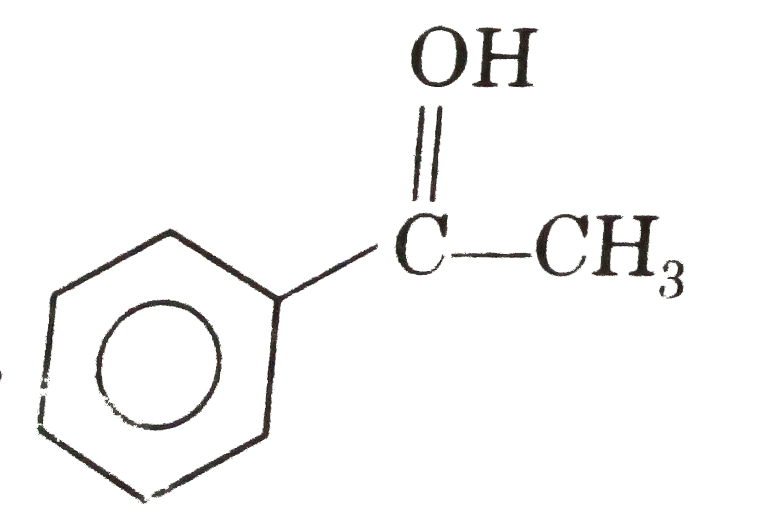
|
|
| 10. |
For a gives compound There are 3 benzenoid isomer of 'X' P, Q and R for which following observation are made : (a) P is a monosubstituted benzene derivative which can give observation are made : (b) Q give position iodoform test. (c) R gives silver mirror with Tollen's reagent. Number of possible P : |
|
Answer» 1 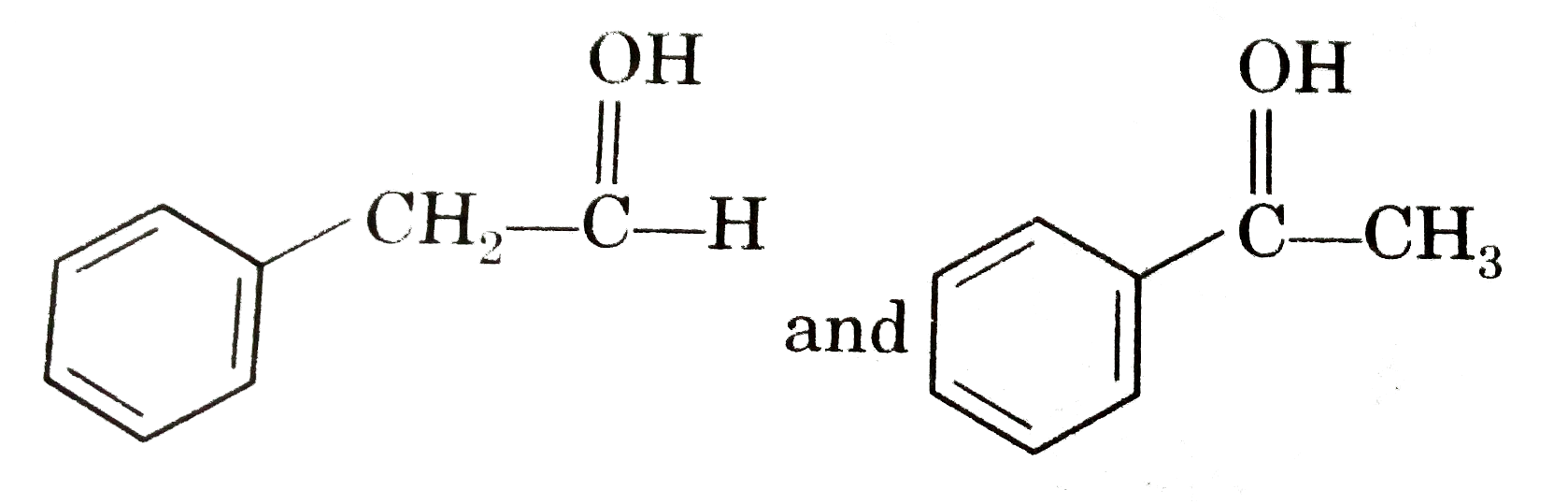
|
|
| 11. |
For a given solution pH=6.9 at 60^(@)C where K_W=10^(-12). The solution is :- |
|
Answer» ACIDIC |
|
| 12. |
For a given sample of ideal gas |
|
Answer» <P>`V PROP ( T )/( p )` |
|
| 13. |
For a given redox change, E_(RP_2)^@ +E_(OP_1)^@ is equal to ……… where 1 is oxidised and 2 is reduced : |
|
Answer» Coulomb |
|
| 14. |
For a given reaction rate = K (A)^1 (B)^(2//3), the unit of rate constant K can be given as |
|
Answer» |
|
| 15. |
For a given reaction .of first order, it takes 20 minute for the concentration to drop from 1.0 M litre^-1 to 0.6 M litre^-1time required for the concentration to drop from 0.6 M litre^-1to 0.36 M litre^-1will be: |
|
Answer» More than 20 minute |
|
| 16. |
For a given reaction of first order, it takes 20 min, for the concentration to drop from 1 ML^(-1) to 0.6 ML^(-1). The time required for the momentum to drop from 0.6ML^(-1) to 0.36ML^(-1) will be |
|
Answer» ` gt 20` MIN |
|
| 17. |
For a given reaction of first order, it takes 20 min for the concentration to drop from 1.0M to 0.6. The time required for the concentration to drop from 0.6M to 0.36M will be |
|
Answer» more than 20 minutes |
|
| 18. |
For a given reaction half life period was found to be directly proportional to the initial concentration of the reactant. The order is |
|
Answer» zero If `t_(1//2) prop a ` then `1 - n = 1` or n = 0 |
|
| 19. |
For a given reaction half life period was found to be directly proportional to the initial concentration of the reactant. The order is: |
|
Answer» Zero |
|
| 20. |
For a given reaction, DeltaH=35.5 kJ mol^(-1) and DeltaS=83.6 JK^(-1) mol^(-1). The reaction is spontaneous at : (Assume that DeltaH and DeltaS do not very with temperature) |
|
Answer» `T gt 425 K` for equilibrium `DeltaG=0` `DeltaH-TDeltaS` `T_(eq).=(DeltaH)/(DELTAS)=(35.5xx1000)/(83.6)=425 K` Since the reaction is endothermic it will be spontaneous at `T gt 425 K`. |
|
| 21. |
For a given reaction, Ararr"Product, rate is" 1xx10^(-4)"M s^(-1) when [A] = 0.01 M and rate is 1.41xx10^(-4)"M s"^(-1) when[A] = 0.02 M. Hence, rate law is : |
|
Answer» `-(d[A])/(DT)=K[A]^(2)` |
|
| 22. |
For a given reaction 3 A + B to C + D the rate of reaction can be represented by |
|
Answer» `-(1)/(3) (d[A])/(DT) = (-d[B])/(dt) = (+d[C])/(dt) = (+d[D])/(dt)` |
|
| 23. |
For a given reaction ArarrB , then time required for 75% disappearance ofAis twice that required for 50% disappearance of A . The order of the reaction with respect to A is - |
|
Answer» 0 |
|
| 24. |
For a given one mole of ideal gas kept at 6.5 atm ina container of capacity 2.463 litre. The Avogadro proportionality constant for the hypothesis is (see figure) |
|
Answer» 0.406 |
|
| 25. |
For a given period, the most non metallic p-block element belongs to group: |
|
Answer» 1. 13 |
|
| 26. |
For a given mass of gas, if pressure is reduced to half and temperature is increased. two times, then the volume would become |
| Answer» Answer :D | |
| 27. |
For a given mass of a gas , if pressure is reduced to half and its temperature is doubled, then volume V will become : |
|
Answer» 4V `V _(1) = V, V_(2) = ? ` `( p_(1) V_(1))/( T_(1)) = ( p_(2)V_(2))/(T_(2))` or `V_(2) = ( p _(1) V_(1) T_(2))/(p_(2) T_(1))` `= ( p XX V xx 2T)/( p //2 xx T ) = 4V` |
|
| 28. |
For a given mass of a gas, if pressure increases : |
|
Answer» VOLUME and TEMPERATURE remain constant |
|
| 29. |
For a given mass of a gas at constant temperature. If the volume V becomes four times, the pressure p will become : |
|
Answer» 4p If volume becomes 4 times, pressure will BECOME `p //4` so that pV is constant |
|
| 30. |
For a given halogen atom, the reactivity is maximum for : |
| Answer» Answer :D | |
| 31. |
For a given exothermic reaction , K_(p) and k'_(p) are the equilibrium constants at temperatures T_(1) and T_(2) respectively. Assuming that heat of reaction is constant in temperaturerange between T_(1) and T_(2) , it is readily observed that |
|
Answer» `K_(p)=K'_(p)` |
|
| 32. |
For a given complex [Co(NH_3)_5 NO_2 ] Cl_2. Write its IUPAC name and Linkage isomer. |
|
Answer» SOLUTION :pentaamminenitrito -N- COBALT(III) chloride. `[CO(NH_3)_5 (ONO)]Cl_2` |
|
| 33. |
For a given cell reaction , Cr +3H_2O +OCI^- rarrCr^(3+)+3CI^- 6OH^-, the species undergoing reduction is : |
| Answer» Answer :C | |
| 34. |
For a general substance A the phase diagram is represented as shown. Identify the option (s) which is/are correct. |
|
Answer» Triple point of the SUBSTANCE is 200 K and 3.8 MM of Hg. |
|
| 35. |
For a given alkyl group, the boiling point are in the order: |
|
Answer» `RI lt RBT lt RCI` |
|
| 36. |
For a given alcohol the order of reactivity with halogen acid is |
|
Answer» HI `GT` HCL `gt` HBR |
|
| 37. |
For a general reaction AtoB. plot of concentrating of A vs time is given in fig. Answer the following questions on the basis of this graph. a) What is the order of the reaction? b) What is the slope of the curve? c) What are the units of rate constant? |
|
Answer» SOLUTION :a) Reaction is of zero order. b) Slope of curve = `-k` C) UNITS of RATE constant = mol `L^(-1)s^(-1)` |
|
| 38. |
For a general reaction given below, the value of solubility product can be given us {:(A_(x)B_(y),=xA^(+y),+yB^(-x)),(a,0,0),(a-s,xs,ys):} K_(sp)=(xs)^(x).(ys)^(y) (or) K_(sp)=x^(x)y^(y) (S)^(x+y) Solubility product gives us not only an idea about the solubility of an electrolyte in a solvent but also helps in explaining concept of precipitation and calculation [H^(+)] ion, [OH^(-)] ion. It is also useful in qualitative analysis for the idetification and separation of basic radicals What is the molar solubility of Cu(OH)_(2), in 1.0 M NH_(3) if the deep blue complex ion [Cu(NH_(3))_(4)]^(2+) is formed. The K_(sp), of Cu(OH)_(2), is 1.6xx 10^(-19) and K_(3), of[Cu(NH_(3))_(4) is 1.1 xx 10^(13) |
|
Answer» `7.1xx10^(-4)`M |
|
| 39. |
For a general nth order reaction A to P with initial concentration of the reactant 'a' and rate constant 'k', derive expression for time for 75% completion of the reaction in terms of a, n and k. |
|
Answer» Solution :For REACTIONS of 2nd order, `k=(1)/(t)[(1)/(C_(t))-(1)/(C_(0))]` For reactions of 3RD order, `k=(1)/(2t)[(1)/(C_(t)^(2))-(1)/(C_(0)^(2))]` For reaction of nth order, `t=(1)/((n-1)k)[(1)/(C_(t)^(n-1))-(1)/(C_(0)^(n-1))]` When `75%` of the reaction is COMPLETE, `C_(t)=25%" or "C_(0)=(1)/(4)C_(0)` REPLACING `C_(0)` by a, `t_(75%)=(1)/((n-1)k)[(1)/((a//4)^(n-1))-(1)/(a^(n-1))]=(1)/((n-1)k)[(4^(n-1))/(a^(n-1))-(1)/(a^(n-1))]=(1)/((n-1)k)[(2^(2n-2)-1)/(a^(n-1))]` |
|
| 40. |
For a general chemical change 2A+3B rarrProducts, the rates with respect to A is r_1 and that with respect toB is r_2 The rates r_1 and r_2are related as |
|
Answer» `3r_1=2r_2` `-1/2. (d[A])/(dt)=+1/3.(d[B])/(dt)` GIVEN: `(d[A])/(dt)=r_1, (d[B])/(dt)=r_2` or `1/2r_1=1/3r_2or 3r_1=2r_2` |
|
| 41. |
For a gaseous reaction the unit of rate of reaction is |
|
Answer» L ATM s 1 |
|
| 42. |
For a gaseous reaction the unit of rate of reactions is |
|
Answer» L ATM `s^(-1)` |
|
| 43. |
For a general gaseous reaction of the type R to P , if the initial concentration of R is doubled, half life of the reaction is also doubled, the order of that reaction is |
| Answer» ANSWER :A | |
| 44. |
For a gaseous reaction, the rate expression is k[A][B]. If the volume of the reaction vessel is reduced to 1//4^(th) of the initial volume, the reaction rate, relating to original rate will be... . .. times |
|
Answer» 10 |
|
| 45. |
for a gaseous reaction, the unit of rate of reaction are |
|
Answer» L atm `s^(-1)` |
|
| 46. |
For a gaseous reaction the rate =K[A][B]. The volume of the vessel containing the gas is suddenly reduced to 1/4 th of the initial volume. The rate of reaction relative to initial rate would be |
|
Answer» `1/16` |
|
| 47. |
For a gaseous reaction at 300K, DeltaH - DeltaU = - 4.98 kJ assuming that R=8.3 JK^(-1) mol^(-1), Deltan_((g)) is |
|
Answer» 1 `DeltanRT=DeltaH-DeltaE` `Deltanxx8.3xx300=-4.98xx10^(3)` `Deltan=-2`. |
|
| 48. |
For a gaseous reaction, A(g)+3B(g)rarr3C(g)+3D(g) triangleU is 17 kcal at 27^@C. Assuming R=2cal K^-1 mol^-1, the value of triangleH for the above reaction will be: |
|
Answer» 15.8 kcal |
|
| 49. |
For a gaseous reaction : 2A(g)rarrB(g)+2C(g), the pressure changes from 10 atm to 15 atm in 10 min. Order of the reaction may be : |
|
Answer» 1 |
|
| 50. |
For a gaseous reaction, 2A(g) + B(g) to C(g) , DeltaH =- 30 "Kcal"//"mole at"300K If the reaction follows the rate law (d[C])/(dt) =4xx10^(-3)[A]^(2) [B] M //min and initially concentration ofB "is" [B] = 10^(-3) M and concentration of A is [A] =1 M, then calculate the rate at which heat will be liberatedper minute initially if reaction occurs in a rigid container of volume 10 litres. [Express answer in 10^(-1) "cal/min"] ["Use": R =2 "cal"// "mol" K ] |
|
Answer» |
|