Saved Bookmarks
This section includes 7 InterviewSolutions, each offering curated multiple-choice questions to sharpen your Current Affairs knowledge and support exam preparation. Choose a topic below to get started.
| 1. |
Following are a group of compounds showing acidic behaviour: Give the IUPAC names of these compounds. |
|
Answer» `(##ANE_PKE_CHE_XII_C12_E02_006_S01##)`-PHENOL `CH_3COO+F49H`-ETHANOIC acid `CH_3-CH_2-COOH`-PROPANOIC acid |
|
| 2. |
Following are a group of compounds showing acidic behaviour: Formic acid is stronger than acetic acid. Why? |
|
Answer» |
|
| 3. |
Following acid can't not from alpha-amino acid |
|
Answer» succinic acid |
|
| 4. |
Following 2^(@) amine has chiral carbon as indicated H-underset(CH_(3))underset(|)overset(CH_(3))overset(|)(C)-NH_(2). This on reaction with NaNO_(2)+ HCl, from |
|
Answer» `1^(@)` alcohol with REACTION of CONFIGURATION |
|
| 5. |
Following are a group of compounds showing acidic behaviour:does not contain carboxylic group, still it is acidic. Why? |
|
Answer» |
|
| 6. |
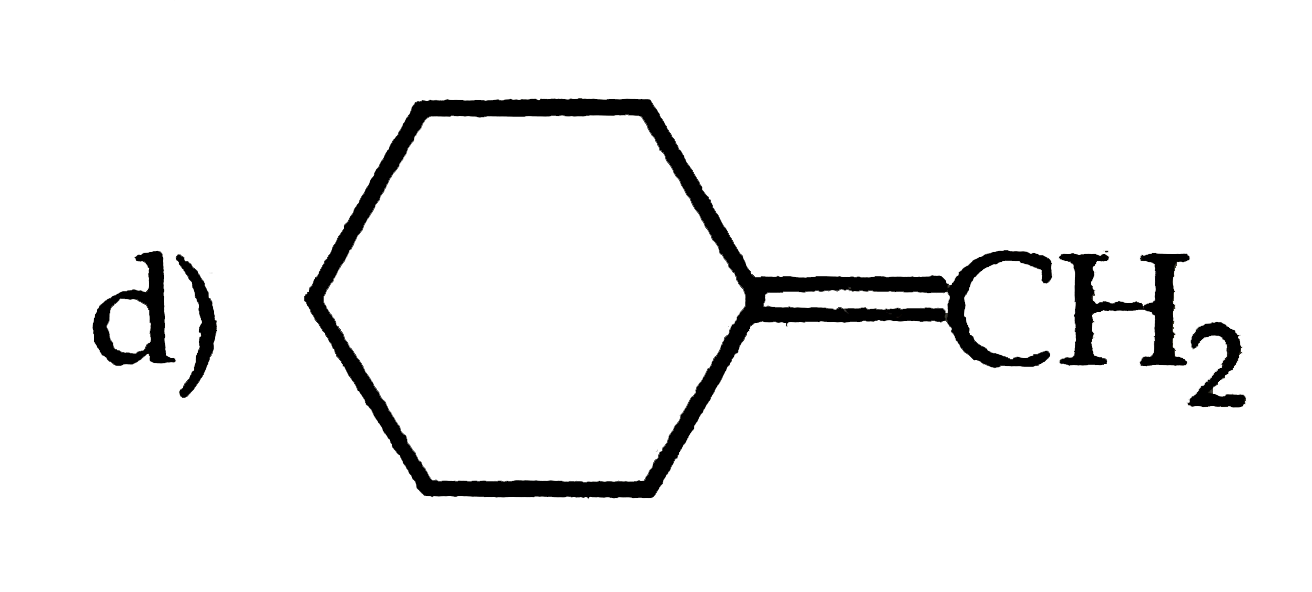
Following alkene will give same product by any method out of hydration, hydroboration - oxidation : |
|
Answer» `CH_3CH=CH_2` |
|
| 7. |
Following 1^(0)aminehaschircal centreCH_(3)CHNH_(2)C_(2)H This on reactionswith NaNO_(2) + HCl froms |
|
Answer» `1^(0)` alcohol with RETENTION of configuartion |
|
| 8. |
Fog is colloidal solution of : |
| Answer» Solution :Liquid in gas | |
| 9. |
Fog is colloidal solution of ........... |
|
Answer» solid in GAS DISPERSED phase-liquid |
|
| 10. |
Fog is colloidal solution of - |
|
Answer» LIQUID in gas |
|
| 11. |
Fog is a _______ colloidal solution. |
|
Answer» GAS in LIQUID |
|
| 12. |
Fog is an example of what? |
|
Answer» DISPERSION of LIQUID in GAS |
|
| 14. |
Fog is colloidal solution of |
|
Answer» LIQUID DISPERSED in gas |
|
| 15. |
Fog is an example of a colloid system of: |
|
Answer» LIQUID PARTICLES DISPERSED in GAS |
|
| 17. |
Fog is an example of colloidal system of : |
|
Answer» Liquid DISPERSED in gas |
|
| 18. |
Fog is a ......... type of colloidal sol. |
|
Answer» solid-gas |
|
| 19. |
For the reaction : 3CIO^(-) rarr CIO_(3)^(-) +2CI^(-) various steps are : CIO^(-) +CIO^(-) rarr CIO_(2)^(-)+CI^(-) (slow ) CIO_(2)^(-)+ CIO^(-) rarr CIO_(3)^(-)+CI^(-) (fast ) the order of the reaction is : |
|
Answer» 1 |
|
| 20. |
Fog is a colloidal solution of |
|
Answer» SMOKE |
|
| 22. |
flying bird isan example of |
|
Answer» CLOSED system |
|
| 23. |
Flux is used to remove |
|
Answer» ACIDIC IMPURITIES |
|
| 24. |
Flux is added to |
|
Answer» OBTAIN PURE METAL |
|
| 25. |
Flux is a substances which is used to convert |
|
Answer» MINERAL into silicate |
|
| 26. |
Flux combines with slag to form gangue.True or False |
| Answer» SOLUTION :FLUX COMBINES with gangue to FORM SLAG. | |
| 28. |
Flux. |
| Answer» Solution :A flux is a chemical substance which is added to the CONCENTRATED ore during smelting in ORDER to remove the GANGUE or IMPURITIES by chemical reaction forming a fusible mass called slag. | |
| 29. |
Flurobenzene (C_(6)H_(5)F) can be synthesized in the laboratory |
|
Answer» By heating phenol with HF and KF 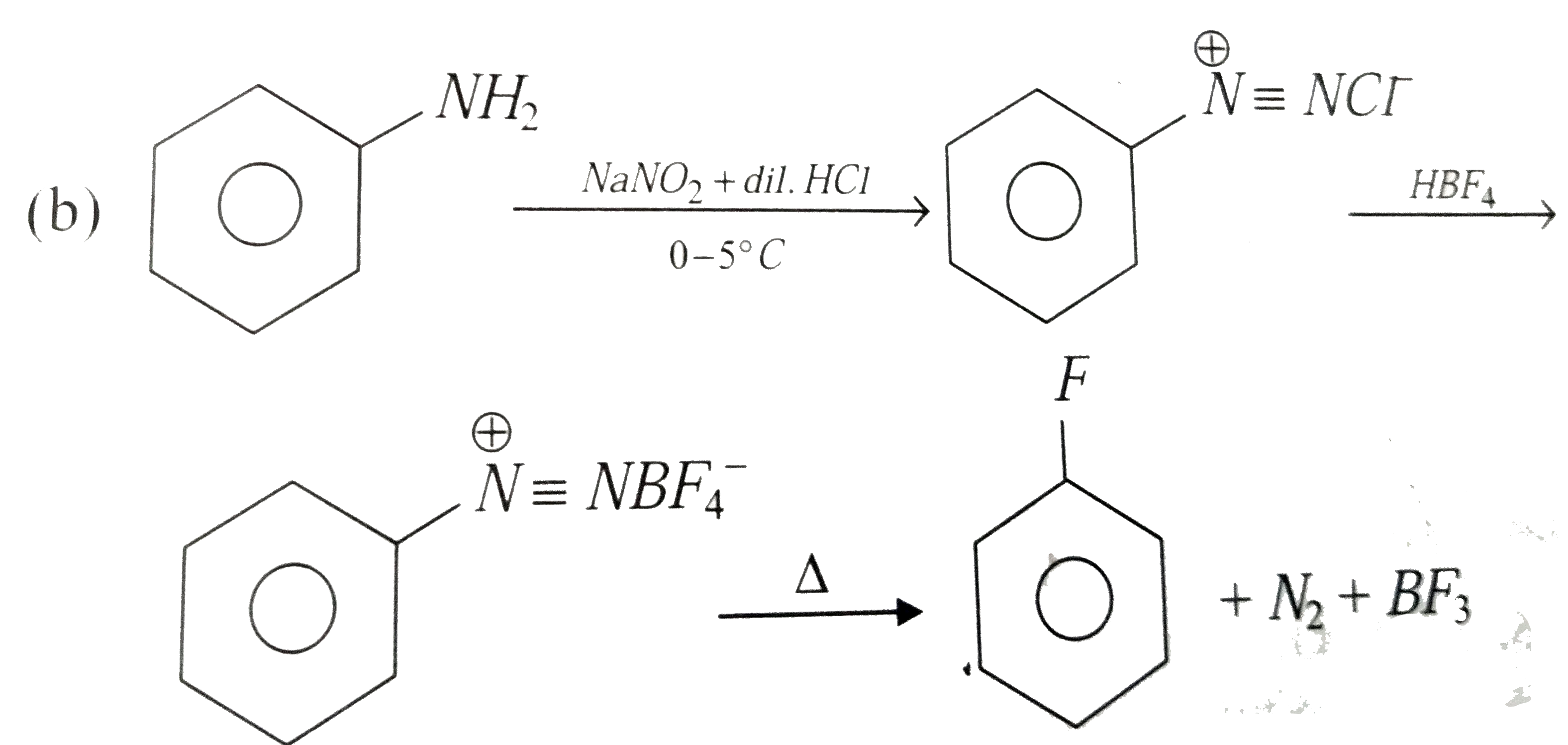 . .
|
|
| 30. |
Flurobenzene (C_(6)H_(5)F) can be synthesised in the laboratory |
|
Answer» by heatingphenol with HF and KF |
|
| 31. |
Fluorspar and cryolite have the formula___________ and ___________ respectively. |
| Answer» SOLUTION :`CaF_2, Na_3AlF_6` | |
| 33. |
Fluorspar, cryolite and fluoroapatite are the minerals containing |
|
Answer» P |
|
| 34. |
Fluorosis, the base disease is caused by the presence of |
|
Answer» PESTICIDES in water |
|
| 35. |
Fluoroboric acid is used as catalyst in preparation of ether from |
|
Answer» SODIUM alkoxide |
|
| 36. |
Fluorobenzene is prepared conveniently |
|
Answer» by HEATING benzene diazonium tetrafluoroborate |
|
| 37. |
Fluorobenzene is prepared by treating benzene diazonium chloride with fluoroboric acid and heating the product obtained. This reaction is known as : |
|
Answer» Schiemann REACTION |
|
| 38. |
Fluorobenzene can be synthesised in the laboratory |
|
Answer» by heating PHENOL with HF and KF |
|
| 39. |
Fluorobenzene can be synthesised in the laboratory: |
|
Answer» from ANILINE by diazotisation followed by heating the diazonium salt with `HBF_(4)`. 
|
|
| 40. |
Fluorobenzene can be prepared from benzene diazonium chloride by heating with: |
|
Answer» fluoroboric acid followed by HEATING 
|
|
| 42. |
Fluorine the I^(st) member of group 17^(th) differs from the other members of the group in many respects due to the following reasons. (i) Small size(ii) Hight EN(iii) absence of 'd' orbitals (iv) its Delta H dissociation in molecular form of X_(2) is the least.The most basic among the following |
|
Answer» Cl-Cl |
|
| 43. |
Fluoro acetic acid is more acidic than iodoacetic acid. Give reason. |
|
Answer» SOLUTION :Acidity increases with increasing electro negativity of the substituents. F is more electro NEGATIVE `F-CH_2 – COOH gtCI – CH_2 COOHgtBr – CH_2 – COOH gt I- CH_2- COOH` So FLUORO acetic ACID is more acidic than iodoacetic acid. |
|
| 44. |
Fluorine shows anamolous behaviours in VILA group due to |
|
Answer» its SMALL size |
|
| 46. |
Fluorine reacts with uranium to form UF_(6). U(s)+3F_(2)(g)rarrUF_(6)(g) How many fluorine molecules are required to produce 2 mg of UF_(6) from an excess of uranium? The molar mass of UF_(6) is 352 g "mol"^(-1). |
| Answer» Answer :B | |
| 47. |
Fluorine reacts with water to give |
|
Answer» Oxygen `2H_(2) O + 2F_(2) rarr 4HF + O_(2) , 3H_(2) O + 3F_(2) rarr 6HF + O_(3)` |
|
| 48. |
Fluorine reacts with water giving |
|
Answer» HF and `O_2` |
|
| 49. |
Fluorine provides the largest variety of interhalogen compounds among halogens, why? |
| Answer» SOLUTION :It is because fluorine is smallest in size, most electronegative and is the STRONGEST oxidising AGENT. | |
| 50. |
Fluorine never acts as the central atom in polyatomic interhalogen compounds. Or Why does fluorine not play the role of a central atom in interhalogen compounds ? |
|
Answer» Solution :The reasons are : (i) F being SMALLEST cannot accommodate larger SIZED other halogen ATOMS it. (ii) Due to the absence of d-orbitals, F does not show positive oxidation states of +3, +5 or +7 needed for the formation of POLYATOMIC INTERHALOGEN compounds |
|