Saved Bookmarks
This section includes 7 InterviewSolutions, each offering curated multiple-choice questions to sharpen your Current Affairs knowledge and support exam preparation. Choose a topic below to get started.
| 1. |
Draw the structure of the following compounds. (a) Sulphuric acid (b) Marshall's acid. |
|
Answer» SOLUTION :(a) STRUCTURE of SULPHURIC acid : `HO-OVERSET(O)overset(||)underset(O)underset(||)S-OH` (b)`underset("(Peroxodisulphuric acid)")("Structure of Marshall.s acid"):HO-overset(O)overset(||)underset(O)underset(||)S-O-O-underset(O)underset(||)overset(O)overset(||)S-OH` |
|
| 2. |
During the extraction of aluminium by Hall-Heroult process at which electrode oxygen gas is liberated. |
|
Answer» Solution :(ii) `2Al_(2)O_(3)+3C rarr 4Al+3CO_(2)` `Al_(2)O_(3)overset ("Electrolysis ") to 2Al^(3)+3O^(2)` At Anode : `Al^(3+)+ 3E^(-) to Al` At Cathode : `C+O^(2-) +2E^(-)to CO_(2)` `CO+O^(2-)+2e ^(-) to CO_(2) uarr` (iii) Oxygen gas is not liberated , |
|
| 3. |
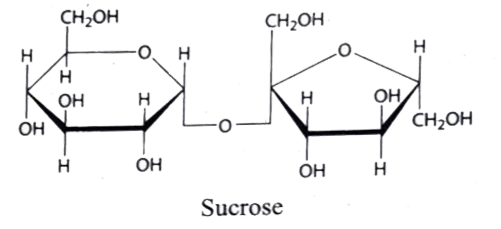
Draw thestructure of surcose . |
Answer» Solution :Sucrose `C_(12)H_(22)O_(11)`ISA DISACCHARIDE. 
|
|
| 4. |
During the extraction of aluminimum by Hall - He'rault process, i) Write neat labelled diagram of elecctrolytic cell. ii) Write over all cell reaction. iii) At which electrode oxygen gas is liberated? |
Answer» Solution :i.  II. `2Al_(2)O_(3)+3C rarr 4Al+3CO_(2)` iii. ANODE. |
|
| 5. |
Draw the structure of the compound whose IUPAC name is 4 - chloropentan -2- one. |
| Answer» SOLUTION :`CH_(3)-overset(Cl)overset(|)CH-CH_(2)-overset(O)overset(||)C-CH_(3)` | |
| 6. |
During the extraction of Ag and Au using a KCN solution, cyanide ions react with metal ions as |
|
Answer» a reducing AGENT |
|
| 7. |
Draw the structure of the compound named 4-methyl pent-3-en-2-one. |
| Answer» SOLUTION :`CH_(3)-UNDERSET(CH_(3))underset(|)(C)=CH-underset(O)underset(||)(C)-CH_(3)` | |
| 8. |
During the evaporation of liquid |
|
Answer» The temperature of the liquid |
|
| 10. |
During the estimation of nitrogen by Kjeldahl's method, copper sulphate is added to : |
|
Answer» raise the BOILING POINT of `H_(2)SO_(4)` |
|
| 11. |
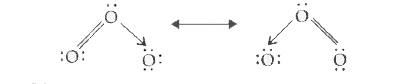
Draw the structure of SO_(3)^(2-). |
Answer» SOLUTION :In `SO_(3)^(2-)` ion, S is `sp^(3)`-HYBRIDIZED. Due to the presence of a lone PAIR of ELECTRONS, `SO_(3)^(2-)` has a pyramidal SHAPE as shown : 
|
|
| 12. |
During the emission of a positron from a nucleus, the mass number of the daughter element ramains the same but the atomic number |
|
Answer» is decreased by 1 unit So , atomic number is decreased by 1 unit. |
|
| 13. |
Draw the structure of saccharin. How many times is it sweeter than cane sugar ? |
Answer» SOLUTION : It is 550 TIMES sweeter than cane SUGAR. |
|
| 14. |
During the electroytic refining of zinc, which of the following statement is true? |
|
Answer» The IMPURE metal is at the cathode |
|
| 15. |
Draw the structure of [Pt(Cl_(3))(C_(2)H_(4))] |
| Answer» SOLUTION :The COMPLEX is KNOWN as Zeises SALT. | |
| 16. |
During the electrolytic reduction of alumina, the reaction at cathode is |
|
Answer» `2H_(2)O rarr O_(2) +4H+4e^(-)` |
|
| 17. |
Draw the structure of propane-1, 2, 3 tricarbaldehyde. |
| Answer» SOLUTION :`UNDERSET(CHO)underset(|)CH_(2)-underset(CHO)underset(|)CH-underset(CHO)underset(|)CH_(2)` | |
| 18. |
During the electrolysis of molten NaCl solution, 230g of sodium metal is deposited on the cathode, then how many moles of chlorine will be obtained at anode |
|
Answer» 10 `(230)/(W_(2))=(33)/(35.5)` `W_(2)=247.42` `n=(247.42)/(71)=3.48` moles `Cl_(2)` gas. |
|
| 19. |
Draw the structure of propofol? Mention its use. |
Answer» SOLUTION :Propofol structure:  It is USED during MINOR SURGICAL procedures. |
|
| 20. |
During the electrolysis of molten sodium chloride, the time required to produce 0.10 mol of chlorine gas using a current of 3 ampere is |
|
Answer» 55 minutes To PRODUCE 1 mol of `Cl_(2)`, charge required `=2F=2xx96500C` `THEREFORE`To produce 0.1 mol of `Cl_(2)`, charge required `=2xx96500xx0.1=19300C` `Q=Ixxt` `thereforet=Q=(19300)/(3)sec=(19300)/(3xx60)`min `=107.22"min"cong110`min |
|
| 21. |
Draw the structure of phosphinic acid (H_3PO_2). |
Answer» SOLUTION :Phosphinic ACID ( HYPOPHOSPHOROUS acid ) has the STRUCTURE : 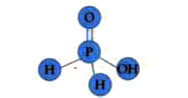
|
|
| 22. |
During the electrolysis of Potassium acetate solution the anode products are |
|
Answer» `C_(2) H_(6) ,CO_(2)` |
|
| 23. |
During the electrolysis of fused PbBr_(2) the reaction that occurs at the cathode is : |
|
Answer» BROMIDE ions are OXIDIZED `PB to Pb^(2+) + 2e^(-)` |
|
| 24. |
Draw the structure of peroxodisulfuric acid. |
| Answer» SOLUTION :`HO - OVERSET(O)overset(||)UNDERSET(O)underset(||)S-O-O-overset(O)overset(||)underset(O)underset(||)S-OH` | |
| 25. |
Draw the structure of perchloric acid (HClO_4) |
Answer» SOLUTION :
|
|
| 26. |
During the electrolysis of fusedNaCI, the reaction that occurs at the anode is : |
|
Answer» CHLORIDE IONS are oxidized |
|
| 27. |
Draw the structure of penicillin? Give its use. |
Answer» Solution : Penicillin is USED to treat all TYPE of INFECTIONS PNEUMONIA, urinary tract infections. |
|
| 28. |
During the electrolysis of fused sodium chloride, the anodic reaction is |
|
Answer» Reduction of SODIUM ions |
|
| 29. |
Draw the structure of PCl_(3). |
Answer» SOLUTION :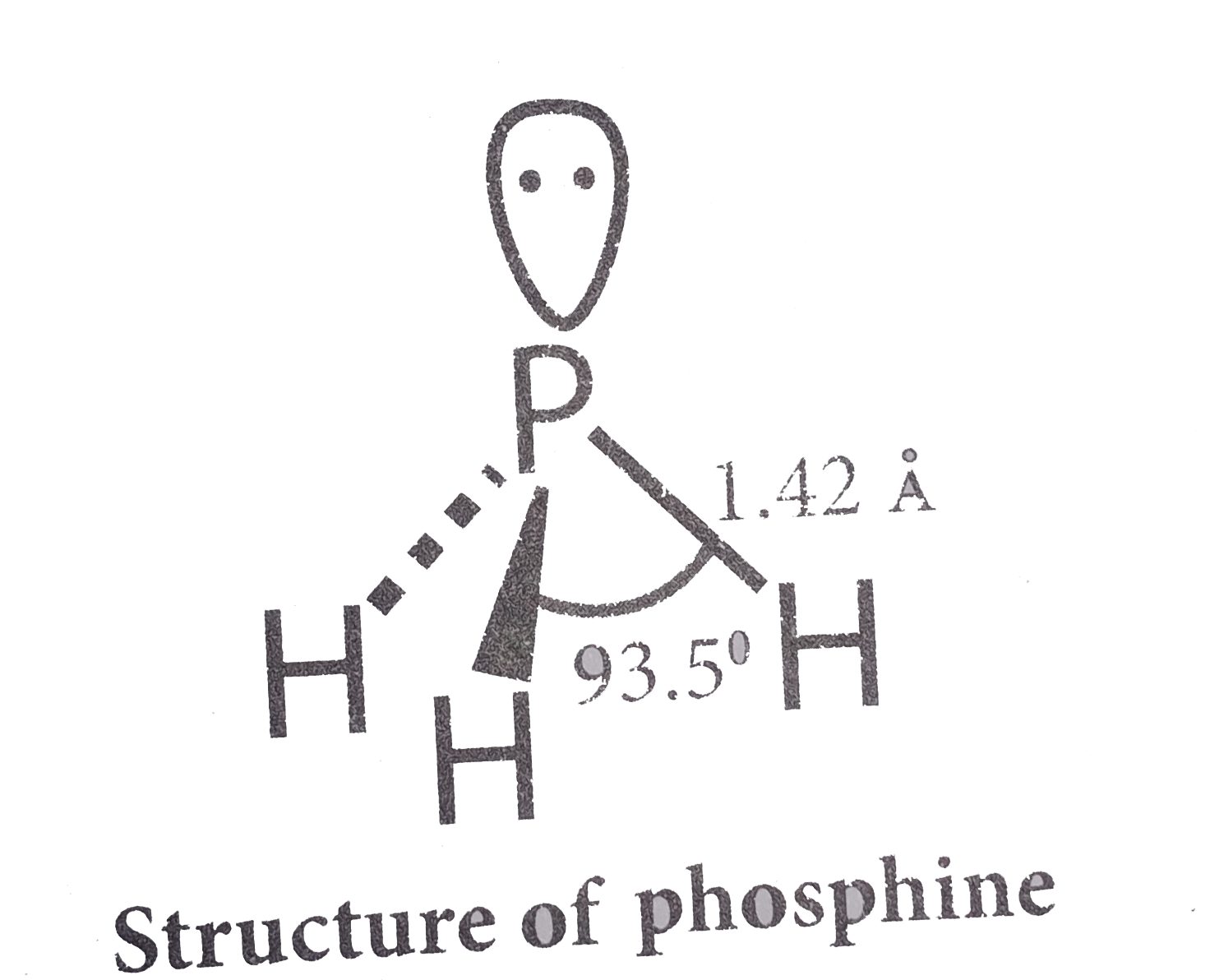
|
|
| 30. |
During the electrolysis of fused potassium chloride at platinum electrodes, 0.25 gram atom of metal is liberated. What would be the volume of chlorine that can be collected in the experiment at STP? |
|
Answer» Solution :REACTION at cathode, `K^(+)+e^(-) rarr K` and at anode, `2Cl^(-) rarr 2e^(-) +Cl_(2)`. For 0.25 GRAM ATOM of potassium liberated, moles of chlorinereleased `=0.125`. Volume of chlorine released in the experiment at STP `=0.125xx22.4=2.8 L`. |
|
| 31. |
Draw the structure of PCI_(5). Or Solid PCI_(5) is ionic in nature. |
Answer» SOLUTION :In the solid state, `PCI_(5)` exists as `[PCI_(4)]^(+)[PCI_(6)]^(-)` in which `[PCI_(4)]^(+)` species is tetrahedral while `[PCI_(6)]^(-)` species is octahedral as SHOWN : 
|
|
| 32. |
During the electrolysis of dilute sulphuric acid, the following process is possible at anode. |
|
Answer» `2H_2O_((L)) to O_(2(g)) + 4H_((AQ))^(+) + 4e^(-)` |
|
| 33. |
During the electrolysis of CrCl_(3), chlorine gas is evolved at the anode and chromium is deposited at the cathode. How many grams of Cr and how many litres of chlorine (at NTP) are produced, when a current of 6 amperes is passed for one hour ? |
| Answer» SOLUTION :3.88 G, 2.507 LITRES | |
| 34. |
Draw the structure of optical isomers of (i) [PICl_(2)] (en)_(2)]^(2+) (ii). [Cr.(NH_(3))Cl_(2)(en)]^(+) |
Answer» Solution :Only cis-form will show optical ISOMERISM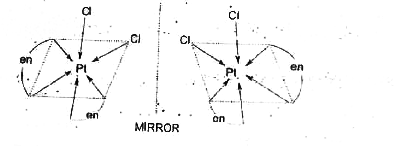 (ii) Both cis and transforms will show optical isomerism: `cis - [Cr (NH_(3))_(2)Cl_(2)(EN)]` 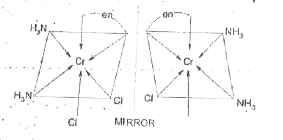
|
|
| 35. |
During the electrolysis of cryolite, aluminium and fluorine are formed in .... molar ratio |
|
Answer» `1:2` |
|
| 36. |
During the electrolysis of calcium chloride for the extraction of calcium, calcium fluoride is also added. The calcium fluoride : |
|
Answer» lowers the melting point of CALCIUM chloride |
|
| 38. |
During the electrolysis of aqueous solution of the following, molarity of the solution increaseswithout changing the chemical composition |
| Answer» | |
| 39. |
During the electrolysis of acidulated water, the mass of hydrogen obtained is 'x' times that of O_2 and the volume of H_2 is 'y' times that of O_2 .The ratio of 'y' and 'x' is |
|
Answer» 16 |
|
| 40. |
During the electrolysis of a concentrated brine solution. Calculate the moles of chlorine gas produced by the passage of 4F electricity. |
|
Answer» |
|
| 41. |
Draw the structure of monomers of the following polymer : Teflon |
| Answer» SOLUTION :`F_2C = CF_2` TETRAFLUOROETHENE | |
| 42. |
During the discharge of a lead storage battery, the density of sulphuric acid fell from 1.294 g mL^(-1) to 1.139 g mL^(-). Sulphuric acid of density 1.294 g mL^(-1) is 39% by weight and that of density 1.139 g mL^(-1) is 20% by weight. The battery hold 3.5 litre of acied and discharge. Calculate the no. of ampere hour for which the battery must have been used. The charging and discharging reactions are: Pb+SO_(4)^(2-) rarr PbSO_(4)+2e (charging) PbO_(2)+4H^(+)+SO_(4)^(2-)+2e rarr PbSO_(4)+2H_(2)O (discharging) |
|
Answer» Solution :The overall battery reaction is `Pb+PbO_(2) + 2H_(2)SO_(4) = 2PbSO_(4) + 2H_(2)O` `because` two moles of electrons are involved for the reaction of two moles `H_(2)SO_(4)`. `THEREFORE` eq. wt. of `H_(2)SO_(4)` = mol. Wt. of `H_(2)SO_(4) = 98`. Following in the same WAY as in no. of eq. of `H_(2)SO_(4)` present in 3.5 litres of solution of a charged battery `= (39)/(98) xx (1.294)/(100) xx 3500` `= 18.0235` No. of equivalents of `H_(2)SO_(4)` present in 3.5 litres of solution after getting discharged `= (20)/(98) xx (1.139)/(100) xx 3500` = 8.1357 Number of eq. of `H_(2)SO_(4)` lost = 18.0235 - 8.1357 = 9.8878 `therefore` moles of electric charge produced by the battery = 9.8878 F `= 9.8878 xx 96500` coulombs `= 9.8878 xx 96500` amp - seconds `= (9.8878 xx 96500)/(60 xx 60)` amp - HOURS =265 amp - hours. |
|
| 43. |
During the discharge of a lead storage battery, the density of sulphuric acid fell from 1.294 to 1.139 g/mL. Supphuric acid of density 1.294 g/mL is 39% H_(2)SO_(4 )by weight and that of density 1.139 g/mL is 20% H_(2)SO_(4)by weight. The battery hold 3.5 L of the acid and the volume remained particlcally constant during the discharge.Calculate the number of ampere-hours for which the battery must have been used. The charging and discharging reactions are Pb+SO_(4)^(2-) = PbSO_(4) +2e^(-) (charging) PbO_(2)+ 4H^(+) + So+(4)^(2-) = PbSo_(4) + 2H_(2)O (discharging) |
|
Answer» Solution :For 1.0 L `H_2SO_4`: INITIAL mass of `H_2SO_4=1294xx39/100=504.66g,` FINAL mass of `H_2SO_4=1139xx20/100=227.80g` `implies H_2SO_4` Consumed/litres `=504.66-227.80=276 g` `implies` Total `H_2SO_4` USED up `=276.86xx3.5=969.01 g=(969.01)/(98) m ol= 9.888 m ol` Q 1 mole of `H_2SO_4` is associated with transfer of .0 mole of electrons, total of 9.888 mole ofelectrone tranfer has occured. Ampere-hour `=(9.888xx96500)/(3600)=2.65Ah` |
|
| 44. |
Draw the structure of monomers of the following polymer : Polythene |
| Answer» SOLUTION :`H_2C = CH_2` ETHENE | |
| 46. |
Draw the structure of monomers of each of the polymer : PVC |
| Answer» Solution :`H_2C-=underset("Vinyl CHLORIDE")underset(CL)underset(|)(CH)` | |
| 47. |
During the discharge of a lead storage battery, the density of sulphuric acid fell from 1.294 to 1.139 g.ml^(-1).H_(2)SO_(4) of density 1.294 gml^(-1) is 39% and that of density 1.139 g.ml^(-1) is 20% by weight. The battery holds 3.5 L of acid and the volume practically remains constant during discharge. Calcualte the number of ampere hours for which the battery must have been used. The discharging and charging reactions are: Pb + SO_(4)^(2-) rightarrow PbSO_(4) + 2e^(-) (Anodic reaction) PbO-92) + 4H^(+) + SO_(4)^(2-) + 2e^(-) rightarrow PbSo_94) + 2H_(2)O (Cathode reaction) |
|
Answer» |
|
| 48. |
Draw the structure of : {:((i)BrF_(3),(ii)XeOF_(4)):} (b) Explain giving reason in each case : (i) Why H_(2) Te is more acidic than H_(2)S? (ii) Why are halogens strong oxidising agents ? (iii) Why does nitrogen show catenation tendentcy less than phosphorus ? |
Answer» Solution :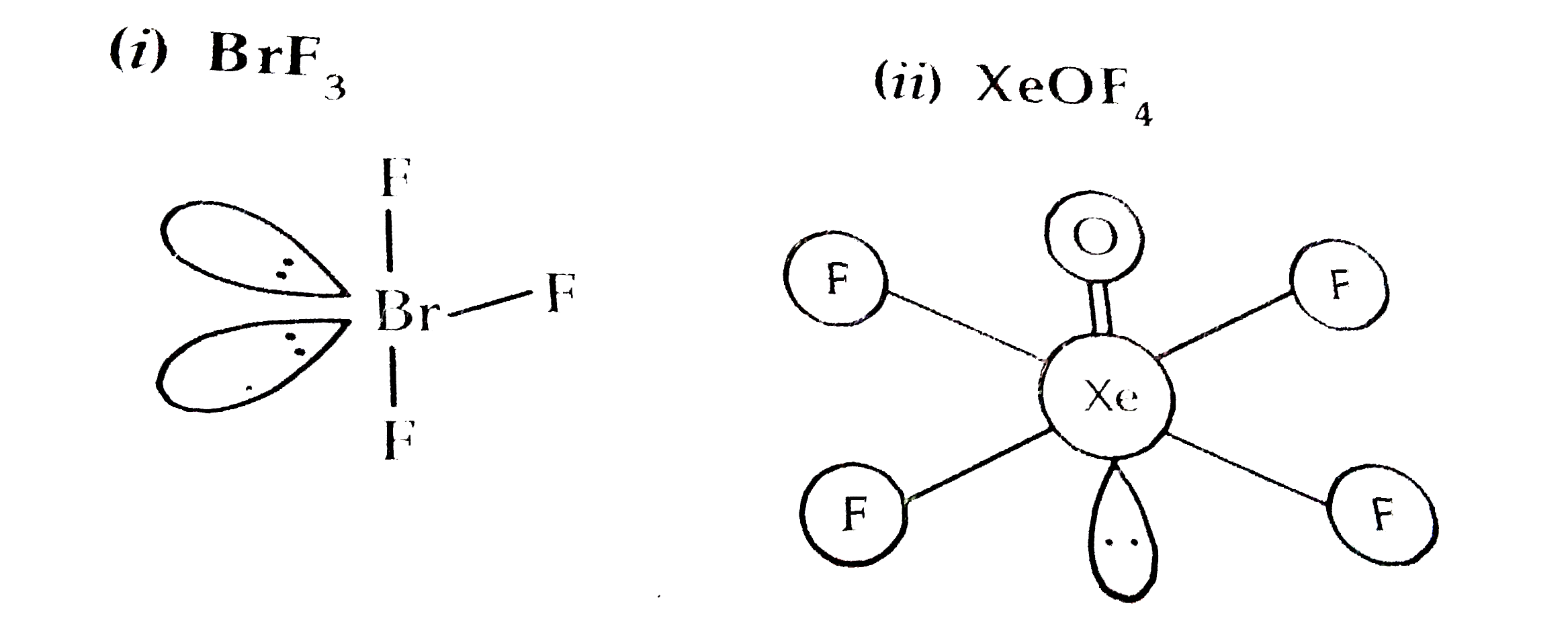 (i) As the size of element increase down the group bond length increases and hence, bond dissociation energy decreases. Hence H-S bond dissociation energy is higher than that of H- Te bond dissociation energy and hence H- S bond breakes less EASILY than H- Te bond. Hence `H_(2)` Te is strong acid than `H_(2)S.` (ii) See Q. 25, (or) (b) (i) Delhi Board (Comptt.) 2016. (iii) N-N single bond is weaker than P - P single bond because Nitrogen has smaller size, due to that lone pair of electrons on TWO N-atom repel the bond of N-N bond and hence, it makes N-N single ond weakeer than P-P bond in which the lone pair of electrons FO not replel the bond pair electrons because bigger size of phosphorus. Consequently, Nitrogen shows the little tendency for CATENATION than PHOSPHOROUS. |
|
| 49. |
During the discharge of a lead storage battery, the density of sulphuric acid fell from 1.294 g/m to 1.139 g/m. Sulphuric acid of density 1.294 g/m was 39% H_2SO_4 by wt. while acid of density 1.139 g/ m contains 20% acid by wt. The battery holds 3.5 L of acid and the value remianed practically same through the discharge. Catculate the number of amp hr. for which the battery must have been used. The charging and discharging reactions are : PbO_2 +SO_4^(2-) + 4H^++ 2e^(-)toPbSO_4 + 2H_2O (discharging ) PbSO_4 (s) +2eto Pb (s) + SO_4^(2-)(charging ) |
|
Answer» |
|
| 50. |
During the discharge of a lead storage battery, density of H_2SO_4fell from 1.3 to 1.14 g/mL. Sulphuric acid of density 1.3g/ml is 40W% and that of 1.14g/mL is 20W%. The battery holds two litre of the acid and volume remains practically constant during discharging. The number of ampere-sec used from the battery is. |
|
Answer» `3 XX 96,500` |
|