

Saved Bookmarks
This section includes 7 InterviewSolutions, each offering curated multiple-choice questions to sharpen your Current Affairs knowledge and support exam preparation. Choose a topic below to get started.
| 1. |
Draw structure S_(3)O_(9) |
| Answer» | |
| 2. |
During decomposition of an activated complex : |
|
Answer» energy is ALWAYS RELEASED |
|
| 3. |
Draw structure sodium dihydrogen phosphate |
| Answer» | |
| 4. |
During decomposition of an activated comples. (i).energy is always releasing (ii).energy is always absorbed (iii).energy does not change (iv).reactants may be formed |
|
Answer» (i), (II) and (ii) |
|
| 5. |
Draw structure RbIO_(2) |
| Answer» | |
| 6. |
During decomposition of an activated complex |
|
Answer» ENERGY is always RELEASED |
|
| 7. |
Draw structure S_(2)O_(7)^(2-) |
| Answer» | |
| 8. |
During decomposition of an activate complex……. |
|
Answer» ENERGY Is ALWAYS released So activated complex decompose and convert into product with low energy,product and reactant also form ,so (D) is correct. Activated complex with HIGH energy is there which decompose and form product and always energy releases.Statement (A) is correct. 
|
|
| 9. |
Draw structure potassium bicarbonate (KHCO_(3)) |
| Answer» | |
| 10. |
During debromination of meso-dibromobutane, the major compound formed is |
| Answer» Solution :It gives trans - 2 - butene. | |
| 11. |
Draw structure Pyrophosphoric acid (H_(4)P_(2)O_(7)) |
| Answer» | |
| 12. |
During debromination of meso dibromobutane, the major compound formed as: |
|
Answer» n-butane |
|
| 13. |
Draw structure peroxy phosphoric acid (H_(3)PO_(5)) |
| Answer» | |
| 14. |
During debromination of meso-dibromo-butane, the major compound formed is: |
|
Answer» n-butane |
|
| 15. |
Draw structure Peroxy diphosphoric acid (H_(4)P_(2)O_(8)) |
| Answer» | |
| 16. |
During day time plants absorb: |
|
Answer» CARBON dioxide |
|
| 17. |
Draw structure P_(4)S_(10) |
| Answer» | |
| 18. |
During curdling of milk, what happens to the sugar present in it? |
| Answer» SOLUTION :LACTIC ACID is FORMED. | |
| 19. |
Draw structure P_(4)O_(10) |
| Answer» | |
| 20. |
During curdling of milk , what happens to sugar presnet in it ? |
| Answer» Solution :During curdling of MILK , the milk SUGAR LACTOSE is converted into lactic acid. | |
| 21. |
Draw structure P_(4)O_(6) |
| Answer» | |
| 22. |
During curdling of milk, what happens to sugar present in it ? |
| Answer» SOLUTION :LACTOSE CHANGES to LACTIC ACID. | |
| 23. |
Draw structure P_(4) |
| Answer» | |
| 24. |
Draw structure Oleum (H_(2)S_(2)O_(7)) |
| Answer» | |
| 25. |
During coupling reaction of benzene diazonium chloride and aniline the pH of the reaction medium should be |
|
Answer» `1 - 2` |
|
| 26. |
Draw structure of TNT, an explosive. |
Answer» SOLUTION :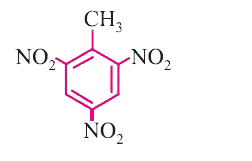
|
|
| 27. |
During coupling reaction of benzene diazonium chloride and aniline, the pH of reaction medium should be approximately |
|
Answer» `1-2` |
|
| 28. |
Draw structure of lactose . |
Answer» SOLUTION :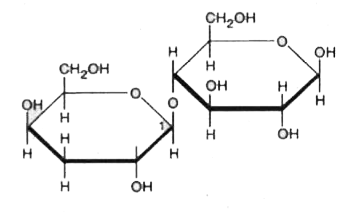
|
|
| 29. |
During conversion of oxime to nitroparaffins, which reaction is involved? |
|
Answer» REDUCTION |
|
| 30. |
Draw structure of sucrose . |
Answer» SOLUTION :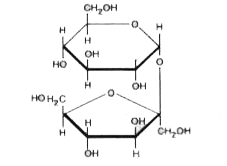
|
|
| 31. |
Draw structure of cyclopropanone oxime. |
Answer» SOLUTION :
|
|
| 32. |
During conversion of nitroalkane to N-alkyl hydroxyl amine, which of the following reducing agent is used? |
|
Answer» `Sn+ cone. HCl` |
|
| 33. |
Draw structure NH_(4)OCN |
| Answer» | |
| 34. |
During conversion ofisopropyl alcohol to isopropyl iodid which of the following is not used |
| Answer» Answer :C | |
| 35. |
Draw structure O_(2)F_(2)(dimer form of OF) |
| Answer» | |
| 36. |
During conversion of alcohol to monoiodo alkane which of the following is used |
| Answer» Answer :B | |
| 37. |
Draw structure NaIO_(3) |
| Answer» | |
| 38. |
During conversion of glucose into glucose cyanohydrin, what functional group/atom of glucose is replaced? |
|
Answer» Hydrogen  Hence , during this CONVERSION , aldehydic group is REPLACED |
|
| 39. |
Draw structure NaHSO_(3) |
| Answer» | |
| 40. |
During conductometric titration of 0. 1 MHCl with 1.0 M KOH, which is the correct observation ? |
|
Answer» Resistance of the SOLUTION decreases upto equivalence point and them INCREASES |
|
| 41. |
Draw structure Na_(2)S_(4)O_(6) |
| Answer» | |
| 42. |
During coagulation of egg which change occurs 1) breaking of peptide bond 2) breaking of hydrogen bond 3) breaking of ionic bond 4) breaking of sulphide bond |
|
Answer» only 1 |
|
| 43. |
Draw structure N_(2)O_(5) |
| Answer» | |
| 44. |
During chlorination of methane to methyl chloride, the propagation step is represented by |
|
Answer» `CL - Cl overset(HV) (to) overset(*)(C)L + overset(*)(C)l` |
|
| 45. |
During charging of lead storage bttery, the reaction occurring at the cathode is:- |
|
Answer» `Pb^(2+)+2etoPb` `PbO_(2)+4H^(+)+SO_(4)^(2-)+2e^(-)toPbSO_(4)+2H_(2)O` During charging of lead storage battery, the reaction is REVERSED at both anode and cathode. The reaction occurring at the cathode is, `PbSO_(4)+2H_(2)OtoPbO_(2)+4H^(+)+SO_(4)^(2-)+2e^(-)` |
|
| 46. |
Draw structure N_(2)O_(3) |
| Answer» | |
| 47. |
Draw structure N_(2)F_(4) |
| Answer» | |
| 48. |
During charging of lead storage cell |
|
Answer» external emf is greater than the emf of cell |
|
| 49. |
During charging of lead accumulator |
|
Answer» electrolysis of `PbSO_(4)` takes place and PB and `PbO_(2)` are deposited |
|
| 50. |
Draw structure Meta phosphoric acid (HPO_(3)) |
| Answer» | |