

Saved Bookmarks
This section includes 7 InterviewSolutions, each offering curated multiple-choice questions to sharpen your Current Affairs knowledge and support exam preparation. Choose a topic below to get started.
| 1. |
Draw additional resonance structure for each species. |
|
Answer» |
|
| 2. |
Drying oil are so called because they : |
|
Answer» Are volatile and so evaporate rapidly |
|
| 3. |
""_("dry")Ca(OH)_(2) underset(H_(2)O)overset(Cl_(2))(rarr) A overset("auto-oxidation")(rarr) CaCl_(2) + B, Identity B. |
|
Answer» `CaOCl_(2)` |
|
| 4. |
Dry sulphurdioxide does not bleach dry flowers. Explain. |
|
Answer» Solution :Sulphur dioxide ACTS as a BLEACHING agent only is moist conditions. NASCENT hydrogen responsible for reduction is PRODUCED `SO_(2)+2H_(2)Orarr 2(H)+H_(2)SO_(4)` Coloured FLOWER `+(H)rarr` Colourless flower |
|
| 6. |
Dry icereacts with n-propyl magnesium iodide to give |
|
Answer» propyl acetic acid |
|
| 7. |
Dry ice is used for making cold-baths in laboratories by mixing with volatile organic solvents. Identify the form of dry ice from the following . |
|
Answer» GASEOUS CARBON dioxide |
|
| 8. |
Draw a sketch to show the splitting of d-orbitals in an octahedral crystal field. State for a d^(6) configuration, how the actual configuration of the split d-orbitals in an octahedral crystal field is decided by the relative values of Delta_(0) and P ? |
|
Answer» Solution :Splitting of d-orbitals in an octahedral field. For `d^(6)` configuration, three electrons will first enter into `t_(2g)`. Now, if `P lt Delta_(0)`, electrons will PAIR up in `t_(2g)` orbitals, giving the configuration `t_(2g)^(6)` and if `Delta_(0)ltP`, two electrons will first enter into `e_(g)` orbitals and one will pair up in `t_(2g)` giving the configuration `t_(2g)^(4) e_(g)^(2)`. |
|
| 9. |
Dry ice is an example of |
|
Answer» IONIC solid |
|
| 10. |
Draw a schematic graph showing how the rate of a first order reaction changes with change in concentration of the reactant. |
| Answer» SOLUTION :As for a FIRST order reaction, rate `prop` molar concentration, graph between Rate vs Molar. Conc. Will be a STRAIGHT LINE passing through the origin. (Similar to Fig. 4.13a, PAGE `4//31`). | |
| 11. |
Draw a plot of In[R] versus t for a first order reaction. What is slope of the line equal to? |
Answer» SOLUTION :
|
|
| 12. |
Draw a schematic diagram illustrating magnetic separation. Can we use this method of concentration when the impurity in the ore is of magnetic nature? |
Answer» SOLUTION :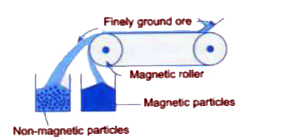 Yes, we can USE this method for separating MAGNETIC IMPURITIES. |
|
| 13. |
Dry ice and benzyl magnesium halide produces |
|
Answer» benzoic acid |
|
| 14. |
Dry heating of calcium acetate gives : |
|
Answer» ACETALDEHYDE |
|
| 15. |
Dry heating of calcium acetate gives |
|
Answer» Acetaldehyde 
|
|
| 16. |
Dry heating of a mixture of calcium acetate and calcium formate gives |
|
Answer» `HCHO` |
|
| 17. |
Dry distillation of .................. gives propanone and CaCO_3 |
| Answer» SOLUTION :CALCIUM ethanoate | |
| 18. |
Draw a neat labelled diagram of H_(2) - O_(2) fuel cell and write overall cell reaction. |
Answer» Solution : The overall CELL reaction `2H_(2(G))+O_(2(g))rarr2H_(2)O_((l))` |
|
| 19. |
Dry cell. |
Answer» SOLUTION :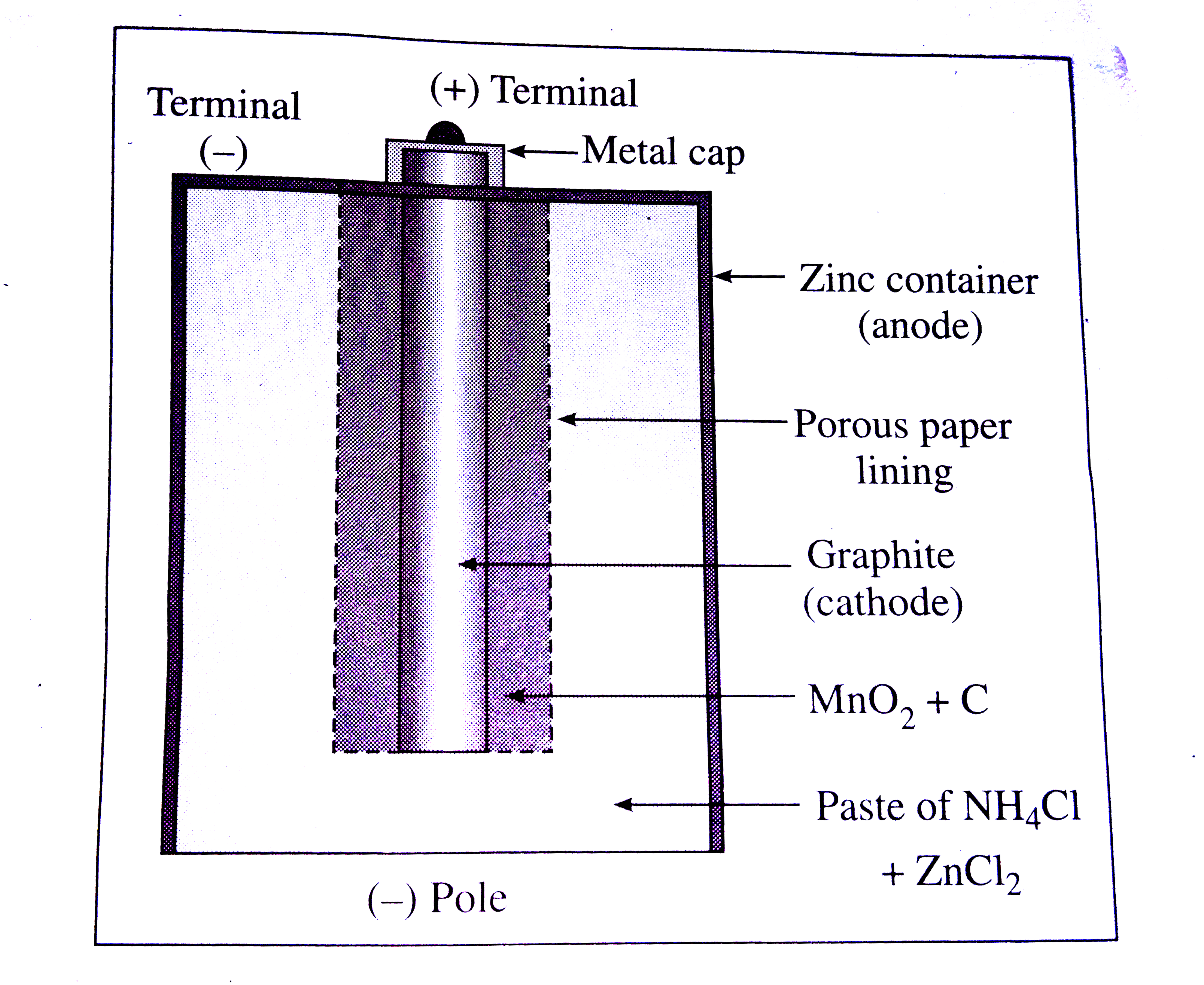
|
|
| 20. |
Drydistillation of amixture of calciumformate and calcium acetate gives. |
|
Answer» Formaldehyde |
|
| 21. |
Draw a neat labelled diagram of electrolytic cell used in the extraction of Aluminium by Hall - Heroult Process. Write the reactions take place at cathode and anode. |
|
Answer» SOLUTION :At ANODE, `C_((s))+O^(2-)rarrCO_((G))+2e^(-)` `C_((s))+2O^(2-)rarrCO_(2(g))+4e^(-)` At CATHODE, `Al^(3+)+3e^(-)rarrAl_((l))` |
|
| 22. |
Dry Distillation of (CH_(3)COO)_(2)Ca gives |
|
Answer» `CH_(3)CHO` |
|
| 23. |
Dry distillation of calcium acetate gives |
|
Answer» Acetaldehyde |
|
| 24. |
Draw a neat, labelled diagram of electrolytic cell for the extraction of aluminium. |
Answer» SOLUTION :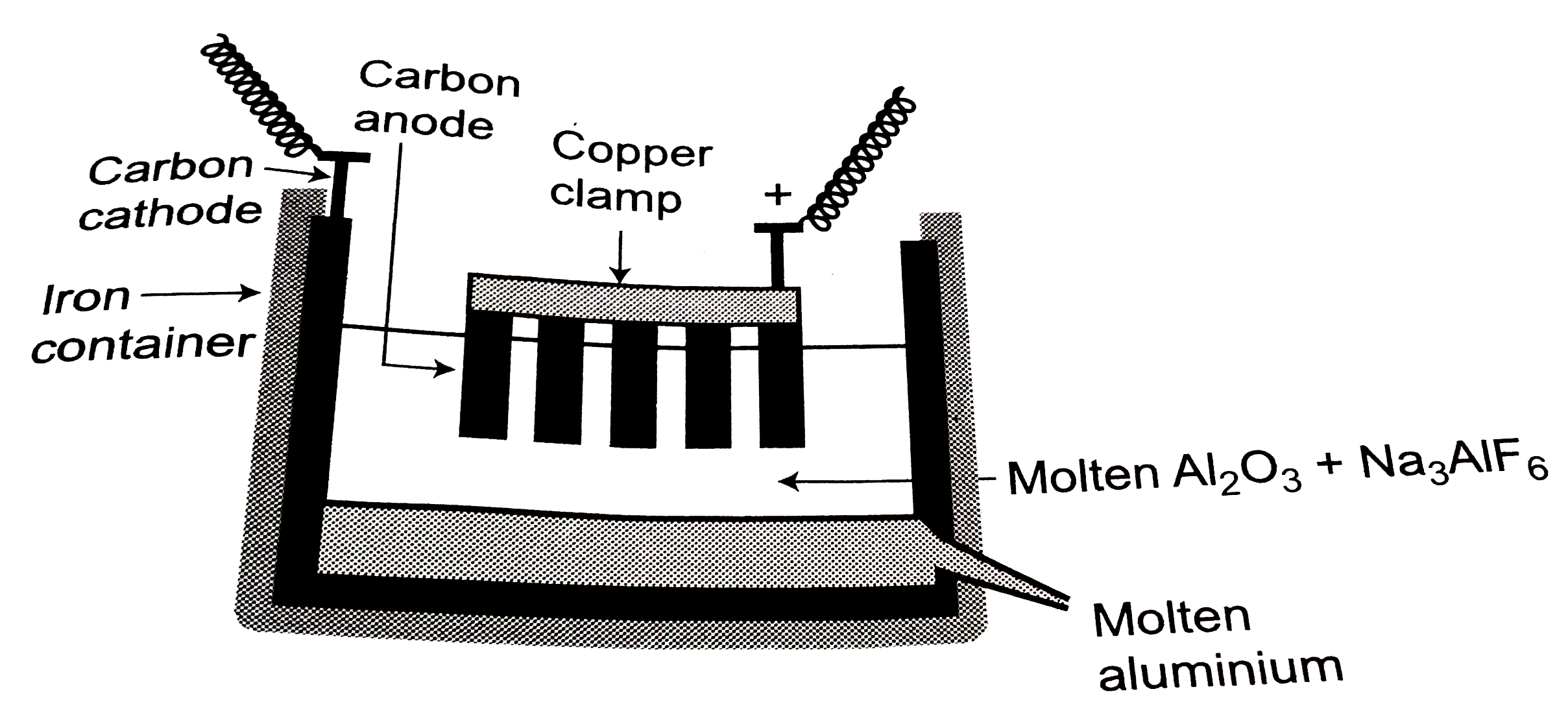 ELECTROLYTIC CELL for the EXTRACTION of ALUMINIUM |
|
| 25. |
Dry distillation of a mixture of calcium acetate and calcium formate can form |
|
Answer» FORMALDEHYDE |
|
| 28. |
Draw a neat diagram of sodium chloride structure and then describe it. |
|
Answer» Solution :The structure of NaCl is as shown below. In this case, the `Cl^(-)` ions from the cubic CLOSE PACKED arrangements. Therefore,`Cl^(-)`ions are present at all the corners and the centre of each face of the cube. The ARRANGEMENT is also regarded as face centred cubic arrangement of `Cl^(-)` ions. The `Na^(+)` ions occupy all the octahedral SITES. As we know that there is one octahedral site per atom in a close packed arrangement, therefore, there will be one`Na^(+)` ion for every `Cl^(-)` ion. Thus, the ratio of `Na^(+)` and `Cl^(-)` ions in this structure is 1:1. 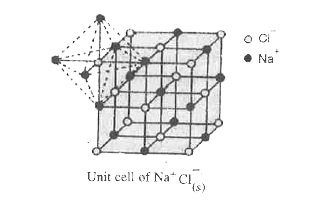 In this structure, each `Na^(+)` ion is surrounded by 6 `Cl^(-)` ions which are disposed towards the corners REGULAR octahedron. This is also shown in the figure. Similarly, each `Cl^(-)` ion is surrounded by six `Na^(+)` ions. Thus, the coordination number of `Na^(+)` and `Cl^(-)` ions in NaCl structure is 6 and 6. |
|
| 29. |
Dry and fused KHF_(2) on electrolysis gives |
|
Answer» `H_(2)` at anode and `F_(2)` at cathode |
|
| 30. |
Dry air was passed through a solution containing 20g of a substance in 100-0g of water and then through pure water. The loss in mass of the solution was 2.945g and that of pure water was 0.059g. Calculate the molar mass of the substance. |
|
Answer» SOLUTION :We have, `("loss in mass of PURE water")/("loss in mass of solution")=(p^(0)-p)/(p)` or `(p^(0)-p)/(p)=(0.059)/(2.945)=0.02` or `(p^(0))/(p)-1=0.02` or `(p^(0))/(p)=1.02` `(p)/(p^(0))=(1)/(1.02)` `(p^(0)-p)/(p^(0))=1-(1)/(1.02)=0.0196` `:.(N)/(N)=(20//M)/(100//18)=0.0196`, `M=183.6g//"MOLES"` |
|
| 31. |
Dry air was passed successively through a solution of 5 gm of a solute in 80 gm of water and then through pure ware. The loss in weight of solution was 2.50 gm and that of pure solvent 0.04 gm. What is the molecular weight of the solute |
|
Answer» `70.31` |
|
| 32. |
Draw a neat diagram of Leclanche cell and mark the parts. |
Answer» SOLUTION :
|
|
| 33. |
Dry air was passed successively through a solution of 5 g of a solute in 180 g of water and then through pure water. The loss in weight of solution was 2.50 g and that of pure solvent 0.04 g The molecular weight of the solute is: |
|
Answer» 31.25 |
|
| 34. |
Draw a neat and labelled diagram of lead storage battery. |
Answer» SOLUTION :
|
|
| 35. |
Dry air is passed through a solution containing 10 g of the solute in 90 g of water and then through pure water. The loss in weight of solution is 2.5 g and that of pure solvent is 0.05 g. Calculate the molecular weight of the solute. |
|
Answer» <P>50 Loss in weight of solvent `prop=p^(@)-p_(s)` `THEREFORE""(p^(@)-p_(s))/(p_(s))=("Loss in weight of solvent")/("Loss in weight of solution")` `=(w_(2)//M_(2))/(w_(1)//M_(1))=(w_(2)M_(1))/(w_(1)M_(2))` `=(0.05)/(2.5)=(10//M_(2))/(90//18)=(2)/(M_(2)) or M_(2)=100` |
|
| 36. |
Draw a neat diagram of blast furnance and describe and describe the reaction that occurs during extraction of cast iron in furnace at. (i) 600^(@)C (ii) 900^(@)C-1000^(@)C. |
|
Answer» Solution :(i) CARBON monoxide REDUCES ferric oxide to iron `Fe_(2)O_(3)+3COrarr2Fe+3CO_(2)` (ii) Calcium carbonate decomposes to calcium oxide and carbon dioxide `CaCO_(3)rarrCaO+CO` Calcium oxide converts sitica gangue into calcium silicate SLAG `CaO+SiO_(2)rarrCaSiO_(3)` |
|
| 37. |
Dry air is passed through a solution and then through its solvent and finally through CaCl_(2). The ratio of weight loss in the solvent to the weight gain in CaCl_(2) gives |
|
Answer» RELATIVE LOWERING of VAPOUR pressure |
|
| 38. |
In the extraction of Aluminium by Hall- Herault process: Give the equation of overall cell reaction. |
Answer» SOLUTION :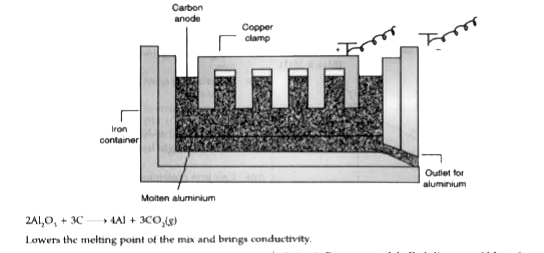 `2Al_(2)O_(3)+3Crarr4Al+3CO_(2)(G)` Lowers the melting point of the MIX and brings conductivity. |
|
| 39. |
Draw a most stable conformation (N-C) bond in the following compound. |
Answer» 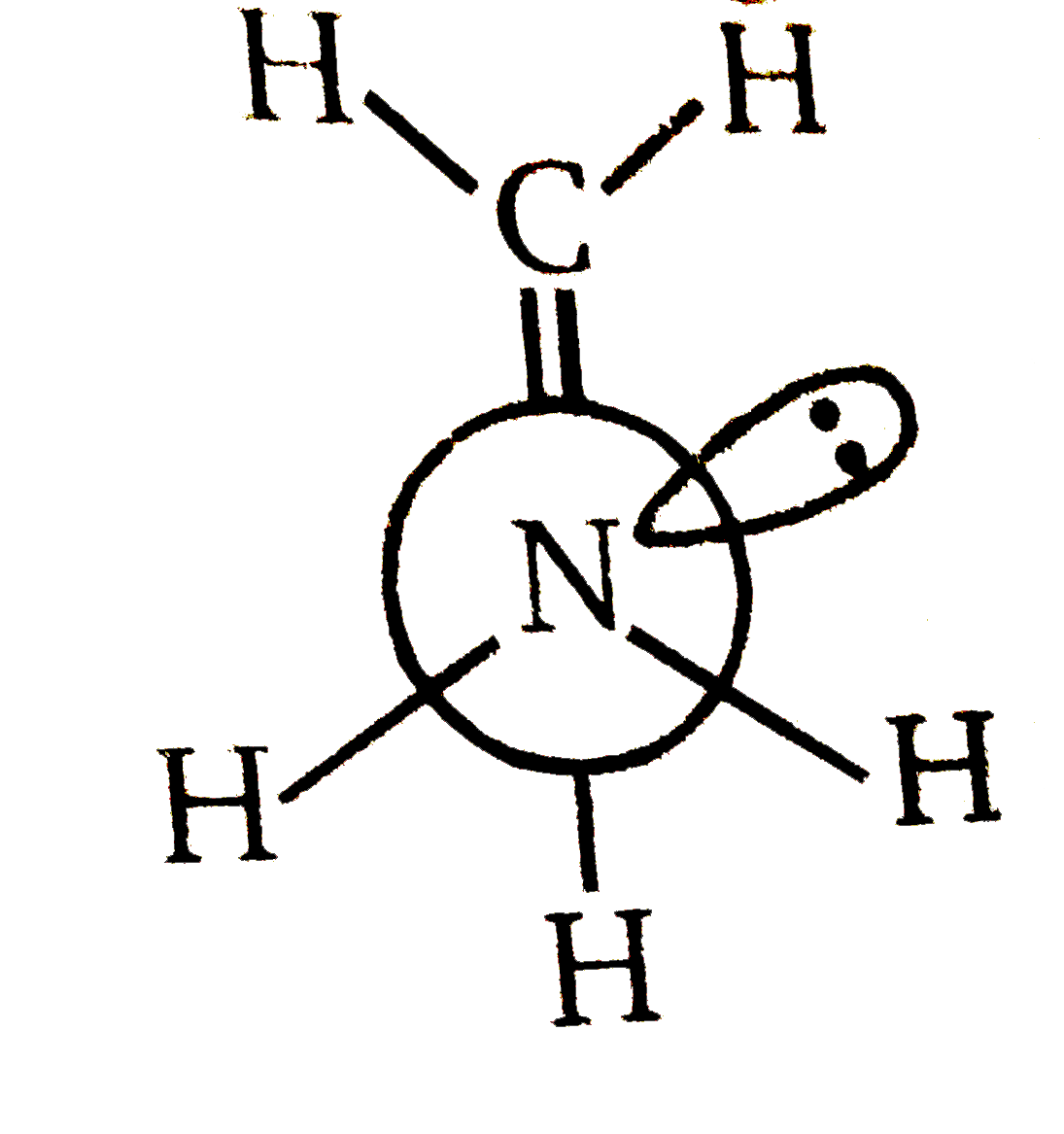 Most STABLE CONFORMER areound (N-C) BOND. Most STABLE CONFORMER areound (N-C) BOND.
|
|
| 40. |
Drugs which produce insensibility to the vital functions bof nervous systen are known as |
|
Answer» Antibiotics |
|
| 41. |
Drugs which produce sleep and reduce anxiety are : |
|
Answer» Hypnotics |
|
| 42. |
Drugs which bind to the receptor site and inhibit its natural function, are called |
|
Answer» antagonists |
|
| 43. |
Drugs which bind stronglyto the activesite of an enzymeand do not dependupon concentration of natural substrate are called as |
|
Answer» COMPETITIVE INHIBITORS |
|
| 44. |
Draw a graph of potential energy V/S reaction co - ordinates showing the effect of catalyst on activation energy (E_(a)) of a reaction. |
Answer» SOLUTION :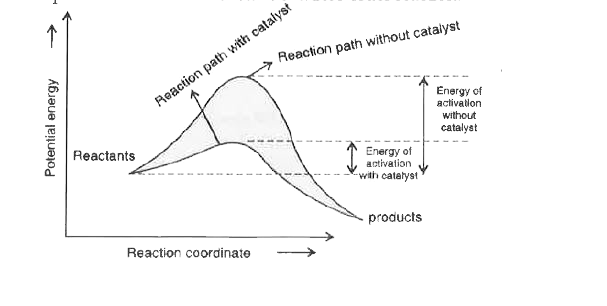
|
|
| 45. |
Drugs which are to be released in a controlled manner in the body are enclosed in capsules made up of |
|
Answer» PGA |
|
| 46. |
Draw a graph of potential energy v/s reaction co-ordinate showing the effect of a catalyst on activation energy. |
Answer» SOLUTION :
|
|
| 47. |
Drugswhich are to be released in a controlledmanner in the body are enclosed in capsulesmade of the following polymer |
|
Answer» PGA |
|
| 48. |
Drugs used for relieving pain are called |
|
Answer» analgesics |
|
| 49. |
Answer all the questions each question carries one mark. Draw a graph of lambda_(m) (v)/(s) sqrtc for acetic acid (weak electrolyte) solution. |
Answer» SOLUTION :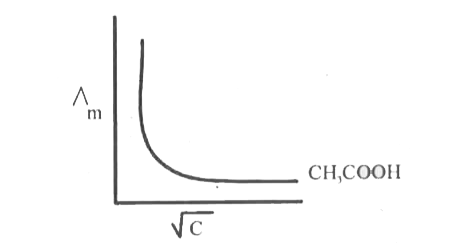
|
|
| 50. |
Drugs that blinfld to the receptor site and inhibit its natural function are called |
|
Answer» Agonists |
|