

Saved Bookmarks
This section includes 7 InterviewSolutions, each offering curated multiple-choice questions to sharpen your Current Affairs knowledge and support exam preparation. Choose a topic below to get started.
| 1. |
Difine adsorption. Write any two features which distinguish depends upon temperture. |
| Answer» | |
| 2. |
Diffusion of solvent through a semi permeable membrane is called |
|
Answer» DIFFUSION |
|
| 3. |
Diffraction angle 2 theta equal to 14.8 ^(@) for a crystal having interplanar distance in the crystal is 0.400 nm when second order diffraction was observed. Calculate the wavelength of X-ray used. |
| Answer» SOLUTION : 0.0515 NM | |
| 4. |
Diffraction angle2 theta equal to 14.8^@ for a crystal having interplanar distance in the crystal is 0.400 nm when second order diffraction was observed. Calculate the wavelength of X-ray used |
| Answer» SOLUTION : 0.0515 NM | |
| 5. |
Diffierentiatebetween "minerals" and "ores". |
|
Answer» Solution :The naturallyoccuringchemical substances in formof whichthe metalsoccurin theearthalongwithimpuritiesare called minerals.The MINERAL fromwhichthe metalcan beextractedconveniently andeconomically is calledan ore. Thus, all oresare mineralsbut allmineralsare not ores. FOREXAMPLE, ironis foundin theearth'scrustisoxides, carbonates and sulphides. Out of theseminerals of iron,theoxides ofiron are employed forextractionofthe metal. Therefore, oxides of ironare theores ofiron. Similarly, aluminiumoccurs in earth'scrustin formof twominerals, i.e.,bauxine`(Al_2 O_ 3X H _ 2 O ) `and clay` (Al_2O_3. SiO_2. 2 H _2O )`. Outofthesetwominerals, Al can beconvenientlyand economically extractedfrom bauxile.Therefore,bauxine istheoreofaluminium. |
|
| 6. |
Differentiating electron in K(19) goes into ns and this is s-block element. What happens il Aufbau rule is not followed? |
| Answer» Solution :K(19) in the absence of AUFBAU rule will have electronic configuration as `1s^(2) 2S^(2) 2p^(6) 3s^(2) 3P^(6) 3d^(1)` and thus differentiating electron enters into 3d-d block ELEMENT. | |
| 7. |
Differentiate thermoplastic and thermosetting. |
Answer» SOLUTION :DIFFERENCE between THERMOPLASTIC and THERMOSETTING:
|
|
| 8. |
Differentiate the following pairs of polymers based on the property mentioned aganist each. (i) Novolac and bakeline (structure). (ii) Buna- S and terylene (intermolecualr forces of attraction). |
|
Answer» SOLUTION :(i) Novolac is a linear but bakelite is a cross -linked polymer of phenol and formaldehyde. (ii) Terylene contains ester functional groups which are polar in, therefore , the intermoleuclar forces of attraction involved in terylene are strong dipoe-dipole interactions as shown below: 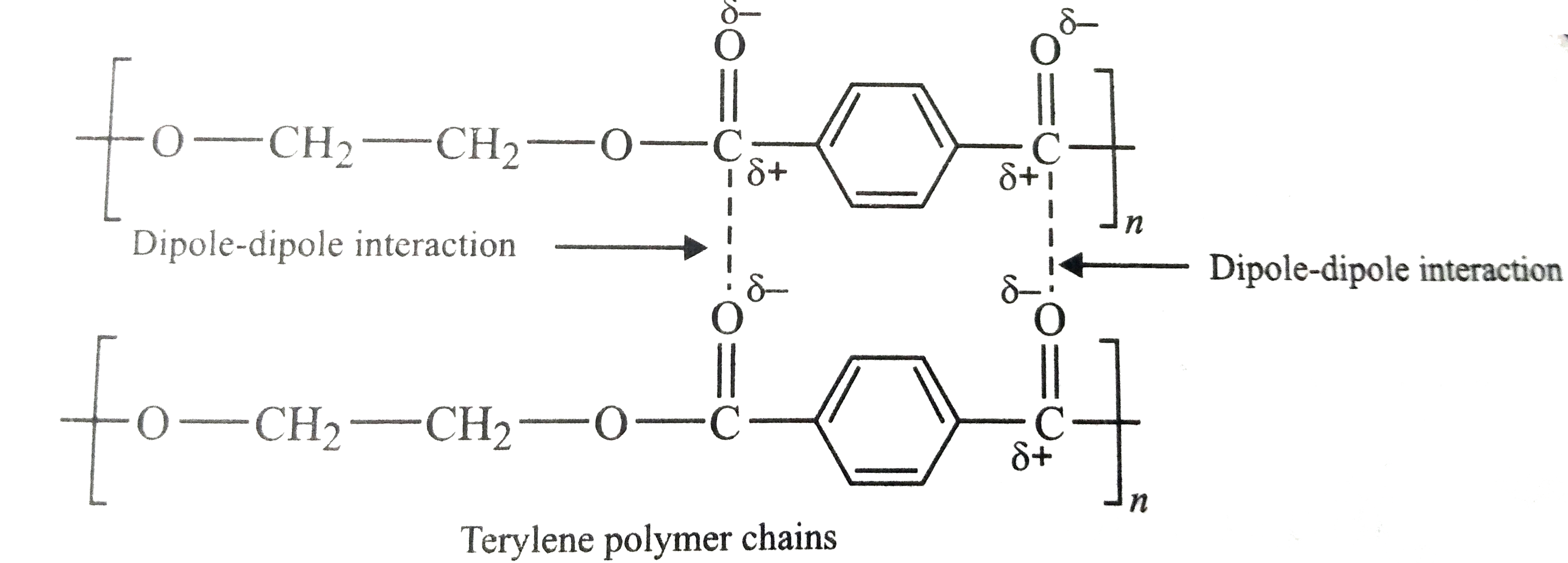 Buna-S , on the other hand, does not have polar functional groups. It has only non - polar hydrocarbon CHAINS and HENCE has only weak van DER WAALS forces of attraction as shown below : 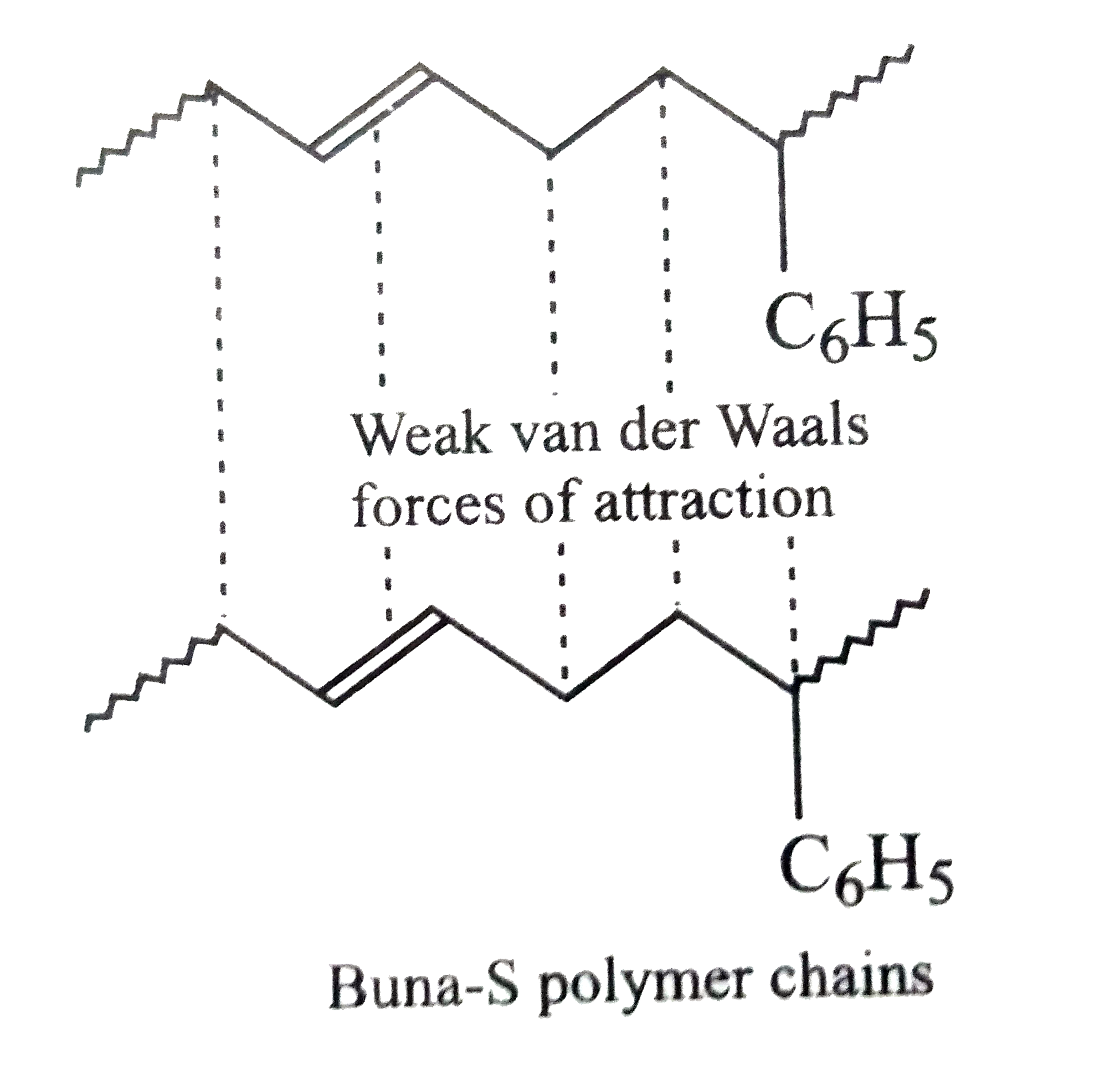
|
|
| 9. |
Differentiate the following pairs of polymers based on the property mentioned againsteach : (i) Novolac and Bakelite (structure). (ii) Buna - S Terylene( intermolecular forces of attraction). |
|
Answer» Solution :(i) Novalac is a linear condensation polymer of o-hydroxy methylphenol formed by reaction between PHENOL and formaldehyde. Bakelite is a cross linked condensation polymer of O and p-hydroxy methyl phenol formed by reaction between phenol and formaldehyde. (ii) Buna-S is formed by addition polymerisation. It has weak intermolecular FORCES of attraction. Terylene OBTAINED by condensation between ethylene GLYCOL and terephthalic acid has stronger intermolecular FORCE of attraction (dipole-dipole attraction). |
|
| 10. |
Differentiate soap and detergents? |
Answer» SOLUTION :
|
|
| 11. |
Differentiate soapsand detergents . |
Answer» SOLUTION :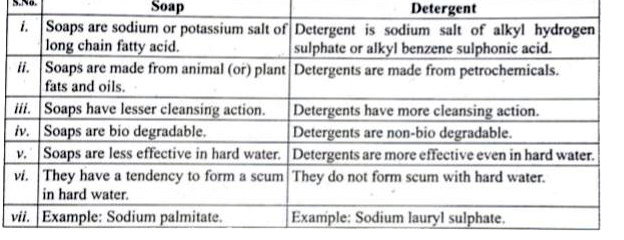
|
|
| 12. |
Differentiate primary valency and secondary valency. |
Answer» SOLUTION :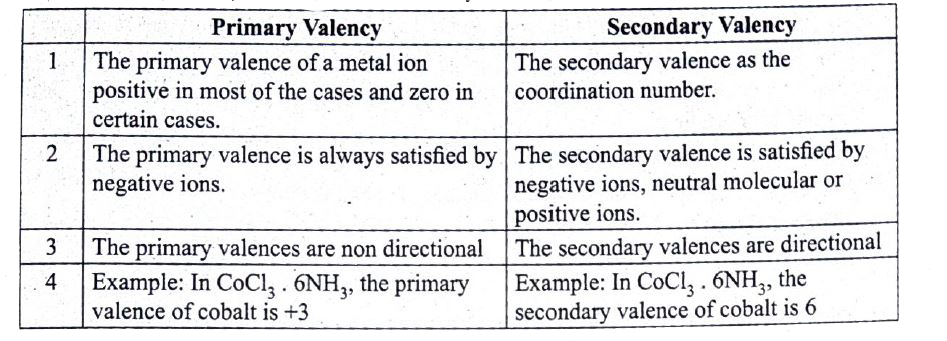
|
|
| 13. |
Differentiate Primary and Secondary cells. |
Answer» SOLUTION :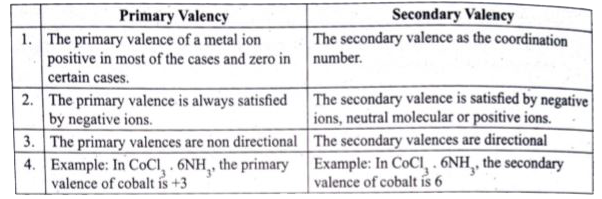
|
|
| 14. |
Differentiate physisorption and chemisorption. |
Answer» SOLUTION :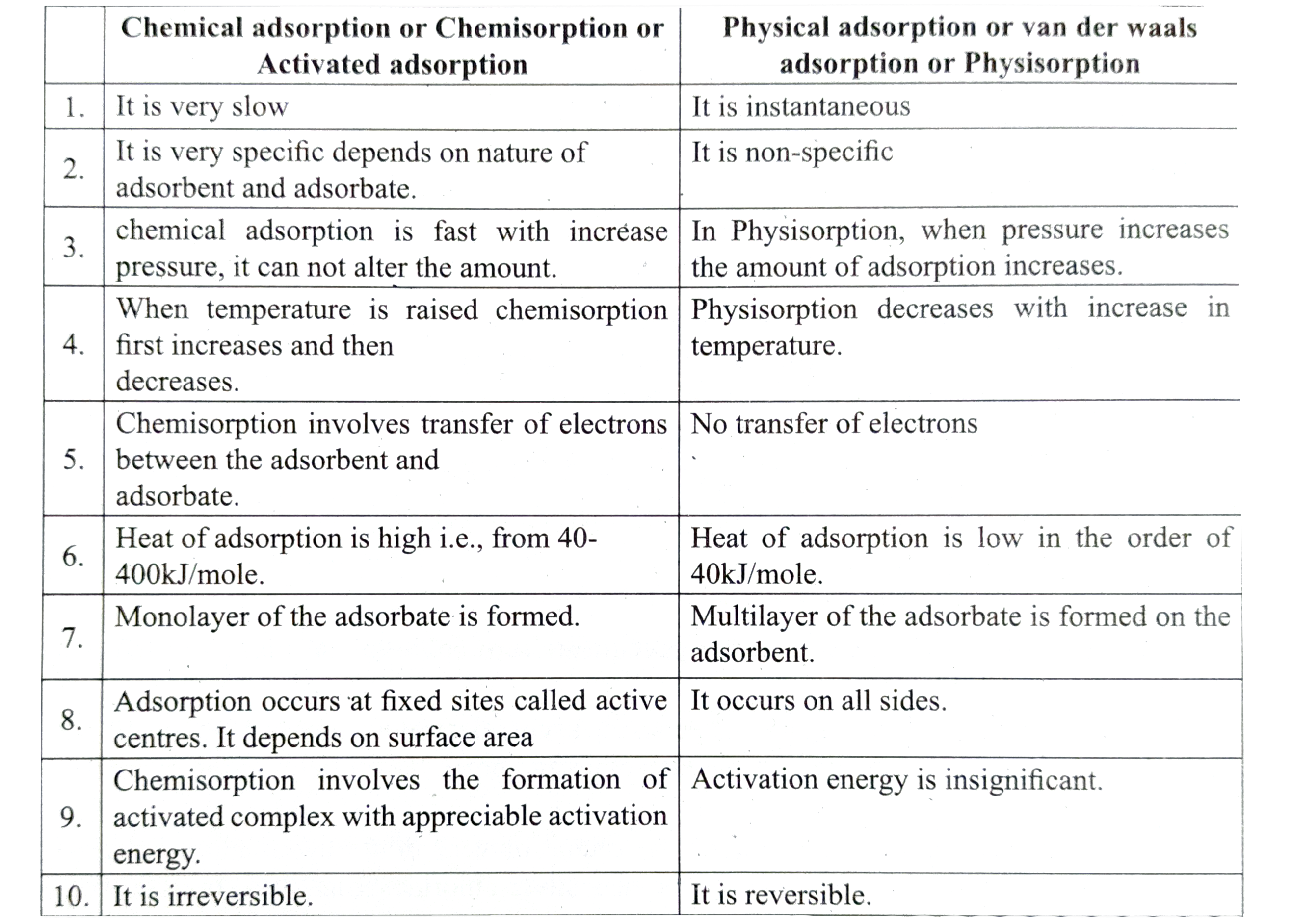
|
|
| 15. |
Differentiate phenols from aleohol. |
|
Answer» Solution : Test to DIFFERENTIATE alcohols and phenols: (i) Phenol REACT with benzene diazonium chloride to form a red ORANGE dye, but ethanol has no REACTION with it. (II)Phenol gives purple colouration with ncutral ferric chloride solution, aleohols do not give such coloration with `FeCl_3`. (ii) Phenol reacts with NaOH to give sodium phenoxide. Ethyl alcohol does not react with NaOH. |
|
| 16. |
Differentiate lyophillic and lyophobic colloids |
Answer» SOLUTION :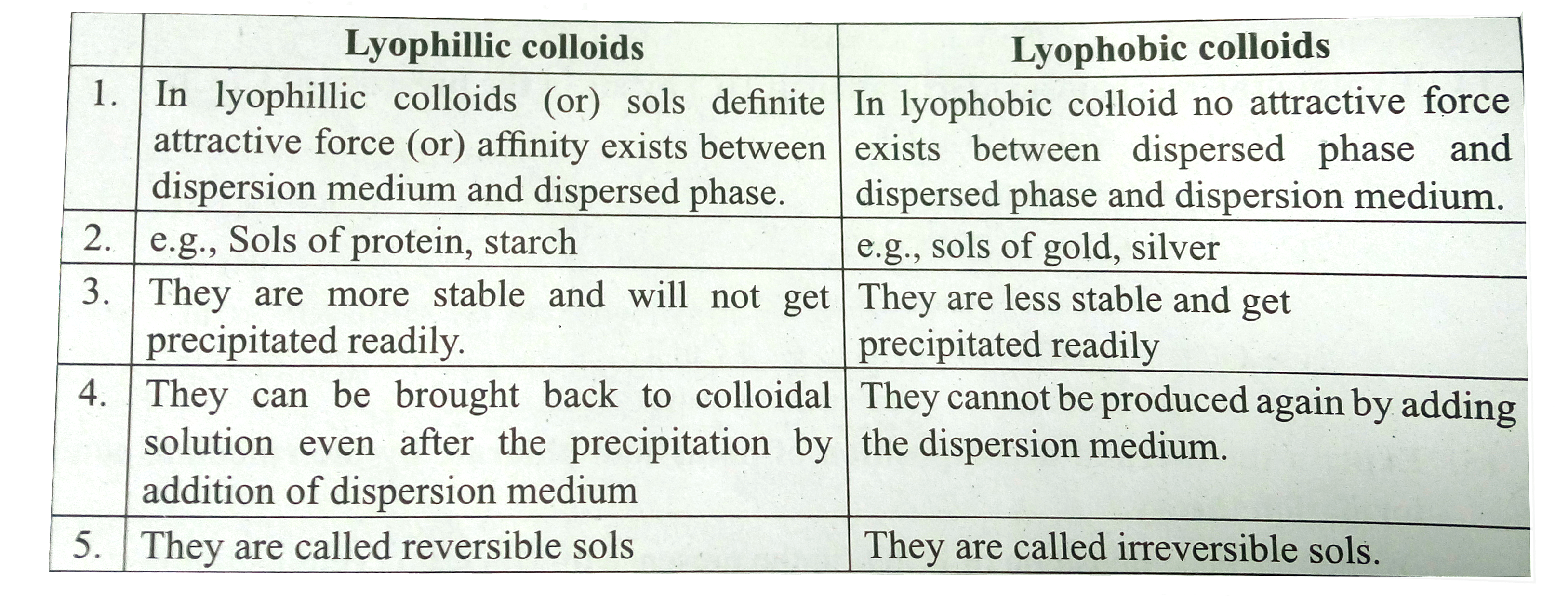
|
|
| 17. |
Differentiate homogeneous and heterogeneous catalysis. |
Answer» SOLUTION :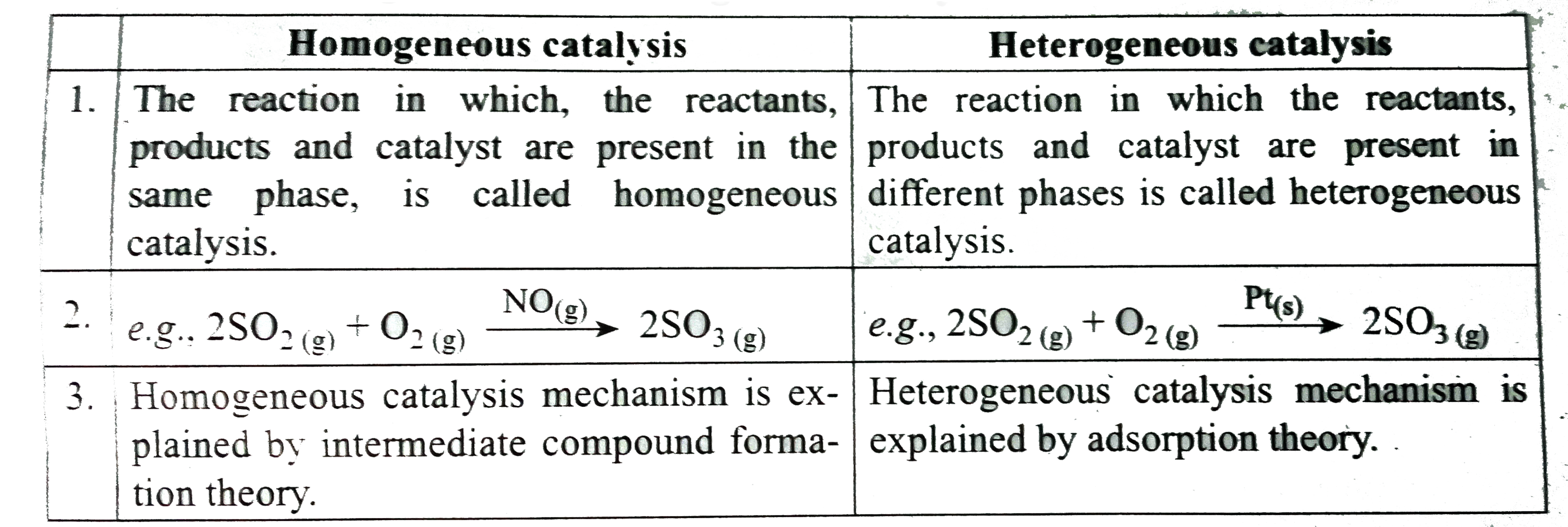
|
|
| 18. |
Differentiate on the basis of chemical composition between cationic and anionic detergents Also give one example of each category. |
|
Answer» Solution :Cationic detergents : These are quatenary ammonium salts of amines with acetates, chlorides or bromides an ANIONS. Cationic part possesses a long hydrocarbon chain and a POSITIVE charge on nitrogen. Example : Cetyltrimethylammonium bromide is an example. ANIONIC detergents : These are SODIUM salts of sulphonated long chain alcohols or hydrocarbons. Example : `underset("Sodium laurylsulphate")(CH_(3)(CH_(2))_(10)CH_(2)OSO_(3)^(-)Na)` |
|
| 19. |
Differentiate Lewis acids and Lewis bases. |
Answer» SOLUTION :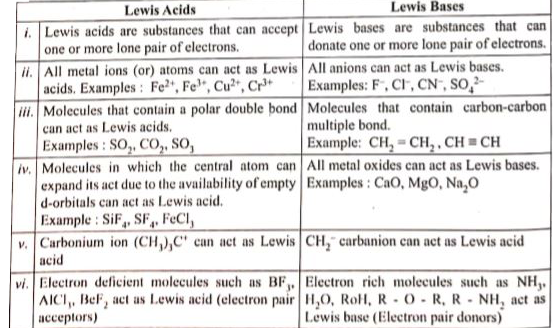
|
|
| 20. |
Differentiate crystalline solids and amorphous solids. |
Answer» SOLUTION :
|
|
| 21. |
Differentiate between the following : Secondary and tertiary structure of protein |
|
Answer» Solution :Secondary structure is responsible for the shape of protein `ALPHA`- helix and `beta`-pleated SHEETS in which polypeptide CHAINS have peptide bonds. Teritary structure represents overall folding of polypeptide chain and GIVE rise to the fibrous of globular MOLECULAR shape. |
|
| 22. |
Differentiate between the nucleotides of DNA and RNA. |
| Answer» SOLUTION :Nucelotide of DNA contains deoxyribose SUGAR while nucleotide of RNA contains ribose sugar PART. They also differ in one heterocyclic base. DNA contains thymine while RNA contains Liracil . | |
| 23. |
Differentiate between the following : Peptide linkage and Glycosidic linkage |
| Answer» Solution :Peptide linkage is —CONH— FORMED between TWO AMINO acids while glycosidic linkage is an OXIDE linkage between two MONOSACCHARIDES. | |
| 24. |
Differentiate between the following : Fibrous proteins and Globular proteins |
| Answer» Solution :In fibrous protein, the POLYPEPTIDE CHAINS RUN parallel while in globular, the chains of polypeptides coil around to give a SPHERICAL shape (or any other CORRECT difference). | |
| 25. |
Differentiate between the following : Amylose and Amylopectin |
| Answer» SOLUTION :Amylose is water soluble COMPONENT while amylopectin is water INSOLUBLE. | |
| 26. |
Differentiate between the following : alpha-helix and beta-pleated sheet structure of protein |
|
Answer» Solution :`alpha`-helix structure : The peptide chains coiled up to FORM right handed helix involving H-bonding (INTRAMOLECULAR). `BETA`-PLEATED sheets : The peptide chains lie side by side together by intermolecular HYDROGEN bonding. |
|
| 27. |
Differentiate between rubbers and plastics on the basis of intermolecular forces. |
|
Answer» Solution :Rubber is a NATURAL POLYMER which contains elastic properties. It is also called as elastomers. In natural rubber cis-polyisoprene molecules consists of various chains held together by weak van der Waals INTERACTIONS and has a coiling structure. So, it can be stretched like a spring. Natural polymer is a linear polymer of ISOPRENE (2-methyl-1,3-batudiene). Plastics are generally polymer of ethene known as polythene. Polythene is thermoplastic polymer which may be linear or branched type of polymers and possesses intermediate intermolecular forces of attraction. It has linear structure that can be moulded but can.t be regained on its original SHAPE after stretching. |
|
| 28. |
Differentiate between retention and inversion. |
Answer» Solution :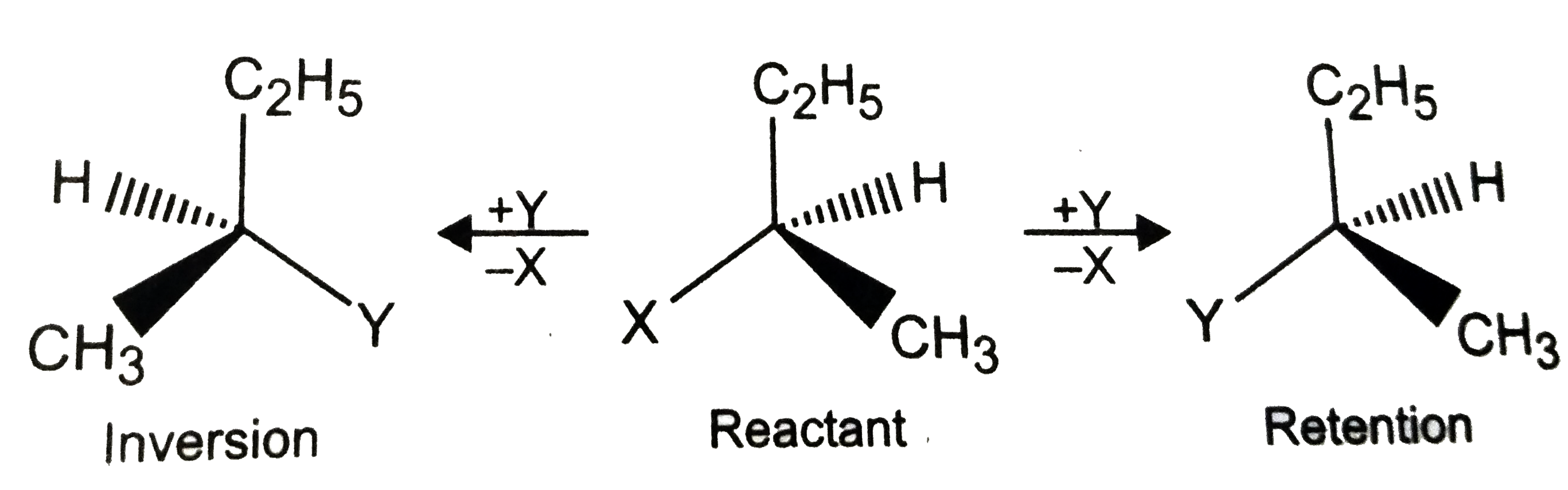 If the relative configuration of the ATOMS/ groups around a chiral centre in an optically active MOLECULES REMAINS the same B efore and after the reaction, the reaction is said to proceed with RETENTION of configuration. on the other hand, if the relative configuration of the atoms/groups around a chiral centre in the product is opposite to that in the reactant, the reaction is said to proceed with inversion of configuration. for example. |
|
| 29. |
Differentiate between point defects and line defects. |
|
Answer» Solution :Point DEFECTS are the irregularities or deviation from ideal ARRANGEMENT around a point or an atom in a CRYSTALLINE substance. Line defects are the irregularities or deviations from ideal arrangement in ENTIRE rows of LATTICE points. |
|
| 30. |
Differentiate between nucleoside and nucleotide: |
|
Answer» Solution :A unit FORMED by the ATTACHMENT of a heterocyclic BASE to 1 position of pentose sugar is KNOWN as nucleoside (base+ sugar ) The unit formed by linking a nucleoside to phosphoric acid at 5 position of sugar is called a nucleotide (base+ sugar + phosphoric acid) |
|
| 31. |
Differentiate between molarity and molality of a solution. What is the effect of temperature in molarity and molality of a solution ? |
| Answer» SOLUTION :TEMPERATURE does INFLUENCE MOLARITY of a solution but not its MOLALITY. | |
| 32. |
Differentiate between molecular structures and behaviours of thermoplastic and thermosetting polymers. Give one example of each type. |
|
Answer» SOLUTION :Thermoplastic polymers : These are the linear or slightly branched long chain molecules capable of repeatedly softening on HEATING and hardening on cooling. These polymers possess intermolecular forces of attraction intermediate between ELASTOMERS and fibres. An example of thermoplastic polymer is polythene. Thermosetting polymers: These polymers are cross-linked or heavily branched molecules which on heating undergo extensive cross-linking in moulds and again BECOME infusible. They cannot be reused. An example of thermosetting polymer is bakelite. |
|
| 33. |
Differentiate between "minerals" and "ores". |
|
Answer» Solution :The naturally occuring chemical substances in which metals occur in the native or combined state are called MINERALS. Minerals are obtained through mining. The minerals that are VIABLE to be used as a source of the metal are called ores. All ores are minerals but all minerals are not ore. For example : Bauxite `(Al_2O_3 cdot xH_2O)` and clay `(Al_2O_3cdot2SiO_2.2H_2O`) are minerals of aluminium. HOWEVER, aluminium is EXTRACTED from bauxite. Thus bauxite is an ore of ALUMINUM. |
|
| 34. |
Differentiate between molality and molarity of a solution ? |
Answer» SOLUTION :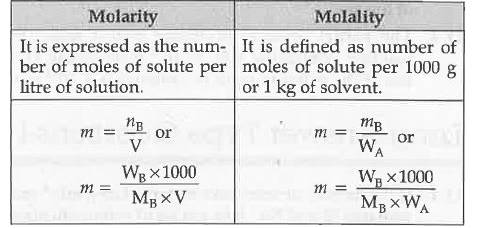
|
|
| 35. |
Differentiate between molarity and molality in a solution. What is the effect of temperature change on molarity and molality in a solution ? |
Answer» SOLUTION :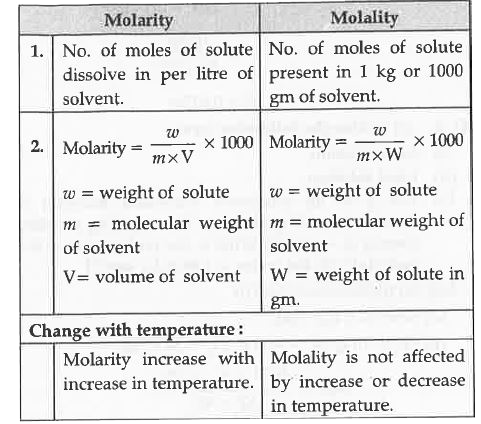
|
|
| 36. |
Differentiate between ''minerals'' and ''ores''. |
| Answer» Solution :The naturally occuring CHEMICAL substances containing metals which occur in the earth along with impurities are called minerals. The mineral from which the metal can be extracted conveniently and economically is called an ORE. Thus, all ores are minerals but all minerals are not ores. For EXAMPLE, iron is found in the earth.s crust as oxides, carbonates and sulphides. These are all minerals of iron. Out of these minerals or iron, the oxides of iron are employed for extraction of the metal. Therefore, oxides of iron are the ores of iron. SIMILARLY, aluminium occurs in earth.s crust in FORM of two minerals, i.e., bauxite `(Al_(2)O_(3).xH_(2)O)" and clay "(Al_(2)O_(3).2SiO_(2).2H_(2)O)`. Out of these two minerals, Al can be conveniently and economically extracted from bauxite. Therefore, bauxite is the ore of aluminium and clay is not the ore of aluminium. | |
| 37. |
Differentiate between 'minerals' and 'ores'. |
Answer» SOLUTION :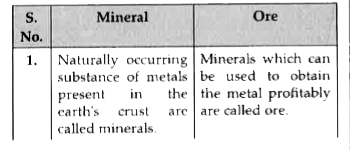 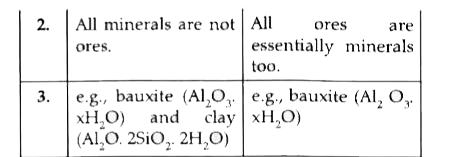
|
|
| 38. |
Differentiate between minerals and ores. |
| Answer» Solution :The naturally occuring chemical SUBSTANCES of metal in earth.s crust along with carthly impurities like sand, lime stone, ROCKS etc. are CALLED minerals ORES. An ore is a mineral from which the metal can be EXTRACTED conveniently and economically. All ores are minerals but all minerals are not ores. | |
| 39. |
Differentiate between mineral and ore. |
|
Answer» Solution :Mineral is the NATURALLY occuring CHEMICAL SUBSTANCE in which an element (generally metal ) commonly OCCURS in earth's crust. Ore is the mineral from which an element (metal) can be conveniently and economically isolated. Please note that all ores of a metal are minerals but all minerals are not ores. |
|
| 40. |
Differentiate between lyophillic and lyophobic colloids (Give is points) |
Answer» SOLUTION :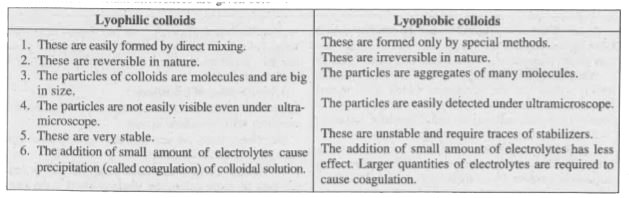
|
|
| 41. |
Differentiate between Keratin and Insulin. |
| Answer» SOLUTION : KERATIN is a fibrous protein while INSULIN is a GLOBULAR protein. | |
| 42. |
Differentiate between homogenous and heterogenous catalysis with one example of each . |
|
Answer» Solution :In the homogenous catalysis , the reactants and the catalyst ara all present in the same phase. But in heterogenous catalysis , these constitute difference phases . For example : (i) Oxide of nitrogen (NO) acts as homogenous catalyst in the oxidation of `SO_2` to `SO_3` in the contactprocess ` 2SO_2 + O_2 overset(NO_2)(to) 2SO_3` (II) Nickel (Ni) acts as the heterogenous catalyst in the reaction of steam on METHANE of form carbon monoxide and hydrogen . `CH_4 + H_2O UNDERSET(1273 K)overset(Ni)(to) underset("steam")(CO + 3H_2) ` |
|
| 43. |
Differentiate between globular and fibrous proteins. |
Answer» SOLUTION :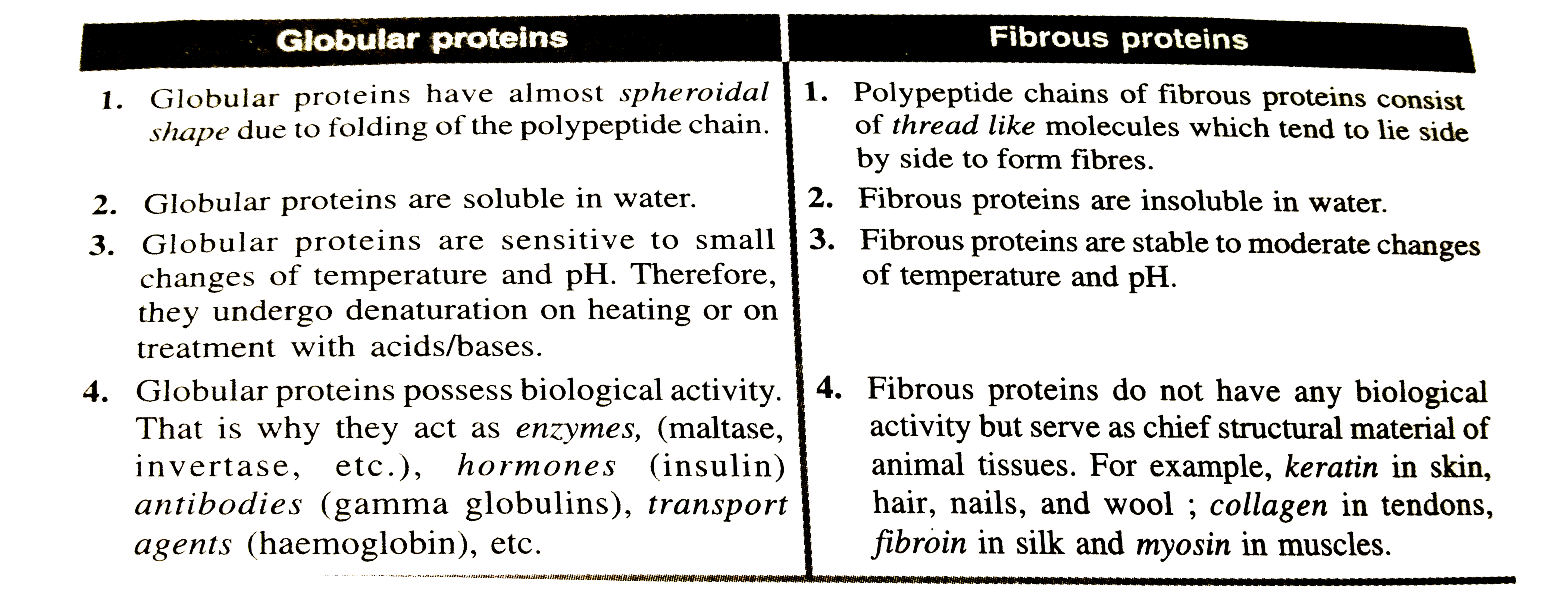
|
|
| 44. |
Differentiate between following: (i) Amylose and amylopectin. (ii) Globular protein and Fibrous protein (iii) Nucleotide and Nucleoside. |
|
Answer» SOLUTION :(i) Amylose and Amylopectin: Amylose is water soluble in constitutes about 15-20% of starch. It is a long unbranched CHAIN with 200-1000a-D-(+)- glucose units held together by C1-C4 glycosidic linkage. Amylopectin is INSOLUBLE in water and constitutes 80-85% of starch. It is a branched chainpolymer of a-D- glucose units with C1-C4 glycosidic linkage whereas branching occurs by C1-C6 glucosidic linkage. (ii) GLOBULAR protein and Fibrous protein: Globular protein and Fibrous protein: Globular proteins are obtained when chains of polypeptides coil around to give a spherical shape. These are usually soluble in water. When the polypeptide chains run parallel and are held together by hydrogen and disulphide bonds, then fibrous proteins are obtained. Such proteins are generally insoluble in water. Nucleotide and Nucleoside: A unit formed by the attachment of a base to 1 position of sugar is known as nucleoside. In nucleoside, the sugar carbons are numbered as 1,2,3 etc. in order to distinguish these from the bases. When nucleosides is linked to PHOSPHORIC acid at 5- position of sugar moiety, we get a nucleotide. |
|
| 45. |
Differentiate between globular and fibrous proteins . |
Answer» Solution :On the BASIS of molecular structure, PROTEINS have been CLASSIFIED as GLOBULAR and fibrous proteins . The difference between the TWO are : 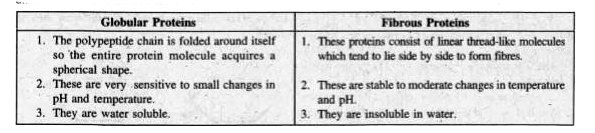
|
|
| 46. |
Differentiate between fibrousproteins and globular proteins. What is meant by thedenaturationof a protein ?. |
Answer» Solution :Differences between fibrousproteins and globoular PROTEIN : Denaturation of protein : Whensolubleforms of PROTIEN such as globour proteins are SUBJECTED to actin of heat ,acidsalkalies orelectrolytes, they undrgoco -agulation to from fibrous proteins insolbein water, resulting in changeof physical and biological properties of protein. THESEARE deantured proteins and PROCESS is calleddenaturation. |
|
| 47. |
Differentiate between [Co(NH_(3))_(5)CI]SO_(4) and [Co(NH_(3))_(5)SO_(4)]Cl ionisationisomers. |
|
Answer» Solution :(A) `[CO(NH_(3))_(5)CI]SO,_(4)` and (B) `[Co(NH_(3))_(4)SO_(4)]Cl` being ionisations ISOMERS, in aqueous solution they ionise producing different ions. (A) `[Co(NH_(3))_(5)Cl]SO_(4) hArr [Co(NH_(3))_(5)Cl]^(2+) +SO_(4)^(2-)` (B) `[Co(NH_(3))_(5)SO_(4)]Cl hArr [Co(NH_(3))_(5)SO_(4)]^(+) + Cl^(-)` (1) The solution of complex A on reaction with `BaCl_(2)`, forms white precipitateof `BaSO_(4)`indicating `SO_(4)^(2-)` is present in outer sphere,`BaCl_(2) + SO_(2)^(4-) to BaSO_(4(s)) + 2Cl^(-)` (II) The solution of complex B on reaction with `AgNO_(3)` forms whitepreciptateof AgClindicating `Cl^(-)`is presentin outerspace.`AgNO_(3) + Cl^(-) toAgCl_((s)) + NO_(3)^(-)` |
|
| 48. |
Differentiate between crystalline and amorphous solids under the following headings : (a) Melting point (b) Anisotropy(c) Order in the arrangement of particles. |
Answer» SOLUTION :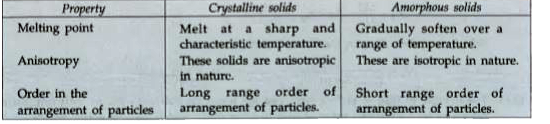
|
|
| 49. |
Differentiate between disinfectants and antiseptics. Give one example of each group. |
|
Answer» Solution :(i) ANTISEPTIC : These are the chemicals which prevent the growth of micro-organisms or kill them but are not harmful to human beings. These are applied externally to the living TISSUES such as wounds, cuts and diseased skin surfaces. Dettol (chloroxylenol + `alpha`-terpineol), bithional, furacin, DILUTE solution of boric acid are COMMON example of antiseptics. (ii) Disinfectant : These are chemicals which kill micro-organisms or prevent their growth but are not safe for human beings. These are applied to INANIMATE objects such as floors, drainage systems. Some substances can act as an antiseptic as well as disinfectant by varying the concentration. For example, 0.2% solution of phenol is an antiseptic while its one percent solution is disinfectant. |
|
| 50. |
Differentiate between adsorption and absorption |
Answer» SOLUTION :
|
|