Saved Bookmarks
This section includes 7 InterviewSolutions, each offering curated multiple-choice questions to sharpen your Current Affairs knowledge and support exam preparation. Choose a topic below to get started.
| 1. |
Construct galvanic cells from the following pairs of half cells and calculate their emf. underset(1 atm) ((Pt)) H_2|HCl (1M) and underset(1 atm)Pt (Cl_2)|HCl (1M) |
| Answer» SOLUTION :`H_2|H^+||Cl_2|Cl^(-) , E=1.36V` | |
| 2. |
Construct galvanic cells from the following pairs of half cells and calculate their emf. Cu|Cu^(2+) (1M) and underset((1M)) Cl^-| underset((1 atm)) Cl_2 Pt |
| Answer» SOLUTION :`Cu|Cu^(2+)||Cl_2|Cl^(-), E=1.02V` | |
| 3. |
Construct galvanic cells for the given spontaneous radox reactions. (i)Zn(s)+2HCl(aq)rarrZnCl_(2)(aq)+H_(2)("g, 1 atm") (ii) Cl_(2)("g, 1 atm")+2I^(-)(aq)rarr I_(2)(aq)rarr I_(2)(s)+2Cl^(-)(aq) (iii) (1)/(2)H_(2)("g, 1 atm")+(1)/(2)Cl_(2)("g, 1 atm") rarr HCl (aq) (iv) Fe^(2+)(aq)+Ce^(4+)(aq)rarrFe^(3+)(aq)+Ce^(3+)(aq) (v) H_(2)("g, 1 atm")+AgCl(s)rarr Ag(s)+HCl(aq) |
Answer» SOLUTION :
|
|
| 4. |
Construct galvanic cells from the following pairs of half cells and calculate their emf at 25^@C Fe^(3+)(0.1M), Fe^(2+) (1M) (Pt) E_(Fe^(3+),Fe^(2+))=0.77volt AgCl(s),Cl^- (0.001M) |Ag E_(AgCl,Cl^-)^@=0.22 volt |
|
Answer» Solution :For the half cell reaction `FE^(3+)+e LEFTRIGHTARROW Fe^(2+)`, `E_(Fe^(3+),Fe^(2+))=E_(Fe^(3+),Fe^(2+))^@-0.0591/1 LOG""([Fe^(2+)])/([Fe^(3+)])` `=0.77- 0.0591/1 log"" 1/0.1=0.71` volt And, for the half cell reaction `AGCL(s)+ e=Ag(s)+CL^(-)` |
|
| 5. |
Construct atcellconsisting of Ni_((ag))^(2+)| Ni_((s)) halfcell andH^(+) ||H_(2(g)) | Pthalf cell (a)Writethe cellreaction ( b)Calculateemfof the cell if cell[Ni^(2+)] = 0.1 [ H^(+)]=0.05 MandE_(Ni)^(0)=- 0.257 V |
|
Answer» `[Ni ^(++) ]=0.1 M` (a) Halfcells : (i) `Ni_((ag))^(2+) | Ni_((s))" and" (II)H_((aq))^(+) | H_(2(s)) | Pt ` `E_(Ni^(2+)//Ni) = - 0.257 V , E_(H^(+) //H_(2) )^(0) E_(SHE)^(0)= 0.0V` Theformulation of thecell willbe `Ni_((s))| NI_((ag))^(2+) " || " H_((ag))^(+)|H_(2) (g , 1 atm ) |Pt` `(RHE (H_((ag)^(+))) +e^(-) to .(1)/(2) H_(2(g))xx2)/(Ni_((s) + 2H_((ag))^(+) to Ni_((aq))^(+) + H_(2(g))))"" underset"(Overall cell reaction )"underset"(Reduction at CATHODE )"("(Oxidation at anode)")` `( b) [Ni^(2+) ]=0.1 M :[ H^(+)]= 0.05 M , N=2` `E_(" cell" )^(0) = E_(H^(+)// H_(2))^(0) = E_(Ni^(2+)// Ni)^(0)=0.0 -(0.257)` `=0.256 V` `E_("cell ") = E_(" cell")^(0)- (0.0592)/(n)lgo _(10).([Ni^(2+)] xx [ H_(2)])/([H^(+) ]^(2))` `=0.257 -(0.0592)/(2) log_(10) .(0.1 xx1)/((0.05)^(2))` ` =0.257 - 0.0296 log _(10) 40` `=0.257 -0.0296 xx 1.6020` `=0.257 -0.04742` `=0.2096 V` `~= 0.2096V` |
|
| 6. |
Constituents of dettol are |
|
Answer» terpineol and CHLOROXYLENOL |
|
| 7. |
Constant boiling mixtures are called : |
|
Answer» IDEAL SOLUTE |
|
| 8. |
Considering the stability of sigma-complex, explain why -OCH_3 is o-/p-orienting -NO_2 is meta-orienting . |
Answer» Solution :Electrophilic SUBSTITUATION reaction in anisole proceeds VIA the following reaction mechanism-  There is an extraordinarily stable (every atom has its octer fulfilled) resonance structure in both ortho-and para- `SIGMA`-complex, but there is no such resonance structure in the meta-`sigma`-complex. So, ortho-and para-`sigma`-complex are more stable than meta-`simga`-complex. Consequently, electrophilic substitution proceeds easily and rapidly via ortho-and para-`sigma`-complex resulting in ortho-and para-substituted compounds as major products. Thus, `-OCH_(3)` is ortho-/para-orienting group. Electrophilic substitution reaction in nitrobenzene proceeds via the following reaction mechanism-  Both ortho-and para-`sigma`-COMPLEXES are extraordinarily unstable resonance structures (due to presence of positive charge on two adjacent atoms). However, in meta-`sigma`-complex there is no such resonance structure and so it is more stable than ortho-and para-`sigma`-complex. Thus, the reaction proceeds rapidly via the meta-`sigma`-complex and the meta-substituted compound is obtained as the major product. Thus, `-NO_(2)` is meta-orienting group. |
|
| 9. |
Considering the reaction, C(s) + O_(2)(g) to CO_(2)(g) + 393.5 kJ the signs of DeltaH, DeltaS and DeltaG respectively are: |
|
Answer» `+,-,-` `DELTAS = +ve` (SPONTANEOUS at all temperature) `DeltaG = -ve` (because reaction is spontaneous) |
|
| 10. |
considering the shape of a Ca nucleus like a sphere, calculate the density of the nucleus of Ca of mass number 40 |
| Answer» Solution :`1.8 XX 10^(14)G CM^(-3)` | |
| 11. |
Considering the reaction: |
|
Answer» `( +, -, -)` `DELTAH = -Delta S= + , Delta G = -` Its an EXOTHERMIC reaction.Therefore `DeltaH = -ve` as energy is released during an exothermic reaction.As its a spontaneous reaction, `Delta G = -ve`.Also entropy or randomness increases while moving from LHS to RHS.Therefore `DELTAS = + ve`. |
|
| 12. |
Considering the parameters such as bond dissociation enthalpy, electron gain enthalpy and hydration enthalpy, compare the oxidising power of F_2 and Cl_2 |
|
Answer» Solution :Bond dissociation enthalpy : `Cl_2 gtF_2` Electron gain enthalpy : `CL gt F` HYDRATION enthalpy : `F^(.) gt Cl^(-)` Though bond dissociation enthalpy and electron gain enthalpy of chlorine is higher than fluorine, fluorine is stronger oxidizing agent than chlorine because of its very HIGH hydration enthalpy which results in large positive value of ELECTRODE potential of fluorine. Thus `F_2` is stronger oxidizing agent than `Cl_2`. |
|
| 13. |
Considering the parameters such as bond dissociation enthalpy, electron gain enthalpy and hydration enthalpy, compare the oxidising power of F_2 and Cl_2. |
| Answer» Solution :The electrode potential of `F_2(+ 2.87 V)` is much higher than that of `Cl_2 (+ 1.36 V)`, therefore, `F_2` is a much stronger OXIDISING agent than `Cl_2`. This can be explained as under: Electrode potential depends upon three factors : (i) bond dissociation energy, (ii) ELECTRON gain enthalpy and (ii) hydration energy. Although electron gain enthalpy of fluorine is less NEGATIVE (-333 kJ `"mol"^(-1)`) than that of CHLORINE (-349 kJ `"mol"^(-1)`), the bond dissociation energy of F – F bond is much lower (158.8 kJ `"mol"^(-1)`) than that of CI - Cl bond (242.6 kJ `"mol"^(-1)`) and hydration energy of `F^(-)` ion (515 kJ `"mol"^(-1)`) is much higher than that of `Cl^(-)` ion (381 kJ `"mol"^(-1)`). The last two factors more than compensate the less negative electron gain enthalpy of `F_2`. As a result, electrode potential of `F_2` is higher than that of `Cl_2` and hence `F_2` is a much stronger oxidising agent than `Cl_2`. | |
| 14. |
Considering the parameters such as bond dissociation enthalpy, electron gain enthalpy and hydration enthalpy, compare the oxidising power of F_(2) and Cl_(2). Oxidizing power is a combined effect of bond dissociation enthalpy, electron gain enthalpy and hydration enthalpy. |
Answer» Solution :Comparing `F_(2)` and `Cl_(2)` with the given parameters.  Form the data given above, it is clear that the BOND dissociation enthalpy and electron gain enthalpy are higher for CHLORINE but pydration energy is much higher for fluorine. It compensates the effect of other two and thus, makes flourine more oxidizing than chlorine. `(1)/(2)X_(2)(g)overset(1//2Delta_("diss")H^(0))toX(g)overset(Delta_("eg")H^(0))toX^(-)(g)overset(Delta_("hyd")H^(0))toX^(-)("aq")` The relative oxidizing power of the HALOGENS can be further illustrated by their reactions with water. `2"F"_(2)(g)+2" H"_(2)O(l)to4H^(+)("aq")+4F^(-)("aq")+O_(2)(g)""...(i)` `Cl_(2)(g)+H_(2)O(l)toHCl("aq")+HOCl("aq")""...(ii)` |
|
| 15. |
Considering the parameters such as bond dissociation enthalphy, electron gain enthalpy and hydration entalpy, compare the oxidising power of F_2 and Cl_2. |
Answer» Solution :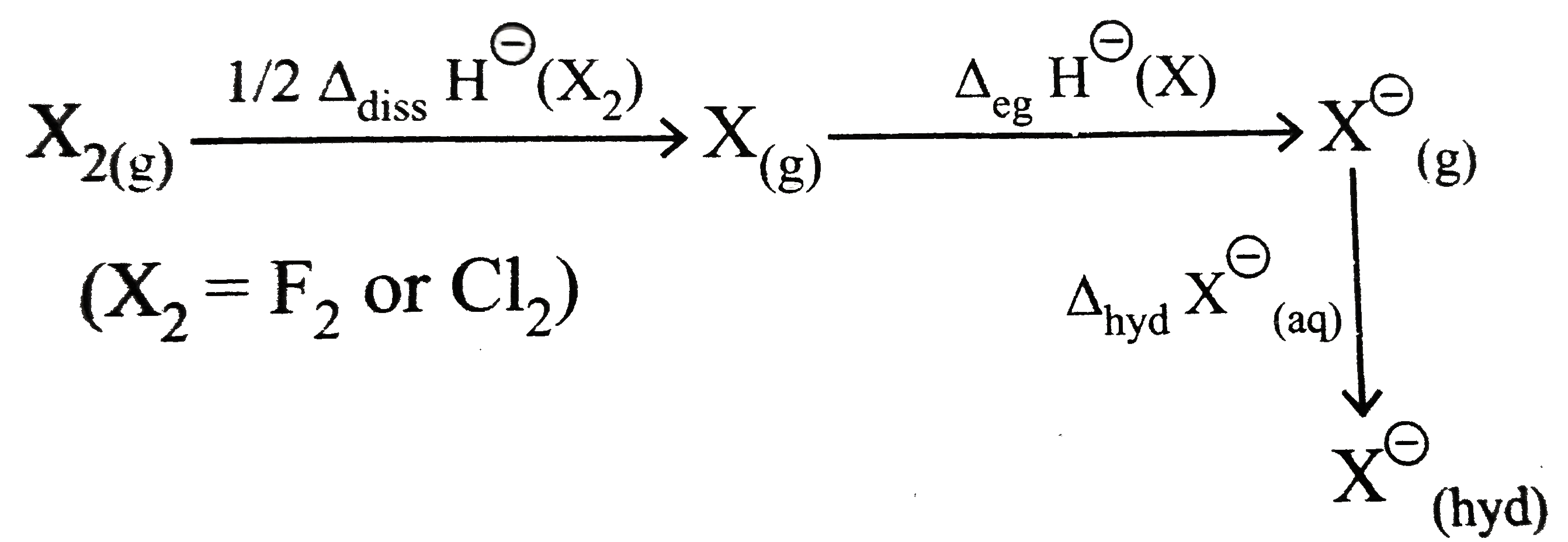 Elctrode potenential depends on: `E=(1)/(2)Delta_(diss)H^(ɵ)(X_(2))+Delta_(eg)H^(ɵ)(X)+Delta_(hyd)H^(ɵ)(X^(ɵ))` Although, electron GAIN enthalpy of fluorine is less negative than that of chlorine the bond dissociation enthalpy of `F-F` bond is MUCH lower than `Cl-Cl` bond and hydration enthalpy of `F^(ɵ)` ion is much HIGHER than that of `Cl^(ɵ)` ion. The later two factors more than compensate the less negative electron gain enthalpy of `F_2`. Consequently electrode potential of `F_2` is higher than `Cl_2` and `F_2` is a much stronger oxidising agent than `Cl_2`. |
|
| 16. |
Considering the parameters such as bond dissociation enthalpy, electron gain enthalpy and hydration enthalpy, compare the oxidising power of F_(2) and Cl_(2). |
| Answer» Solution :The etectrode potential of `F_(2)` (+2.87 V) is much HIGHER that of `Cl_(2)` (+1.36 V), therefore, `F_(2)` is a much stronger OXIDISING agent than `Cl_(2)`. Now, electrode potential depends UPON three factors : (i) bond dissociationn energy, (ii) electron gain enthalpy and (iii) hydration energy. ALTHOUGH electron gain enthalpy of fluorine is LESS negative (-333 kJ `mol^(-1)`) than that of chlorine (-349 kJ `mol^(-1)`), the bond dissociationn energy of F-F bond is much lower (158.8 kJ `mol^(-1)`) than that of Cl-Cl bond (242.6 kJ `mol^(-1)`) and hydration energy of `F^(-)` ion (515 kJ `mol^(-1)`) is much higher than that of `Cl^(-)` ion (381 kJ `mol^(-1)`). The later two factors more than compensate the less negative electron gain enthalpy of `F_(2)`. As a result, electrode potential of `F_(2)` is higher than that of `Cl_(2)` and hence `F_(2)` is a much stronger oxidising agent than `Cl_(2)`. | |
| 17. |
Considering the formation, breaking and stregth of hydrogen bond, pradict which of the following mixture will show a positive devition from Raoult's law? |
|
Answer» METHANOL and acetone  In methanol, the MOLECULES are HYDROGEN bonded In methanol, the MOLECULES are HYDROGEN bonded On ADDING acetone, the extent of H-bonding decreses. Therefore, the solution shows positive deviation. |
|
| 18. |
Considering the formation, breaking and strength of hydrogen bond, predict which of thefollowing mixtures will show a positive deviation from Raoult's law. |
|
Answer» METHANOL and ACETONE. |
|
| 19. |
Considering the formation, breaking and strength of hydrogen bond, predict which of the following mixtures will show a positive deviation from Raoult's law ? |
|
Answer» Methanol and acetone (A - A)* Interaction represents interaction between particles / molecules of acetone AMONG which there is no hydrogen bonding. (A - B)** Interaction is the interaction between the particles / molecules of acetone and methanol. |
|
| 20. |
Considering the formation, breaking and strength of hydrogen bond, predict which of the following mixtures will show a positive deviation from Raoult's law? |
|
Answer» Mmethanol and ACETONE |
|
| 21. |
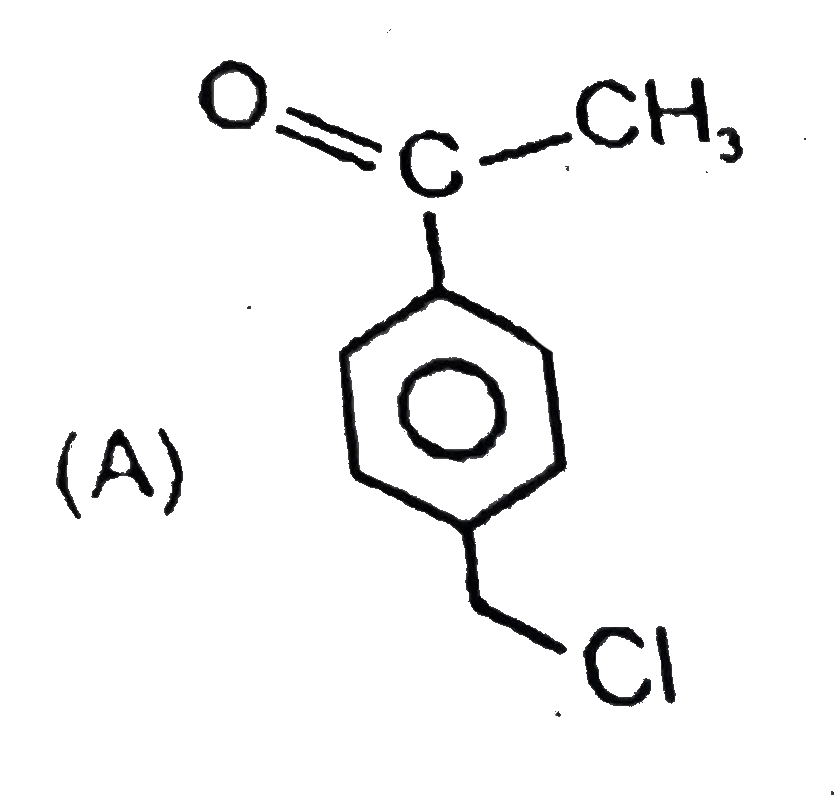
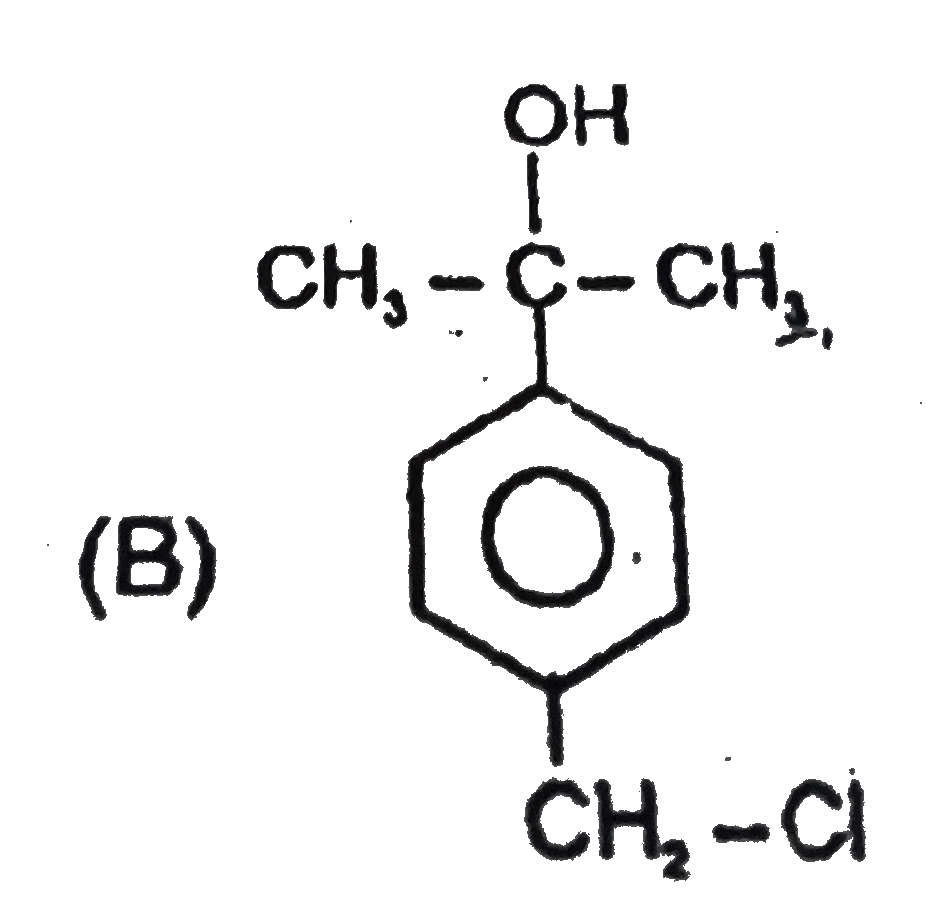
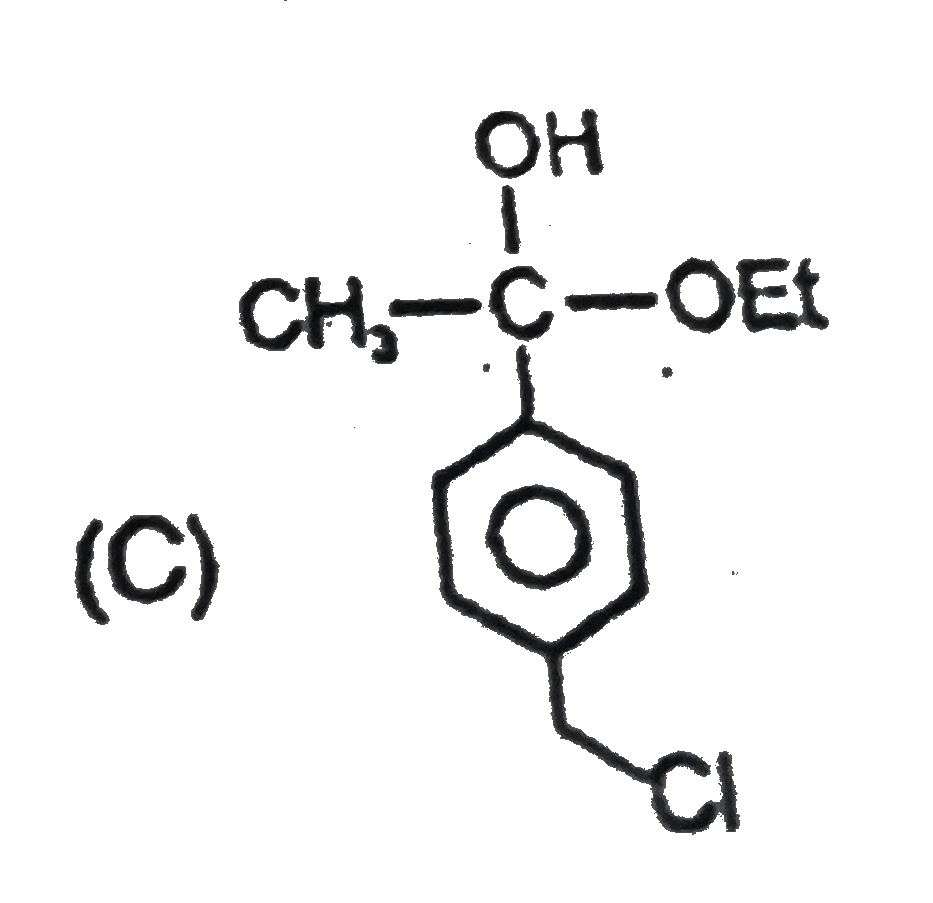
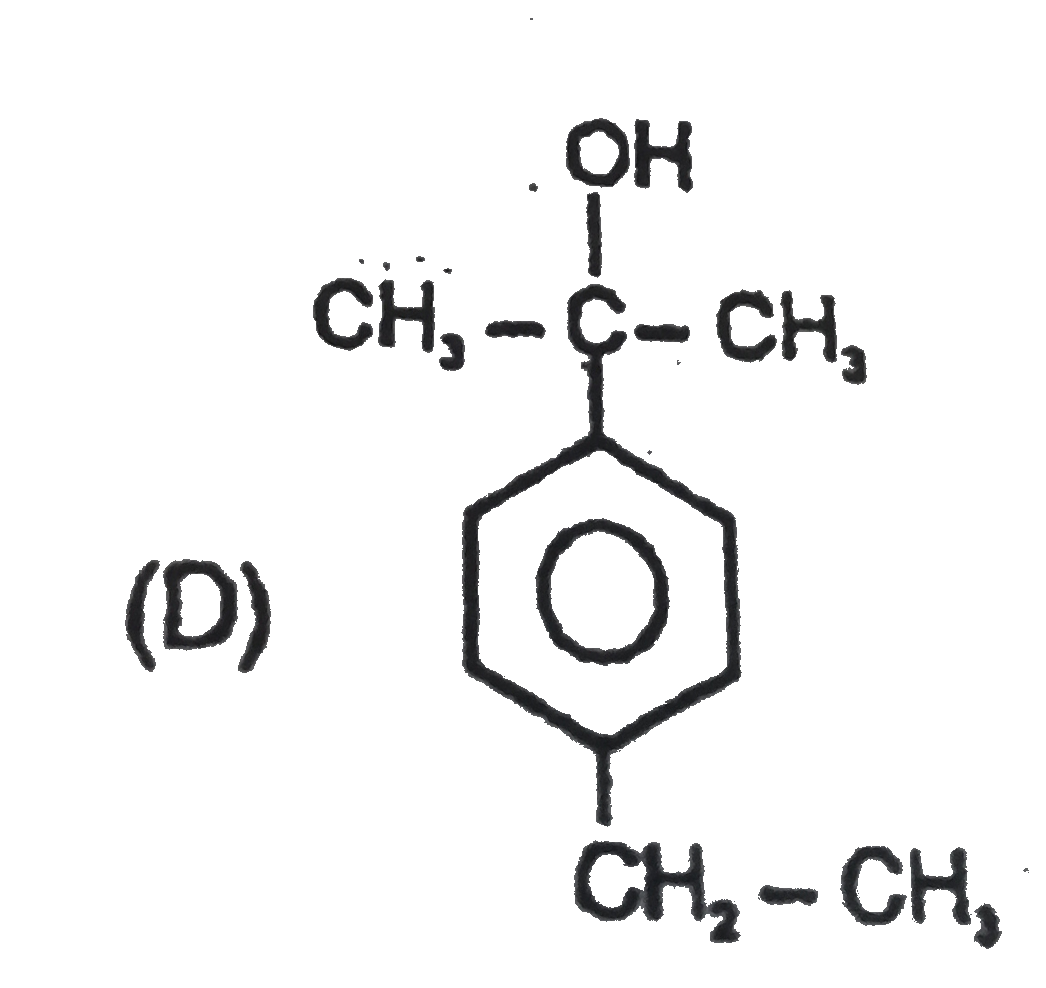
Considering the following reactions (I,II,III) and give your answer for following question. underset((ii)H_3O^(o+))overset((i)CH_3MgBr("excess"))to (III)(a)EtO-oversetoverset(O)(||)C-OETunderset((ii)H^(+))overset((i)PhMgBr("excess"))to (b)EtO-oversetoverset(O)(||)C-OETunderset((ii)H^(+))overset((i)CH_3MgBr("excess"))to (c )H-oversetoverset(O)(||)C-OETunderset((ii)H^(+))overset((i)PhMgBr("excess"))to (d)H-oversetoverset(O)(||)C-OETunderset((ii)H^(+))overset((i)CH_3MgBr("excess"))to (e)ClCH_2COOEtunderset((ii)H^(+))overset((i)CH_3MgBr("excess"))to The product in the reaction (II) will be : |
|
Answer»
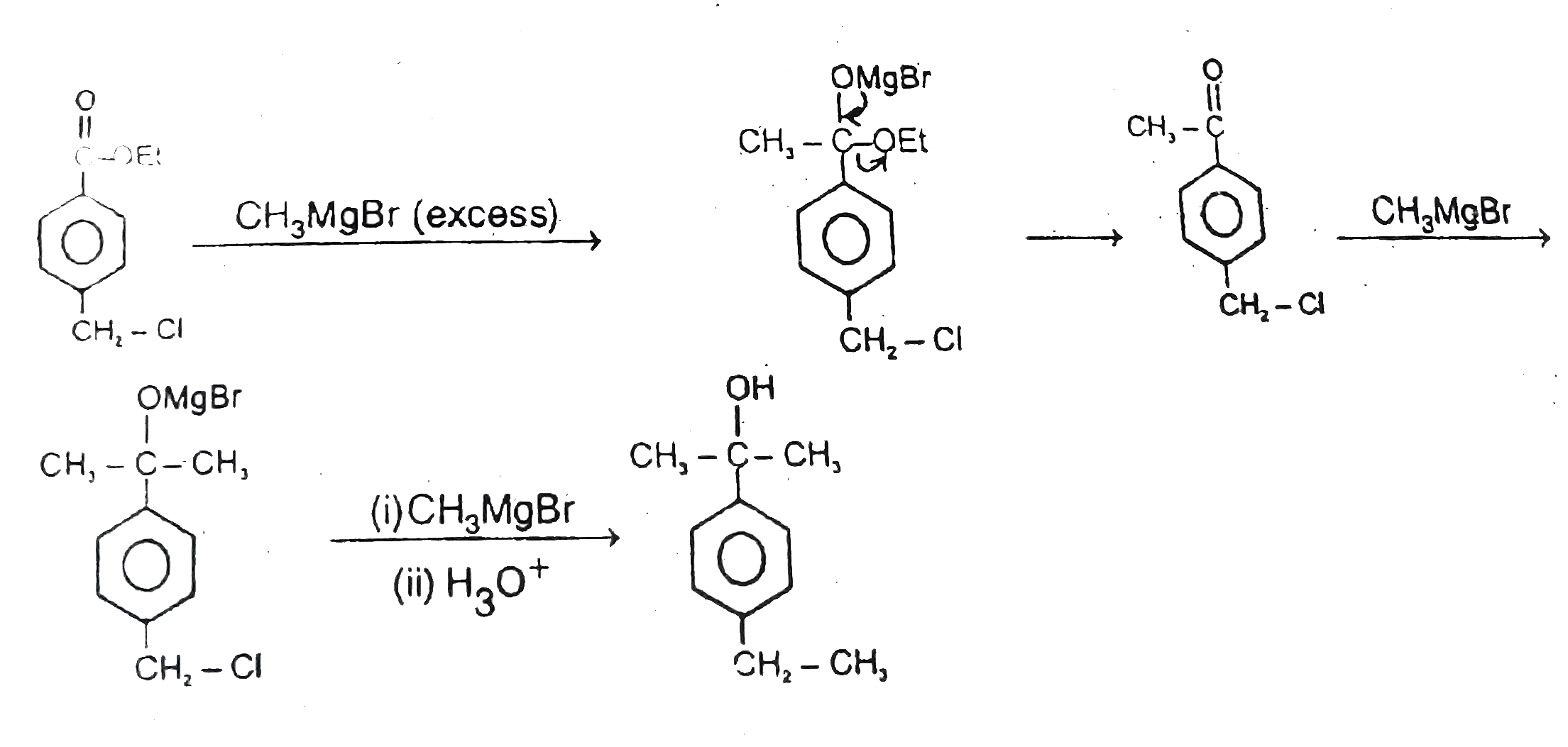
|
|
| 22. |
Considering the following reactions (I,II,III) and give your answer for following question. underset((ii)H_3O^(o+))overset((i)CH_3MgBr("excess"))to (III)(a)EtO-oversetoverset(O)(||)C-OETunderset((ii)H^(+))overset((i)PhMgBr("excess"))to (b)EtO-oversetoverset(O)(||)C-OETunderset((ii)H^(+))overset((i)CH_3MgBr("excess"))to (c )H-oversetoverset(O)(||)C-OETunderset((ii)H^(+))overset((i)PhMgBr("excess"))to (d)H-oversetoverset(O)(||)C-OETunderset((ii)H^(+))overset((i)CH_3MgBr("excess"))to (e)ClCH_2COOEtunderset((ii)H^(+))overset((i)CH_3MgBr("excess"))to In which set of the reactions in (III) the product will be 2^@ alcohol ? |
Answer» Solution :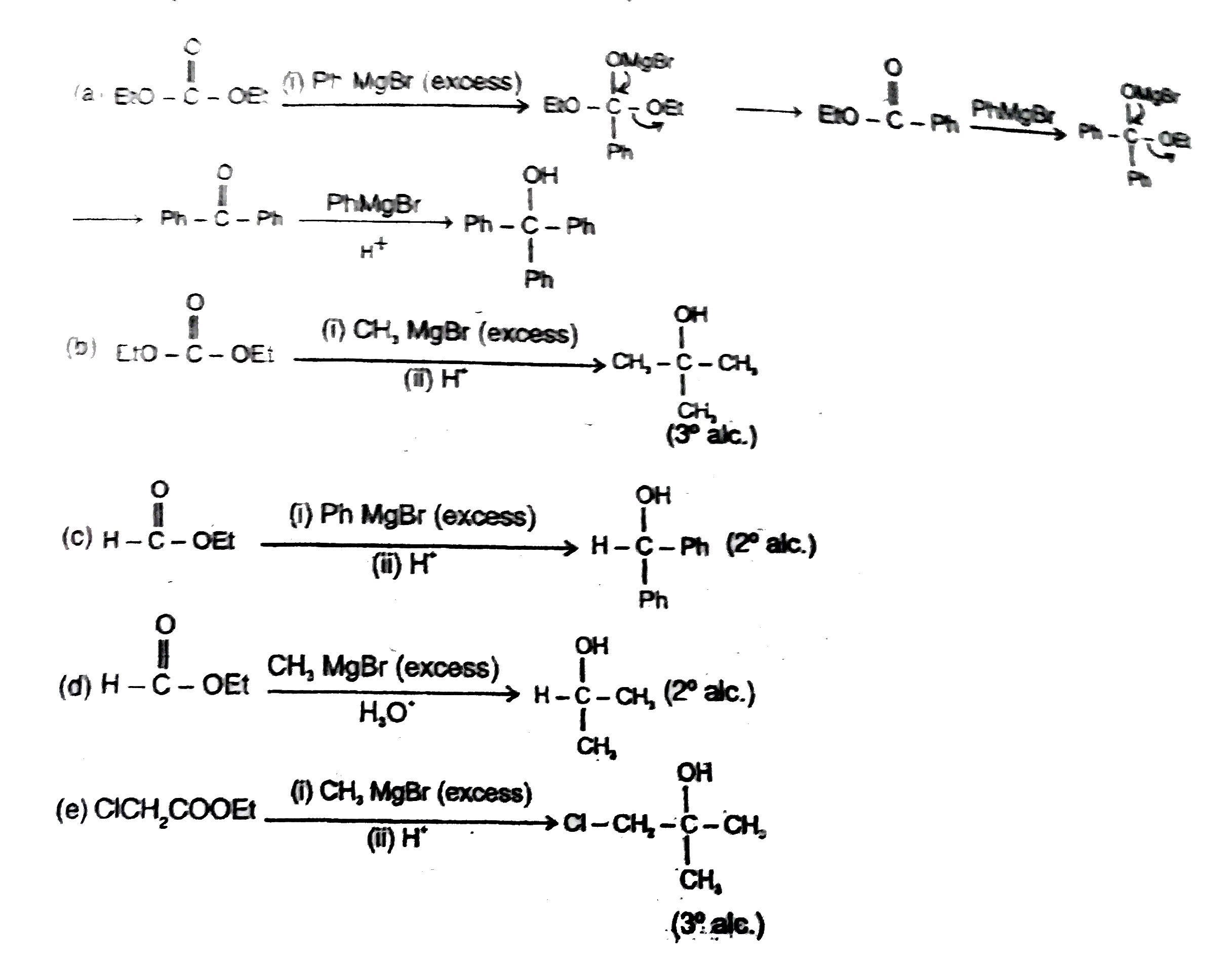
|
|
| 23. |
Considering the following general mechanism , which applies to many thermal decompositions and isomerisations. A + M rarr underset( K_(-1))overset(K_(1))(rarr) A^(*) + M A^(*) overset( K_(2))(rarr) B + C Here A^(*) represent the intermediate species formed during the process. if the first step is slow and rate determining, the rate law is ( d [B])/(dt) = K_(1) [ A][M] On the other hand, if K_(-1) is large, and thus A^(*) is in rapid equilibrium with A, we have, ([A^(*)])/([A]) = (K_(1))/( K_(-1)) ( d[B])/( dt) = K_(2) [A^(*)] = ( K_(1) K_(2))/(K_(-1)) [A] Using steady state approximation, the general rate law for the system can be found out as follows : Rate of production of A^(*) = rate of destruction of A^(*) K_(1) [A][M] = K_(-1) [A^(*)][M]+K_(2) [ A^(*)] or [A^(*)] = ( K_(1) [A][M])/(K_(-1)[M]+K_(2)) Since the rate of reaction is ( d[B])/( dt) = K_(2) [A^(*)] :. ( d [B])/( dt) = ( K_(1) K_(2) [A][M])/(K_(-1) [ M ] + K_(2)) A practical example of the application of the steady state approximation is the decomposition of N_(2)O_(5) as follows : 2N_(2) O_(5) rarr 4NO_(2) + O_(2) It follows the following mechanism : N_(2)O_(5) underset( K_(-1))overset( K_(1))(rarr)NO_(2) + NO_(3) NO_(3) + NO_(2) overset( K_(3))(rarr) 2NO_(2) The steady state aproximateion is applied to a reaction intermediate but never to a reactant or product because |
|
Answer» the concentration of the intermediate is very small |
|
| 24. |
Considering the following reactions (I,II,III) and give your answer for following question. underset((ii)H_3O^(o+))overset((i)CH_3MgBr("excess"))to (III)(a)EtO-oversetoverset(O)(||)C-OETunderset((ii)H^(+))overset((i)PhMgBr("excess"))to (b)EtO-oversetoverset(O)(||)C-OETunderset((ii)H^(+))overset((i)CH_3MgBr("excess"))to (c )H-oversetoverset(O)(||)C-OETunderset((ii)H^(+))overset((i)PhMgBr("excess"))to (d)H-oversetoverset(O)(||)C-OETunderset((ii)H^(+))overset((i)CH_3MgBr("excess"))to (e)ClCH_2COOEtunderset((ii)H^(+))overset((i)CH_3MgBr("excess"))to If CH_3MgBr is taken in excess in reaction (I), how many moles of CH_3MgBr will be consumed in reaction (I) |
|
Answer» 2 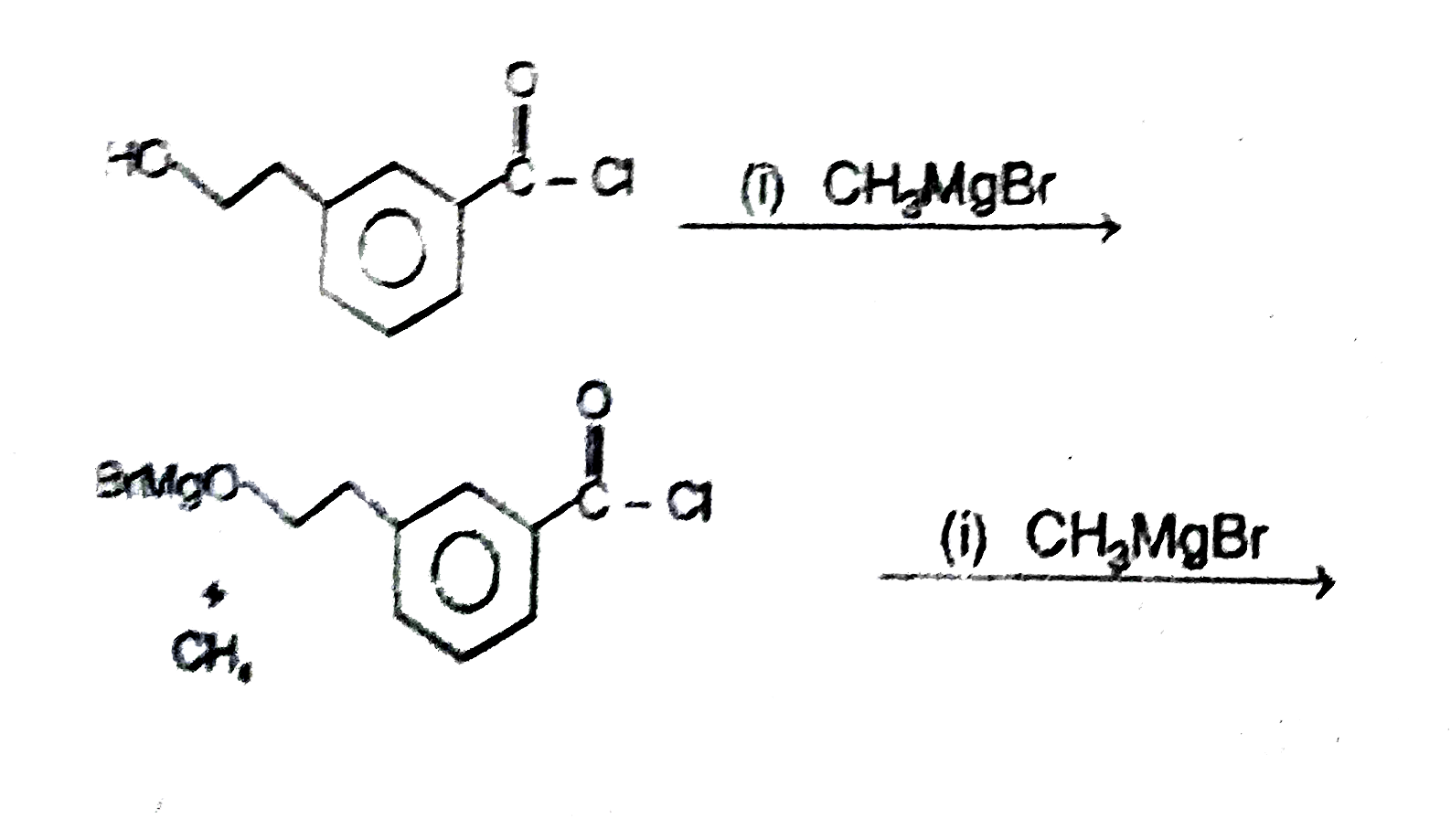 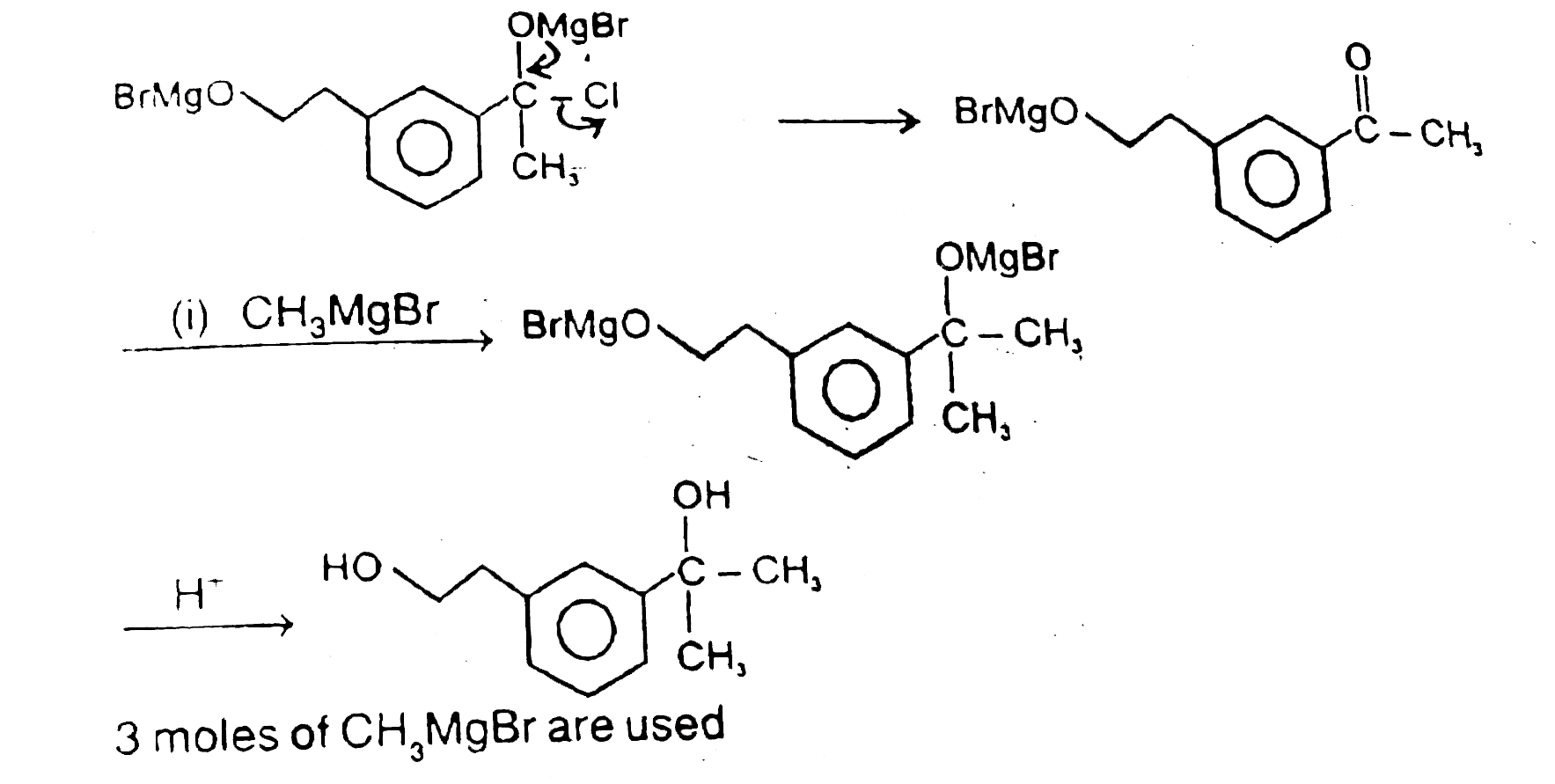
|
|
| 25. |
Considering the following general mechanism , which applies to many thermal decompositions and isomerisations. A + M rarr underset( K_(-1))overset(K_(1))(rarr) A^(*) + M A^(*) overset( K_(2))(rarr) B + C Here A^(*) represent the intermediate species formed during the process. if the first step is slow and rate determining, the rate law is ( d [B])/(dt) = K_(1) [ A][M] On the other hand, if K_(-1) is large, and thus A^(*) is in rapid equilibrium with A, we have, ([A^(*)])/([A]) = (K_(1))/( K_(-1)) ( d[B])/( dt) = K_(2) [A^(*)] = ( K_(1) K_(2))/(K_(-1)) [A] Using steady state approximation, the general rate law for the system can be found out as follows : Rate of production of A^(*) = rate of destruction of A^(*) K_(1) [A][M] = K_(-1) [A^(*)][M]+K_(2) [ A^(*)] or [A^(*)] = ( K_(1) [A][M])/(K_(-1)[M]+K_(2)) Since the rate of reaction is ( d[B])/( dt) = K_(2) [A^(*)] :. ( d [B])/( dt) = ( K_(1) K_(2) [A][M])/(K_(-1) [ M ] + K_(2)) A practical example of the application of the steady state approximation is the decomposition of N_(2)O_(5) as follows : 2N_(2) O_(5) rarr 4NO_(2) + O_(2) It follows the following mechanism : N_(2)O_(5) underset( K_(-1))overset( K_(1))(rarr)NO_(2) + NO_(3) NO_(3) + NO_(2) overset( K_(3))(rarr) 2NO_(2) The overall order of the reaction , 2N_(2)O_(5) rarr 4NO_(2) O_(2) is : |
|
Answer» 2 |
|
| 26. |
Considering the following general mechanism , which applies to many thermal decompositions and isomerisations. A + M rarr underset( K_(-1))overset(K_(1))(rarr) A^(*) + M A^(*) overset( K_(2))(rarr) B + C Here A^(*) represent the intermediate species formed during the process. if the first step is slow and rate determining, the rate law is ( d [B])/(dt) = K_(1) [ A][M] On the other hand, if K_(-1) is large, and thus A^(*) is in rapid equilibrium with A, we have, ([A^(*)])/([A]) = (K_(1))/( K_(-1)) ( d[B])/( dt) = K_(2) [A^(*)] = ( K_(1) K_(2))/(K_(-1)) [A] Using steady state approximation, the general rate law for the system can be found out as follows : Rate of production of A^(*) = rate of destruction of A^(*) K_(1) [A][M] = K_(-1) [A^(*)][M]+K_(2) [ A^(*)] or [A^(*)] = ( K_(1) [A][M])/(K_(-1)[M]+K_(2)) Since the rate of reaction is ( d[B])/( dt) = K_(2) [A^(*)] :. ( d [B])/( dt) = ( K_(1) K_(2) [A][M])/(K_(-1) [ M ] + K_(2)) A practical example of the application of the steady state approximation is the decomposition of N_(2)O_(5) as follows : 2N_(2) O_(5) rarr 4NO_(2) + O_(2) It follows the following mechanism : N_(2)O_(5) underset( K_(-1))overset( K_(1))(rarr)NO_(2) + NO_(3) NO_(3) + NO_(2) overset( K_(3))(rarr) 2NO_(2) For the reaction : 2N_(2)O_(5) rarr 4NO_(2) + O_(2) ( d[O_(2) ] ) /( dt ) = K_("exp") [ N_(2) O_(5) ] The K_("exp.") is given by the expression : |
|
Answer» `K_("EXP") = ( K_(3))/( K_(1) K_(-1))` |
|
| 27. |
considering the electron of outermost orbital of Cu match the items given the column I with their values given in column II. Column-I { (A) orbital angular momentum, (B) angular momentum in an orbit, (C) spin angular momentum} Column - II ( I. 4h, II. 0, III. 0.86h, IV. 1.73) |
|
Answer» A(II),B(I), C(III) |
|
| 28. |
Considering the basec strength of amines in aqueous solution which one has the smallest pK_b value? |
|
Answer» ` (CH_3)_2NH` |
|
| 29. |
Considering the basic strength of amines in aqueous solution ,which one has the smallest pk_(b) value? |
|
Answer» `(CH_(3))_(3)N` |
|
| 30. |
Considering the basic strength of amines in aqueous solution which one hasthe smallest pk_(b) value? |
|
Answer» `(CH_(3)_(2)NH` |
|
| 31. |
Considering the basic strength of amines in aqueous solution, which one has the smallest pK_(b) value? |
|
Answer» `C_(6)H_(5)NH_(2)` `underset(2^(@))((CH_(3))_(2))NHgt underset(1^(@))(CH_(3))NH_(2)gt underset(3^(@))((CH_(3))_(3))N gt underset("Aniline")(C_(6))H_(5)NH_(2)` Basic strength `PROP K_(b) (1)/(pKb)` Hence `(CH_(3))_(2)NH` has the smallest pKb value. |
|
| 32. |
Considering rotation about the C-3 – C-4 bond of 2-methylhexane (a) Draw the Newman projection of the most stableconfomrer (b) Draw the Newman projection of the least stable confomrer |
|
Answer» |
|
| 33. |
Considering H_2O as a weak field ligand, the number of unpaired electrons in [Mn(H_2O)_6]^(2+) will be (Atomic no of Mn=25) |
|
Answer» 3 |
|
| 34. |
Considering H_(2)O as a weak field ligand, the number of unpaired electrons in [Mn(H_(2)O)_(6)]^(2+) will be (At. no of Mn = 25) : |
|
Answer» FIVE |
|
| 35. |
Considering entropy (S) as a thermodynamic parameter the criterion for the spontaneity of any process is: |
|
Answer» `triangleS_(system)-triangleS_(surroundi ngs)GT0` |
|
| 36. |
Considering Ellingharn diagram, which of thefollowing metals can be usedto reduce alumina ? |
|
Answer» Mg |
|
| 37. |
Considering Ellingham diagram,which of the following metals can be used to reduce alumina? |
|
Answer» Fe |
|
| 38. |
Considering Ellingham diagram, which of the following metals can be used to reduce alumina ? |
|
Answer» Mg `Al_(2)O_(3) +3 Mg to 3MgO+2Al` |
|
| 39. |
Considering Ellingham diagram , which of the following metals can be used to reduce alumina ? |
|
Answer» Mg |
|
| 40. |
Considering atomic number 2,4 24 and 42 identify the incorrect statemetn. |
|
Answer» Maximum first ionisation potential belongs to `Z =2.` |
|
| 41. |
Considering an exothermic reaction, with activation energy E_a and E'_a for the forward and backward reactions respectively, Now we can say |
|
Answer» `E_a=E'_a` |
|
| 42. |
Considerig the basic strength of amines in aqueous solution, which one has the smallest pK_(b) value? |
|
Answer» `C_(6)H_(5)NH_(2)` |
|
| 43. |
Consider which can be expressed is degree (temperature) are |
|
Answer» III,IV so `iK_(b)m` can be expressed in DEGREE (Unit of TEMPERATURE) and `K_(b)m` can be expressed in degree (Unit of temperature) and `(DeltaT_(b))/(i)` can be expressed in degree (Unit orf temperature) But unit of `K_(b)` is `"mol"^(-1)KG K` |
|
| 44. |
Consider vlaue of all four quantum number of last electrons and magnetic moment and valence electrons of elements W, X, Y and Z in their ground state: Then according to given information the correct statement (s) is/are: |
|
Answer» `I.E_(1)` of element W is greater than `I.E_(1)` of element X |
|
| 45. |
Consider two chemical reactions. HCOOH_((l))+H_(2)SO_(4(l)) to CO_((g)) +H_(2)SO_(4). H_(2)O_((hq)) H_(2)C_(2)O_(4(l)) +H_(2)SO_(4(l))to CO_((g)) +CO_(2(g))+H_(2)SO_(4).H_(2)O_((hq)) Different mixtures HCOOH & H_(2)C_(2)O_(4) are taken & reacted with H_(2)SO_(4(l)) & gases produced are passed through KOH. select the option (s) in which correct combination of composition of mixture & percentage volume contraction on passing through KOH is mentioned. |
|
Answer» Molar RATIO HCOOH:`H_(2)C_(2)O_(4) = 1:1` |
|
| 46. |
Consider two standard half cells based on the reaction. Ag^(+) (aq) + e to Ag(s): The left half cell contains AgNO_3 at 1 M, and the right half cell initially had the same conc. Of AgNO_3, but just enough NaCl_(aq) has been added to completely precipitate the Ag_((aq))^(+) as AgCl_((s)). If cell emf is 0.295 V, the K_(sp) of AgCl is approximetely : |
|
Answer» `1XX 10^(-12)` |
|
| 47. |
Consider two equilibrium 2Cl_2(g)+2H_2O(g)hArr4HCl(g)+O_2(g) and N_2(g)+O_2(g)hArr2NO(g) simultaneously established in a closed vessel.When some amount of HCl is added at equilibrium, which of the following statements is/are correct : |
|
Answer» Amount of `N_2` gas will increase |
|
| 48. |
Consider two half cells based on the reaction Ag_((aq))^(+)etoAg_((s)).t he left half cell contain Ag^(+) ions at concentration of Ag^(+) ions, but just enough NaCl_((aq)) has been added to completely precipitate the Ag_((aq))^(+) as AgCl. If the emf of the cell is 0.29V, then log_(10)K_(sp) would have been |
|
Answer» 9.804 `E_(Cl^(-)//AGCL//AG)=E_(Cl^(-)//AgCl//Ag)^(o)+(0.0591)/(2)"LOG"(1)/([Cl^(-)])` . . .(i) `E_(Cl^(-)//AgCl//Ag)=E_(Ag^(+)//Ag)^(o)+(0.0591)/(1)" log "K_(sp//(AgCl))` log `K_(sp(AgCl))=-(0.29)/(0.0591)=-0.907` |
|
| 49. |
Consider two aldehydes (1) CH_(3) - CHO ""(2) H - CHO The correct statement is /are |
|
Answer» both UNDERGOES ALDOL condensation |
|
| 50. |
Consider three flasks in diagram below. Assuming that connecting tube has negligible volume and all three falsks are at same temperature. If all three stopcocks are opened then select correct option(s): |
|
Answer» <P>`P_(HCl)=(2)/(3)`atm `P_(NH_(3)=0atm` `P_(HCl)=(1)/(2)xx(2)/(3)=(1)/(3)` atm `P_("total")=(5)/(3)+(!)/(3)=2atm` |
|