Saved Bookmarks
This section includes 7 InterviewSolutions, each offering curated multiple-choice questions to sharpen your Current Affairs knowledge and support exam preparation. Choose a topic below to get started.
| 1. |
Complete the following reaction: CH_3CONH_2+HNO_2rarr |
| Answer» SOLUTION :`CH_3CONH_2+HNO_2rarr CH_3COOH +N_2+H_2O` | |
| 2. |
Complete the following reaction. CH_(3)-CH=CH_(2) underset("Peroxide")overset(HBr)to X underset("Acetone")overset(NaI)toY or How will you convert propene to 1-iodopropane? |
| Answer» Solution :`UNDERSET("Propene")(CH_(3)-CH=CH_(2)) underset(("Anti-Mark. Addition"))overset("HBr, peroxide")to underset("1-Bromopropane (X)")(CH_(3)CH_(2)CH_(2)-Br) underset(("Finkelstein reaction"))overset("NAI, ACETONE")to underset("1-Iodopropane (Y)")(CH_(3)CH_(2)CH_(2)-I)` | |
| 3. |
Complete the following reaction: CH_(3)-COOHoverset(Br_(2)//P)(to) |
| Answer» SOLUTION :`CH_(3)-COOHoverset(Br_(2)//P)(to)UNDERSET(Br)underset(|)(CH_(2))-COOH` | |
| 4. |
Complete the following reaction CH_3-CH_2-CH_2- undersetoverset(||)(O)(C ) - CH_3 underset(H^+) overset(HO-CH_2-CH_2-OH)(to) |
Answer» SOLUTION :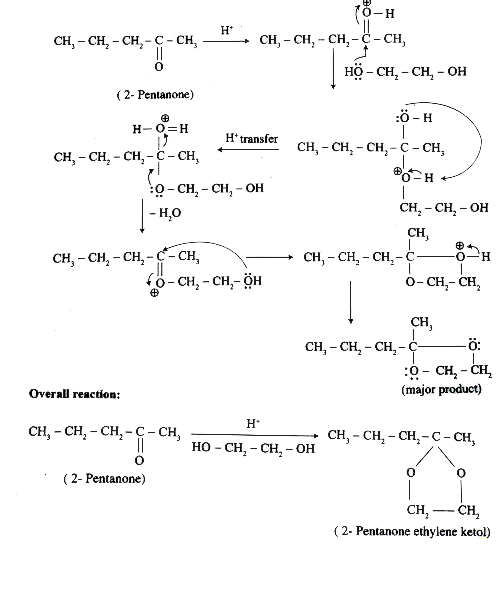
|
|
| 5. |
Complete the following reaction : C_(6)H_(6)+RCOCl overset(AlCl_(3))underset("(Anhy.)")rarr |
| Answer» SOLUTION :`C_(6)H_(6)+RCOCloverset(AlCl_(3))underset("(ANHY.)")rarr C_(6)H_(5)COR+HCl` | |
| 6. |
Complete the following reaction. (a)ZnS+O_(2)overset(Delta)to? (a)P_(4)+O_(2)to? (a)CaCO_(3)Deltato? |
|
Answer» <P> Solution :(a)`2ZnS+3O_(2)Deltato2ZnO+2SO_(2)UARR`(a)`P_(4)+5O_(2)toP_(4)O_(10)uarr` (a)`CaCO_(3)DeltatoCaO+CO_(2)uarr` |
|
| 7. |
Complete the following reaction and Identify products 'A' and 'B'. (CH_(3)CO)_(2)O+NH_(3)toulA+ulB |
Answer» Solution : (A) `CH_(3)CONH_(2)" "-" ""acetamide"` (B) `CH_(3)COOH" "-" ""ACETIC acid"` |
|
| 8. |
Complete the following reaction and identify compounds (A) and (B). B(OH)_(3)underset("Fusion")overset(NH_(4)HF_(2))to(A)underset(Delta)overset(B_(2)O_(3))to(B) |
|
Answer» |
|
| 9. |
Complete the following reaction and give its mechanism in short : |
Answer» Solution :[Hint] 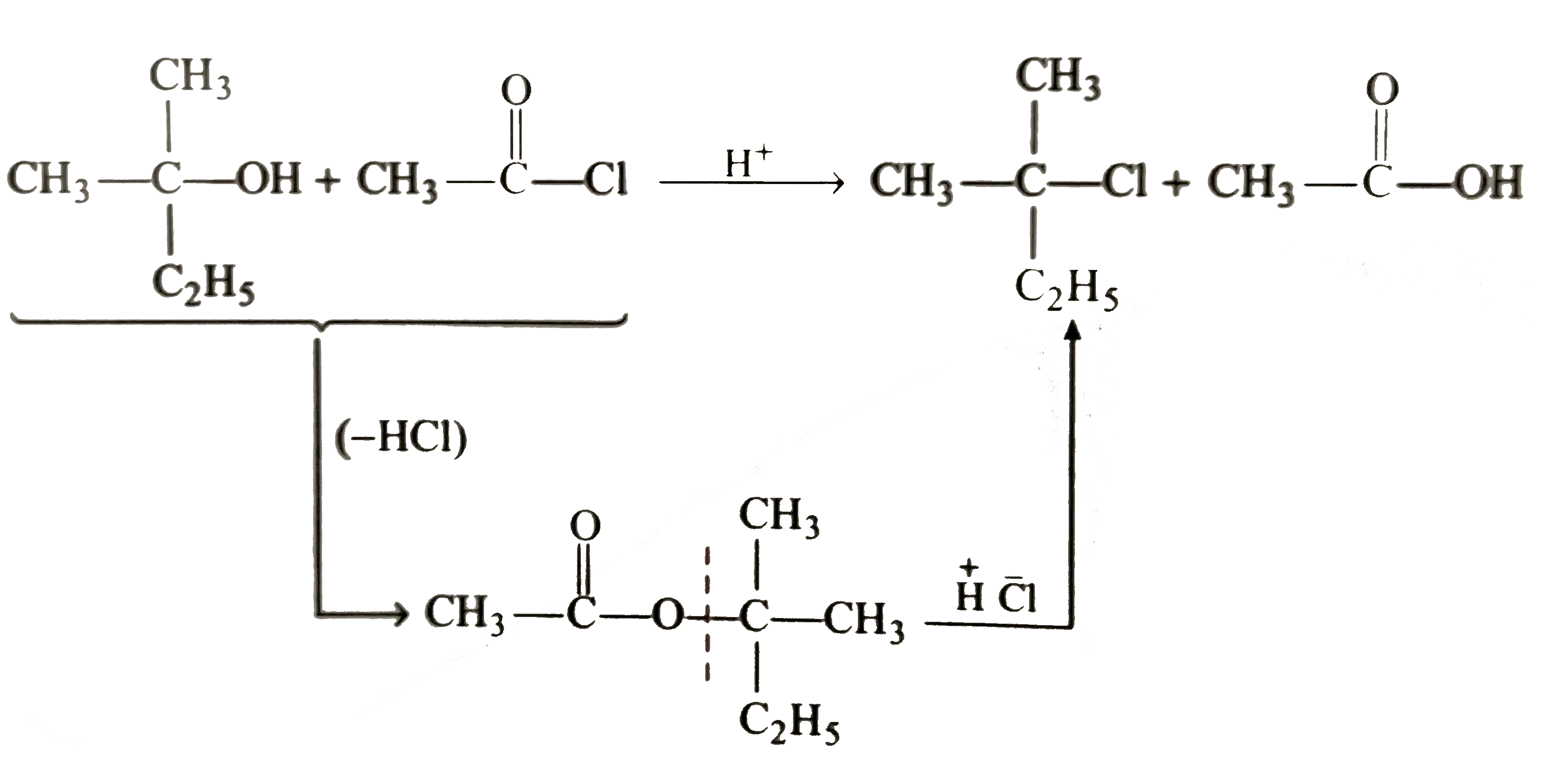 In this reaction, find of all, an ester is formed which undergoes DECOMPOSITION in PRESENCE of dil. HCL. |
|
| 10. |
Complete thefollowing reaction (a) XeF_2 + PCl_5to(b)NH_4 NO_3 overset("heat")(to) |
|
Answer» SOLUTION :(a) `XeF_2 + PF_5 to [XEF]^(+)[PF_6]^(-)` (B) `NH_4NO_3 OVERSET("HEAT")(to) 2N_2O + H_2O` |
|
| 11. |
Complete the following reaction |
Answer» SOLUTION :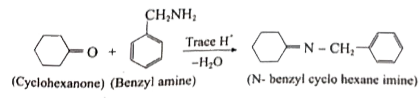
|
|
| 12. |
Complete the following reaction. |
|
Answer» SOLUTION :`R-COOH` CARBOXYLIC ACID |
|
| 13. |
Complete the following reaction, |
Answer» SOLUTION :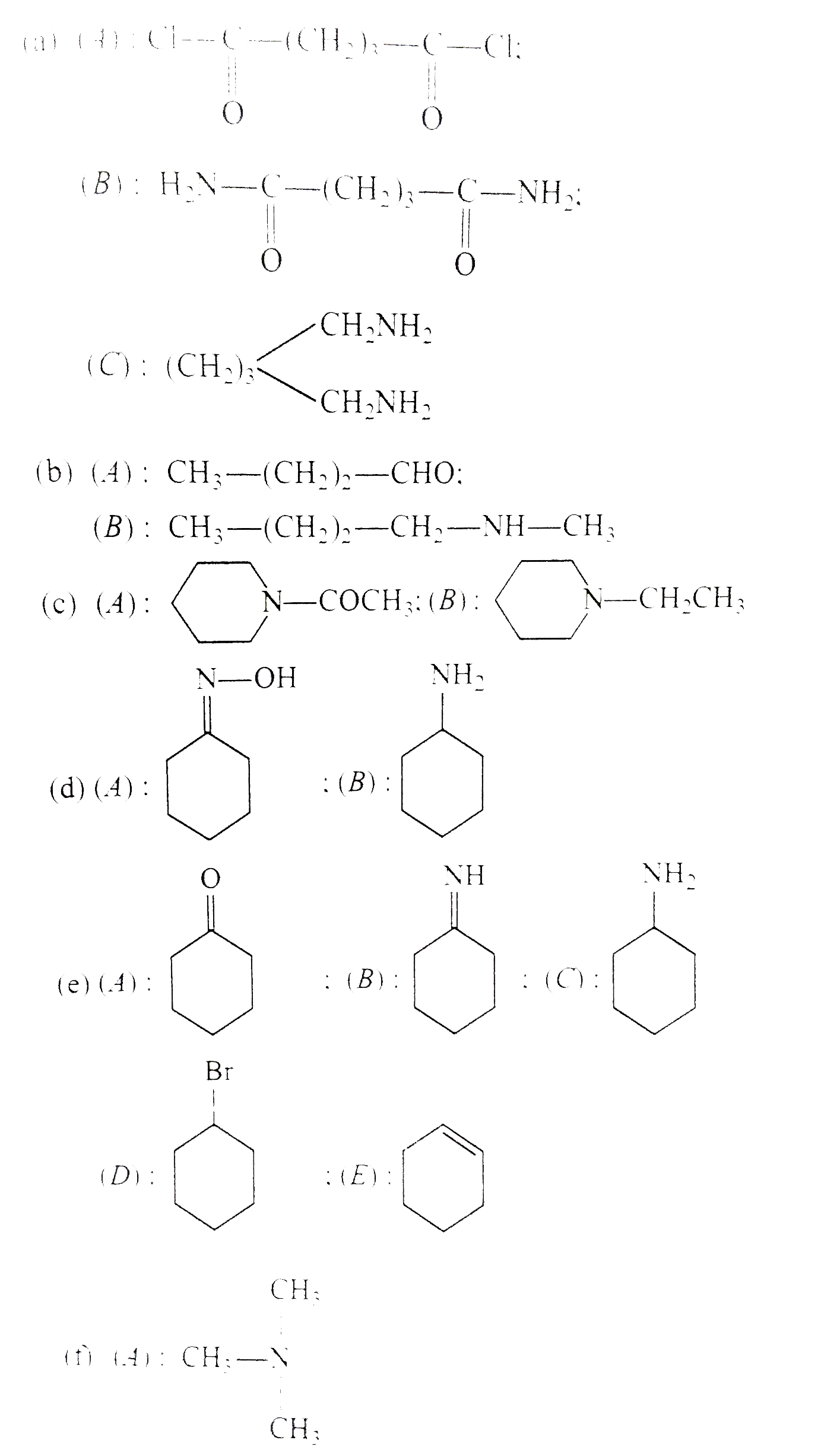
|
|
| 15. |
Complete the following reaction: |
Answer» SOLUTION :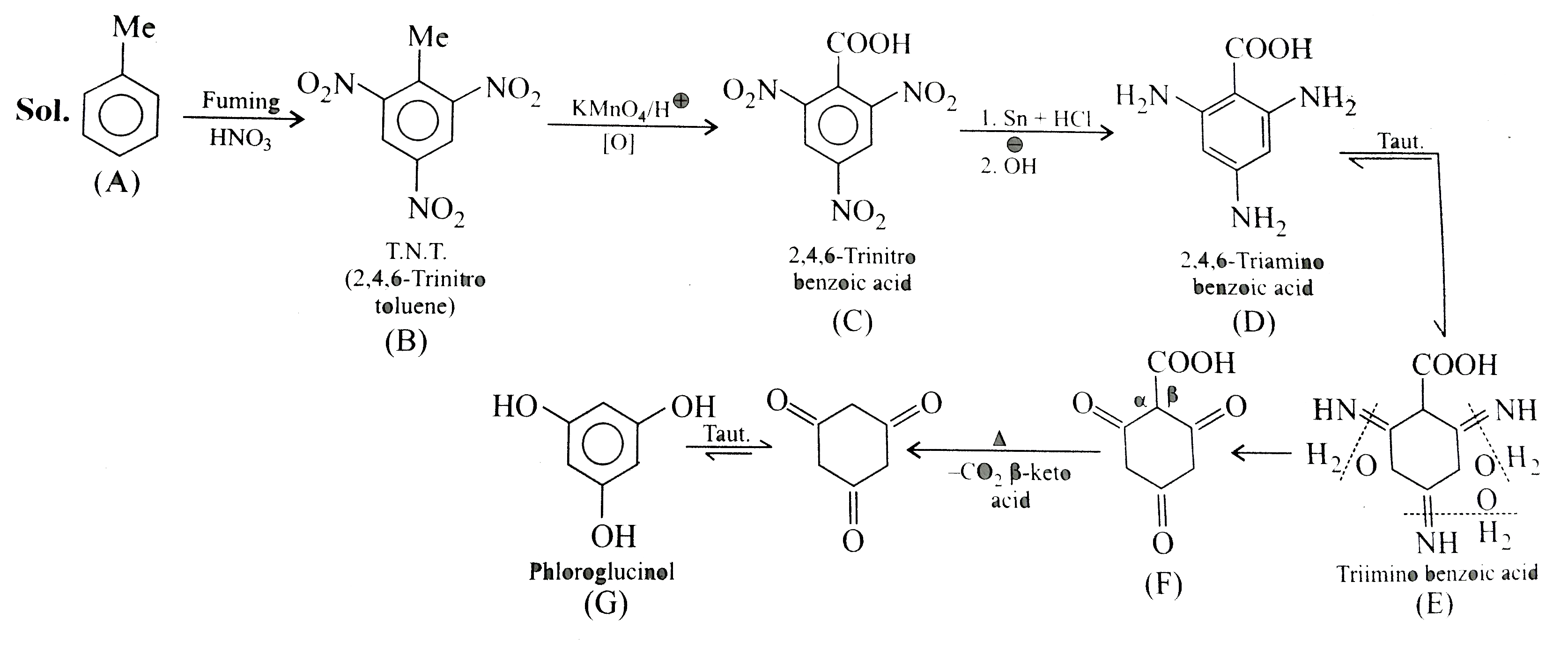
|
|
| 16. |
Complete the following reaction: |
|
Answer» Solution :The reaction of quinones is that of `ALPHA`, `beta`-UNSATURATED ketone. a. 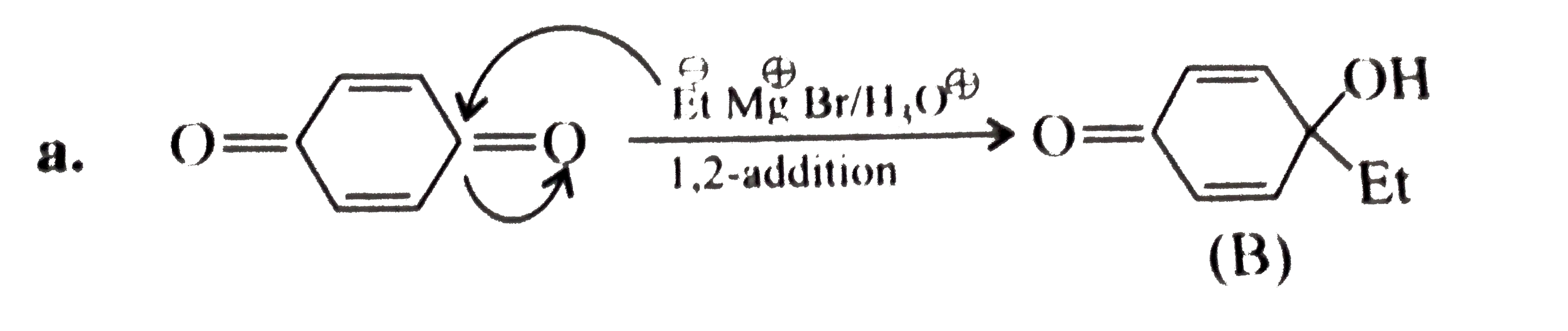 b. 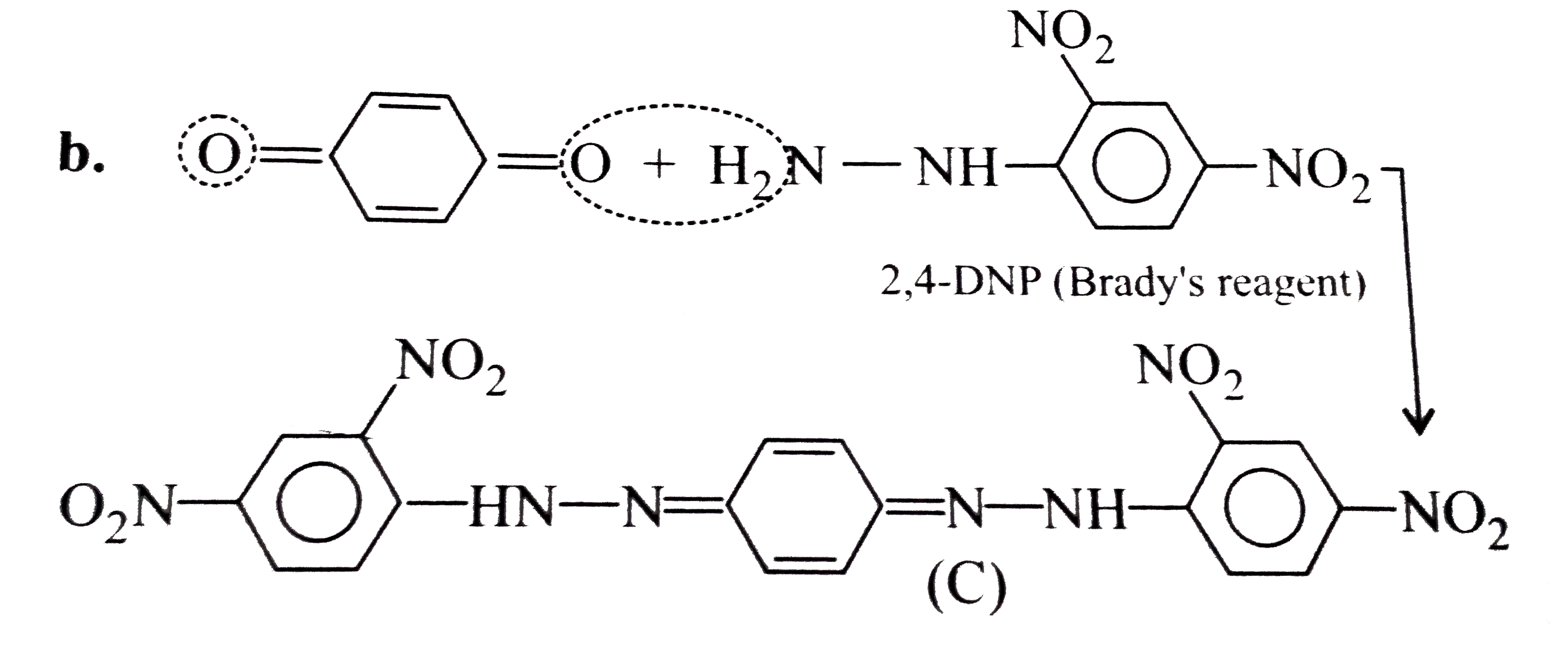 C. 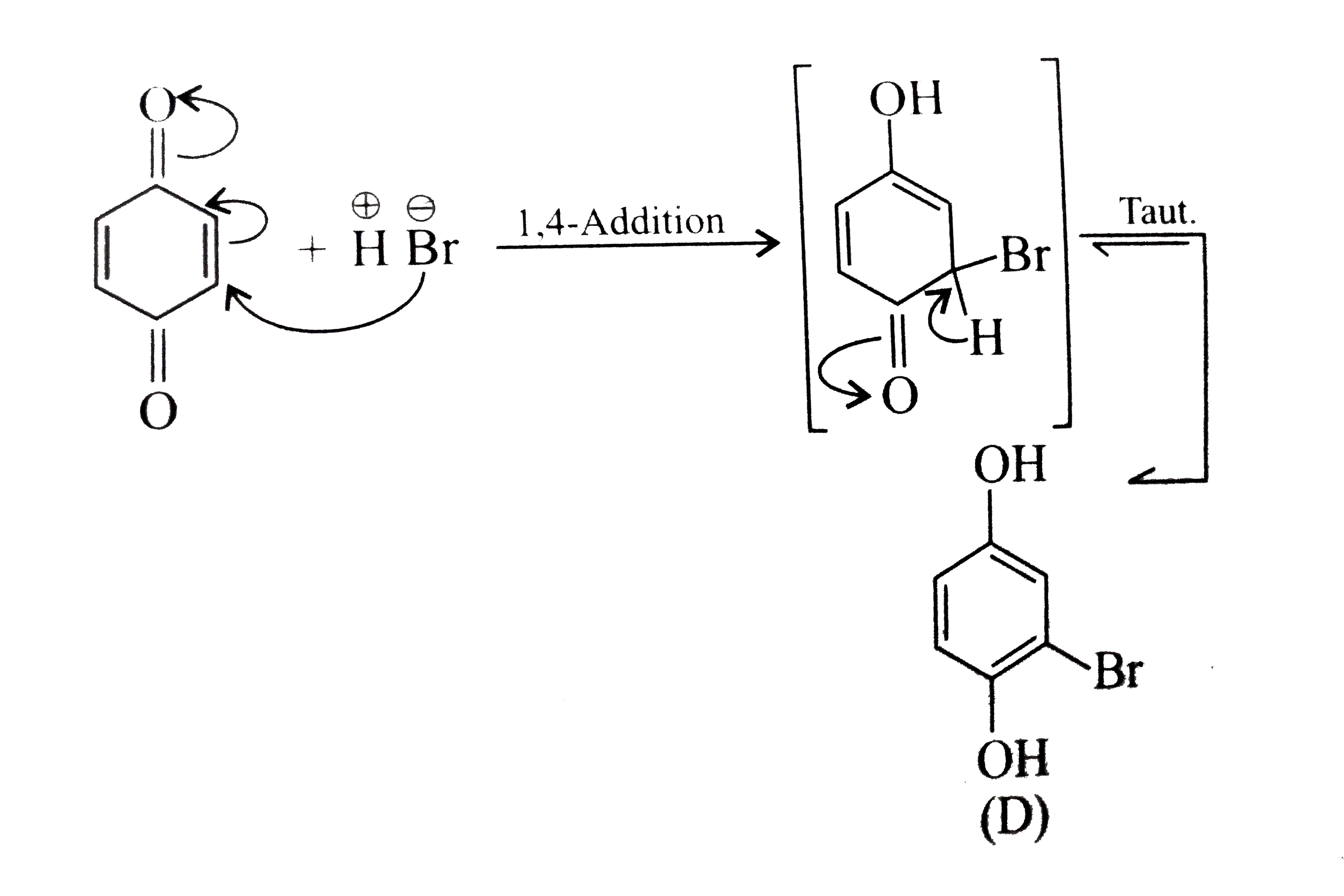 d. It is an example of Diels-Alder reaction. 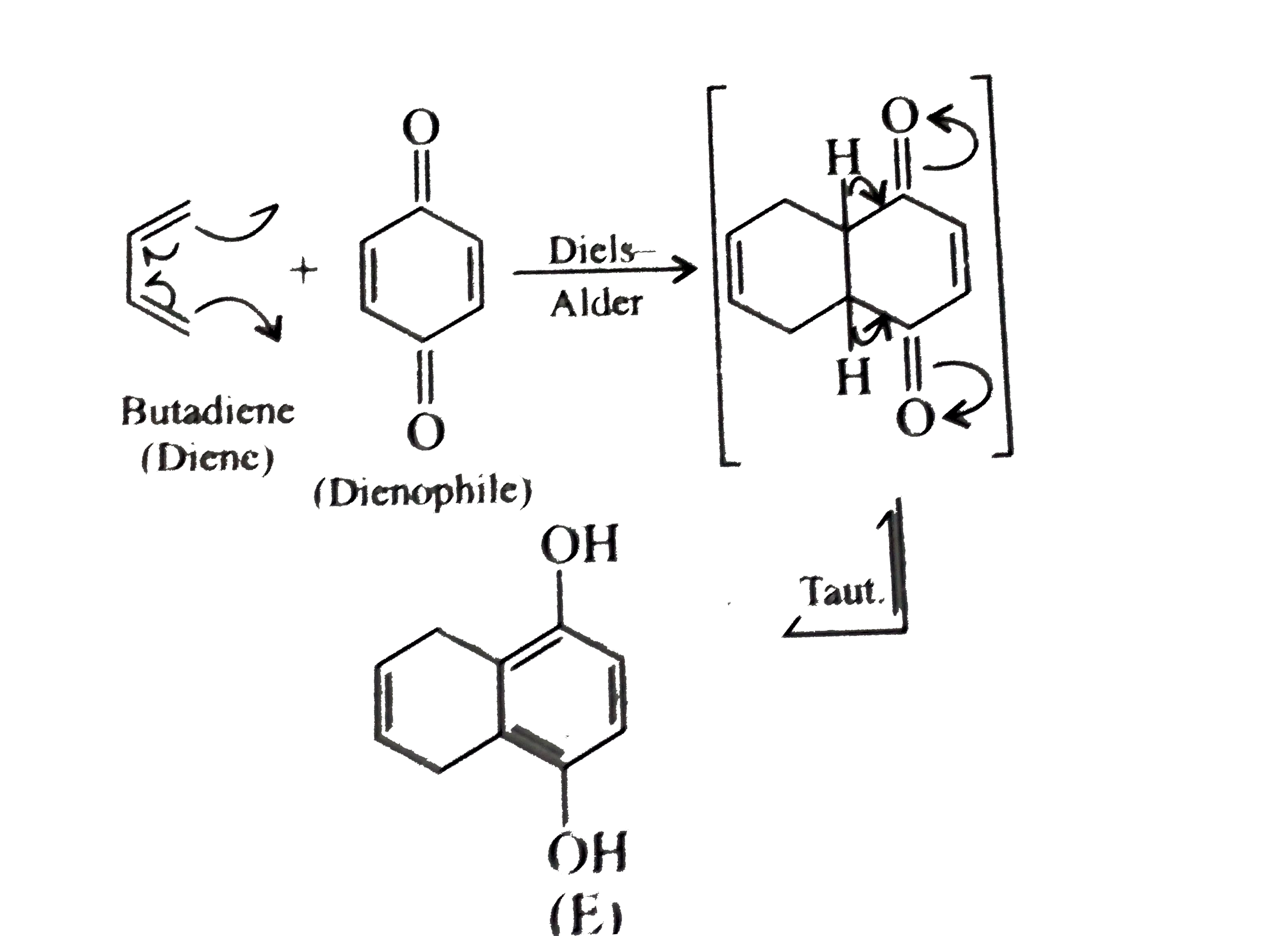 e. 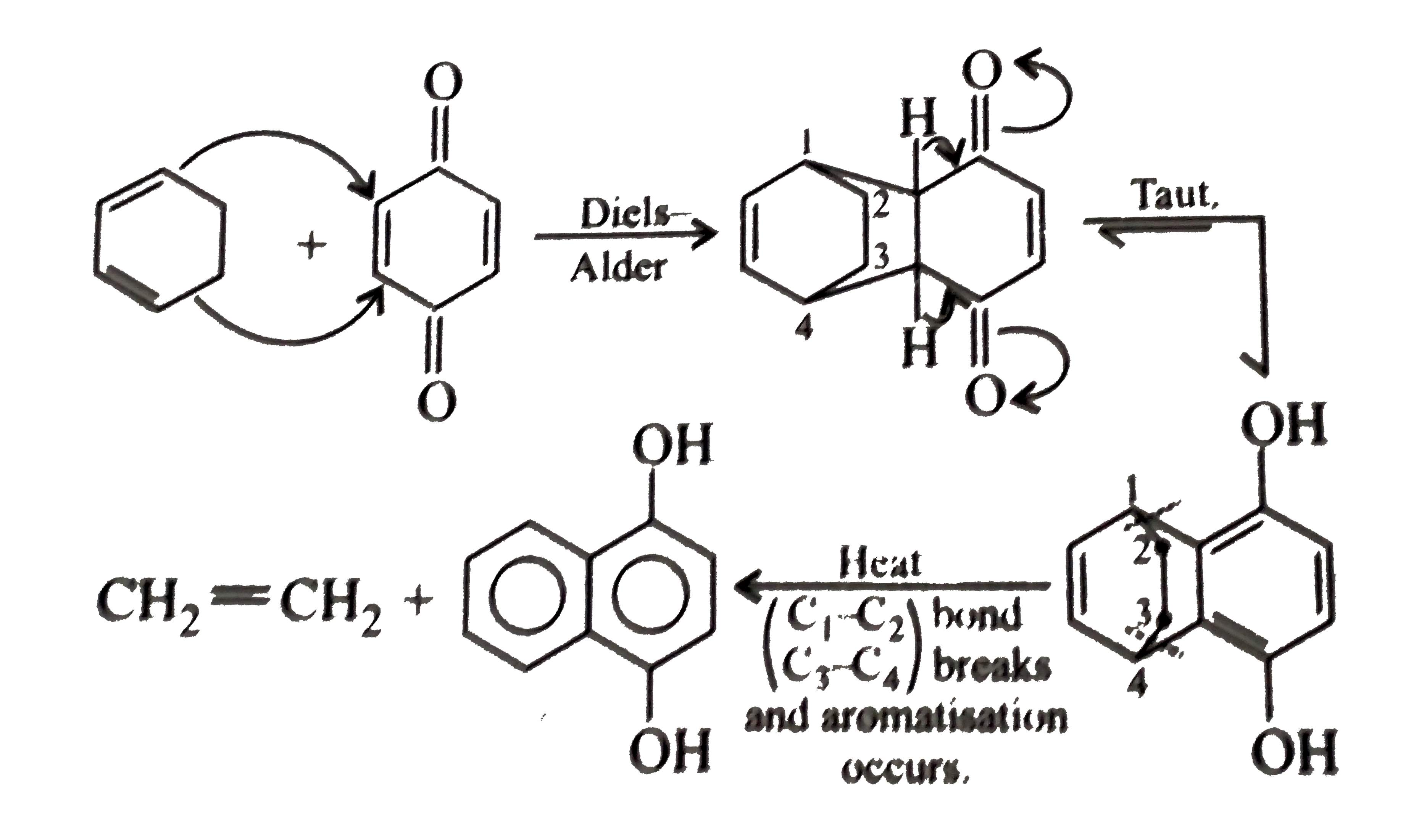 f. 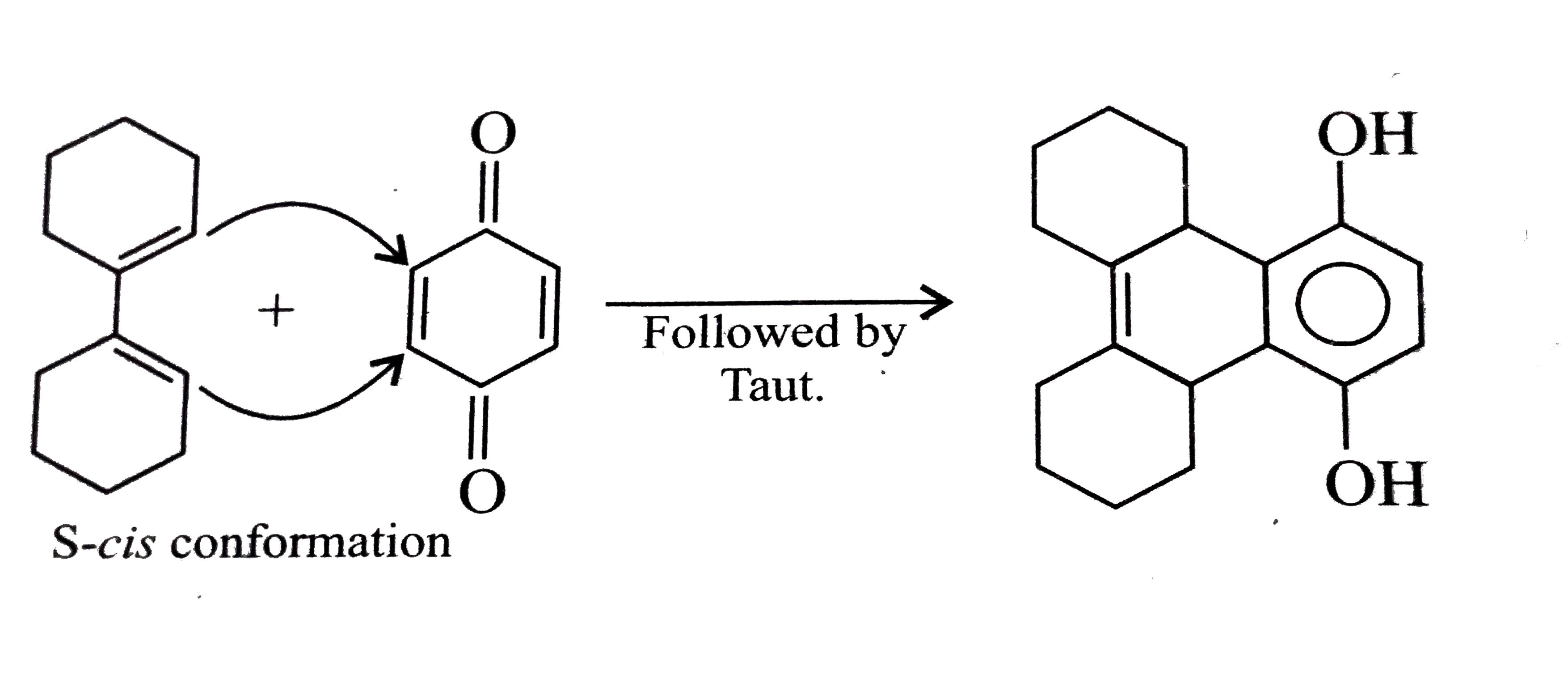 g. 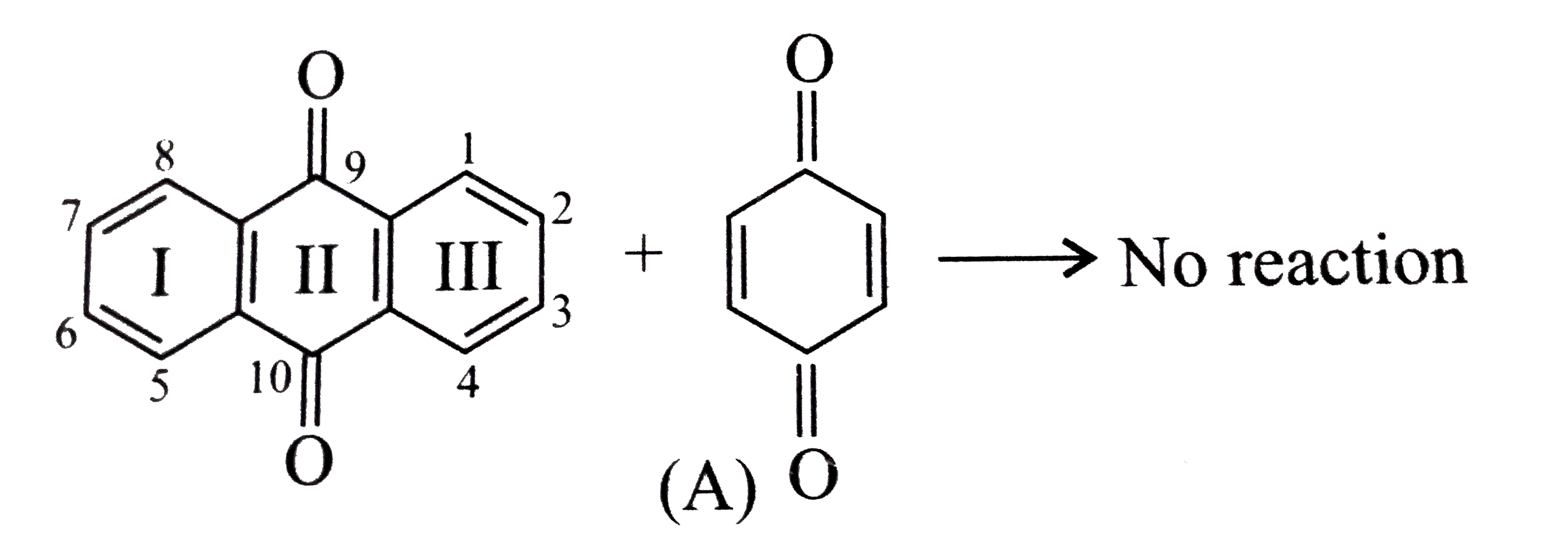 The reaction is eneretically unfavourable because if Diels-Alder reaction occurs either in benzene ring I or in III (acts as a diene), the aromaticity of one of the benzene rings is lost. Hence, the reaction does not occur. However, anthracene UNDERGOES Diels-Alder reaction (acts as a diene) because the aromaticity of TWO benzene rings is retained. h. 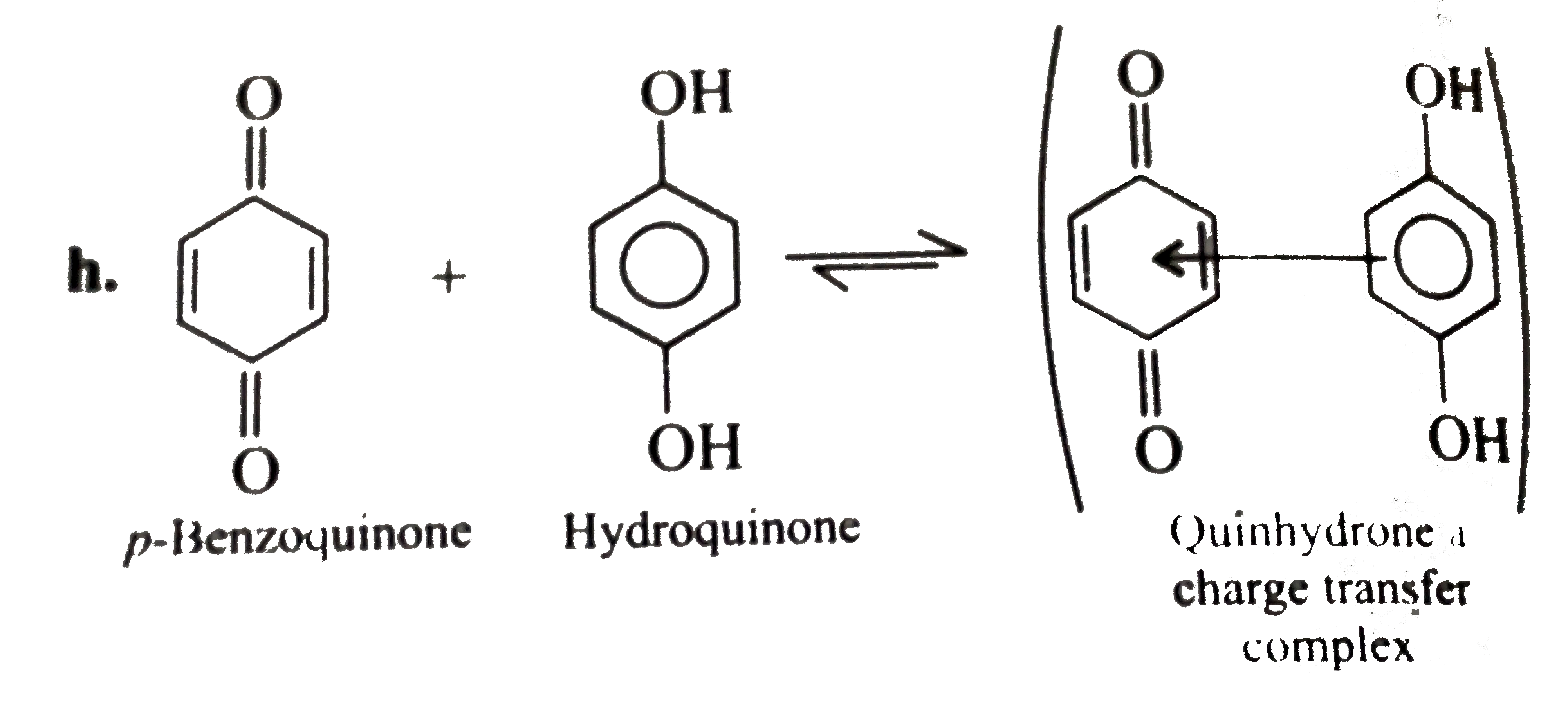 Quinhydrone, a green-black, crystalline compounds, is formed. It is formed by `1:1` charge transfer complex, in which hydroquinone is the `bar e` donor and quinone is the `bar e` acceptor. i. 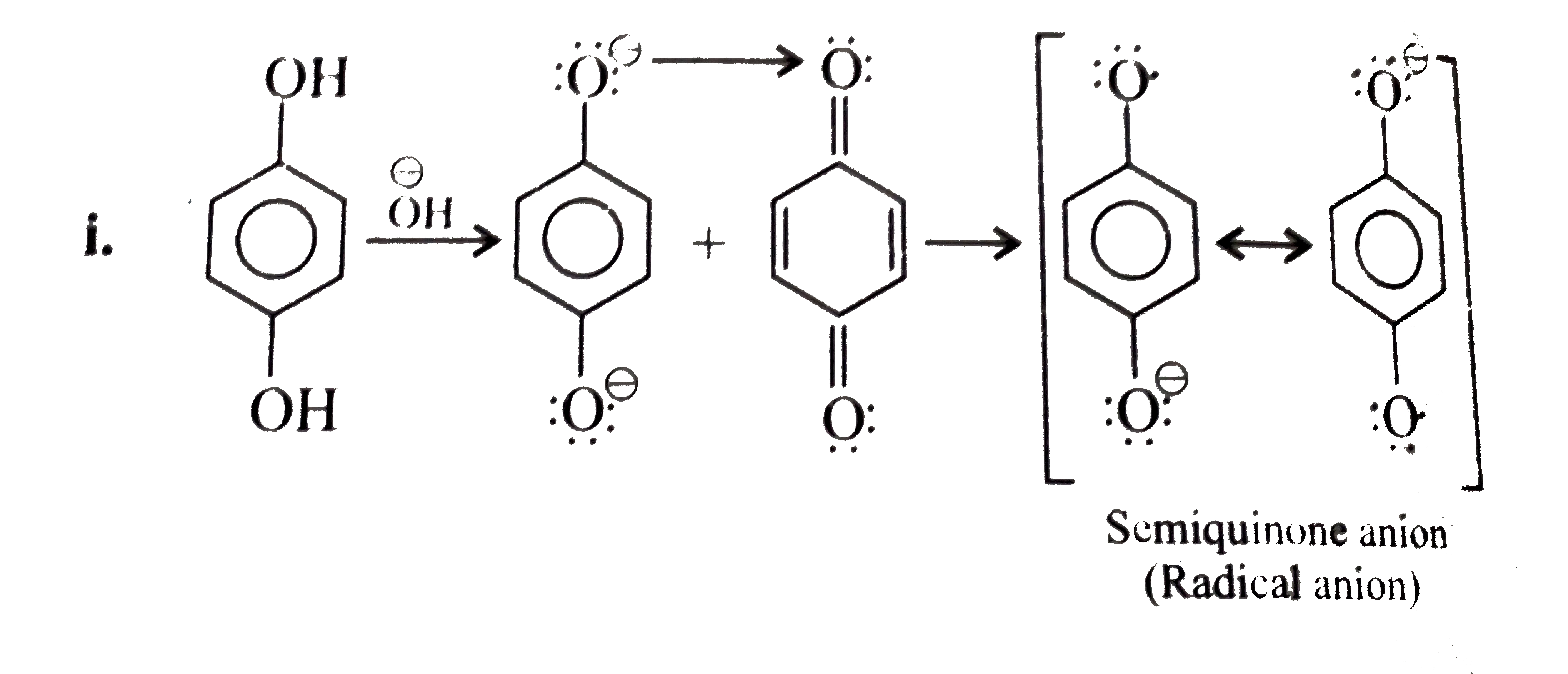 Quinhydrone in basic solution is deeply colloured andparamagnetic because of the formation of radical antion. An `bar e` is transferred form the dianino of hydroquinone to quinone. But, two `bar e` 's are required for the reduction of benzoquinone to hydroquinone. 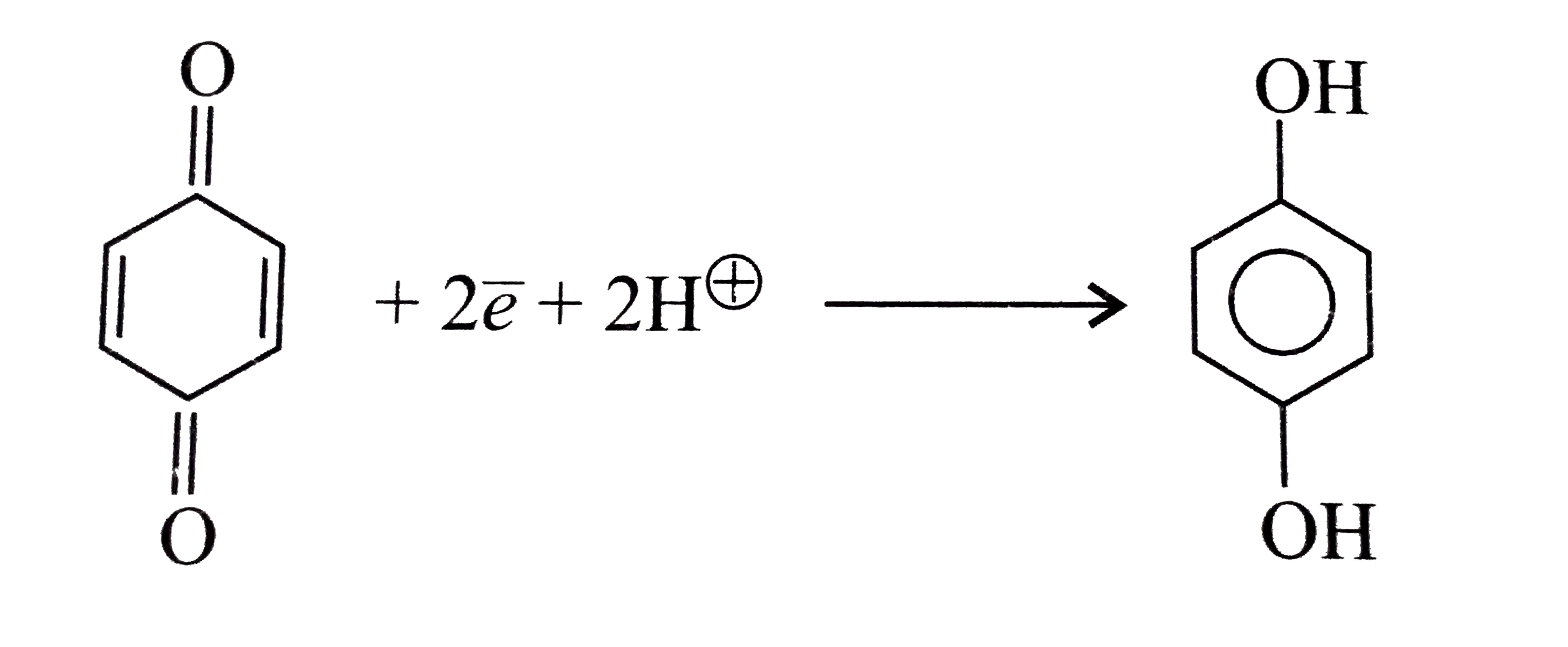 In the formation of semiquinone, one `bar e` is transferred. |
|
| 17. |
Complete the following reaction: |
Answer» Solution :a.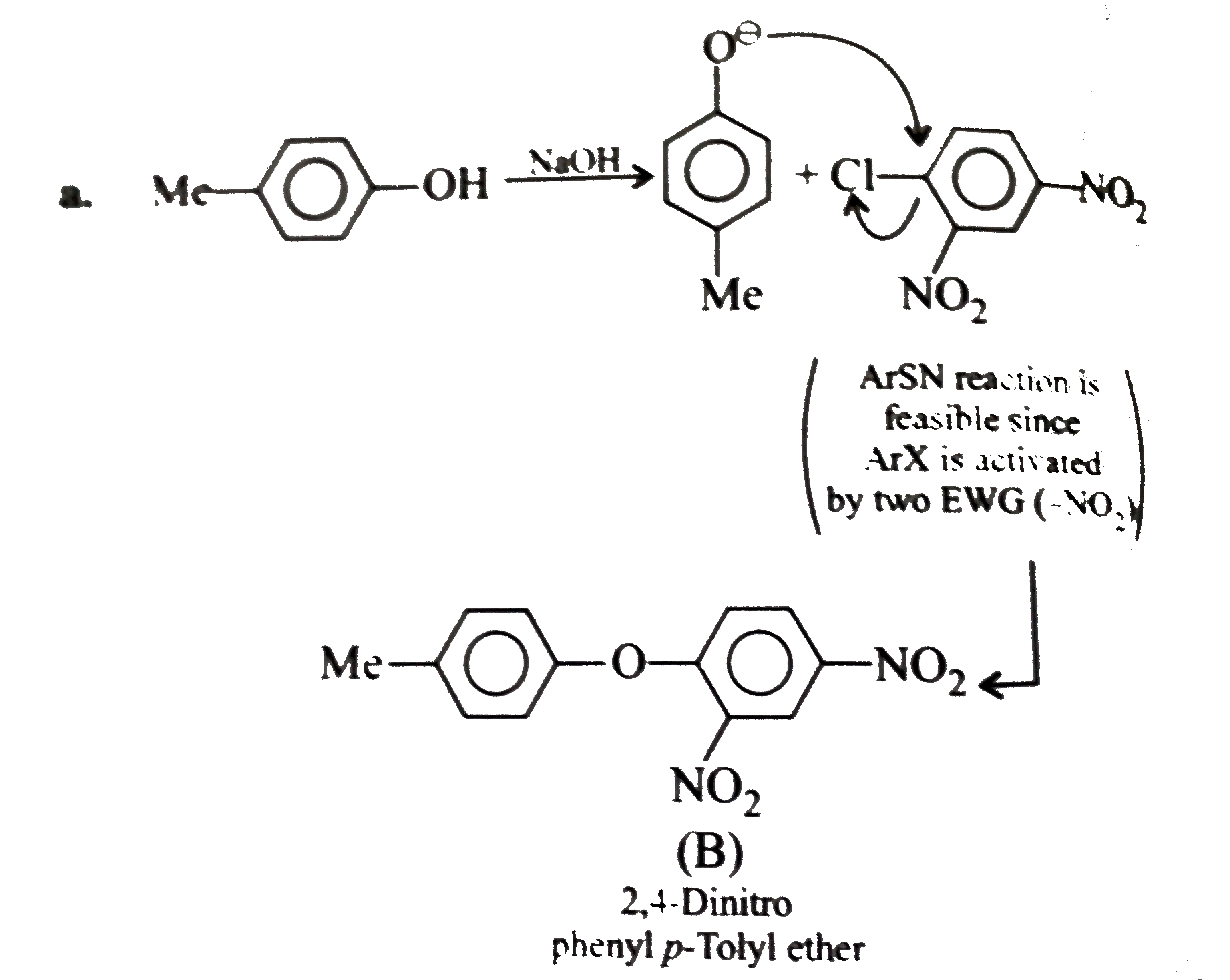 B. 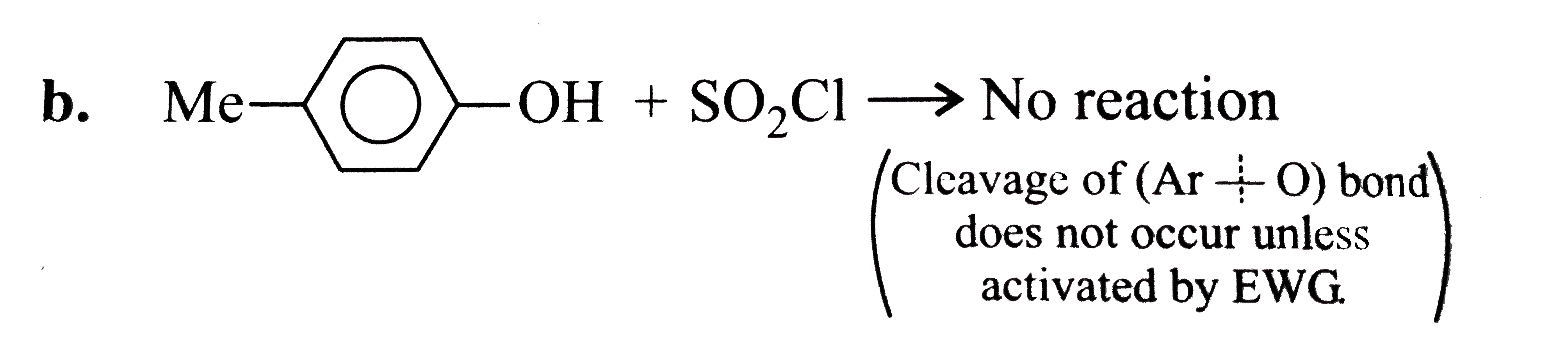 c. 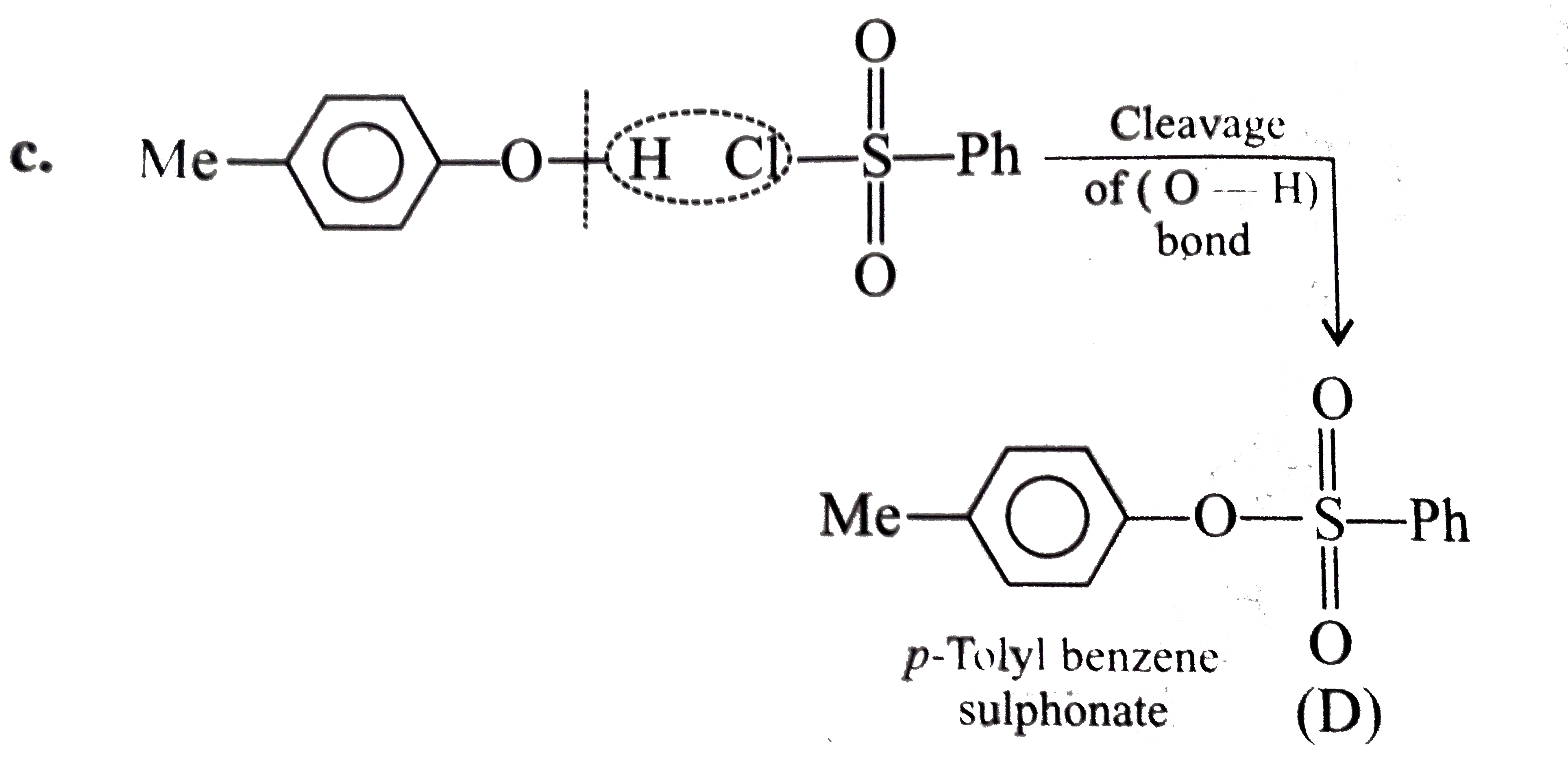 d. 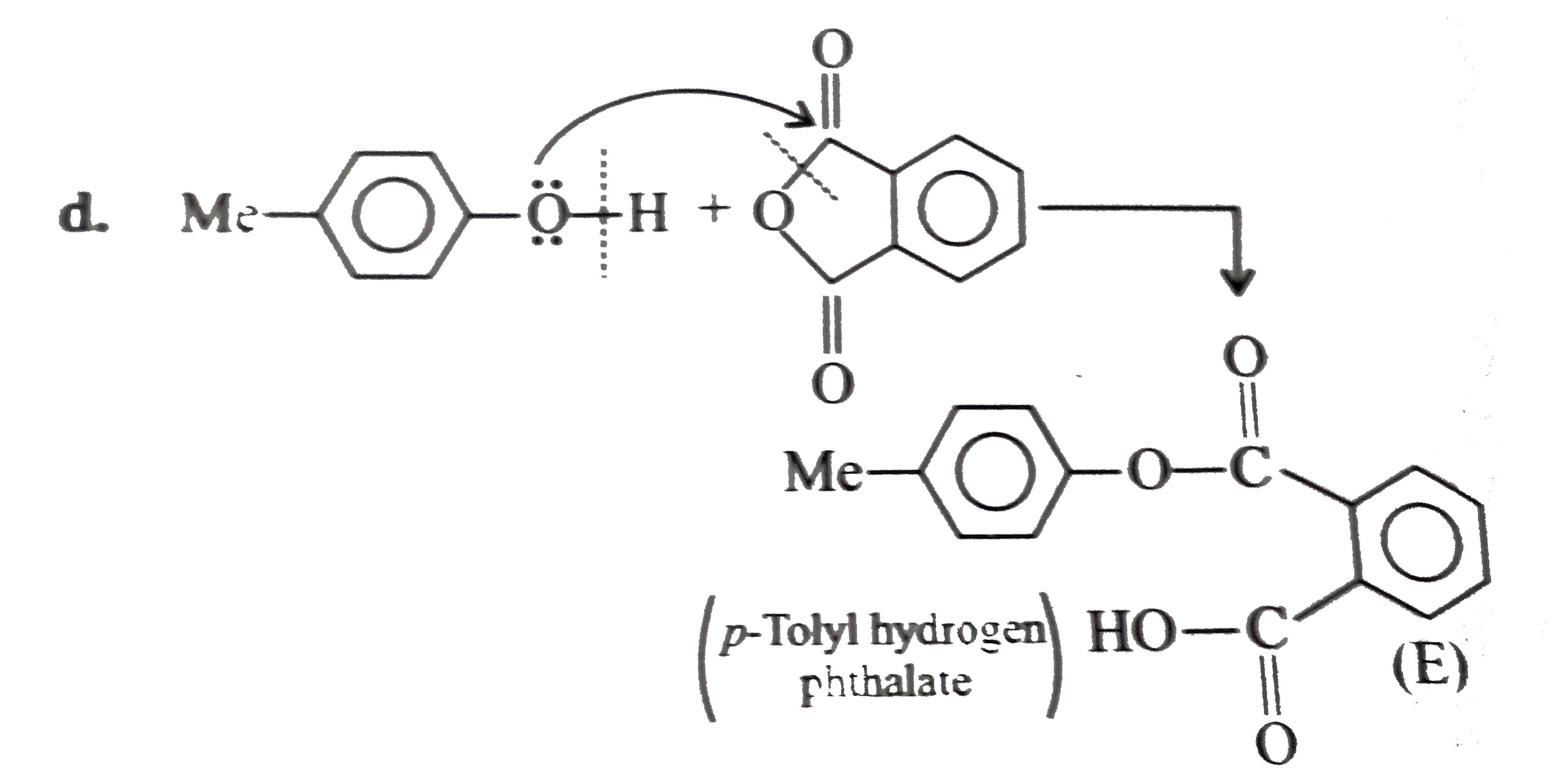 E. 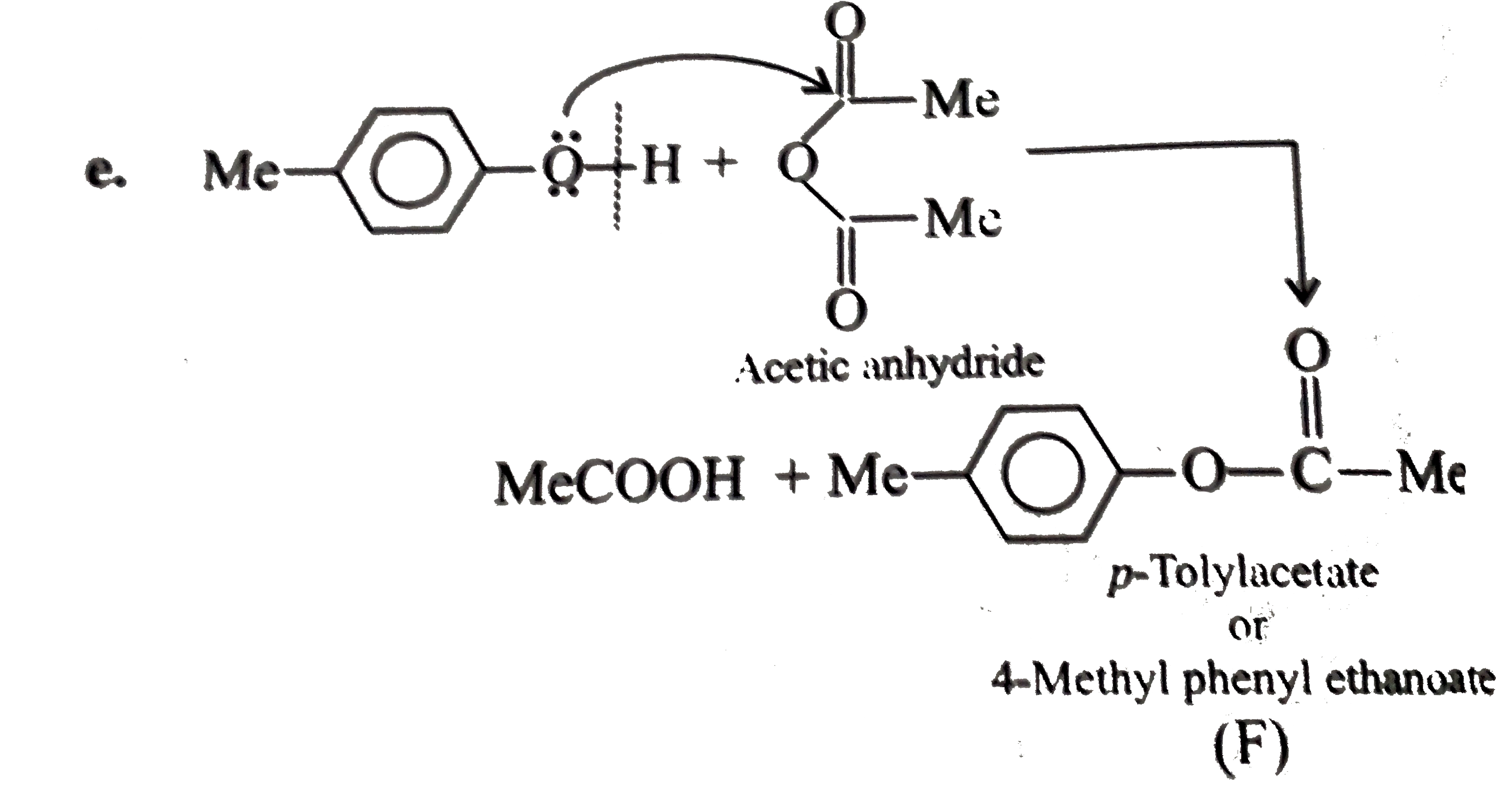 f. 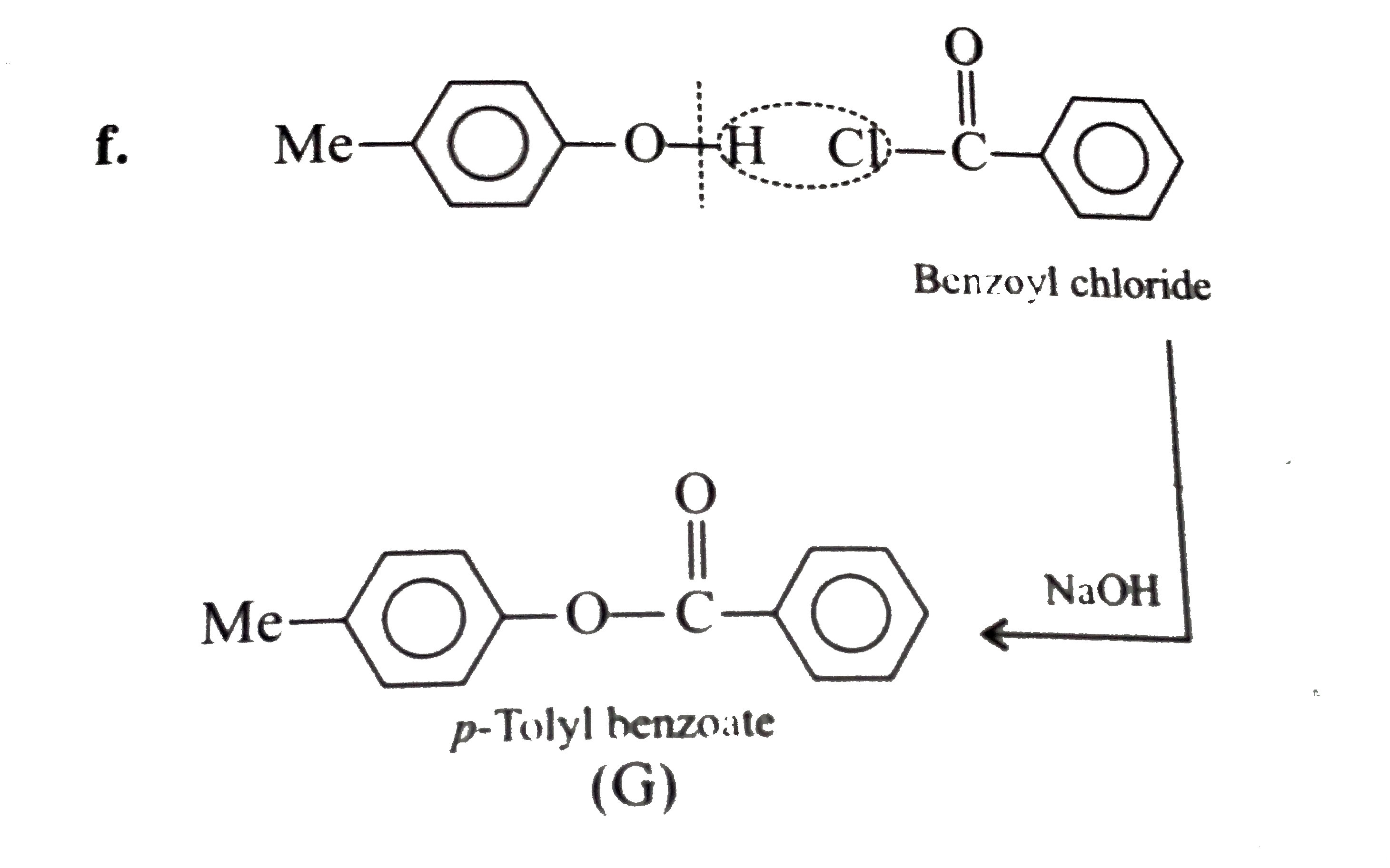 g. 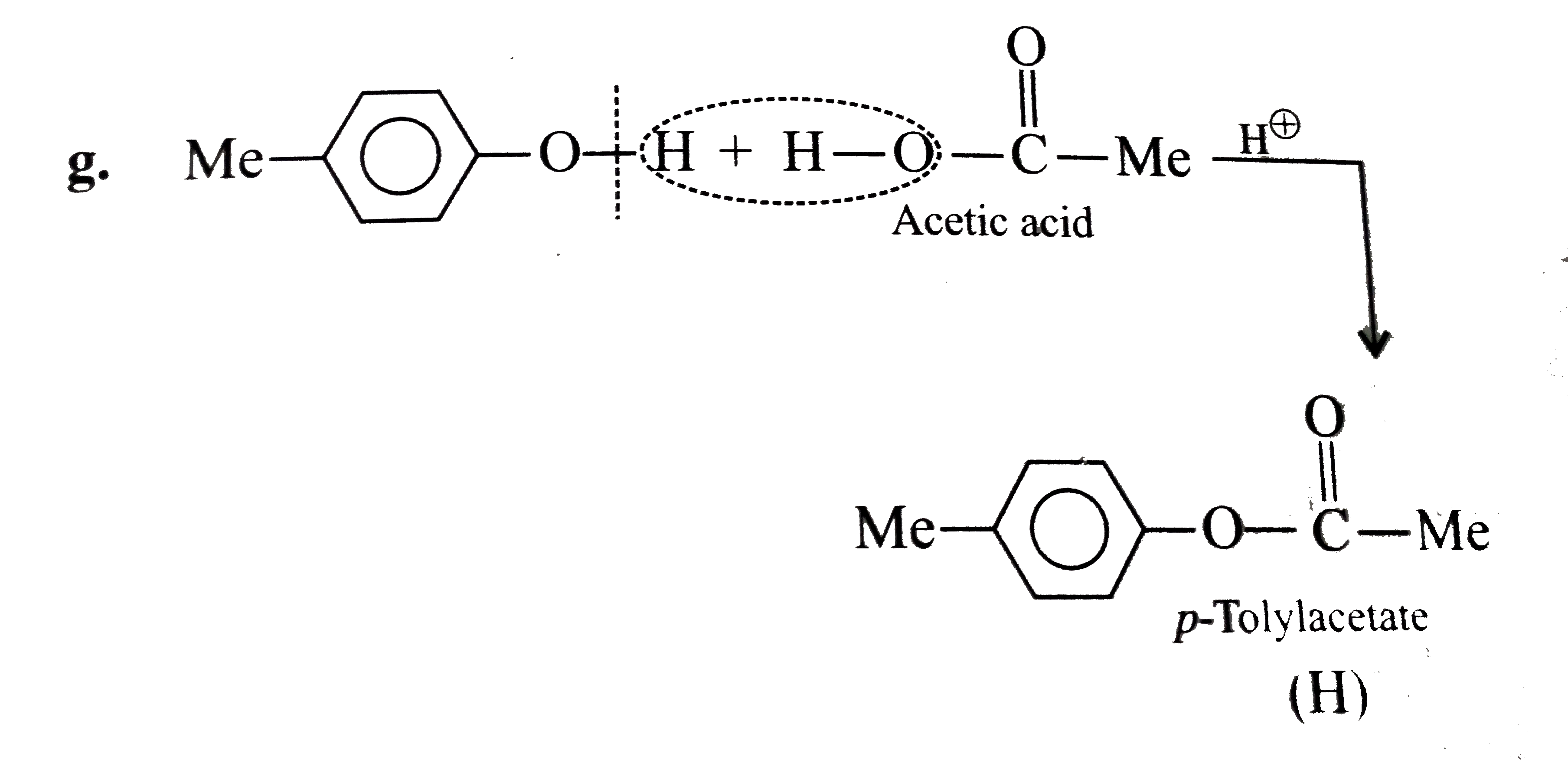 H.  i. 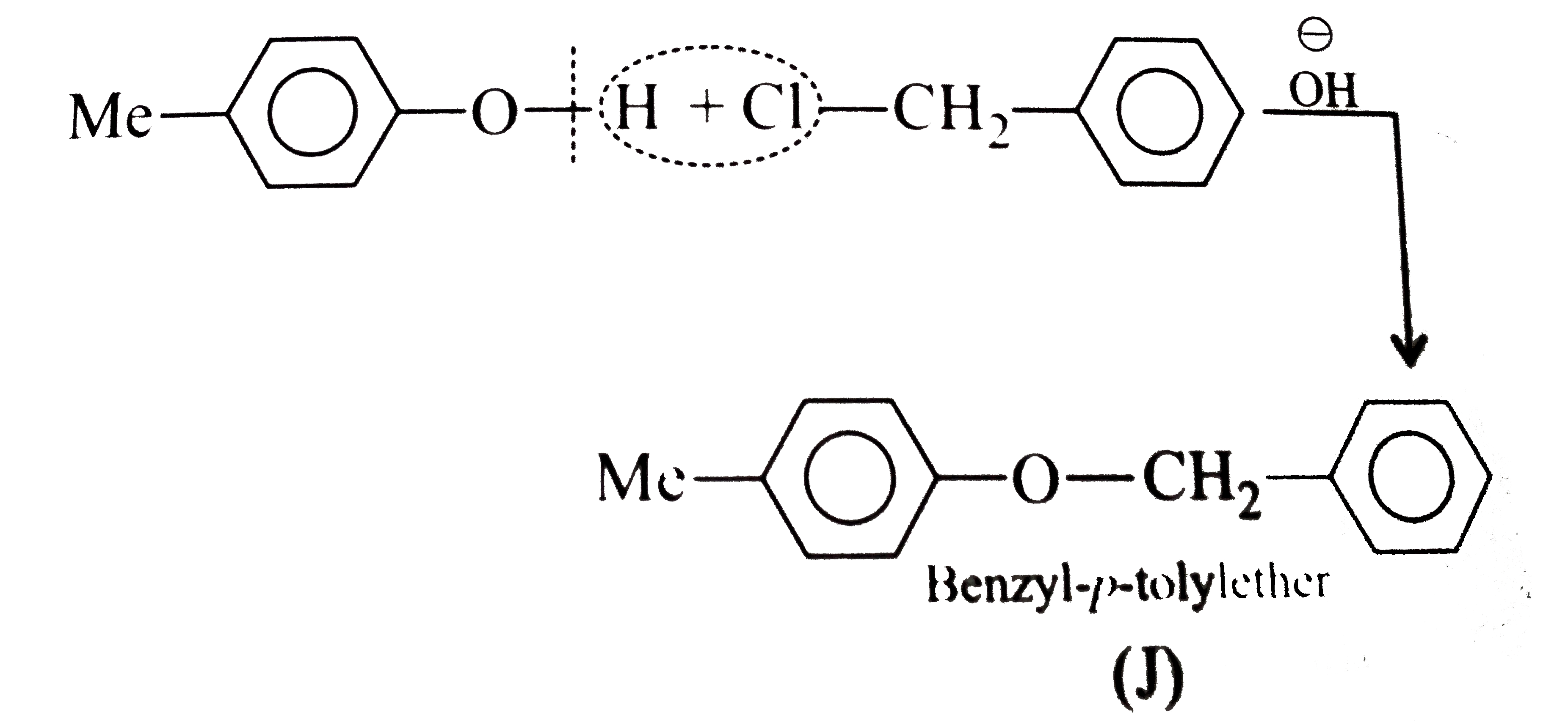 J. 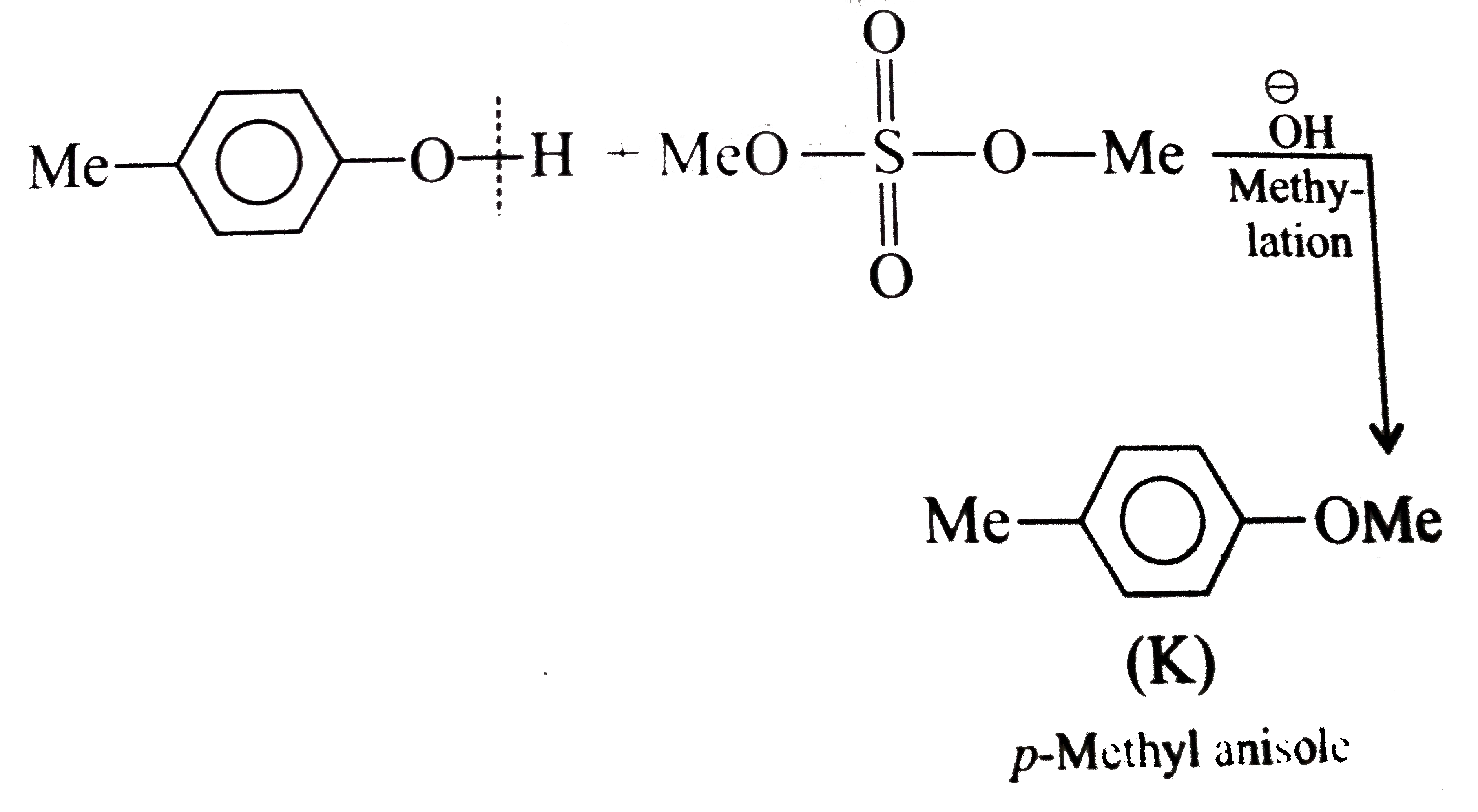 k.  (Cleavage of `(Ar---O)` bonds does not occur with HCI.) |
|
| 18. |
Complete the following reaction : |
Answer» SOLUTION :
|
|
| 19. |
Complete the following reaction : |
|
Answer» |
|
| 21. |
Complete the following reaction : |
|
Answer» |
|
| 22. |
Complete the following question (i). (ii). CH_(3)CH_(2)CH=CH_(2)+HB rto |
Answer» SOLUTION :ADDITION to unsymmetrical double bond is GUIDED by markownikov's RULE  . .
|
|
| 23. |
Consider the following nuclear reactions : I ._(7)^(14)N+._(2)^(4)Herarr._(8)^(17)O+X II ._(4)^(9)Be+._(2)^(4)Hrarr._(6)^(12)He+Y Then |
|
Answer» (c) `._(4)^(9)Be +._(2)^(1)Hrarr._(3)^(6)Li+_(2)^(4)He "" ` (d)`._(20)^(43)Ca+._(2)^(4)He rarr._(21)^(46)+._(1)^(1)H` (Proton) |
|
| 24. |
Complete the following : . |
| Answer» SOLUTION :` (##KSV_CHM_ORG_P2_C15_S01_025_S01.png" WIDTH="80%">. | |
| 25. |
Complete the following : . . |
|
Answer» SOLUTION :` (##KSV_CHM_ORG_P2_C15_E01_019_S01.png" width="80%"> C. `NH_(2)CONH_(2) overset(DELTA)underset(HCI//AcOH)rarr HCN +H-N=C=O` 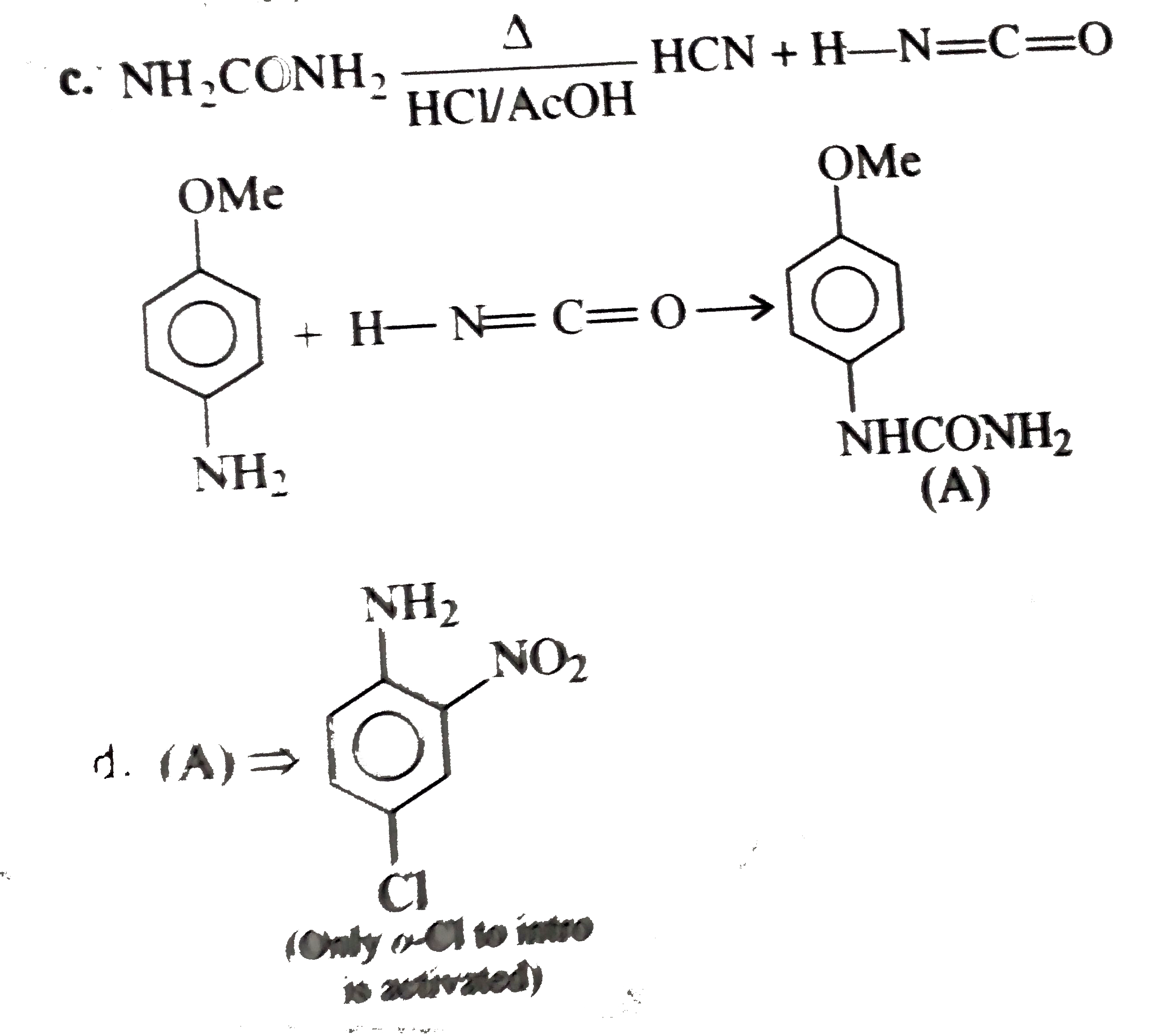 ` (##KSV_CHM_ORG_P2_C15_E01_019_S03.png" width="80%"> 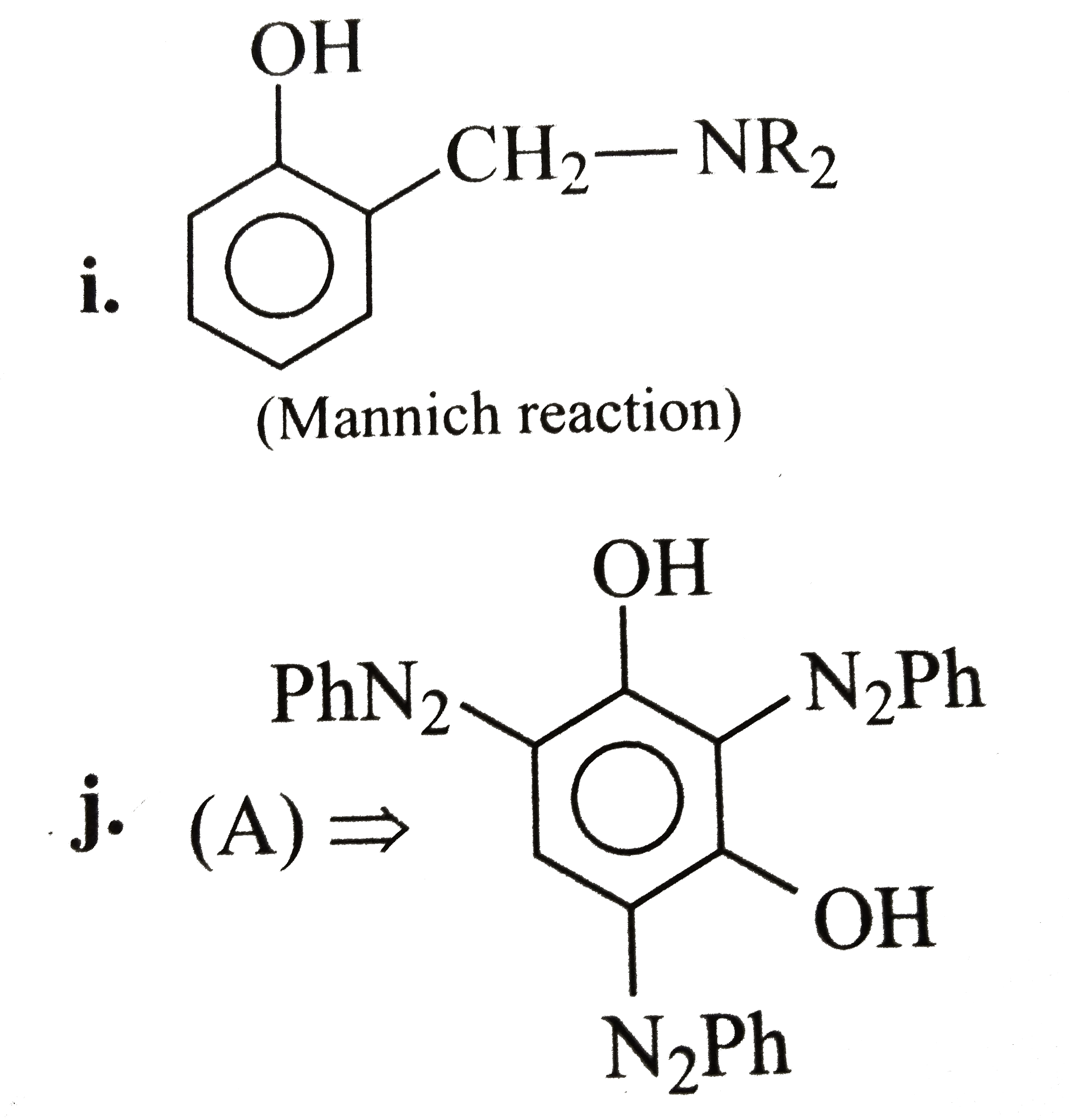 ` (##KSV_CHM_ORG_P2_C15_E01_019_S05.png" width="80%"> 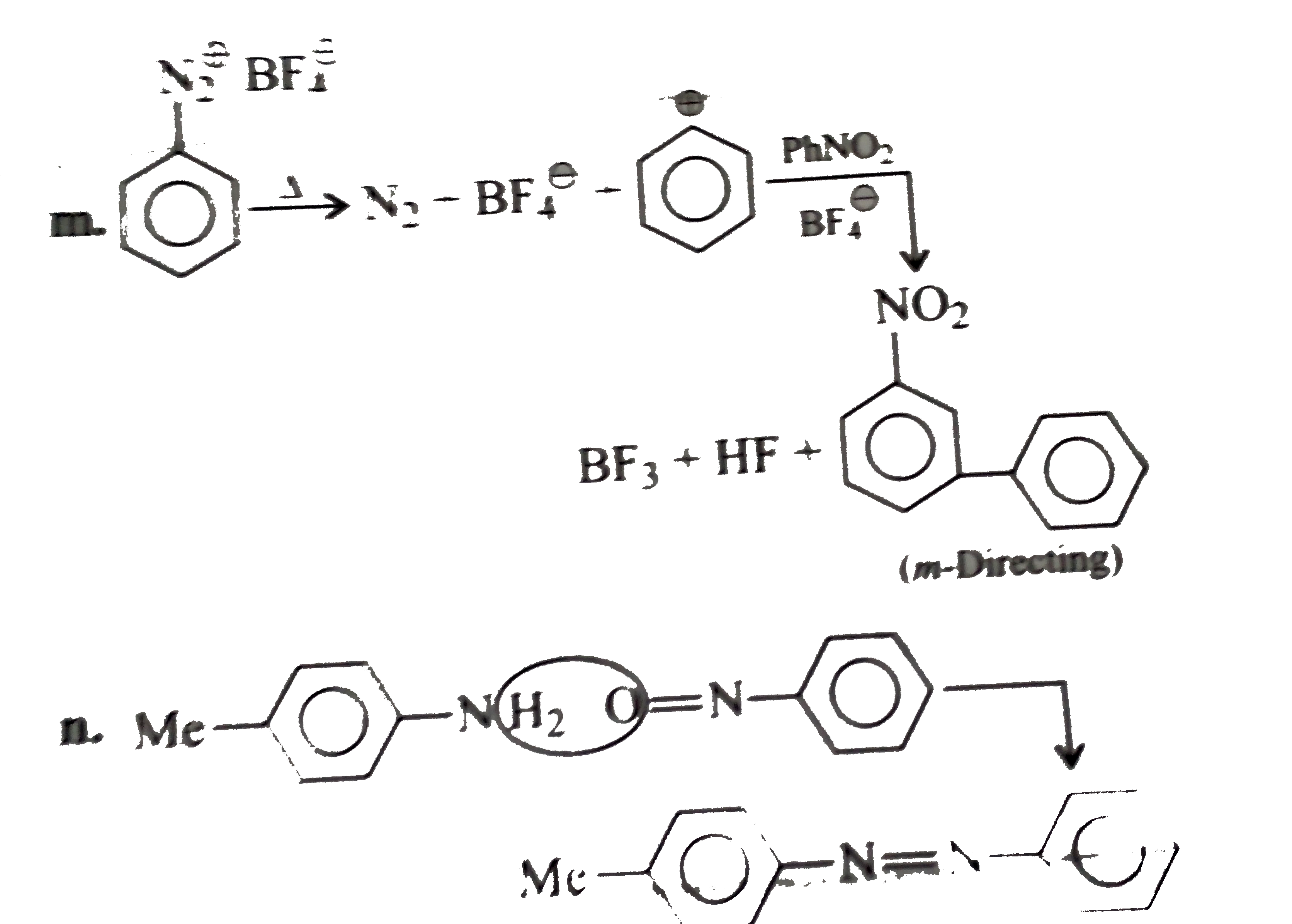 o. In absic medium, coupling TAKES place o-to the `(OH)` group, and in acidc medium , coupling take place o- to the `(NH_(2))` group. 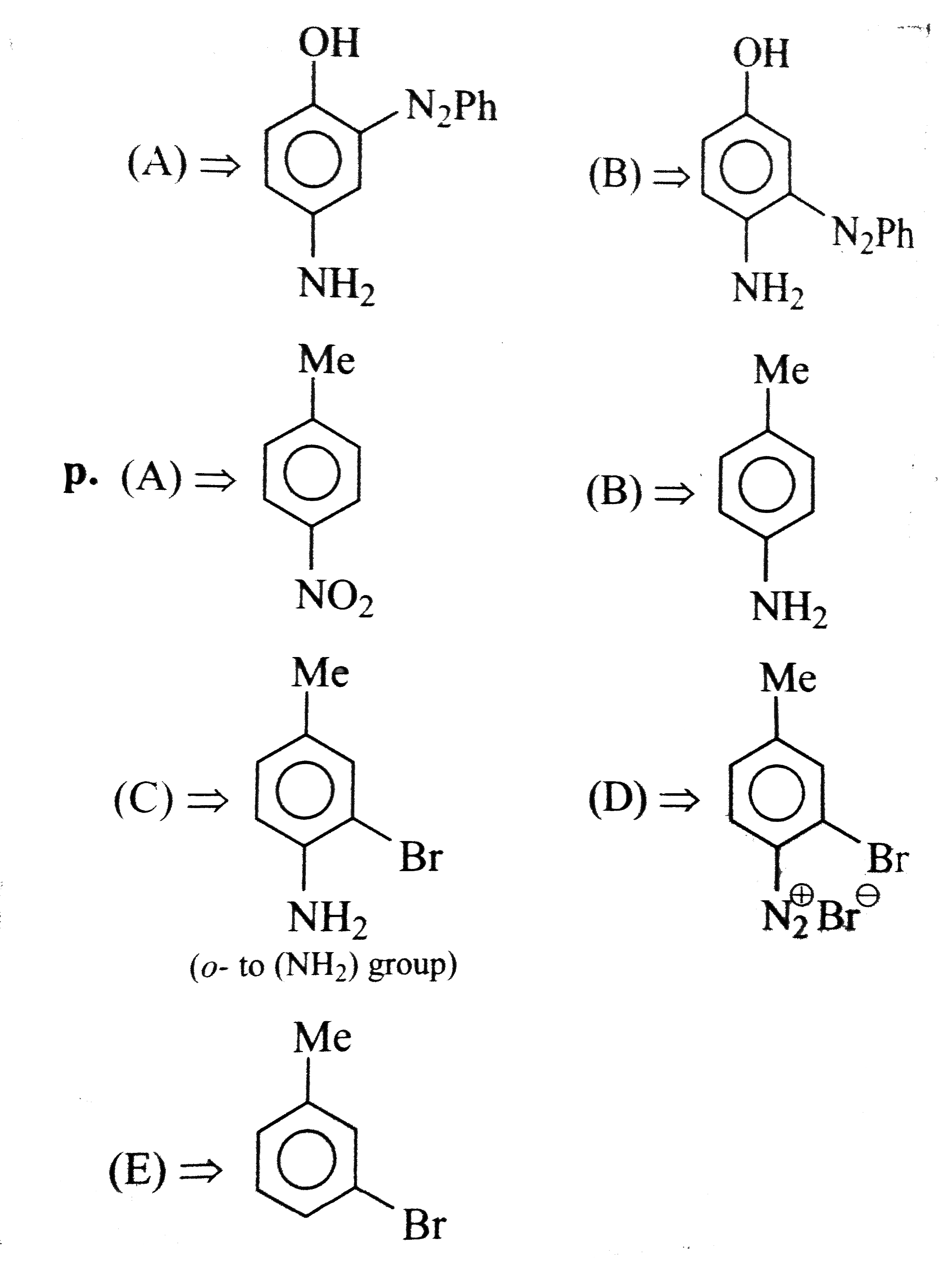 ` (##KSV_CHM_ORG_P2_C15_E01_019_S08.png" width="80%"> 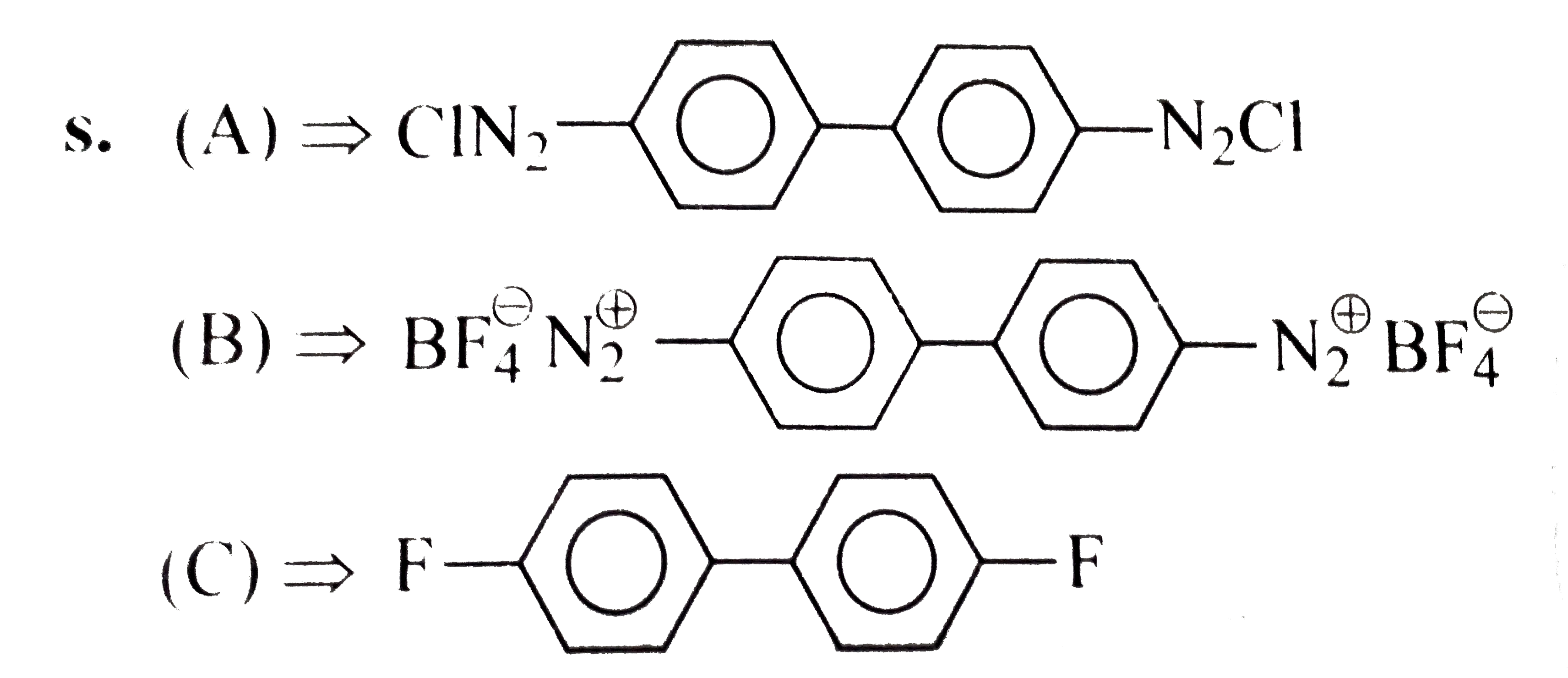 t. Migration of Mg group from (N) atom ti (C ) atom (in benzene nucleus ) takes place in steps . This is called Hofmann -Marticu rearrangement reaction. 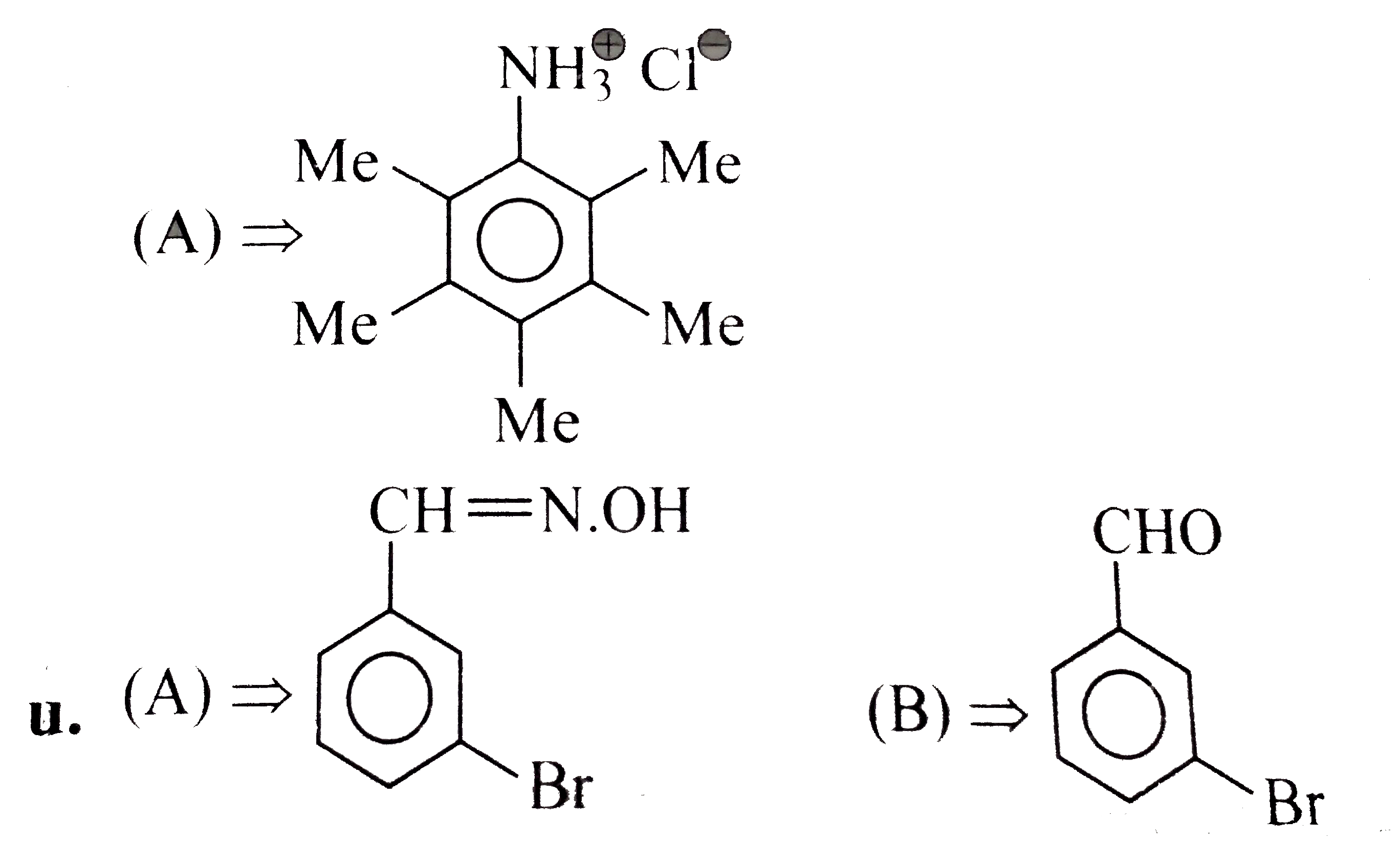 ltbr. v A ovn Richter reation . when halontro benzene in heated with ` KCN`, them nitro group is eleiminated and the (- CN) group eneters the ring o-to the position occupoed by the expelled group. ltbr. v A ovn Richter reation . when halontro benzene in heated with ` KCN`, them nitro group is eleiminated and the (- CN) group eneters the ring o-to the position occupoed by the expelled group. 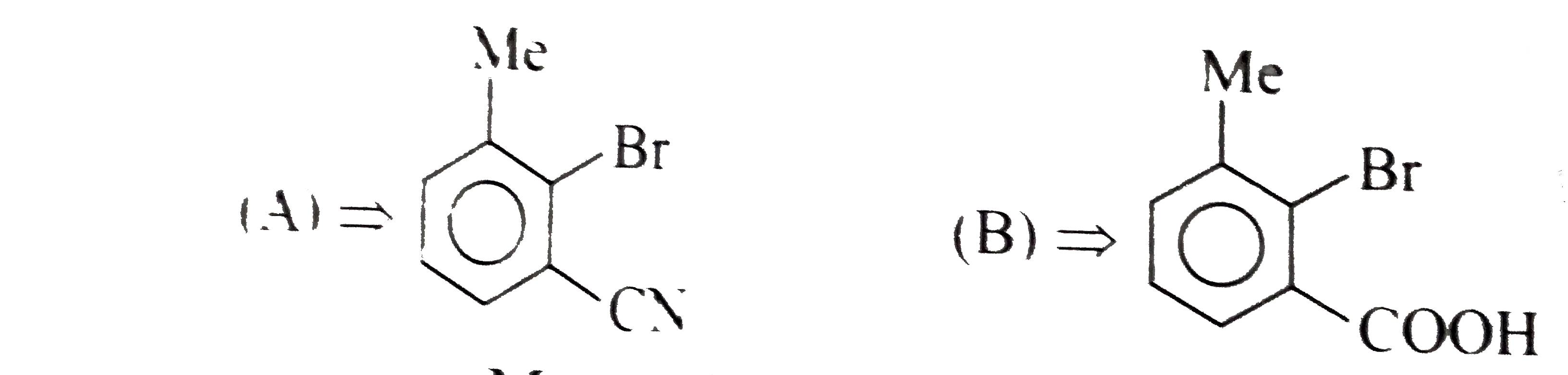
|
|
| 26. |
Complete the following in a meaningful way :- What are safety nets ? |
| Answer» Solution :SAFETY nets are made to PROTECT nations and are for MINIMISING the negative effects of globalisation on those who are ECONOMICALLY week. | |
| 27. |
Complete the following : |
| Answer» SOLUTION :` (##KSV_CHM_ORG_P2_C15_E01_018_S01.png" WIDTH="80%">. | |
| 28. |
Complete the following (i)R-overset(O)overset(||)C-NH_2underset(H_2O)overset(LiAl//H_4)to (ii)C_6H_5N_2Cl+H_3PO_2+H_2Oto (iii) CH_3CH_2Cloverset(NaCN)to(A)underset(Ni//H_2)overset("reduction")to(B) |
|
Answer» SOLUTION :(i)`R-OVERSET(O)overset(||)C-NH_2underset(H_2O)overset(LiAl//H_4)toR-CH_2-NH_2` (II)`C_6H_5N_2Cl+H_3PO_2+H_2OtoC_6H_6+N_2+H_3PO_3+HCl` (III)`(A)=CH_3CH_2CN(B)CH_3CH_2CH_2NH_2` |
|
| 29. |
Complete the following : (ii) CH_(3)CONH_(2)+NaOH+Br_(2)to |
| Answer» SOLUTION :`CH_(3)NH_(2)+Na_(2)CO_(3)+NaBr+H_(2)O`. | |
| 30. |
Complete the following : (iii) . |
Answer» SOLUTION :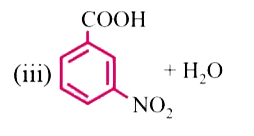 . .
|
|
| 31. |
Complete the following : i. |
Answer» SOLUTION :i. `(NH_4)_2 S ` or ` NH_4SH` REDUCES only ONE NITRO GROUP. 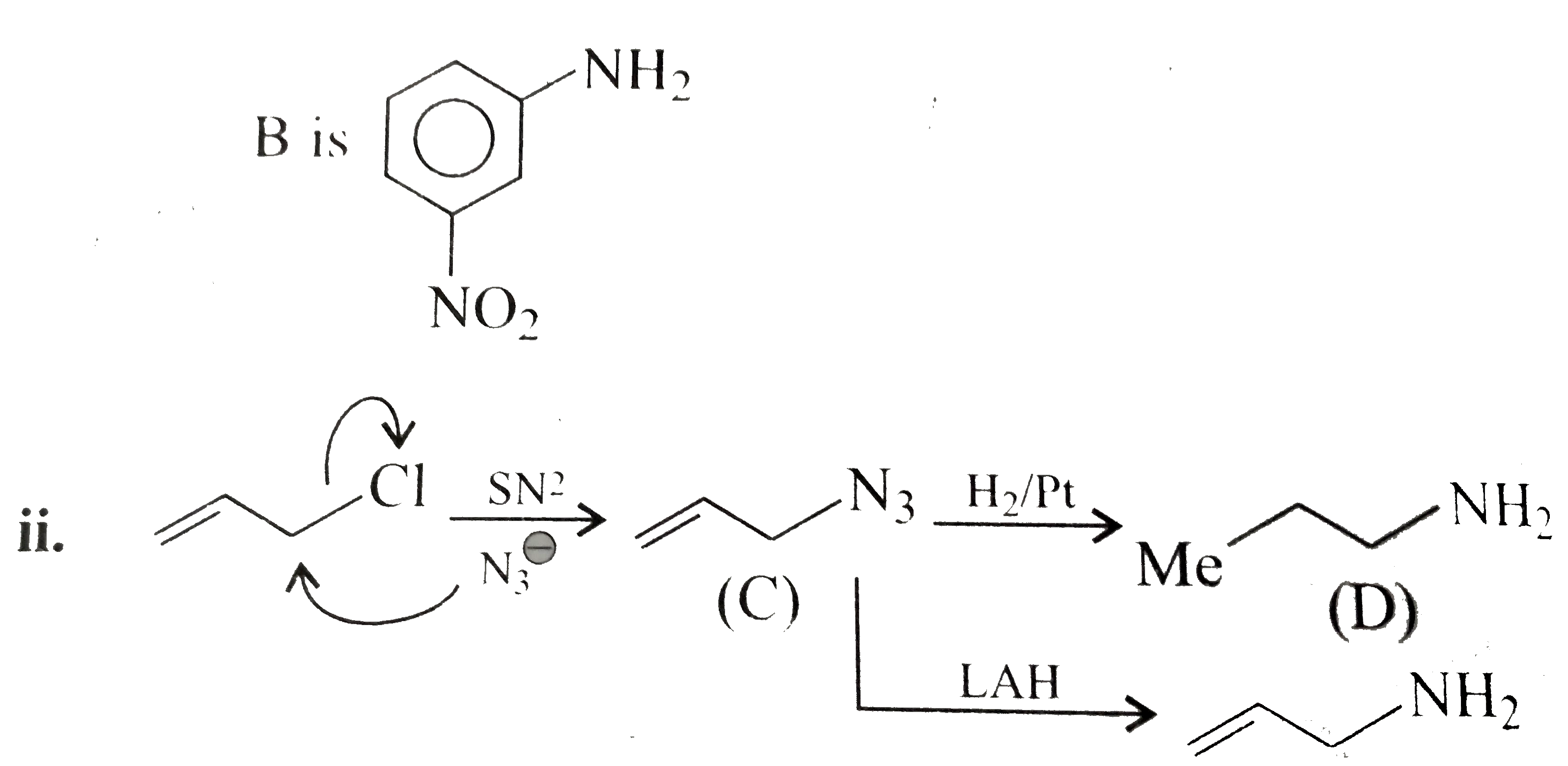
|
|
| 32. |
Complete the following: i. Give the oxidation product of v. Distinguish between allyl alcohol (A) and n-propyl alcohol (B). vi. Complete the following: c. CH_(3)CHO+HC-=CD overset(CH_(3)ONa)(rarr)(A) d. vii. Write the stereochmical products of the following: |
Answer» Solution :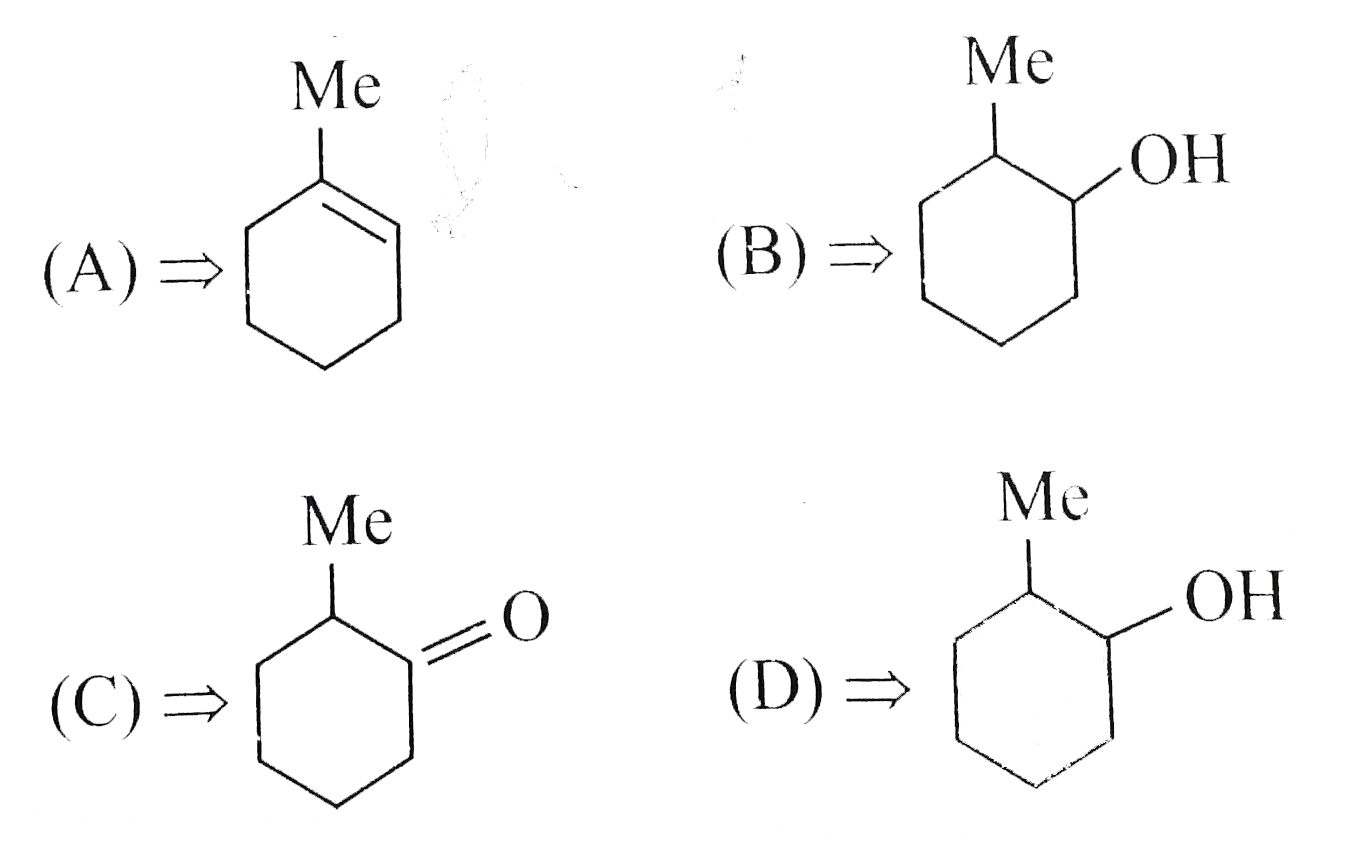 v. `(CH_(2)=CH-CH_(2)OH) (CH_(3)CH_(2)CH_(2)OH)` Lucas Test White turbidity immediately cations are resonance stabilised and are as stable as `3^(@) C^(o+)`. They will react as fast as `3^(@)` ALCOHOL with Lucas test, even though they may be `1^(@)` alcohol. No. REACTION `(1^(@) alcohol)` b. `H_(2)CrO_(4)` Blue-GREEN Blue green vi. No reaction since the terminal triple bond is absent. 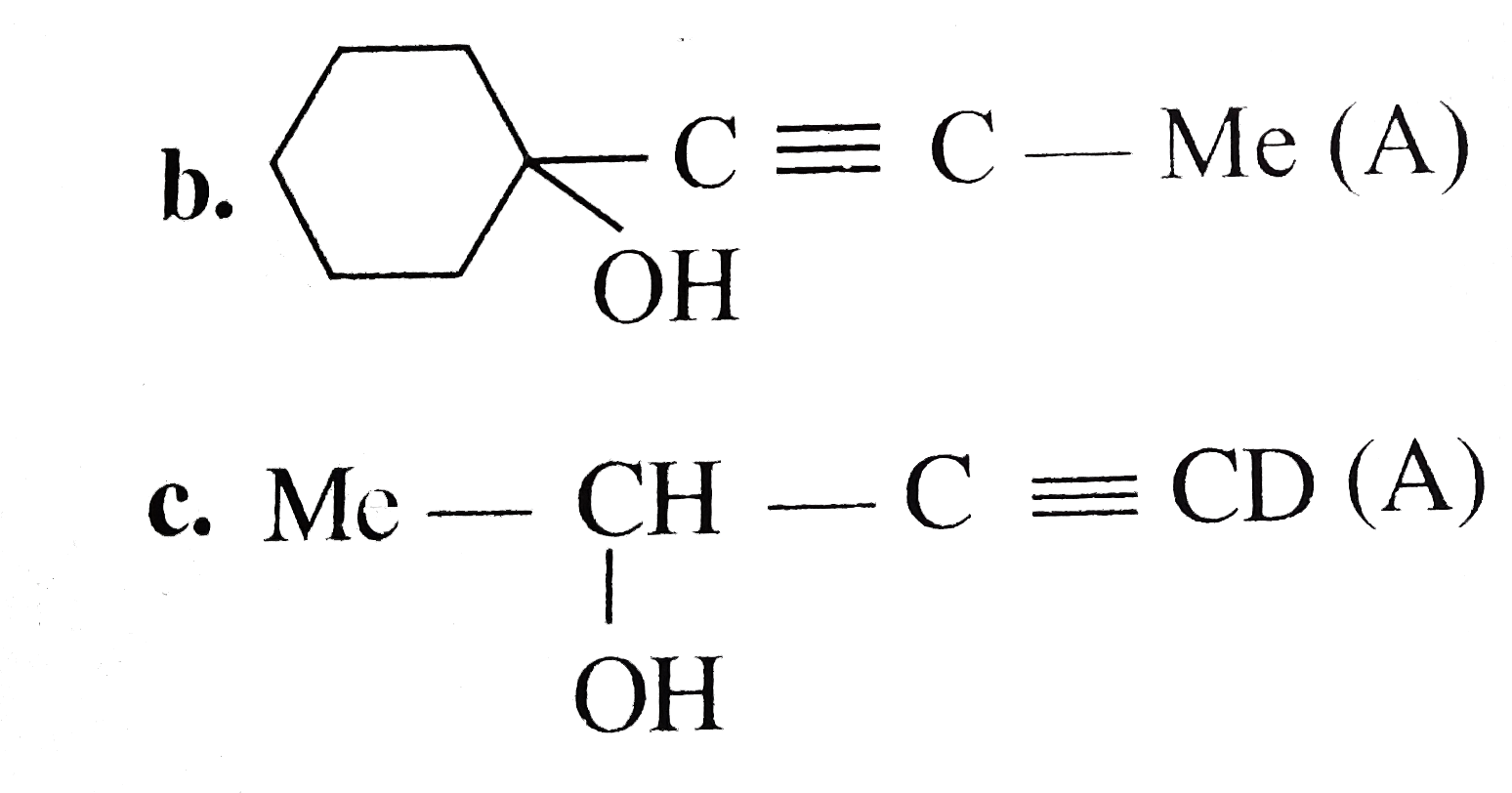 c. `Me-underset(OH)underset(|)(OH)-C-=CD (A)` (Because bond energy of `C-H` is than `C-D`) d. 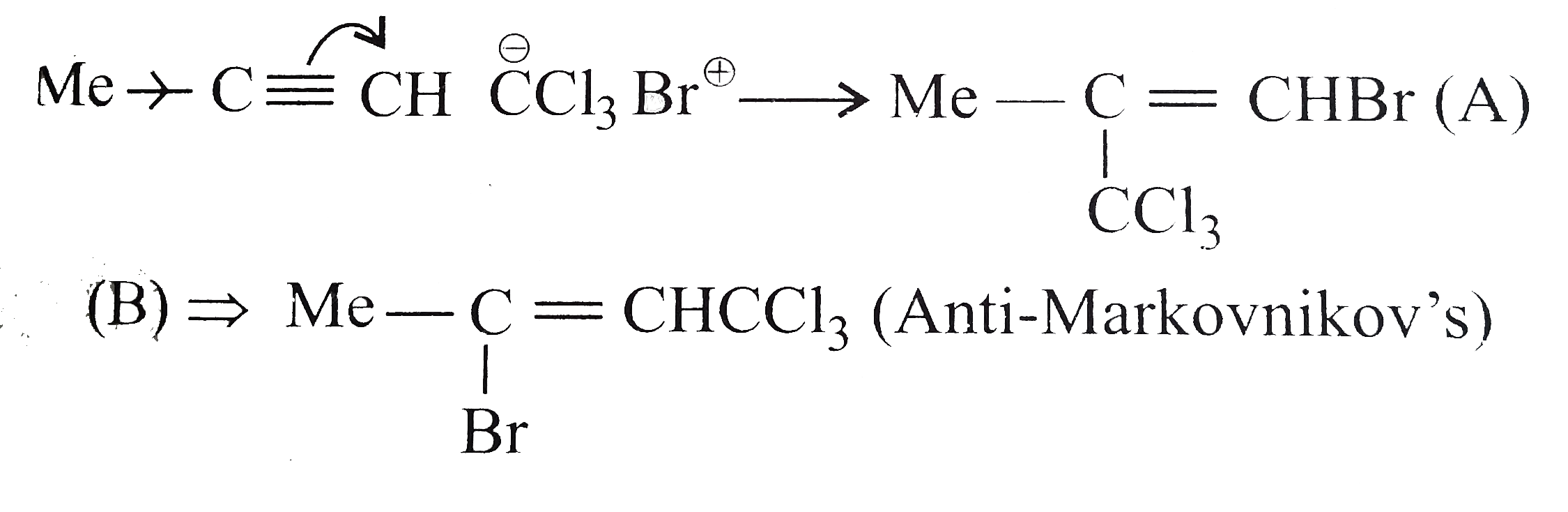 `(B) implies Me-underset(Br)underset(|)(C )=CHC Cl_(3) (anti-Markovnikov's)` 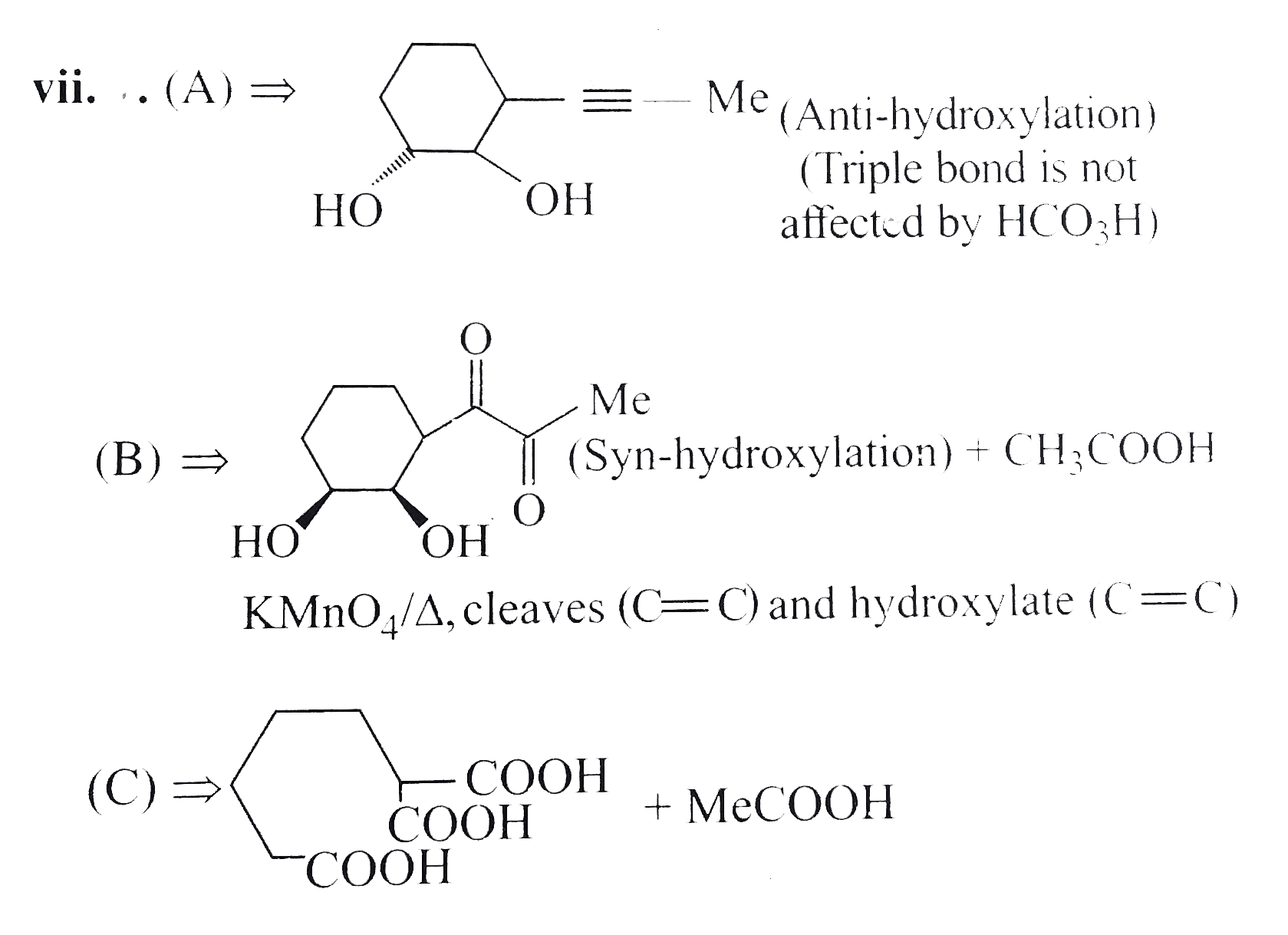 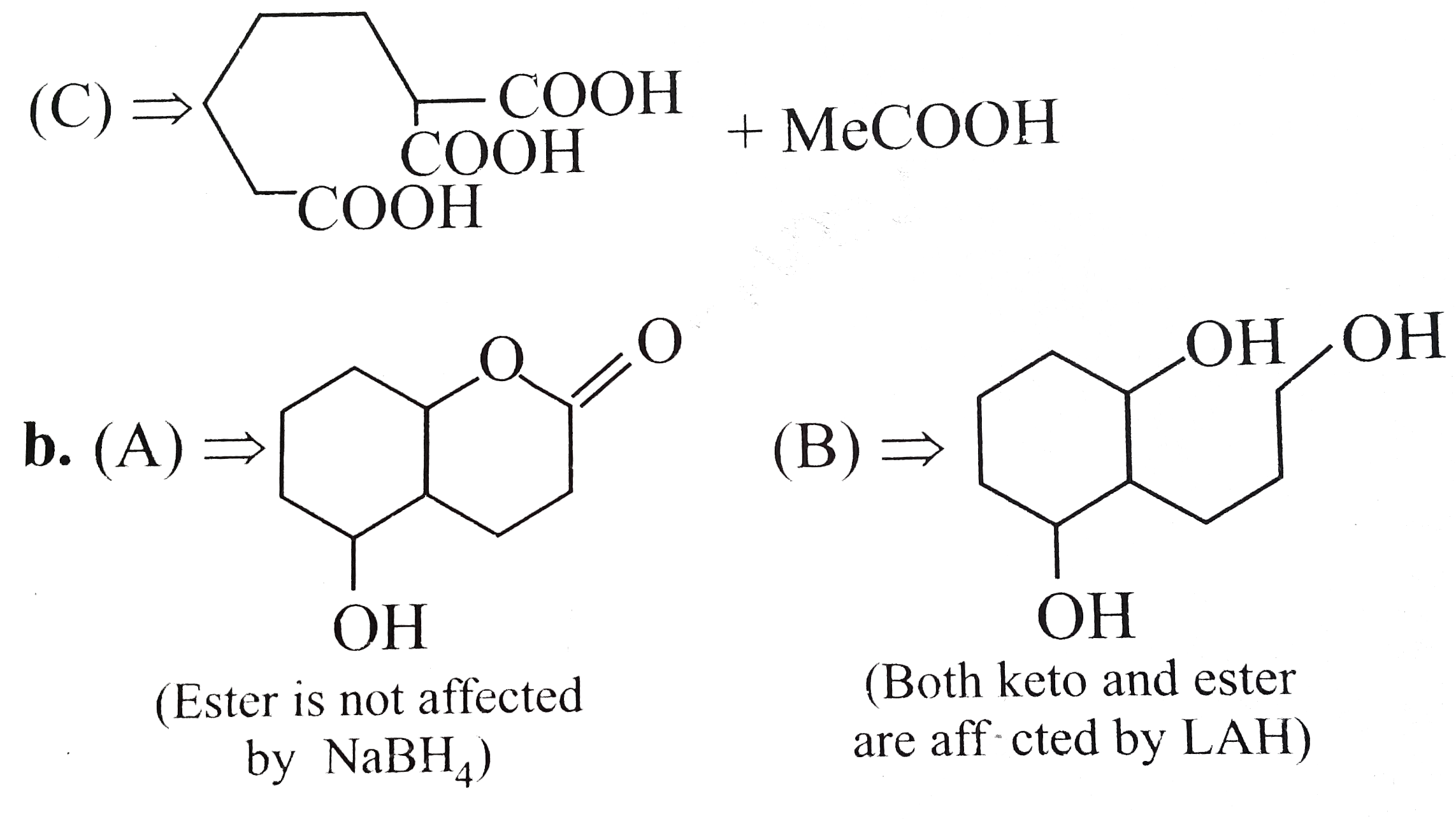
|
|
| 33. |
Complete the following. (i) CH_(3)CN underset(C_(2)H_(5)OH)overset(Na-Hg)rarr ? (ii) CH_(3)NC underset(C_(2)H_(5)OH)overset(Na-Hg)rarr? |
| Answer» SOLUTION :(i) `CH_(3)CN underset(C_(2)H_(5)OH)OVERSET(Na-Hg)RARR underset((1^(@)-"amine"))(CH_(3)CH_(2)NH_(2))` (ii) `CH_(3)NC underset(C_(2)H_(5)OH)overset(Na-Hg)rarr underset((2^(@) " amine"))(CH_(3) - NH- CH_(3))` | |
| 34. |
Complete the following : (i) CH_(3)CONH_(2)+HNO_(2)to |
| Answer» SOLUTION :`CH_(3)COOH+N_(2)+H_(2)O` | |
| 35. |
Complete the following : i) CH_(3)-CH=CH-CH_(2)OH overset("PCC")rarr ii) |
|
Answer» SOLUTION :i) `underset("But -2- enol")(CH_(3)-CH=CH-CH_(2)OH)overset("PCC")rarr underset("But -2- onal")(CH_(3)-CH=CH-CHO)` ii) 
|
|
| 36. |
Complete the following : i. ._(7)N^(14)+._(2)He^(4)rarr ._(8)O^(17)+………. ii.._(92)U^(235)+._(0)n^(1) rarr ._(55)A^(142)+._(37)B^(92)+………. iii. ._(29)Cu^(53)rarr ._(28)Ni^(53)+……………… iv. 2 ._(1)H^(3)rarr._(2)He^(4)+..... v. ._(96)Cm^(246)+._(6)C^(12)rarr ._(102)No^(254)+........... vi. ._(94)Pu^(239)+.......rarr._(96)Cm^(242)+._(0)n^(1) vii.._(34)Se^(82)rarr ............ +2 ._(-1)e^(0) |
|
Answer» Solution :`i.` `._(7)N^(14)+._(2)He^(4)rarr ._(8)O^(17)`+........ or `._(7)N^(14)+._(2)He^(4)rarr._(8)O^(17)+._(Z)X^(m)` Equating mass number on both sides `14+4=17+mimpliesm=-1` Equating atomicnumber on both sides, `7+2=8+ZimpliesZ=-1` `:. X` is `._(1)X^(1) ,i.e., ._(1)H^(1)` . or `._(7)N^(14)+._(2)He^(4) rarr ._(8)O^(17)+._(1)H^(1)` `ii.``._(92)U^(235)+._(0)n^(1) rarr._(55)A^(142)+._(37)B^(92)+.....` Equation is `._(92)U^(235)+._(0)n^(1)rarr``_(55)Cs^(142)+._(37)Rb_(92)+2._(0)n^(1)` `iii.` `._(29)Cu^(53) rarr`._(28)Ni^(53)+._(Z)X^(m)` Equating atomic number on both sides and mass number on both sides `Z=0``m=0` `:. ` `._(29)Cu^(53) rarr ._(28)Ni^(53)+._(Z)X^(m)` Equating atomic numberon both sides and mass number on bot sides `:. 2 ` `._(1)H^(3) rarr._(2)He^(4)+2 ._(0)n^(1)` `v.` Equating atomic number and mass number on both sides `._(96)Cm^(246)=._(6)C^(12)rarr ._(102)No^(254)+4._(0)n^(1)` `vi.` Equating atomic number and mass number on both sides `._(94)Pu^(239)+._(2)He^(4) rarr ._(96)Cm^(242)+._(0)n^(1)` `vii.` Equatingatomic number and mass number on both sides. `._(34)SE^(82) rarr ._(36)Kr^(82)+2._(-1)n^(0)` |
|
| 37. |
Complete the following. Giving the structures of the principle organic product +(COOEt)_(2)+EtONa rarrA (COOH)_(2)+(CH_(2)OH)_(2)overset(conc.H_(2)SO_(4))rarrtoB H_(3)CCOCOC_(6)H_(5)+NaOHoverset(H_(3)O^(+))rarrC |
|
Answer» |
|
| 38. |
Complete the following giving the structures of the principal organic products. |
|
Answer» |
|
| 39. |
Complete the following equation.'XeF6+H_2Oto....+2HF |
| Answer» SOLUTION :`.XeOF_4:` | |
| 40. |
Complete the following equations:HCHO overset(NaOH)rarr |
| Answer» SOLUTION :`2HCHO+H_2O OVERSET(NAOH)RARR HCOOH + CH_3OH` | |
| 41. |
Complete the following equations:HCHO+BrMgCH_3rarr |
Answer» SOLUTION :
|
|
| 42. |
Complete the following equations:(a) 4Al + 3O_(2) to (b) PbS(s) + 4O_(3)(g) to (c) C + 2H_(2)SO_(4) to. |
|
Answer» SOLUTION :(a)`2Al_(2)O_(3)` (B) `PbSO_(4) + 4O_(2)` (c) `2H_(2)O + 2SO_(2) + CO_(2)` |
|
| 43. |
Complete the following equations: C + Conc. 2H _2SO _4 to' |
| Answer» SOLUTION :`2H_2O + CO_2 + 2SO_2` | |
| 44. |
Complete the following equations. Na_(2)SO_(3)+2HClrarr2NaCl+H_(2)O+…… |
| Answer» SOLUTION :`Na_(2)SO_(3)+2HClrarr2NaCl+H_(2)O+SO_(2)` | |
| 45. |
Complete the following equations: (i) SO_(2) + Cl_(2) overset("charcoal")to (ii) S + 2H_(2)SO_(4)underset("conc.") rarr (iii) NO + O_(3) rarr |
|
Answer» Solution :(i)`SO_(2)Cl_(2)` (ii)`3SO_(2) + 2 H_(2)O` (III)`2HNO_(3) + NO` |
|
| 46. |
Complete the following equations : (i) P_(4)+H_(2)Orarr (ii) XeF_(4)+O_(2)F_(2)rarr |
|
Answer» Solution :Direct reaction is not possible. The medium should be either acidic or basic. Acidic Medium : `2P_(4)+12H_(2)Orarr 4PH_(3)+4HPO_(3)^(2-)+8H^(+)` Basic Medium : `2P_(4)+4H_(2)O+8OH^(-)RARR 4PH_(3)+4HPO_(3)^(2-)` (i) `P_(4)+H_(2)Orarr"no reaction"` (ii) `XeF_(4)+O_(2)F_(2)rarr XeF_(6)+O_(2)` |
|
| 47. |
Complete the following equations: i) NO+O_(3)rarr ii) 5SO_(2)+2MnO_(4)^(-)+2H_(2)Orarr iii) C+2H_(2)SO_(4)"(conc.)"rarr |
|
Answer» Solution :i) `NO+O_(3)rarr NO_(2)+O_(2)` ii) `5SO_(2)+2MnO_(4)^(-)+2H_(2)Orarr 5SO_(4)^(2-)+4H^(+)+2Mn^(2+)` iii) `C+2H_(2)SO_(4)" (CONC.)" rarr CO_(2)+2SO_(2)+2H_(2)O` |
|
| 48. |
Complete the following equations (i) n-C_(3)H_(7)-CO_(2)Hton-C_(4)H_(9)OH (ii). Me_(2)CO+EtMgIto?overset(H^(+))to? (iii). EtCO_(2)Et+2MeMgIto?overset(H_(2)O)to? (iv). |
Answer» SOLUTION : 
|
|
| 49. |
Complete the following equations : (i) (iii) CH_(3)COONa overset(NaOH&CaO)underset(Delta)rarr |
Answer» Solution : iii) `CH_(3)COONa overset(NaOHCaO)underset(DELTA)rarrCH_(4)+Na_(2)CO_(3)` |
|