Saved Bookmarks
This section includes 7 InterviewSolutions, each offering curated multiple-choice questions to sharpen your Current Affairs knowledge and support exam preparation. Choose a topic below to get started.
| 1. |
Chromic anhydride in H_(2)SO_(4) is not blue by: |
|
Answer» a.`1^(@)` alcohol |
|
| 2. |
Chromic anhydride in H_(2)SO_(4) is turned blue by |
|
Answer» `1^(@)` ALCOHOL |
|
| 3. |
Chrome yellow is : |
|
Answer» `PbCrO_4` |
|
| 4. |
Chrome yellow is chemically known as: |
|
Answer» LEAD chromate |
|
| 5. |
Chrome green is |
|
Answer» CHROMIUM sulphate |
|
| 6. |
Chromatography is used for the purification of |
|
Answer» Solids |
|
| 7. |
Chromatography is based on the principle of :chemical adsorptionhydrogen bondingchemisorptionphysical adsorption. |
|
Answer» CHEMICAL ADSORPTION |
|
| 8. |
Chromatography is a technique based on………………….. Adsorption of defferent constituents of mixture. |
|
Answer» |
|
| 9. |
Chromatographic technique was intoduced by |
|
Answer» DUMA |
|
| 10. |
Chromatograophy is a valuable method for the separation, isolation,purification of the constituents of a mixtureand it is based on general principle of |
|
Answer» PHASE rule |
|
| 11. |
Chromatographic techniquecan beused forseparation of |
|
Answer» Volatile solids (a) is not correct. |
|
| 12. |
Chromatography technique is used for the separation : |
|
Answer» all VOLATILE liquids |
|
| 13. |
Chromate ion has ________ structure . |
|
Answer» octahedral |
|
| 14. |
Chromate ion, CrO_4^(2-) is |
|
Answer» DIAMAGNETIC, ORANGE in colour |
|
| 15. |
Choretone is an addition product of |
|
Answer» `CH_(3)CHO,HCHO` |
|
| 16. |
{:(CHO),(|overset( (i) Conc.NaON)rarr),(CHO):}X compound X is |
|
Answer» `{:(CH_2OH),(|),(CH_2OH):}` |
|
| 17. |
Chordiazepxide is generally used for |
|
Answer» hypertension |
|
| 18. |
Choose the wrong statement(s). |
|
Answer» If the eqb. constant CHANGES, the state of eqb. has to change. |
|
| 19. |
Choose the Wrong statement amongest the following |
|
Answer» Chlorine water on long STANDING loses its yellow colourdue to the formation of HCl and HOCl |
|
| 20. |
Choose the wrong statement |
|
Answer» 1 MOLE means `6..023 xx 10^23` particles |
|
| 21. |
Choose the wrong statement. |
|
Answer» 1 mole means `6.023 xx 10^(23)`particles |
|
| 22. |
Choose the wrong option : Zinc sulphide |
|
Answer» has LOW MELTING point. |
|
| 23. |
Choose the wrong option about solids : |
|
Answer» They have LONG INTER - MOLECULAR distance |
|
| 24. |
Choose the structure that is an intermediate in the base catalyzed hydrolysis of acetonitrile into acetamide. |
|
Answer»
|
|
| 25. |
Choose the structure that has the name (R, Z)-2-bromo-4-mrthyl-2-phenylhex-4-ene. |
|
Answer»
|
|
| 26. |
Choose the secondary alcohol among the following |
|
Answer» ISOBUTYL alcohol |
|
| 27. |
Choose the reactions which would liberate nitrogen gas? |
|
Answer» `Ca(Ocl)CL+NH_(3) UNDERSET("medium") overset("Aqueous")RARR`? |
|
| 28. |
Choose the strongest base among the following : |
|
Answer»
|
|
| 29. |
Choose the reaction with negative DeltaS value |
|
Answer» `2NaHCO_(3(s))rarrNa_(2)CO_(3(s))+CO_(2(G))+H_(2)O_((g))` For (a), `Deltan_(g)=2-0=2` For (B), `Deltan_(g)=2-1=1` For (C ), `Deltan_(g)=2-3=-1` (`DeltaS` negative) For (d), `Deltan_(g)=3-0=3` For (e),`Deltan_(g)`=1-0=1 |
|
| 30. |
Choose the reaction in each of the following pairs that proceeds at the faster rate. Explain your reasoning. (a). Base-propmoted hydrolysis of phenyl acetate or m-nitrophenyl acetate (b). Base-promoted hydrolysis of m-nitrophenyl acetate or p-nitrophenyl acetate. (c). Reaction of ethyl bromide with phenol or with the sodium salt of phenol. (d). Reaction of ehtylene oxide with the sodium salt of phenol or with the sodium salt of p-nitrophenol (e). Bromination of phenol or phenyl actetate. |
|
Answer» Solution :(a). M-nitrophenyl ACETATE (better leaving group) (b). P-nitrophenyl acetate (better leaving group) (c). SODIUM SALT of phenol (better NUCLEOPHILE) (d). Sodium salt of phenol (better nucleophile) (e). Phenol (more activated aromatic RING). |
|
| 31. |
Choose the reaction in which DeltaH is not equal to DeltaU |
|
Answer» `C_((gr))+O_(2(g))rarrCO_(2(g))` `"When "Deltan_(g)=0, DeltaH=DeltaU` For (a), `Deltan_(g)=0` `(b) Deltan_(g)=1-2=-1` (C) `Deltan_(g)=0` (d)` Deltan_(g)=2-2=0` `(e) Deltan_(g)=2-2=0` |
|
| 32. |
Choosethe properoptionfor givenstatementon the basis of physicalproperties |
|
Answer» ALKYL isocyanides havebadodourswhilealkylcyanideshave pleasantodours |
|
| 33. |
Choose the option with correct words to fill in the blanks. According to preferential discharge vtheory, out of number of ions the one which requires ____ energy will be liberted ____ at a given electrode. |
|
Answer» LEAST, first |
|
| 34. |
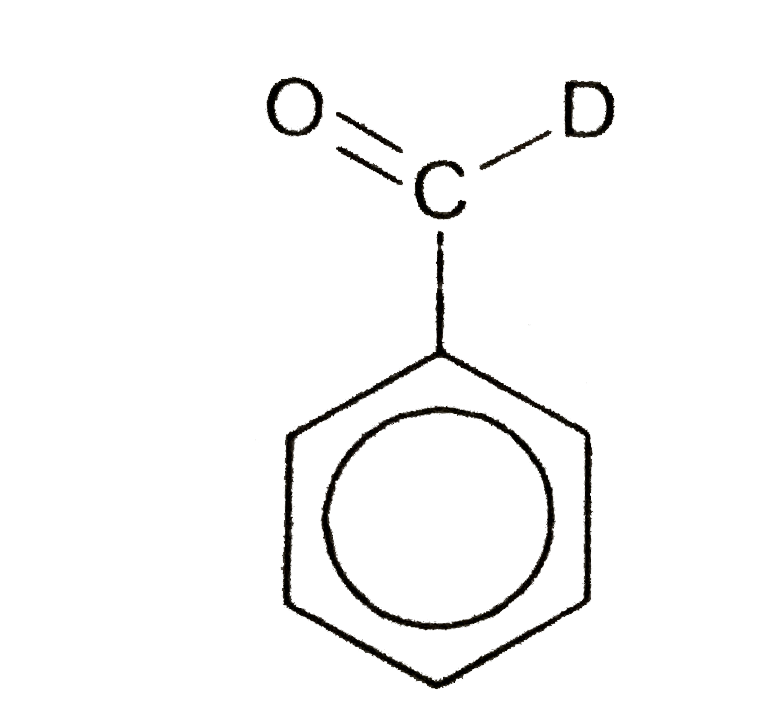
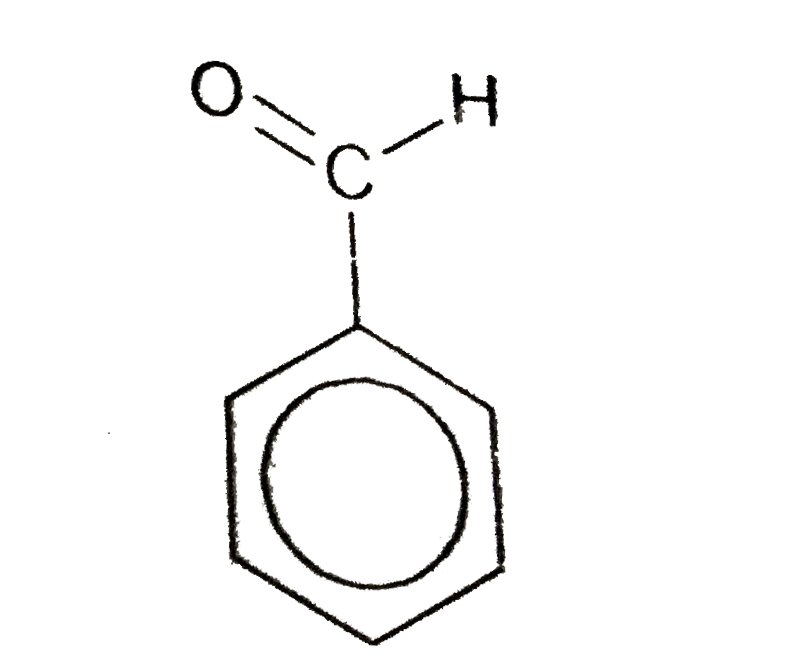
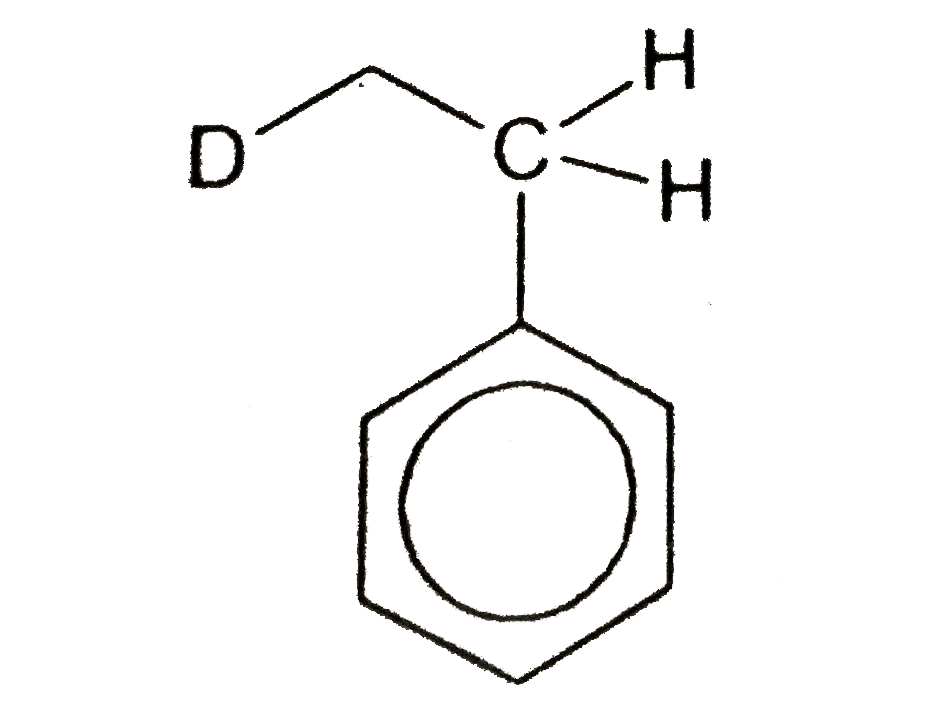
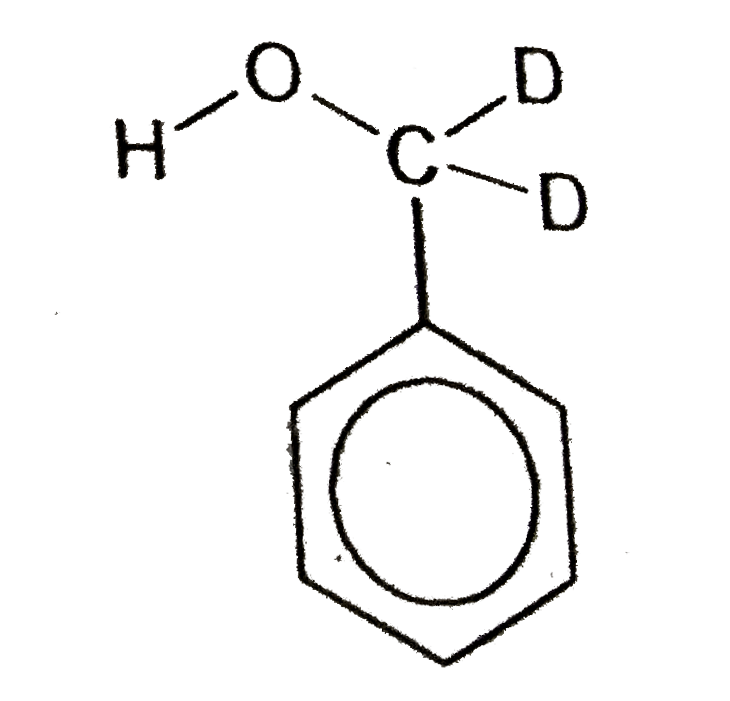
Choose the order that has the following benzoyl compounds correctly arranged with respect to increasing reactivity. |
|
Answer» `(i) LT (II) lt (III)` |
|
| 35. |
Choose the only incorrect statement. |
|
Answer» Articles can be electro palted with silver and gold much more smoothly and evenly form solutions of the COMPLEXES, `[Ag(CN)_(2)]^(-)` and `[Au(CN)_(2)]^(-)` than form a sloution of SIMPLE metal ions. |
|
| 36. |
Choose the odd one out of the following: |
|
Answer» DANIEL CELL |
|
| 37. |
Choose the number of correct statements. (a) The pi-"acid" ligands can stabilize the low oxidation states of metals. (b) In the chelating ring produced by acac ligand, pseudo-aromaticity is maintained. The Flexidentate character of EDTA largely depends on pH. (d) M-SCN linkage is bent while M-NCS linkage is linear. (e ) Ambidentate character of a peptide linkage mainly depends on pH. (f) Dioxygen (O_(2) , dinitrogen (N_(2)) can act as pi-"acid" ligands. (g) Ag(SCN) (solid) form a polymeric zig-zag chain. (h) Dithiooxalate and thiosulphate can produce the linkage isomers. (i) For [PtCl_(2)(PR_(3))_(2)], the trans-isomer shows 0 (zero) dipole moment but for [PtCl_(2)(Et_(2)S)_(2), the trans isomer shows a non-zero dipole moment. |
|
Answer» |
|
| 38. |
Choose the number of correct statements. (a) Measurement of molar conductivity was utilized by Werner to characteris the cobalt (III)-ammine compounds. (b) The neutral ligands can only satisfy the secondary valence but the anions may satisfy both the primary and secondary valencies. (c ) The secondary valencies are directional to provide the specific geometry of a complex but the primary valencies have nothing to do with the goemetry of coordination compounds. (d) The oxyanions, aminopoly carboxylates, cysteine, histidine etc. can show the flexidentate character. (e ) The concept of co-ordination number in co-ordination compounds is different from that in the ionic solids . (f) In determining the co-ordination number in co-ordination compounds, the number of pi-bonds formed by ligands with metal centre has no role. (g) Olefins can act both as monodentate and bidentate ligands depending on the conditions. (h) The distinction between the perfect and imperfect complexes is arbitrary. (i) mu-bond is a special type of sigma-bond |
|
Answer» |
|
| 39. |
Choose the most reactive among the following compound : |
|
Answer»
|
|
| 40. |
Choose the member that will react faster than the following pairs by SN^(1) mechanism. {:(""CH_(3)),("|"),(CH_(3)-CH_(2)-C-CH_(3)"2 - Iodo - 2- methylbutane"),("|"),("I"):} OR {:(""CH_(3)""I),("||"),(CH_(3)-CH-CH-CH_(3)"2 - Iodo - 3 - methylbutane"):} |
| Answer» Solution :Since 2 - Iodo - 2 - methylbutane is a TERTIARY alkyl halide, it UNDERGOES `SN^(1)` reaction FASTER than 2 - Iodo - 3 - methylbutane. | |
| 41. |
Choose the member of each of the following pairs of compounds that is likely to be the weaker base. (a). H_(2)O or H_(3)O^(+) (b). Cl^(-),SH^(-) (c) F^(-),OH^(-),NH_(3)^(-),CH_(3)^(-) (d) HF,H_(2)O,NH_(3) (e) OH^(-),SH^(-),SeH^(-). |
|
Answer» |
|
| 42. |
Choose the major product of the following reaction |
|
Answer»
|
|
| 44. |
Choose the law that corresponds to data shown for the reaction, A + B rarr products. |
|
Answer» Rate = `k[B]^(3)` |
|
| 45. |
Choose the major product of the following reaction? |
|
Answer»
|
|
| 46. |
Choose the incorrect statements/s among the following: (1)There are five heterocyclic bases in DNA & RNA (2) All the bases except adenine have primary amine group (3) Double helix of Nucleic acid is spiraled together by H- bonding (4) Proteins have no nitrogen content in them. |
|
Answer» `1, 2, 4` |
|
| 47. |
Choose the incorrect statements. |
|
Answer» `BeCO_(3)` is preserved in an ATMOSPHERE of `CO_(2)` as it is thermaly least stable. |
|
| 48. |
Choose the incorrect statement pertaining to the adsorption of gas on a solid surface |
|
Answer» Adsorption is always exothermic |
|
| 49. |
Choose the incorrect statement(s). |
|
Answer» `[CO(NH_(3))_(5)(NO_(2)]Cl_(2)` is OBTAINED as the yellow form, in which the nitrate ligand is bound through oxygen (-ONO) and as the red form in which the nitrate ligand is bound through NITROGEN `(-NO_(2))` While, O-donor causes lower spitting, hence, larger wavelength is absorbed in case of -ONO (green absorbed, red transmitted). (b) `[Pt(NH_(3))_(2)Cl_(2)][Pt(NH_(3))_(2)Br_(2)]` is neutral in nature. |
|
| 50. |
Choose the incorrect statement in the following. |
|
Answer» Surface tension is the force acting per unit length perpendicular to the line drawn on the surface of the liquid |
|
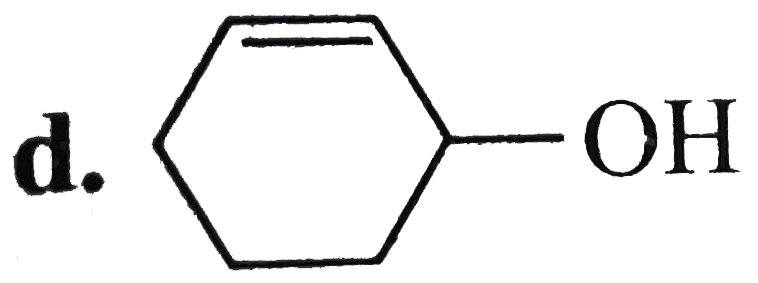




_E01_196_O01.png)
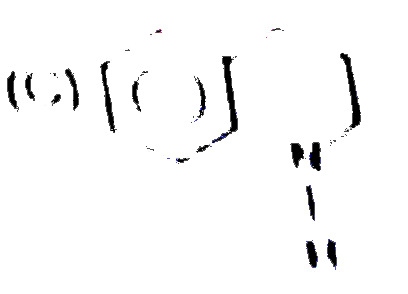
_E01_196_O02.png)
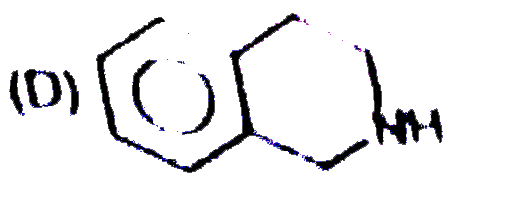
_E01_196_O03.png)
_E01_196_O04.png)