

Saved Bookmarks
This section includes 7 InterviewSolutions, each offering curated multiple-choice questions to sharpen your Current Affairs knowledge and support exam preparation. Choose a topic below to get started.
| 1. |
Carbon cannot be used in the reduction of Al_2 O_3 because |
|
Answer» it is an EXPENSIVE PROPOSITION |
|
| 2. |
Carbon can reduce ferric oxide to iron at a temperature above 983 K because |
|
Answer» carbon monoxide formed is thermodynamically less satble than ferric oxide |
|
| 3. |
Carbon burns in air and forms two oxides CO and CO_2.This shows that carbon has : |
|
Answer» Two ALLOTROPIC forms |
|
| 4. |
Carbon black, which is used in making printer's ink is obtained by the decomposition of |
|
Answer» Acetylene |
|
| 5. |
Carbon black, which is used in making printer's ink, is obtained by decomposition of |
|
Answer» Acetylene It CONTAINS 98-99% carbon. It is USED in MAKING black ink, PAINTS and shoe polishes |
|
| 6. |
Carbonblackis obtained whenmethaneis : |
|
Answer» heatedin absenceof air |
|
| 7. |
Carbon atoms in the compound (CN)_(4)C_(2) are |
|
Answer» SP HYBRIDIZED 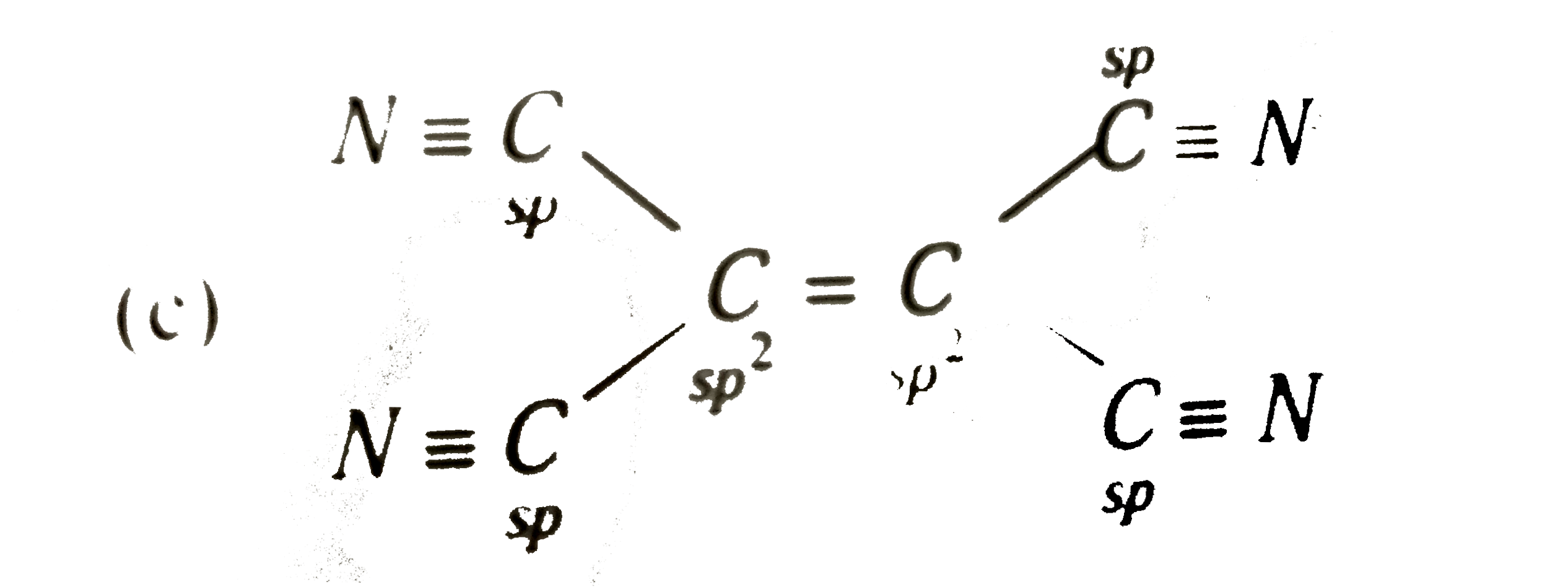
|
|
| 8. |
Carbon atoms in fullerene with formula C_(60) have |
|
Answer» `SP^(3)` hybridised |
|
| 9. |
Carbon atoms in diamond are bonded with each other in configuration : |
|
Answer» planer |
|
| 10. |
Carbon atoms in fullerence with formula C_(60) have……… |
|
Answer» `SP^(3)` hybridised |
|
| 11. |
Carbon atoms in diamond are bonded to each other in configuration which is : |
|
Answer» Planar |
|
| 12. |
Carbon atoms bearing the -OH group in phenols and CH_(2)=CH-OH are |
|
Answer» both hybridised `SP^(2)` |
|
| 16. |
Carbon atom in methyl carbocation contains how many pairs of electrons? |
|
Answer» 8 |
|
| 17. |
Carbon atom in carboxyl group is |
|
Answer» SP-hybridised state |
|
| 18. |
Carbon atom holding halogen in aryl halides is: |
|
Answer» `sp^2-Hybridized` |
|
| 19. |
Carbon atom holding halogen in aryl halides is : |
|
Answer» `SP^(2)` HYBRIDIZED |
|
| 20. |
Carbon and oxygen forms two compound . Carbon content in one of them is 42.9% while in the other is 27.3% . Thegiven data is in support with |
|
Answer» LAW of definite proportions |
|
| 21. |
Carbon and hydrogen are estimated by : |
| Answer» Answer :A | |
| 22. |
Carbon and CO gas are used to reduce which of the following pairs of metal oxides for extraction of metals? |
|
Answer» `FEO, SNO` |
|
| 23. |
Carbon and CO gas are used to reduce which of the following pairs of metal oxides for extraction of metals ? |
|
Answer» FEO, SnO 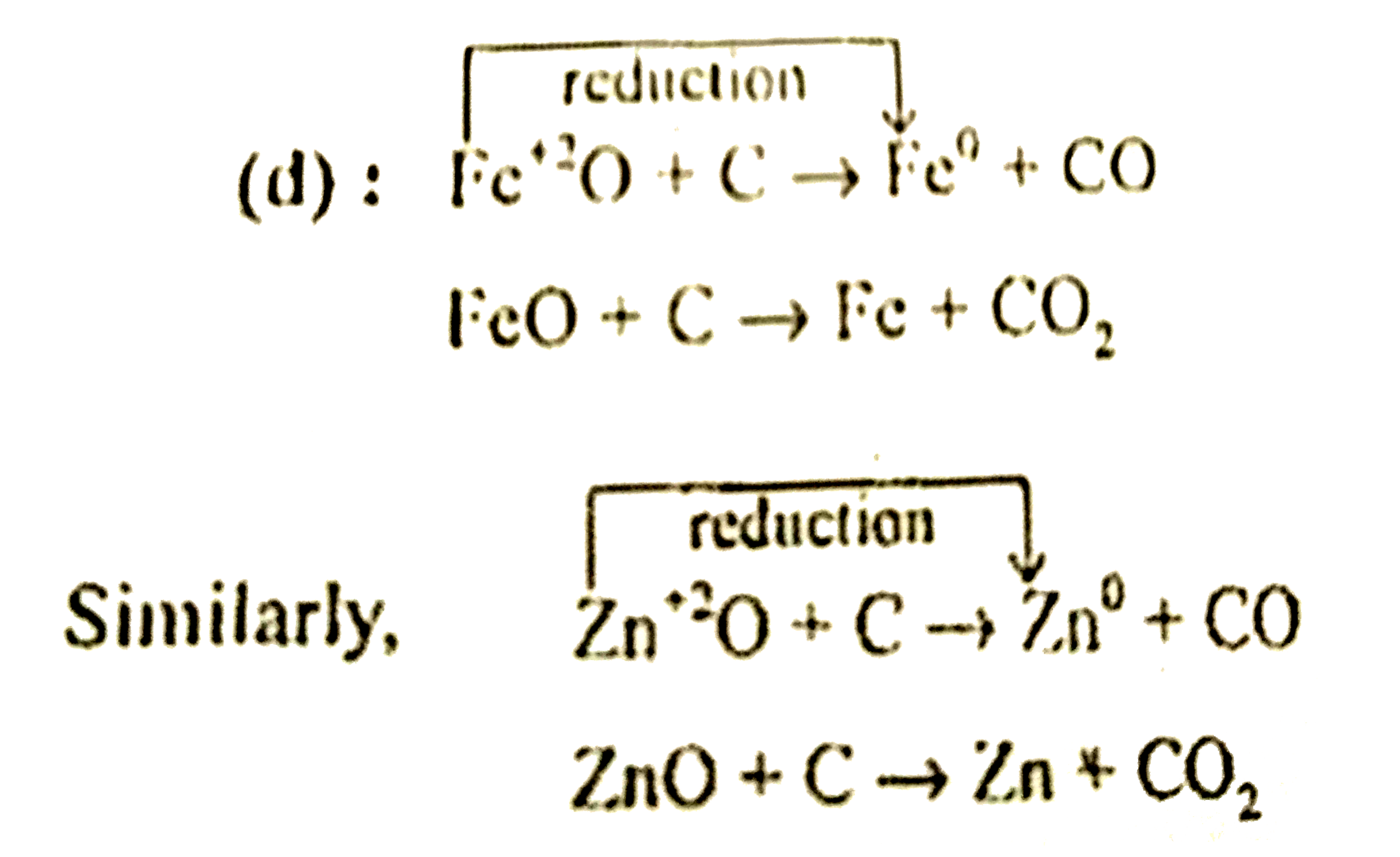
|
|
| 24. |
Carbon and carbon monoxide burn in oxygen to form carbon dioxide according to the following reactionsC+O_(2)rarrCO_(2), DeltaH=-394 " kJ mol"^(-1)2CO+O_(2)rarr2CO_(2),DeltaH=-569 " kJ mol"^(-1)The heat of formation of 1 mol of carbon monoxide is thus |
|
Answer» `-219.0 kJ mol^(-1)` `2C+2O_(2)rarr2CO_(2)+788 kJ "….(ii)"` `2CO_(2)+O_(2)rarr2CO_(2)+569 kJ "….(iii)"` `2CO_(2)rarr2CO+O_(2)-569 kJ "….(IV)"` EQ. (ii) +eq. (iv) = - 109.5 kJ`mol^(-1)`. |
|
| 25. |
Carbon-14 used to determine the age of organic material. The procedure is absed on the formation of C^(14) byneutron capture iin the upper atmosphere. ._(7)N^(14)+._(0)n^(1) rarr ._(6)C^(14)+._(1)H^(1) C^(14) is absorbed by living organisms during photosynthesis. The C^(14) content is constant in living organism. Once the plant or animal dies, the uptake of carbon dioxide by it ceases and the level of C^(14) in the dead being falls due to the decay, which C^(14) undergoes. ._(6)C^(14)rarr ._(7)N^(14)+beta^(c-) The half- life period of C^(14) is 5770 year. The decay constant (lambda) can be calculated by using the following formuls : lambda=(0.693)/(t_(1//2)) The comparison of the beta^(c-) activity of the dead matter with that of the carbon still in circulation enables measurement of the period of the isolation of the material from the living cycle. The method, however, ceases to be accurate over periods longer than 30000 years. The proportion of C^(14) to C^(12) in living matter is 1:10^(12). A nuclear explosion has taken place leading to an increase in the concentration of C^(14) in nearby areas. C^(14) concentration is C_(1) in nearby areas and C_(2) in areas far away. If the age of the fossil is determined to be T_(1) and T_(2) at the places , respectively, then |
|
Answer» The age of the fossil will increase at the place where explosion has taken place and`T_(1)-T_(2)=(1)/(lambda)ln ``(C_(1))/(C_(2))` So decay constant`lambda=(1)/(T_(1)-T_(2))ln``(C_(1))/(C_(2))` `C_(1)` is the concentration at `T_(1)` time. `C_(2)` is the concentration at `T_(2)` time. So, `T_(1)-T_(2)=(1)/(lambda)ln ``(C_(1))/(C_(2))` |
|
| 26. |
Carbon-14 used to determine the age of organic material. The procedure is absed on the formation of C^(14) byneutron capture iin the upper atmosphere. ._(7)N^(14)+._(0)n^(1) rarr ._(6)C^(14)+._(1)H^(1) C^(14) is absorbed by living organisms during photosynthesis. The C^(14) content is constant in living organism. Once the plant or animal dies, the uptake of carbon dioxide by it ceases and the level of C^(14) in the dead being falls due to the decay, which C^(14) undergoes. ._(6)C^(14)rarr ._(7)N^(14)+beta^(c-) The half- life period of C^(14) is 5770 year. The decay constant (lambda) can be calculated by using the following formuls : lambda=(0.693)/(t_(1//2)) The comparison of the beta^(c-) activity of the dead matter with that of the carbon still in circulation enables measurement of the period of the isolation of the material from the living cycle. The method, however, ceases to be accurate over periods longer than 30000 years. The proportion of C^(14) to C^(12) in living matter is 1:10^(12). What should be the age of fossil for meaningful determination of its age ? |
|
Answer» 6 years |
|
| 27. |
Carbon-14 used to determine the age of organic material. The procedure is absed on the formation of C^(14) byneutron capture iin the upper atmosphere. ._(7)N^(14)+ ._(0)n^(1) rarr ._(6)C^(14)+._(1)H^(1) C^(14) is absorbed by living organisms during photosynthesis. The C^(14) content is constant in living organism. Once the plant or animal dies, the uptake of carbon dioxide by it ceases and the level of C^(14) in the dead being falls due to the decay, which C^(14) undergoes. ._(6)C^(14)rarr._(7)N^(14)+beta^(c-) The half- life period of C^(14) is 5770 year. The decay constant (lambda) can be calculated by using the following formuls : lambda=(0.693)/(t_(1//2)) The comparison of the beta^(c-) activity of the dead matter with that of the carbon still in circulation enables measurement of the period of the isolation of the material from the living cycle. The method, however, ceases to be accurate over periods longer than 30000 years. The proportion of C^(14) to C^(12) in living matter is 1:10^(12). Which of the following options is correct ? |
|
Answer» In LIVING organisms, circulation of `.^(14)C` from the atmosphere is high, so the carbon content is constant in organism. |
|
| 28. |
Carbon - 14 is used to determine the age of organic material . The procedure is based on the formation of ""^(14) C by neutron capture in the atmosphere . T_(1) - T_(2) = (1)/(lambda) "log" (C_(1))/(C_(2)) ""^(14) C is absorbed by living organisms during photosynthesis . The ""^(14) C content is content is constant in living organism once the plant or animal dies , the uptake of carbon dioxide by it increases and the level of ""^(14) C in the dead being falls due to the decay which C^(14) undergoes . ""_(6)^(14) C to""_(7)^(14) N + beta^(-) (""_(-1)^(0)e) . The half- life period of ""^(14) C is 5770 years . The decay constant (lambda) can be calculated using the formula lambda = (0.693)/(t_(1//2)). The comparison of the b^(-) activity of the dead matter with that of the carbon still in circulation enables measurement of the period of the isolation of the material from the living cycle . the method , however , ceases to be accurate over period longer than 30,000 years . The proportion of ""^(14) C to ""^(12) C in living matter is 1 : 10^(2) A nuclear explosion has taken place leading toincrease in concentration of C^(14) is C_(3) nearby areas and C_(2) in areas far away . If the age of the fossil is determined to be T_(1) and T_(2) at the places respectively then |
|
Answer» the age of the fossil will INCREASE at the place where explosion has taken place and `T_(1)- T_(2) = (1)/(LAMBDA) "log" (C_(1))/(C_(2))` `lambda (T_(1) - T_(2)) = 1_(n) ((c_1)/(c_1)) - 1_n ((c_2)/(c_1)) , lambda (T_(1) -T_(2)) = 1_(n) ((c_(1))/(c_(2)) xx (c_(1))/(c_(2))) , (T_(1) - T_(2)) = (1)/(lambda) xx 1_n ((c_1)/(c_2))` |
|
| 29. |
Carbon - 14 is used to determine the age of organic material . The procedure is based on the formation of ""^(14) C by neutron capture in the atmosphere . T_(1) - T_(2) = (1)/(lambda) "log" (C_(1))/(C_(2)) ""^(14) C is absorbed by living organisms during photosynthesis . The ""^(14) C content is constant in living organism once the plant or animal dies , the uptake of carbon dioxide by it increases and the level of ""^(14) C in the dead being falls due to the decay which C^(14) undergoes . ""_(6)^(14) C to""_(7)^(14) N + beta^(-) (""_(-1)^(0)e) . The half- life period of ""^(14) C is 5770 years . The decay constant (lambda) can be calculated using the formula lambda = (0.693)/(t_(1//2)). The comparison of the b^(-) activity of the dead matter with that of the carbon still in circulation enables measurement of the period of the isolation of the material from the living cycle . the method , however , ceases to be accurate over period longer than 30,000 years . The proportion of ""^(14) C to ""^(12) C in living matter is 1 : 10^(2) Which of the following options is correct ? |
|
Answer» In living organisms , circulation of `""^(14) C` from atmosphere is high so the carbon content is constant in organism |
|
| 30. |
Carbon-14 is used to determine the age of organic material. The procedure is based on the formation of .^(14)C by neutron capture in the upper atmosphere. ._(7)^(14)N + ._(0)^(1)n rarr ._(6)^(14)C + ._(1)n^(1) .^(14)C is absorbed by living organisms during photosynthesis. The .^(14)C content is constant in living organism once the plant or animal dies, the uptake of carbon dioxide by it ceases and the level of .^(14)C in the dead being, falls due to the decay which .^(14)C undergoes. ._(6)^(14)C rarr ._(7)^(14)N + beta^(-) The half-life period of .^(14)C is 5770 years. The decay constant (lamda) can be calculated by using the following formula lamda = (0.693)/(t_(1//2)). The comparison of the beta^(-) activity of the dead matter with that of the carbon still in circulation enable measurement of the period of the isolation of the material from the living cycle. The method however, ceases to be accurate over periods longer than 30,000 years. The proportion of .^(14)C " to " .^(12)C in living matter is 1 : 10^(12).A nuclear explosion has taken place leading to increase in concentration of .^(14)C in nearby areas. C^(14) concentrations is C_(1) in nearby areas and C_(2) in areas far away. If the age of the fossil is determined to be T_(1) and T_(2) at the places respectively then |
|
Answer» The age of the fossil will increase at the place where EXPLOSION has taken and `T_(1) - T_(2) = (1)/(LAMDA "LN" (C_(1))/(C_(2))` So decay constant `lamda = (1)/(T_(1) - T_(2)) "ln" (C_(1))/(C_(2))` `C_(1)` is the concentration at `T_(1)` times `C_(2)` is the concentration at `T_(2)` time So `T_(1) - T_(2) = (1)/(lamda) ln (C_(1))/(C_(2))` |
|
| 31. |
Carbon-14 is used to determine the age of organic material. The procedure is based on the formation of .^(14)C by neutron capture in the upper atmosphere. ._(7)^(14)N + ._(0)^(1)n rarr ._(6)^(14)C + ._(1)n^(1) .^(14)C is absorbed by living organisms during photosynthesis. The .^(14)C content is constant in living organism once the plant or animal dies, the uptake of carbon dioxide by it ceases and the level of .^(14)C in the dead being, falls due to the decay which .^(14)C undergoes. ._(6)^(14)C rarr ._(7)^(14)N + beta^(-) The half-life period of .^(14)C is 5770 years. The decay constant (lamda) can be calculated by using the following formula lamda = (0.693)/(t_(1//2)). The comparison of the beta^(-) activity of the dead matter with that of the carbon still in circulation enable measurement of the period of the isolation of the material from the living cycle. The method however, ceases to be accurate over periods longer than 30,000 years. The proportion of .^(14)C " to " .^(12)C in living matter is 1 : 10^(12). What should be the age of fossil for meaningful determination of its age |
|
Answer» 6 YEARS |
|
| 32. |
Carbon-14 is used to determine the age of organic material. The procedure is based on the formation of .^(14)C by neutron capture in the upper atmosphere. ._(7)^(14)N + ._(0)^(1)n rarr ._(6)^(14)C + ._(1)n^(1) .^(14)C is absorbed by living organisms during photosynthesis. The .^(14)C content is constant in living organism once the plant or animal dies, the uptake of carbon dioxide by it ceases and the level of .^(14)C in the dead being, falls due to the decay which .^(14)C undergoes. ._(6)^(14)C rarr ._(7)^(14)N + beta^(-) The half-life period of .^(14)C is 5770 years. The decay constant (lamda) can be calculated by using the following formula lamda = (0.693)/(t_(1//2)). The comparison of the beta^(-) activity of the dead matter with that of the carbon still in circulation enable measurement of the period of the isolation of the material from the living cycle. The method however, ceases to be accurate over periods longer than 30,000 years. The proportion of .^(14)C " to " .^(12)C in living matter is 1 : 10^(12). Which of the following option is correct |
|
Answer» In living organisms, circulation of `.^(14)C` from atmosphere is high so the carbon content is constant in organism |
|
| 33. |
Carbon -14 is used to determine the age of organic material. The procedure, is based on the formation of .^(14)C by neutron capture in the upper atmosphere. ""_(7)^(14)N+_(0)n^(1) to _(6)^(14)C+_(1)n^(1). .^(14)C is absorbed by living organisms during photosynthesis. The .^(14)C content is constant in living organism once the plant or animal dies, the uptake of carbon dioxide by it ceases and the level of .^(14)C in the dead being, falls due to the decay.which C^(14) undergoes ""_(6)^(14)C to _(7)^(14)N+beta^(-) The half life period of ^(14)C is 5770 years. The decay constant (lambda) can be calculated by using the following formula lambda=(0.693)/(t_(1//2)) The comparison of the beta^(-) activity of the dead matter with that of the carbon still in circulation enables measurement of the period of the isolation of the material from the living cycle. The method however, ceases to be accurate over periods longer than 30,000 years. The proportion of .^(14)C to .^(12)C in livingmatter is 1 : 10^(12). What should be the age of fossil for meaningful determination of its age ? |
|
Answer» `6` years |
|
| 34. |
Carbon -14 is used to determine the age of organic material. The procedure, is based on the formation of .^(14)C by neutron capture in the upper atmosphere. ""_(7)^(14)N+_(0)n^(1) to ""_(6)^(14)C+""_(1)n^(1). ""^(14)C is absorbed by living organisms during photosynthesis. The .^(14)C content is constant in living organism once the plant or animal dies, the uptake of carbon dioxide by it ceases and the level of ""^(14)C in the dead being, falls due to the decay.which C^(14) undergoes ""_(6)^(14)C to ""_(7)^(14)N+beta^(-) The half life period of ""^(14)C is 5770 years. The decay constant (lambda) can be calculated by using the following formula lambda=(0.693)/(t_(1//2)) The comparison of the beta^(-) activity of the dead matter with that of the carbon still in circulation enables measurement of the period of the isolation of the material from the living cycle. The method however, ceases to be accurate over periods longer than 30,000 years. The proportion of ""^(14)C to ""^(12)C in livingmatter is 1 : 10^(12). Which of the following option is correct ? |
|
Answer» In living organisms, CIRCULATION of `.^(14)C` from atmosphere is HIGH so the carbon content is constant in organism |
|
| 35. |
Carbon 14 is used to determine the age of organic material. The procedure is based on the formation of 14C by neutron capture in the upper atmosphere ""_(7)N^(14) + _(0)n^(1)rarr ""_(6)C^(14)+ ""_(1)H^(1) ""^(14)C is absorbed by living organism during photosynthesis. The ""^(14)C content is constant in living organism once the plant or animal dies, the uptake of carbon dioxide by it ceases and the level of ""^(14)C in the dead being falls due to the decay which C^(14) undergoes. ""_(6)C^(14)rarr ""_(7)N^(14) + _(-1)e^(0) The half life period of ""^(14)C is 5770 years. The decay constant (lambda) can be calculated by using the following formulalambda = (0.693)/t_(1/2)The comparison of the beta –activity of the dead matter with that of carbon still in circulation enables measurement of the period of the isolation of the material from the living cycle. The method however, ceases to be accurate over periods longer than 30,000 years. The proportion of ""^(14)C to ""^(12)C in living matter is 1 : 10^(12 ) A nuclear explosion has taken place leading to increase in concentration of C^(14) in nearby areas. C^(14) concentration is C_(1) in nearby areas and C_(2) in areas far away. If the age of the fossil is determined to be t_(1) and t_(2) at the places respectively, then |
|
Answer» The age of the fossil will increase at the place where EXPLOSION has taken place and |
|
| 36. |
Carbon 14 is used to determine the age of organic material. The procedure is based on the formation of 14C by neutron capture in the upper atmosphere ""_(7)N^(14) + _(0)n^(1)rarr ""_(6)C^(14)+ ""_(1)H^(1) ""^(14)C is absorbed by living organism during photosynthesis. The ""^(14)C content is constant in living organism once the plant or animal dies, the uptake of carbon dioxide by it ceases and the level of ""^(14)C in the dead being falls due to the decay which C^(14) undergoes. ""_(6)C^(14)rarr ""_(7)N^(14) + _(-1)e^(0) The half life period of ""^(14)C is 5770 years. The decay constant (lambda) can be calculated by using the following formulalambda = (0.693)/t_(1/2)The comparison of the beta –activity of the dead matter with that of carbon still in circulation enables measurement of the period of the isolation of the material from the living cycle. The method however, ceases to be accurate over periods longer than 30,000 years. The proportion of ""^(14)C to ""^(12)C in living matter is 1 : 10^(12 ) Which of the following option is correct ? |
|
Answer» In LIVING organisms, circulation of `""^(14)C` from atmosphere is high so the carbon content is constant in organism |
|
| 37. |
Carbon 14 dating method is based on the fact that |
|
Answer» CARBON -14 FRACTION is the same in all objects |
|
| 38. |
Carbon-14 dating method is that the : |
|
Answer» Carbon-14 FRACTION is the same in all objects |
|
| 39. |
Carbolic acid is reacted with conc. H_2SO_4 at 300 K gives, |
|
Answer» 2-hydroxybenzenesulphonic acid |
|
| 40. |
Carbolic acid is obtained from oxidation of |
|
Answer» SODIUM salicylate |
|
| 41. |
Carbolic acid is …………………. . |
|
Answer» PHENOL |
|
| 42. |
Carbohydrates which differ in configuration at the glycosidic carbon (i.e. C_(1) in aldose and C_(2) in ketoses) are called |
|
Answer» Anomers |
|
| 43. |
Carbohydrates which give two molecules of mono-saccharides are called disaccharides. These are: |
|
Answer» MALTOSE |
|
| 44. |
Carbohydrates that produce two to ten monosaccharide units on hydrolysis are called________. |
| Answer» SOLUTION :OLIGOSACCHARIDES | |
| 45. |
Carbohydrates may be regarded as |
|
Answer» AROMATIC compounds |
|
| 46. |
Carbohydrates , proteins and facts are the thre main components of our food. For a normal person, a balanced diet which contains all these three components in right proportions is recommended for good health. Arjun , a class XII students , however, pointed out that this is not right always. Under special situations, it is not the balanced diet but it is the protein rich diet which is often recommended. Read the above passage and answer the following questions: (i) Why a protein rich diet is recommended for HIV/AIDS patients ? (ii) Why children and expectant mothers need a protein rich diet ? (iii) Person who wish to reduce body weight and heart patients are also recommended protein rich diet. Why ? |
|
Answer» Solution :(i) The immune system of HIV/AIDS PATIENTS is largely/ completely distroyed. Since REBUILDING immune system besides medication also requires antibodies which are proteins. Therefore, to rebuilt/strengthen immune systems, protein rich diet is recommended. (ii) Children for their growth and expectant mothers for the growth of their expected infants require building of muscles which requires protein rich foods. (iii) Protein increases satiety, i.e., you feel fail full for longer periods, thereby reducing the total number of calories eaten per DAY. Further , it increases protein metabolism thereby maintaining lean muscles which is required for weight loss. A protein rich diet helps to REDUCES the blood pressure as well as the CHOLESTEROL level in the blood. Both these factors are beneficial for heart patients. |
|
| 47. |
Carbohydrates in which large number of monosaccharide units linked to each other by oxides bridges are |
|
Answer» non-sugars |
|
| 48. |
Carbohydrates may be : |
|
Answer» sugars |
|
| 49. |
Carbohydrates have |
|
Answer» BITTER taste |
|
| 50. |
Carbohydrates have the general formula C_X(H_2O)_Y. Which of the following is not a carbohydrate: |
|
Answer» `C_6H_16O_6` |
|