Saved Bookmarks
This section includes 7 InterviewSolutions, each offering curated multiple-choice questions to sharpen your Current Affairs knowledge and support exam preparation. Choose a topic below to get started.
| 2. |
, Product of the reaction is : |
|
Answer»
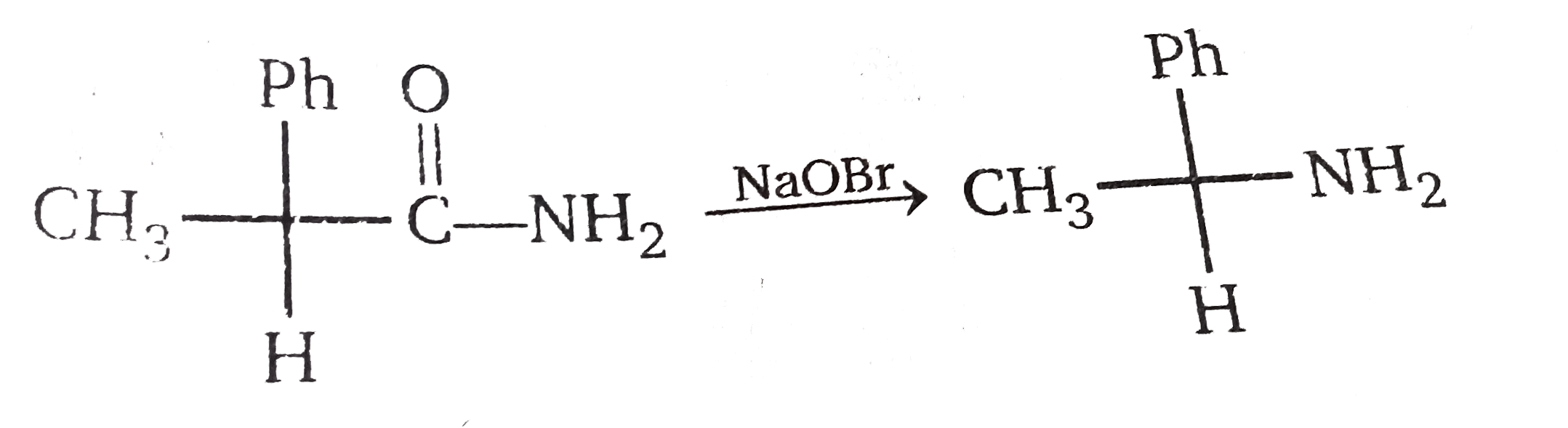
|
|
| 3. |
, product formed is |
|
Answer»
|
|
| 6. |
……. ppm concentration of flouride ion causes a stain of teeth. |
|
Answer» `1.5` |
|
| 9. |
....... possess both copper and iron. |
|
Answer» COPPER PYRITES |
|
| 10. |
.................... polymers are used in medical field such as surgical sutures, plasma substitute. |
| Answer» SOLUTION :BIODEGRADABLE | |
| 12. |
, overset(O_(3)//Zn, H_(2)O)rarr (X)+(Y) Compound (X) and (Y) can be distinguish by : |
| Answer» Solution :N//A | |
| 13. |
, overset(NaOBr)rarrP_(1)underset(KOH)overset(CHCl_(3))rarrP_(2)underset(Ni)overset(H_(2))rarrP_(3) product P_(3) is |
|
Answer» `1^(@)"amine"` |
|
| 14. |
, overset(Hg(Oac)_(2).H_(2)O)underset(NaBH_(4))rarr(P) P in the following reaction : |
|
Answer» <P> 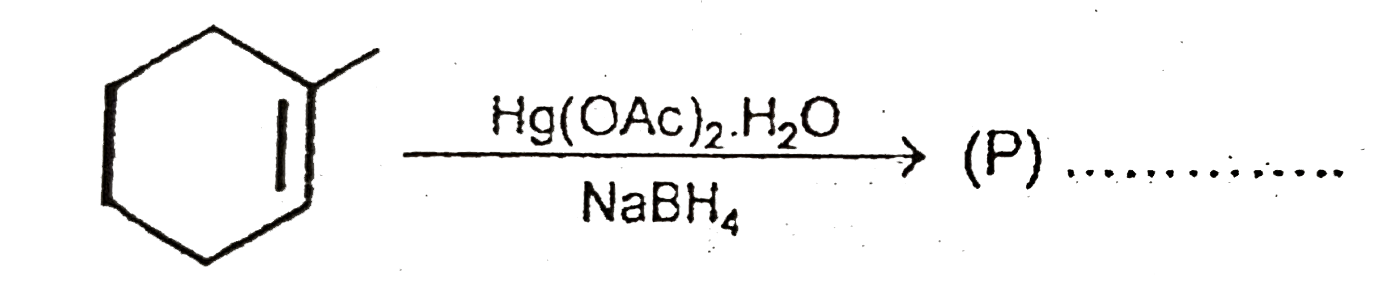 `overset(Hg(Oac)_(23)H_(2)O)UNDERSET(NaBH_(4))rarr (P)` ……………… `overset(Hg(Oac)_(23)H_(2)O)UNDERSET(NaBH_(4))rarr (P)` ……………… Markonikov addition of water. 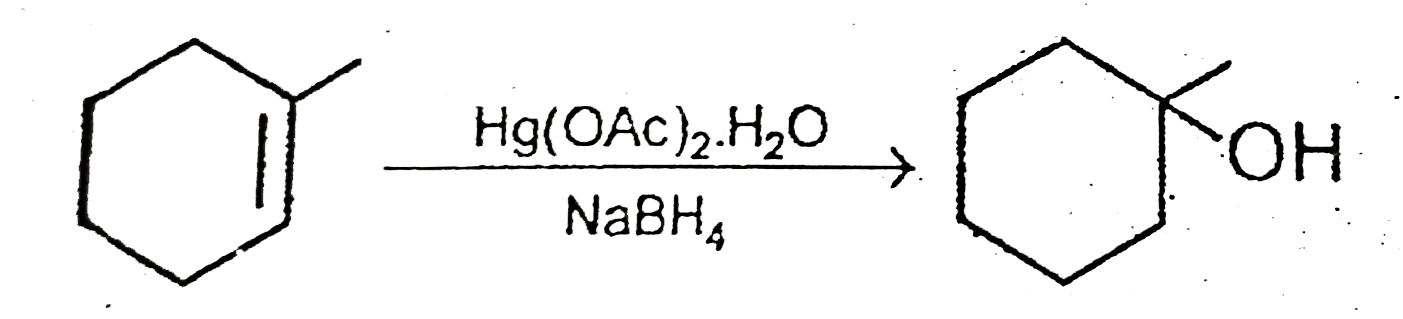
|
|
| 15. |
, overset(H_(2)//Ni)rarrPoverset(Cl_(2)//hv)rarrQ (Total number of monochloro structure products). |
Answer» SOLUTION :
|
|
| 16. |
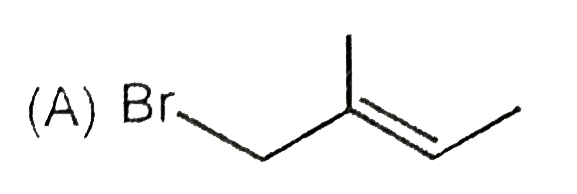
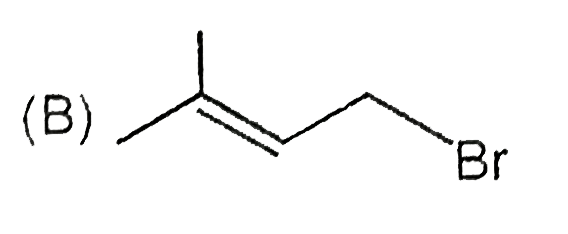
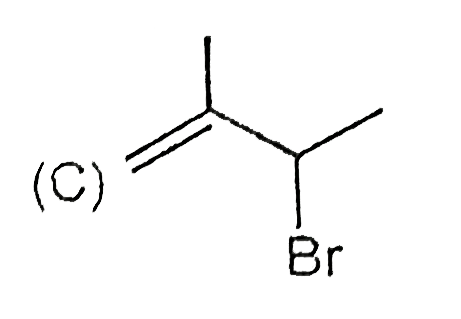
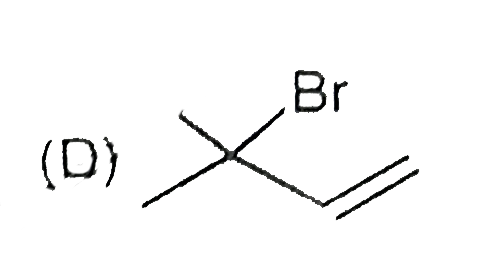
, overset(HBr(1"equivalent"))(rarr) Major product is : |
|
Answer»
`nf=(6)/(1)=6` `("Molar mass")/("Equivalent mass")=nf=6` |
|
| 18. |
........... or .......... used as promoter for iron in Haber's process |
| Answer» SOLUTION :MO ( or) `Al_2O_3` | |
| 20. |
{:(""OH ""O),(""|""||), (CH_(3)-CH-CH-CH-C-O-C_(2)H_(5)),(""|""|),(""CN ""CHO):} According to IUPAC, principal functional group of the given compound is :- |
|
Answer» `-OH` |
|
| 22. |
-OH group present in alcohols is neutral white it is acidic in carboxylic acid because |
|
Answer» in carboxylic acid -OH group is ATTACHED to electron withdrawing CARBONYL group |
|
| 24. |
……………….of a reaction cannot be determined experimentally. |
|
Answer» order |
|
| 25. |
____of a reaction cannot be determined experimentally. |
|
Answer» ORDER |
|
| 26. |
…………………..occurs in natural fats and in long chain fatty acids in form of triglycerides. |
| Answer» SOLUTION :GLYCEROL | |
| 27. |
{:(""O^(16)),("||"),(CH_(3)-C-H overset(D_(2)O^(18))underset(D^(o+))to CH_(3)-C-H),("||"),(""._(18)O):} Give the following reaction intermediate is : |
|
Answer» `{:("".^(18)OD),("|"),(CH_(3)-C-D),("|"),(""._(16)OD):}` |
|
| 28. |
-NO_(2) group is reduced to -NH_(2) by |
|
Answer» `Fe+conc. HCl` |
|
| 29. |
-NO_(2) groupis convertedinto -NH_(2) groupby thereaction |
|
Answer» DEHYDRATION |
|
| 30. |
-NH_(2) group in aniline is |
|
Answer» meta directing |
|
| 31. |
-NH_(2) group in anilineis |
|
Answer» only o-DIRECTING |
|
| 32. |
[--NH-CH(R)-oversetoverset(O)(||)C--]_n is a - |
|
Answer» homopolymer |
|
| 33. |
[--NH-(CH_(2))_(6)-CONHCO-(CH_(2))_(4)-CO--]_(n)is a ………………. |
|
Answer» ADDITION POLYMER |
|
| 34. |
-[NH-(CH_(2))_(6)-NH-CO-(CH_(2))_(4)-CO]_(n)- |
|
Answer» HOMO POLYMER |
|
| 36. |
. Na and Mg are also called bridge elements. Why? |
Answer» SOLUTION :NA is called bridge ELEMENT since it LINKS group IA and group IB.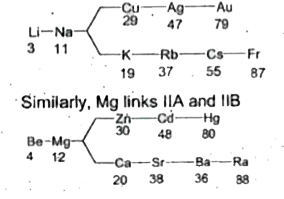
|
|
| 39. |
(+) Mesomeric effect is observed with |
|
Answer» `- overset(..)(NH_(2))` |
|
| 41. |
_______ may be defined as optically active polyhydroxy aldehydes or ketones or the compounds which produce such units on hydrolysis. |
| Answer» SOLUTION :CARBOHYDRATES | |
| 42. |
. Maximum number of wurtz reaction products formed are |
|
Answer» 2 |
|
| 43. |
{:(,, "List-I","List-II"),(,(A),Ti^(+3),1" Charge transfer phenomenon"),(,(B),MnO_(4)^(-),2" Impurities"),(,(C),F_(2),3" s-stransition"),(,(D),"Gems",4" d-d transition"),(, ,,5" Excitation of electron"):} The correct match which is responsible for colour |
|
Answer» A-4, B-1, C-2, D-5 |
|
| 44. |
{:(,"List - I",," List - II"),(,"(Nearest neighbours)",,"(Co-ordination number)"),((P),"Second nearest neighbour of "Cs^(+) "in CsCl",(1),8),((Q),"Third nearest neighbour of "Na^(+)" in NaCl",(2),12),((R ),"Second nearest neighbour of "Ca^(2+)" in "CaF_(2),(3),4),((S),"First nearest neighbour of " Zn^(2+)" in ZnS(Zinc blende)",(4),6):} |
|
Answer» P-4, Q-1, R-3, S-2 |
|
| 45. |
{:("List-I ","List-II "),("(mineral)","(type of mineral)"),("1) Beryl ","a) Sulphate "),("2) Monosite sand ","b) Silicate "),("3) Pentlandite ","c) Sulphide "),("4) Anglesite ","d) Phosphate "):} |
|
Answer» `{:(1,2,3,4),(B,d,C,a):}` |
|
| 46. |
Match the following {:("List-I","List-II"),((1)"Liquation",(a)"Volatile metals with non volatile impurit"),((2)"Poling",(b) "Metal with its metal oxies as impurity"),((3)"Cupellation",(c)"Metal with easily oxidisable impurities"),((4)"Distillation",(d)"Metal and impurities differ in M.P"):} |
|
Answer» `{:(1,2,3,4),(a,B,C,d):}` |
|
| 47. |
Match the following : {:("List-I","List-II"),((1)"vanArkel method",(1)"Manufacture of caustic soda"),((B)"Solvay process",(2)"Purification of Titanium"),((C)"Cupellation",(3)"Manufacture of" Na_(2)CO_(3)),((D)"Poling",(4)"Purification of copper"),(,(5)"Refining of silver"):} |
|
Answer» `{:(A,B,C,D),(2,1,3,4):}` |
|
| 48. |
{:("List-I ","List-II "),("1) Argentite ","a) KCl"),("2) Horn silver ","b) AgCl"),("3) Ruby silver ","c) "Ag_(2)S),("4) Sylvine ","d) "2Ag_(2)S.Sb_(2)S_(3)):} |
|
Answer» `{:(1,2,3,4),(C,a,d,B):}` |
|
| 49. |
{:("LIST-1","LIST - 2"),("A) Faraday's first law","1) " exx96500),("B) Chemical equivalent","2)" (m_(1))/(E_(1))=(m_(2))/(E_(2))),("C) Faraday's second law","3) S.H.E."),("D) Pt,"H_(2)(atm)//H^(+)(1M), "4) "m=eQ),(,"5) Salt bridge"):} The correct match is |
|
Answer» `{:("A","B","C","D"),(4,1,3,2):}` |
|
| 50. |
{:("LIST - 1 ", "LIST - 2 "),( "A) Very dilute " H_(2)SO_(4)"by inert electrodes","1) "Hg//Hg_(2)Cl_(2(S))" , "KC//"(salt)"),("B) Potential is zerovolts","2) " H_(2)S_(2)O_(8) " at anode"),("C) " 50% H_(2)SO_(4) " byinert electrodes","3) Daniel cell"),("D) "Zn//Zn_((aq))^(+2)"//" Cu_((aq))^(+2)//Cu,"4) " O_(2) " at anode"),(,"5) Pt, "H_(2)(1atm)//H^(+)(1M)):} The correct match is |
|
Answer» `{:("A","B","C","D"),(4,5,2,3):}` |
|