

Saved Bookmarks
This section includes 7 InterviewSolutions, each offering curated multiple-choice questions to sharpen your Current Affairs knowledge and support exam preparation. Choose a topic below to get started.
| 1. |
Name the members of the lanthanoid series which exhibit (+4) oxidation states and those which exhibit (+2) oxidation states. Try to correlate this type of behaviour with the electronic configurations of these elements. |
|
Answer» Solution :Elements Ce(Z=58), Pr(Z=59), Tb(Z=65) and DY(Z=66) SHOW (+4) oxidation state. While elements Nd(Z=60), Pm(Z=61), Sm(Z=62), Eu(Z=63), Tm (Z=69) and Yb(Z=70) show (+2) oxidation STATES. (+2) and (+4) oxidation states occur when the configuration `f^(0), f^(7) and f^(14)` are attained by the elements. (i) `Ce^(4+) (f^(0)) rArr (+4)` Oxidation state. (ii) `Eu^(2+) (f^(7) rArr (+2)` Oxidation state. (iii) `Yb^(2+) (f^(14)) rArr (+2)` Oxidation state. |
|
| 2. |
Name the members of the lanthanoid series which exhibit +2 oxidation states. Try to correlate this type of behaviour with the electronic configuration of these elements. |
|
Answer» Solution :`+4` oxidation state is given by : `""_(58)Ce,""_(59)Pr, ""_(60)Nd, ""_(65)Tb, ""_(66)Dy` `+2` oxidation state is given by : `""_(60)Nd,""_(62)SM,""_(63)Eu,""_(69)Tm,""_(70)Yb` +2 oxidation state is EXHIBITED when the lanthanoid has the configuration `5d^(0)6s^(2)` so that 2 electrons are easily lost. +4 oxidation state is exhibited when the configuration left is close to `4f^(0)("e.g., "4f^(0),4f^(1),4f^(2))` or close to `4f^(1)("e.g., "4f^(7)" or "4f^(8))`. |
|
| 3. |
Name the members of the lanthanoid series which exhibit +4 oxidation states and those which exhibit +2 oxidation states. Try to correlate this type of behaviour with the electronic configuration of these elements. |
|
Answer» Solution :` +4 = ""_(58)Ce, ""_(59)Pr, ""_(60)ND, ""_(65)Tb, ""_(66)Dy` `+2 = ""_(60)Nd, ""_(62)Sm, ""_(63)Eu, ""_(69)Tm, ""_(70)Yb` +2 OXIDATION state is exhibited when the LANTHANOID has the configuration `5d^06s^2` so that 2 electrons are easily lost. +4 oxidationstate is exhibited when the configuration left is CLOSE to `4f^(0) (e.g, 4f^0 , 4f^1, 4f^2) ` or close to `4f^7 (e.g. 4f^7 or 4f^8)` |
|
| 4. |
Name the medicine which can be used both as an analgesic as well as an antipyretic. |
| Answer» SOLUTION :ASPIRIN. | |
| 5. |
Name the major product obtained when tertiary butyl bromide is heated with alcoholic KOH solution. |
| Answer» SOLUTION :2 METHYL PROP - 2 - AL | |
| 6. |
Name the major product obtained when an alkyl halide is treated with silver cyanide. |
| Answer» SOLUTION : ALKYL CARBYLAMINE. | |
| 7. |
Name the major product formed when sodium phenoxide is heated with CO_(2) at 400K under 4-7 atm pressure. What is the name of the reaction? |
| Answer» SOLUTION :2-Hydroxybenzoic ACID (SALICYLIC acid). KOLBE's REACTION. | |
| 8. |
Name the major product formed when the vapours of following alcohols are passed over hot cooper at 573K. |
Answer» SOLUTION :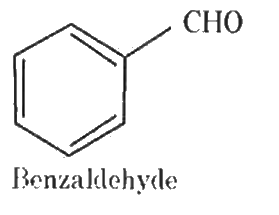
|
|
| 9. |
Name the major product formed when the vapours of following alcohols are passed over hot cooper at 573K. CH_(3)-CH(OH)CH_(3) |
| Answer» SOLUTION :`UNDERSET("PROPANONE")(CH_(3)-underset(O)underset(||)(O)-CH_(3))` | |
| 10. |
Name the major product formed when nitrous acid is treated with i) methylamine ii) aniline at low temperature |
| Answer» Solution :(i)Methyl ALCOHOL (II) BENZENE DIAZONIUM SALT. | |
| 11. |
Name the major organic product formed in the following conversion.(i) When nitrous acid is treated with methyl lamine. (ii) Benzene diazonium chloride is treated with Kl |
| Answer» Solution :(i) AlcoholC`H_3- NH_2 + HNO_2 overset(NaNO_2 + HCl) (to) [CH_3N_2Cl] overset(H_2O)(to) R - OH + N_2 + HCl `(ii) IODOBENZENE`CH_5N_2Cl + KItoC_6H_5I+N_2+KCl` | |
| 12. |
Name the major organic product formed when 2-bromopentane is heated with alcoholic potassium hydroxide solution. |
| Answer» SOLUTION : PENT - 2 - ENE or 2 - PENTENE | |
| 13. |
Name the major product formed when nitrous acid is treated with Methylamine |
| Answer» SOLUTION :METHYL ALCOHOL | |
| 14. |
Name the main product formed when bromoethane is treated with sodium metal in dry ether |
|
Answer» SOLUTION :The MAIN proewe wish-Butane `(C_(4)H_(10)).` `C_(2)H_(5)Br + 2Na + BrC_(2)H_(5)OVERSET"Dry Ether"rightarrowC_(2)H_(5)-C_(2)H_(5)+2NaBr` |
|
| 15. |
Name the maindiesease causeddue tolackof viatmin and its source in eachof the following A, B_(6) and E. |
Answer» SOLUTION :
|
|
| 16. |
Name the main constituents of dettol. |
| Answer» SOLUTION :CHLOROXYLENOL and `ALPHA`-terpineol. | |
| 17. |
Name the macromolecules which are chosen as drug targets. |
| Answer» SOLUTION :Macromolecules such as PROTEINS, NUCLEIC acids, carbohydrates and LIPIDS are called drug targets. | |
| 18. |
Name the macromolecules that are chosen as drug targets. |
| Answer» Solution :The MACROMOLECULES which are chosen as drug targets are carbohydrates, PROTEINS, lipids and NUCLEIC acids. | |
| 19. |
Name the linkage which prop- amino acids are joined in a linear fashion in proteins. |
| Answer» SOLUTION :The linkage by which `prop`- amino ACIDS are joined in a LINEAR fashion in proteins is called PEPTIDE linkage. | |
| 20. |
Name the linkage which joins two monosaccharide units through oxygen atoms. |
| Answer» SOLUTION :The linkage which joins TWO MONOSACCHARIDE units through oxygen ATOM is called glycosidic linkage. | |
| 21. |
Name the linkage connecting monosaccharide units in polysaccharides. |
| Answer» SOLUTION :In a POLYSACCHARIDE molecule , the MONOSACCHARIDE unit are LINKED through glycosidic LINKAGE . | |
| 22. |
Name the law behind the dissolution of CO_(2) gas in soft drinks under high pressure. |
| Answer» SOLUTION :HENRY's LAW. | |
| 23. |
Name the lanthanoid element which exhibits a +4 oxidation state besides +3 oxidation state. |
| Answer» SOLUTION :CERIUM SHOWS +3 as well as +4 oxidation state. | |
| 24. |
Name the law behind the dissolution of CO_2 gas In soft drinks under high pressure. |
| Answer» SOLUTION :Henry.s LAW | |
| 25. |
Name the isomerism shown by the following pair of coordination compounds : |
| Answer» SOLUTION :IONISATION ISOMERISM. | |
| 26. |
Name the isomerism exhibited by the co-ordination compounds? [Co(NH_(3))_(5)Br]SO_(4) and [Co(NH_(3))_(5)SO_(4)]Br Give ne test to distinguish between these two compounds. |
| Answer» SOLUTION :They EXHIBIT IONISATION ISOMERISM. | |
| 27. |
Name the ionization isomer of [Cr(H_(2)O)_(5)Br]SO_(4) |
| Answer» Solution :`[CR(H_(2)O)_(5)SO_(4)]BR`, i.e. pentaaquasulphatochromium (III) bromide. | |
| 28. |
Name the instrument used to measure conductance. |
| Answer» SOLUTION :WHEATSTONE BRIDGE | |
| 29. |
What are the biological functions of nucleic acids? |
|
Answer» SOLUTION :(i) ENERGY carriers (ATP) (ii) Components of ENZYME COFACTORS (iii) Chemical MESSENGERS. |
|
| 30. |
Name the hydrocarbon that is a liquid at STP. |
|
Answer» ethane |
|
| 32. |
Name the halogen which forms only one oxo acid and also write the formula of the oxo acid. |
| Answer» Solution :HALOGEN : `F_(2)` (Fluorine) and Oxo ACID : HOF (HYPOFLUOROUS acid) | |
| 33. |
Name the halogen-which forms only one oxo acid and also write the formula of the oxo acid of that halogen. |
| Answer» SOLUTION :FLUORINE, HOF | |
| 34. |
Name the halogen with lowest ionization energy. |
| Answer» SOLUTION :Halogen having the largest SIZE has the lowest ionization ENERGY, i.e., I (IODINE). | |
| 35. |
Name the halogen which does not exhibit positive oxidation state . |
| Answer» Solution :Fluorine being the most electronegative element does not SHOW POSITIVE oxidation STATES. | |
| 37. |
Name the gas that is released when propanol is treated with diazomethane. |
| Answer» SOLUTION :NITROGEN GAS `(N_(2))`. | |
| 38. |
Name the gas that is released when ethyl amine is treated with nitrous acid . |
| Answer» SOLUTION :NITROGEN GAS `(N_(2))` | |
| 39. |
Name the gas that can readily decolourise acidified KMnO_(4) solution. |
|
Answer» <P>`SO_(2)` |
|
| 40. |
Name the gas that can readily decolourise acidified KMnO_(4) solution- |
|
Answer» <P>`CO_(2)` |
|
| 41. |
Name the gas other than CO_(2) which also turns lime water milky. |
| Answer» Solution :`SO_(2)` gas also TURNS lime WATER milky as insluble `CaSO_(3)` is PRODUCED. | |
| 42. |
Name the gas liberated when zinc reacts with dil. HNO_(3) |
|
Answer» |
|
| 43. |
Name the gas liberated when concentrated HCI is heated with MnO_(2) Give the equation for the reaction. Name the reagent used to obtain bleaching powder from chlorine. |
|
Answer» SOLUTION :CHLORINE Or `Cl_(2)` `MnO_(2)^(+)4HCL rarr MnCl_(2)+2H_(2)O+Cl_(2)` Dry SLAKED lime. |
|
| 44. |
Name the gas liberated whenaqueous solution of ammonium chlorideis mixed with sodium nitrite . Give equation. |
|
Answer» Solution :NITROGEN GAS `NH_(4)Cl+NaNO_(2)rarrN_(2)+2H_(2)O+NaCl` |
|
| 45. |
Name the gas liberated when bromo ethane is heated with alcoholic potash. |
|
Answer» |
|
| 46. |
Name the gas evolved when concentrated HCI is added to powdered potassium dichromate. On passing the evolved gas through acidified KBr solution, the solution turns brown. Write the balanced equations for the reactions involved. |
|
Answer» Solution :`Cl_(2)` gas is evolved when conc. HCL reacts with powdered `K_(2)Cr_(2) O_(7)`. `{:(K_(2)Cr_(2)O_(7)+8 HCI rarr 2 KCI + 2 CrCl_(3) + 4 H_(2)O + 3 [O]),(""2 HCl + [O] rarr [H_(2)O + Cl_(2)] xx 3),(bar(K_(2)Cr_(2)O_(7)+14HCl rarr 2 KCL + 2 CrCl_(3) + 3 Cl_(2) + 7 H_(2)O)):}` SINCE `Cl_(2)` is a stronger oxidising agent than `Br_(2)`, therefore, when `Cl_(2)` is passed through acidified KBr solution. `Br_(2)` is liberated which turns solution brown. `Cl_(2) + 2 KBr rarr 2 KCl + Br_(2)` (turns solution brown) |
|
| 48. |
Namethe fourcategories in whichpolymershave beenclassifiedon the basis of magnitudeof forces present in them . |
| Answer» SOLUTION :(i) Elastomers (II) Fibres (iii) THERMOPLASTICS (iv) Thermosetting POLYMERS . | |