

Saved Bookmarks
This section includes 7 InterviewSolutions, each offering curated multiple-choice questions to sharpen your Current Affairs knowledge and support exam preparation. Choose a topic below to get started.
| 1. |
Match the defects gives in column I withstatements given in column II and mark the appropriate choice. |
|
Answer» `A to IV, B to III, C to ii, D to i` |
|
| 2. |
Match the defects given in Column I with the statements in given Column II. |
|
Answer» |
|
| 3. |
Match the crystal system / unit cells mentioned in Column I with their characteristic features mentioned in Column II. Indicate your answer by darkening the appropriate bubbles of the 4 × 4 matrix given in the ORS. Column I (A) simple cubic and face-centred cubic (B) cubic and rhombohedral (C) cubic and tetragonal (D) hexagonal and monoclinic Column II (P) have these cell parameters a = b = c and alpha=beta=gamma (Q) are two crystal systems (R) have only two crystallographic angles of 90° (S) belong to same crystal system |
|
Answer» <P> |
|
| 4. |
Match the correct bond dissociation in halogens{:("Halogens","Bond energy "),(F_(2),"158.8 Kj mol"^(-1)),(Cl_(2),"242.6KJmol"^(-1)),(Br_(2),"151.1KJmol"^(-1)),(I_(2),"192.8KJmol"^(-1)):} |
|
Answer» `1-A,2-B,3-D,4-C` |
|
| 5. |
Match the correct properties of compounds of column I with column II. |
Answer» 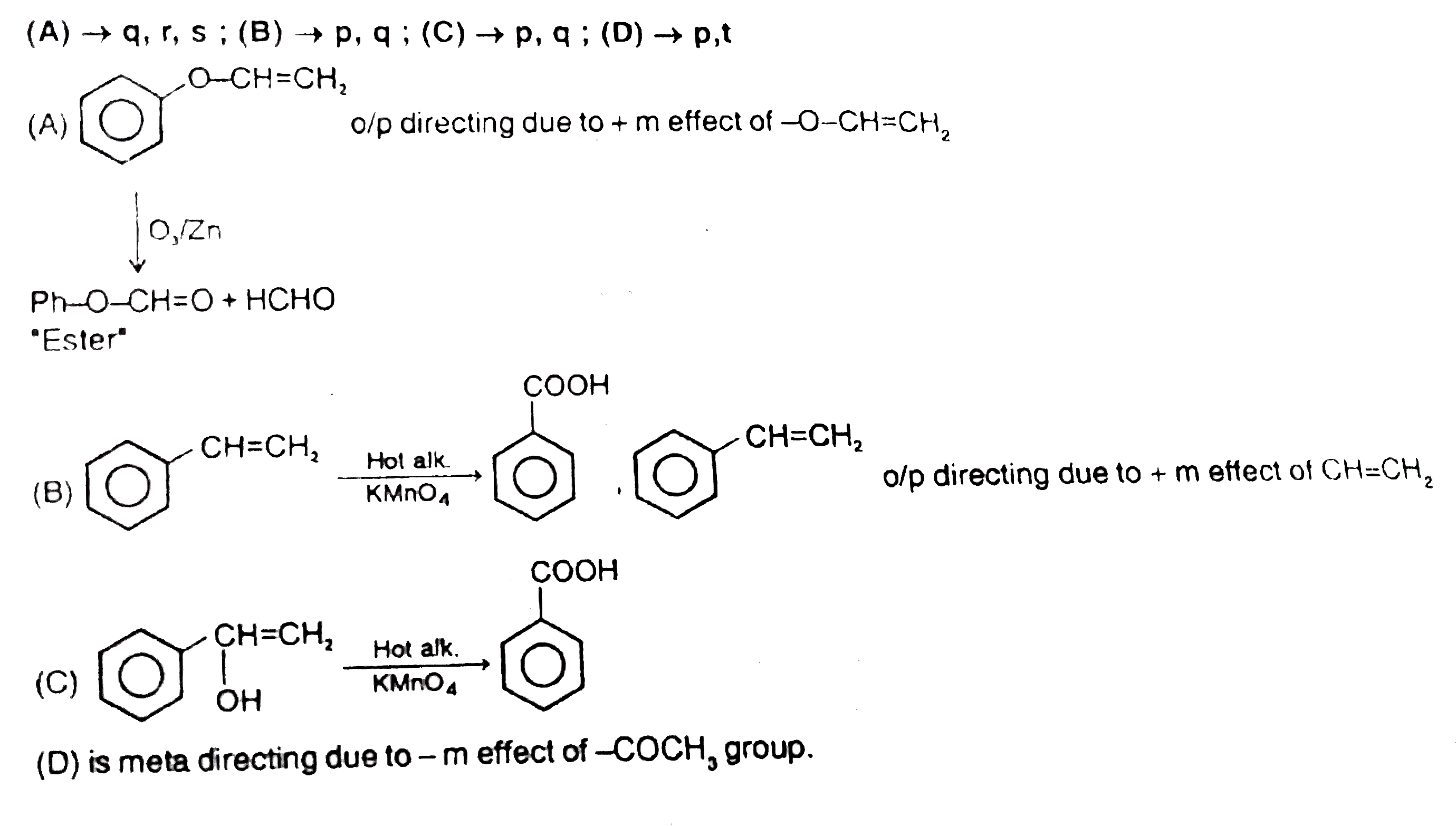
|
|
| 6. |
Match the coordination compounds given in Column I with the central metal atoms given in Column II and assign the correct code : {:(,"Column I",,"Column II"),(,"(Coordination Compound)",,"(Central metal atom)"),("A".,"Chlorophyll",1.,"rhodium"),("B".,"Blood pigment",2.,"cobalt"),("C".,"Wilkinson catalyst",3.,"calcium"),("D".,"Vitamin"B_(12),4.,"iron"),(,,5.,"magnesium"):} |
|
Answer» `{:("A (5)","B (4)","C (1)","D (2)"):}` |
|
| 7. |
Match the conversions in Column I with the type (s) of reaction (s) given in Column II. {:(,"Column I",,"Column II"),((A),PbStoPbO,(p),"Roasting"),((B),CaCO_(3)toCaO,(q),"Calcination"),((C),ZnStoCu,(r),"Carbon reducrtion"),((D),Cu_(2)toCu,(s),"Self reduction"):} |
|
Answer» |
|
| 8. |
Match the coordination compounds given in Column I with the central metal atoms given Column II. |
|
Answer» |
|
| 10. |
Match the contents of Column I with the contents ofColumn II |
|
Answer» |
|
| 11. |
Match the compounds of List with their composition of List-II |
| Answer» SOLUTION :`ATOS`,,`Btop`,`Ctor`,Q,`DTOS` | |
| 12. |
Match the compounds listed in column I with characteristic listed in column II. {:("Column-I","Column-II"),((A)SF_2,(p)sp^3"and bent"),((B)KrF_4,(q)"Lone pair"),((C )NOCl,(r)"Bond angle lt"109^@28'),((D )N(Me)_3,(s)sp^2"and bent"),(,(t)sp^3d^2"and square planar"):} |
Answer» 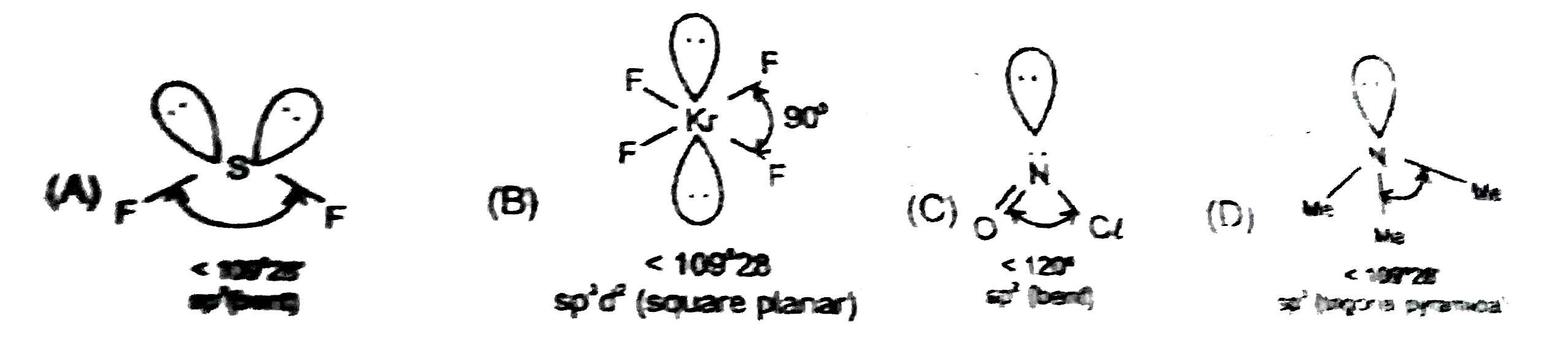
|
|
| 13. |
Match the compounds, listed in column-I with the characteristic(s) listed in column-II. {:("ColumnI","ColumnII"),((A)BeO(s),(p)"Amphoteric in nature"),((B)NaHCO_3("crystalline"),(q)"Imparts characteristic colour to Bunsen flame"),((C )BeCl_2(s),(r)"Produce"H_2O_2 and O_2 "on reaction with water." ),((D)CsO_2(s),(s)"Show hydrogen bonding"),(,(t)"Has a chain structure"):} |
|
Answer» (B)Hydrogen bonding , `HCO_3^(-)` ions are LINKED into an INFINITE chain through H-bonding. (C ) 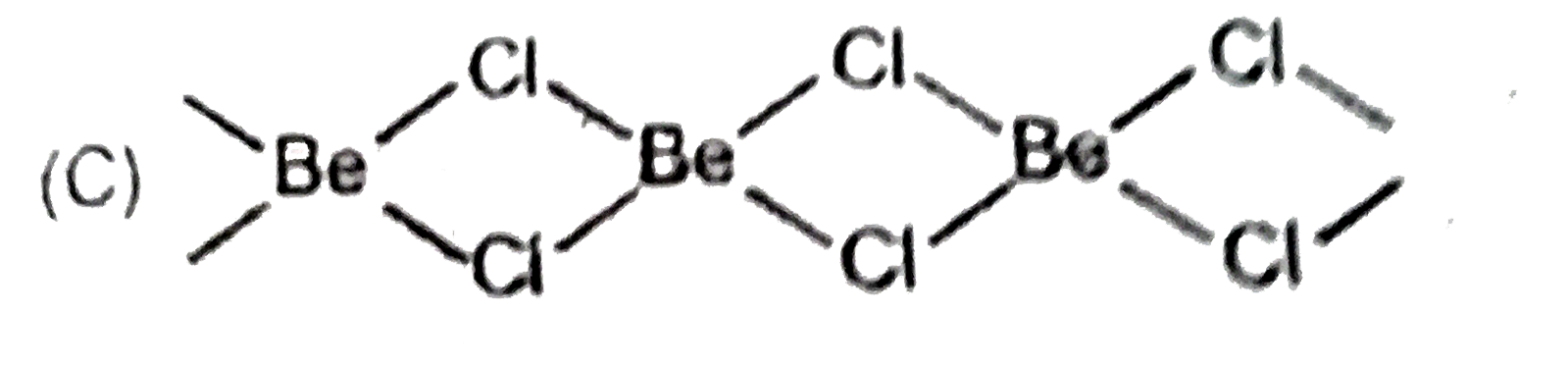 (D)`2CsO_2 + 2H_2O to 2Cs^(+)+2OH^(-)+H_2O_2 + O_2` |
|
| 14. |
Match the compounds listed in column I with characteristic listed in column II. {:("Column-I","Column-II"),((A)"Hypophosphorus acid",(p)"All hydrogen are ioniasable in water"),((B)"Orthoboric acid",(q)"Monobasic acid"),((C )"Hypophosphoric acid",(r)sp^3"hybridised central atom(s)"),((D)"Pyrosulphurous acid",(s)"Lewis acid"),(,(t)"Central atom contains one lone pair of electrons"):} |
Answer» 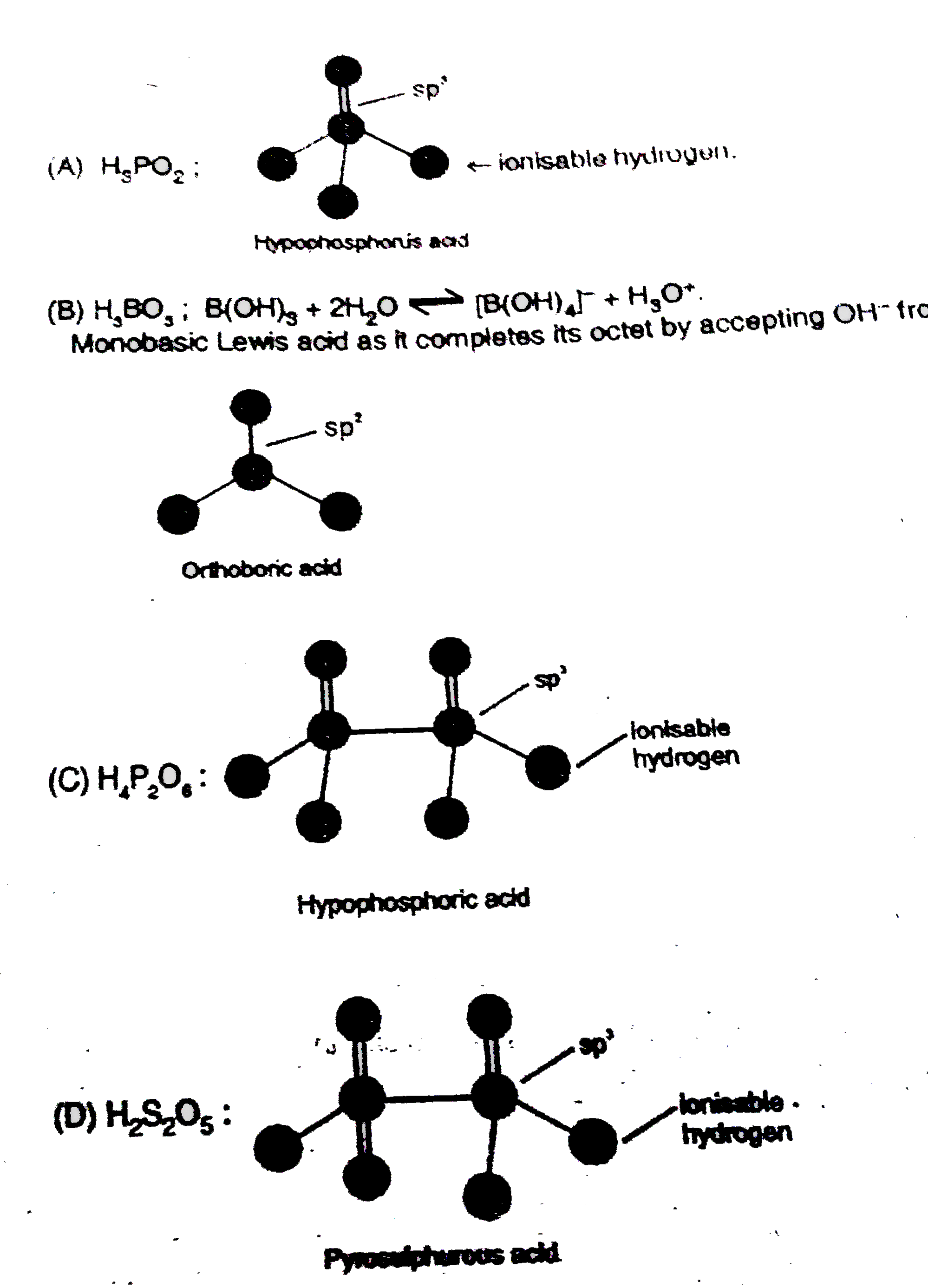
|
|
| 15. |
Match the compounds listed in column I with characteristic listed in column II. {:("Column-I","Column-II"),((A)"Cyclic silicates",(p)"Tetrahedral hybridisation"),((B)"Single chain silicates",(q)"Si-O bonds are 50% ionic and 50% covalent"),((C )"Pyro silicates",(r)"General formula is")(SiO_3)_n^(2n),((D)"Sheet silicates (two dimensional ",(s)"Two oxygen atoms per tetrahedron are shared "),(,(t)"Square planar geometry"):} |
|
Answer» (B)Two oxygen atoms per tetrahedran are shared forming a chain of tetrahedron, `(SiO_3)_n^(2n-)`, Hybridisation of each Si atom is `sp^3`. (C )One oxygen atom per tetrahedron is shared . `Si_2O_7^(2-)` .Hybridisation of each Si atom is `sp^3`. (D)Threeoxygen atom per tetrahedron is shared . `(Si_2O_5)_n^(2-)` .`sp^3` hybridisation . |
|
| 16. |
Match the compounds listed in column I with characteristic listed in column II. {:("Column-I","Column-II"),((A)B_2H_6,(p)"Tetrahedral hybridisation"),((B)Al_2Cl_6,(q)"Trigonal planar hybridisation"),((C )BeCl_2(s),(r)"Empty orbital of central atom participate in hybridisation"),((D)(SiH_3)_3N,(s)"Two types of bonds"),(,(t)"Two type of bond angles"):} |
Answer» 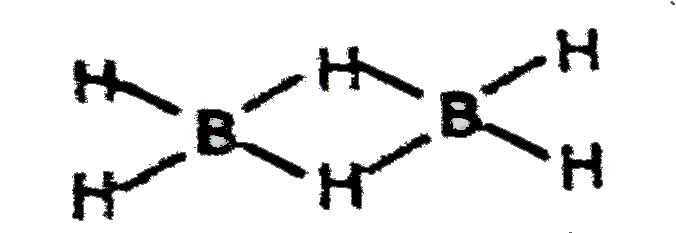 (B)`sp^3` hybridisation , empty orbital participate in hybridisation , there are two types of bonds namely , covalent and COORDINATE bonds 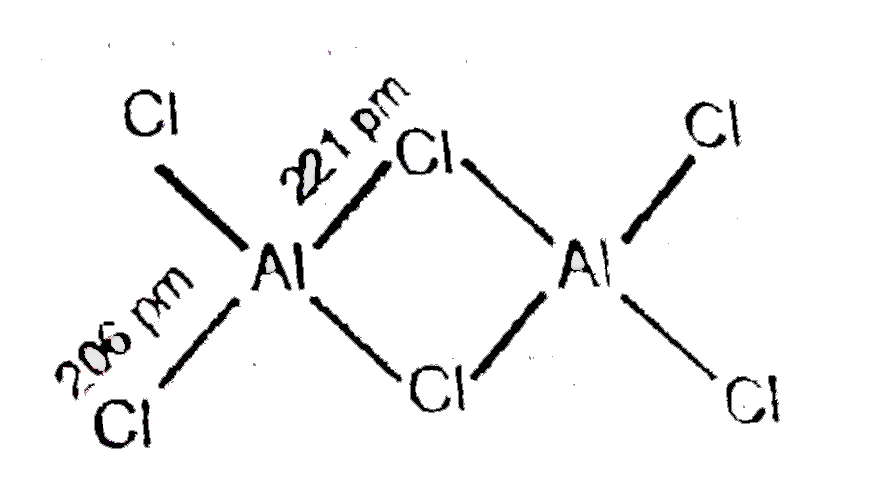 (C )`sp^3` hybridisation , empty orbital (two) participate in hybridisation , there are two types of bonds namely , covalent and coordinate bonds 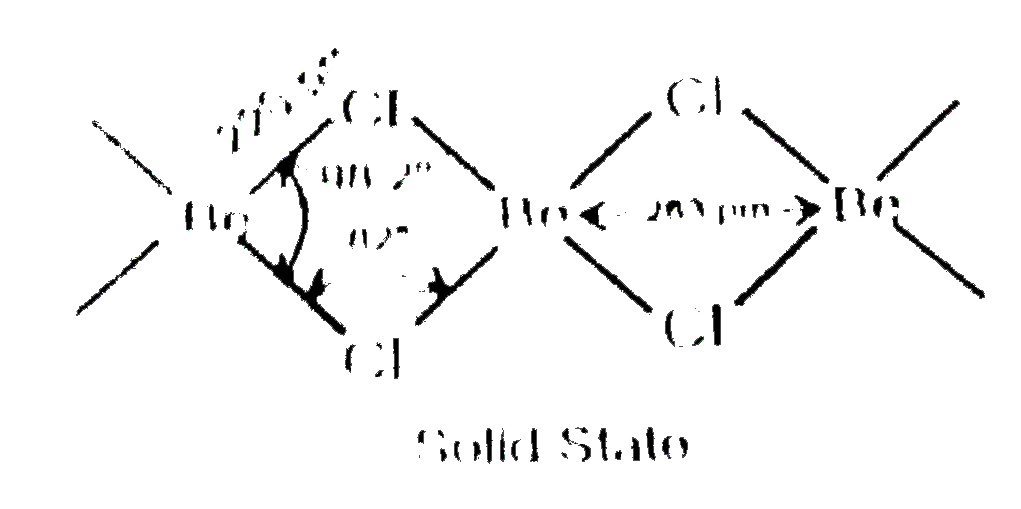 (D)`sp^2` hybridisation , because of involvement of lone pair of electrons in `ppi-dpi` delocation between N and empty d-orbital of silicon.Only covalent bonds 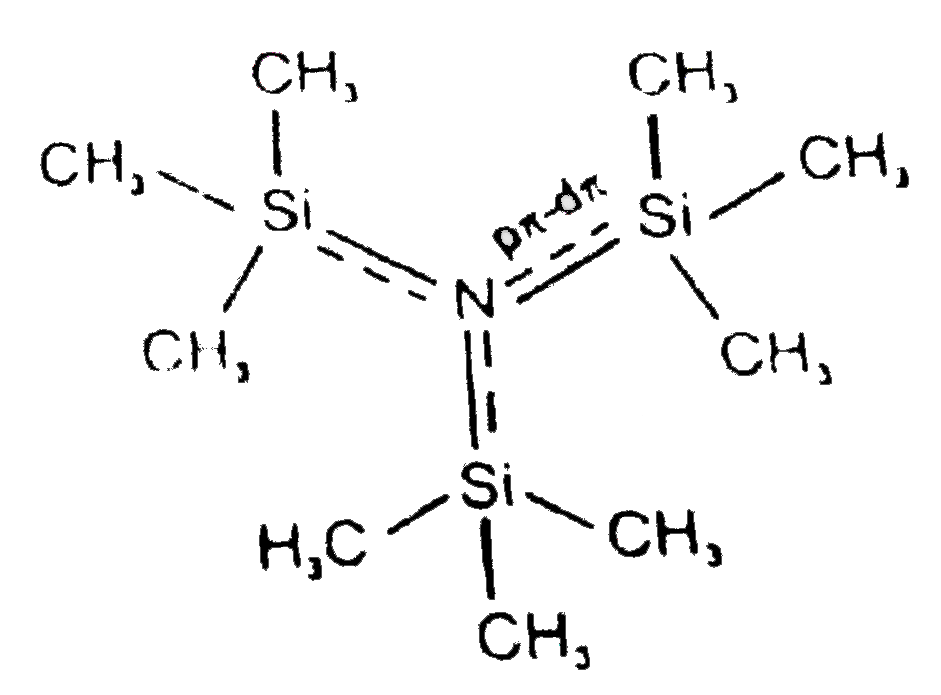
|
|
| 17. |
Match the compounds listed in column-I with characteristic listed in column-II {:("Column-I","Column-II"),((A)"Chloral hydrate",(p)"Forms a zig-zag chain in both solid and also in the liquid"),((B)"Hydrogen fluoride",(q)"Forms two dimensional sheet with almost almost hexagonal symmetry"),((C )"Crystalline boric acid",(r)"London dispersion force"),((D )"Sulphuric acid",(s)"Intramolecular H-bond"),(,(t)"Intermolecular H-bond"):} |
Answer» 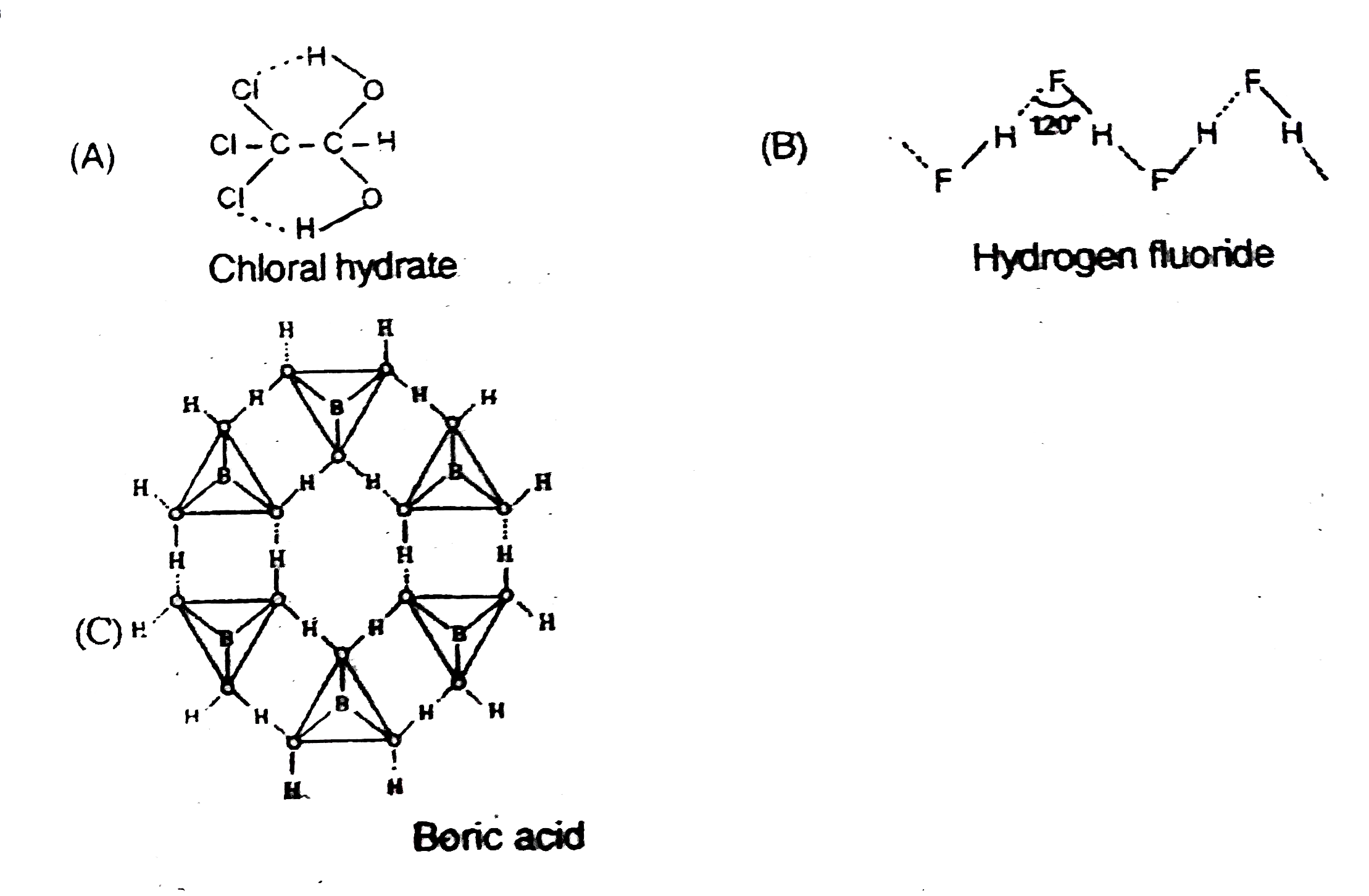 In the solid state, `B(OH)_3` UNITS are HYDROGEN BONDED together in to two dimensional sheets with almost hyxagonal symmetry.Thelayered are QUITE a large distance apart (3.18Å) (D) 
|
|
| 18. |
Match the compounds listed in colomn-I with the related uses/particulars listed in column-II. {:("ColumnI","ColumnII"),((A)"Calcium hypochlorite",(p)"Used as air purifier in submarine"),((B)"Calcium suphate hemi hydrate",(q)"Used for 'softening' water"),((C )"Potassium super oxide",(r)"A constituent of bleaching powder" ),((D)"Calcium oxide",(s)"Plaster of Paris"),(,(t)"Used in preparation of sodium hydroxide."):} |
|
Answer» `Ca(O CL)_2` is constituent of bleaching powder. (B)`CaSO_4 . 1/2H_2O` is CALLED as Plaster of Paris. (C )`KO_2` absorbs `CO_2` and gives `O_2` gas according to the FOLLOWING reactions, so used as air purifier in submarine. `2KO_2 + CO_2 to K_2CO_3+3/2O_2, 2KO_2 + 2H_2O to 2KOH + H_2O_2 +O_2` (D)Calcium oxide i.e. quick lime is used for the removal of temporary hardness of water. `CaO+H_2O to Ca(OH)_2 , Ca(OH)_2 + Ca(HCO_3)_2 to 2CaCO_3 darr + 2H_2O` `Ca(OH)_2+Na_2CO_3 to CaCO_3 darr + 2NAOH`(causticising PROCESS). |
|
| 19. |
Match the compounds listed in colomn-I with characteristic(s) type of reactions listed in column-II. {:("Column I","Column II"),((A)"Ionic hydrides",(p)B_2H_6","CH_4","H_2O","SiH_4),((B)"Covalent hydrides",(q)CuH","ZnH_2","CdH_2","HgH_2 ),(( C)"Metallic hydrides",(r)ScH_2","TiH_2","VH_2","ZrH_2),((D)"Intermediate hydrides",(s)NaH","KH","CaH_2","SrH_2):} |
|
Answer» <P> (B)Covalent `to`(p) (C )METALLIC `to` ( R ) (D)Intermediate `to` (q) |
|
| 20. |
Match the compounds/ionsin Column I with their properties/reactions in Column It. Indicate your answer by darkeningthe appropriate bubbles of the 4xx4 matrix given in the ORS. |
|
Answer» <P> SOLUTION :`(A)-p,Q,s,(B)-q,( C )-q,r,s, (D)-q,r`(Note. Assuming `AgNO_(3)` is AMMONICAL.) |
|
| 21. |
Match the compounds in Column-Iwith their characterstic test(s)/reaction(s) given in Column-II. Indicate your answerby darkening the appropriate bubbles of the 4 x 4 matrix given in the ORS. |
|
Answer» |
|
| 22. |
Match the compounds/ion in column l with their properties / reaction in Cloumn ll. Indicate your answer by darkening the appropriate bubbles of the 4xx4 matrix given in the ORS. Column l (A) C_(6)H_(5)CHO (B) CH_(3) C equiv CH (C) CN^(–) (D) l^(–) Column ll (P) give precipitate with 2,4- dinitrophenylhydrazine (Q) gives precipitate with AgNO_(3) (R) is a nucleophile (S) is involved in cyanohydrin formation Column II (P) sodium fusion extract of the compound gives Prussian blue colour with FeSO_(4) (Q) gives positive FeCl_(3) test (R) gives white precipitate with AgNO_(3) (S) reacts with aldehydes to form the corre sponding hydrazone de rivative |
|
Answer» |
|
| 23. |
Match the compounds in Column-I with their properties in Column-II {:("Column-I","Column-II"),((A)K_(2)MnO_(4),(p)"Transition element in +6 state"),((B) KMnO_(4),( q)"Oxidising agent in acid medium"),((C )K_(2)Cr_(2)O_(7),(r )"Manufactured from pyrolusite ore"),((D)K_(2)CrO_(4),(s)"Manufactured from chromite ore"):} |
| Answer» SOLUTION :`(A to p,r)(B to q,r) (C to p,q,s) (D to p,s)` | |
| 24. |
Match the compounds in Column I with their characteristic test(s)/reaction(s) given in Column II. Indicate your answer by darkening the appropriate bubbles of the 4 xx 4 matrix given in the ORS. Column I Column II (P) sodium fusion extract of the compound gives Prussian blue colour with FeSO_(4) (Q) gives positive FeCl_(3) test (R) gives white precipitate with AgNO_(3) (S) reacts with aldehydes to form the corresponding hydrazone derivative |
|
Answer» |
|
| 25. |
Match the compounds in Column I with their characteristic test (s) reaction (0s) given in Column II. |
|
Answer» <P> |
|
| 26. |
Match the compounds given in List I with List II and select the suitable option using the code given below {:(List I,List II),((A)"Benzaldehyde",(i)"Phenolphthalein"),((B)"Phthalic anhydride",(ii)"Benzoin condensation"),((C)"Phenyl benzoate",(iii)"Oil of wintergreen"),((D)"Methyl salicylate",(iv)"Fire rearrangement"):} Code |
|
Answer» `{:((A),(B),(C),(D).),((ii),(iii),(iv),(i).):}` 
|
|
| 27. |
Match the compounds given in Column I with the oxidation state of cobalt present in it (given in Column II) |
|
Answer» |
|
| 28. |
Match the compounds given in Column I with the oxidation state of cobalt present in it (given in Column II) and assign the correct code. {:(,"Column I (Compound)",,"Column I (Oxidation state of Co)"),("A".,[Co(NCS)(NH_(3))_(5)](SO_(3)),1.,+4),("B".,[Co(NH_(3))_(4)Cl_(2)]SO_(4),2.,0),("C".,Na_(4)[Co(S_(2)O_(3))_(3)],3.,+1),("D".,[Co_(2)(CO)_(8)],4.,+2),(,,5.,+3):} |
|
Answer» `{:("A (1)","B (2)","C (4)","D (5)"):}` |
|
| 29. |
Match the compounds given in Column-I with the hybridisation and shape given in Column-II and mark the correct option. |
|
Answer» A-(1), B-(3), C-(4), D-(2) |
|
| 30. |
Match the compounds given in column I with the hybridisation and shape given in column II and mark the correct option. {:(,"Column I",,"Column II"),((A),XeF_(6),(i),"Distorted octahedral"),((B),XeO_(3),(ii),"Square planar"),((C),XeOF_(4),(iii),"Pyramidal"),((D),XeF_(4),(iv),"Square pyramidal"):} |
|
Answer» `{:(,A,B,C,D),((a),(iv),(iii),(i),"(ii)"):}` |
|
| 31. |
Match the compounds given in Column I with the hybridisation and shape given in Column II and mark the correct option. {:("Column I","Column II"),((A) XeF_(6),(1)sp^(3)d^(3)-"distorted octahedral"),((B)XeO_(3),(2)sp^(3)d^(2)-"square planar"),((C)XeOF_(4),(3)sp^(3)-"pyramidal"),((D)XeF_(4),(4)sp^(3)d^(2)-"square pyramidal"):} |
|
Answer» `{:(A(1),B(3),C(4),D(2)):}` |
|
| 32. |
Match the compounds given in Column - I with the effects given in Column - II. {:(,"Column - I",,"Column - II"),((i),"Chloramphenicol",(a),"Malaria"),((ii),"Thyroxine",(b),"Anaesthetic"),((iii),"Chloroquine",(c ),"Typhoid fever"),((iv),"Chloroform",(d),"Goiter"),(,,(e ),"Blood substituent"):} |
| Answer» Solution :(i -C), (II - d), (iii - a), (iv - B) | |
| 33. |
Match the compounds given in Column-I with Column-II and select the suitable option using the code given below |
|
Answer» a(II), b(III), c(IV), d(i) |
|
| 34. |
Match the compounds given in column I with the effects given in column II. . |
|
Answer» |
|
| 35. |
Match the compounds given in column-I with column - II and select the suitable option using the code given below |
|
Answer» a(iv), B(i), v(ii), d(iii) 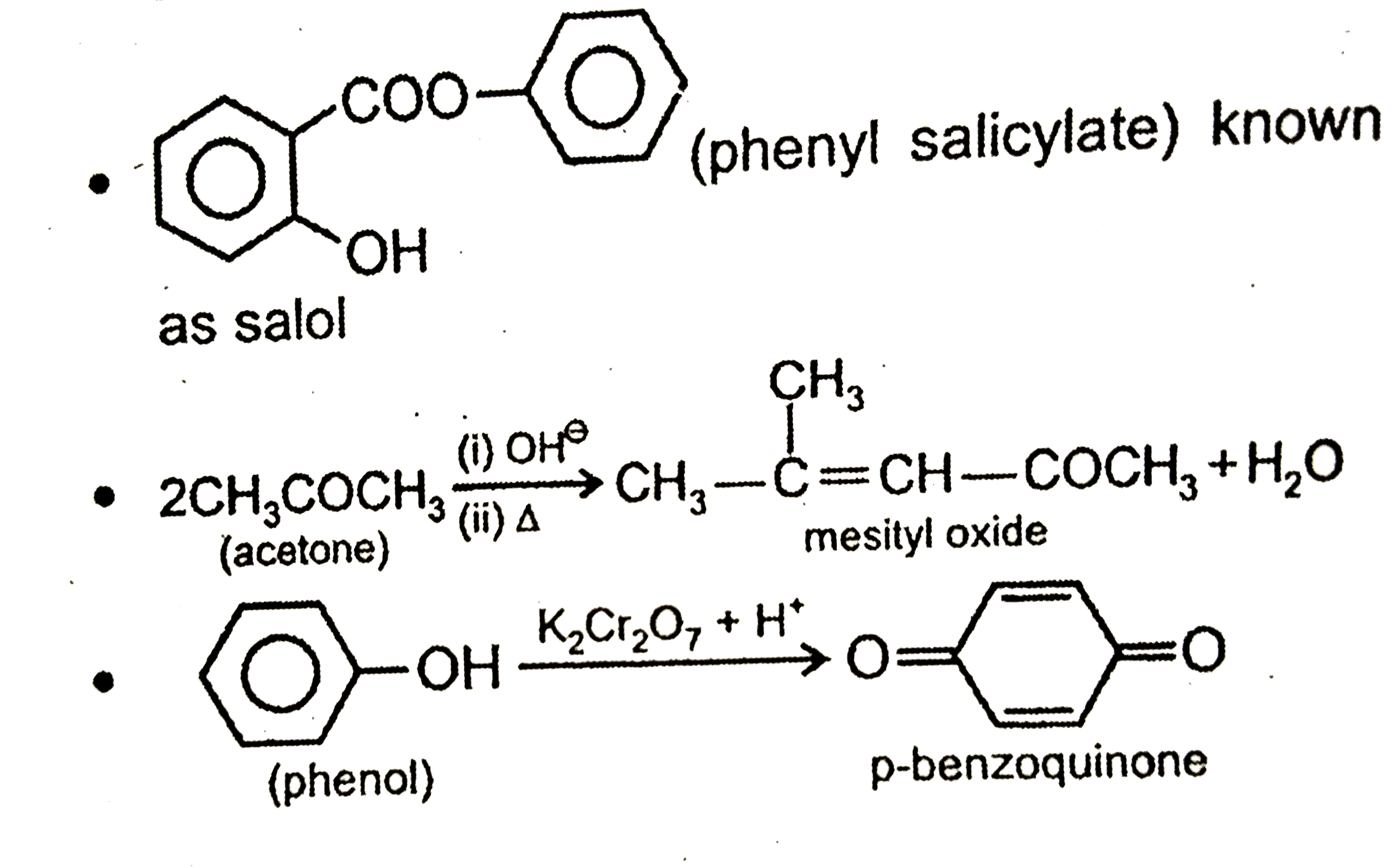
|
|
| 36. |
Match the compounds give in Column I with the hybridisation and shape given in Column II and mark the correct option. |
|
Answer» |
|
| 37. |
Match the compounds // elements given in Column I with uses given in Column II {:(,"Column I ( Compound/element)" ,,"Column II (Use)"),((i),"Lanthanoid oxide",(a),"Production ofiron alloy"),((ii) ,"Lanthanoid ",(b) ,"Television screen"),((iii), "Misch metal",(c ) ,"Petroleum cracking"),((iv),"Magnesium based alloy is constituent of ",(d) ,"Lanthanoid metal"+"iron"),((v) ,"Mixed oxides of lanthanoids are employed",(e ),"Bullets"),(,,(f),"In X-rayscreen"):} |
|
Answer» |
|
| 38. |
Match the compound with the metal for which it is used for the process of extraction. {:("(i) NaCN","(a) Titanium"),("(ii) Iodine","(b) Aluminium"),("(iii) Cryolite","(c) Silver ore"):} |
|
Answer» (i) - (C ), (II) - (a), (III) - (B) |
|
| 39. |
Match the compound reaction's product given in column I to the properties given in column II {:("Column I","Column II"),("(A)"NaNO_(2)overset(HCl)rarrAoverset(FeSO_(4))rarrP,"(p)White ppt"),("(B)"HgCl_(2)overset(SnCl_(2))rarrP,"(q)Oxidation state of metal in product is +1"),("(C)"Hg_(2)Cl_(2)overset(NH_(4)OH)rarrP,"(r)Metal-metal bond is present"),("(D)"Zn overset(H_(2)S)underset(NH_(4)OH//NH_(4)Cl)rarrP,"(s)Colour is due to complex formation"),(,"(t)Black ppt"):} |
|
Answer» <P> |
|
| 40. |
Match the complexes listed in column-I with characteristic type of isomerism listed in column-II {:("Column I","Column II"),((A)CoCl_3. 5NH_3. H_2O,(p)"In one of this isomeric forms, the metal satisfies its secondary valences by only neutral molecules."),((B)Co(NH_3)_5BrSO_4,(q)"The magnetic moment of one of the isomers form is 3.87 B.M."),(( C)CrCl_3. 6H_2O,(r)"Show ionisation isomerism"),((D)Cr(NO_2)_2. 6H_2O,(s)"Show hydrate isomerism"),(,(t)"Show linkage isomerism."):} |
|
Answer» (B)`overset(III)([Co(NH_3)_5Br])SO_4 and overset(III)([Co(NH_3)_5SO_4])`Br-ionisation isomerism. (C )`[Cr(H_2O)_6]Cl_3, [Cr(H_2O)Cl]Cl_2. H_2O` and `[Cr(H_2O)_4Cl_2]Cl.2H_2O`-hydrate isomerism. In first form secondary valences (i.e. six) of the metal are satisfied by only neutral molecules. Cr(III) has 3 unpaired electrons whether the ligand is weak or strong FIELD , `mu_(B.M.)=sqrt(3(3+2))`=3.87 B.M. (D)`[Cr(H_2O)_6]NO_2 and [Cr(H_2O)_5 (NO_2)]NO_2 H_2O`-hydrate isomerism `[Cr(H_2O)_5(NO_2)]NO_2. H_2O and [Cr(H_2O)_5(ONO)]NO_2. H_2O` -linkage isomerism. In first form secondary valencies (i.e. six) of the metal are satisfied by only neutral molecules. In the complex the Cr is in +1 oxidation state with electron configuration. `[Ar]^(18)3d^5 4s^0`.It contains five unpaired electrons |
|
| 41. |
Match the components/elements given in column I with uses given in column II. |
|
Answer» A-4 , B-3, C-1, D-2 |
|
| 42. |
Match the compound/elements given in Column O with uses given in Column II. |
|
Answer» |
|
| 43. |
Match the complexes in Column with their properties listed in Column-11. Indicate your answer by darkening the appropriate bubbles of the 4 xx 4 matrix given in the ORS |
Answer» 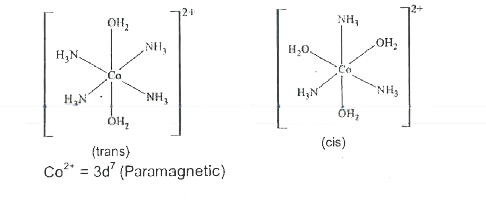 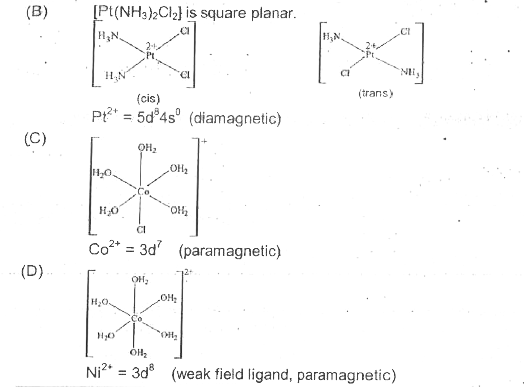
|
|
| 44. |
Match the complexes in Column-I with their information in Column-II {:((A)[Cu(NH_(3))_(2)]SO_(4), (p)dsp^(2)),((B)[Pt[NH_(3))_(2)Cl_(2)],(q)"Octahedral"),((C )K_(4)[Fe(CN)_(6)],( r)sp^(3)d^(2)),((D) [Fe(H_(2)O)_(6)Cl_(3)],(s)"squareplanar"):} |
|
Answer» <P> Solution :`(A to p,s)(B to p,s) (C to Q), (D to q,R)` |
|
| 45. |
Match the complex with its oxidation state of central metal {:("Column I","Column II"),("(A)Chromyl chloride test","(p)"S^(2-)),("(B)Ring test","(q)"NO_(3)^(-)),("(C)Smell of vinegar","(r)"CH_(3)COO^(-)),("(D)Smell of rotten eggs","(s)"Cl^(-)):} |
|
Answer» |
|
| 46. |
Match the complexes in Column I with their properties listed in Column II |
|
Answer» `{:("A","B","C","D",),(4,2,3,1,):}` |
|
| 47. |
Match the complex species given in Column I with the possible isomerism given in Column II and assign the correct code : {:(,"Column I (Complex species)",,"Column II (Isomerism)"),("A".,[Co(NH_(3))_(4)Cl_(2)]^(+),1.,"optical"),("B".,cis-[Co(en)_(2)Cl_(2)]^(+),2.,"ionisation"),("C".,[Co(NH_(3))_(5)(NO_(2))]Cl_(2),3.,"coordination"),("D".,[Co(NH_(3))_(6)][Cr(CN)_(6)],4.,"geometrical"),(,,5.,"linkage"):} |
|
Answer» `{:("A (1)","B (2)","C (4)","D (5)"):}` |
|
| 48. |
Match the complex species given un Column I with the possibvle isomerism given in Column II. |
|
Answer» |
|
| 49. |
Match the complex ions given in Column I with the hybridisation and number of unpaired electrons given in Column II and assign the correct code : {:(,"Column I (Complex ion)",,"Column II (Hybridisation, number of unpaired electron"),("A".,[Cr(H_(2)O)_(6)]^(3+),1.,dsp^(2).1),("B".,[Co(CN)_(4)]^(2-),2.,sp^(3)d^(2).5),("C".,[Ni(NH_(3))_(6)]^(2+),3.,d^(2)sp^(3).3),("D".,[MnF_(6)]^(4-),4.,sp^(3)d^(2).2):} |
|
Answer» `{:("A (3)","B (1)","C (5)","D (2)"):}` |
|
| 50. |
Match the complex ions given in Column I with the hybridisation and number of unpaired electrons given in Column II. |
|
Answer» |
|