Saved Bookmarks
This section includes 7 InterviewSolutions, each offering curated multiple-choice questions to sharpen your Current Affairs knowledge and support exam preparation. Choose a topic below to get started.
| 1. |
Lucas reagent is a mixture of : |
|
Answer» CONC. `HCl +` ANHYDROUS `ZnCl_2` |
|
| 2. |
Lucas reagent is a... |
|
Answer» Concentrated HCl + Anhydrous `ZnCl_(2)` |
|
| 3. |
Lucas reagent is: |
|
Answer» ANHYDROUS `CaCl_(2)` and CONC. `HCL` |
|
| 4. |
Lucas reagent is |
|
Answer» anhydrous `ZnCl_2` DISSOLVED in CONC. `HNO_3` |
|
| 5. |
Lucas reagent is _________. |
|
Answer» `ZnCl_(2)` |
|
| 6. |
Lubricating properties of graphite are diminished in presence of: |
|
Answer» HIGH PRESSURE |
|
| 7. |
Lubricant used in which is : |
|
Answer» COCONUT oil |
|
| 8. |
Lu (OH)_(3) is less basis than La (OH)_(3). This is due to |
|
Answer» DECREASE in IONIC character of M-OH bond |
|
| 9. |
ltBRgt |
|
Answer» `(b) Cu_(2)SO_(4) to Cu+SO_(2)` `(c ) Cu_(2)S+Cu_(2)O to Cu+SO_(2)` `(d) PbSO_(4)+PBS to Pb+SO_(2)` |
|
| 12. |
lt. Of a hydrocarbon weighs as much as one litre of CO_(2) .The molecular formula of the hydrocarbon is :- |
|
Answer» `C_(3)H_(8)` |
|
| 13. |
overset(H^o+//H_(2)O)underset(Delta)rarr |
|
Answer»

|
|
| 14. |
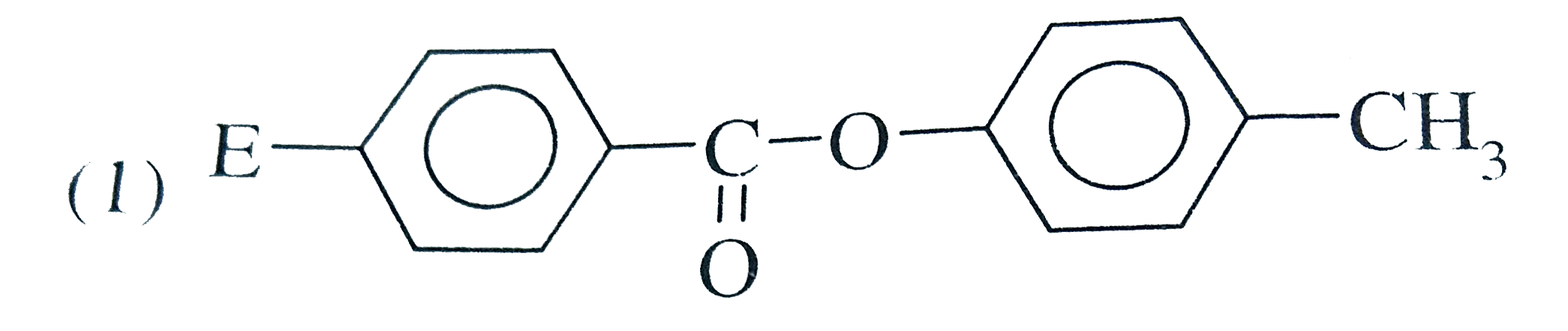
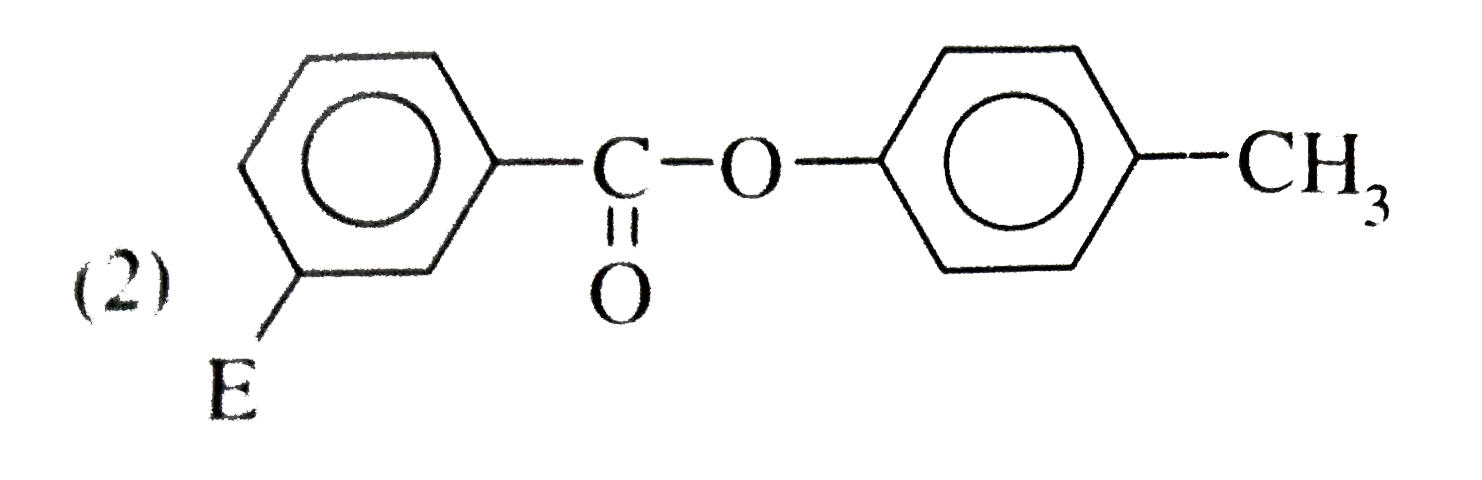
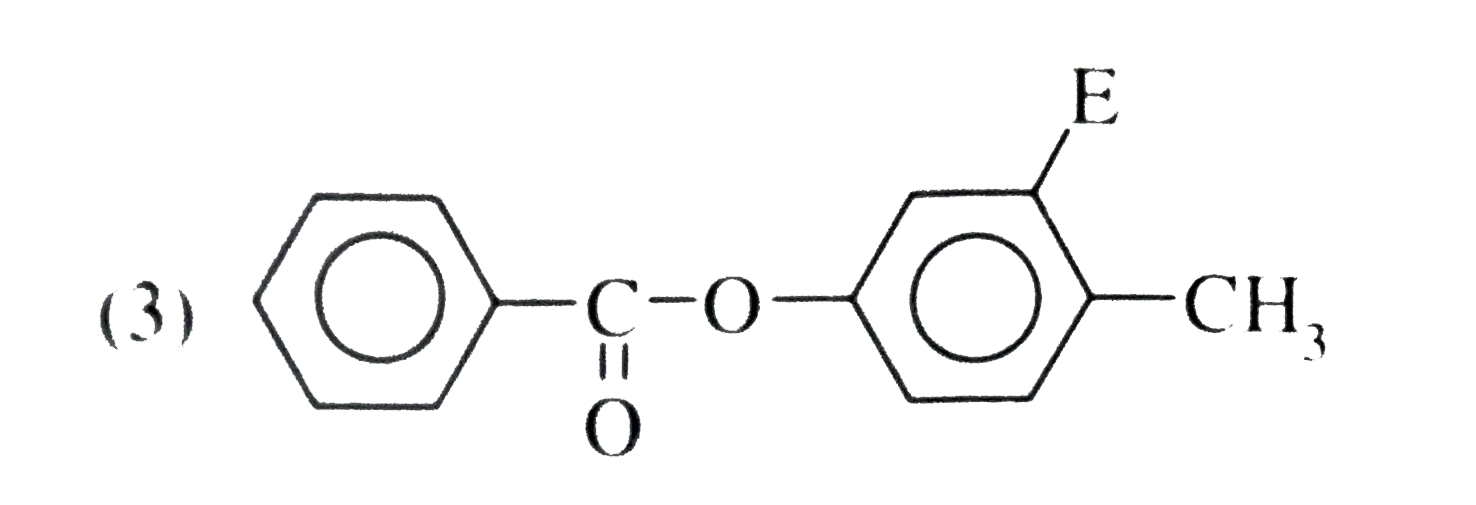
overset)(E^(+))to major product major product will be |
|
Answer»
|
|
| 15. |
Major product : |
|
Answer»
|
|
| 16. |
LPG is an mixture of _____&_____ . |
|
Answer» |
|
| 17. |
LPG is a mixture of |
|
Answer» `C_6H_12+C_6H_6` |
|
| 19. |
Lowest IP will be shown by the element having the configuration ? |
|
Answer» `[He] 2S^(2)` |
|
| 20. |
Lowering of vapour pressure of 1.00 m solution of a non-volatile solute in a hypothetical solvent of molar mass 40 g/mole at its normal boiling point is: |
|
Answer» 29.23 TORR |
|
| 21. |
Lowering of vapour pressure on dissolving a non-volatile solute in a liquid is a colligative property. |
| Answer» | |
| 22. |
Lowering of vapour pressure is highest for |
|
Answer» UREA |
|
| 23. |
Lowering of vapour pressure is determined by Ostward and Walner dynamic method. It is based on the principle, when air is allowed to pass through a solvent or solution, it takes up solvent vapour with it to get itself saturated with vapours at that temperature. dry ari to solution overset(P_(A)) to underset(A)("solvent") overset(P_(A)^(+)) to "Anhy".CaCl_(2) to air. A and B are weighted separately before and after passing dry air. Loss in weight of each set, gives the lowering of vapour pressure. The temperature of air, the solution and the solvent is kept constant. Loss in weight (w_(1)) of solution will be proportional to |
|
Answer» <P>`P_(A)` |
|
| 24. |
Lowering of vapour pressure is determined by Ostward and Walner dynamic method. It is based on the principle, when air is allowed to pass through a solvent or solution, it takes up solvent vapour with it to get itself saturated with vapours at that temperature. dry ari to solution overset(P_(A)) to underset(A)("solvent") overset(P_(A)^(+)) to "Anhy".CaCl_(2) to air. A and B are weighted separately before and after passing dry air. Loss in weight of each set, gives the lowering of vapour pressure. The temperature of air, the solution and the solvent is kept constant. Dry air was passed through 5 g of solute iini 80 g of water and then through pure water. The loss in weight of solution was 2.5 g and that of pure water was 0.04 g. The molecule weight of solute is: |
|
Answer» 7.143 |
|
| 25. |
Lowering of vapour pressure is determined by Ostward and Walner dynamic method. It is based on the principle, when air is allowed to pass through a solvent or solution, it takes up solvent vapour with it to get itself saturated with vapours at that temperature. dry ari to solution overset(P_(A)) to underset(A)("solvent") overset(P_(A)^(+)) to "Anhy".CaCl_(2) to air. A and B are weighted separately before and after passing dry air. Loss in weight of each set, gives the lowering of vapour pressure. The temperature of air, the solution and the solvent is kept constant. (P_(A)^(@) - P_(A))/(P_(A)^(@)) is equal to |
|
Answer» `W_(1)/(W_(1) + W_(2))` |
|
| 26. |
Lowering of vapour pressure is determined by Ostward and Walner dynamic method. It is based on the principle, when air is allowed to pass through a solvent or solution, it takes up solvent vapour with it to get itself saturated with vapours at that temperature. dry ari to solution overset(P_(A)) to underset(A)("solvent") overset(P_(A)^(+)) to "Anhy".CaCl_(2) to air. A and B are weighted separately before and after passing dry air. Loss in weight of each set, gives the lowering of vapour pressure. The temperature of air, the solution and the solvent is kept constant. Loss in weight of solvent W_(2) will be proportinal to: |
|
Answer» <P>`P_(A)^(@) - P_(A)` |
|
| 27. |
Lowering of vapour pressure is determined by Ostward and Walner dynamic method. It is based on the principle, when air is allowed to pass through a solvent or solution, it takes up solvent vapour with it to get itself saturated with vapours at that temperature. dry ari to solution overset(P_(A)) to underset(A)("solvent") overset(P_(A)^(+)) to "Anhy".CaCl_(2) to air. A and B are weighted separately before and after passing dry air. Loss in weight of each set, gives the lowering of vapour pressure. The temperature of air, the solution and the solvent is kept constant. Gain in weight of anyhdrous CaCl_(2) is proportinal to |
|
Answer» <P>`P_(A)` |
|
| 28. |
Lowering of vapour pressure in 1 motal aqueous solution at 100^@C is |
|
Answer» <P>13.44 mm Hg `m = (x_B XX 1000)/((1-x_B)m_A), 1 = (x_B xx 1000)/((1-x_B) xx 18)` `x_B` = mole fraction of solute, `m_A` = molar mass of solvent `x_B` = 0.0176, `x_A` = 0.9824, p=p `x_A` `=p 760 xx 0.9824=746.624 , Delta p = p-p= 760 -746.624` `~~` 13.4 mm Hg |
|
| 30. |
Lowering in vapour pressure is the highest for: |
|
Answer» 0.2 m Urea |
|
| 31. |
Lower molecular weight optically active ether is reacted with cold HI gives |
|
Answer» butan-1-ol and iodomethane |
|
| 32. |
Lower members of carboxylic acid family are |
|
Answer» WAXY solids. |
|
| 33. |
Lower members of aliphatic carboxylic acid are soluble in water. This is due to |
|
Answer» FORMATION of HYDROGEN BONDS with WATER |
|
| 34. |
Lower members of aldehydes are soluble in water where as the higher members are not. Give reasons. |
Answer» Solution :The lower members are soluble in water, as the carbonyl group is polar and it can FORM intermolecular hydrogen BONDING with water.  This .SOLUBILITY decreases with increase in the size of alkyl group. This is because BIGGER alkyl groups increase the non-polar character of the molecule and prevent hydrogen bonding with water. |
|
| 35. |
Lower halogenated ethers can be converted into higher ethers by using _______ reagent. |
|
Answer» GRIGNARD |
|
| 36. |
Lowerethers are volatileliquidswhich on evaporation produce cooling. Therefore , they are used in _____________. |
|
Answer» MOTORS |
|
| 37. |
Loweraminesare soluble inwater.Thisstatementsis |
|
Answer» False |
|
| 38. |
Lower aliphatic carboxylic acids are soluble in water where as higher ones are insoluble. Given reason. |
|
Answer» Solution :(i) Lower aliphatic carboxylic acids (up to four carbon) are MISCIBLE with water due to the formation of hydrogen bonds with water. (ii) Higher carboxylic acid are insoluble in water due to increased HYDROPHOBIC INTERACTION of hydrocarbon PART. |
|
| 39. |
Lower aliphatic carboxylic acids are miscible with water but higher carboxylic acids are insoluble in water. Give reason. (or) Acetic acid is soluble in water but hexanoic acid in insoluble in water. Why? |
| Answer» Solution :Aliphatic ACIDS are miscible with WATER due to the formation of hydrogen bonds with water. Higher carboxylic acids are insoluble in water due to increased hydrophobic interaction of hydrocarbon part. THATS why acetic ACID is soluble in water whereas hexanoic acid is insoluble in water. | |
| 41. |
Lower alcohols like ethanol and methanol are miscible in water due to ___________ |
|
Answer» their ACIDIC character |
|
| 42. |
Loweralcohols are miscible with waterbecauseof the fact that ___________ . |
|
Answer» alcohols undergo solvolysis with WATERMOLECULES |
|
| 43. |
Lower alcohols are soluble in water, higher alcohols are not. Why ? |
| Answer» SOLUTION :DUE to FORMATION of HYDROGEN BONDS. | |
| 44. |
Lower alcohols are highly soluble in water due to_____. |
| Answer» SOLUTION :H-bonding. | |
| 45. |
Low volatile nature of H_2SO_4 is due to: |
|
Answer» HYDROGEN bonding |
|
| 46. |
Low spin complex of d^6- cation in an octahedral field willhave the following energy. (Delta_0 = crystal field splitting energy in an octahedral field, P= Electron pairing energy) |
|
Answer» <P>`(-12)/5 Delta_0 + P` |
|
| 47. |
Low spin complex is formed by : |
|
Answer» `SP^(3)d^(2)` HYBRIDIZATION |
|
| 48. |
Low reactivity of ketones with respect to aldehydes is due to |
|
Answer» greater + I EFFECT of alkyl group |
|
| 49. |
Low molecular weight alcohols are |
|
Answer» SOLUBLE in water |
|


` </p>Answer :D)