Saved Bookmarks
This section includes 7 InterviewSolutions, each offering curated multiple-choice questions to sharpen your Current Affairs knowledge and support exam preparation. Choose a topic below to get started.
| 1. |
In which of the following conversions all the three oxygen atoms of O_(3) molecules are utilised for oxidation: I. Ferrous oxide to ferric oxide II. Acidified stannous chloride to stannic chloride III. Moist iodine to iodic acid VI. Sulphur dioxide to sulphur trioxide |
|
Answer» I and II only |
|
| 2. |
In this reaction {:(CH_(3)CHO+HCN),(""darr),(CH_(3)CH(OH)CNoverset(H^(+)//OH^(-))rarrCH_(3)CH(OH)COOH):} as asymmetric centre is generated. The acid obtained would be |
|
Answer» `20% D+ 80% L-`isomer |
|
| 3. |
In which of the following conditions a chemical reaction can not occur |
|
Answer» `DeltaH` and `DeltaS` INCREASE and `TDeltaS gt DeltaH` |
|
| 4. |
In this reaction C_(6)H_(5)NH_(2)+HCl+NaNO_(2)rarrX. Product X is |
|
Answer» ANILINE hydrochloride |
|
| 5. |
In which of the following compounds X is bonded to an sp^(2) carbon- |
| Answer» ANSWER :A::D | |
| 6. |
In this reaction, CH_(3)CHOtoCH_(3)CH(OH)Cnoverset(H*OH)toCH_(3)CH(OH)COOH An asymmetric centre is generated. The acid obtained would be |
|
Answer» 50%D+50% L-isomer 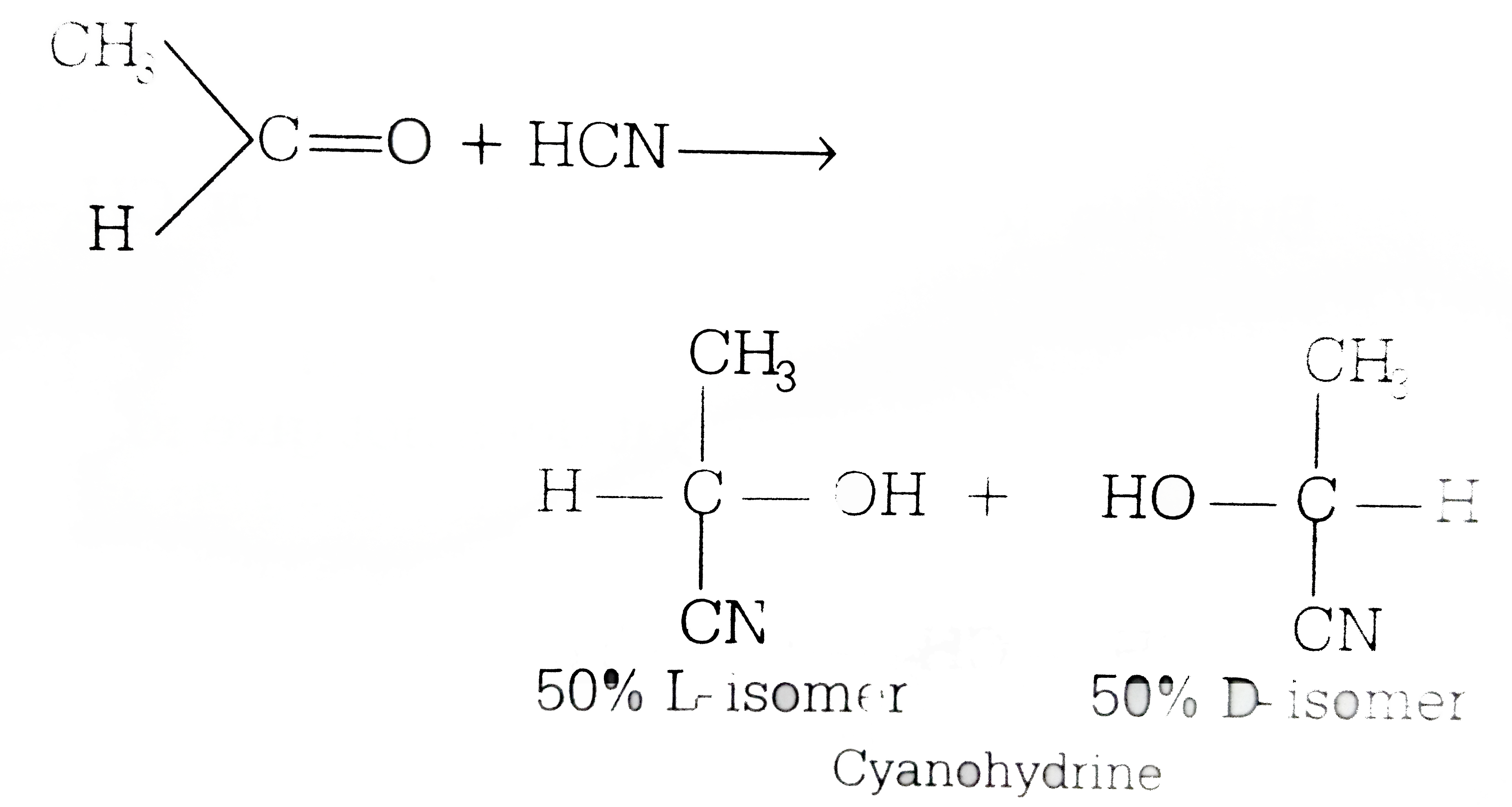
|
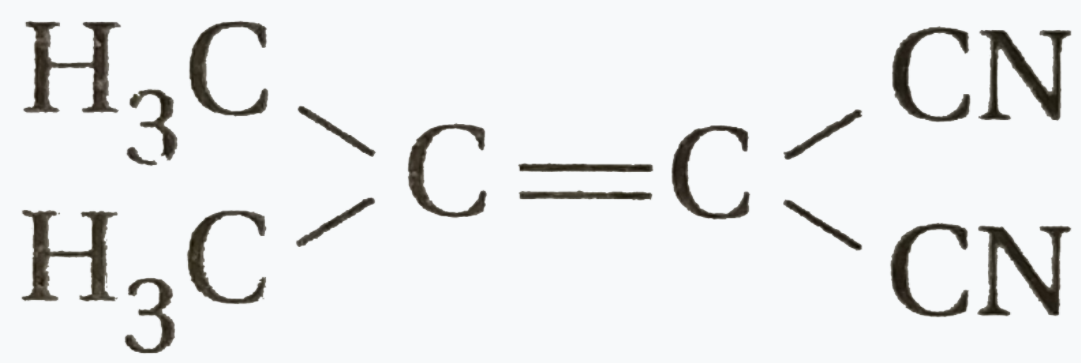
|
| 7. |
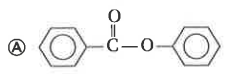
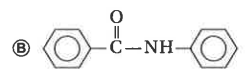
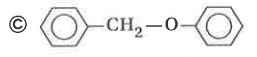
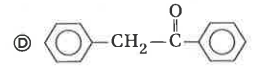
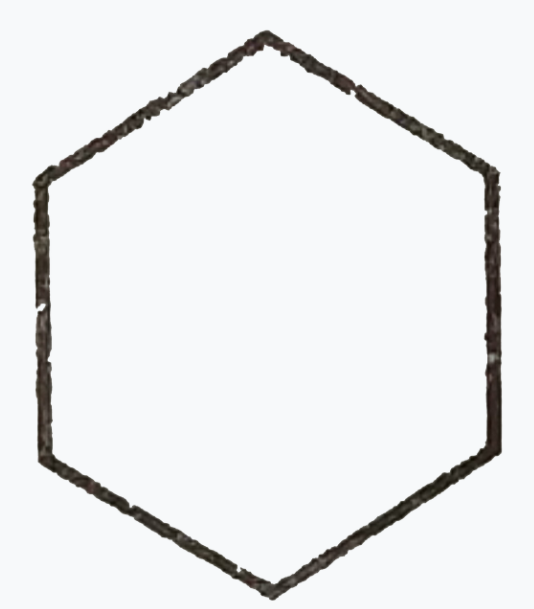
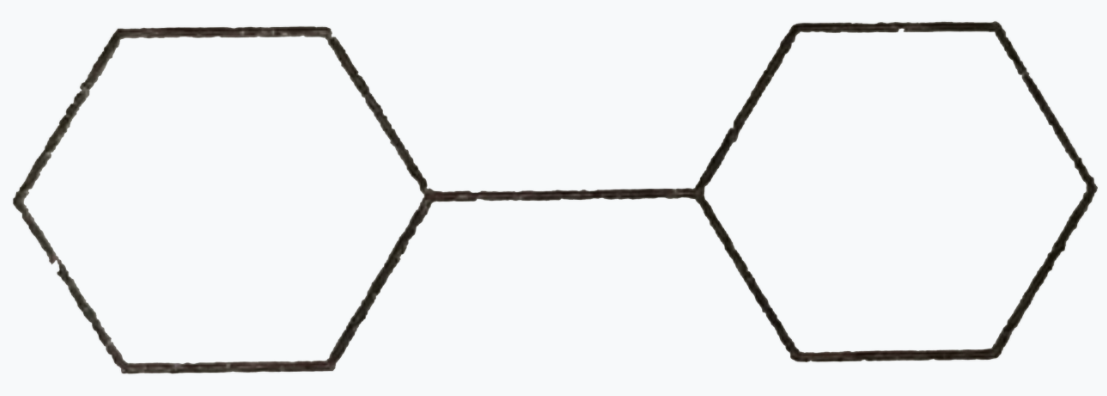
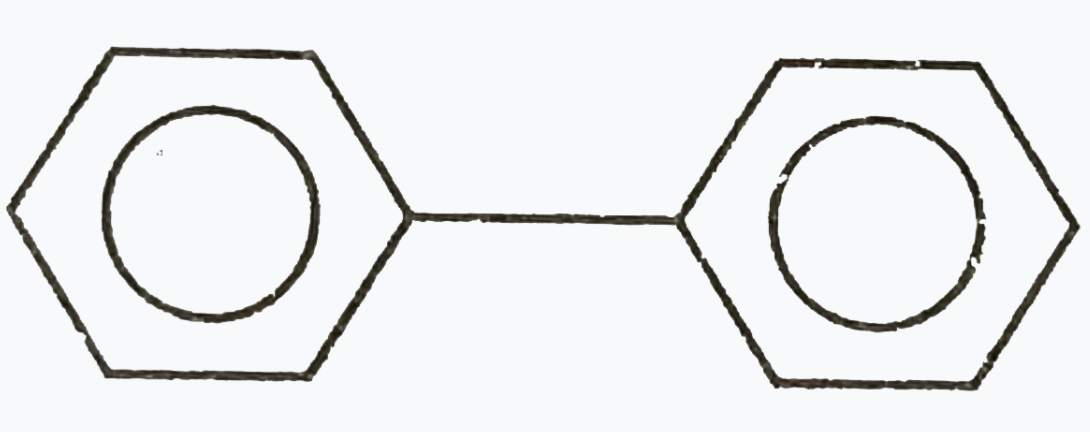
In which of the following compounds the ring on the left side undergoes electrophilic substitution reaction - |
|
Answer»
|
|
| 8. |
In which of the following complexes the nickel metal is in highest oxidation state: |
|
Answer» `[Fe(H_2O)_3(OH)_3]` |
|
| 9. |
In which of the following compounds, the periodicity of the definite formation is not observed ? |
|
Answer» `I_(2(s))` |
|
| 10. |
In this case we have A rarrB +C Time ""t" "prop Total pressure of A + B + C""P_(2)" " P_(3) Find k. |
|
Answer» <P> SOLUTION :`K=(1)/(t)" In "(P_(3))/(2(P_(3)-P_(2)))` |
|
| 11. |
In which complex is the transition metal in zero. oxidation state: |
|
Answer» `[Fe(H_2O)_3(OH)_3]` |
|
| 12. |
In third row of periodic table the atomic radii from Na and Cl |
|
Answer» Continuosly decreases |
|
| 13. |
In third group, iron gives blood red colouration with ammonium thiocyanate due to the formation of the compound? |
|
Answer» FERRIC cyanide |
|
| 14. |
In which of the following compounds the oxidation state of the nickel atom is zero, |
|
Answer» `KNiCI_3` |
|
| 15. |
In third group of qualitive analysis, NH_(4)Cl is added before NH_(4)OH so that |
|
Answer» `OH^(-)` concentration DECREASES On adding `NH_(4)Cl,` the dissociation of `NH_(4)OH` is suppressed such that `[OH^(-)]` is very less and only less soluble hydroxides are precipitated. Hence choices (a) and (b) are correct while (c) and (d) are incorrect. |
|
| 16. |
In third row of periodic table from Na to Cl |
|
Answer» ELECTRONEGATIVITY increases |
|
| 17. |
In which of the following compounds, the nucleophilic character of N - atom is maximum- |
|
Answer»
|
|
| 18. |
In thermodynamics which one of the following is not an intensive property |
|
Answer» Pressure |
|
| 19. |
In thermite process the metal used as reducing agent is |
|
Answer» sodium |
|
| 20. |
In the Zn-Cu cell, when the concentrations of Zn^(2+) and Cu^(2+)are unity, the e.m.f. is |
|
Answer» 1.75 V |
|
| 21. |
In the Victor-Meyer's test, the colours given by 1^(@), 2^(@), and 3^(@) alcohols are, respectively |
|
Answer» RED, COLOURLESS , BLUE |
|
| 22. |
In the vulcanisation of rubber: |
|
Answer» Sulpher reacts to FORM a NEW compound. |
|
| 23. |
In the Wacker process, the oxidation of ethyne to ethanol is catalysed by____________. |
| Answer» SOLUTION :`PdCl_(2)` | |
| 24. |
In the viscope process the solvent for cellulose consists of |
|
Answer» ETHER and alcohol |
|
| 25. |
In the Victor Meyer's method for the determination of molecular mass of an organic compound, what is measured ? |
|
Answer» Volume of DISPLACED air |
|
| 26. |
In the valence bond theory, hybridisation of orbitals is an integral part of bond formation.Hybridisation consists of mixing or linear combination of the "pure" atomic orbitals in such a way as to form new hybrid orbitals such as sp, sp^2, sp^3, sp^3d , sp^3d^2 etc. Now answer the following questions : Which of the following are isostructural ? {:(NO_3^(-),CO_3^(2-),CIO_3^(-),SO_3,XeO_3),((I),(II),(III),(IV),"(V)"):} |
|
Answer» (I) and (IV) 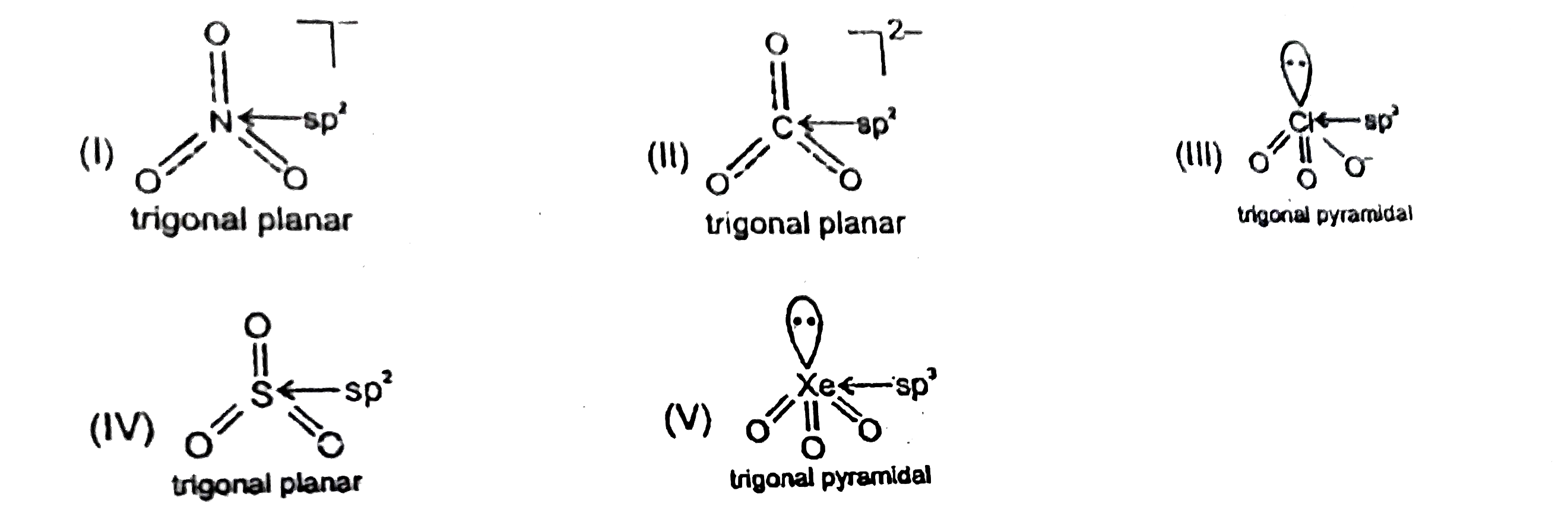
|
|
| 27. |
In the valence bond theory, hybridisation of orbitals is an integral part of bond formation.Hybridisation consists of mixing or linear combination of the "pure" atomic orbitals in such a way as to form new hybrid orbitals such as sp, sp^2, sp^3, sp^3d , sp^3d^2 etc. Now answer the following questions : Which of the following atomic orbitals does not participitate in trigonal bipyramidal hybridisation i.e. sp^3d hybridisation ? |
|
Answer» s |
|
| 28. |
InthevanArkelprocess .........is usedto purify.............or........... . |
|
Answer» |
|
| 29. |
In the use of Cl_2 as bleaching agent, the substance that is mainly responsible for the bleaching is |
|
Answer» `HClO_(2)` |
|
| 30. |
In the unsaturatedhydrocarbon compound have |
|
Answer» carbon-carbon DOUBLE bond |
|
| 31. |
In the upper layer of the atmosphere, ozone is formed by the: |
|
Answer» Action of UV RAYS on oxygen |
|
| 32. |
In the upper layers of atmosphere, ozone is formed. |
|
Answer» action of ultraviolet rays on oxygen |
|
| 33. |
In the trinitrocellulose, each glucose unit contains how many-OH groups |
|
Answer» 2 |
|
| 34. |
In the unit-cell of NaCI lattice there are: |
|
Answer» `3Na^+ION` |
|
| 35. |
In the treatment of waste water discharge, which treatment stage involves biological treatment |
|
Answer» Primary treatment Primary treatment INVOLVES physical process of removing the suspended matters. Secondary treatment involves BIOLOGICAL treatment Tertiary treatment involves the removal of phosphate, nitrate and sulphate |
|
| 36. |
In the transition series,starting from lanthanum (._(57)La), the next elements hafnium (._(72)Hf), has an atomicnumberof 72. Why do weobserve this jump in atomic number ? |
| Answer» Solution :This is because after `._(57) LA`, filling of 4 f-orbitalstarts which is complete at atomic NUMBER 71.These 14 elements , THEREFORE, BELONG to f-block and placedseparately at the bottom of the periodic table. | |
| 37. |
In the transition series, with an increase in atomic number, the atomic radius does not change very much. Why is it so ? |
| Answer» SOLUTION :This is because electrons are ADDED to inner d-orbitals and EFFECTIVE NUCLEAR charge does not change APPRECIABLY. | |
| 38. |
In the transition series, with an increase in atomic number, the atomic radius does not change very much. Why is it so? |
| Answer» SOLUTION :In case of transition elements, electrons are added into INNER (n - 1) d-orbitals and due to the opposing screening EFFECT of these electrons, EFFECTIVE nuclear charge does not change appreciably. | |
| 39. |
In the transformation of ""_(92)^(238)U to ""_(92)^(234)U, if one emission is an alpha-particle, what should be the other emission ? |
|
Answer» Two `beta^(-)` and one `beta^(+)` i.e., `2beta^(-)` |
|
| 40. |
In the transformation of ._(92)^(235)U " to " ._(92)^(234)U, if one emission is an alpha-particle, what should be the other emission (s) |
|
Answer» TWO `beta^(-)` |
|
| 41. |
In the titration of Cl^(-)ions in solution with AgNO_(3) sodium salt of fluorescein is used as an indicator. The equivalence point is marked with the appearance of reddish pink colour. This is due to |
|
Answer» adsorption of `Cl^(-)`ions by AgCl precipitate particles |
|
| 42. |
In the titration between oxalic acid and acidified potassium permanganate, the manganous salt formed during the reaction catalyses the reaction. The manganous salt acts as: |
|
Answer» A promoter |
|
| 43. |
What is the action of hydrochloric acid on potassium permanganate ? |
|
Answer» A promoter |
|
| 44. |
In the titratin of Fe^(2+) ions with KMnO_(4) in acidic medium, why dilute H_(2)SO_(4) is used and not dilute HCl ? |
|
Answer» Solution :`KMnO_(4)` in presence of dilute `H_(2)SO_(4)` acts as oxidizing agent and oxygen produced oxidizes FERROUS salt to FERRIC salt `2KMnO_(4) + 3H_(2)SO_(4) rarr K_(2)SO_(4) + 2MnSO_(4) + 3H_(2)O +5(O)` `2FeSO_(4) + H_(2)SO_(4) + (O)rarr Fe_(2)(SO_(4))_(3) + H_(2) O ] xx 5` `bar ( 2KMnO_(4) + 8 H_(2) SO_(4)+ 10 FeSO_(4) rarr K_(2)SO_(4)2MnSO_(4) + 5Fe_(2)(SO_(4))_(3) + 8 H_(2)O)` `KMnO_(4)`in presence of dilute HCl also acts as oxidizing agent but oxygen produced is usedup partly for OXIDATION of HCl `2KMnO_(4) + 4HCl rarr 2KCl+ 2MnCl_(2) + 2H_(2)O + 6 (O)` `2HCL +(O) rarr H_(2)O+ Cl_(2)` |
|
| 45. |
In the thermite process, the reducing agent is : |
|
Answer» Nickel |
|
| 47. |
In the thermal refining silicates of which metals float as slag on copper ? |
|
Answer» Ag, Au & PT |
|
| 49. |
In the thermal dissociation fo PCl_(5). the partical pressure in the gaseous equlibrium mixture is 1.0 atmosphere when half of PCl_(5) is found to dissociate. The equlibrium constant of the reaction (K_(p)) in atomosphere is |
|
Answer» <P>`0.25` `{:("Initial CONC.",1,0,0),("At EQULIBRIUM",0.5,0.5,0.5):}` `K_(p)=(Px^(2))/((1-x^(2)))=(1xx0.5xx0.5)/([1-(0.5)^(2)])=(0.5xx0.5)/(0.75)=1/3=0.3` |
|
| 50. |
In the thermal decomposition of N_(2)O" at "764^(@)C, the time required to decompose half the reactant was 263 seconds, when the initial pressure was 290 mm of Hg and 212 seconds at an initial pressure of 360 mm of Hg. What is the order of this reaction ? |
|
Answer» Solution :`(t_(1))/(t_(2))=((a_(2))/(a_(1)))^(n-1)` `a_(1)="290 mm of HG "t_(1)="263 SECONDS"` `a_(2)="360 mm of Hg "t_(2)="212 seconds"` `(263)/(212)=((360)/(290))^(n-1)` `1.24=(1.24)^(n-1)` `n-1=1` `n=1+1=2` HENCE, the REACTION is of second order. |
|