Saved Bookmarks
This section includes 7 InterviewSolutions, each offering curated multiple-choice questions to sharpen your Current Affairs knowledge and support exam preparation. Choose a topic below to get started.
| 1. |
If the density of some lake water is 1.2.5 g mL^(-1) and contains 92 g of Na^(+) ions per kg of water, calculate the molality of Na^(+) ions in the lake. |
|
Answer» Solution :No. of MOLES of `Na^(+)` ion `= ("mass")/("molar Mass")` `= (92 G)/(23g "mol"^(-2))` = 4 mol MOLARITY of `Na^(+)` ions = `("No. of moles of "Na^(+) ions)/("Mass of WATER in KG ")` = `(4 " mol ")/(1 kg )` ` = 4 " mol " kg^(-1) = 4 `m. |
|
| 2. |
In a acid catalysed hydrolysis of an organic compound A, the half-life of A changes from 100 min (when carried out in a buffer sollution of pH=3) to 1 min (when carried out in a buffer solution of pH=4). Both the half lives are independent of concentration nof organic compound. If the rate law is represented as R-K[H^(+)]^(a)[A]^(b) then the values of a and b will be : |
| Answer» Answer :D | |
| 3. |
In a 7.0 L evacuated chamber, 0.50 mol H_(2) and 0.50 mol I_(2) react at 427°C H_(2)(g) + I_(2) (g)hArr2HI(g). At the given temperature, K_(c) = 49 for the reaction. What is the partial pressure (atm) of HI in the equilibrium mixture ? |
|
Answer» 6.385 |
|
| 4. |
If the density of methanol is 0.793kg L^(-1), what is its volume needed for making 2.5 L of its 0.25 M solutoin? |
|
Answer» SOLUTION :`"Molar mass of methanol "(CH_(3)OH)="32 g MOL"^(-1)="0.032 kg mol"^(-1)` `{:("Applying",""M_(1)xxV_(1),=,""M_(2)V_(2)),(,"(Given solution)",,"(Solution to be prepared)"),(,24.78xxV_(1)=0.25xx2.5L,,):}` `"or"V_(1)=0.02522L=25.22mL` |
|
| 5. |
In a 7.0 L evacuated chamber, 0.50 mol H_(2) and 0.50 mol I_(2) react at 427°C H_(2)(g) + I_(2) (g)hArr2HI(g). At the given temperature, K_(c) = 49 for the reaction. How many moles of the iodine remain unreacted at equilibrium ? |
|
Answer» 0.388 |
|
| 6. |
If the density of crystalline CsCI is 3.988 g cm^-3 , calculate the volume effectively occupied by a single CsCl ion pair in the crystal ( CsCl = 168.4 ) |
|
Answer» `7.01 * 10^(-23) cm^3` |
|
| 7. |
In a 7.0 L evacuated chamber, 0.50 mol H_(2) and 0.50 mol I_(2) react at 427°C H_(2)(g) + I_(2) (g)hArr2HI(g). At the given temperature, K_(c) = 49 for the reaction. What is the total pressure (atm) in the chamber |
|
Answer» 83.14 |
|
| 8. |
If the density of a solvent is greater than 1 kg. dm^(-3) then the molarity (M) and molality (m) are related as |
|
Answer» M GT m If `d gt 2 kg dm^(-3), M gt m` |
|
| 9. |
In a 500ml capacity vessel CO and Cl_(2). are mixed to from COCl_(2). At equilibrium, it constains 0.2 moles of COCl_(2) and 0.1 mole of each of CO and Cl_(2). the equilibrium constant K_(c) for the reaction CO+CL_(2) hArr COCl_(2) is |
|
Answer» 5 `[CO]=(0.1)/(0.5),[Cl_(2)]=(0.1)/(0.5),[COCl_(2)]=(0.2)/(0.5)` `=([COCl_(2)])/([CO][Cl_(2)])=((0.2)/(0.5))/((0.1)/(0.5)XX(0.1)/(0.5))=2/5xx25=10` |
|
| 10. |
If the density of a solution is "3.12 g mL"^(-1), the mass of 1.5 mL solution in significant figures is ……….. . |
|
Answer» 4.7 g `=4.68g=4.7g"(in CORRECT significant figures)"` |
|
| 11. |
If the densities of nuclei of ""_(1) H^(1) and ""_(92) U^(238) are X and Y respectively ,then correct relation is |
|
Answer» X = Y |
|
| 12. |
If the DeltaG of a cell reaction AgCl+e^(-)toAg+Cl^(-) is -21.20Kj, The standard e.m.f. of the cell is |
|
Answer» 0.229V `becauseDeltaG=-nFE` `E=(21200)/(1xx96500)=0.2196V=0.22V` |
|
| 13. |
If the degree of dissociation of PCl_5at a certain temperature and 1 atm is 0.2,calculate the pressure at which the substance will be half-dissociated at the same temperature. |
| Answer» SOLUTION :0.125 ATM | |
| 14. |
In a 7.0 L evacuated chamber, 0.50 mol H_(2) and 0.50 mol I_(2) react at 427°C H_(2)(g) + I_(2) (g)hArr2HI(g). At the given temperature, K_(c) = 49 for the reaction. What is the value of K_(p) ? |
|
Answer» 7 |
|
| 15. |
If the degree of association is 70% for the reaction 2A hArr(A)_2 athe van't Hoff factor for the solute 'A' is |
|
Answer» `0.30` |
|
| 16. |
In a 50 - mL solution of H_(2)O_(2)an excess of KI and dilute H_(2)SO_(4)were added The I_(2)so liberated required 20 mL of 0.1 N Na_(2)S_(2)O_(3)for complete reaction . Caculate the strength of H_(2)O_(2) in grams per litre . |
|
Answer» Solution :`2KL +H_(2)SO_(4) +H_(2)O_(2) to K_(2)SO_(4) +2H_(2)O + I_(2)` `2Na_(2)S_(2)O_(3) +I_(2) to Na_(2)S_(4)O_(6) +2NaI ` m.e of `H_(2)O_(2)`in 5 mL = m.e of `I_(2)` = m.e of `Na_(2)S_(2)O_(3)` ` :. ` m.e of `H_(2)O_(2)` in 50 mL = `0.1 xx20 = 2 ` ...(EQN.1) ` :. ` m.e of `H_(2)O_(2)` in 1000 mL = `2/50 xx1000 = 40` Equivalents per litre` = 2/50 xx1000 = 40 ` Equivalents per litre ` = 40/1000`..(Eqn . 3) Grams per litre of `H_(2)O_(2) = 40/1000 xx 17` ...(Eqn .4) `(" EQ. wt . of "H_(2)O_(2) = 34/2 = 17 )` |
|
| 17. |
If the current is passed into the solution of an electrolyte |
|
Answer» ANIONS move TOWARDS anode, cations towards cathode |
|
| 18. |
In a 3-litre vessel the following equilibrium partial pressures are measured:N_2 = 190 mm, H_2 = 317 mm, NH_3= 1000 mm. Hydrogen is removed from the vessel until the pressure of nitrogen at equilibrium is equal to 250 mm. Calculate the pressure of other substances under the new condition. |
|
Answer» <P> SOLUTION :`P_(H_2) = 265.8mm` |
|
| 19. |
In a 3D hexagonal unit cell of identical atoms, the number of atoms that will contribute their 100% volume within the cell would be: |
|
Answer» |
|
| 20. |
If the currentis passed into the solution of an electrolyte : |
|
Answer» Anions move towards ANODE, cations towards cathode |
|
| 21. |
In a 1st order reaction, reactant concentration C varies with times t as: |
|
Answer» `(1)/(C)` increase LINEARLY with t 
|
|
| 22. |
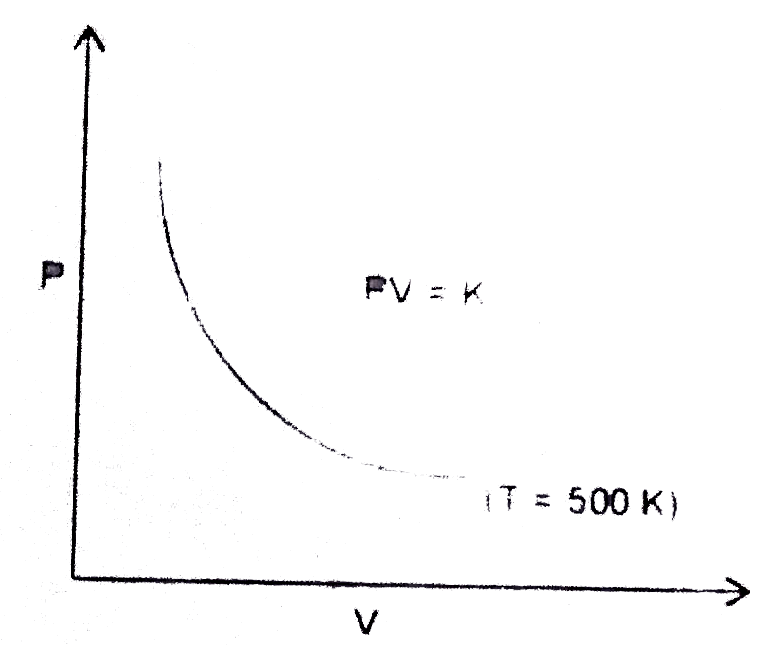
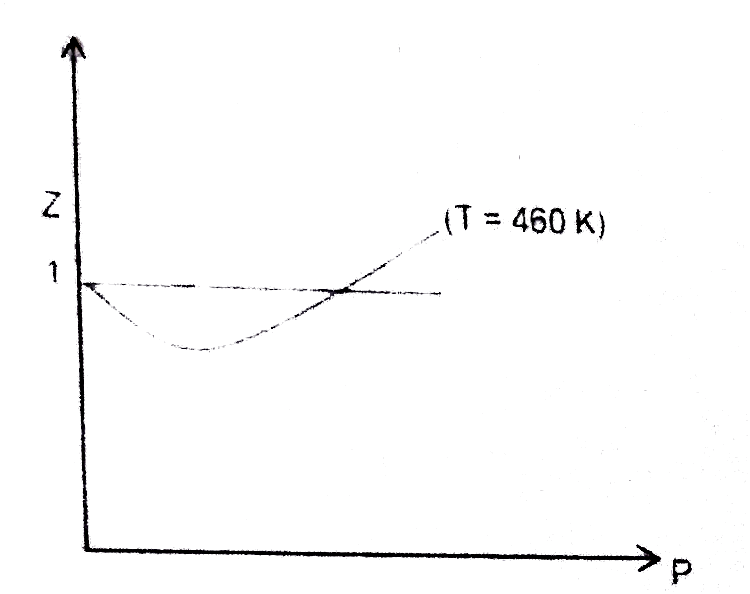
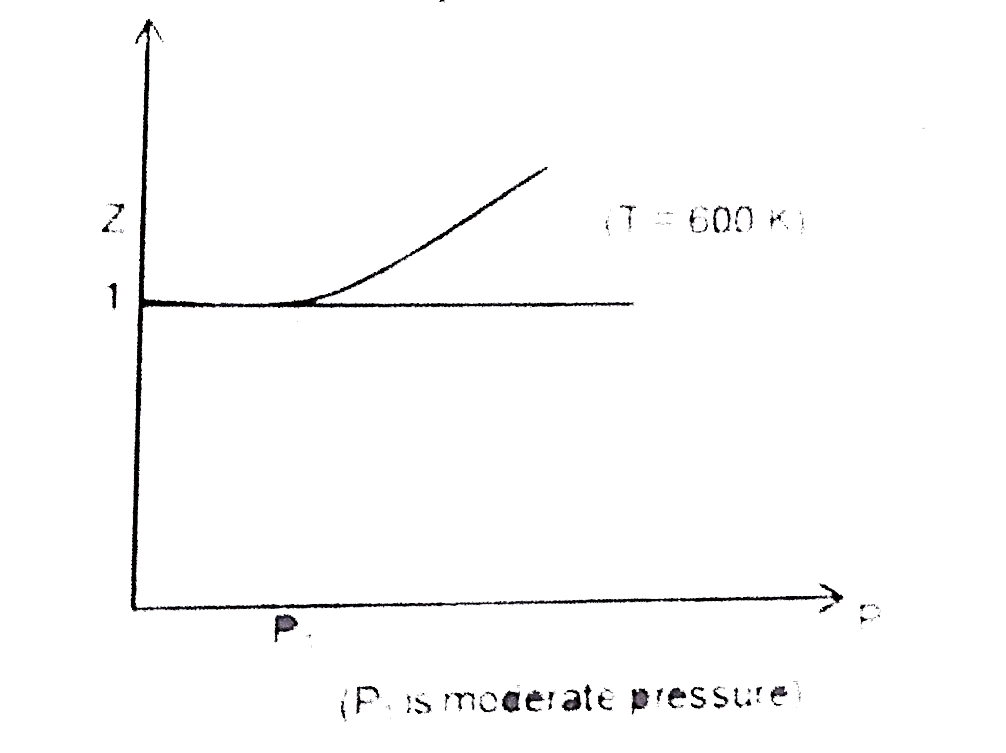
If the critical temperature of a gas is 500 K, then which of the following is correct for the same gas ? |
|
Answer»
(C ) `T_(B) = 1687.5 K` as `T_(c ) = 500 K = (8a)/(27Rb)` (D) It would be CONFIRM CORRECT above its inversion temperature `(3375 K)` |
|
| 23. |
In a 1.0 L aqueous solution when the reaction 2Ag^(+)(aq) + Cu(s) rarr Cu^(2+)(aq) + 2Ag(s) reaches equilibrium,[Cu^(2+)] = xM "and" [Ag^(+)] = yM If the volume of solution is doubled by adding water, then at equilibrium : |
|
Answer» `[Cu^(2+)] = x/2 M, [Ag^(+)] = Y/2 M` At equilibrium : `[Cu^(2+)] = xM , [Ag^(+)] = YM` `K_(eq) = K_(c) = [Cu^(2+)]/[Ag^(+)]^(2) = x/y^(2)` |
|
| 24. |
In a 10 litre box 2.5 mole hydroiodic acid is taken. After equilibrium 2HI |
| Answer» ANSWER :D | |
| 25. |
If the corrdination number of an element in its crystal lattice is 8, then packing is : |
|
Answer» fcc |
|
| 26. |
In a 0.2 molal aqueous solution of a weak acid HX the degree of ionization is 0.3. Taking K_(f) for water as 1.85, the freezing point of the solution will be nearest to |
|
Answer» `-0.360^(@)C` i=1.3. `DeltaT_(f)=iK_(f)m` `=1.3xx(1.85 K KG mol^(-1))xx(0.2 mol kg^(-1))` =0.480 K. f.p. of solution = 0-0.480 K. `=-0.480K=-0480^(@)C`. |
|
| 27. |
If the configuration of manganese is [Ar]3d^(6),4s^(2), then maximum oxidation number of m anganese will be |
| Answer» ANSWER :A | |
| 28. |
In a 0.2 molal aqueous solution of aweal acid, HX, the degree of dissociation is 0.3 . Taking K_(f) for water as 1.85, the freezing point of the solution will be nearest to |
|
Answer» `-0.360^(@)C` `{:(,HX,hArr,H^(+),+,X^(-)),("INITIAL",1,,0,,0),("After dissociation",1-0.3,,0.3,,0.3):}` TOTAL MOLES `=1-0.3+0.3+0.3=1.3` `i=(1.3)/(1)=1.3` `DeltaT_(f)=iK_(f)xxm=1.3xx1.85xx0.2=0.481` `T_(f)=0-0.481= -0.481^(@)C`. |
|
| 29. |
if the conductance and specific conductance of a solution is one then its cell constant would be |
|
Answer» 1 |
|
| 30. |
If the concentraton of the reactants is increased ,the rate of reaction |
|
Answer» REMAINS unaffected |
|
| 31. |
If the concentrations of Fe^(2+)and Fe^(3+)are equal, what should be the concentration of Ag^+ions to have zero voltage for a galvanic cell made up of Ag^(+)|Agand Fe^(3+)| Fe^(2+)electrodes. Also, calculate the equilibrium constant at 25^@Cfor the following cell reaction: Fe^(2+) + Ag^+ = Fe^(3+) + Ag. |
| Answer» SOLUTION :0.33M, 3.0 | |
| 32. |
If the concentrations are expressed in mole litre^(-1) and time in sec then the units of the rate constant for the first order reaction are : |
|
Answer» MOL `litre^(-1) sec^(-1)` |
|
| 33. |
In 3d-series,manganese shows maximum number of oxidation states. |
|
Answer» |
|
| 34. |
If the concentration units for the first order reaction is increased by 'm' times, then the rate constant k will be |
|
Answer» km On increasing the concentration UNITS by m times , `k'= (2.303)/(t) "log" (ma)/(m (a-x))` or k' = k, thus , the VALUE of first order rate constant REMAINS the same onchanging the concentration units . |
|
| 36. |
If the concentration units are reduced by n times, then the value of rate constant of first order will |
|
Answer» increase by n times |
|
| 37. |
In 3d-series which element cannot displace hydrogen gas from dilute acids? Why? |
|
Answer» |
|
| 38. |
In 3d series which element has highest melting point |
|
Answer» V |
|
| 39. |
If the concentration units are reduced by n times, then the value of rate constant of first order will: |
|
Answer» INCREASE by N times |
|
| 40. |
In 3d series (Sc to Zn), the enthalpy of atomization of Zn is low. Why ? |
| Answer» SOLUTION :DUE to ABSENCE of UNPAIRED ELECTRONS. | |
| 41. |
If the concentration of water vapour in the air is 1% and the total atmospheric pressure equals to 1 atm then the partial pressure of water vapours is |
| Answer» Answer :C | |
| 42. |
In 2002 A.D. according to research the concentration of CFC reached to |
|
Answer» 326 ppb |
|
| 43. |
If the concentration of water vapour in the air is 1% and the total atmospheric pressure equals 1 atm then the partial pressure of water vapour is : |
|
Answer» 0.1 atm |
|
| 44. |
If the concentration of OH^(-) ions in the reaction Fe(OH)_(3)(s)hArr Fe^(3+)(aq)+3OH^(-)(aq)is decreased by 1/4 times, then equilibrium concentration of Fe^(3+) will increase by |
|
Answer» 8 times `K=[Fe^(3+)][OH^(-)]^(3)` Concentration of `OH^(-)` ion in the REACTION is decreased by 1/4 times, then equilibrium concentration of `Fe^(3+)` will be increased by `(4)^(3)=-64` times in order to keep the value of K to be CONSTANT. |
|
| 45. |
If the concentration of OH^(-) ions in the reaction Fe(OH)_(3) hArr Fe^(3+)(aq)+3OH^(-)(aq) is decreased by 1/4 times, then equlibrium concentration of Fe^(3+) will increase by |
|
Answer» 64 TIMES |
|
| 46. |
In 2-butene, which one of the following statements is true ? |
|
Answer» `C_1 - C_2` BOND is a `sp^3 - sp^3 SIGMA`- bond |
|
| 47. |
If the concentration of lead iodide in its saturated solution at25^@C be 2xx10^(-3) mol per litre its solubility product is : |
|
Answer» `4XX10^(-6)` |
|
| 48. |
In 1st row transition series the highest oxidation number is shown by |
|
Answer» Fe |
|
| 49. |
If the concentration of N_2 ,H_2 and NH_3 are 1,2,3, respectively , their concentration at equilibrium will be : N_2 + 3H_2 hArr 2NH_3. |
|
Answer» (1-x) (2-3x) (2X) |
|