

Saved Bookmarks
This section includes 7 InterviewSolutions, each offering curated multiple-choice questions to sharpen your Current Affairs knowledge and support exam preparation. Choose a topic below to get started.
| 1. |
Give the products expected (if any) when nitroben- zene reacts under the following conditions. (A) Cl_(2),FeCl_(3), heat (B) fuming HNO_(3),H_(2)SO_(4) (C) H_(3)C-overset(O)overset("||")(C)-Cl, AlCl_(3) (1.1 equiv.) then H_(2)O |
|
Answer» |
|
| 2. |
Glucose and 2-deoxyribose can be differentifated by |
|
Answer» Fehling's solution |
|
| 3. |
Give the products and mechanism for each of the following reactions. Explain why nucleophilic attack on the epoxide occurs at different sites in the two reactions. |
Answer» Solution :Attack by a strong nucleophile suchas `CH_3 O^(-)` (methoxide ION) on an epoxide occurs at the least hindered carbon, similar to an `S_N 2` reaction. Since methoxide is regenerated in the last step , this mechanism suggests that only a catalytic AMONT of `CH_3 O^(-)` is required .  Attack by a weak nucleophile such as methanol `(CH_3 OH)` can occur only when the epoxide has been protonated so that a better leaving GROUP is formed . Under these conditions, the epoxide C-O bonds are weakened because the leaving group has been improved. THe protonated epoxide can be viewed as a resonance hybrid of the following structures :  A weak nucleophile attacks the resonance hybrid carbon with the largest `delta^+` charge. The magnitude of the `delta^+` is determined by the relative importance of the resonance contributors. Resonance contributor (a) is the most important because all the atoms have a full octet. Contributor (b) is a secondary carbocation with benzene ring resonance whereas contributor(c) is a primary carbocation , so contribution (b) is more important than (c) .These relative contribiutions in the resonance hybrid reveal that the benzylic carbon has more `delta+` than the primary carbon, so the nucleophile attacks at the benzylic carbon. (The same reasoning applies to any three -MEMBERED ring with two carbons and a third atom bearing a positive charge, such as a protonated epoxide ,a halonium ion or a mercurinium ion ) A weak nucleophile attacks the resonance hybrid carbon with the largest `delta^+` charge. The magnitude of the `delta^+` is determined by the relative importance of the resonance contributors. Resonance contributor (a) is the most important because all the atoms have a full octet. Contributor (b) is a secondary carbocation with benzene ring resonance whereas contributor(c) is a primary carbocation , so contribution (b) is more important than (c) .These relative contribiutions in the resonance hybrid reveal that the benzylic carbon has more `delta+` than the primary carbon, so the nucleophile attacks at the benzylic carbon. (The same reasoning applies to any three -MEMBERED ring with two carbons and a third atom bearing a positive charge, such as a protonated epoxide ,a halonium ion or a mercurinium ion )  Since the proton source is regenerated in the last step, this mechanism suggests that only a catalyst amount of acid is needed. |
|
| 4. |
Give the product of the following reactions. H_(3)C-H_(2)C-C-=C-CH_(2)CH_(2)CH_(3)underset("Neutral")overset(KMnO_(4))rarrX H_(3)C-H_(2)C-C-=C-CH_(2)CH_(2)CH_(3)underset("acidic higher temp")overset(KMnO_(4))rarrY |
| Answer» Solution :`X=CH_(3)-CH_(2)-UNDERSET((ALPHA" diketone"))underset(O)underset(||)(C)-underset(O)underset(||)(C)-CH_(2)-CH_(2)-CH_(3)` | |
| 5. |
Glucose, aldo hexose, dextrose, blood sugar, fruit sugar. |
| Answer» Solution :FRUIT SUGAR. It is the NAME of fructose. All others areindicating GLUCOSE only. | |
| 6. |
Give the product of the following reactions: a. b.Given the stereochemical or rerranfged product of the following reaction. i. ii. iii. iv. |
Answer» Solution :a.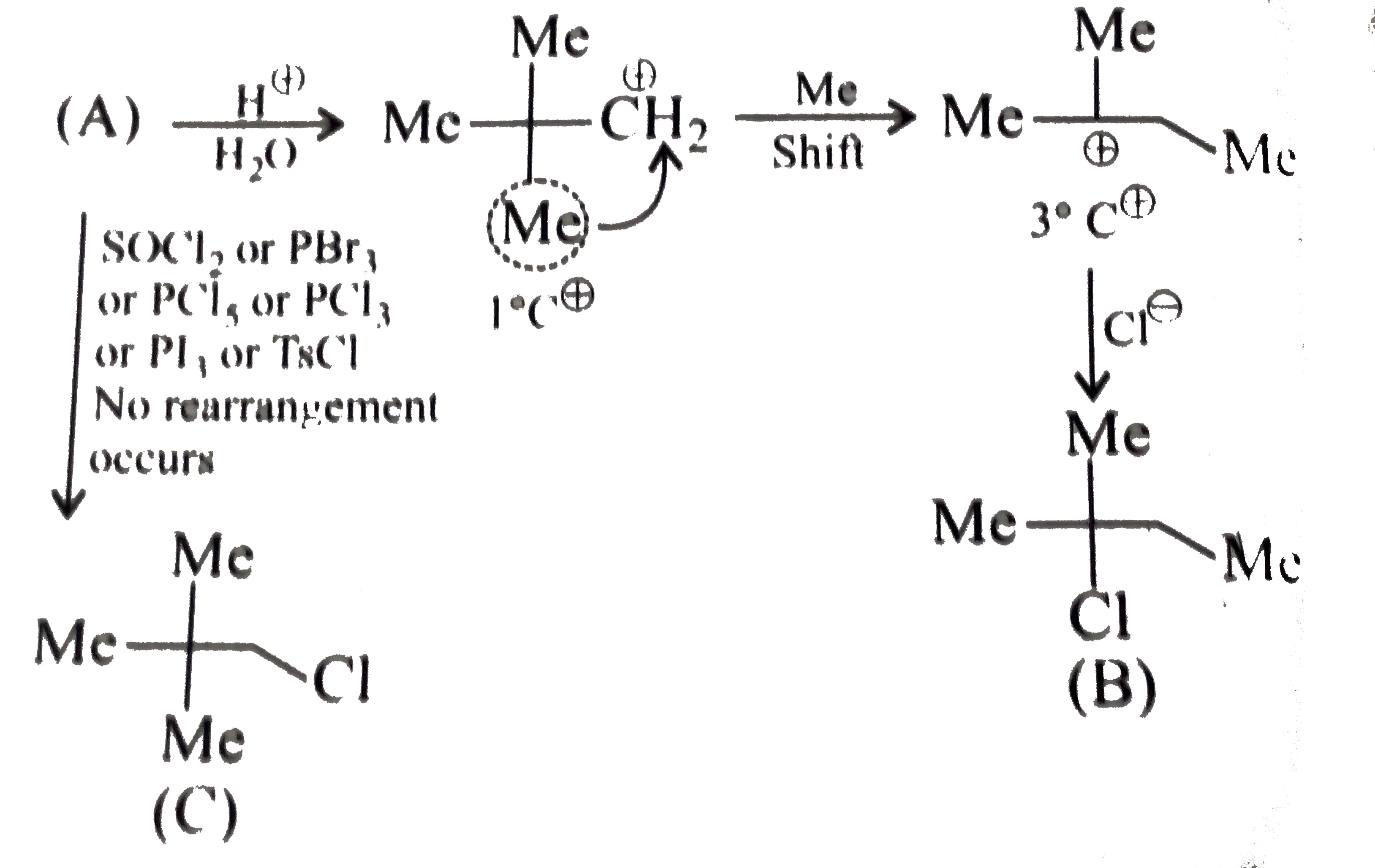 b. i. 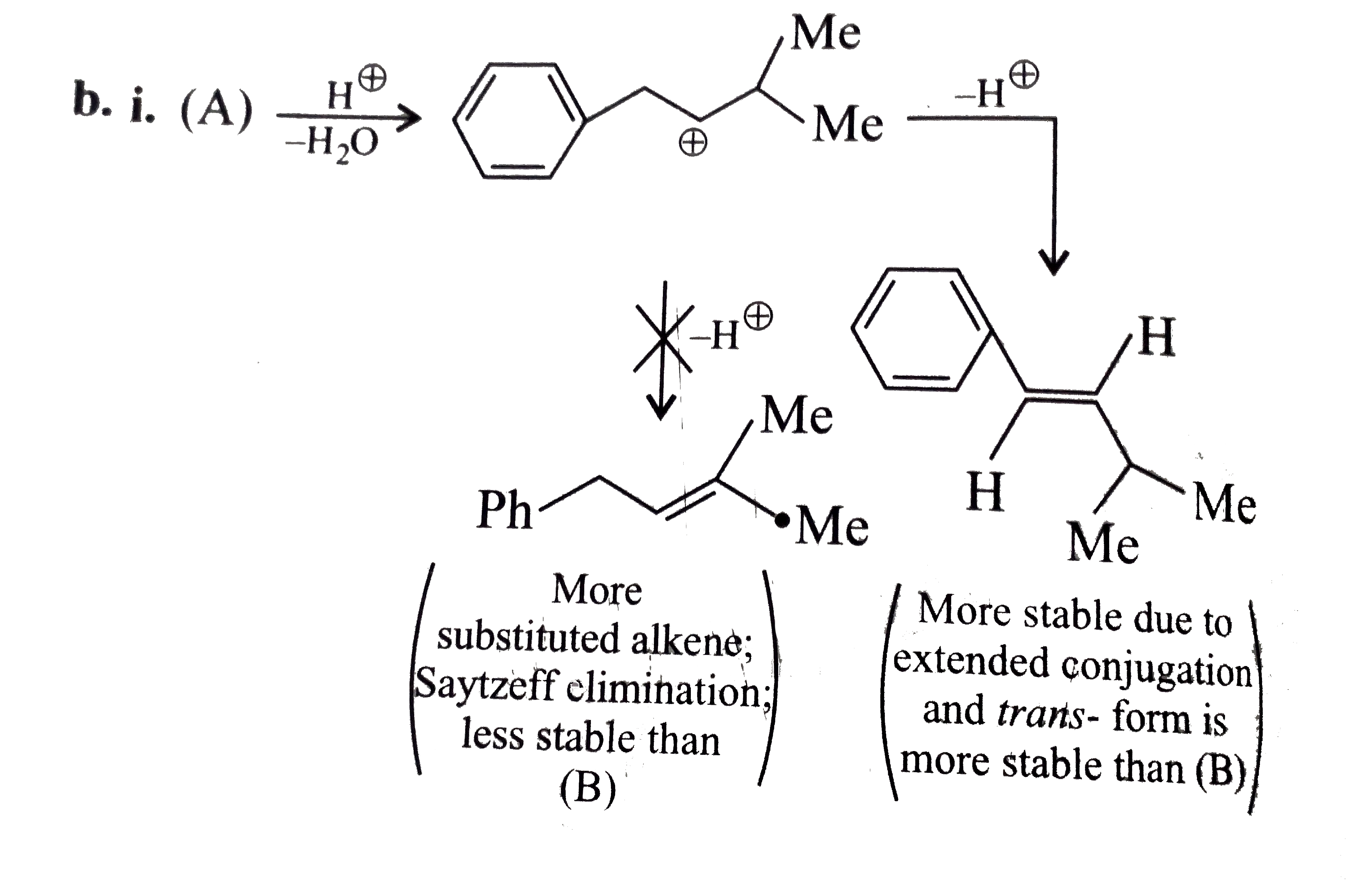 II. The nucleophile `Br^(-)` reacts at either of the two `bar e` DEFICIENT sites. 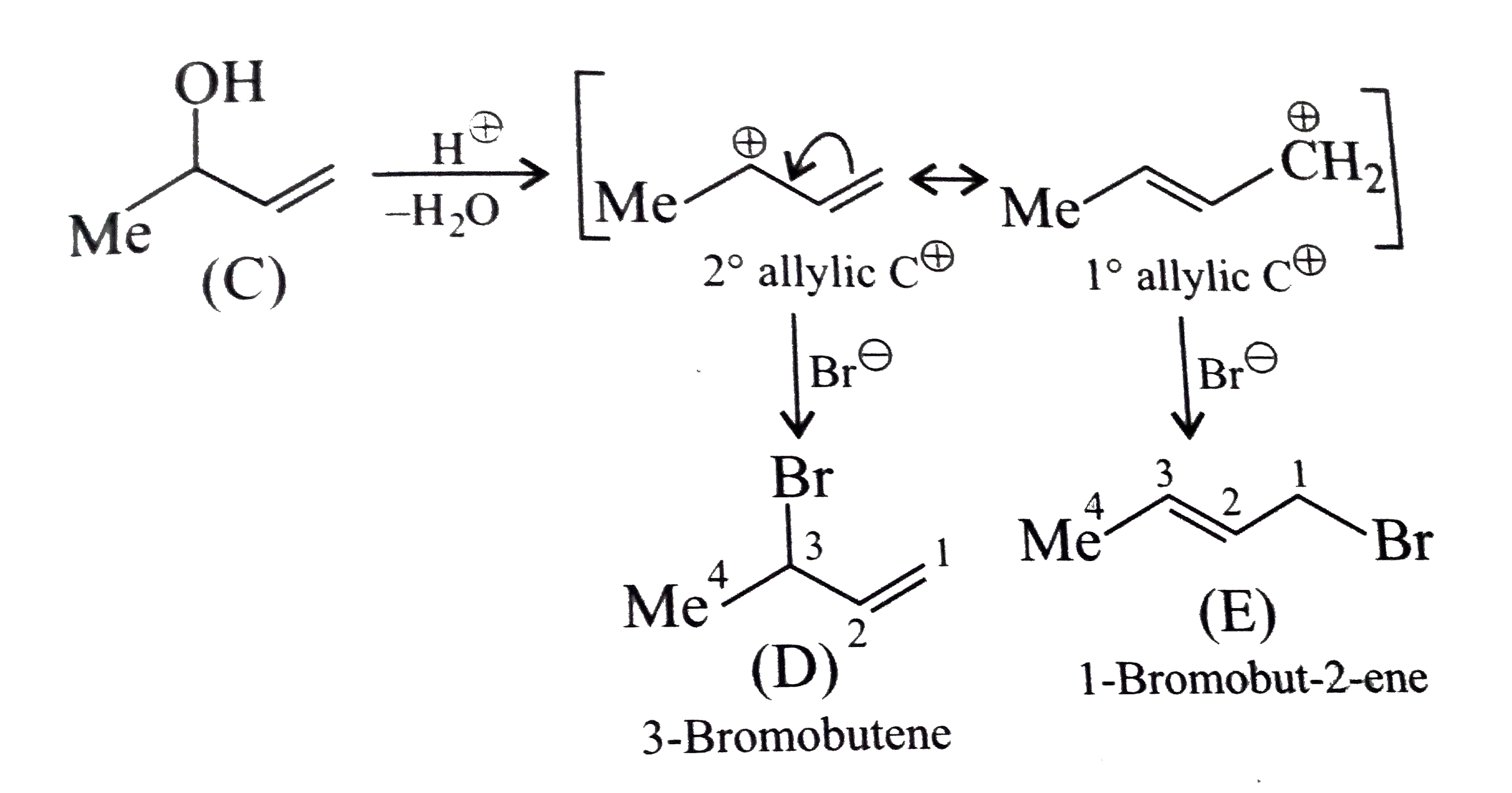 iii. The double bond shifts to give an allylic conjugated diene from which the isomers are formed. 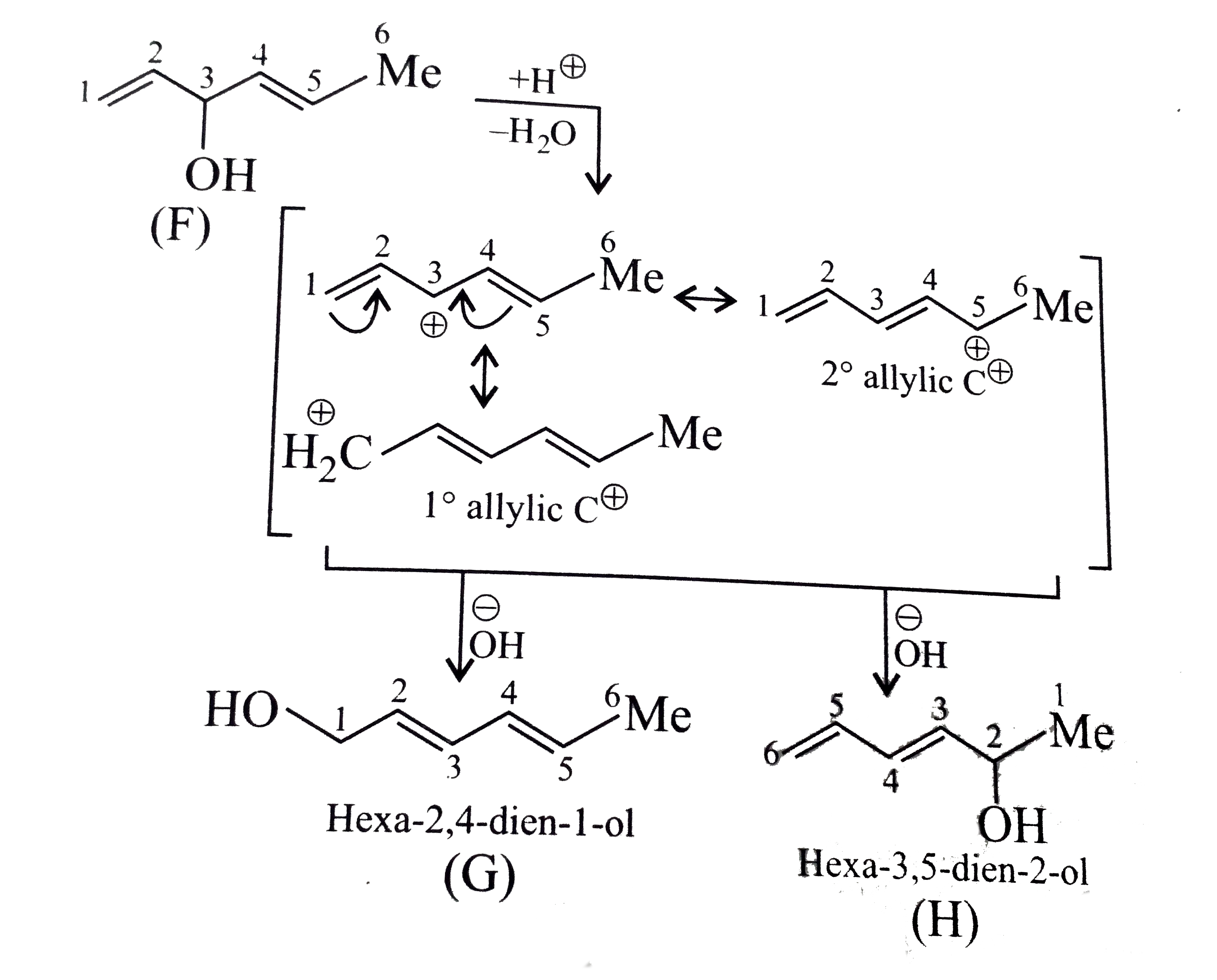 IV. 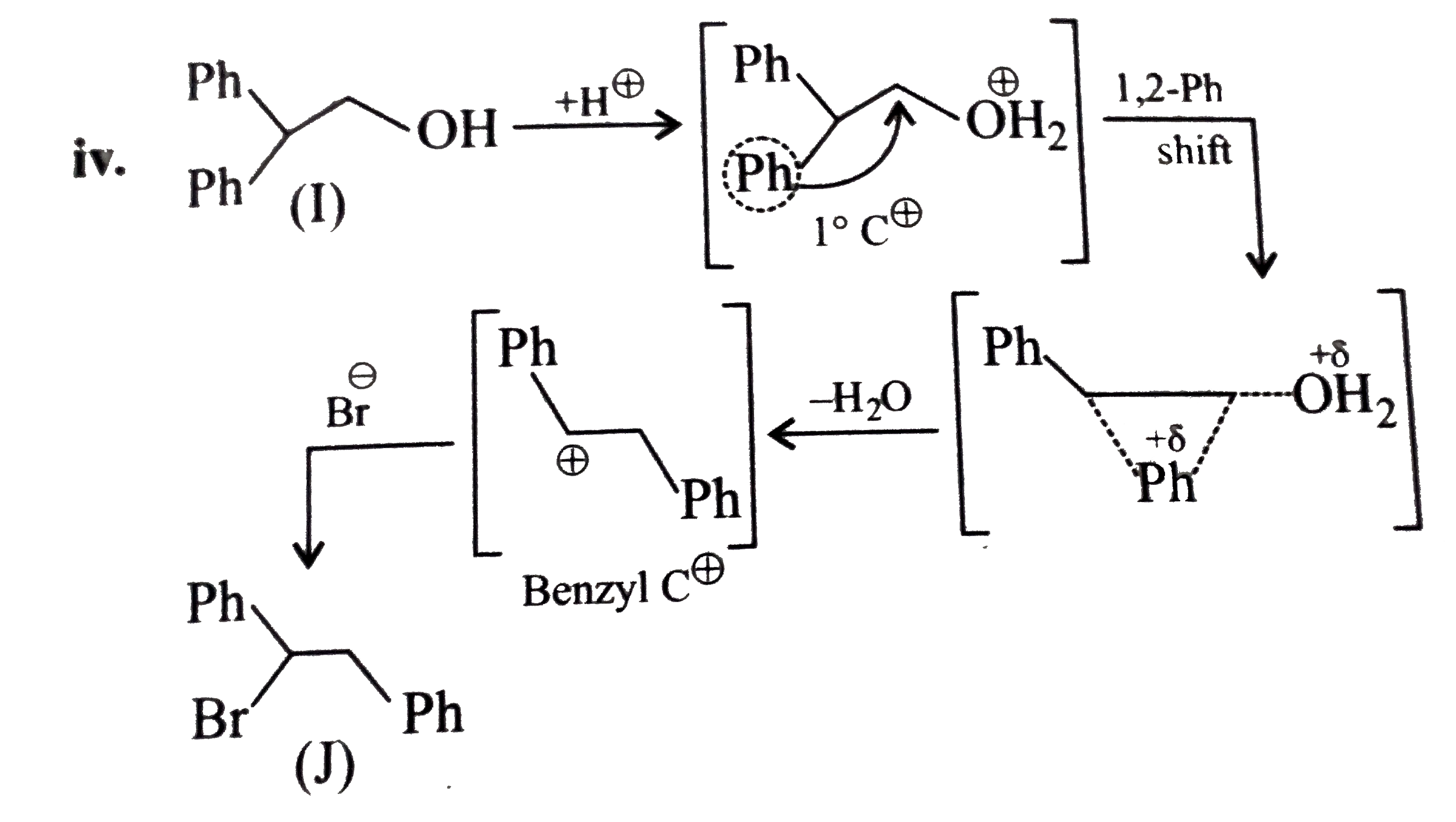 The synchronous MIGRATION of PH provides greater assistance in the removal of `H_(2)O` from the protonated alcohol than does an (Me) group. |
|
| 7. |
Glucosazone is osazone derivativie very similar to that formed from |
|
Answer» Fructose |
|
| 8. |
Givethe product of the following reaction: (iii). Me-overset(O)overset(||)(C)-Etunderset(H_(2)O)overset(Mg)tounderset(Delta)overset(H_(2)SO_(4))toC (iv). Ph-overset(O)overset(||)(C)-Meunderset(H_(2)O)overset(Mg)tounderset(Delta)overset(H_(2)SO_(4))toD |
Answer» SOLUTION :
|
|
| 9. |
Gluconic acid is prepared by |
|
Answer» OXIDATION of SUCROSE with bromine water |
|
| 10. |
Give the product of E2 reaction of the following compounds with atc. KOH. a. Ertho-and therno form of I- bromo 1.2- diphenyl propane b. Eryhgro- and thero-fromof 2,2,3,5,5- penta methyl 4- bromo hexane |
Answer» SOLUTION :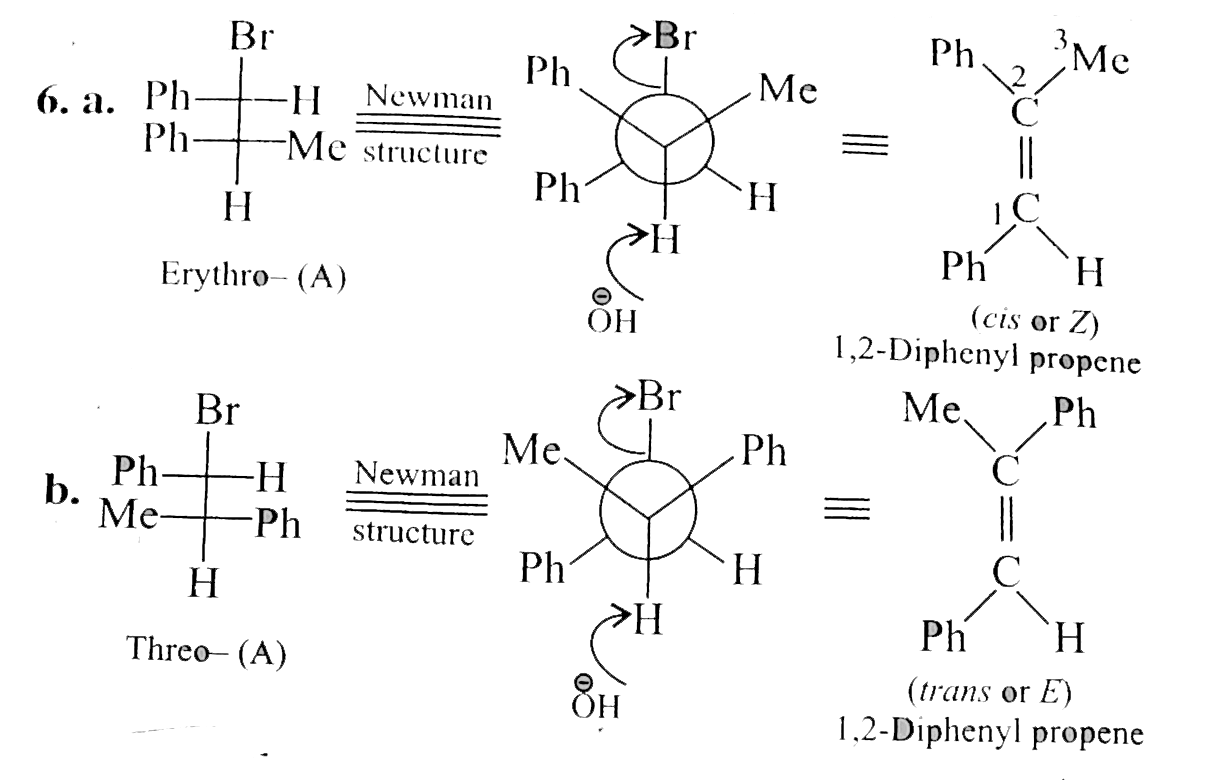 C. and d. Borth earhto and THREO GIVE the same product. 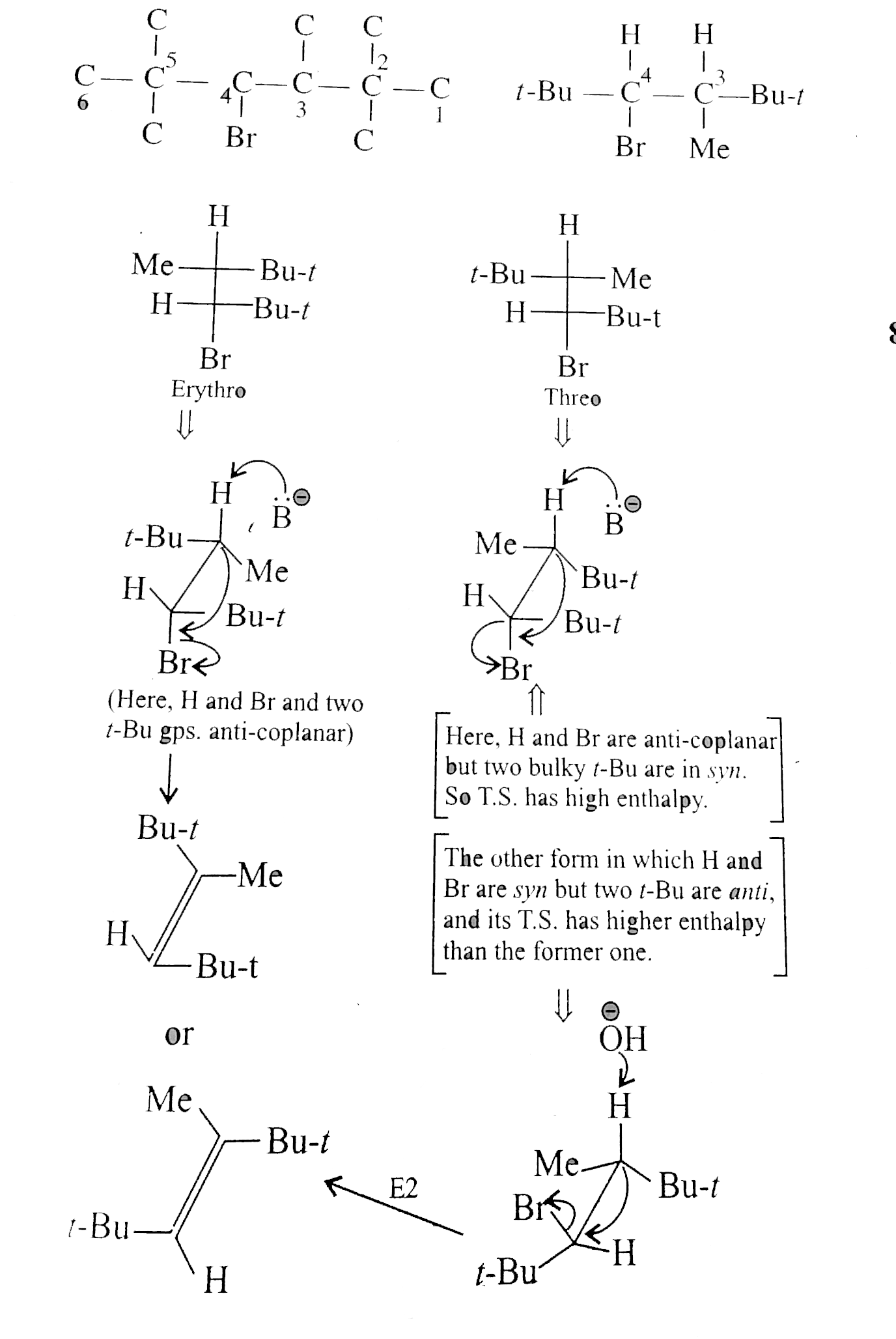
|
|
| 11. |
Glucocorticoids are produced by |
|
Answer» a. CONTROL the carbohyrates metabolism |
|
| 12. |
Give the product of the following reaction : |
|
Answer» |
|
| 14. |
Give the product of each of the following reactions: |
Answer» SOLUTION :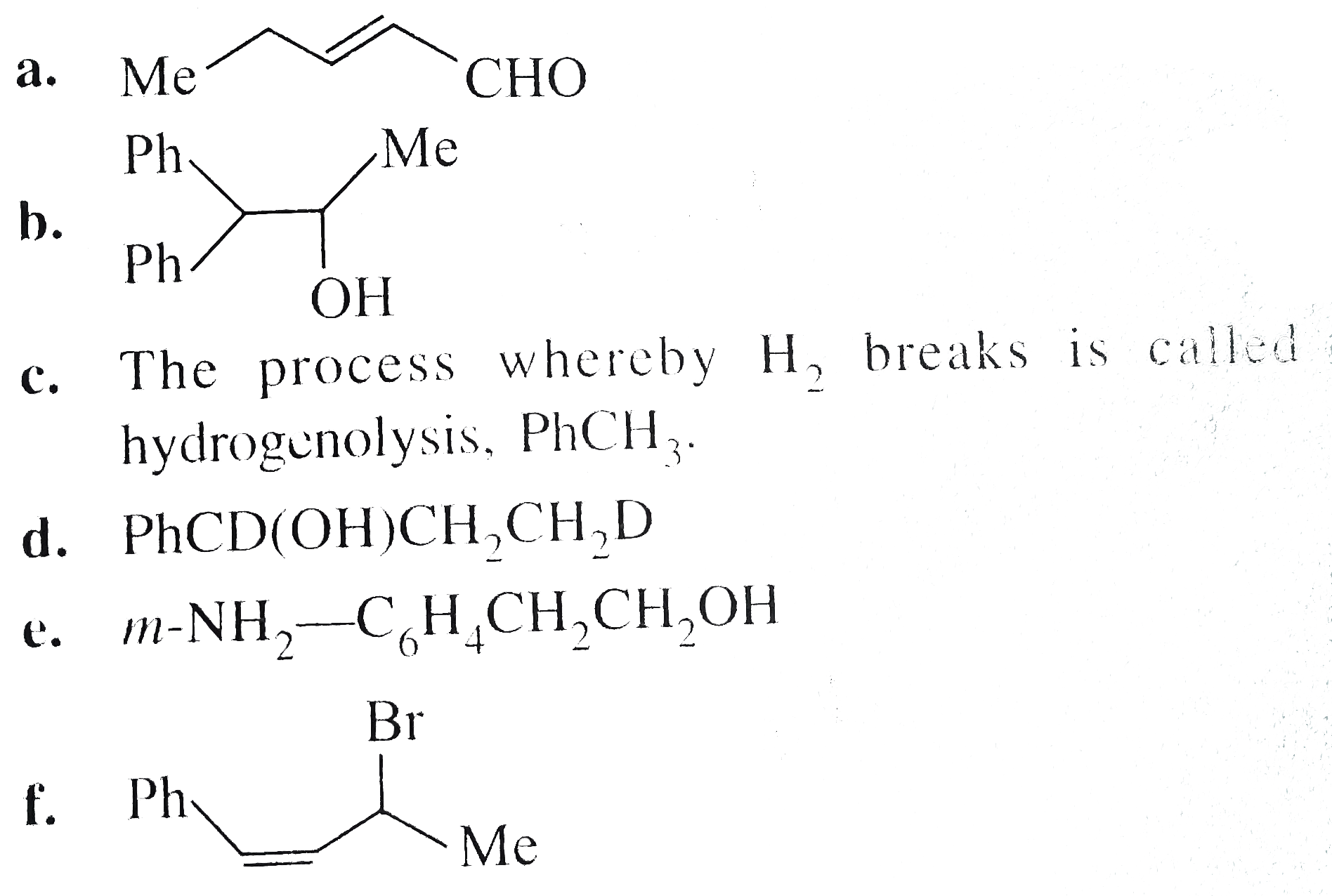
|
|
| 15. |
Give the product and show the steps in (i) the hydration of cyclobutylethene in dil. H_(2)SO_(4) (iii) dehydration of cyclobutylcarbinol. |
Answer» Solution :In this REACTION, the addition of `H^(+)` to `C^(1)` gives a `2^(@)` CARBOCATION, which rearrangee by ring expansion. FINALLY, it gives 2-methyleyelopentanol. 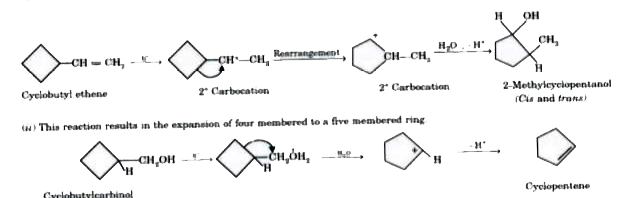
|
|
| 16. |
Globular proteins are present in: |
|
Answer» Blood |
|
| 17. |
Globular protein in haemoglobin is made up of |
|
Answer» TWO POLYPEPTIDE CHAINS |
|
| 18. |
Give theprincipal product on brominationwith Br_(2)//FeBr_(3) of the following. I. Ph-OCOR, II. Ph - CH = CH - NO_(2) III. PhCOONH_(2), IV. Ph-O-Ph V. PhCH_(2)OH, VI. PhCoEt VII. Ph - CH = CH - COOH |
Answer» SOLUTION :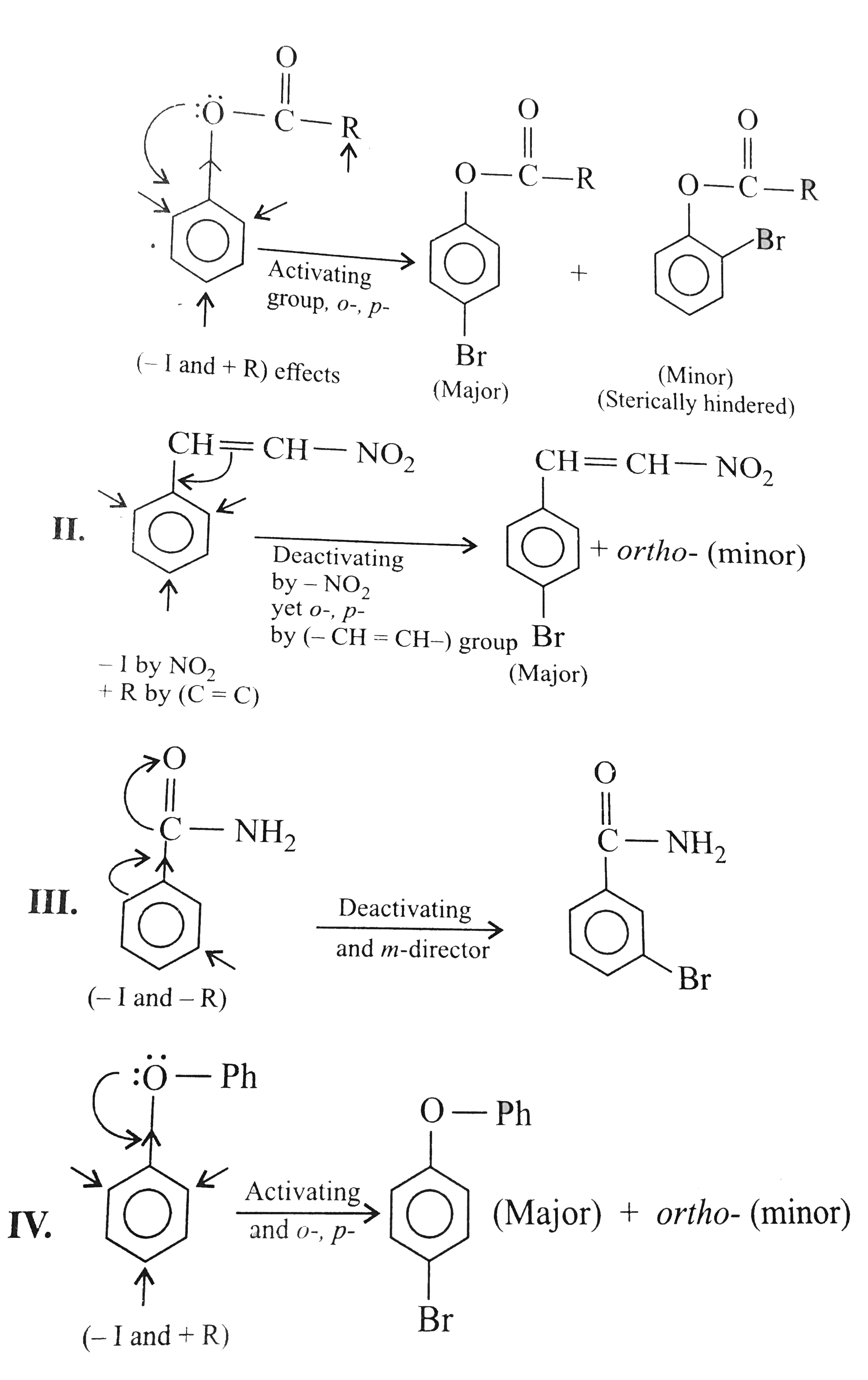 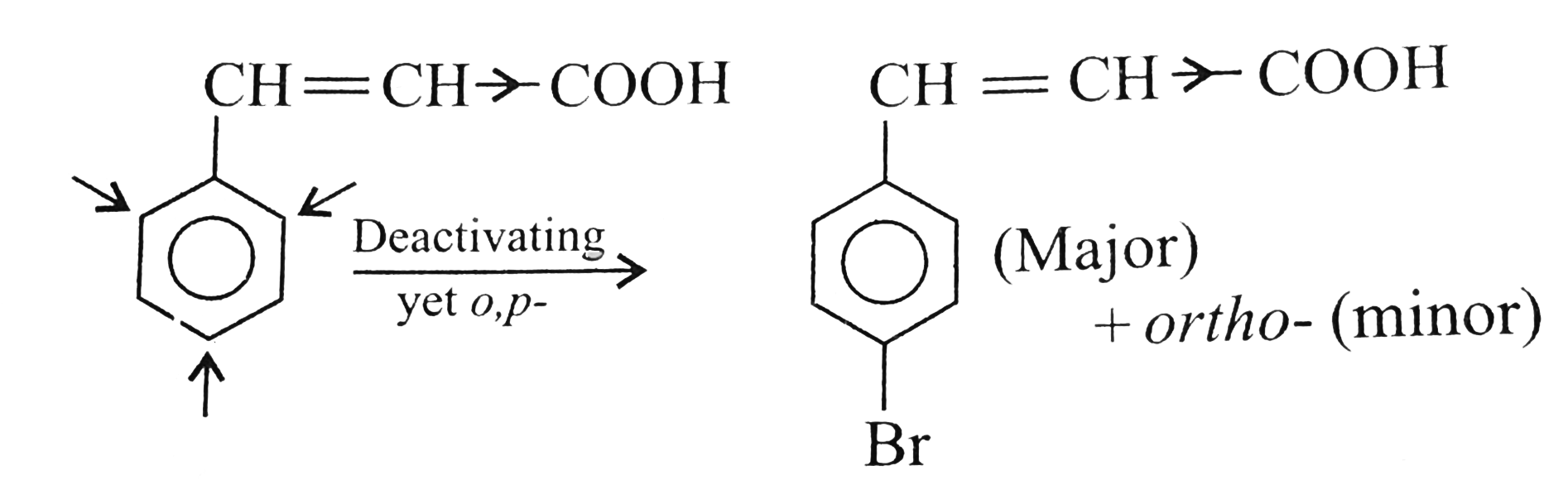
|
|
| 19. |
Globular and Fibrous proteins. |
| Answer» SOLUTION :`{:("Globular proteins","Fibrous proteins"),("1. the proteins are folded to from spherical STRUCTURE.","1. The proteins in which the polypeptide chains lie parallel to from fibre like structure."),("2. Globular proteins are soluble in water.","2. Fibroous proteins are insoluble in water."),("3. Ther are SENSITIVE to small CHANGES of temperature and pH.","3. They are stable to moderate changes of temperature and pH."),("4. They possess biological activity.","4. they do not possess biological activity."):}` | |
| 20. |
Give the principle involved in zone refining process. |
| Answer» Solution :The IMPURITIES are more SOLUBLE in the MELTING State than in sölid state of the METAL. | |
| 21. |
Global warming may result in : |
|
Answer» Flood |
|
| 22. |
Global warming can lead to |
|
Answer» FLOODING of LOW LYING areas |
|
| 23. |
Give the preparation of phosphorus trichloride and phosphorus pentachloride. |
|
Answer» Solution :PREPARATION of phosphorus trichloride (`PCl_3`) : It is obtained by passing dry chlorine over heated white phosphorus `P_(4) + 6Cl_(2) to 4PCl_(3)` It is also obtained by the ACTION of thionyl chloride with white phosphorus. `P_(4) + 8SOCl_(2) to 4PCl_(3) + 4SO_(2) + 2S_(2)Cl_(2)` Preparation of phosphorus pentachloride (`PCl_(5)`) : Phosphorus pentachloride is prepared by the reaction of white phosphorus with excess of dry chlorine. `P_(4) + 10Cl_(2) to 4PCl_(5)` It can also be prepared by the action of `SO_(2)Cl_(2)`on phosphorus: `P_(4) + 10SO_(2)Cl_(2) to 4PCl_(5) + 10SO_(2)` Phosphorus also forms trihalides with bromine and iodine however pentahalide with iodine is not known because of large size of iodine atom, the effective overlapping of orbitals DONOT take place to form a bond. |
|
| 24. |
Glauber's salt is : |
|
Answer» `Na_(2)SO_(4)` |
|
| 25. |
Glid sol is not a |
|
Answer» LYOPHOBIC sol |
|
| 26. |
Give the preparation of (i) Polyacrylonitrile (ii) Teflon (iii) Nylon 6,6 (iv) Nylon-6. |
|
Answer» Solution :(i) Polyacrylonitrile: Acrylinitrile (monomer) on polymerisation in the presence of a peroxide catalyst gives polyacrylonitrile or orlon. `underset("acrylonitrile")(nCH_(2)=CH-)CNoverset("polymerisation")(to) -underset("repeating unit") (CH_(2))-overset(CN)overset(|)(CH)-to underset("polyacrylonitrile" ("Orplon"))(CH_(2)-overset(CN)overset(|)(CH)_(n))` It is used in making clothes, caprets and blankets. (ii) Teflon (July '16): Tetrafluoroethylene (monomer) on polymerisation in the presence of oxygen as a catalyst under high pressure forms Teflon. `underset("tetrafluoroethylene")(nCF_(2)=F_(2))overset("polymerlsation")(to)underset("repeating unit")(-CF_(2)-CF_(2))- to underset("teflon")((CF_(2)-CF_(2))_(n))` It is used in coating of cooking pans, gaskets, valves,seats, etc. (iii) Nylon 6,6: Nylon 6,6 is a linear polyamide polymer FORMED by the condensation polymerisation reaction. The monomers used in the preparation of Nylon-6,6 are: 1. Adipic acid: `HOOC-(CH_(2))_(4)-COOH` 2. Hexamiethylene diamine, `H_(2)N-(CH_(2))_(6)-NH_(2)` When equimolar aqueous solutions of adipic acid and hemaxethylene diamine are mixed and heated, there is neutralization to form a nylon salt. During polymerisation at 553 K nylon salt loses a water molecule to form nylone 6,6 polymer. `underset("Hemaxethylenediamine")(H_(2)N-(CH_(2))_(6)-NH_(2))+HOOC-underset("Adipic acid")((CH_(2))_(4))-COOHunderset(H_(2)O)overset(Delta)(to)` `underset(("hexamethylene diamonium adiapate")) underset("Nylon salt")([H_(3)N-(CH_(2))_(6)-NH_(3)OOC(CH_(2))_(4)COO])` `n[H_(3)N-(CH_(2))_(6)underset("Nylon salt")(-NH_(3))OOC(CH_(2))_(4)COO] underset(553K)overset(-2nH_(2)O)(to)` `underset("Nylon6,6")(HN-(CH_(2))_(6))-NH-overset(O)overset(||)(C)-(CH_(2))_(4)-overset(O)overset(||)(C)_(n)` |
|
| 27. |
Global climate is threatened by increase in concentration of |
|
Answer» Oxygen |
|
| 29. |
Glass react with |
|
Answer» Oleum `Na_(2)SiO_(3)+8HF to 2Na+H_(2)SiF_(6)+3H_(2)O` `CaSiO_(3)+8HF to CaF_(2)+H_(2)SiF_(6)+3H_(2)O` `H_(2)SiF_(6)` is hydrofluorosilicic ACID . |
|
| 30. |
Give the preparation of chlorobenzene from benzene diazonium chloride and give its reaction with : (i) Na (ii) CH_(3)Cl in the presence of anhydrous AICl_(3) (iii) H_(2)SO_(4) and (iv) HNO_(3) in the presence of conc. H_(2)SO_(4) |
Answer» SOLUTION : 
|
|
| 31. |
Glass, Rubber, plastics are the examples of ………………….. solids. |
| Answer» SOLUTION :Amorphoous | |
| 32. |
Give the preparation of alkyl halide by the reaction of: (i) HCl and (ii) PCI_(5) on ethanol and give its reaction with : (a) Aq. KOH (b) AgCN and (c) Mg. |
|
Answer» Solution :`C_(2)H_(5)OH+ HCL underset(Delta)overset("Anhy." ZnCl_(2))to C_(2)H_(5)CL+ H_(2)O` `C_(2)H_(5)OH+ PCI_(5) overset(Delta)to C_(2)H_(5)Cl+HCl+POCl_(3)` (a)`C_(2)H_(5)Cl+KOH_((aq))to C_(2)H_(5)OH+KCl` (b)`C_(2)H_(5)Cl+ AgCN to C_(2)H_(5)CN+ AgCl` (c)`C_(2)H_(5)Cl+Mg to C_(2)H_(5)MgCl` |
|
| 34. |
Glass is soluble in: |
|
Answer» HF |
|
| 35. |
Give the preparation of alcohols from carboxylic acids and esters. |
|
Answer» Solution :`to` The alcohols are prepared from carboxylic acids and esters by reduction. The REDUCING agent is `LiAlH_(4)//H_(2)O`. The `LiAlH_(4)` reduces carboxylic acids in excellent yield. Commercially the carboxylic acids are converted to ester followed by their reduction using hydrogen in the presence of catalyst. `RCOOH underset((ii) H_(2)O)overset(LiAlH_(4))to RCCOR. underset("Catalyst")overset(H_(2))to RCH_(2)OH+ R.OH` |
|
| 37. |
Give the preparation of alcohols from alkenes. |
|
Answer» Solution :`to` The alcohols are prepared from alkenes by two ways : (1) Acid catalysed hydration : In presence of acid, the hydration of alkenes gives alcohols as per Markovnikov.s rule. The acid act as a catalyst in the reaction.  `to` Mechanism of the reaction : Step-1 : Protonation of alkene to form carbocation by electrophilic attack of`H_(3)O^(+)` `H_(2)+ H^(+) to H_(3)O^(+)`  Step 2: Nucleophilic attack of water on carbocation.  Step 3: Deprotonation to form an alcohol.  `to` The electrophilic attack by H2O+ is a slow step in the reaction and thus it is a rate determining step. As the electrophile is added in a slow step of the reaction, it is known as electrophilic addition reaction. `to` (ii) Hydroboration-oxidation of alkenes : Diborane `(BH_(3))_(2)` REACTS with alkenes to give trialkyl boranes as addition product. The trialkyl borane is oxidized to trialkyl borate by hydrogen peroxide in presence of aqueous alkaline solution.  `to` The addition of boranes to double bond takes place in such a manner that the boron atom gets attached `sp^(2)` carbon carrying GREATER NUMBER of hydrogen atoms. The alcohol so formed looks as if it has been formed by the addition of water to the alkene in a way opposite to the Markovnikov.s rule. In this method the alcohol is obtained in excellent yield. |
|
| 38. |
Glass is an example of? |
|
Answer» Singlej-celled organisms |
|
| 39. |
Glass is actually |
|
Answer» a CRYSTALLINE SOLID |
|
| 40. |
Write the postulates of Warner's theory. |
|
Answer» Solution :(i) . Every metal atom has two types ofvalencies Primaryvalency or ionisable valancy Secondary valency or non ionisable valency (ii) The primaryvalancy CORRESPONDS to the oxidation state of metal ion. It is always satisfied by negative ions. (iii) Secondary valency corresponds to the coordination number of the metal ion or atom.It is satisfied by either negative ions or neutral molecules. (iv) The molecules or ions that satisfy secondary valencies are called ligands (v) The ligands which satisfy secondary valencies must project in definite directios in space. So that secondary valencies are directional in nature whereas the PRIMARY valencies are non-directional in nature. (vi) . The ligand have unshared pair of electrons.These unshared pair of electrons are donated to central metal ion or atom in a compound.Such compounds are called coordination compounds. Werner's representation E.g: ` [Co(NH_3)_6]Cl_3` Cl : Primary valency (dotted lines ) ` NH_3 ` secondary valency (SOLID lines ) Defects of Werner's theory Werner's theory describes the structures of many co-ordination compounds SUCCESSFULLY However ,it does not explain the magnetic and spectral PROPERTIES |
|
| 41. |
Give the preparation and properties and structures of oxides of nitrogen. |
Answer» SOLUTION :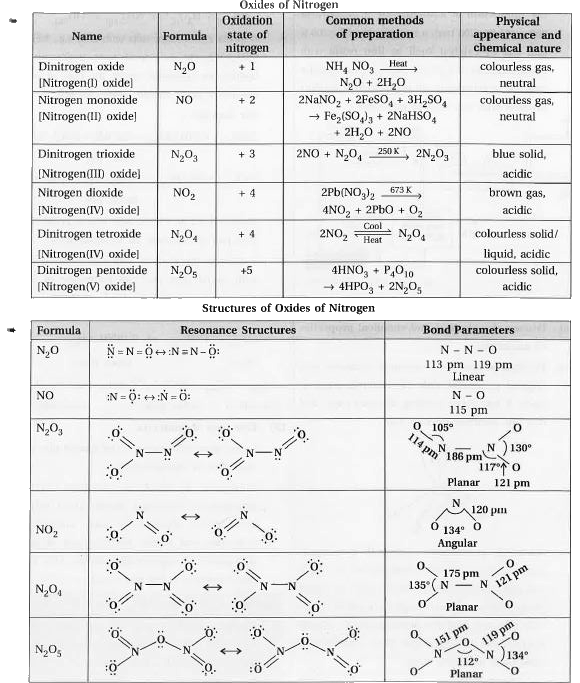
|
|
| 43. |
Give the possible cyclic isomers of formula C_(6)H_(12). |
Answer» SOLUTION :
|
|
| 45. |
Give the plausible explanation for the following: (a) Glucose doesn.t give 2, 4-DNP test. (b) The two strands in DNA are not identical but are complementary. (c ) Starch and cellulose both contain glucose unit as monomer, yet they are structurally different. |
|
Answer» Solution :(a) Glucose doesn.t give 2, 4-DNP test The aldehydic group in glucose is not FREE as per the cyclic structure of glucose. Therefore, it does not give 2, 4-DNP test. (b) The two stands are complementary to each other because the hydrogen BONDS are formed between specific pairs of bases. Adenine forms hydrogen bond with thymine whereas cytosine forms hydrogens bonds with guanine. (c ) Starch CONSISTS of amylose and amylopectin. Amylose is a long UNBRANCHED CHAIN of `alpha-D-(+)-`glucose units held together by 1, 4-glycosidic linkage. Amylopectin is a branched chain polymer of `alpha-D-`glucose units in which the chain is formed by `C1-C4` glycosidic linkage. Cellulose is a straight chain polysaccharide composed of `beta-D-`glucose units which are joined by glycosidic linkage between C1 of one glucose unit and C4 of the next glucose unit. |
|
| 47. |
Give the pharmacological function of Tranquilizers? |
| Answer» SOLUTION :They are neurologically active DRUGS USED to TREAT mental diseases. | |
| 48. |
Give the plot oflog ([R]_(0))/([R]) vs time for a first order reaction. |
Answer» SOLUTION :The PLOT is an under : 
|
|
| 49. |
Glacial phosphoric acid is |
|
Answer» `HPO_3` |
|