Saved Bookmarks
This section includes 7 InterviewSolutions, each offering curated multiple-choice questions to sharpen your Current Affairs knowledge and support exam preparation. Choose a topic below to get started.
| 1. |
Example of dehydration is : |
|
Answer» mutarotation |
|
| 2. |
Example of crystalline solids are : |
|
Answer» SODIUM CHLORIDE and QUARTZ. |
|
| 3. |
Example of condensation polymer is |
|
Answer» Formaldehyde ` to ` -meta-formaldehyde 
|
|
| 5. |
Example of addition polymer is: |
|
Answer» BUNA -s |
|
| 6. |
Explain Kolbe's reaction. |
Answer» Solution :When phenol is treated with sodium HYDROXIDE gives sodium phenate which is heated with carbon DIOXIDE, to `140^(@)C` under 6-7 atm pressure sodium SALICYLATE is formed which on acidification with dil hydrochloric acid gives salicylic acid. |
|
| 7. |
Examine the ten structural formulas shown below and select those that satisfy each of the following conditions. Enter one or more letters (a through j) in each answer box, reflecting your choice for each. {:(A,"Which compounds undergo electrophilic nitration more rapidly than benzene ?",,),(B,"Which compounds give meta substitution under electrophilic bromination conditions ?",,):} |
|
Answer» Examine the ten structural formulas shown at the bottom of this page, and select those that satisfy each of the following conditions. ENTER one or more letters (a through j) in each answer box, REFLECTING your choice for each. A. Which COMPOUNDS undergo electrophilic nitration more rapidly than benzene ? a, b, e, f, h B. Which compounds give meta substitution under electrophilic bromination conditions ? d, g, i 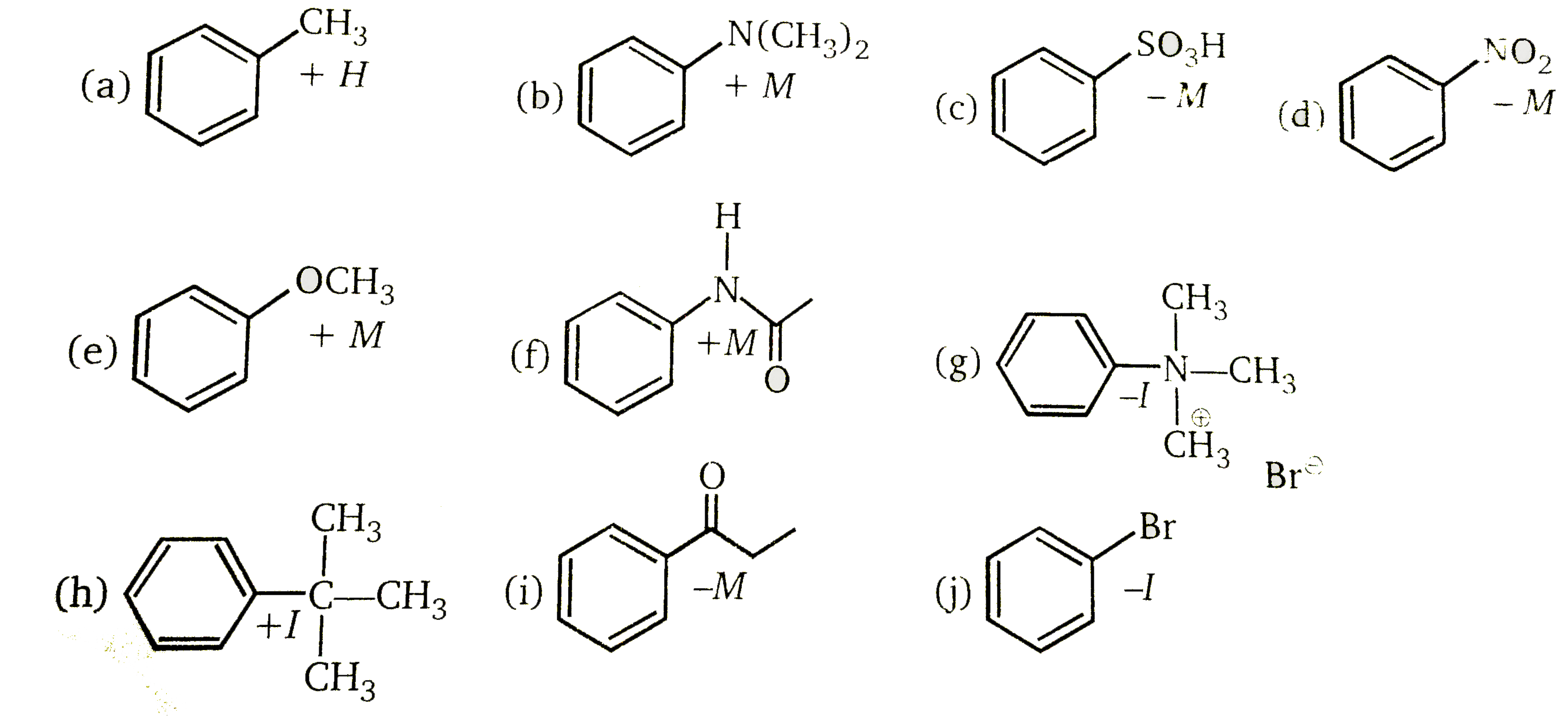
|
|
| 8. |
Examine the substances H_2O, NaCl, C_6H_6 and name the magnetic property common to them. |
| Answer» SOLUTION :DIAMAGNETISM | |
| 9. |
Examine the structure of following compounds, and find out number of compounds that will undergo decarboxylation in presence of heat. |
| Answer» | |
| 10. |
Examine the structure of following compounds and find out the number of compounds that will undergo decarboxylation in presence of heat |
| Answer» | |
| 11. |
Examine the structural formulas of following compounds and find out how many compounds can below Claisen condensation reaction. |
|
Answer» |
|
| 12. |
Examine the structural formulas of compounds given below and identify number of compounds which show positive iodoformrest. |
|
Answer» These COMPOUNDS will give iodoform test 
|
|
| 13. |
Examine the role of traditional notion of security in the contemporary world. |
|
Answer» SOLUTION :Examine the role of traditional notion of SECURITY in the contemporary world. External and internal - Concerned with military THREATS - choices before government-surrender prevent R defend - use deterrence defence alliance building and balance of power - Build up military power - threats from outside the border - In the country the threats are controlled and regulated by the government. - this was secured to the powerful countries of the world - Each responsible for their own security - Newly independent nations worried about internal separatist threats - Some countries in Africa and Asia that are newly independent worried about the military conflict with neighbours. - Attacks from the Cold WAR super powers from each other and colonies worried of cold war turning into hot war. |
|
| 14. |
Examine the illustration of a portion of the defective crystal given below and answer the following questions : (i) What are these type of vacancy defects called ? (ii) How is the density of a crystal affected by these defects ? (iii) Name one ionic compound which can show this type of defect in the crystalline state. (iv) How is the stoichiometry of the compound affected ? |
|
Answer» Solution :(i) SCHOTTKY DEFECT. (II) DENSITY of the crystal decreases. (iii) NACL (iv) Stoichiometry is not affected. |
|
| 15. |
Examine the given defective crystal : {:(X^(+),Y^(-),X^(+),Y^(-),X^(+)),(Y^(-),X^(+),Y^(-),X^(+), Y^(-)),(X^(+),Y^(-),X^(+),e^(-),X^(+)),(Y^(-),X^(+),Y^(-),X^(+),Y^(-)):} Answer the following questions : (i) Is the above defect stoichiometric or non-stoichiometric ? (ii) Write the term used for the electron occupied site. (iii) Give an example of a compound which shows this type of defect. |
|
Answer» SOLUTION :(i) This DEFECT is non-stoichiometric. (ii) F-centre (III) When CRYSTALS of NaCl are heated in an atmosphere of NA vapours. |
|
| 16. |
Examine the given defective crystal : {:(X^(+),Y^(-),X^(+),Y^(-),X^(+)),(Y^(-),O,Y^(-),X^(+), Y^(-)),(X^(+),Y^(-),X^(+),O,X^(+)),(Y^(-),X^(+),Y^(-),X^(+),Y^(-)):} Answer the following questions : (i) Is the above defect stoichiometric or non-stoichiometric ? (ii) Write the term used for this type of defect. Give an example of the compound which shows this type of defect. (iii) How does this defect affect the density of the solid ? |
|
Answer» Solution :(i) This defect is stoichiometric because ONE cation and one anion is missing. (ii) This is SCHOTTKY defect because equal number of cations and anions are missing. NaCl is an example of a compound showing this defect. (iii) Density of the solid is decreased. |
|
| 17. |
Examine the given defective crystal {:(X^(+),Y^(-),X^(+),Y^(-),X^(+)),(,X^(+),,, ),(Y^(-),O,Y^(-),X^(+),Y^(-)),(X^(+),Y^(-),X^(+),Y^(-),X^(+)),(Y^(-),X^(+),Y^(-),X^(+),Y^(-)):} Answer the following questions : (i) Is the above defect stoichiometric or non-stoichiometric ? (ii) Write the term used for this type of defect. (iii) Why do silver halides show this type of defect ? |
|
Answer» SOLUTION :(i) This defect is STOICHIOMETRIC. (ii) FRENKEL defect (iii) `AG^(+)` ion due to its SMALL size fits into the interstitial position. |
|
| 18. |
Examine the given defective crystal and {:(A^(+),B^(-),A^(+),B^(-),A^(+)),(B^(-),0,B^(-),A^(+),B^(-)),(A^(+),B^(-),A^(+),0,A^(+)),(B^(-),A^(+),B^(-),A^(+),B^(-)):} Answer the following questions : (i) What type of stoichiometirc defect is shown by the crystal ? (ii) How is the density of the crystal affected by this defect ? (iii) What type of ionic substances show such defect ? |
|
Answer» Solution :(i) SCHOTTKY DEFECT. (ii) DECREASES. (iii) Alkali METAL halides/Ionic substances having almost similar SIZE of cations and anions (NaCl/KCl). |
|
| 19. |
Examine the following two structures for the aniline ion and choose the correct statement from the ones given below |
|
Answer» II is not an ACCEPTABLE canonical structure because carbonium ions are less stable than ammonium ions Statement C is correct (due to absence of `d-`subsehell in valence shell of N, it cannot accommodate 10 electrons in its valence shell). Statement B is incorrect many canocial structures are non aromatic). Statement D is incorrect (canonical structure II is not acceptable) |
|
| 20. |
Examine the following statements pertaning to an S_(N^(2)) reaction (1) The rate of reaction is independent of the concentration of the nucleophile (2) The nucleophile attacks the C-atom on the side of the molecule opposite to the group being displaced (3) The reaction proceeds with simultaneous bond formation and bond rupture/cleavage Amongst the following which of the above were true |
|
Answer» 1,2 |
|
| 21. |
Examine the following structural formulas and select those that are chiral. |
|
Answer» |
|
| 22. |
Examine the following formulas and select those pairs that satisfy the following conditions : Be sure to write two letters (and only two) in each answer box. In the second and fourth parts more than one answer is possible. |
|
Answer» |
|
| 23. |
Examine the following formulas and select those pairs that satisfy the following conditions : Be sure to write two letters (end only two ) in each answer box, unless you select f.In the second and third parts more than one answer is possibl. |
|
Answer» |
|
| 24. |
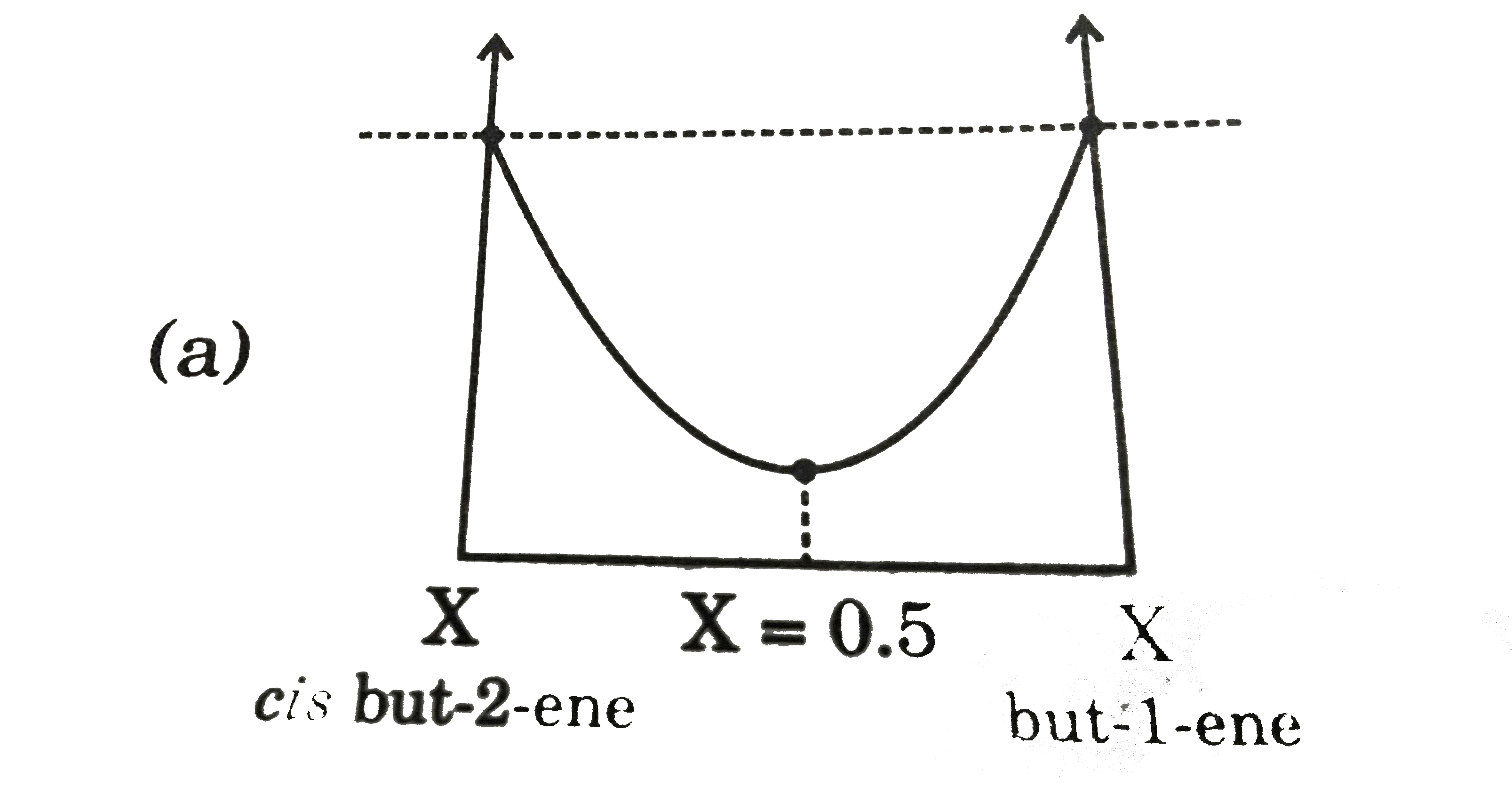
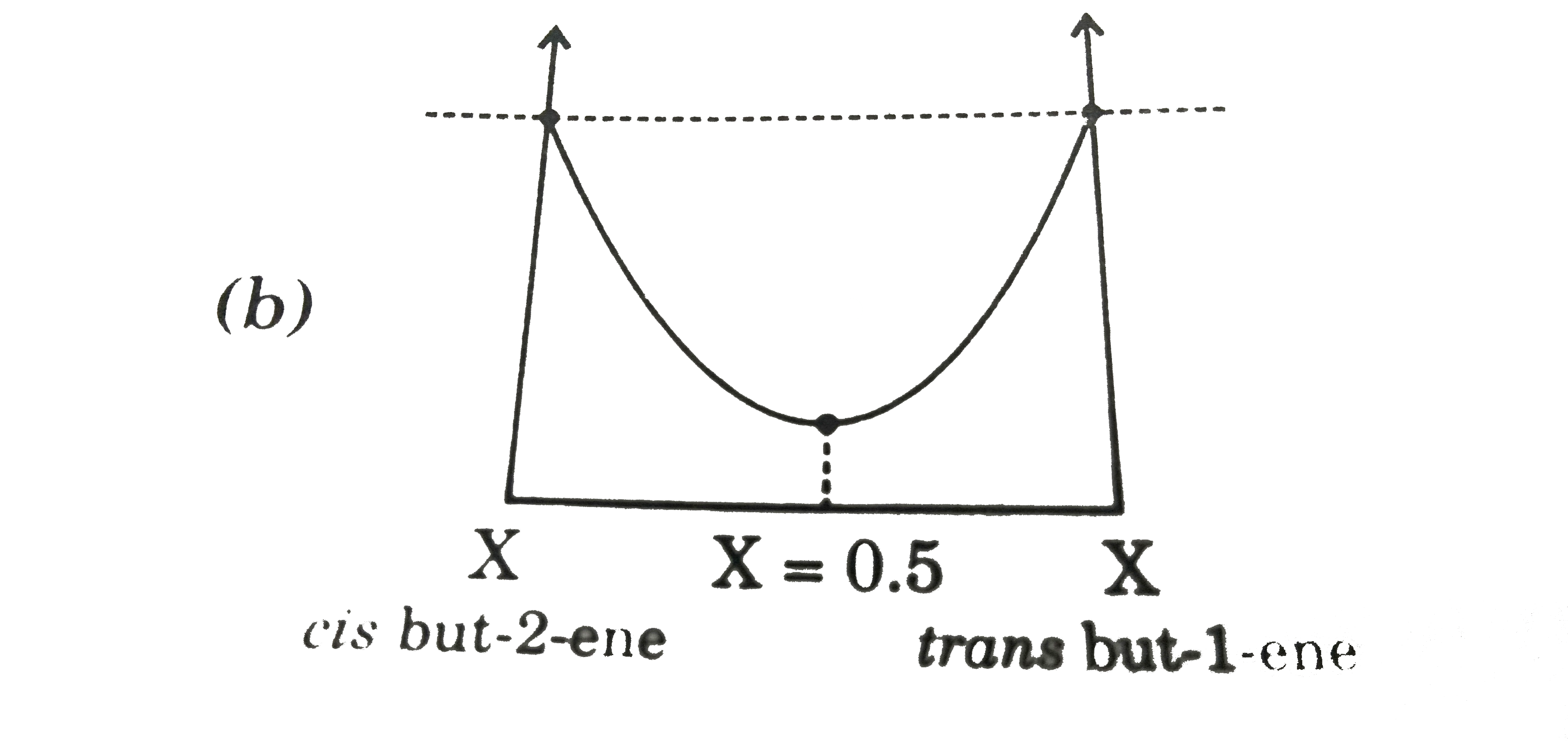
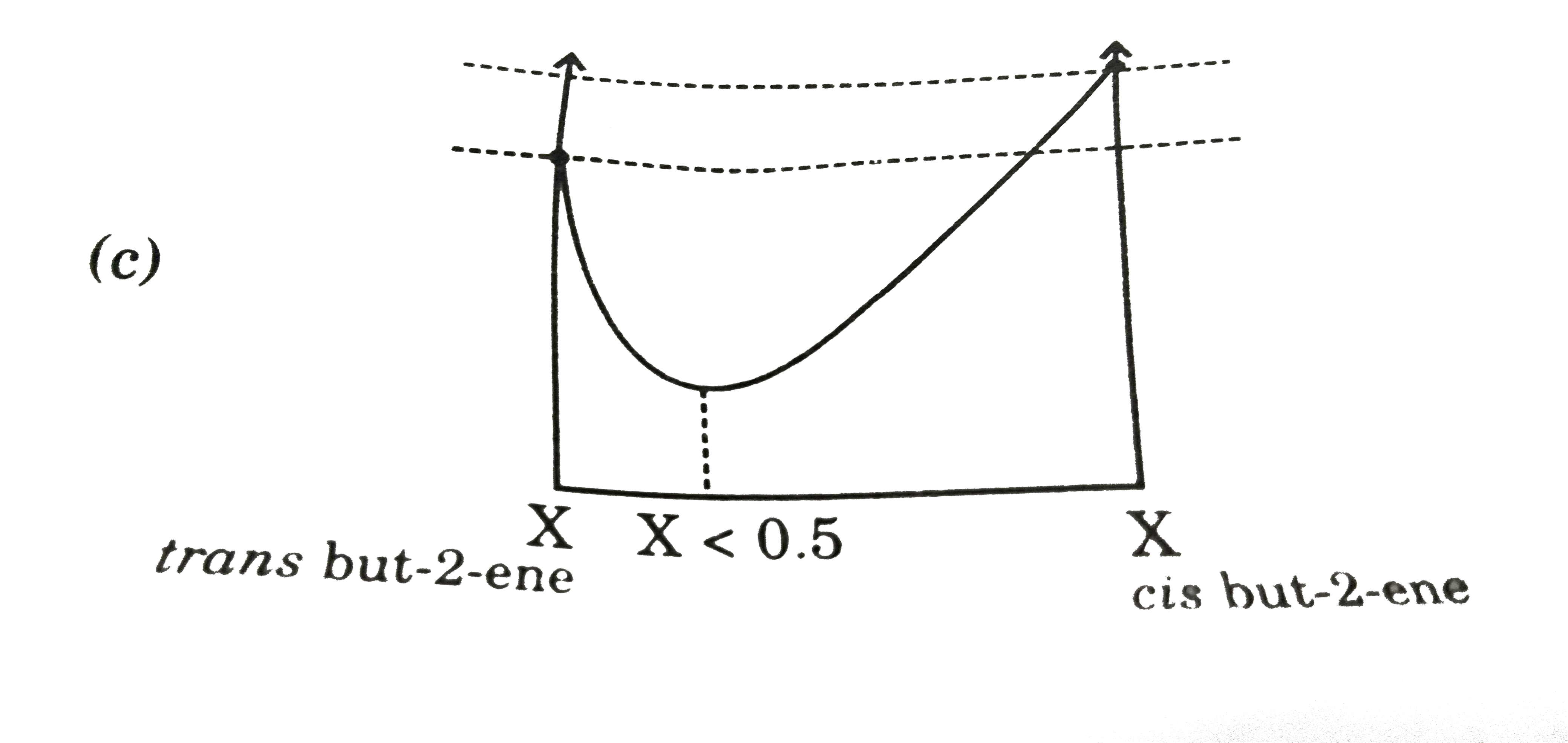
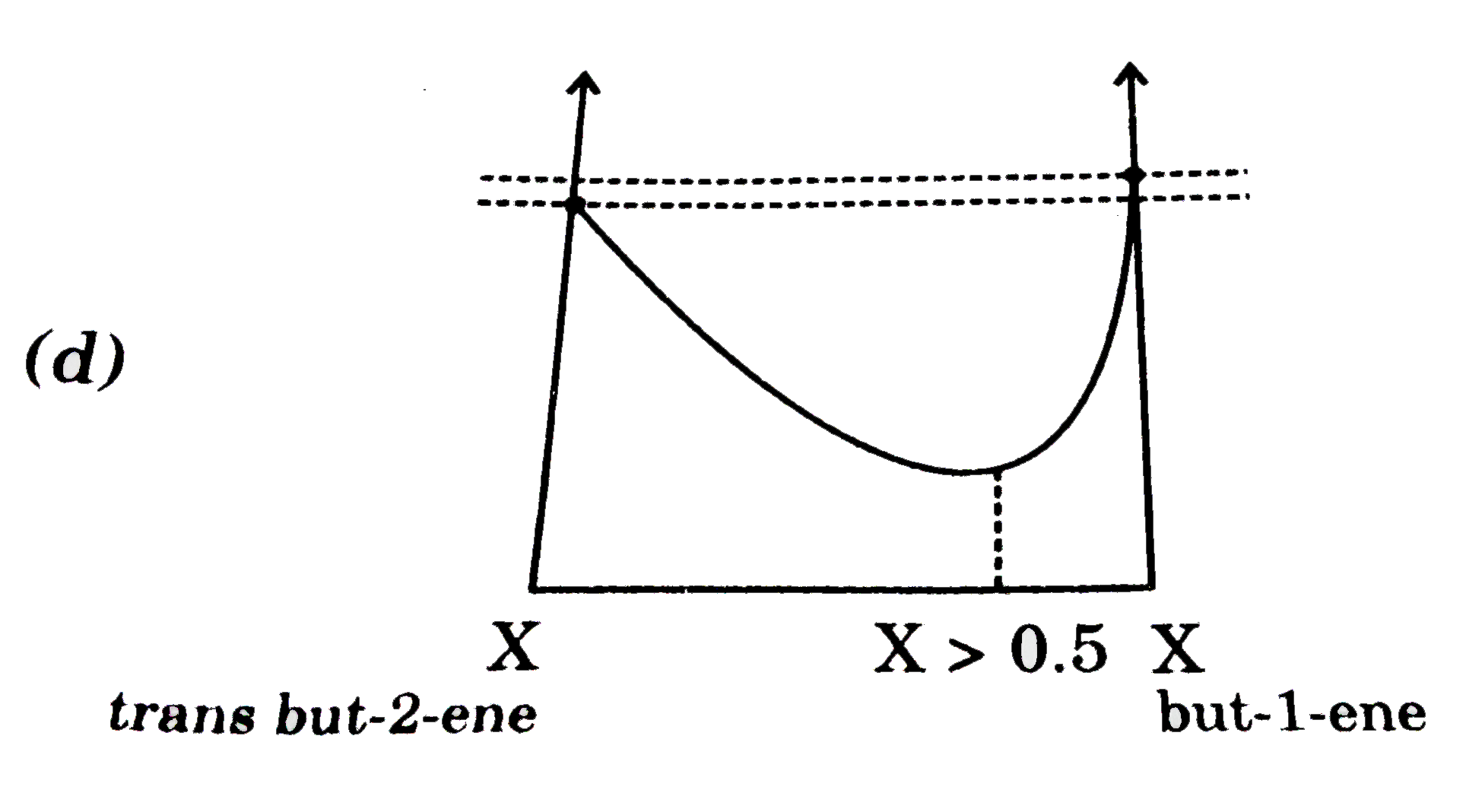
Every reaction whether started by taking only reactants or by taking only products or any other combination always has a tendency to move towards equilibrium. Hence, equilibrium state can be considered as the one with most stable composition. In case of isomers, based on stability data position of equilibrium can als be decided. Which of the following graphs are correct for the isomeric conversions at 1 bar and 298 K? |
|
Answer»
|
|
| 25. |
Evolution of deep red vapours when an inorganic salt is mixed with powdered K_(2)Cr_(2)O_(7) and heated with conc. H_(2)SO_(4) confirms the presence of a |
|
Answer» chloride |
|
| 26. |
Exalain: Reduction reaction is possible with higher E^(Theta) value. OR Reduction of water is carried out near cathode in presence of aqueous Na. OR Reduction of species is dependent on its reduction potential value. |
|
Answer» Solution :* Reduction reactions OCCUR on the surface of CATHODE. If more than one species are present near cathode, in such situations, species with higher `E^(Theta)` value gives reduction reactions. * e.g., If we take an example of aqueous NaCl solution, DUE to aqueous solution, near cathode `Na^(+)` ions of NaCl and `H^(+)` ions of `H_(2)O` are available. `NaCl to Na^(+)("Cation")+Cl^(-)("Anion")` `H_(2)O_((l)) to H^(+)("Cation")+OH^(-)("Anion")` (i) `Na_((aq))^(+) +e^(-) to Na_((S))""E_(cell)^(Theta)=-2.71V` (ii) `H_((aq))^(+)+e^(-) to (1)/(2)H_(2(g))""E_(cell)^(Theta)=0.00V` * So, reaction |
|
| 27. |
Exactly 8mg of a lyophilic 'sol' is added to 20ml of a gold sol to protect against addition of 2ml of 20% NaCl. What is the gold number of the given sol? |
|
Answer» 10 ml of gold sol `rarr ?` 2ML `rarr ? 20% NaCl to 4 mg` `1 ml rarr 10% NaCl rarr ?` |
|
| 28. |
Eventhough reduction of magnesia with aluminium is thermodynamically feasible, in practice aluminium is not used in the metallurgy of magnesium. Why? |
| Answer» Solution :For the reduction of MAGNESIA with aluminium, the temperature required is very high `(GT 1400^(@)C)`. Thus the process is uneconomic and TECHNOLOGICALLY DIFFICULT. | |
| 29. |
Eventhough reduction of magnesia with aluminium is thermodynamically feasible, in practice aluminium is not used in the metallurgy of Mg. Why? |
| Answer» Solution :For the reduction of magnesia with aluminium, the temperature required is very HIGH `( gt1400^@ C)`. Thus the process is UNECONOMIC and TECHNOLOGICALLY difficult. | |
| 30. |
Eventhough reductionof magnesia with aluminiumis thermodynamically feasible, in practice aluminium is not usedin the metallurgyof Mg. Why ? |
| Answer» Solution :for the reduction of magnesia with aluminium, the temperature REQUIRED is very high `(GT 1400^(@) C)`. Thusthe process is uneconomic and technologically DIFFICULT. | |
| 31. |
Eventhough Cu^(2+) has one unpaired d - electron, anhydrous copper sulphate is colourless. Why? |
| Answer» SOLUTION :Crystal FIELD splitting is absent is anhhydrous `CuSO_4` DUE to the absence of WATER. Hence d-d transition is not possible. THUS anhydrous `CuSO_4` is colourless. | |
| 32. |
Even in the absence of group II,colloidalyellowish ppt appears on passing H_(2)S gas , it be due to the presence of (a) _____. |
|
Answer» |
|
| 33. |
Even crystal, the substance which we consider as the most perfect solid, shows some defects or imperfections. Which law in thermodynamics deals with this topic? |
| Answer» SOLUTION :THIRD LAW of THERMODYNAMICS | |
| 34. |
Even crystal, the substance which we consider as the most perfect solid, shows some defects or imperfections. Explain the law. |
| Answer» SOLUTION :Entropy of a perfectly CRYSTALLINE SUBSTANCE is zero at ABSOLUTE zero temperature. | |
| 35. |
Evaporation of water is: |
|
Answer» An EXOTHERMIC change |
|
| 36. |
Evaporation of water is |
|
Answer» An ENDOTHERMIC change |
|
| 37. |
Eutrophication of a lake means, it : |
|
Answer» Is LOW in nutrients |
|
| 38. |
Eutrophication causes reduction in : |
|
Answer» DISSOLVED hydrogen |
|
| 40. |
Eutrophication causes |
|
Answer» INCREASE of NUTRIENTS in WATER |
|
| 41. |
Eu^(3+) ion is isoelectronic with |
|
Answer» `Ce ^(4+)` |
|
| 42. |
Euchlorine is a mixture of |
|
Answer» `Cl_(2)` and `SO_(2)` |
|
| 43. |
Eu^(2+) ion has strong tendency to |
|
Answer» GAIN electron |
|
| 44. |
Ethynylestradiol, menstranol, hydrogen peroxide, norethindrone, norethynodrel. |
| Answer» Solution :HYDROGEN peroxide. It is an antiseptic and a disinfectant whereas OTHERES are ANTIFERTILITY drugs. | |
| 45. |
Ethyne on reaction with water in the presence of HgSO_4 and H_2SO_4gives ........ |
|
Answer» PROPANONE |
|
| 46. |
Ethyne isliberated by the electrolysisof anaqueous solutionof : |
|
Answer» sodiumehtanoate |
|
| 47. |
Ethylmagnesium iodide reacts with formaldehyde to give a product which on acid hydrolysis forms. |
|
Answer» an aldehyde |
|
| 48. |
Ethyliodide and silver nitrite react to form mainly |
|
Answer» NITROETHANE |
|
| 49. |
Ethylidine dichloride can be prepared by the reaction of HCl and |
|
Answer» `C_2H_4` |
|
| 50. |
Ethylidine dichloride (CH_3CHCl_2) can be prepared by the addition of hydrogen chloride on : |
|
Answer» `C_H_6` |
|