Saved Bookmarks
This section includes 7 InterviewSolutions, each offering curated multiple-choice questions to sharpen your Current Affairs knowledge and support exam preparation. Choose a topic below to get started.
| 1. |
Dehydrochlorination of (CH_(3))_(2)CHCHCHlCH_(3) gives major product, |
|
Answer» `(CH_(3))_(2)C=CHCH_(3)` |
|
| 3. |
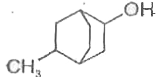
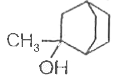
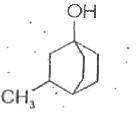
Dehydration require an acid catalyst to protonate the hydroxy group of the alcohol and convert and convert it into good leaving group. Loss of water followed by a loss of a proton, given the alkene an equilibrium is established between reactants and products. Q. Which alcohol is most reactive towards dehydration of alcohol in acid catalysed reaction. |
|
Answer»

|
|
| 4. |
Dehydration require an acid catalyst to protonate the hydroxy group of the alcohol and convert and convert it into good leaving group. Loss of water followed by a loss of a proton, given the alkene an equilibrium is established between reactants and products. Q. total number of alpha-hydrogen in A+B is |
|
Answer» 13 
|
|
| 5. |
Dehydration require an acid catalyst to protonate the hydroxy group of the alcohol and convert and convert it into good leaving group. Loss of water followed by a loss of a proton, given the alkene an equilibrium is established between reactants and products. Q. To improve the yield of above reaction which of following is correct. |
|
Answer» High temperature |
|
| 6. |
Dehydration of tertiary alcohols with Cu at 573 K gives: |
|
Answer» Aldehydes |
|
| 7. |
Dehydration of primary amides with SOCl_2 gives : |
|
Answer» Nitriles |
|
| 8. |
Dehydration of neophentyl alcohol gives |
|
Answer» 2-methyl but-1-ene |
|
| 9. |
Dehydration of methanol with conc. H_2SO_4 at 410K gives |
|
Answer» DIMETHYL ether |
|
| 10. |
Dehydration of glycerol produces |
|
Answer» Propanone `{:(CH_(2)OH""CH_(2)),(|""|),(CHOHunderset(Delta)overset(KHSO_(4))to CH+2H_(2)O),(|""|),(CH_(2)OH ""UNDERSET("Acrolein")(CHO)):}` |
|
| 11. |
Dehydration of formic acid with sulphuric acid gives |
|
Answer» `CO` |
|
| 12. |
Dehydration of ethanol with excess amount of conc.sulphuric acid gives . |
| Answer» SOLUTION :Deithl ETHER is obtaned. | |
| 14. |
Dehydration of ethanol with conc. Sulphuric acid gives acetylene. Is it true or false? |
| Answer» Solution :DEHYDRATION of ETHANOL with conc.sulphuric ACID gives ETHYLENE. | |
| 16. |
Dehydration of ethanolgives |
|
Answer» Acetic acid |
|
| 18. |
Dehydration of alcohols to form alkenes is always carried out with conc. H_(2)SO_(4) and not witth conc. HCl or HNO_(3), explain why? |
|
Answer» Solution :DEHYDRATION of alcohols to form alkenes occurs through carbocation INTERMEDIATES. If HCl is used, then chloride `(CL^(-))` ion beinng a good nucleophile brings about substitution reaction to give an alkyl chloride. `underset("Alcohol")(R-CH_(2)CH_(2)-OH) underset(-H_(2)O)overset(H^(+))to underset(R-CH_(2)CH_(2)-Cl" Alkyl chloride (substitution product)")underset(darr+Cl^(-))underset("Carbocation")(R-CH_(2)-overset(+)(C)H_(2))underset(-H^(+))to underset("Alkene (elimination product)")(R-CH=CH_(2))` If `H_(2)SO_(4)` is used, then the bisulphate ion `(HSO_(4))^(-)` being non-nucleophilic cannot bring about the substitution reaction. instead the carbocation loses a proton to form an alkene. conc. `HNO_(3)` is not used because it being a strong oxidising AGENT, preferentially brings abou the oxidation of alcohols first to aldehydes or ketones and then to the carboxylic acids. thus, dehydration of alcohols to form alkenes is always carried out with such strong acids (e.g. `H_(2)SO_(4),H_(3)PO_(4),KHSO_(4)`) which have non-nucleophilic anions. |
|
| 19. |
Dehydration of alcohols take place more rapidly with POCl_(3) than with H_(2)SO_(4) select the correct statement(s) about the following dehydration reaction. |
|
Answer» It does not involve carbocation |
|
| 20. |
Dehydration of alcohols to give alkenes is catalysed by : |
|
Answer» `"CONC. "H_(2)SO_(4)" at 413 K"` |
|
| 21. |
Dehydration of alcohols on give ethers is catalyzed by : |
|
Answer» CONE.`H_2 S0_4` at 413 K |
|
| 22. |
Dehydration of alcohols is suitable for preparing ethers having primary alkyl groups only. Comment |
|
Answer» Solution :During DEHYDRATION of alcohol the ALKYL group should be unhindered and the temperature be kept low. Otherwise the reaction FAVOURS the formation of alkene. The reaction follows `S_N1` pathway when the alcohol is SECONDARY or tertiary. However, the dehydration of secondary and tertiary alcohols to give corresponding ethers is unsuccessful as elimination competes over substitution and as a CONSEQUENCE, alkenes are easily formed. |
|
| 23. |
Dehydration of alcohol take place more rapidlywith POCL_(3)then with H_(2)SO_(4). Select the correct statements about the following dehydration reaction : |
|
Answer» It does not involve carbocation . |
|
| 24. |
Dehydration of alcohol produces alkene, the reaction intermediate is |
| Answer» Answer :A | |
| 25. |
Dehydration of alcohol by conc. H_(2)SO_(4) takes place according to following steps: CH_(3)-overset(CH_(3))overset("|")underset("H")underset("|")"C "-CH_(2)overset(* *)underset(* *)OHoverset(H^(+))underset("step - 1")rarrCH_(3)-overset(CH_(3))overset("|")underset("H")underset("|")"C "-CH_(2)overset(+)OH_(2)overset(-H_(2)O)underset("step - 2")rarr CH_(3)-overset(CH_(3))overset("|")underset("H")underset("|")"C "-overset(+)CH_(2) overset(1,2-H^(-)" shift")underset("step - 3")Rarr CH_(3)-overset(CH_(3))overset("|")underset("+")C-CH_(3)overset(-H^(+))underset("step - 4")rarr CH_(3)=overset(CH_(3))overset("|")"C "-CH_(3) The lowest and fastest steps in the above reaction are |
|
Answer» step 1 is lowest, by 3 is fastest |
|
| 26. |
Dehydration of alcohol involves : |
|
Answer» CARBONIUM ion |
|
| 27. |
Dehydration of 3-phenyl butan-2-ol gives |
|
Answer» 2-phenyl but-2-ene |
|
| 28. |
Dehydration of alcohol can be prepared from rectified spirit by____distillation. |
| Answer» SOLUTION :SYMMETRICAL ETHERS. | |
| 29. |
Dehydration of 3^(@) alcohol undergoes in presence of: |
|
Answer» 20% of `H_(3)PO_(4)` |
|
| 30. |
Dehydration of 1 -propanol by the use of H_(2)SO_(4) and subsequent treatment with HI gives : |
|
Answer» `CH_(3)CH_(2)CH_(2)I` |
|
| 31. |
Dehydration of 2-butanol yield |
|
Answer» 1-butene |
|
| 32. |
Dehydration of 1-butanol gives 2-butene as a major product, by which of the following intermediate the compound 2-butene is obtained. |
|
Answer»
 HENCE, (C) is the CORRECT ANSWER. |
|
| 34. |
Dehydration is most easy for |
|
Answer» primary alcohols |
|
| 37. |
Dehydrated phosphorus trichloride in water gives |
| Answer» Solution :`3H_(2)O +PCl_(3) to H_(3)PO_(3) +3HCl` | |
| 38. |
Degree of unsaturation of this compound is |
|
Answer» 10 |
|
| 39. |
Degree of unsaturation in oils and fats is measured in terms of : |
|
Answer» Saponification value |
|
| 40. |
Degree of unsaturation of product form after complete hydrogenation of the following compound: |
Answer» SOLUTION :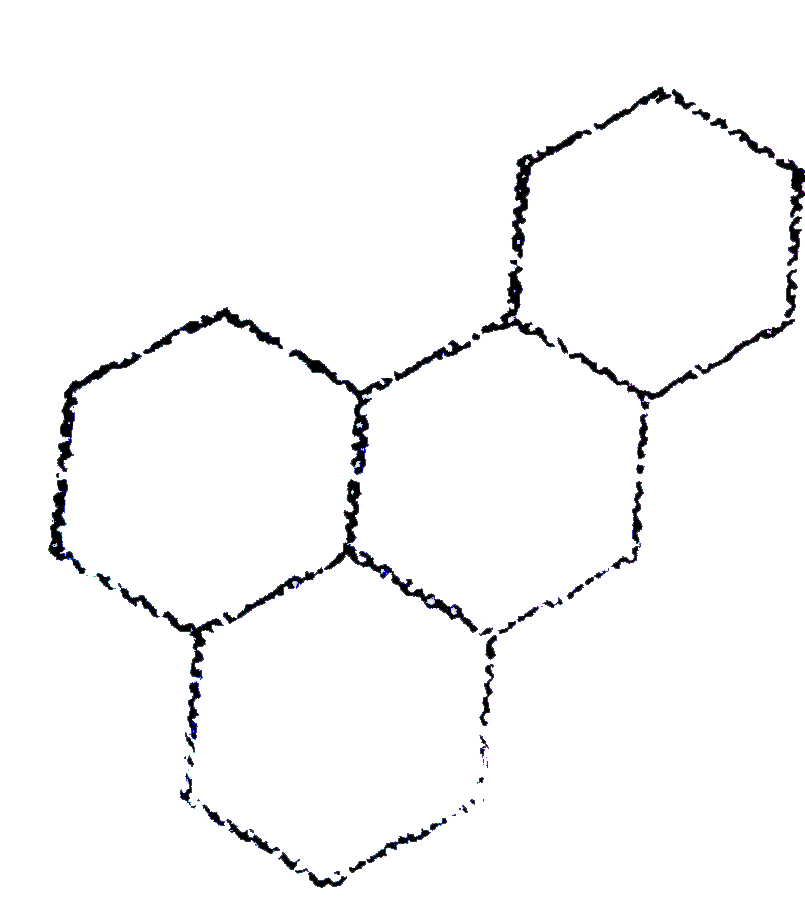 has four rings so Degree of unsaturation `= 4` has four rings so Degree of unsaturation `= 4`
|
|
| 41. |
Degree of unsaturation for |
|
Answer» 12 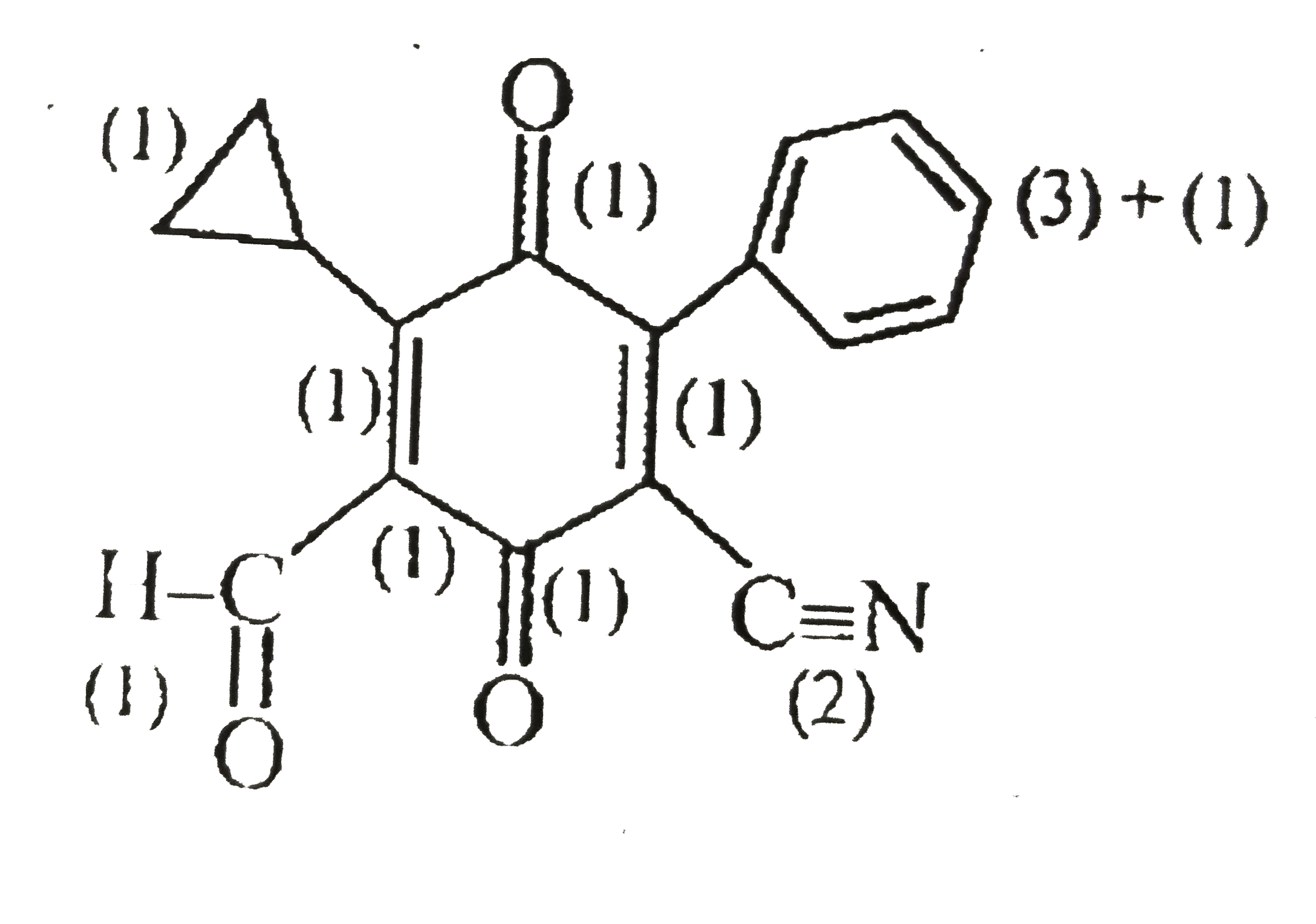
|
|
| 42. |
Degree of unsaturation for |
|
Answer» 12 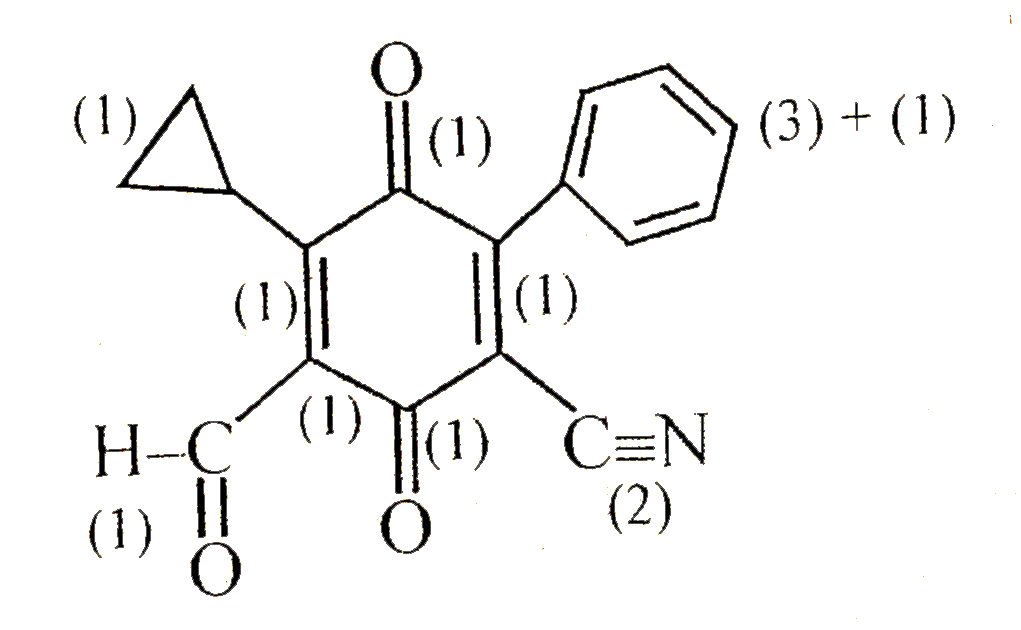
|
|
| 43. |
Degree of ionisation of a soltuion produces |
|
Answer» |
|
| 44. |
Degree of hydrolysis of a salt of weak acid and a seak base: |
|
Answer» INCREASES with concentration |
|
| 45. |
Degree of hydrolysis for a salt of strong acid and weak base is |
|
Answer» Independent of dilution `A^(-)` does not undergo hydrolysis because HA is strong acid. `B^(+)` undergoes hydrolysis `B^(+) +H_(2)O=BOH+H^(+)` `h=sqrt((K_(h)V)/(c))-(1)h=` degreee of hydrolysis where `K_(h)= " Hydrolysis constant "= (K_(w))/(K_(b))` `h propsqrt(K_(h))-(3)`greater the `K_(b)` lesser the h `h propsqrtV-(4)V=` volume of salt solution hence h increases with dilution. `K_(h)=(K_(w))/(K_(b)). Both K_(w)and B_(b)` CHANGE with temperature, so `K_(h)` change with temperature. Hence, STATEMENT (b) is correct, h increases if `K_(b)` decreases, statement (c) correct. It is found that as TEMPERATUE, increases, `k_(w) and K+_(b)` increase but increase in `K_(w)` is greater than increase in `K_(b).` Hence, h increase with increase in temp. or h decreases with decrease in temp., hence statement (d) is correct, (a) is not correct from explanation of (b). |
|
| 46. |
Degree of dissociation of pure water is 1.9xx10^(-9). Molar ionic conductances of H^(+) and OH^(-) ions at infinite diluton are 200 S cm^(2)mol^(-1) and 250" S "cm^(2)mol^(-1) respectively. Molar conductance of water is |
|
Answer» `3.8xx10^(-7)" S "cm^(2)MOL^(-1)` `wedge_(m)^(c)=alphaxxwedge_(m)^(0)=(1.9xx10^(-9))xx(200+350)" S "cm^(2)mol^(-1)` `=1.9xx550xx10^(-9)=1.045xx10^(-6)" S "cm^(2)mol^(-1)` |
|
| 47. |
Degree of dissociation of 0.1 N CH_(3)COOH is (Dissociation constant = 1 xx 10^(-5)) |
|
Answer» `10^(-5)` NORMALITY of solution `= 0.1 N = (1)/(10) N` Dissociation constant `K = 1 xx 10^(-5)` `K = C alpha^(2), alpha = sqrt((K)/(C)) = sqrt((1 xx 10^(-5))/(0.1)) , alpha = 1 xx 10^(-2)`. |
|
| 48. |
Degree of dissociation of pure water is 2.8 times 10^(-9), Molar ionic conductance of H^(+) and OH^(-) ions at infinite dilution are 300 and 350 S cm^(2) respectively. The molar conductance of water is _________. |
|
Answer» `1.5 times 10^(-6)S" "CM^(2)MOL^(-1)` `wedge^(C)=alpha times wedge^(@)` `""=2.8 times 10^(-19) times (300+350)` `""=1.820 times 10^(-6)` |
|
| 49. |
Degree of dissociation alpha is |
|
Answer» `ALPHA=(K_a)/(C )` |
|
| 50. |
Degree of dissociation (alpha) alpha are the number of moles which are dissociating from 1 mole of given reactants and gas density measurements can be used to determine the degree of dissociatin. Let us take a general case where one molecule of a substance A splits up into n molecules of A(g) on heating i.e., A_(n)(g)hArrnA(g) t=0a t =t_(eq)a-x nx ""alpha=x/aimpliesx=a alpha a-a alpha n a alpha Total number of Moles =a-a alpha +n a alpha =[1+(n-1)alpha]a Observed molecular weight of molar mass of the mixture M_("mixture")=(M_(A_(n)))/([1+(n-1)alpha]),M_(A_(n))= Molar mass of A_(n) If the t otal mass of the mixture in question (1) is 300 gm, then moles of C(g) present are |
|
Answer» `1/4` |
|