Saved Bookmarks
This section includes 7 InterviewSolutions, each offering curated multiple-choice questions to sharpen your Current Affairs knowledge and support exam preparation. Choose a topic below to get started.
| 1. |
Deep blue CuSO_(4).5H_(2)O is converted to a bluish white salt at 100^(@)C. At 250^(@)Cand 750^(@)C it is then transformed to a white powder (X) and black material (Y) respectively. Identify the salts. |
|
Answer» `X =Cu, Y = CuSO_(4)` 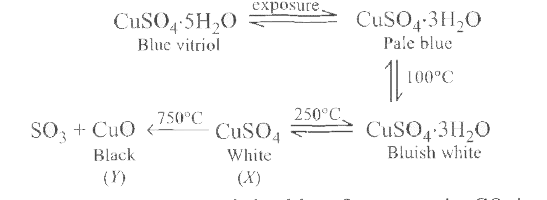
|
|
| 2. |
Deduce the structures of the compounds which yeild the following products on reductive ozonolysis. a) CH_(3)CHO and HCHO b) (CH_(3))_(2)CO and HCHO c) (CH_(3))_(2)CO and CH_(3)CHO d) (CH_(3))_(2)CO only e) CH_(3)CH_(2)-underset(CH_(3))underset(|)C=O (two moles) f) HCHO and O=CH-underset(CH_(3))underset(|)(CH)(CH_(3))_(2) g) CH_(3)CH_(2)underset(C_(2)H_(5))underset(|)C=O and OHC-CHO and OHC(CH_(2))CH_(3) h) OHC-CH_(2)CH_(2)CH_(2)CHO only i) OHC-CH_(2)-CHO (two moles) j) |
|
Answer» Solution :a) `CH_(3)-CH=CH_(2)` (Propene) B) `(CH_(3))_(2)=CH_(2)` (methylprop-1-ene) C) `(CH_(3))_(2)C=CHCH_(3)`, (2-Methylbut-2-ene) d) `(CH_(3))_(2)C=C(CH_(3))_(2)`(2,3-Dimethylbut-2-ene) 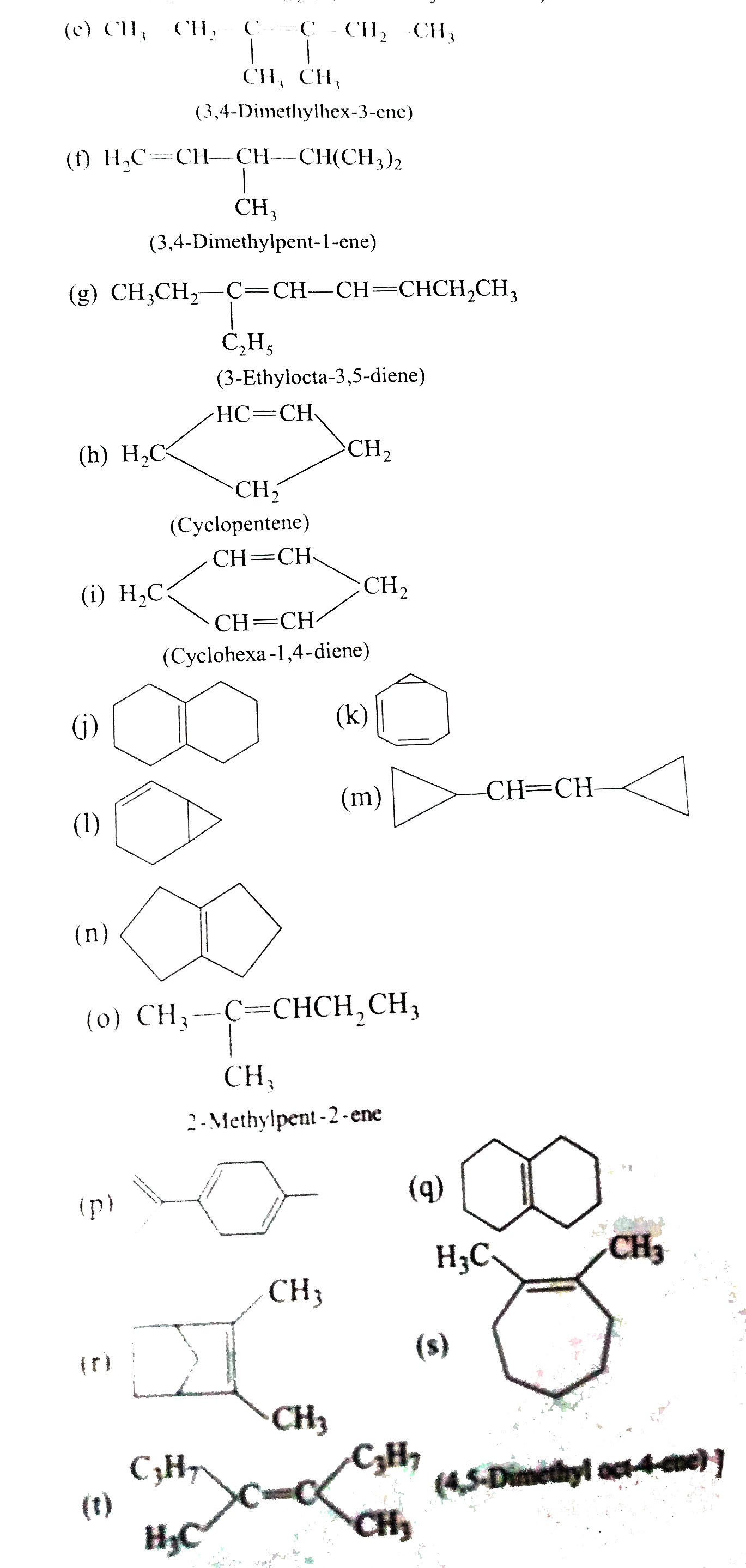
|
|
| 3. |
Deduce the structures of Ni(CN)_(4)^(2-) and NiCl_(4)^(2-). Write their magnetic moments ? |
| Answer» SOLUTION :0, 2.83 BM | |
| 4. |
Deduce the oxidation number of oxygen in hypofluorous acid -HOF. |
Answer» SOLUTION :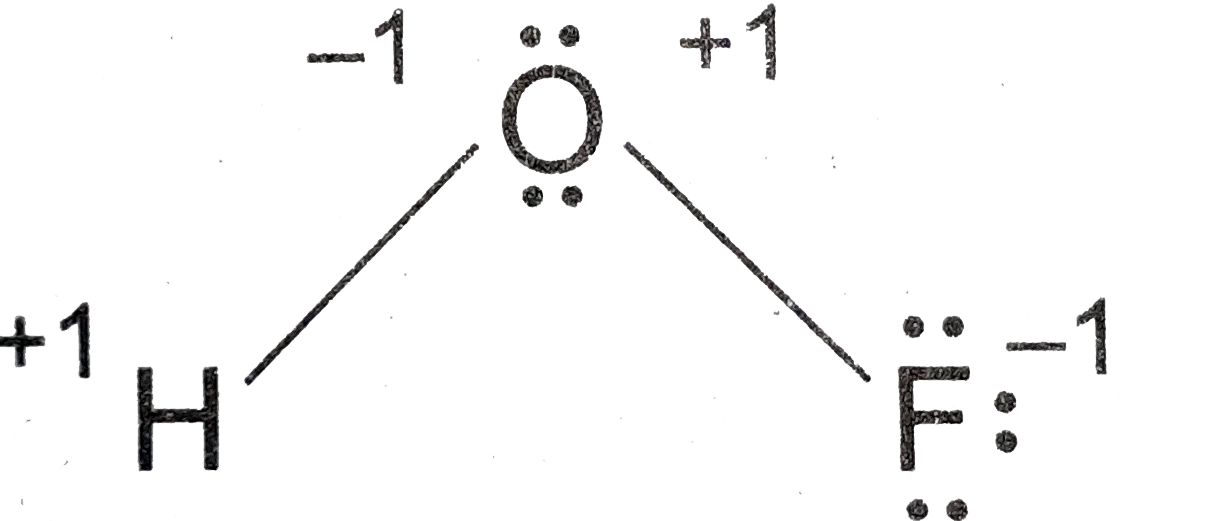 In case of `O-F` bond is `HOF`, fluorine is most electronegative element. So its oxidation number is `-1`. THEREBY oxidation number of O is `+1`. SIMILARLY in case of `O-H` bond is HOF. O is HIGHLY electronegative than H. So its oxidation number is `-1` and oxidation number of H is `+1`. So, Net oxidation of OXYGEN is `-1+1=0`. |
|
| 5. |
Deduce the structure of [Nicl_(4)]^(2) and [Ni(Cl_(4)]^(2-) considering the hybridization of the metal. Calculate the magnetic moment (spin only) of the species. |
|
Answer» Solution : `[NiCl_(4)]^(2-) implies sp^(3)` (as `cl^(-)` is weak FIELD ligand) - Tetrahedral `[Ni(CN)_(4)]^(2-)implies dsp^(2)` (as `CN^(-)` is strong field ligand) - SQUARE planar MAGNETIC moments `(mu_(spin))`values are as follows, `[NiCl_(4)]^(2-)impliessqrt(2(2+2))=2.82 B.M.` `[Ni(CN)_(4)]^(2-)implies sqrt(0(0+2)) = 0.0 B.M.` |
|
| 6. |
Deduce the shape and magnetic behaviour of the complex ion [Co(NH_(3))_(5)NO_(2)]^(2+). |
|
Answer» Solution :`CO : 1s^(2) 2s^(2) 2p^(6) 3S^(2) 3p^(6) 4s^(2) 3d^(7)` `Co^(3+)` ion has outer electronic configuration : `4s^(0) 3d^(6)`. `NH_(3)` causes pairing of ELECTRONS in d-orbital as shown below :  It has octahedral shape. It is DIAMAGNETIC because it does not have unpaired electrons. |
|
| 7. |
Deduce the oxidation number of oxygen in hypofluorousacid - HOF. |
| Answer» SOLUTION :OXIDATION NUMBER of O in HOF is -2. | |
| 8. |
Deduce the molecular shape of BrF_(3) on the basis of VSEPR theory. |
|
Answer» Solution :No. of electrons in the valence SHELL of the central BR atom = 7. No. of electrons provided by three F atoms `= 3 xx 1 = 3`. Total no. of electrons around the central Br atom = 7 + 3 = 10. `therefore` Total no. of electron pairs around the central Br atom = 10/2 = 5. But the no. of bond pairs = 3 (`because` there are three Br-F bonds) `therefore` No. of lone pairs = 5 - 3 = 2. On the basis of VSEPR theory, a molecule with three bond pairs and two lone pairs must be T-shapped (i.e., distorted trigonal bipyramidal) as shown. The tow lone pairs will occupy equatorinal positions to minimze lone pair-lone pair REPULSIONS WHIC are much stronger than lone pair-bond pair and bond pair-bond pair repulsions. Further, the axial F atoms will be slightly bent towards the equatorial F atom to minimize the lone pair-bond pair repulsions. Therefore, the shape of `BrF_(3)` would be slightly bent T as shown in Figure 
|
|
| 9. |
Deduce the identify of the missinig compounds in the following raction sequences. Show stereochemistry in parts (b) through (d). |
Answer» Solution :(A). `CH_(2)=CH-CH_(2)-CH_(2)OH` <BR> (B). `Br-CH_(2)CH(Br)CH_(2)CH_(2)OH` 
|
|
| 10. |
Deduce from the following E^@values of half cells, what combination of two halt would resutlt in a cell with the largenstpotential : (i) Ararr A^+ +e ,E^@=+1.2V (ii) B^-rarrB+e,E^@=-2.1V (iii) CrarrC^(2+) +2e,E^@=-0.38V(iv)D^(2-) rarrD^- +e,E^@=-0.59V |
|
Answer» `(i) and (IV)` |
|
| 11. |
Deduce from the following E^@values of half cells, what combination of two halt would resutlt in a cell with the largenstpotential : (i) A+e rarr A ,E^@=-0.24V (ii) B^- +e rarrB^(2-),E^@=+1.25V (iii) C^- +2erarrC^(3-),E^@=-1.25V(iv) D + 2e rarrD^(2-), E^@=+ 0.68V |
|
Answer» `(II) and (III)` |
|
| 12. |
Deduce from the following E^@ values of half cells , what combination of two half cells would result in a cell with largest potential :(i) A^(3-) rarr A^(2-) + e^- , E^@=1.5 V (ii) B^(2+) +e^- rarrB^+ ,E^@ =-2.1V (iii)C^(2+)+e^- rarrC^+,E^@=+0.5V(iv)DrarrD^2 +2e^-,E^@=-1.5V |
|
Answer» `(i) and (III)` |
|
| 13. |
Decresis order of reducing properties of Ln^(3+) |
|
Answer» `EU^(3++ )gt Tb ^(3+)gt DY ^(3+)gt GD^(3+)` |
|
| 14. |
Decribe the action of the following on chlorobenzene : Acetyl chloride in the presence of anhydrousAlCl_(3) |
Answer» Solution :Acetyl chloride in the presence of ANHYDROUS `AlCl_(3)` : When chlorobenzence is reacted with acetyl chloride in the presence of anhydrous `AlCl_(3), `a mixture of 2-chloro ACETOPHENONE and 4-chloro acetophenone (major product ) is formed. Since, the acetyl group is introduced in the benzence RING, the reaction is termed as FRIEDEL Crafts acylation.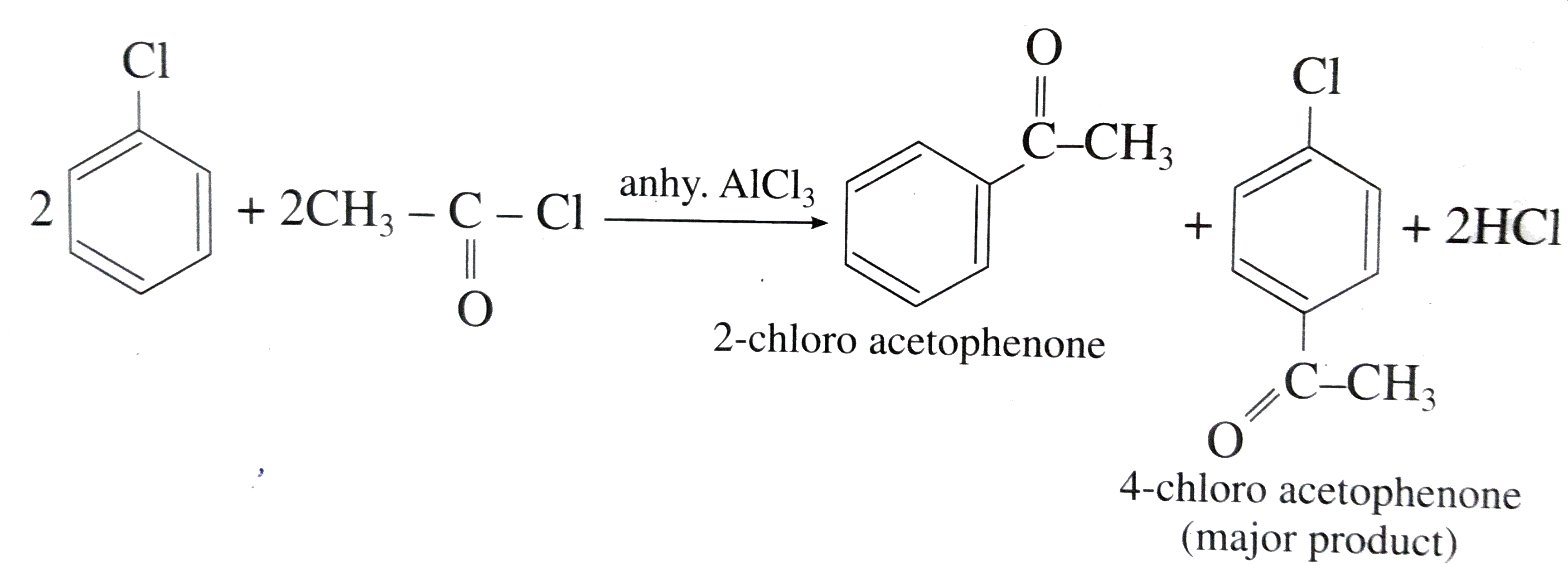
|
|
| 15. |
Decreasing order of size of various hybrid orbitals is : (when principal quantum number 'n' will remains same) |
|
Answer» `SP gtsp^(2)gtsp^(3)` |
|
| 16. |
Decreasing order of reducing property of dioxide of 16th group element is |
|
Answer» `PoO_(2) gt TeO_(2) gt SeO_(2) gt SO_(2)` |
|
| 17. |
Decreasing order of reducing power hydrogen halides is: |
|
Answer» `HIGTHBRGTHCLGTHF` |
|
| 18. |
Decreasing order of reactivitytowards nucleophilic addition to carbon yl group among cyclopentanone , 3- pentanone and n- pentanal is |
|
Answer» 3- pentanone , cyclopentanone , n - pentanal 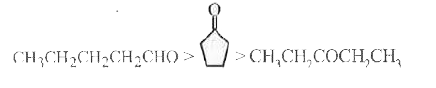
|
|
| 19. |
Decreasing order of reactivity in Williamson's ether synthesis of the following is: I. Me_(3)C CH_(2)Br II. CH_(3)CH_(2)CH_(2)Br III. CH_(3)=CHCH_(2)Cl IV. CH_(3)CH_(2)CH_(2)Cl |
|
Answer» IIIgtIIgtIVgtI 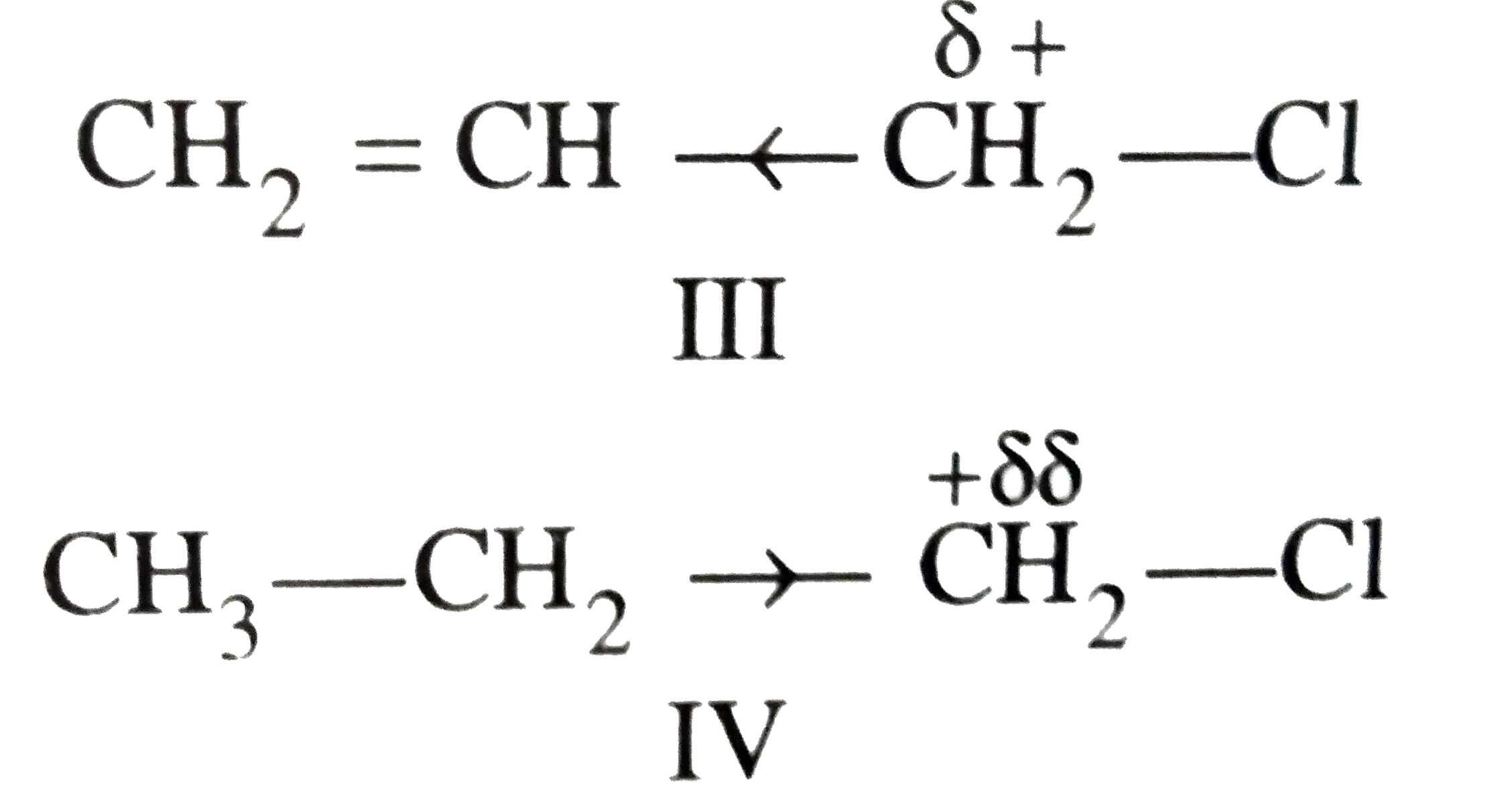 on III than on IV, in other words, nucleophilic attack occurs faster on III than on IV. further, since Williamson's synthesis occurs by `S_(N)2` mechanism, therefore, due to steric hindrance, neopentyl bromide (I) is the least REACTIVE. thus, the decreasing order of reactivity is: IIgtIIIgtIVgtI. |
|
| 20. |
Decreasing order of reactivity of hydrogen halides towards cleavage of C-O bond in ether is |
|
Answer» HCLgtHBrgtHI |
|
| 21. |
Decreasing order of reactivity in Williamson's ether synthesis of following : |
|
Answer»
|
|
| 22. |
Decreasing order of oxidising property of tetrapositive lanthanide is |
|
Answer» `Dy ^(4+)gt DE^(4+) gt Pr ^(4+) gt ND^(4+)` `Dy^(4+).` Hence `Dy ^(4+)` has more tendency to gain electron and acts as strongest oxidising agent. Oxidising property of ION decreases as `Dy^(4+)gt Nd ^(4+) gt Pr^(4+) gt Tb ^(4+) gt Ce^(4+).` |
|
| 23. |
Decreasingorder of nucleophilicity is- |
|
Answer» `OH^(Theta)gtNH_(2)^(Theta)gtCH_(3)O^(Theta)gtRNH_(2)` `NH_(2)^(Theta)gtCH_(3)O^(Theta)gtOH^(Theta)gtRNH_(2)` |
|
| 24. |
Decreasing order of melting point of compound I-IV follows: |
|
Answer» IVgtIIIgtIIgtI |
|
| 25. |
Decreasing order of ionic character of Ln (OH0_(3) is |
|
Answer» `Sm (OH)_(3) gtLu (OH)_(3)gt GD (OH)_(3) gt Tb (OH)_(3)` |
|
| 26. |
Decreasing order of intermolecular forces of polymer is (i) Neoprene (ii) silk (iii) Buna-N (iv) melamine formaldehyde resin |
|
Answer» `2gt1gt4gt3` |
|
| 27. |
Decreasing order of halogen to form oxide is |
|
Answer» `F gt Cl gt BR gt I` |
|
| 28. |
Decreasing order of calorific value is |
|
Answer» `C_(2)H_(2)gtC_(4)H_(10)gtC_(3)H_(8)gtC_(2)H_(4)` |
|
| 29. |
Decreasing order of C-C bond length is (I)C_2H_6 (II)C_2H_2 (III)C_6H_6 (IV)C_2H_6 |
|
Answer» IV gt III gt I gt II Bond order =`"Bonding -antibonding ELECTRON"/2` Bond order is highest for `C_2H_6` so it has MINIMUM bond strength |
|
| 30. |
Decreasing order of acidic strengths of following compound is |
|
Answer» X gt y gt z |
|
| 31. |
Decreasing order of boiling points of n-pentanol (A) n-pentane (B), 3-pentanol (C ) and 2,2-dimethyl propanol (D) is : |
|
Answer» A,C,D,B |
|
| 32. |
Decreasing order of boiling points of n-Petanol (A), n-Pentane (B), Pentan-3-ol(C) and 2,2-Dimethylpropanol (D) is ________ |
|
Answer» A,C,D,B |
|
| 33. |
Decreasing order of acidity of p-methoxy benzoic acid (A), p-nitrobenzoic acid (B) and benzoic acid (C) is- |
|
Answer» B,C,A |
|
| 34. |
Decreasing nucelophilic order of the following is: i. Me_(2)N - Nme_(2), ii. MeNH-NHMe iii. H_(2)N - NH_(2), iv. NH_(3) |
|
Answer» `(i) GT (ii) gt (iii) gt (IV)` |
|
| 35. |
Decrease in the pressure for the following equilibria : H_(2)O(s)hArrH_(2)O(l) result in the : |
|
Answer» formation of more `H_(2)O` (s) |
|
| 36. |
Decrease in vapour pressureof an aqueous solution of an electrolyteis4%. What would be the percentage increasein elevation in boiling point ? ( K_(b) = 0.512 K kg mol^(-1)) |
| Answer» Solution :`DELTA T _(B) PROP( P_(0)-P)` | |
| 37. |
Decrease in free energy of a reacting system indicates to: |
|
Answer» EXOTHERMIC reaction |
|
| 38. |
Decrease in atomic number is observed during |
|
Answer» `ALPHA`-EMISSION |
|
| 39. |
Decrease in atomic number is observed during : |
|
Answer» ALPHA EMISSION |
|
| 40. |
Decomposition of urea into NH_3 and CO_2 is followed by the action of enzyme : |
|
Answer» Urease |
|
| 41. |
Decomposition of reaction 3A(g) rarr 2B(g) + 2C(s) follows first order kinetics. Starting with pure A(at 6 atm), the pressure developed after 20 minutes and after a long time are 5.05 atm and 4.05 atm, respectively. Identify the correct statement. |
|
Answer» Time for `75%` completion is slightly more than 40 minute. |
|
| 42. |
Decomposition of Ozone into Oxygen has |
|
Answer» `DELTA G = - ve ` |
|
| 43. |
Decomposition of non-volatile solute 'A' into another non-volatile solute B and C, when dissolved in water follows first order kinetics as : A to 2B + C when one mole of A is dissolvedin 180 gm of water and left for decomposition, the vapour pressure of solution was found to be 20 mm Hg after 12 hrs. Determine the vapour pressure of the solution (in mm of Hg) after 24 hars Assume constant temperature of 25^(@) C, throughout . The vapour pressure of pure water at 25^(@) Cis 24mm Hg. [Fill your answer by multiplying it with 100] |
|
Answer» |
|
| 45. |
Decomposition of NH_(3(g)) on platinum surface at high temperature is a zero order reaction. Explain. |
|
Answer» Solution :(1) The decomposition of `NH_(3(G))` on platinum surface is represented as, `2NH_(3(g))overset(1130K)UNDERSET(Pt)rarrN_(2(g))+3H_(2(g))` (2) Since it is a heterogeneous catalysed reaction, `NH_(3)` gaseous molecules at high pressure are adsorbed on the metal surface covering the surface area. (3) The number of `NH_(3)` molecules adsorbed is small compared to `NH_(3)` molecules in the gaseous PHASE. (4) Only the molecules adsorbed on the surface GET decomposed. Hence the rate of the decomposition becomes independent of the concentration (pressure) of `NH_(3)`. THEREFORE the decomposition reaction is zero order. |
|
| 46. |
Decomposition of NH_3 on Pt surface follows zero order kinetics. If the initial pressure is 4 atm, the product of t_(1//2)and k equals to |
|
Answer» 2atm |
|
| 47. |
Decompositon of NH_(3) on gold surface follows zero order kinetics. If rate constant is 5xx10^(-4)Ms^(-1), rate of formation of N_(2) will be |
|
Answer» `10^(-3)"M-s"^(-1)` |
|
| 48. |
Decomposition of M_(2)O_(2) becomes faster in presence of ........ |
|
Answer» Pt |
|
| 49. |
Decomposition of hydrogen peroxide in alkaline medium in presence of iodide (I^(-))catalyst occurs according to the equation:2H_(2)O_(2)underset("alkali")overset(I^(-))rarr2H_(2)O(l)+O_(2)(g) A proposed mechanism for this reaction involves the following steps : Step-I : H_(2)O_(2)(l)+I^(-)(aq)rarrH_(2)O(l)+IO^(-)(aq)("slow") Step-II : H_(2)O_(2)(l)+IO^(-)(aq)rarrH_(2)O(l)+IO^(-)(aq)+O_(2)(g)("fast") Calculate the order of the reaction. |
| Answer» SOLUTION :ORDER of the REACTION is 2. | |
| 50. |
Decomposition of hydrogen peroxide is retarded in the presence of_____. |
|
Answer» alcohol |
|