

Saved Bookmarks
This section includes 7 InterviewSolutions, each offering curated multiple-choice questions to sharpen your Current Affairs knowledge and support exam preparation. Choose a topic below to get started.
| 1. |
Cryolite is |
|
Answer» `Na_3AlF_6`and is usedintheelectrolysis ofaluminaforloweringthe meltingpointofaluminaonly |
|
| 2. |
Cryolite is _________ |
|
Answer» SODIUM hexachloro ALUMINATE (III) |
|
| 3. |
Cryogenic studies are those studies performed at very low temperatures. The best supporting substance is |
|
Answer» LIQUID argon |
|
| 4. |
Crude calcium carbide is madein an electricfurnace by the followingreaction : CaO + 3C to Ca C_(2) + COTheproductcontains 85% of CaC_(2) and 15% of unreacted CaO (a) How much CaO is to be added to the furnace chargefor each 1000 kg of CaC_(2)(pure) produced? (b) Howmuch CaO is tobe added to thefurnace charge for each 1000 kg of crude product ? |
|
Answer» (B) 893. 7 kg |
|
| 5. |
Cr(s)|Cr^(3+)||Fe^(2+)|Fe(s) In above cell, the value of n in the Nernst equation : i.e., E=E^(@)-(0.059)/n log_(10) Q will be : |
|
Answer» |
|
| 6. |
Crotonaldehyde is easily exidised to crotonicacid using |
|
Answer» alkaline `KMnO_(4)` |
|
| 7. |
Crotanaldehyde on reaction with LiAlH_4 and water produces………………… . |
|
Answer» ETHANOL |
|
| 8. |
Cross-linking is not present in |
|
Answer» polythene |
|
| 9. |
Cross linked polymer among the following is |
|
Answer» POLYTHENE |
|
| 10. |
Cr(OH)_(3) is madesoluble in NaOH in presence of _________(a)________ when (b) _____of____(c ) ____ colouris formedand gives yellow ppt. of (d) _____when (e ) ____ is added. |
|
Answer» |
|
| 11. |
CrO_(4)^(2-) (yellow) changes to Cr_(2)O_(7)^(2-)(orange ) in pH=y . Hence x and y are : |
|
Answer» `6,8` `Cr_(2)O_(7)^(2-)+2OHrarr2CrO_(4)^(2-)+H_(2)O` |
|
| 12. |
CrO_(4)^(2-)(yellow) changes to Cr_(2)O_(7)^(2-)(orange) in pH=x and vice-versa in pH=y. Hence, x and y are: |
|
Answer» Solution :`2CrO_(4)^(2-)+2H^(+) to Cr_(2)O_(7)^(2-)+H_(2)O` `Cr_(2)O_(7)^(2-)+2OH^(-) to 2CrO_(4)^(2-)+H_(2)O` |
|
| 13. |
CrO_(4)^(2-) (yellow) chages to Cr_(2)O_(7)^(2-) (orange) in p^(H) = y. Hence x and y are |
|
Answer» 6,8 |
|
| 14. |
CrO_4^(2-)+H^(+)to[X]+H_2O Give the answer of the following questions for the reaction product [X] (P)In how many M-O bonds, the bond length are equal ? (Q)What is the oxidation state of the central metal ion ? (R)What is the magnetic moment of the central metal ion ? (S)How many peroxide linkages are there in the product formed by the reaction of [X] with H_2O_2 in acidic medium ? |
|
Answer» (P) 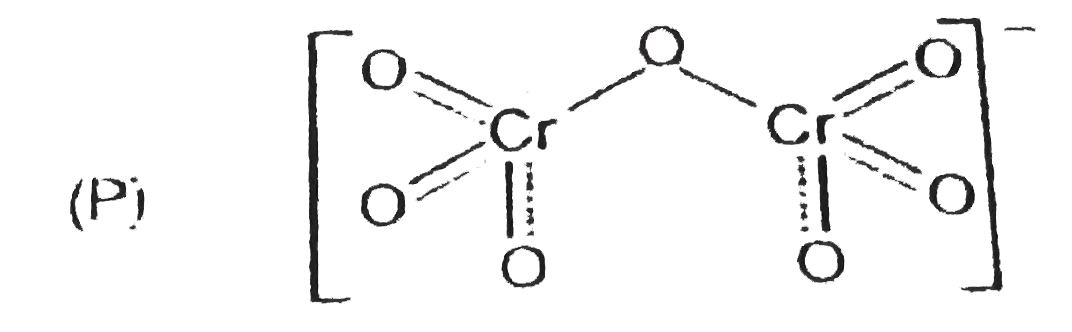 Six Cr-O bonds are EQUAL in LENGTHS because of resonance. (Q)`Cr_2O_7^(2-)` `2x+7(-2)= -2` or x=6 (R)ELECTRONIC configuration of `overset(+6)(Cr)` is `[Ar]^(18)3d^(0)4s^(0)`.No unpaired electron so magnetic moment is ZERO (0). (S)`Cr_2O_7^(2-)+2H^(+)+4H_2O_3to2CrO(O_2)_2+5H_2O` 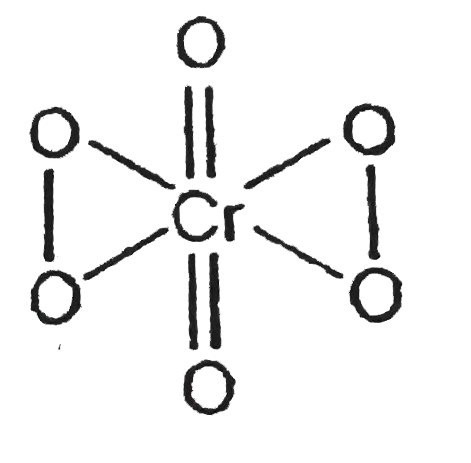
|
|
| 15. |
CrO_(4)^(2-) and MnO_(4)^(-) |
|
Answer» presence of UNPAIRED ELECTRONS in 'd' orbtials of CR and Mn |
|
| 16. |
CrO_(4) dissolves in aqueous NaOH to give : |
| Answer» Answer :B | |
| 17. |
CrO_(4)^(-2),MnO_(4)^(-)ions are coloured due to |
|
Answer» presence of UNPAIRED electrons in di orbitals of Cr & Mn |
|
| 18. |
CrO_(3) is coloured due to |
|
Answer» LowI.E. |
|
| 19. |
CrO_3 dissolves in aqueous NaOH to give |
| Answer» Answer :a | |
| 21. |
[Cr(NH_(3))_(6)][Cr(SCN)_(6)] and [Cr(NH_(3))_(2) (SCN)_(4)][Cr(NH_(3))_(4) (SCN)_(2)] are the examples of what type of isomerism? |
|
Answer» Ionisation isomerism |
|
| 22. |
[Cr(NH_(3))_(6)]^(3+) is paramagnetic while [Ni(CN)_(4)]^(2-) is diamagnetic . Explainwhy? |
|
Answer» Solution :`Cr(24) : [Ar]4s^(1)3D^(5)` `Cr^(3+)(24) : [Ar]4s^(0)3d^(5)` `[Cr(NH_(3))_(6)]^(3+)`  It is PARAMAGNETIC DUE to the presence of unpaired electrons.  It has a square planar STRUCTURE, and it is diamagnetic due to the absence of unpaired electrons. |
|
| 23. |
[Cr(NH_(3))_(6)]^(3+) is paramagnetic while [Ni(CN)_(4)]^(2-) is diamagnetic. Explain, why ? |
|
Answer» Solution :`[Cr(NH_(3))_(6)]^(3+)` is paramagnetic. The oxidation state of Cr in this complex is +3. Hence, we have ELECTRONIC configuration of `Cr^(3+)` `d^(2)sp^(3)` hybridisation 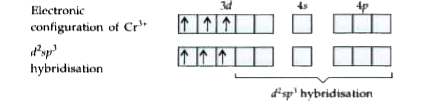 As NH3 is a weak LIGAND, pairing of electrons does not TAKE place. Hence, `d^(2)sp^(3)` hybridisation takes place forming inner complex with octahedral SHAPE. As there are three unpaired electrons, the compound is paramagnetic. `[Ni(CN)_(4)]^(2-)` is diamagnetic due to the absence of unpaired electrons. |
|
| 24. |
[Cr(NH_(3))_(6)]^(3+) is paramagnetic while [Ni(CN)_(4)]^(2-) is diamagnetic. Explain why ? |
| Answer» SOLUTION :`[Cr(NH_(3))_(6)]^(3+)`, `[Ni(CN)_(4)]^(2-)`. | |
| 25. |
[Cr(NH_3)_6]^(3+) ion is: |
|
Answer» Paramagnetic |
|
| 26. |
[Cr(NH_3)_4Cl_2]Br is a coordination compound.Write the ionisation isomer of the above compound. |
| Answer» SOLUTION :`[CR(NH_3)_4ClBr]CL` | |
| 27. |
[Cr(NH_(3))_(4)ClBr]NO_(2) and [Cr(NH_(3))_(4)ClNO_(2)]Br are examples of ………… |
|
Answer» LINKAGE isomerism |
|
| 28. |
[Cr(NH_3)_4Cl_2]Br is a coordination compound.Name the ligands present in it. |
| Answer» SOLUTION :`NH_3` and `CL^-` | |
| 29. |
[Cr(NH_3)_4Cl_2]Br is a coordination compound. Write its IUPAC name. |
| Answer» SOLUTION :Tetraamminedichloridochromium(III)BROMIDE | |
| 30. |
[Cr(NH_(3))_(5)Br]Cl" and "[Cr(NH_(3))_(5)Cl]Br can be distinguish by/and isomerism shown is : |
|
Answer» `BaCl_(2)`, IONISATION 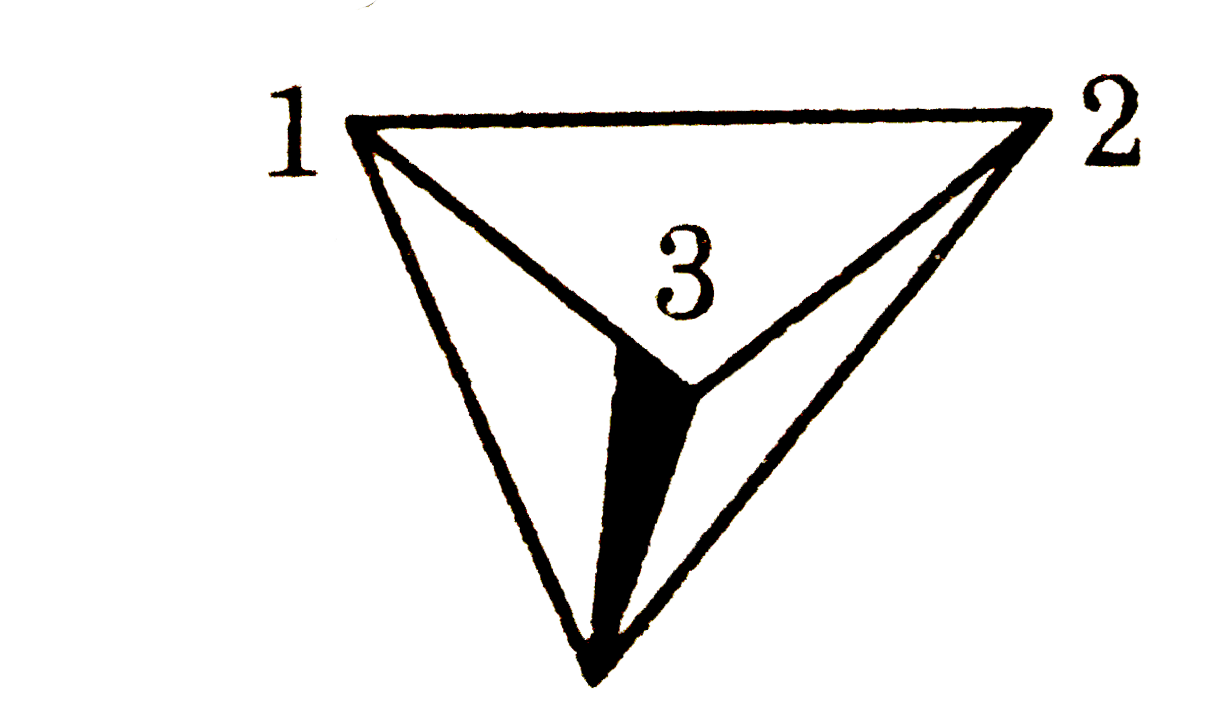
|
|
| 31. |
Critical temperatures of H_(2) O. NH_(3) . CO_(2) and O_(2 are 647K , 405K, 304.10 and 154.2 K respecitvely. If the cooling starts from 500K to their critical temperature, the gas that liquifies first is : |
|
Answer» `H_(2) O` |
|
| 32. |
Critically evaluate the role of the UNO in a Unipolar World. Is is still relevant ? How ? |
|
Answer» Solution :Believed that reform and restructure of UNO can help it cope better with a Unipolar world where USA is the most powerful The US stands alone after USSR’s disintegration and US power cannot be checked. US is the single largest contributor to the UN- financial power. US soil , US bureaucracy and military might UNO is in New York- USA uses power to SPLIT the vote. and reduce opposition to its policies UN does bring NATIONS together. Support the UN to help STATES and nation and people of the world since it works to promote objectives for a peaceful world. Relevant as it is a forum for dialogue, discussions and helping newly INDEPENDENT countries with development and organs help solve crisis and helps world with issues. |
|
| 33. |
Critical temperature of SO_2, N_2, NH_3 and CH_4 are 430 K, 126K, 406 K and 356 K. Arrange in the descending order of volume of these gases adsorbed per gram of charcoal. |
| Answer» Solution :Extent of adsorption is DIRECTLY proportional to CRITICA temperature . Order of extent of adsorption of the given gases is : `SO_(2) gt NH _(3) gt CH_(4)gt N_(2)` | |
| 34. |
Critical temperature of SO_(2), N_(2), NH_(3), and CH_(4) are 430K, 126K, 406K and 356K. Arrange in the descending order of volume of these gases adsorbed per gram of charcoal. |
| Answer» SOLUTION :Extent of adsorption is DIRECTLY proportional to critical TEMPERATURE. ORDER of extent of adsorption of the given gases is: `SO_(2)gt NH_(3) gt CH_(4) gt N_(2)`. | |
| 36. |
Critical micelle concentration for a soap solution is 1.5xx10^(-4) mol L^(-1) .Micelle formation is possible only when the concentration of soap solution in mol L^(-1) is |
|
Answer» `2.0 xx 10^(-3)` |
|
| 37. |
Critical micelle concentration (CMS) of soap solutions lies in the range |
|
Answer» `10^(-6)-10^(-5)M` |
|
| 38. |
Cristal defects give rise to certain special properties in the solids. Why does LiCl not exhibit Frenkel Defect? |
| Answer» SOLUTION :the SIZE of the CATION is BIGGER than the VOID. | |
| 39. |
Cristal defects give rise to certain special properties in the solids. Explain the pink colour of LiCl when heated in the vapours of Li. |
| Answer» SOLUTION :DUE to F-centre, It is ELECTRON TRAPPED ANION vaccancy | |
| 40. |
[Cr(H_(2)O)_(6)]Cl_(3) (atomic number of Cr=24) has a magnetic moment of 3.83 B.M. The correct present in the complex is : |
|
Answer» `3d_(XY)^(1),3d_(yz)^(1), 3d_(XZ)^(1)` |
|
| 41. |
[Cr(H_2O)_6]Cl_3(at. no. of Cr=24) has a magnetic moment of 3.83 BM. The correct distribution of 3d-electrons in the chromium of the complex |
|
Answer» `3d_(XY)^(1), 3d_(YZ)^(1) , 3d_(xz)^(1)` |
|
| 42. |
[Cr(H_(2)O)_(6)]Cl_(3) (at. no. of Cr = 24)has a magnetic moment of 3.83 B.M. The correct distribution of 3d electrons in the chromium of the complex is : |
|
Answer» `3d_(xy)^(1), (3d_(X^(2)-y^(2)))^(1), 3d_(yz)^(1)` |
|
| 43. |
[Cr(H_(2)O)_(6)]Cl_(3) (at. No. of Cr = 24) has a magnetic moment of 3.83 B.M. the correct distribution of 3d electrons in the chromium of the complex is |
|
Answer» `3d_(xy)^(1), 3d_(yz)^(1), 3d_(xz)^(1)`  In `d^(2)sp^(3)` HYBRIDISATION, the ORBITALS taking part are `d_(x^(2)-y^(2)) and d_(z^(2))`. Hence, unpaired electrons are present in `3d_(xy), 3d_(yz), 3d_(xz)`. |
|
| 44. |
[Cr(H_2O)_6]Cl_3 and [Cr(H_2O)_4Cl_2]Cl. H_2O are hydrate isomers. Their colours are respectively |
|
Answer» VIOLET and green |
|
| 45. |
[Cr(H_2O)_6]^(3+) ion has d-electrons equal to: |
|
Answer» 2 |
|
| 46. |
Cresols have |
|
Answer» 2-OH groups |
|
| 47. |
Cresols are |
|
Answer» HYDROXY toluenes 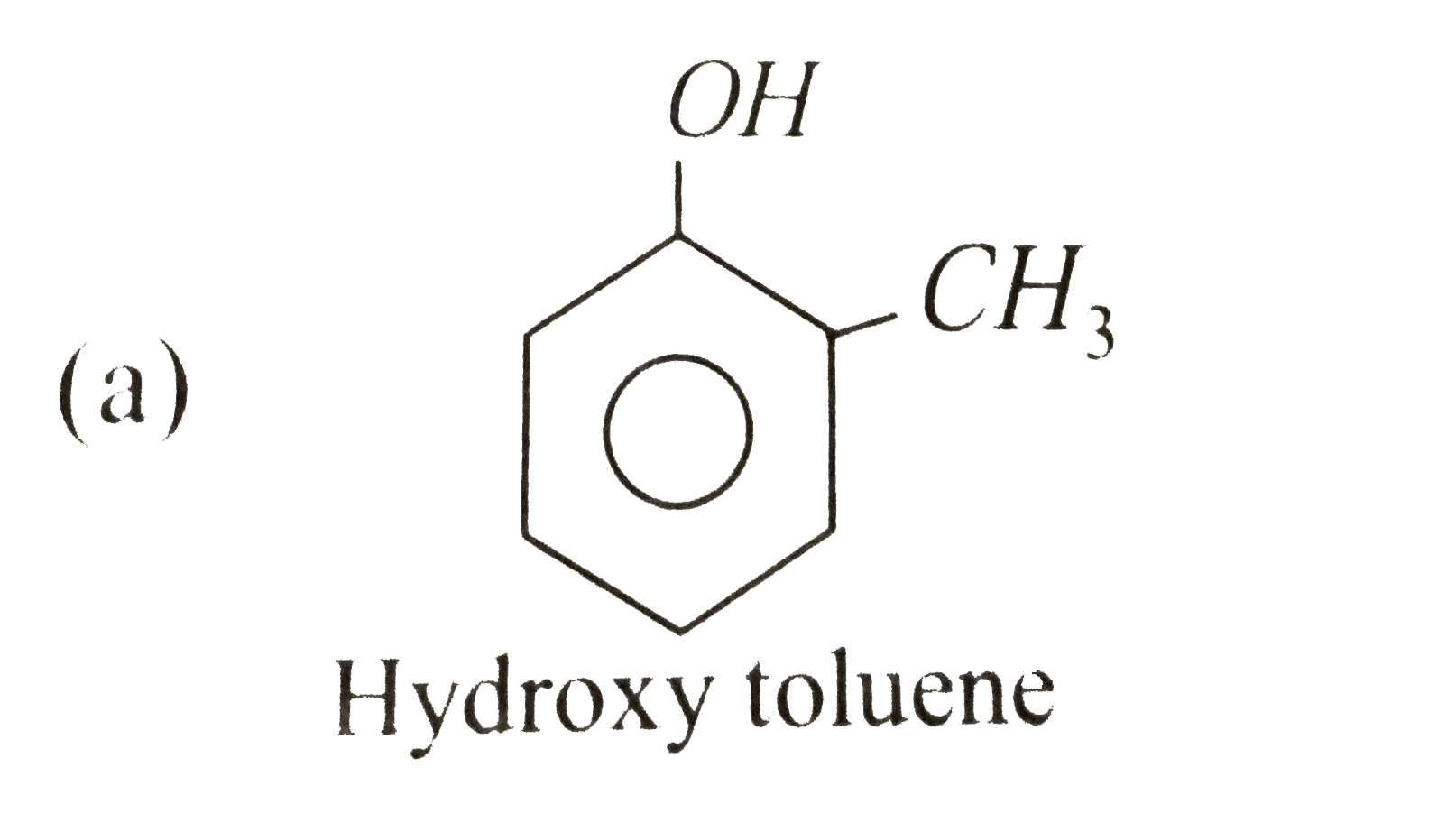
|
|
| 48. |
Cresols and aniline are used as .............. in froth floatation process: |
|
Answer» |
|