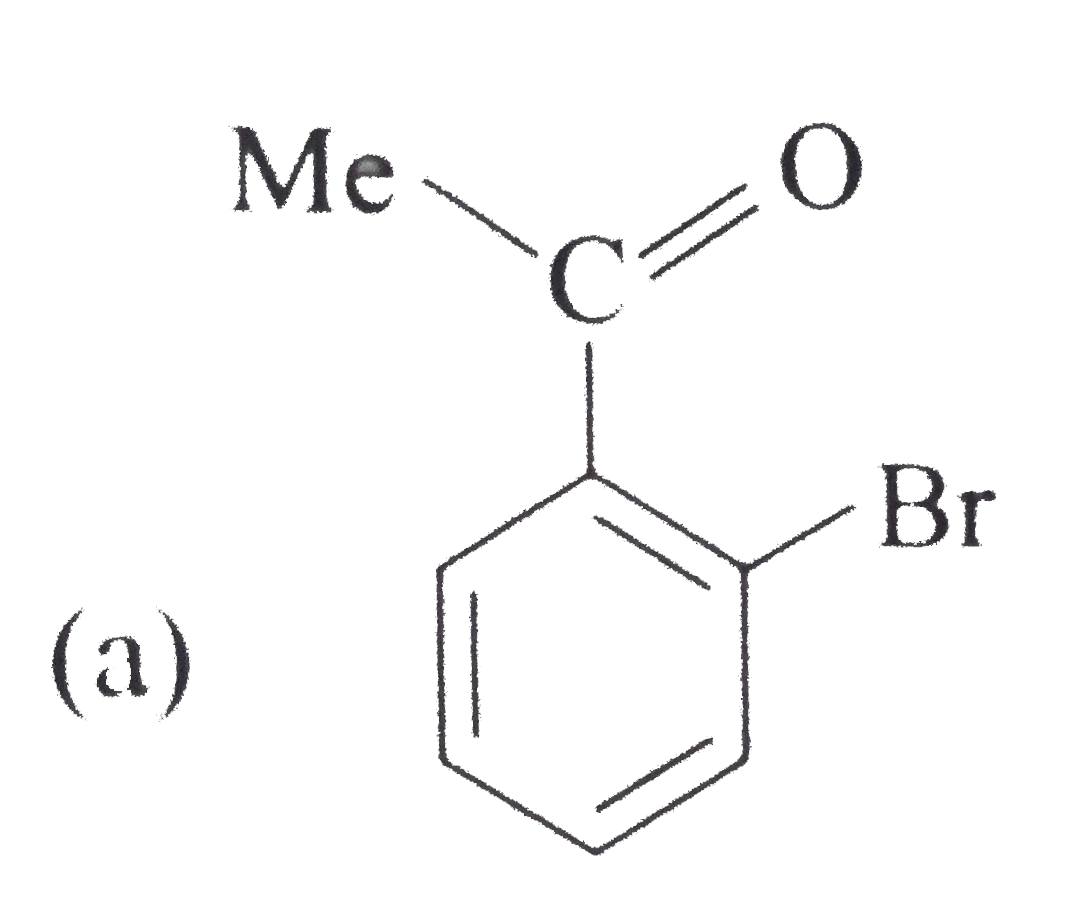
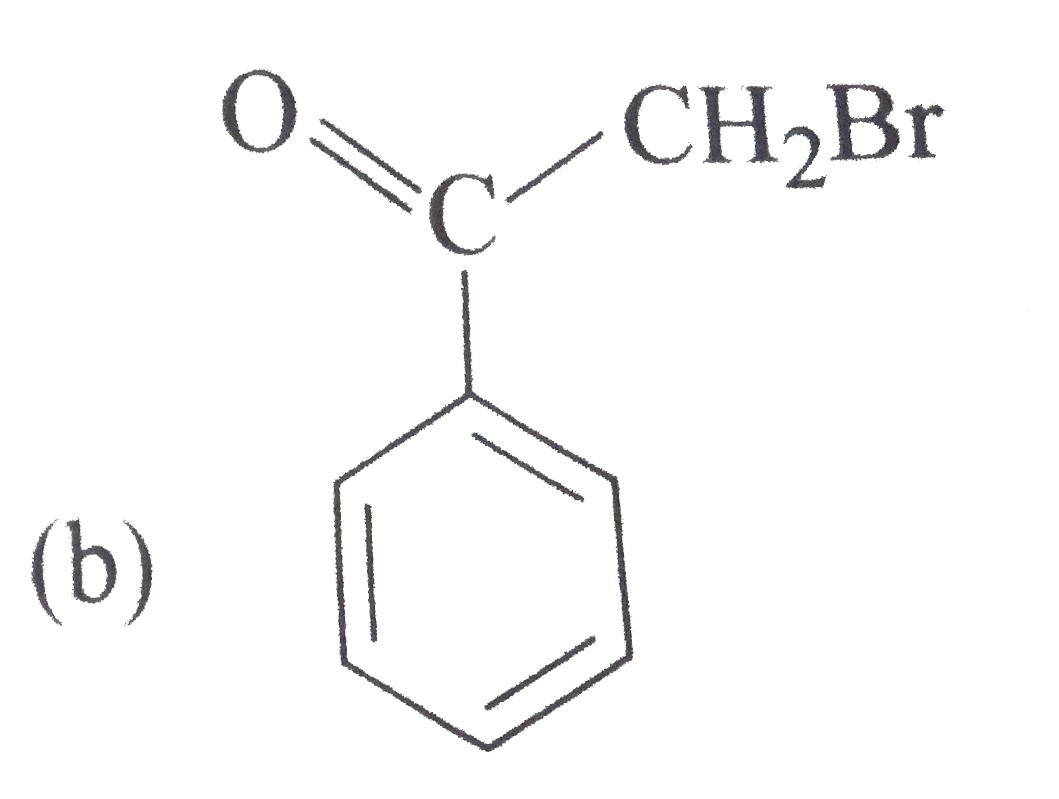
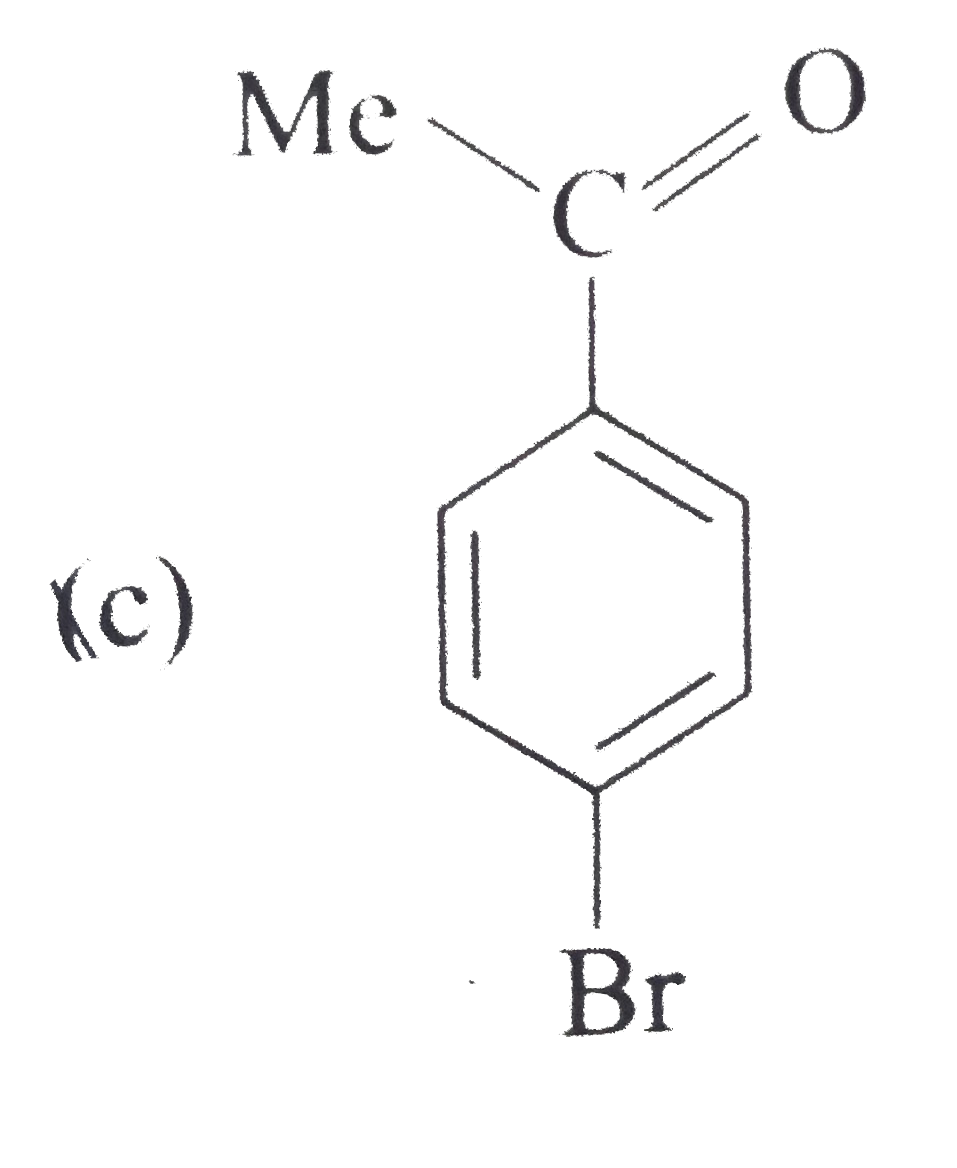
Saved Bookmarks
This section includes 7 InterviewSolutions, each offering curated multiple-choice questions to sharpen your Current Affairs knowledge and support exam preparation. Choose a topic below to get started.
| 1. |
Bronze is a mixture of |
|
Answer» Pb+Sn |
|
| 3. |
Brompheniramine is drug of which class ? |
|
Answer» ANTI fertility |
|
| 4. |
Bromophenol blue is anindicatorwith a valueof K_(a) = 5.84 xx10^(-5) . At whatworkas anindicator ?Alsoreportthe% of thisindicatorin its basicfor at a pH of 4.84 . |
|
Answer» Solution :`HBPh hArrH^(+) + BPh^(-)` `K_(a) = ([H^(+)][BPh^(-)])/([HBPh]) , `when`BPh^(-)` = HBPh ,indicatorwill work . THUS ` [H^(+)] = 5.84 xx10^(-5)` ` :. pH = 4.2336` ALSOIF pH= 4.84 or `[H^(+]= 1.44 xx10^(-5) ` , then `K_(a) = ([H^(+)] [BPh^(-)])/([HBPh])` or `5.84 xx10^(-5) = (1.44 xx10^(-5)CALPHA)/(C(1-alpha))` `alpha = 0.8 ` or 80 % |
|
| 5. |
Bromoethane when treated with alcoholic KOH gives ethene, KBr and H_2O. Identify the type of reaction. |
| Answer» SOLUTION :`BETA`-ELIMINATION | |
| 6. |
Bromoethane when treated with alcoholic KOH gives ethene, KBr and H_2O. Instead of bromethane, if you take 2-bromobutane, what is the major product obtained ? Write down the chemical equation for the reaction. |
Answer» SOLUTION :
|
|
| 7. |
Bromopheneramine is used as |
|
Answer» antiallergy |
|
| 8. |
Bromoethane on treatment with alcoholic KOH gives : |
|
Answer» ETHYL alcohol |
|
| 9. |
Bromoethane when treated with alcoholic KOH gives ethene, KBr and H_2O. Explain the rule behind the above reaction . |
| Answer» SOLUTION :SAYTZEFF's RULE (or ZAITSEV's rule). | |
| 10. |
Show how Bromobenzenecompound can be convered to benzoic acid. |
Answer» SOLUTION :
|
|
| 11. |
Bromobenzene to Diphenyl |
Answer» SOLUTION : BROMOBENZENE to DIPHENYL : 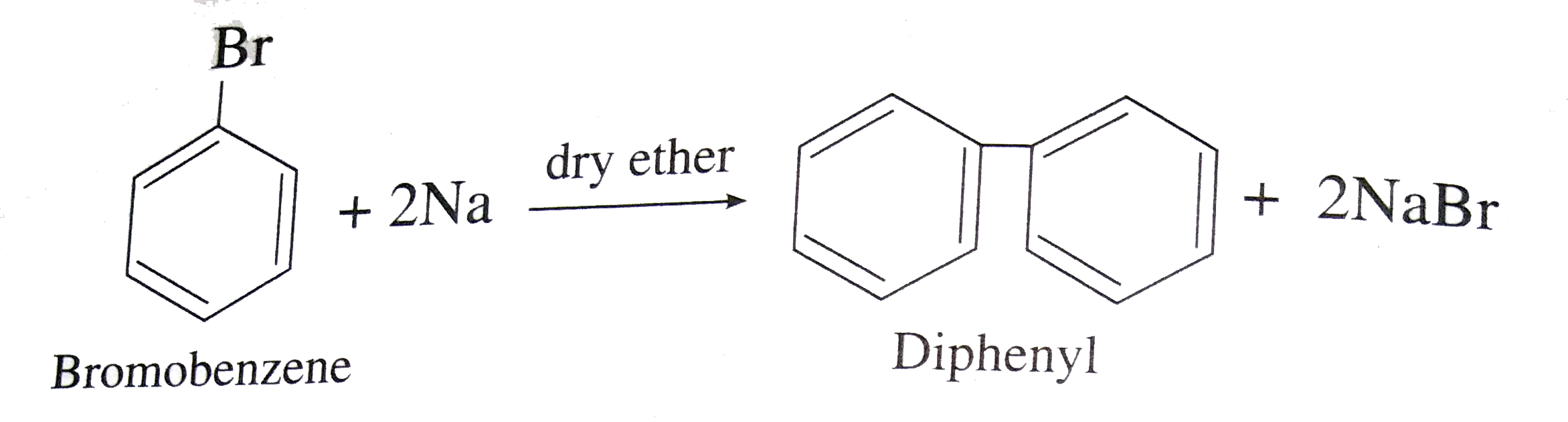
|
|
| 12. |
Bromobenzene to toluene |
Answer» SOLUTION :BROMOBENZENE to TOLUENE : 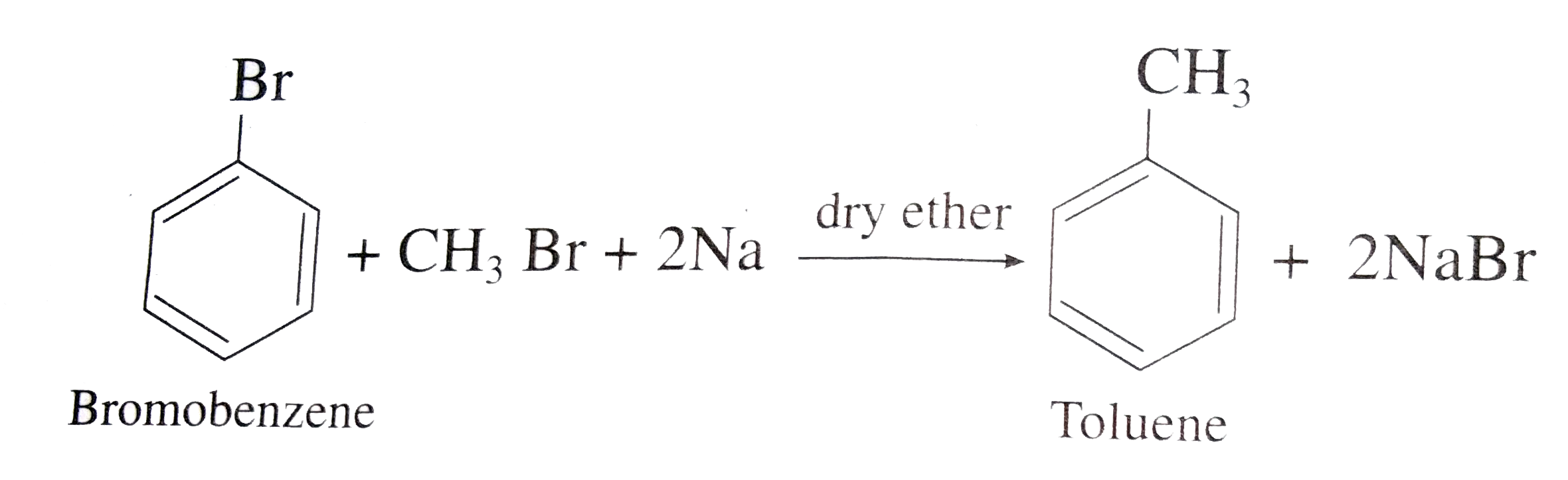
|
|
| 13. |
Bromobenzene can be prepared from benzene diazonium chloride. Whenits is treated with |
|
Answer» `Cu/HBr`<BR>`Br_(2), HBr` |
|
| 14. |
Bromobenzene reacts with Mg in dry ether to give a compond (A) which further reacts with ethanolto yield |
|
Answer» ETHYLBENZENE |
|
| 15. |
Bromine water reacts with SO_(2) to form |
|
Answer» HBR and S |
|
| 16. |
Bromine water reacts with aniline to give : |
|
Answer» o-Bromoaniline |
|
| 17. |
Bromobenzene to benzoic acid . |
Answer» SOLUTION :
|
|
| 18. |
Bromine water is decolourised by: |
|
Answer» HEXYNE |
|
| 19. |
Bromine vapours turn starch iodine paper |
|
Answer» Violet |
|
| 20. |
Bromine vapours turms ……..paper blue |
|
Answer» STARCH iodide |
|
| 21. |
Bromine vapours will turn moist starch iodide paper |
|
Answer» Brown |
|
| 22. |
Bromine gas turns starch iodine paper |
|
Answer» Brown |
|
| 23. |
Bromine occurs as a bromide in a mineral called: |
|
Answer» Nitre |
|
| 24. |
Bromine reacts with NaOH to produce: |
|
Answer» NaBr only in COLD SOLUTION |
|
| 25. |
Bromine is prepared commercially by the reaction : 2Br^(-)(aq)+Cl_(2)(aq)rarr 2Cl^(-)(aq)+Br_(2)(aq) Suppose we have 50.0 mL of 0.060 M solution of NaBr. What volume of 0.050 M solution of Cl_(2) is needed to react completely the Br^(-)? |
|
Answer» `" 2 mol of "Br^(-)" REACT with Cl"_(2)= "1 mol"` `therefore"0.03 mol of "Br^(-)" will react with "Cl_(2)=(1)/(2)xx0.03=0.0015 mol` `"0.05 mol of "Cl_(2)" solution are present in 1000 mL of Cl"_(2)" solution"` `therefore 0.015" mol of "Cl_(2)" will be present in "Cl_(2)" solution"=(1000)/(0.05)xx0.0015=30mL.` |
|
| 26. |
Bromine is prepared in the laboratory by heating a mixture of: |
|
Answer» `MGBR + H_2SO_4` |
|
| 27. |
Bromine is obtained on a commercial scale from: |
|
Answer» Caliche |
|
| 28. |
Bromine is obtained commercially from sea water by adding |
| Answer» Answer :A | |
| 29. |
Bromine is not recognised by is |
|
Answer» ABILITY to turn STARCH iodide paper blue |
|
| 30. |
Bromine is liberated when aqueous solution of potassium bromide is treated with |
|
Answer» Cl A more electronegative HALOGEN can DISPLACE less acid because of lowest bond DISSOCIATION ENERGY. |
|
| 31. |
Bromine is liberated when an aqueous solution of potassium bromide is treated with |
|
Answer» `Cl_(2)` A more electronegativehalogen can DISPLACE less ELECTRONEGATIVITY halogen. |
|
| 33. |
Bromine is liberated when an aqueous solution of KBr is treated with: |
|
Answer» `Cl_2` |
|
| 34. |
Bromine can exhiits the following oxidation states. |
|
Answer» `-1,+1,+3,+5` |
|
| 35. |
Bromine can be liberated from potassium bromide solution by the action of |
|
Answer» iodine solution |
|
| 36. |
Bromine can be liberated from potassium bromide solution by |
|
Answer» IODINE solution |
|
| 38. |
Bromination of trans but-2-ene leads to the formation of |
|
Answer» d-form |
|
| 39. |
Bromination of phenol in non-polarsolventforms __________ |
|
Answer» o-bromophenol |
|
| 41. |
Bromination of PhCOMe in acetic acid medium produces mainly |
|
Answer»
|
|
| 42. |
Bromination of anisole gives major product |
|
Answer» o-bromoanisole |
|
| 43. |
Bromination of aniline with bromine water mainly gives |
|
Answer» Red PRECIPITATE of 2, 4, 6 - tribromo ANILINE |
|
| 44. |
Bromination of aniline in acid medium results --------- as major product |
|
Answer» `2,4,6 -` TRI bromo ANILINE |
|
| 45. |
Bromination of alkane in the presence of AlBr_(3) is an example of, |
|
Answer» free RADICAL SUBSTITUTION |
|
| 46. |
Bromination of anilinegives2,4,6 - tribromoanilinewhere as nitrationof anilinegivesm -nitroaniline . In case ofnitrationm -derivativesis fored |
|
Answer» In PRESENCEOF strongacid `NH_(2)`groupprotonatedto form`overset(Ɵ)NH_(2)Cl` |
|
| 48. |
Bromide and nitrates both give brown fumes with conc. H_(2)SO_(4). Which of the following reagent will be used to distinguish between them? |
|
Answer» `K_(2)Cr_(2)O_(7)` |
|
| 49. |
Bromide and nitrates both give brown fumes with conc. H_2SO_4. Which of the following reagent will be used to distinguish between them? |
|
Answer» `K_2Cr_2O_7` |
|
| 50. |
Broadly speaking there are four types of stereisomers namely conformational isomers geometrical isomers, enantiomers and diastereomers.Although conformational isomers , have same configuration geometrical isomers have different atoms attached to each of the doubly bonded carbon atom, and enantiomers are due to chirality in the molecule Enantiomers are also known as optical isomers and diastereomers are those stereoisomers which are not enantiomers.In simple compound, number of stereoisomers.In chiral molecule is given by the reaction 2^n, where n is the number of dissimilar chiral carbon. Observe the following structures and answer the questions given below : How many stereoisomers are possible in pent-3-en-2-ol, CH_3CH=CHCHOHCH_3 |
|
Answer» 1 |
|