

Saved Bookmarks
This section includes 7 InterviewSolutions, each offering curated multiple-choice questions to sharpen your Current Affairs knowledge and support exam preparation. Choose a topic below to get started.
| 1. |
Assertion : Detergents with low CMC are more economical to use. Reason : Cleansing action of detergents involves the formation of micelles. These are formed when the concentration of detergents becomes equal to CMC. |
|
Answer» ASSERTION and REASON both are correct and the reason is correct EXPLANATION of assertion. |
|
| 2. |
Assertion. Detergents are preferred to soaps for washing purposes. Reason. Detergents having branched hydrocarbon chains are non-biodegradable. |
|
Answer» If both ASSERTION and REASON are true, and reason is the true explanation of the assertion. |
|
| 3. |
Assertion : Detergents are superior to soaps. Reason : Higher the TFM better is the quality of soap |
|
Answer» (A) and (R) are true and (R) is the correct EXPLANATION of (A) |
|
| 4. |
Assertion : Desilverisation of lead is done by Parke's method. Reason : When lead-silver alloy is poor in silver, zinc is added to molten ore. |
|
Answer» If both assetion and reason are CORRECT, and reason is the CORRECT EXPLANATION of the ASSERTION |
|
| 5. |
Assertion : Deoxyribose , C_5H_10O_4 is not a carbohydrate. Reason : Carbohydrates are hydrates of carbon so compounds which follow C_(x)(H_2O)_y formula are carbohydrates. |
|
Answer» If both assertion and reason are TRUE , and is the true explanation of the assertion. Correct reason : OPTICALLY active polyhydroxyaldehydes or ketones or substances which GIVE these on hydrolysis are called carbohydrates. |
|
| 6. |
Assertion : DeltaG^(@)=-nFE_(cell)^(@). Reason : E_(cell)^(@) should be positive for an electrochemical cell. |
|
Answer» If both assertion and REASON are correct and reason is correct EXPLANATION for assertion. |
|
| 7. |
Assertion : Dacron is formed by step growth polymerisation of monomer units . Reason : Dacron fibre is crease resistant . |
|
Answer» If both ASSERTION and REASON are TRUEAND reason is the correct explanationof assertion . |
|
| 8. |
Assertion : D-glucose is dextrorotatory whereasL-glucose is laevorotatory. Reason : D-compounds are always dextro and L-compounds are always laevorotatory |
|
Answer» If both assertion and REASON are true and reason is the correct explanation of assertion. |
|
| 9. |
Assertion :D.(+)-Glucose is dextrorotatory in nature. Reason : 'D' represents its dextrorotatory nature. |
|
Answer» Assertion and reason both are CORRECT statements and reason explains the assertion. |
|
| 10. |
Assertion : Ce^(4+) is good analytical reagent. Reason: Ce^(4+) has the tendency to change to Ce^(3+) |
|
Answer» If both assertion and reason are true and reason is the CORRECT EXPLANATION of assertion. |
|
| 11. |
Assertion :- Cycolobutane is less stable than cyclopentane. Reason :- presence of bent bonds causes loss of orbital overlap. |
|
Answer» If both ASSERTION & Reason are TRUE & the Reason is a CORRECT EXPLANATION of the Assertion. |
|
| 12. |
Assertion : Catalyst affects the final state of the equlibrium. Reason: It enables the system to attain a new equilibrium state by complexing with the reagents. |
|
Answer» If both ASSERTION and REASON are TRUE and the reason in the correct EXPLANATION of the assertion. |
|
| 13. |
Assertion : Cyclohexanone exhibit keto-enol tautomerism. Reason : In cyclohexanone, one form contains enolic group (-C=C-OH). |
|
Answer» If both assertion and reason are true and the reason is the CORRECT EXPLANATION of the assertion 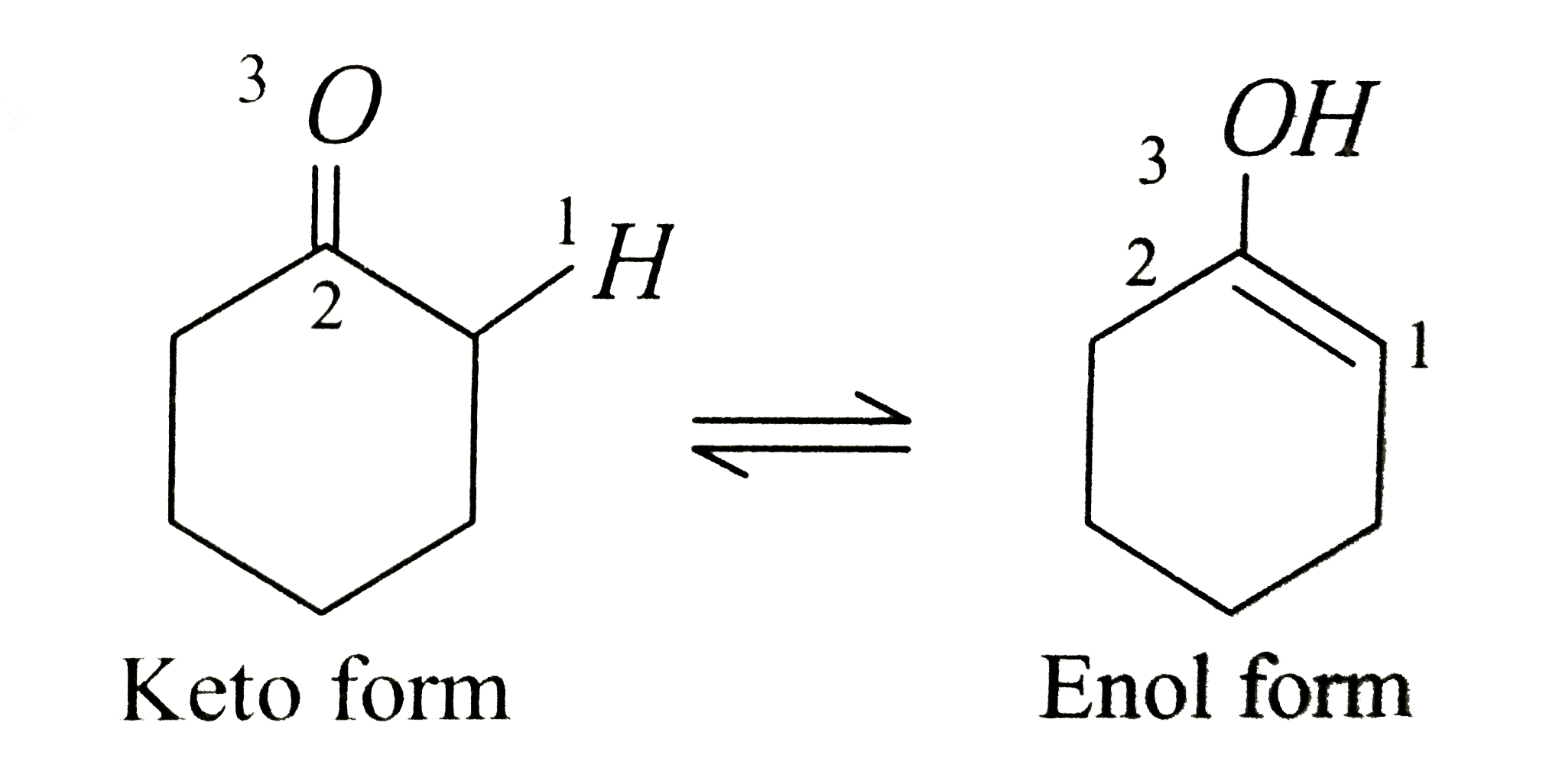
|
|
| 14. |
Assertion: Catalyst changes Gibbs free energy of a system. Reason: Catalyst changes pre-exponential factor for a reaction. |
|
Answer» If both assertion and reason are correct EXPLANATION for assertion. Correct reason: Catalyst cannot change pre-exponential factor for a reaction. |
|
| 15. |
Assertion : Cyclohexa -2, 4-dieneone does not give positive test for ketones Reason : Enel form of Cyclohexa-2, 4-dieneone is more stable and it undergoes tautomerism |
|
Answer» ASSERTION is true, REASON is true, Reason is a correct EXPLANATION for Assertion |
|
| 16. |
Assertion :- Catalyst change Gibbs free energy of system. Reason :- Catalyst changes preexponential factor of a chemical reaction. |
|
Answer» If both Assertion & REASON are True & the Reason is a CORRECT EXPLANATION of the Assertion. |
|
| 17. |
Assertion: CuSO_(4)*5H_(2)O and FeSO_(4)*7H_(2)O are blue and green colour compounds respectively. Reason: Both compounds have their specific colour due to phenomenon of polarisation of anion. |
|
Answer» If both assertion and REASON are TRUE and the reason is the correct explanation of assertion |
|
| 18. |
Assertion :Carboxypeptidase is an exopeptidase. Reason : it cleaves N-terminal bond. |
|
Answer» If both assertion and REASON are TRUE , and is the true explanation of the assertion. |
|
| 19. |
Assertion: Current stops flowing when E_(cell)=0. Reason: Equilibrium of the cell reaction is attained. |
|
Answer» Both ASSERTION and REASON are TRUE and the reason is the CORRECT EXPLANATION of assertion. |
|
| 20. |
Assertion: Cyclic silicates and chain silicates have the same general molecular formula. Reason: In cyclic silicates, three corners of each SiC_(4) tetradedron are shared while in chain silicates only two are shared with other tetrahedra. |
|
Answer» If both assertion and reason are true and the reason is the correct explanantion of the assertion |
|
| 21. |
Assertion: [Cu(en)_2]^(2+) is more stable than [Cu(NH_3)_4]^(2+) Reason: Both these complexes have a square planar shape. |
|
Answer» Both Assertion & Reason are TRUE ,Reason is the correct EXPLANATION of Assertion |
|
| 22. |
Assertion : Current stops flowing when E_(cell)=0. Reason: Equilibrium of the cell reaction is attained. |
|
Answer» Both assertion and reason are TRUE and the reason is the correct explanation of assertion. |
|
| 23. |
Assertion : Carboxylic acids do not undergo Friedel - Crafts reaction. Reason : Carboxylgroup is meta-directing group. |
|
Answer» If both assertion and reason are true and reason is the correct EXPLANATION of assertion. |
|
| 24. |
Assertion: Carboxylic acids contain a carbonyl group but do not give characteristic reactions of the carbonyl group. Reason: Due to resonance, the electrophilic nature of the carboxyl carbon is greatly reduced as compared to the carbonyl carbon in aldehydes and ketones. |
|
Answer» if both ASSERTION and RESON are TRUE, and REASON is the true EXPLANATION of the assertion. |
|
| 25. |
Assertion: Carboxylic acid exist as dimer. Reason: Carboxylic acid shows hydrogen bonding. |
|
Answer» If both assertion and reason are true and the reason is the correct EXPLANATION of the assertion. 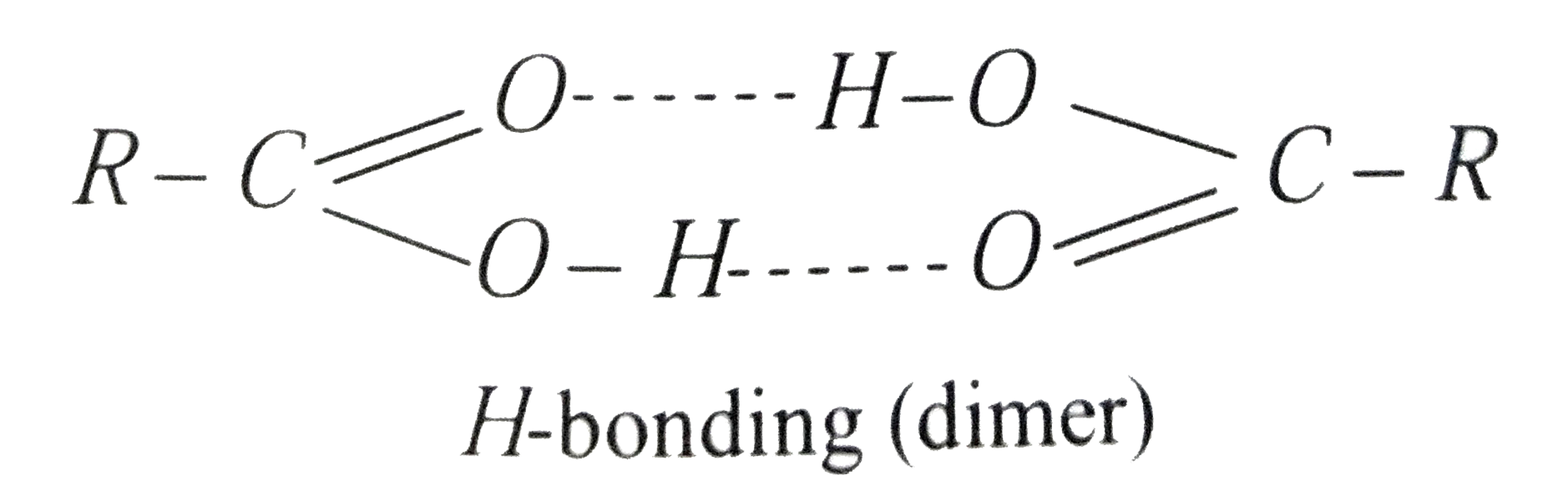
|
|
| 26. |
Assertion : Carbonyl compounds take part in nucleophilic addition reactions. Reason : These reactions are initiated by nucleophilic attack at the electron deficient carbon atom. |
|
Answer» If both ASSERTION and REASON are CORRECT and reason is correct EXPLANATION for assertion. |
|
| 27. |
Assertion : Carbonate and sulphate are concentrated by froth floatation process Reason : Pine oil wets the gangue particle |
|
Answer» Both (A) and (R ) are TRUE and (R ) is the CORRECT EXPLANATION of (A). |
|
| 28. |
Assertion : CuFeS_(2) is concentrated by froth floatation method. Reason : CuFeS_(2) is main ore of copper. |
|
Answer» If both assetion and REASON are CORRECT, and reason is the CORRECT explanation of the assertion |
|
| 29. |
Assertion. Carbonate andhydroxide ores areconcentratedby frothfloatationprocess. Reason. In frothfloatation process,mineral oil is usedbecauseit perferentiallywets the gangue particles. |
|
Answer» Ifbothassertionandreasonaretrue, ANDREASON is NOTTHE trueexplanationofthe ASSERTION. Correct reason. Infrothfloatationprocess,pineoilpreferentially wets the oreparticles. |
|
| 30. |
Assertion : Carbon shows an anomalous behaviour in group 14. Reason : Carbon has maximum covalency of 4. |
|
Answer» Both assertion and reason are TRUE and the reason is the correct explanation of the assertion. |
|
| 31. |
Assertion : Carbon is used in blast furnace for reduction of Fe_(2)O_(3). Reason : The gangue present is silica which is acidic in nature. |
|
Answer» Both (A) and (R ) are TRUE and (R ) is the CORRECT EXPLANATION of (A). |
|
| 32. |
Assertion : Carbon has maximum tendency of catenation among group 14. Reason : C-Cbond strength is very strong. |
|
Answer» Both ASSERTION and reason are true and the reason is the CORRECT EXPLANATION of the assertion. |
|
| 33. |
Assertion : Cuprous ion(Cu^(+)) is colouless whereas cupric ion (Cu^(++)) is blue in the aqueoussolution. Reason :Cuprous ion (Cu^(+))has unpaired electrons while cupric ion (Cu^(++))does not . |
|
Answer» If both the assertion and reason are true andreason is correct explanation of the assertion . |
|
| 34. |
Assertion : Cu^(2+) iodide is not known Reason : Cu^(2+)oxidises I^(-) to iodine. |
|
Answer» Both ASSERTION and reason are TRUE and reason is the CORRECT explanation of the assertion . |
|
| 35. |
Assertion :- Camphor is used as solvent in the determination of moleclar masses of naphthalene, anthracene etc. Reason :- Camphor has high molal elevation constant. |
|
Answer» If both assertion and reason are TRUE and the reason is the correct explanation of the assertion. |
|
| 36. |
Assertion: Cu^(2+)(aq) is more stable than Cu^(2+)(aq) Reason: Electrode potential is more important in determining stable oxidation state than electronic configuration. |
|
Answer» If both assertion and reason are TRUE and the reason is the CORRECT EXPLANATION of assertion |
|
| 37. |
Assertion :CaF_2 has been given the same fluorspar. Reason :Solid CaF_2 emits light when heated |
|
Answer» Both Assertion and Reason are TRUE and Reason is the CORRECT explanation of Assertion |
|
| 38. |
Assertion: Cu^(2+) iodide is not known. Reason: Cu^(2+)oxidises I– to iodine. |
|
Answer» Both ASSERTION and REASON are TRUE, and reason is the CORRECT EXPLANATION of the assertion. |
|
| 39. |
Assertion : Ca^(++) and K^(+) ions are responsible for maintaining proper osmotic pressure balance in the cells of organism. Reason : Solutions having the same osmotic pressure at same temp are called isotonic solutions. |
|
Answer» If both assertion and reason are true and the reason is the correct explanation of the assertion. |
|
| 40. |
Assertion: Cu^(2+)(aq) is less than Cu^(3+)(aq) but Fe^(3+) is more stable than Fe^(2+)(aq) Reason : Half filled and completely filled subshells are more stable |
|
Answer» If both ASSERTION and reason are true and the reason is the correct explanation of assertion |
|
| 41. |
Assertion Ca^(2+) and Ba^(2+) can be distinguished by treatment with Na_(2)C_(2)O_(4) solution. Reason CaC_(2)O_(4) is soluble in dilute acetic acid while BaC_(2)O_(4) is insoluble in dilute acetic acid solution. |
|
Answer» |
|
| 42. |
Assertion: (C_(2)H_(5))_(3)N is less basic than trimethylamine (CH_(3))_(3)N Reason: Due to hyperconjugation of C_(2)H_(5) is less than methyl. |
|
Answer» If both ASSERTION and reason are true and reason is the CORRECT EXPLANATION of assertion. |
|
| 43. |
Assertion: Cu^(2+) and Cd^(2+) are separated by first adding KCN solution and then passing H_(2)S gas. Reason: KCN reduces Cu^(2+) to Cu^(+) and form a complex with it. |
|
Answer» If both assertion and reason are true and the reason is the correct explanation of the assertion. Both assertion and reason are correct and reason is the correct explanation of assertion. |
|
| 44. |
Assertion : C - O bond in metal carbonyl is long. Reason : There is delocalisation of electrons from filled d orbitals into the empty orbitals on the CO ligands. |
|
Answer» If both assertion and reason are true and reason is the CORRECT explanation of assertion |
|
| 45. |
Assertion : Cu react with HCl & form H_(2) gas Reason : Cu above then hydrogen in electro chemical series |
|
Answer» If both Assertion & REASON are True & the Reason is a CORRECT explanation of the Assertion. |
|
| 46. |
Assertion: C Cl_(4) is not a fire extinguisher. Reason: C Cl_(4) is insoluble in water. |
|
Answer» If both ASSERTION and reason are true and the reason is the correct EXPLANATION of the assertion. |
|
| 47. |
Assertion: Cu is less reactive than hydrogen. Reason : E_(Cu^(2+)//Cu)^(Theta) is negative. |
|
Answer» Both assertion and reason are true and the reason is the correct EXPLANATION of assertion. Standard electrode potential of `E^(@)" "CU^(2+)//Cu=0.34` V and `E_(H^(+)//H_(2))^(Theta)=0.0V`. This shows that copper is less REACTIVE than HYDROGEN. |
|
| 48. |
Assertion :C Cl_(4) is a non-polar molecule. Reason : C Cl_(4) has polar bonds. |
|
Answer» If assertion is true but the reason is false |
|
| 49. |
Assertion: Cu cannot liberate hydrogen froma acids. Reason : Because it has positive electrode potential. |
|
Answer» Both assertion and reason are TRUE and reason is the CORRECT explanation of the assertion . |
|
| 50. |
Assertion : Butter and cheese are emulsions Reason: Emulsion is a colloidal solution of liquid dispersed in solid. |
|
Answer» (A) and (R) are TRUE and (R) is the CORRECT EXPLANATION of (A) |
|