

Saved Bookmarks
| 1. |
Consider a spherical body A of radius R which is placed concentrically in a hollow enclosure H of radius 4R as shown in the The temperature of the body A and H are T_(A) and T_(H) respectively Emissivity transmittivity and reflactivity of two bodies A and H are (e_(a),e_(H)),?(t_(A),t_(H)), and (r_(A),r_(H)) respectively (Assume no absorption of the thermal energy by the space in between the body and enclosure as well as outside the enclousre and all radiations to be emitted and absorbed normal to the surface [Tske sigma xx 4pi r^(2) xx 300^(4) = betaJ//s] Consider two cases, first one in which A is a perfect black body and the second in which A is a non-black In both the cases temperature of boby A is same equal to 300K and H is at temperature 600K For H t = and a ne 1 For this situation mark out the correct statements (s) . |
|
Answer» The bodies lose their distinctiveness inside the enclosure and both of them EMIT the same RADIATION as that of the black body . So rate at which `A` LOSES energy is `beta J//s` and the rate at which `P` and `Q` receive energy are `beta//2J//s` and `betaJ//s` respectively This energy is received on the area of sphere passing through `P` and `Q` Now in this case each of incidence, refleaction absorption take place The rate at which energy has been lost by `A` is `P = - [P_(absorbed)-P_(emitted)]` `=-[(beta)/(8)+(beta)/(32)+...]+[(beta)/(2)+(beta)/(8)+(beta)/(32)+....]=(beta)/(2)` The rate a which energy is received by `P` is `P_(1) =0` The rate at which energy is receivedly `Q` is `P_(2)=[(beta)/(2)+(beta)/(8)+...]+[(beta)/(2)+(beta)/(8)+(beta)/(32)+.....]=(beta)/(2)` `=(beta)/(2)xx(4)/(3)+(beta)/(4)xx(4)/(3)=beta` `If beta = sigma 4piR^(2) xx 300^(4)` then `sigma xx 4pi (4R)^(2) xx 600^(4) = 256beta =gamma` Let `a_(H) =e_(H) = 0.5` and for `A` in `2nd` case `e_(A) = a_(A) = 0.5` For `1st` case, `P_("emitted") = beta J//s P_("absorbed") = (gamma)/(2) + (beta)/(2)` rate at which energy is lost `P=(beta-(gamma)/(2)-(beta)/(2))J//s` For `2nd` case `P_("emitted") = ((beta)/(2) + (beta)/(8) + (beta)/(32))J//s` For `2nd` case `P_("emitted")= ((beta)/(2)+(beta)/(8)+(beta)/(32)+....)+((gamma)/(4)+(gamma)/(16)+....)=(2beta)/(3)+(gamma)/(3)` `P_("absorbed")=((beta)/(2)+(beta)/(32)+...)+((gamma)/(4)+(gamma)/(16)+....)=(beta)/(6)+(gamma)/(3)` Rate at which heat is lost `P = (beta)/(2)` In these questions thermal equilibrium is not acheived and infinite no of reflection absorption can take place beforethermal equilibrium has been actived and it is because of very large speed of radiation 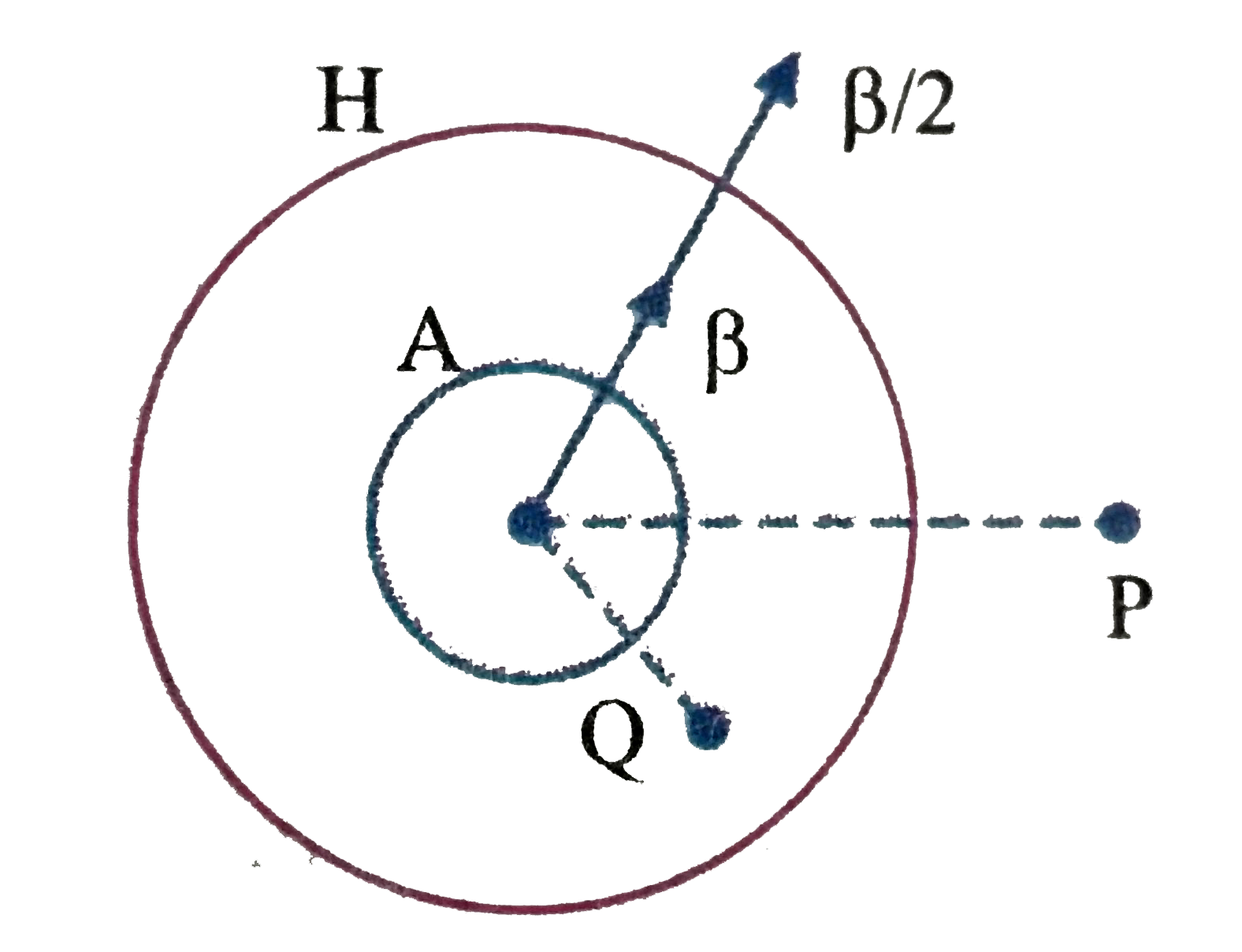 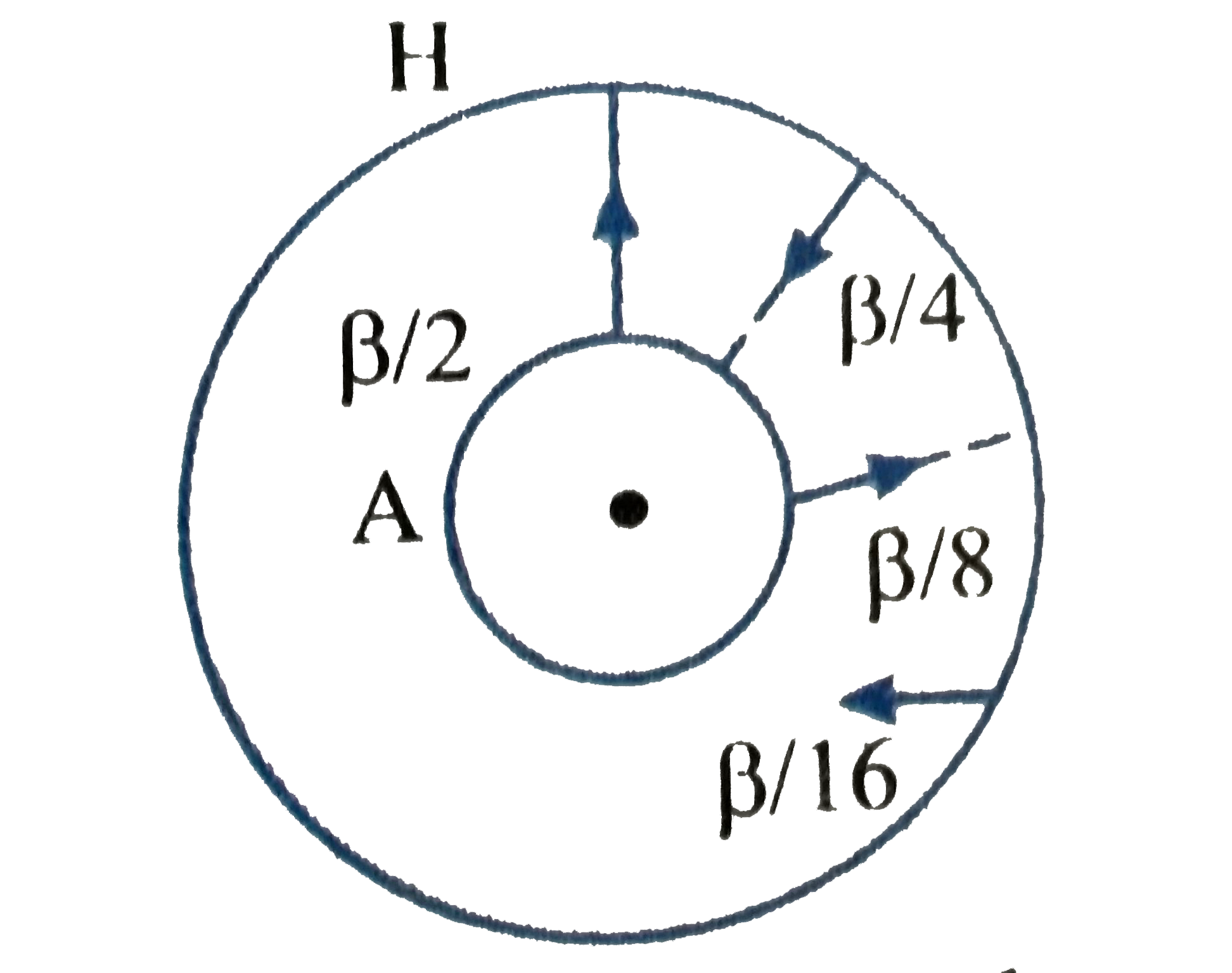 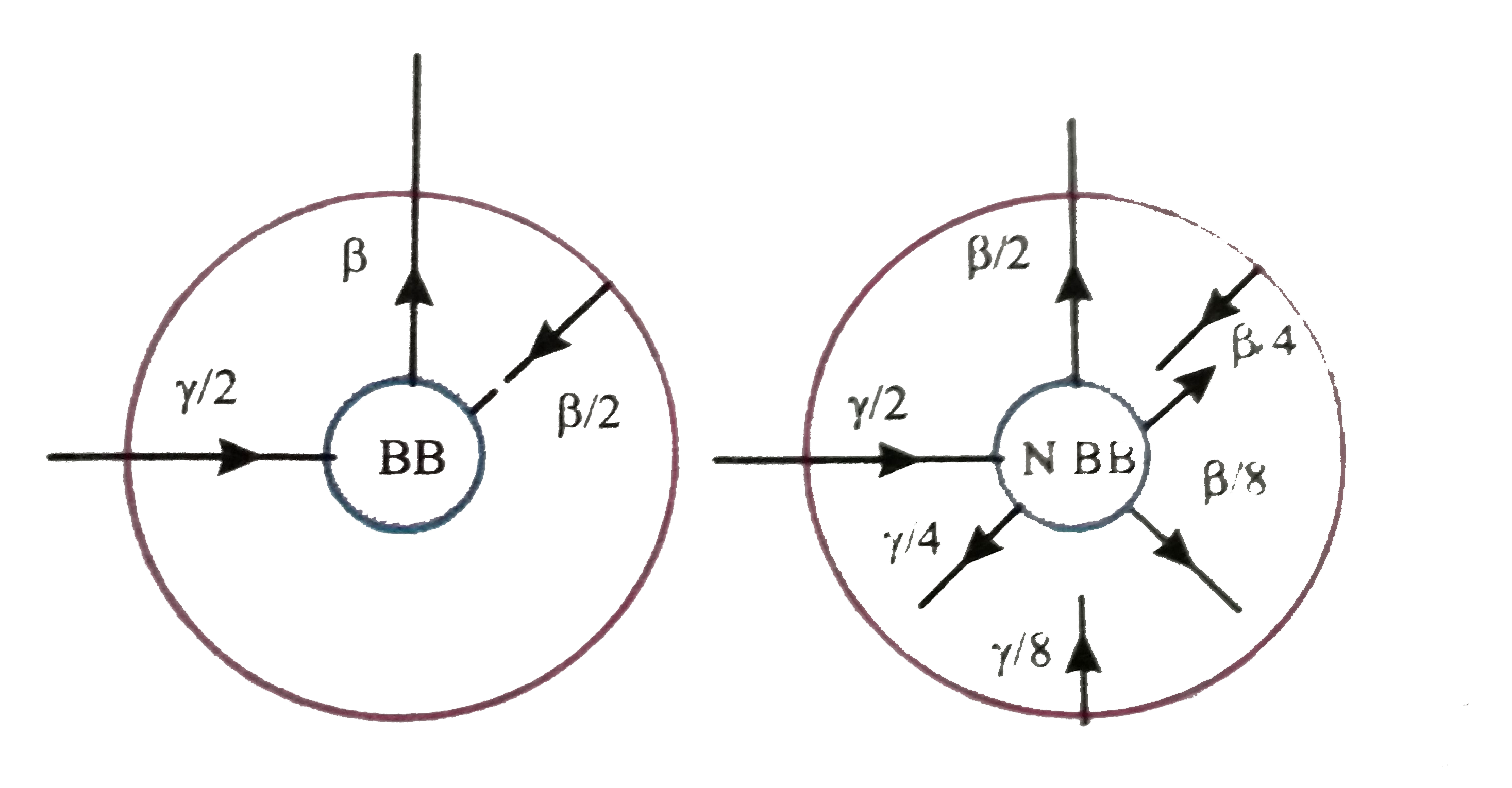
|
|