

Saved Bookmarks
| 1. |
Assertion : The instantaneous velocity is given by the limiting value of the average velocity as the time interval approaches zero. Reason : The direction of the average velocity is same as that of displacement. |
|
Answer» If both assertion and reason are true and reason is the correct explanation of assertion `vecv = (trianglevecr)/(trianglet) = (trianglex hati+triangleyhatj)/(trianglet) = hati(trianglex)/(trianglet) +HATJ(triangley)/(trianglet)` or` vecv = vecv_(x) hati + vecv_(y) hatj` Since `vecv = (Deltavecr)/(deltat)`, the direction of the average velocity is the same as that of `Deltavecr` . The INSTANTANEOUS velocity is the limiting value of the average velocity as the time interval approaches zero. `therefore vecv = lim_(Deltat to0) (Deltavecr)/(Deltat) = (dvecr)/(dt)`. 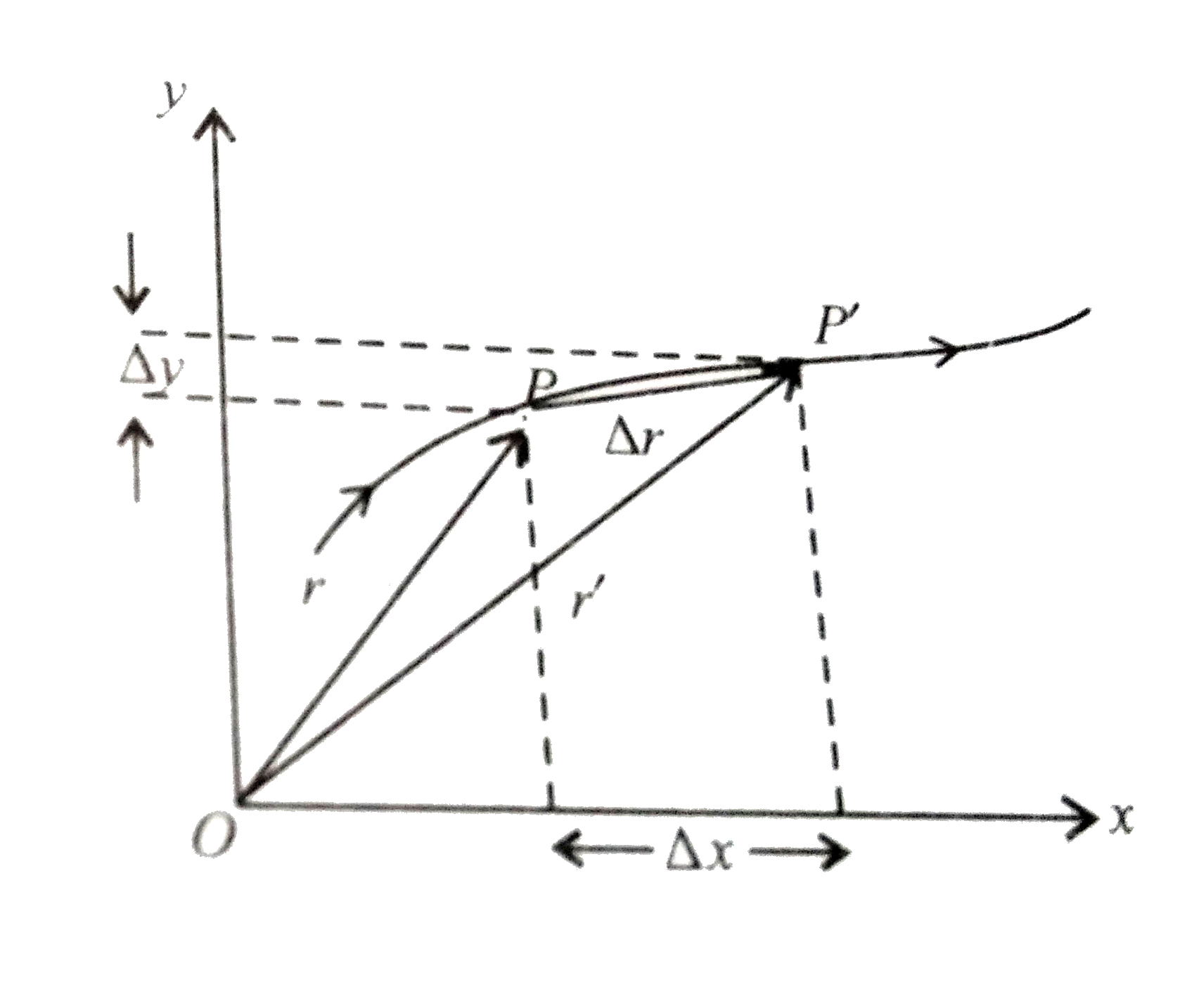
|
|