

Saved Bookmarks
| 1. |
Arrange the following in the increasing order of their reactivity towards nucleophilic addition reactions: C_(6)H_(5)COCH_(3),CH_(3)CHO,CH_(3)COCH_(3). |
Answer» Solution :Due to electron-donating inductive effect (+I-effect) of the two `CH_(3)` groups in `CH_(3)COCH_(3)` as compared to SMALLER +I-effect of one `CH_(3)` group in `CH_(3)COCH_(3)`, the magnitude of the +ve charge on the carbon atom of the CARBONYL group in `CH_(3)CHO` is more than in `CH_(3)COCH_(3)`. as a result, nucleophilic ADDITION reactions occur more readily in `CH_(3)CHO` than in `CH_(3)COCH_(3)`. 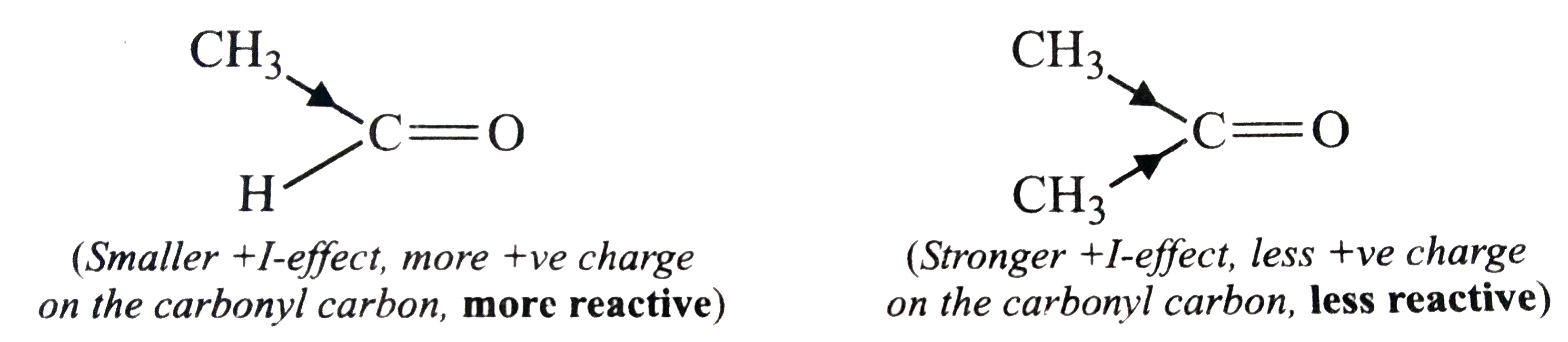 In `C_(6)H_(5)COCH_(3)`, the electron-donating RESONANCE effect (+R-effect) of the benzene ring reduces the +ve charge on the carbon atom of the carbonyl group. since +R-effect of benzene ring is more pronounced than +I-effect of the `CH_(3)` group, therefore, magnitude of the +ve charge on the carbon atom of the carbonyl group in `C_(6)H_(5)COCH_(3)` is reduced to a much greater extent than in `CH_(3)CHO` and `CH_(3)COCH_(3)`. As a result, `C_(6)H_(5)COCH_(3)` is much LESS reactive than `CH_(3)CHO` and `CH_(3)COCH_(3)`. 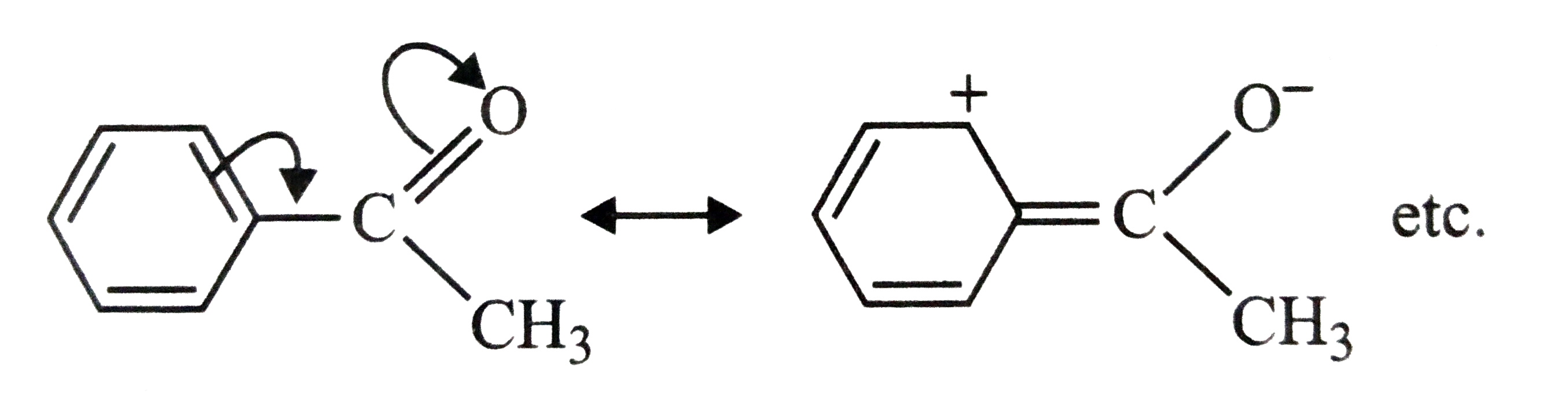 Thus, the overall reactivity of these three compounds towards nucleophilic addition reactions increases in the order: `C_(6)H_(5)COCH_(3) lt CH_(3)COCH_(3) lt CH_(3)CHO` |
|