Saved Bookmarks
| 1. |
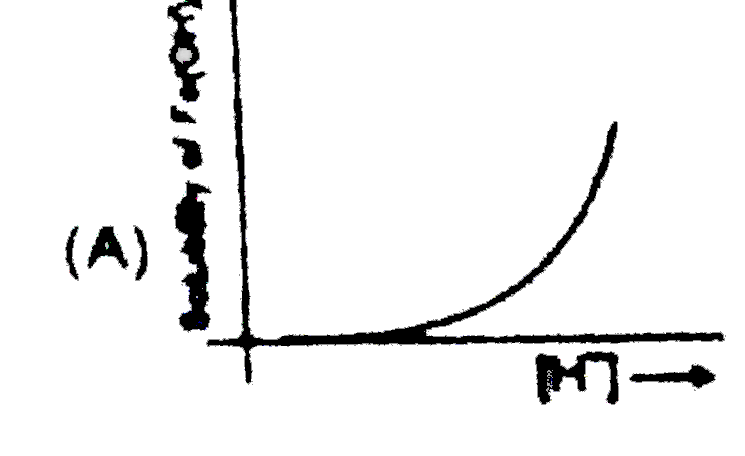
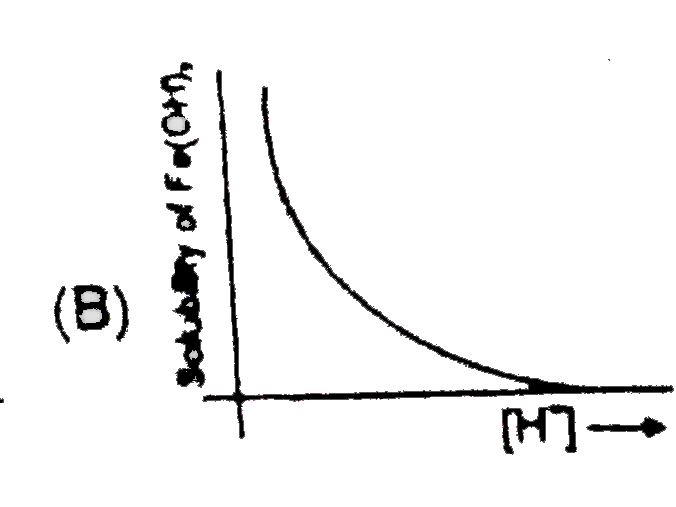
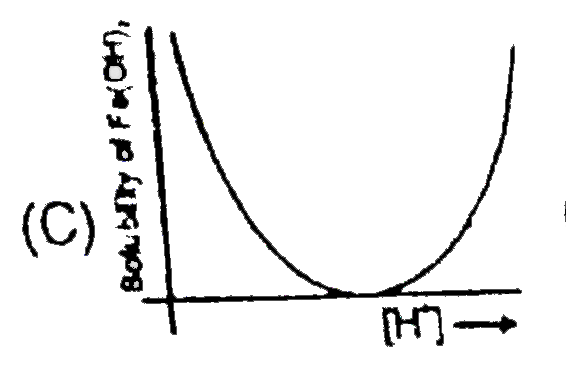
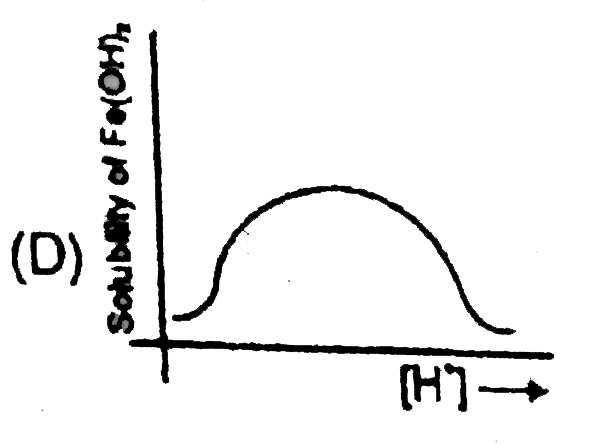
Amphoterism Amphoteric oxides, such as aluminium oxide, are soluble both in strongly acidic and in strongly base solutions : In acid:Al_2O_3(s)+6H_3O^(+)(aq)hArr2Al^(3+)(aq)+9H_2O(l) In base:Al(OH)_3(s)+OH^(-)(aq)hArr Al(OH)_4^(-)(aq) Dissolution of Al(OH)_3 in excess base is just a special case of the effect of complex-ion formation on solubility.Al(OH)_3 dissolves because excess OH^(-) ions convert it to the soluble complex ion Al(OH)_4^(-)(aluminate ion)The effect of pH on the solubility of Al(OH)_3 is shown in figure. Other examples of amphoteric hydroxides include Zn(OH)_2,Cr(OH)_3,Sn(OH)_2 and Pb(OH)_2, which react with excess OH^(-) ions to form the soluble complex ion Zn(OH)_4^(2-)(zincate ion),Cr(OH)_4^(-)(chromite ion),Sn(OH)_3^(-) , Fe(OH)_2 and Fe(OH)_3 , dissolve in strong acid but not in strong base. Which of the following curves best represents the variation of solubility of ferrous hydroxide Fe(OH)_2 with the concentration of [H^(+)] ions in the solution: |
|
Answer»
|
|