

Saved Bookmarks
| 1. |
A balloon carrying a stone rises from rest on the ground with a constant acceleration 10 m//s^(2). After 5 s, the stone is released and ultimately it strikes the ground. Sketch a v-t graph for the stone and the maximum height attained by it. |
Answer» Solution :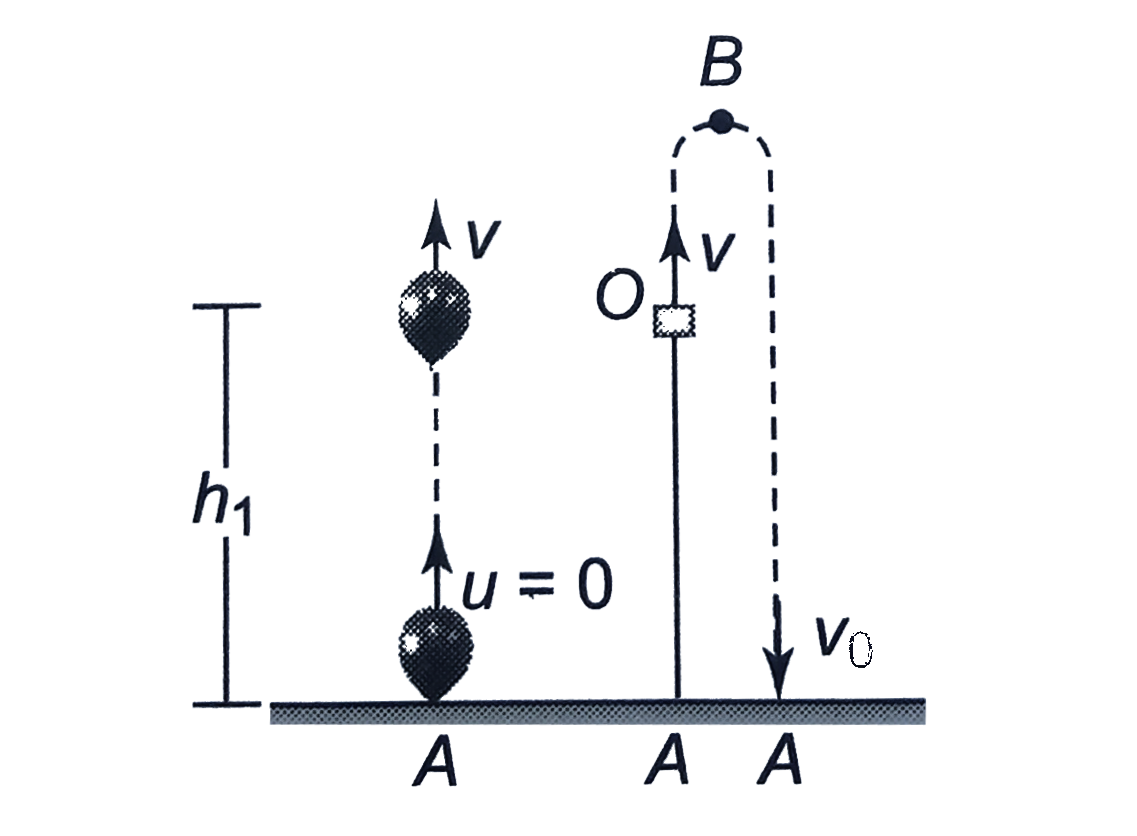 First the stone will accelerate with balloon. ACCELERATED motion: `t=0` to `t=5s` `v=u+a_(1)t=0+10t=50 m//s` `h_(1)=ut+1/2a_(1)t^(2)=0+1/2xx10xx5^(2)=125 m` After release, the stone will move under gravity. Assuming O as the origin and upward direction +ve, O to A through B: Displacement`=-h_(1)=-125 m` `-h_(1)=v t_(2)-1/2g t_(2)^(2)` `-125=50t_(2)-5 t_(2)^(2)` `t_(2)^(2)-10t-25=0` `t_(2)=(10+-sqrt(100+100))/2 =(10+-10sqrt(2))/2` `t_(2)=(10+-10xx1.4)/2 =12 s,-2s` The stone will strike the ground after 12 s (from its release). VELOCITY of the stone at t=12 s, `v_(0)=v-g t_(2)=50-10xx12=-70 m//s` v-t graph for stone A to O: `t=0, v=0` `t=5 s, v=50 m//s` `v=10t` `y=10 x` (straight line) 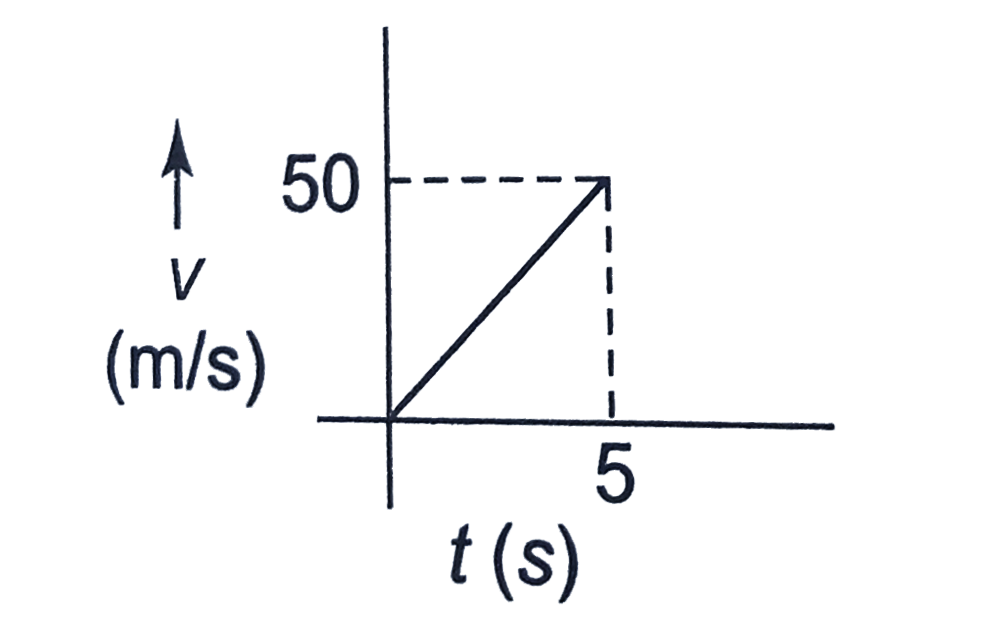 O to A through B: `v=50-10 t` `t=0, v=50 m//s` `t=12 s, v=-70 m//s` `v=0implies50-10timplies t=5 s` Shape: y=50-10x(straight line) y=c+mx c=50, +ve m=-10, -ve 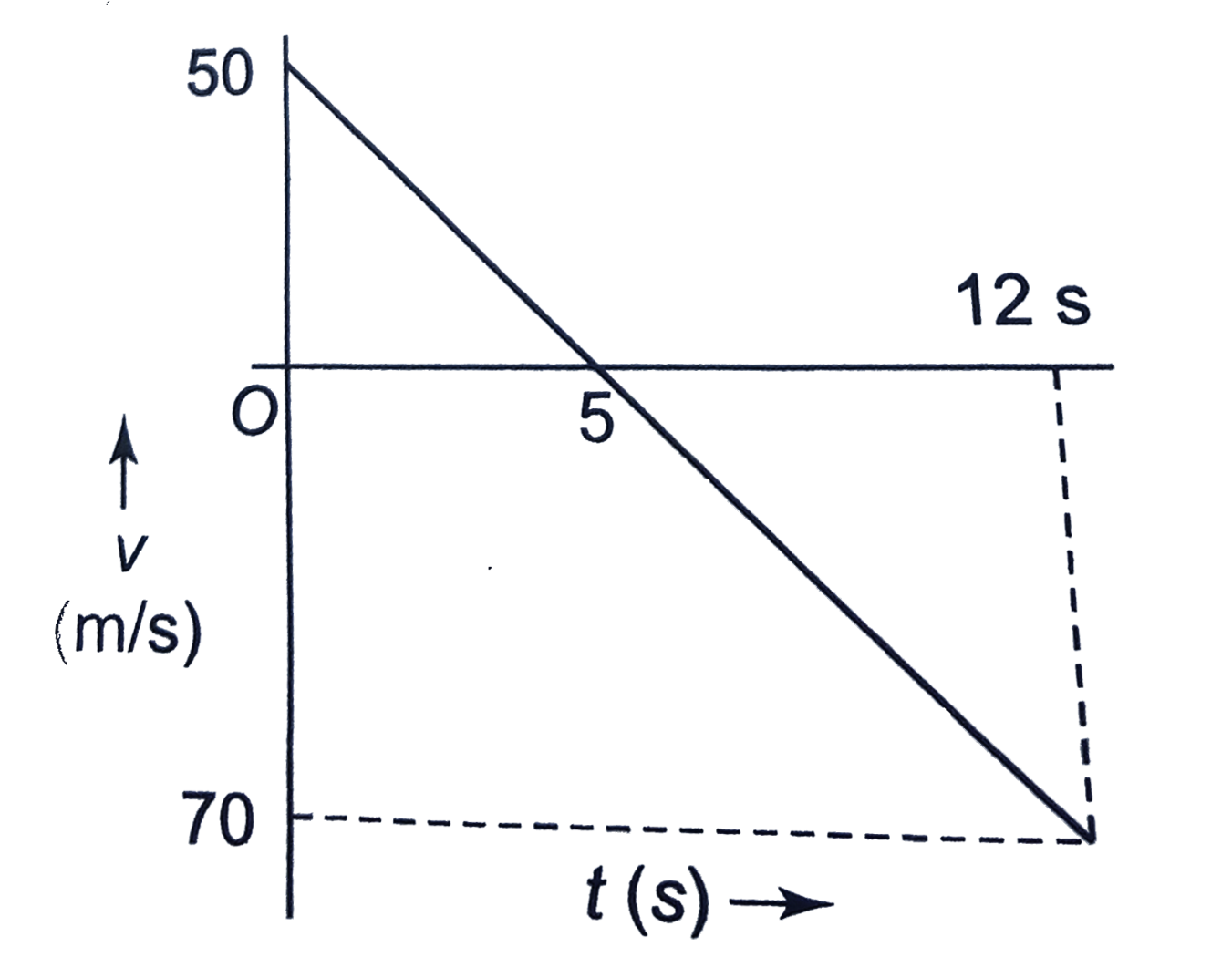 Comdining the above two graph, we get the following graph: 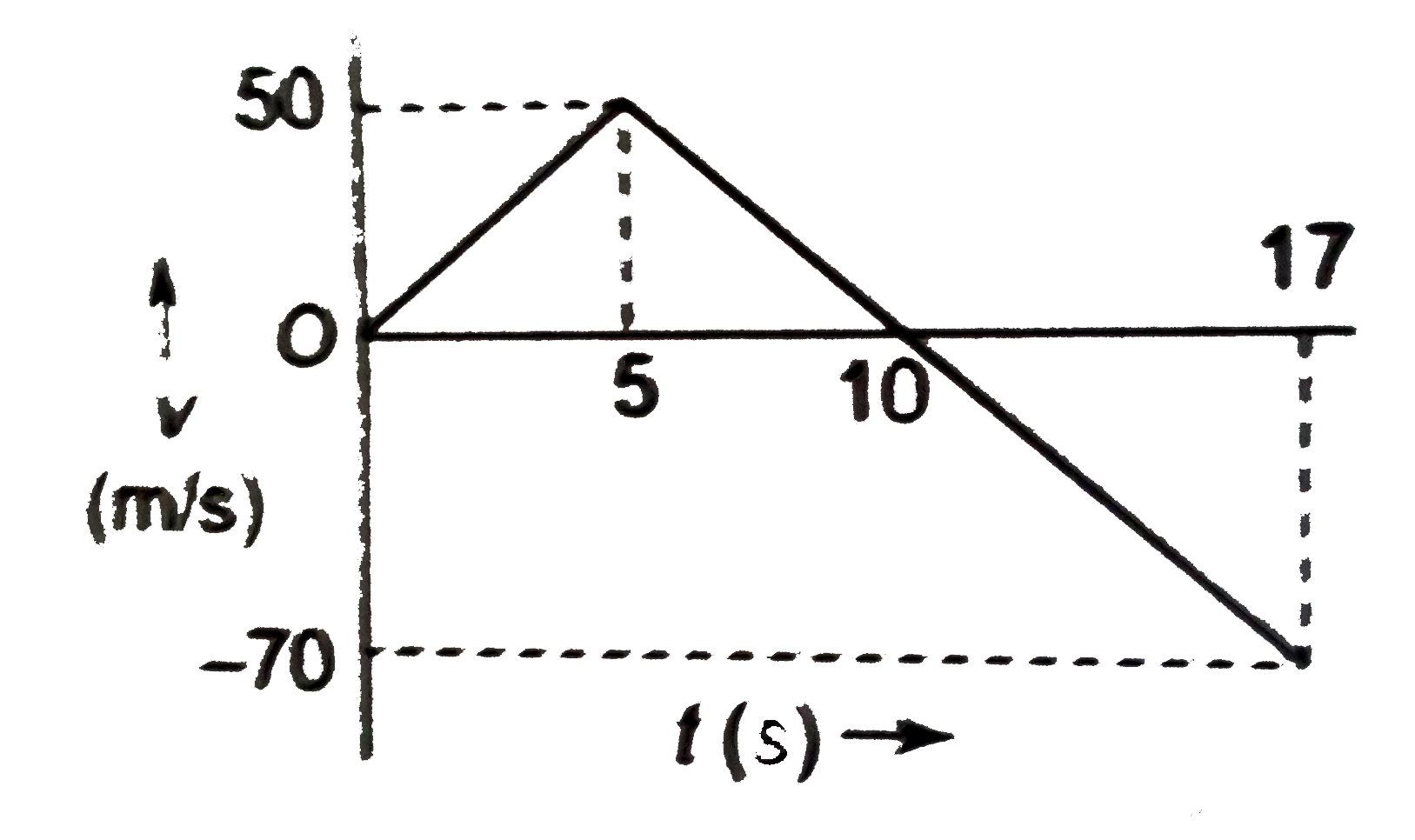 The area of the v-t graph from t=0 to t=10 s will give the maximum HEIGHT attained by the stone. Maximum height`=1/2xx50xx10=250 m` OR If we take time from the start of the balloon, the velocity of the stone in terms of time after its release will be `v=50-10(t-5)=100-10t(5 s lt = t lt = 17 s)` `t=5 s, v=50 m//s` `t=17 s, v=-70 m//s` `v=0implies100-10T=0impliest=10 s` 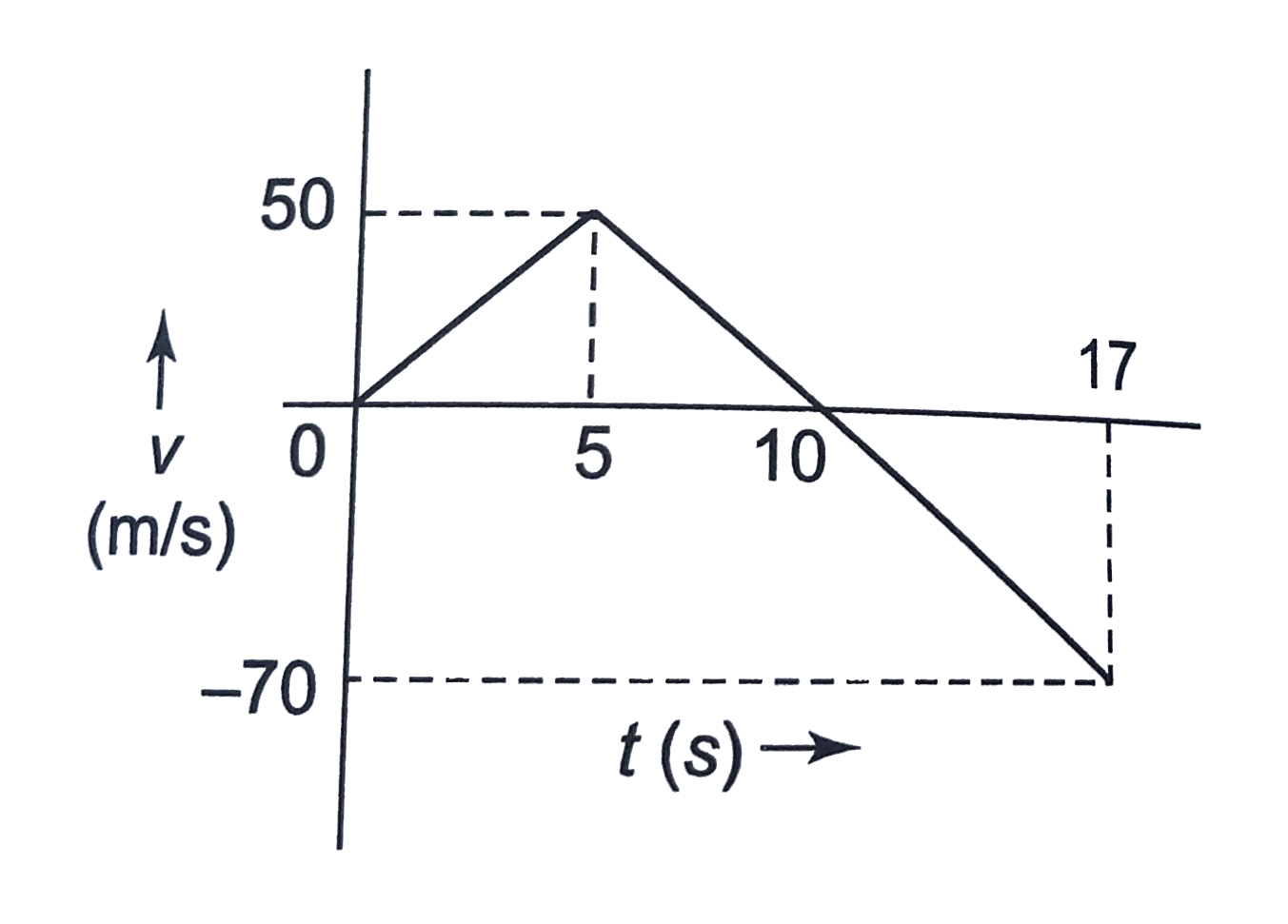
|
|