

Saved Bookmarks
| 1. |
a. b. c. Acetone on reaction with NH_(2)OH gives one compound, whereas acetaldehyde gives two compounds that can be separated. Why? d. Acetone on reaction with HCN gives one compound, whereas acetaldehyde gives two compounds that are difficult to separate. Why? e. Butan-2-one gives sodium bisulphite addition product, whereas pentan-3-one does not. Why? (Test to differentiate Butan-2-one and pentan-3-one) f. h. There are two (-NH_(2)) groups in semicarbazide, of them which group reacts with (C=O) group and why? |
Answer» Solution :a. 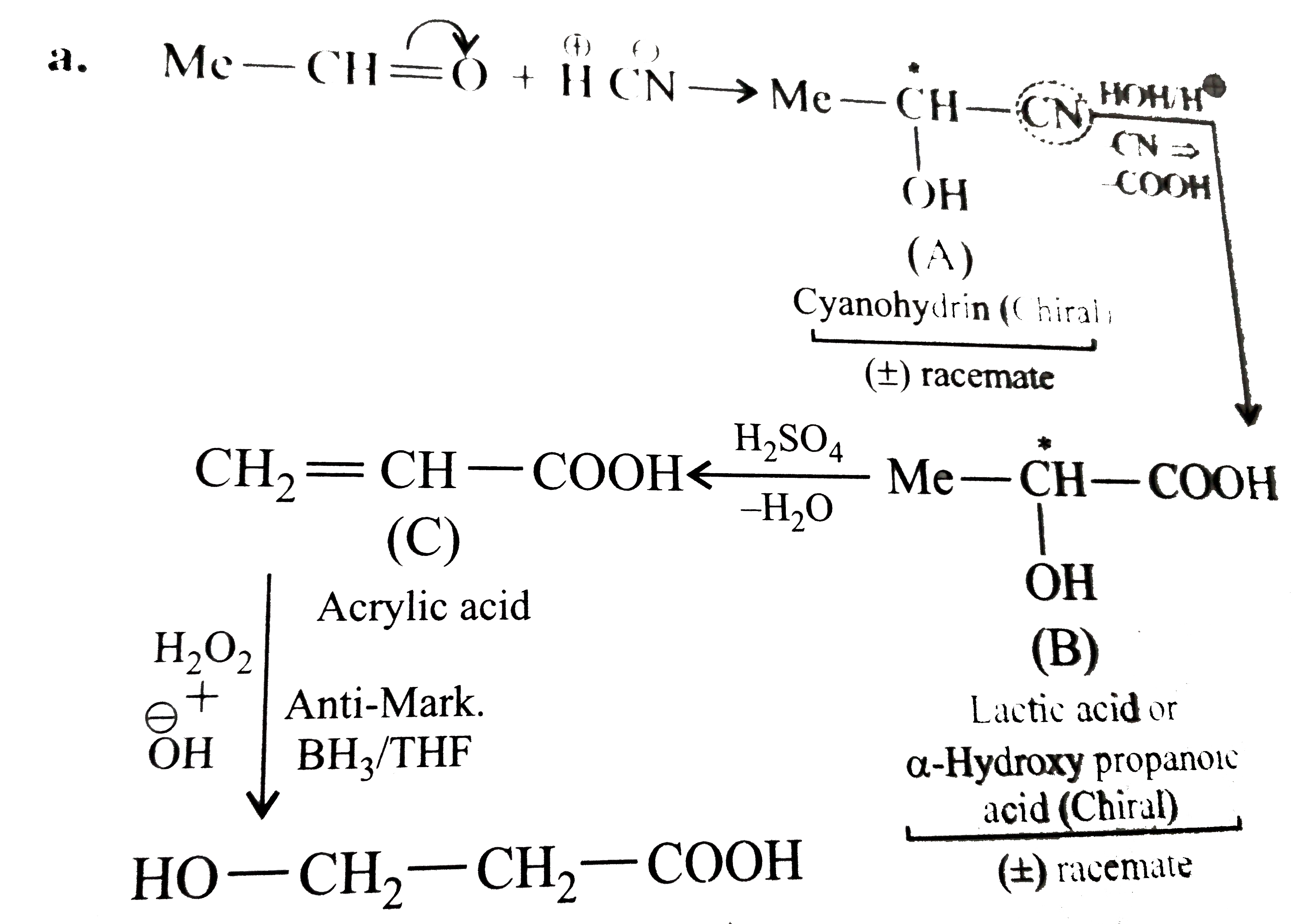 b. 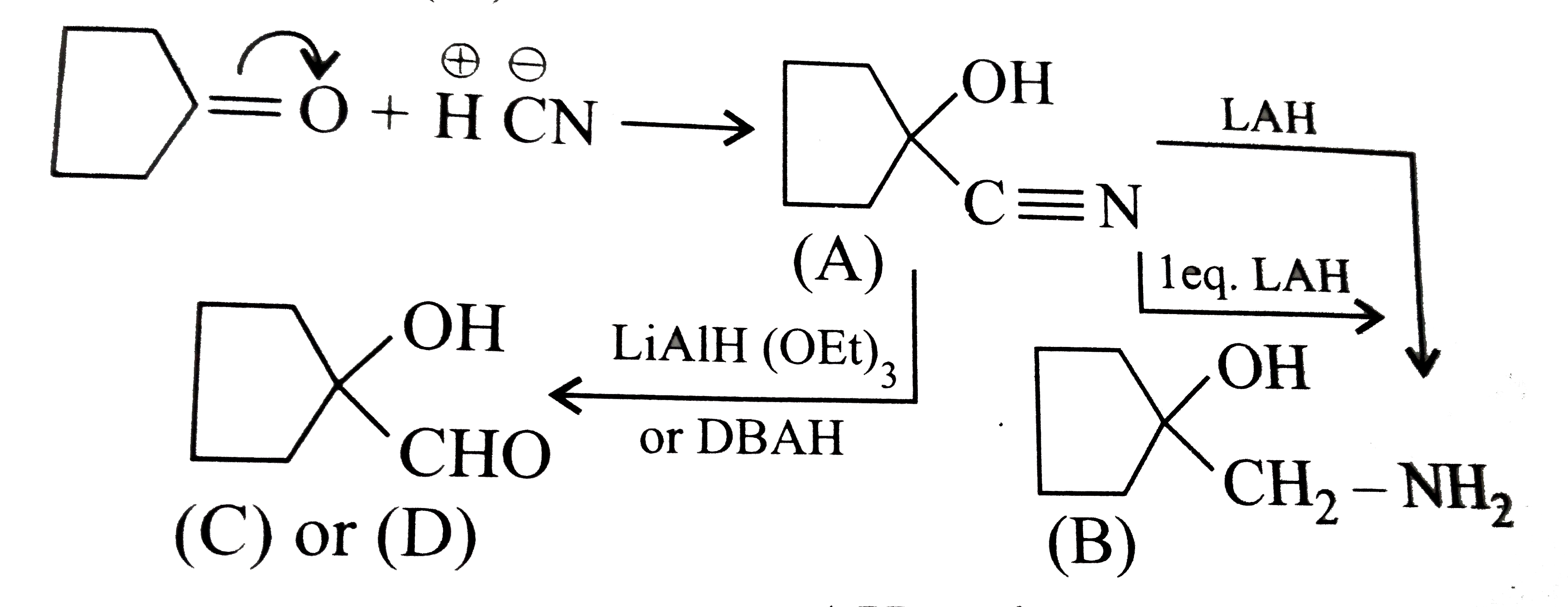 With one equivalent of LAH at low temperature, the reaction can be used to avoid over-reduction and proceed only upto aldehyde stage. Deactivated reducing agents such as lithium triethoxyaluminium hydride or DBAH may also be used. Mechanism: 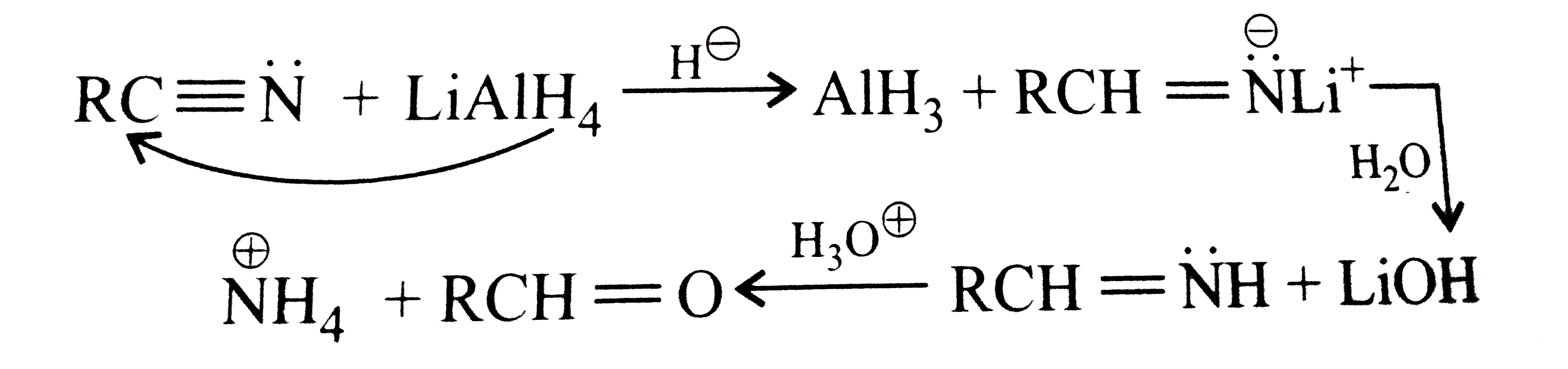 c. i. 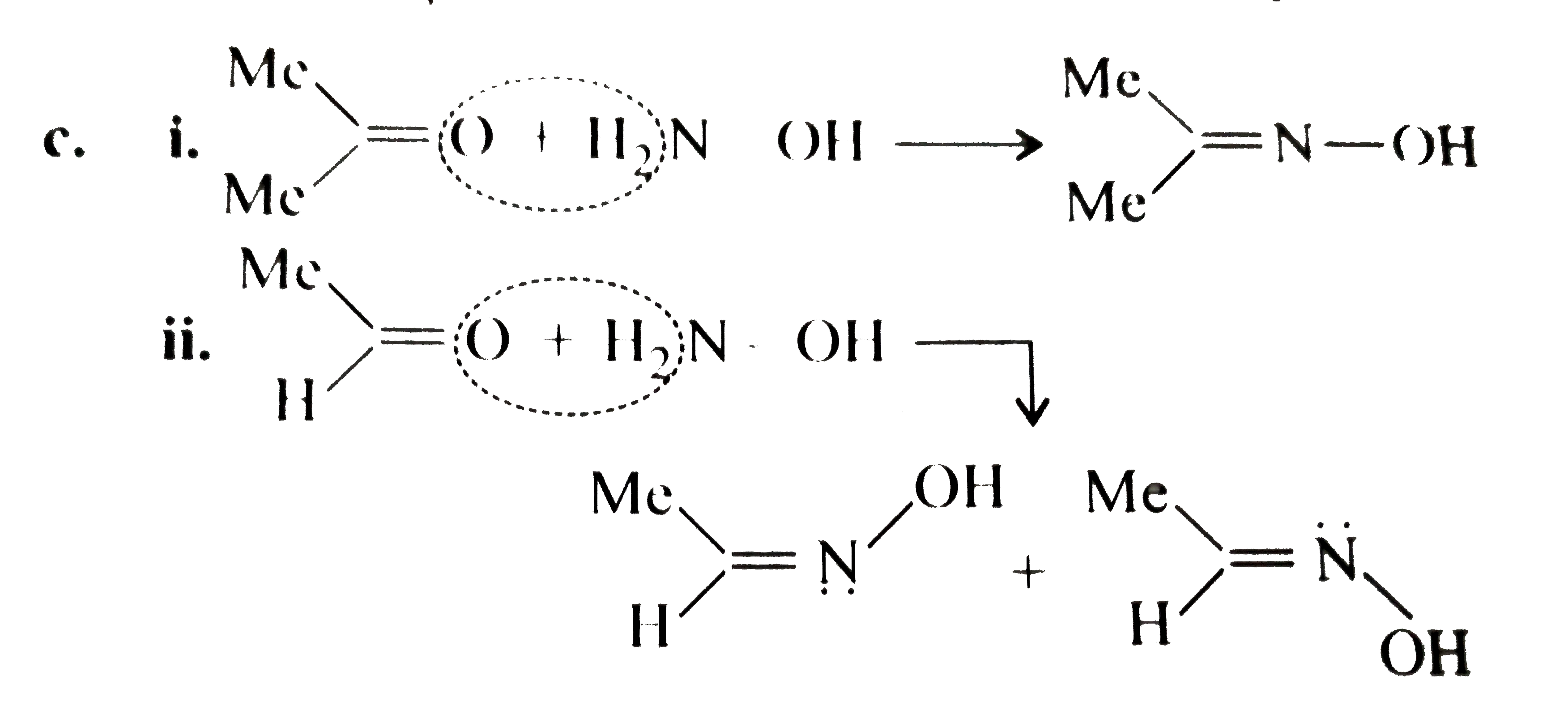 ii. 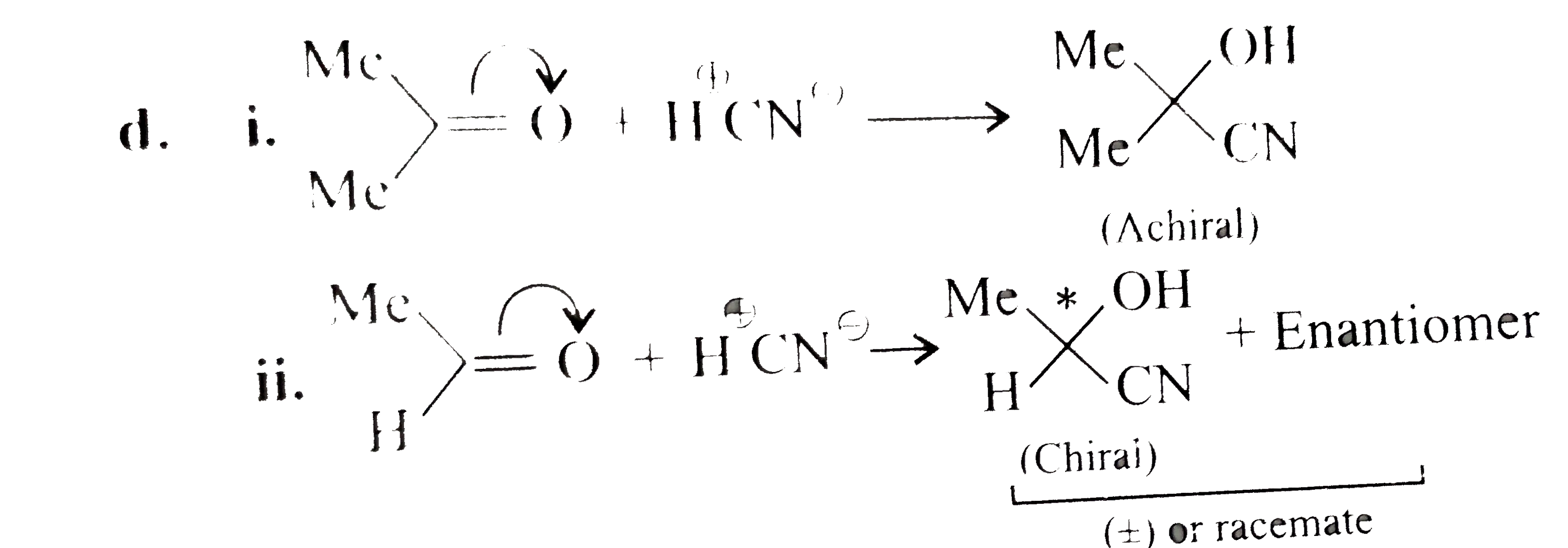 It gives geometrical isomers (disastereomers) which can be separated. Similar reactions are possible with other derivatives of ammonia, i.e., `NH_(2)NH_(2), PhNHNH_(2), 2,4-DNP`, semicarbazide `(H_(2)N NHCONH_(2))`, etc. SIMILARLY, `HCHO`, `PhCOPh` (benzophenone),`MeCH_(2)COCH_(2)Me` (pentan`-3-`one), etc.,will GIVE one compound, whereas `MeCHO`,`PhCOMe` (acetophenone),`PhCHO`, and `MeCH_(2)COMw` (butan`-2-`one) will give two geometrical isomers. d. i. 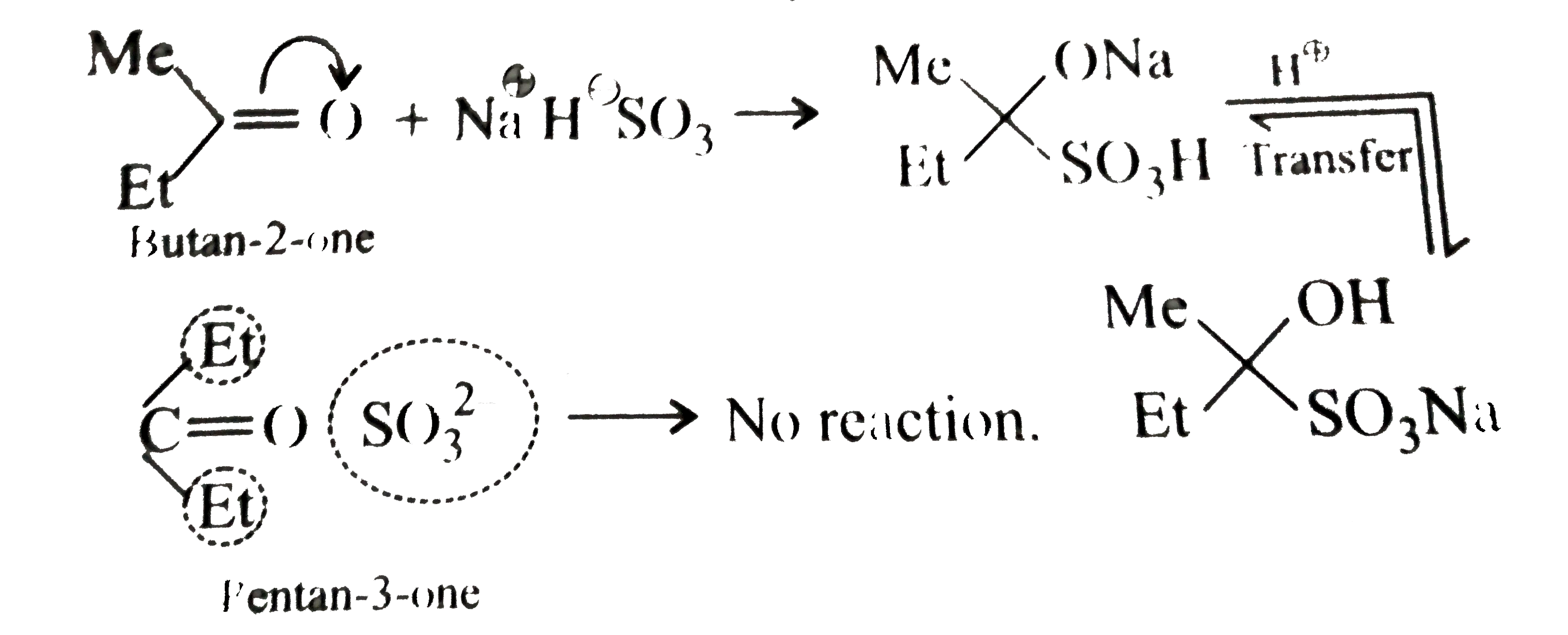 ii. 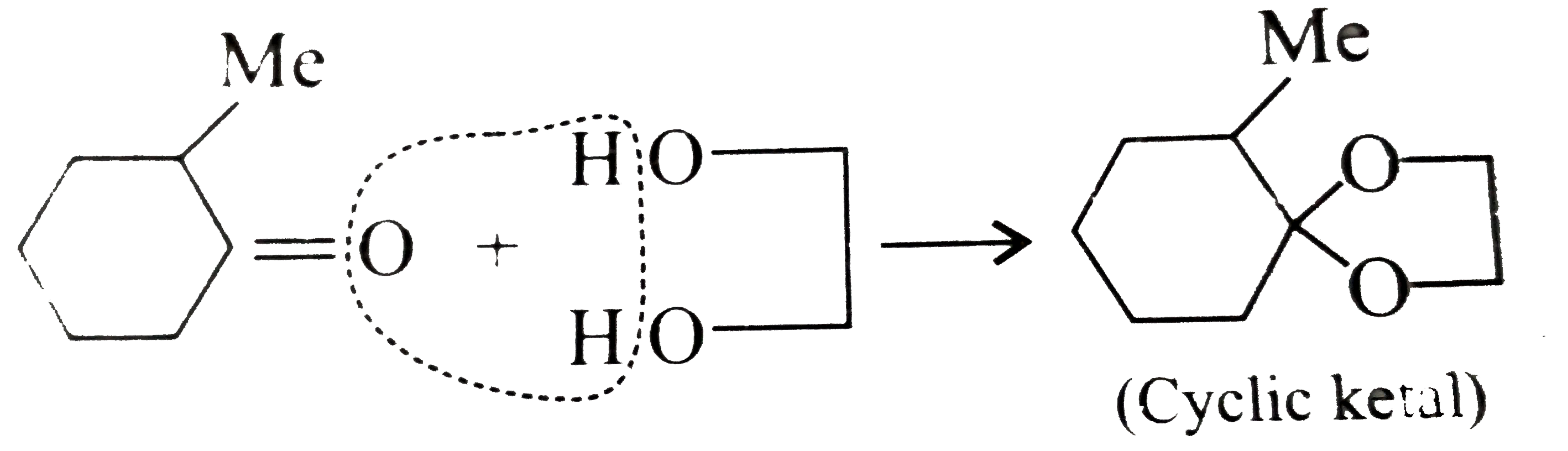 It gives enantiomers (optical isomers) due to the chiral centre. They arae difficult to separate since the chemical and physical properties of enantiomers are same. HOWEVER, they can be separated by biochemical method using enzymes and making their diastereomers. Similarly, `HCHO, MeCOMe, PhCOPh` (benzopehenone), `MeCH_(2)COCH_(2)Me` (pentan`-3-`one) will give only one compound, whereas `MeCHO, PhCOMe` (acetophenone), and `MeCOCH_(2)Me` (butan`-2-`one) will give two optical isomers. e. 3-Pentanone undergoes `NA` reaction with `HCN`, `NH_(3)`, `ROH`, etc., but with `NaHSO_(3)`, it does not react. This is due to the following: i. Large-sized nucleophile `(SO_(3)^(2-))`. ii. Due to steric hindrance by two bulky ethyl group. 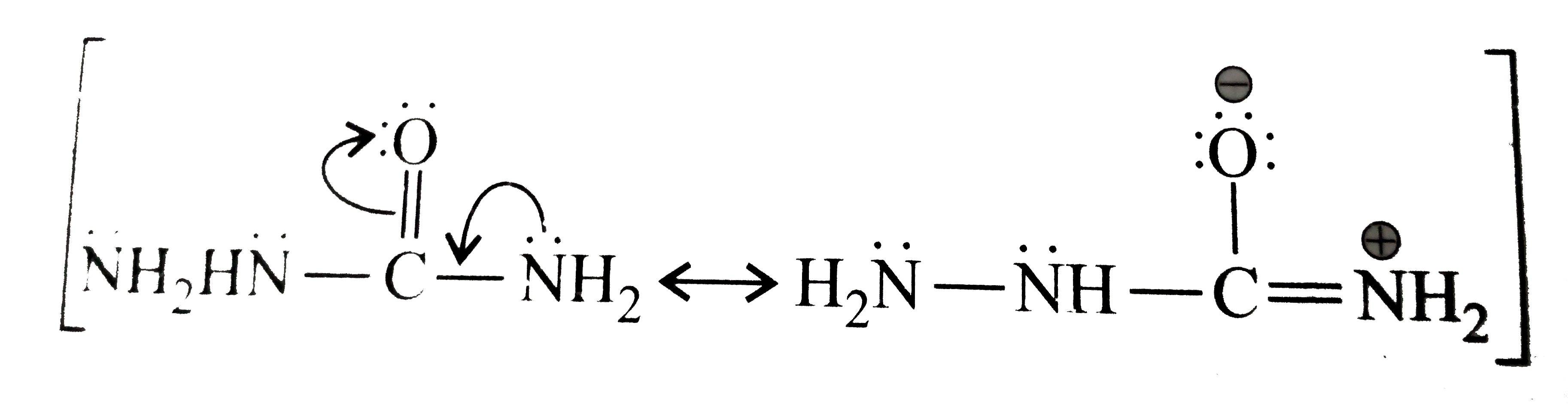 f. No reaction, since ketone does not react with monohydric alcohol. h. Semicarbazide `(overset(a)NH_(2)NHCOoverset(b)NH_(2))` reacts with `(C=O)` with `(overset(a)NH_(2))` group, since `(overset(b)NH_(2))` group closer to `(C=O)` group is deactivated by resonance stabilisation. Hence, `(overset(b)NH_(2))` group no longer acts as nucleophile. So, `(overset(a)NH_(2))` group is more nucleophilic than the `(overset(b)NH_(2))` group. |
|