

Saved Bookmarks
| 1. |
1. i. 2CH_(3)CH_(2)CHOoverset(Θ)overset(OH)rarr(A)oversetDeltararr(B) ii. 2PhCH_(2)CHOoverset(Θ)overset(OH)rarr(C)oversetDeltararr(d) iii. iv. 2. i. ii. A hydrocarbon (A) of the formula C_(7)H_(12) on ozonolysis gives a compound (B) which undergoes aldol condensation giving 1-acetyI cyclopentene. Identify (A) and (B). 3. Acetone and butan-2-one undergo both self and across aldol (ketol) condensations to gove aldol (ketol) which loses water to give alpha,beta- unsaturated ketones. The number of isomeric alpha,beta- unsaturated ketones formed is: i. Three iii. Four ii. Five iv. Six 4. Give the cyclic intramolecular aldol condensation of the following reactions: a. Hexane-2,5-dione underset((ii) Delta)overset((i)overset(Θ)(O)H)rarr b. Octane-2,8-dione underset((ii) Delta)overset((i)overset(Θ)(O)H)rarr c. Nonane-2,8-dione underset((ii) Delta)overset((i)overset(Θ)(O)H)rarr d. Pentane-2,4-dione underset((ii) Delta)overset((i)overset(Θ)(O)H)rarr 5. Identify the reactants that can be and that cannot be synthesised from the compounds given below. i. PhCH=CHCOCH=CHPh ii. PhCH=CHCH_(2)COMe iii. PhCH=CHCH_(2)CH_(2)COMe iv. PhCOCH=CH_(2) v. PhCH=CHCH=CHCOMe vi. 3- Ethyl -2- methyl cyclohex -2-en-one vii. 2- Methyl cyclohex -1-ene-carboxaldehyde viii. ix. 1- Hydroxy-4-methyl bicyclo [2.2.2] octan-3-one 6. Give the mixed aldol product from the reaction of crotonaldehyde (CH_(3)CH=CH-CH=O) with CH_(3)CHO |
Answer» Solution :1. i. 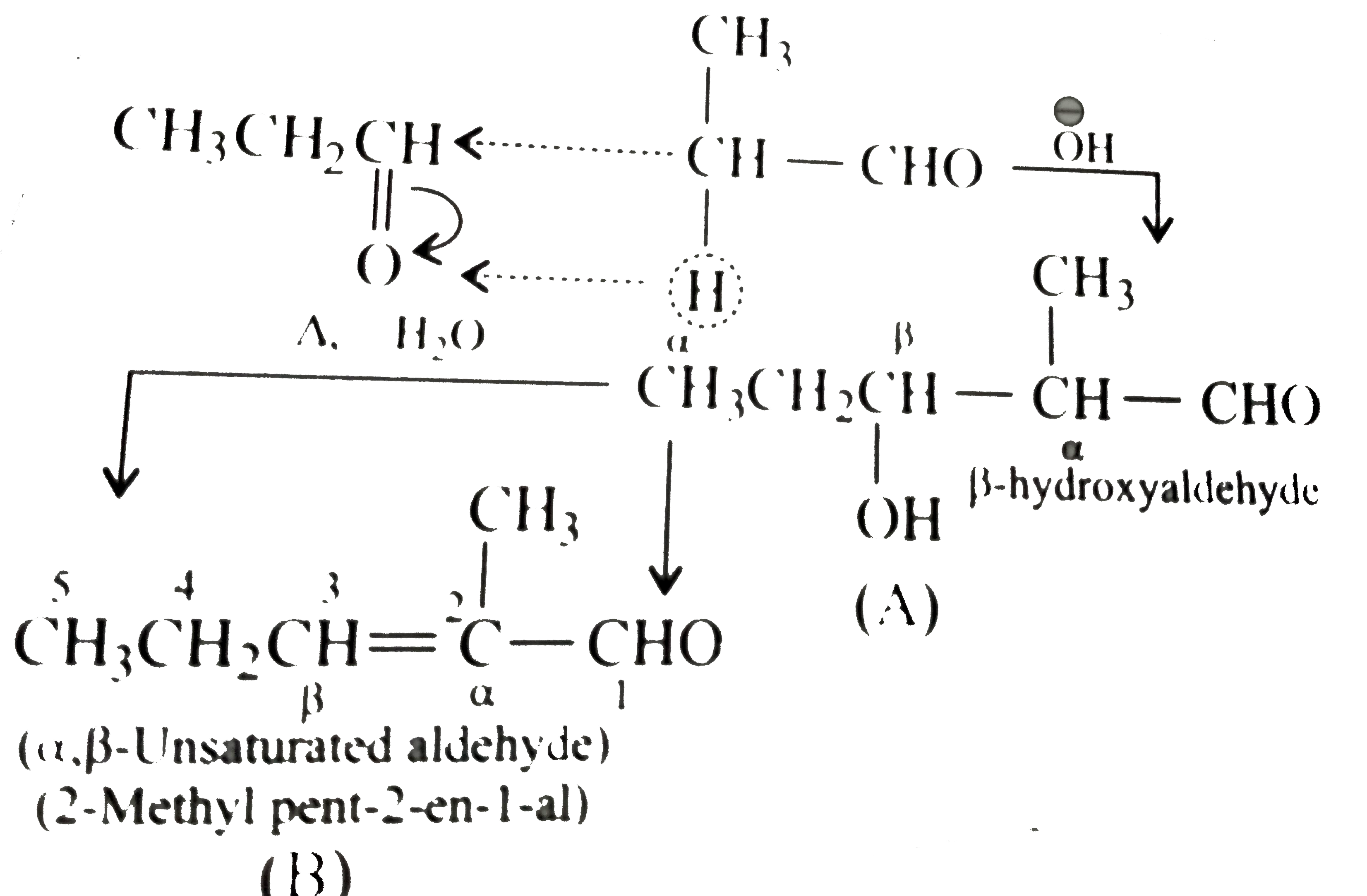 ii. 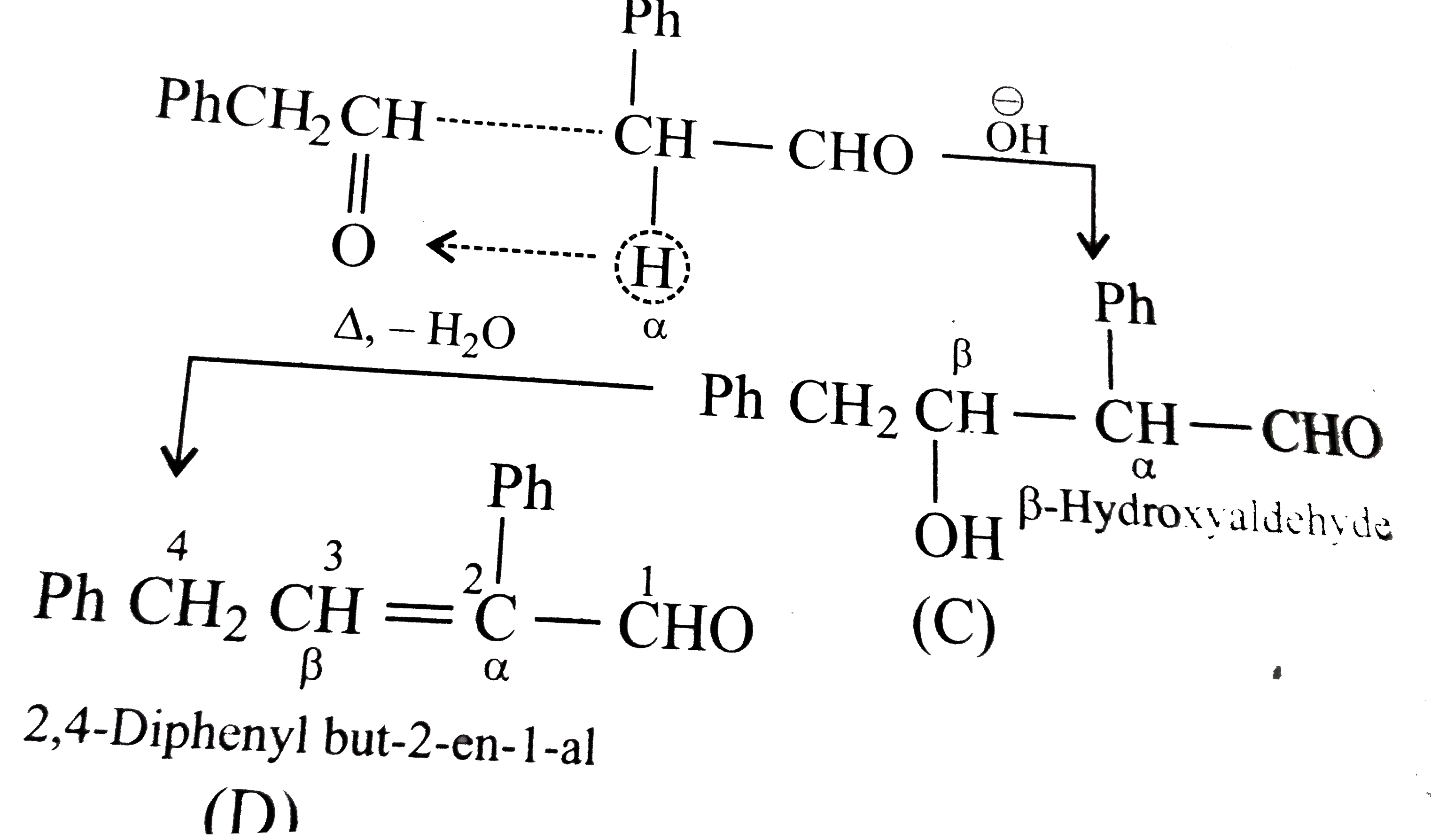 iii. 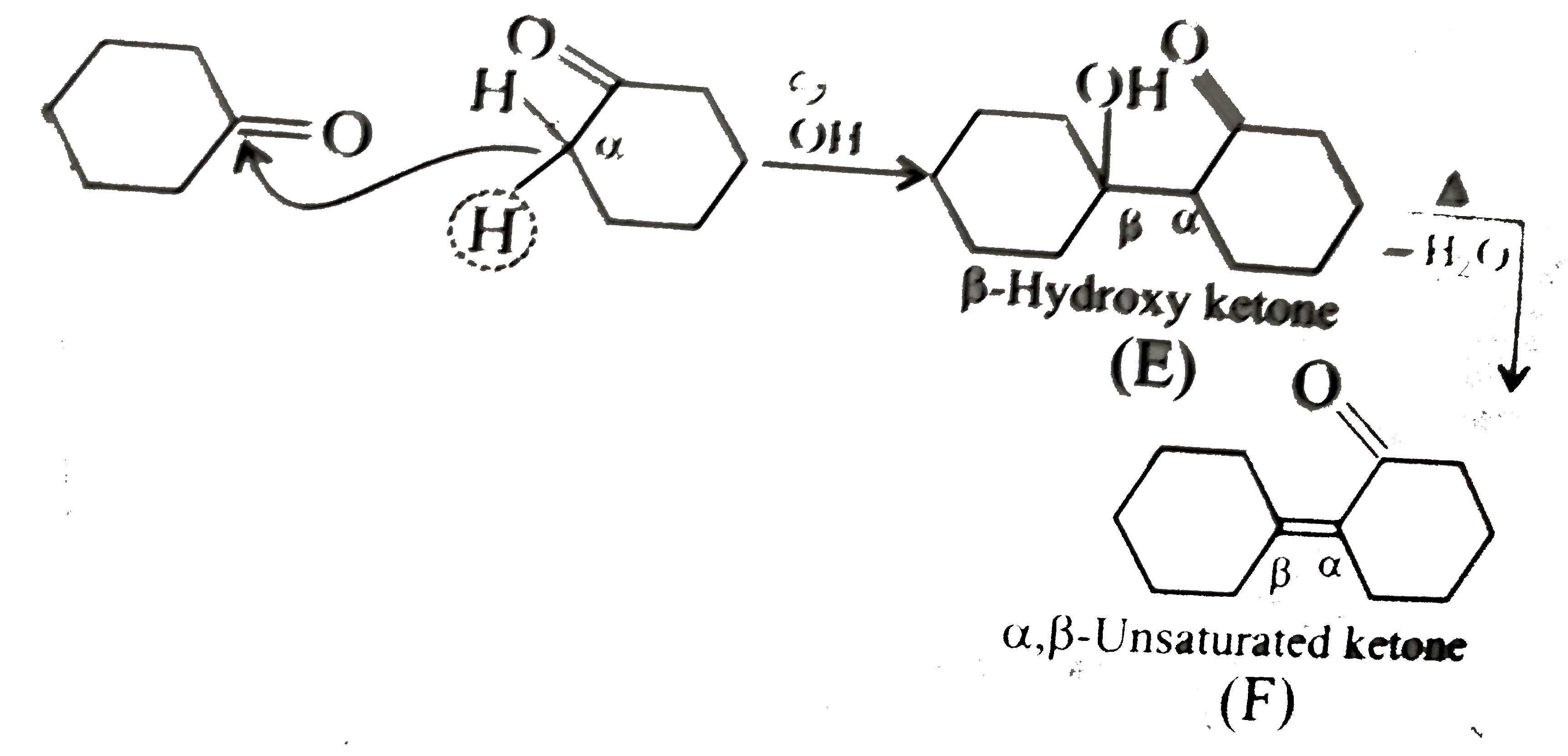 iv. 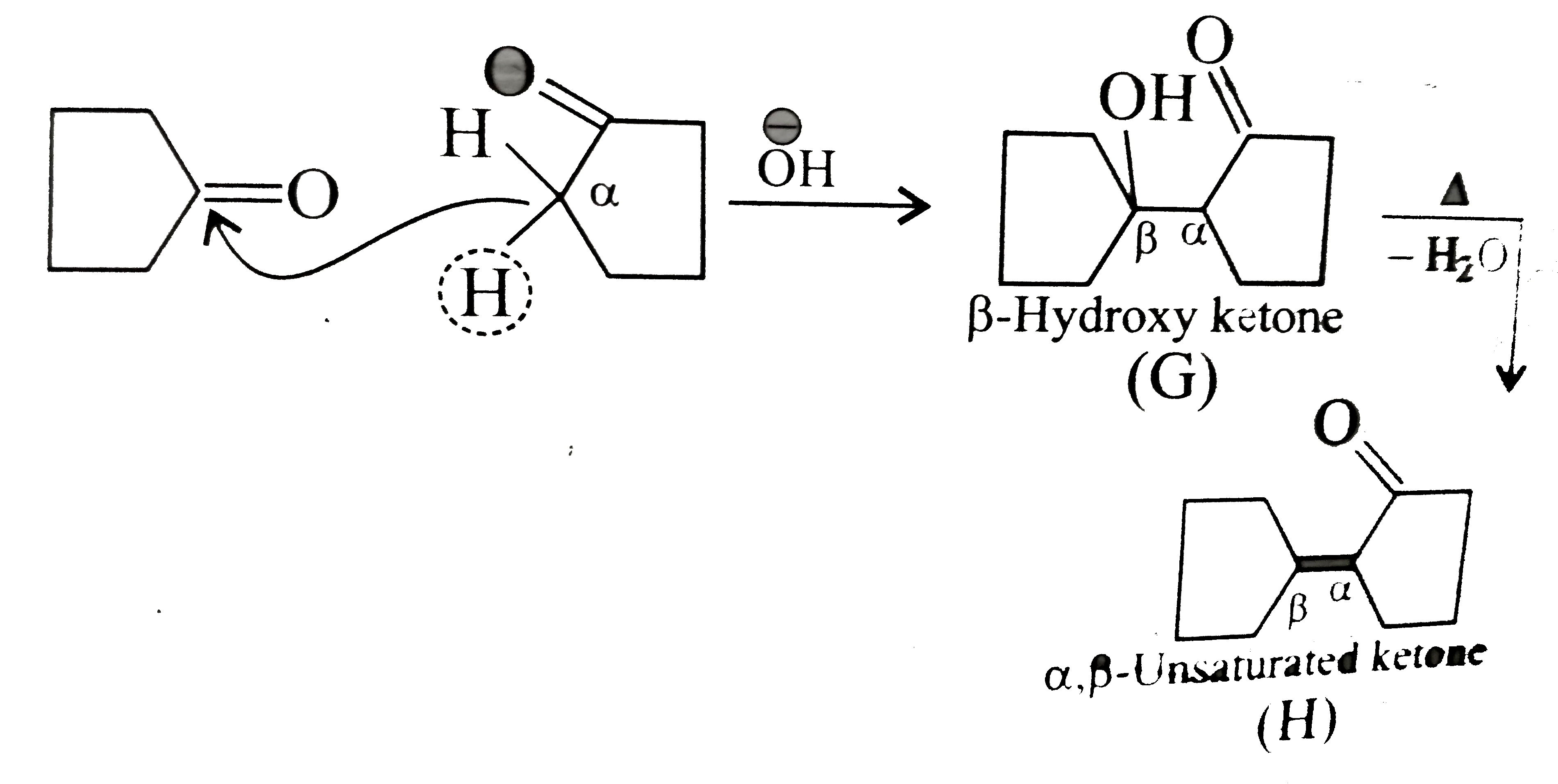 2. i. 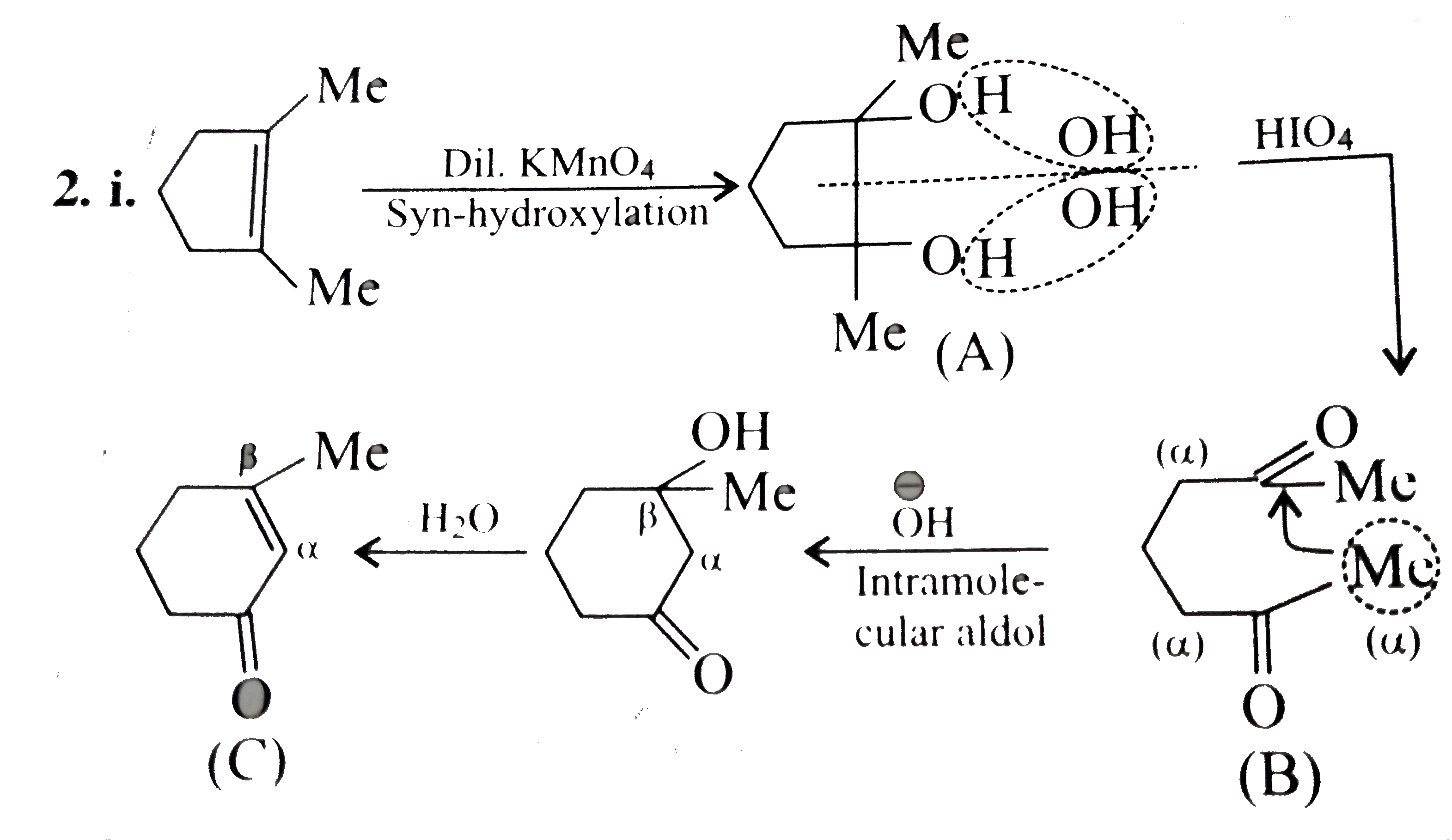 ii. 2 D.U. in A`=((2n_(C)+2)-n_(H))/(2)=(16-12)/(2)=2^(@)` Two D.U. in `(A)` SUGGEST one `(C=C)` bond, cyclic compound obtained with base suggests ring in `(A)`. 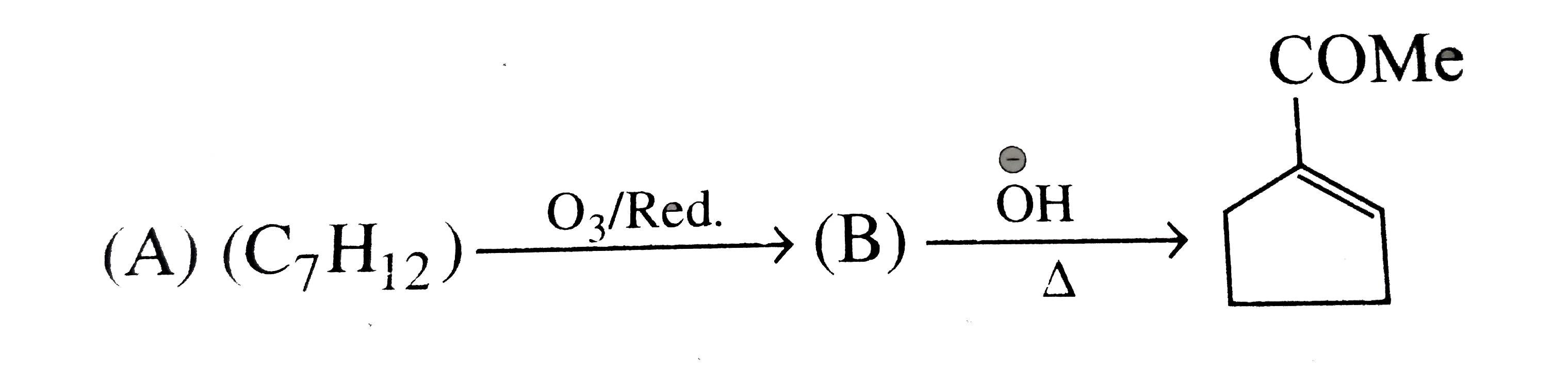 Proceed reverse: 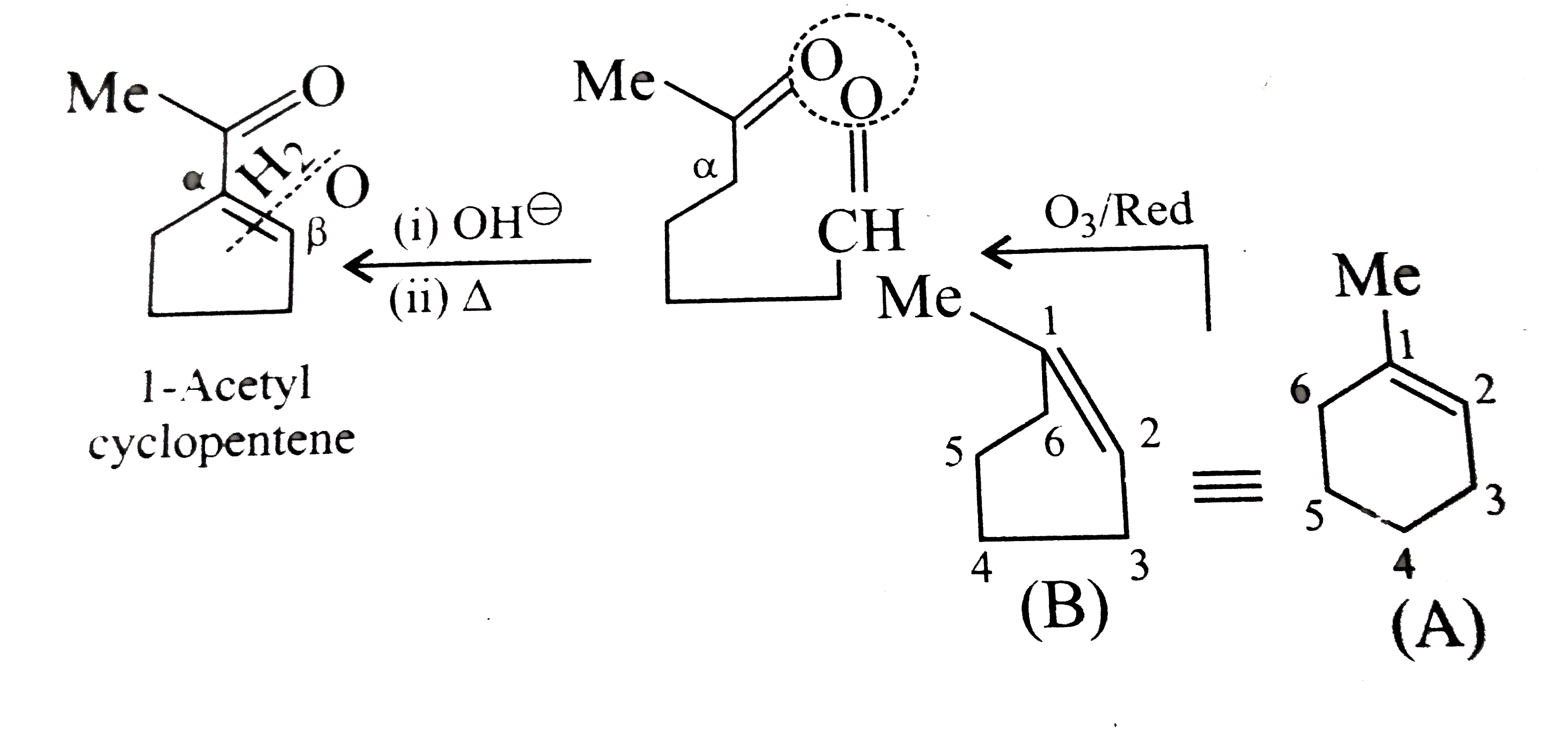 3.d. Three self and three crossed aldol condensation products: Butan`-2`-one (unsymmetrical KETONE) has two types of dissimilar `alpha-H` atoms `(overset(alpha)MeCOCoverset(alpha')H_(2)Me)`, and acetone (symmetrical ketone) has only one type of similar `alpha-H` atoms `(overset(alpha)MeCOoverset(alpha)Me)`. 4 a. 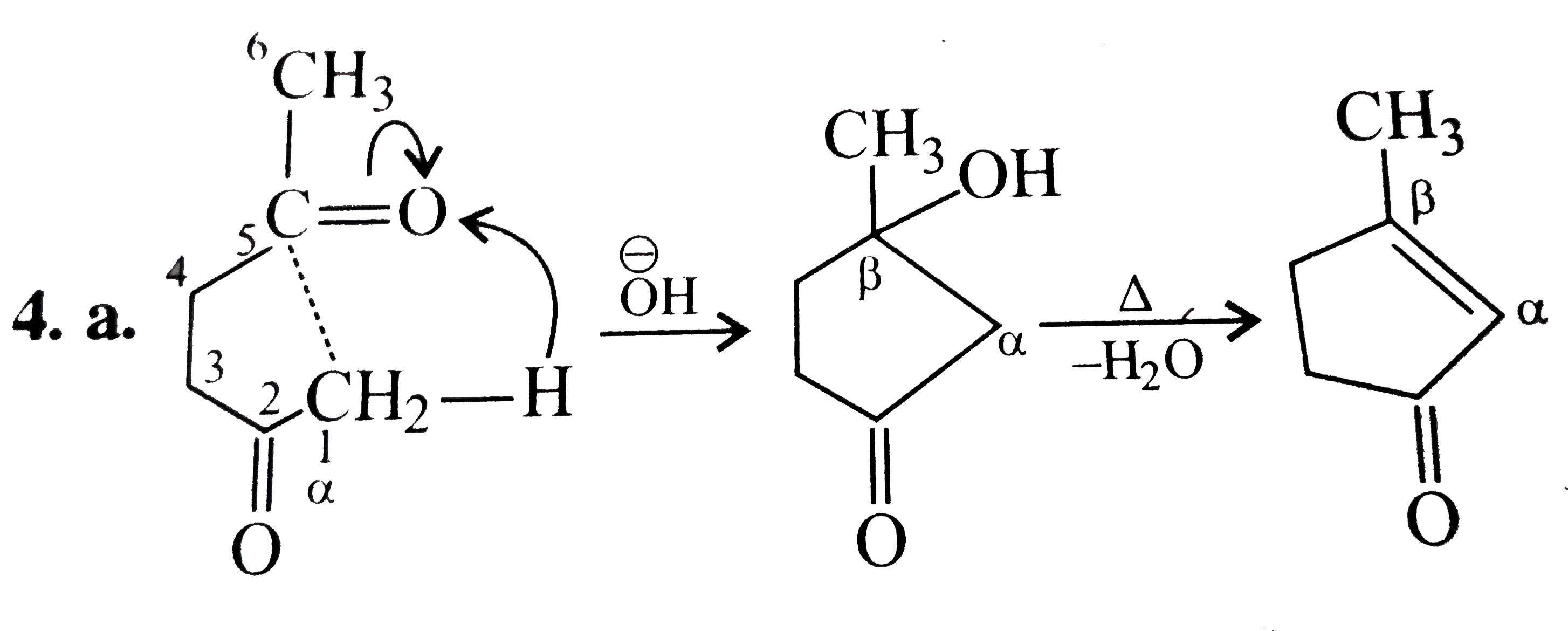 b. 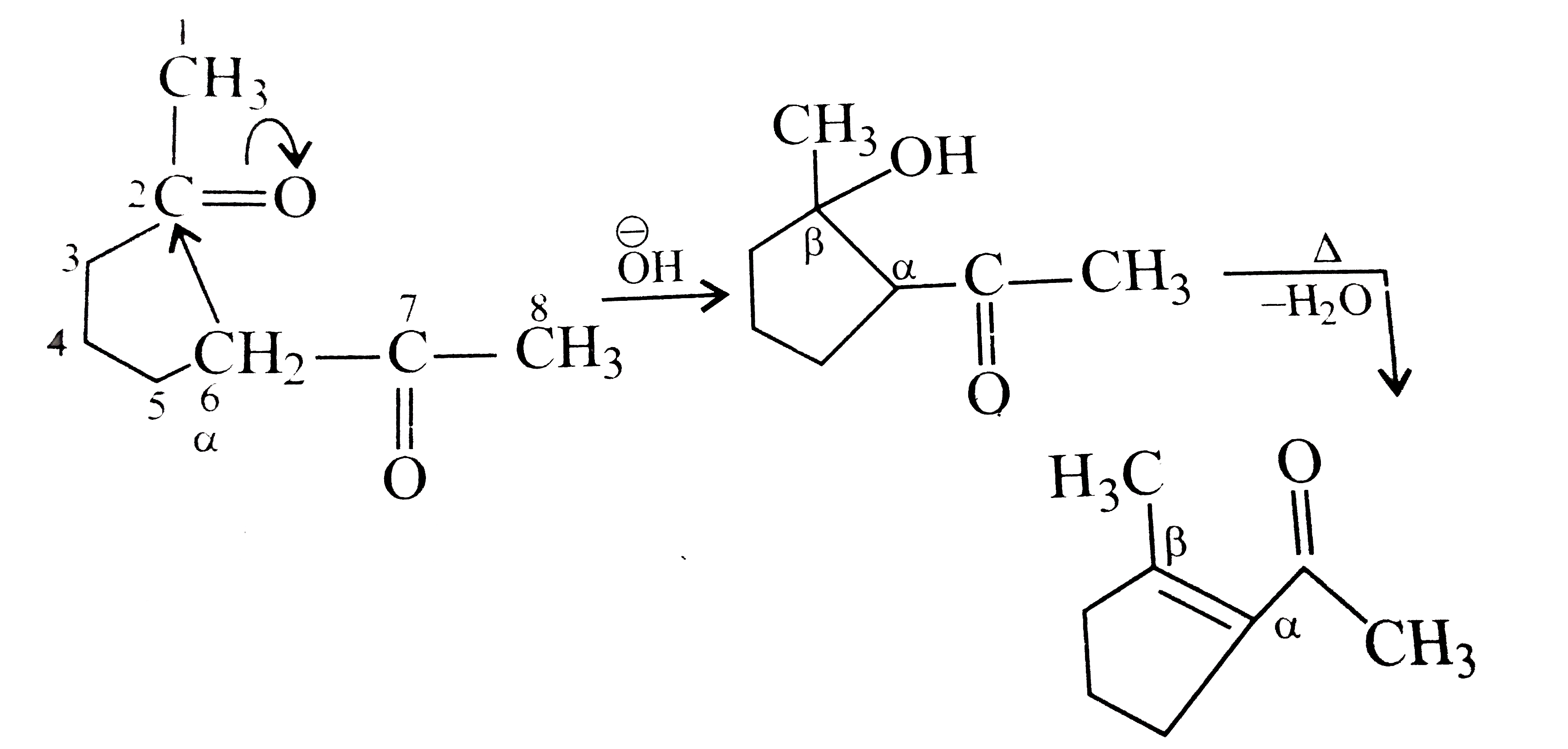 c. 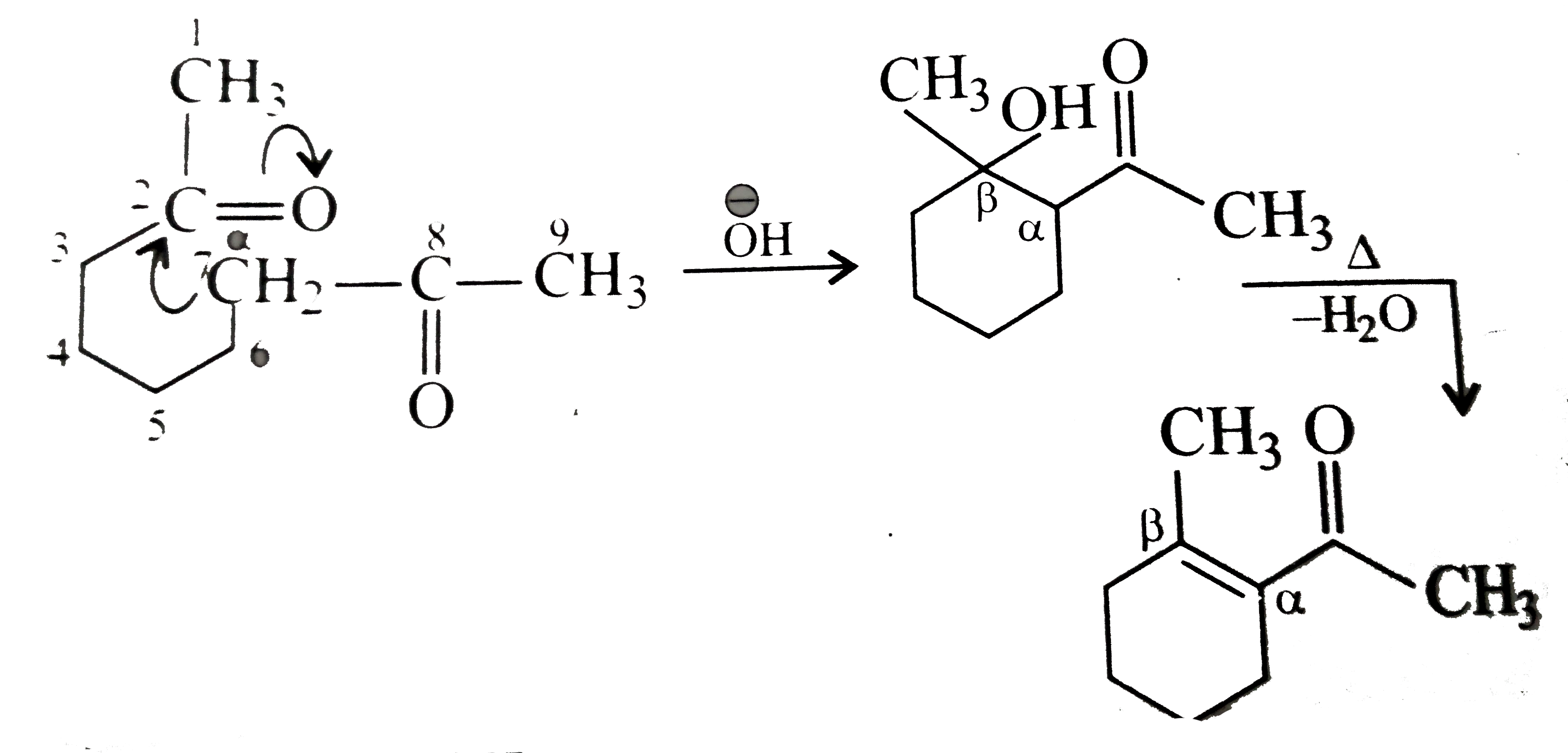 d. `(CH_(3)-CO-CH_(2)-CO-CH_(3))` merely forms the stable carbanion `(CH_(3)-CO-Coverset(..)overset(Θ)H-COCH_(3))` and does not react further. Carbanion does not ADD to C`-4` because a strained four-membered ring be would be formed. 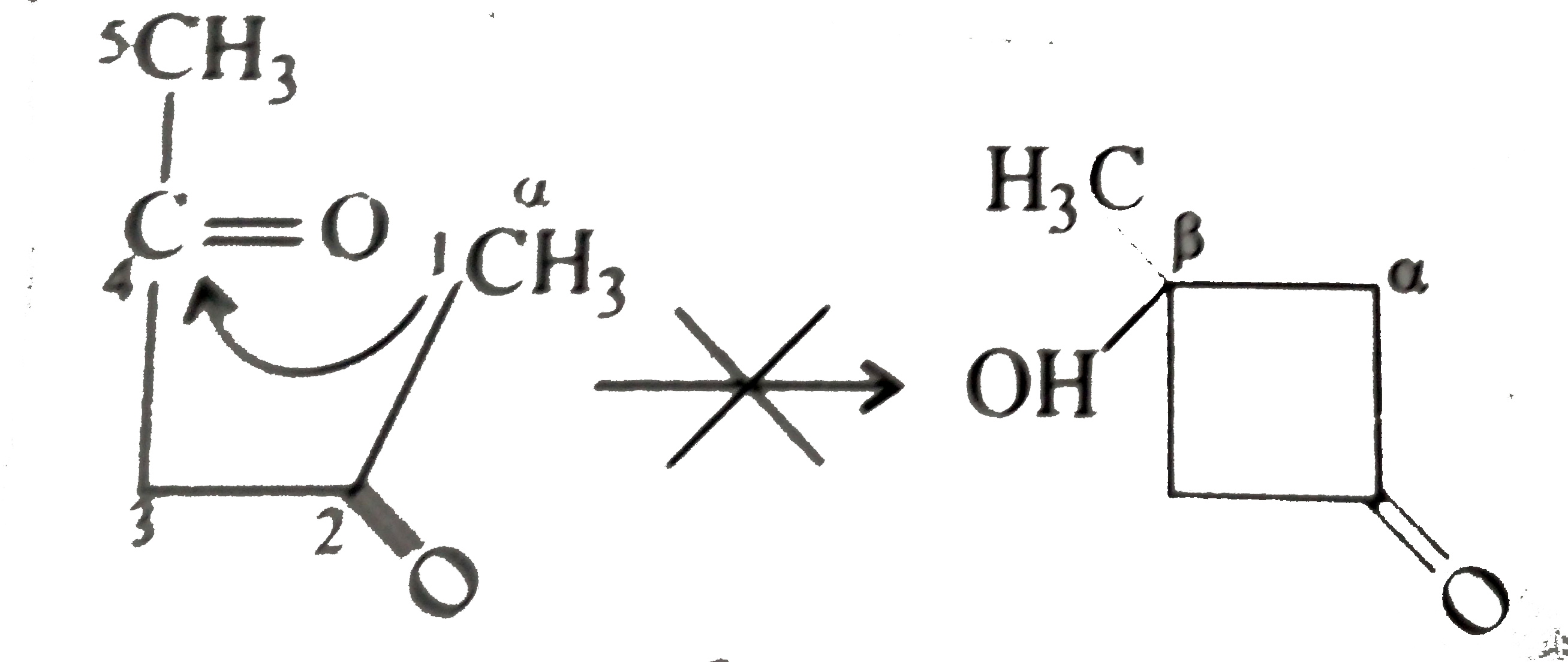 5. i. 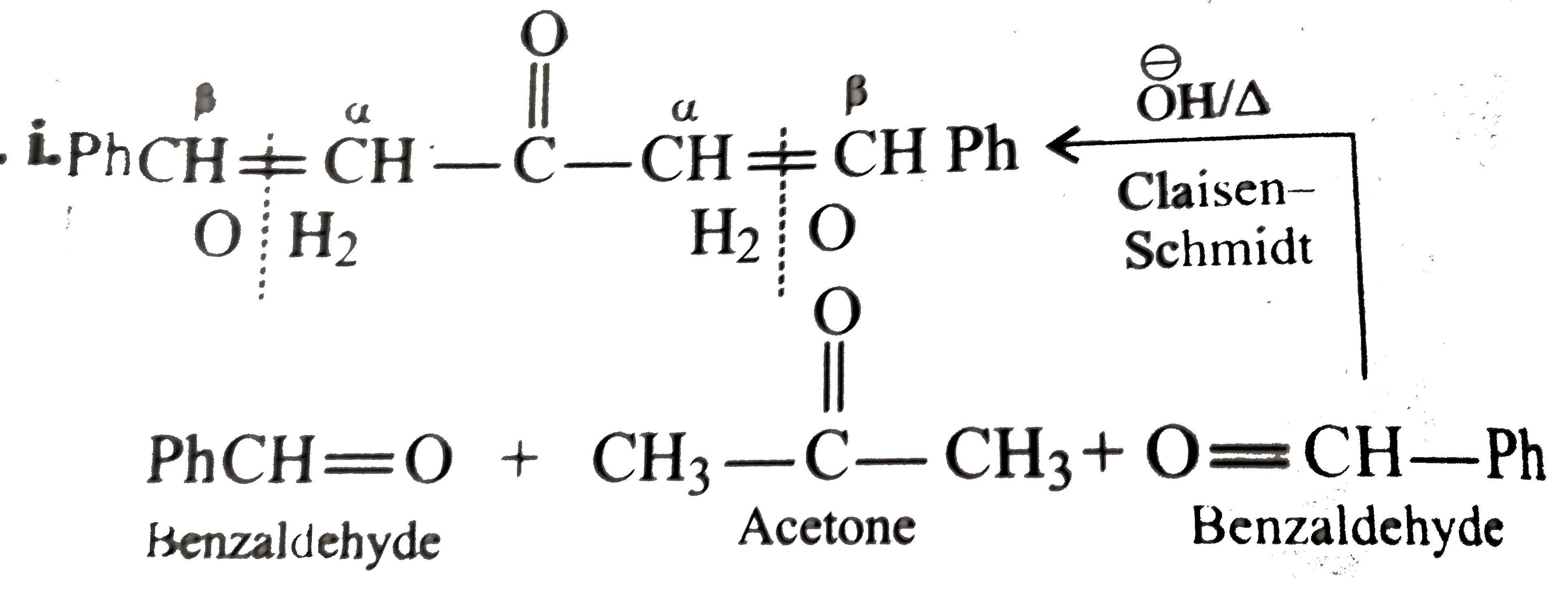 iv. 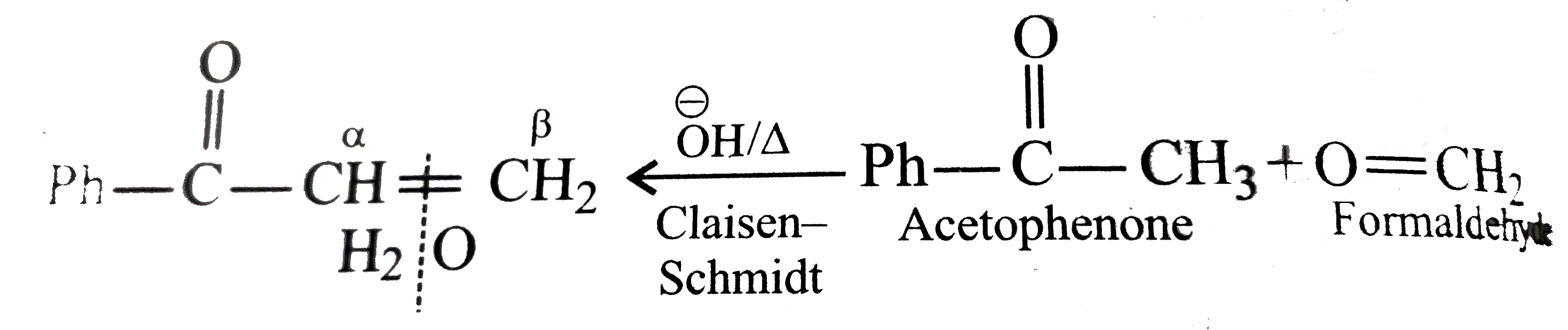 v. 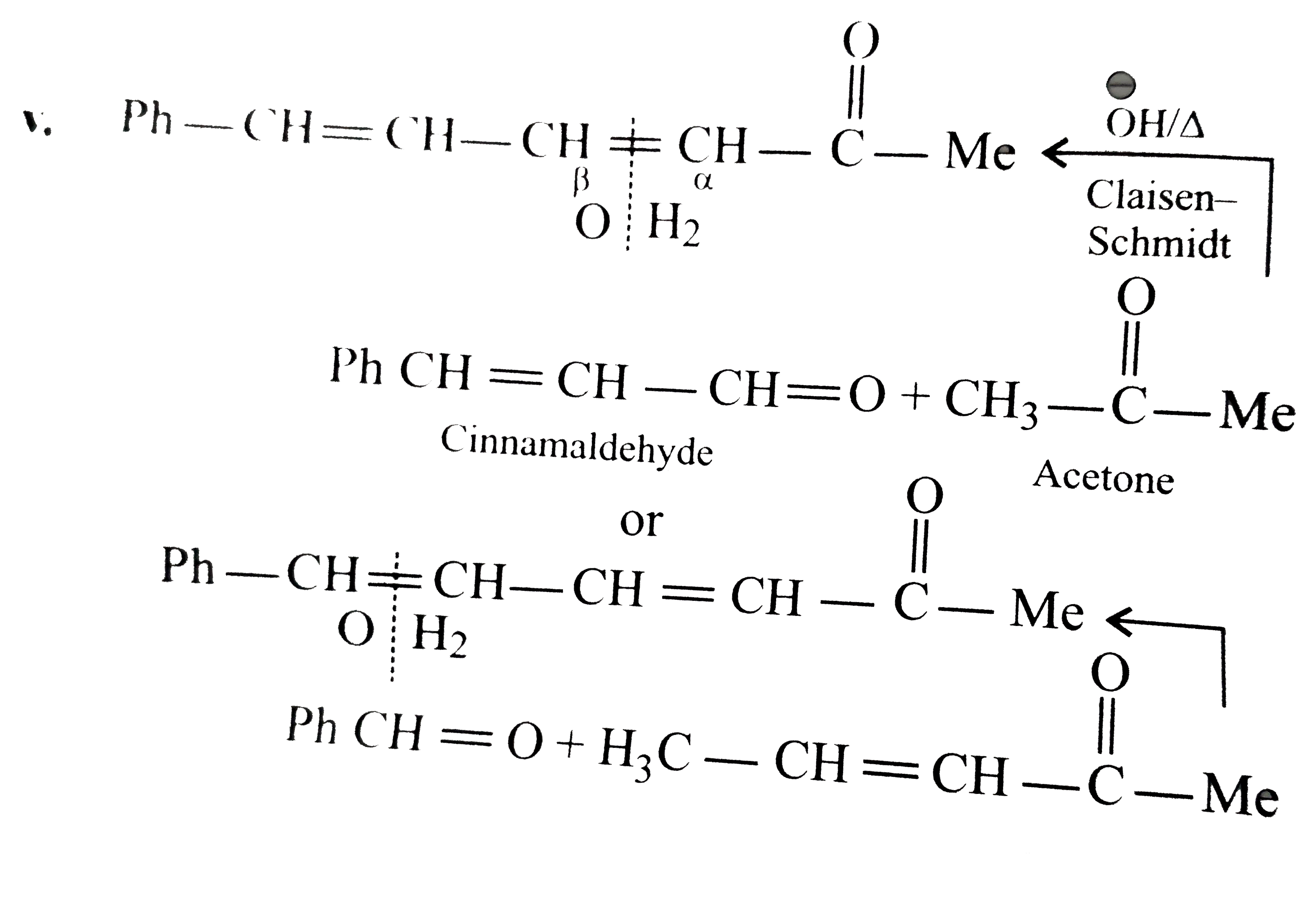 If the adol reaction of `PhCH=O` `(I)` with `CH_(3)CH=CH-overset(O)overset(||)(C)-Me (II)` occurs, two different carbanions (enolate anions) can form `overset(..)overset(Θ)Cunderset(gamma)H_(2)Cunderset(BETA)H=Cunderset(alpha)H-overset(O)overset(||)C-Me (III)` and `CH_(3)CH=CH-overset(O)overset(||)C-underset((alpha))(overset(Θ)(C )H_(2))` (IV). The carbanion (enolate anion) (III) is formed more easily than (IV). The carbanion (III) formed by the removal of `gamma-H` of (II) with base is delocalised to O through the conjugated system giving carbanion enolate. 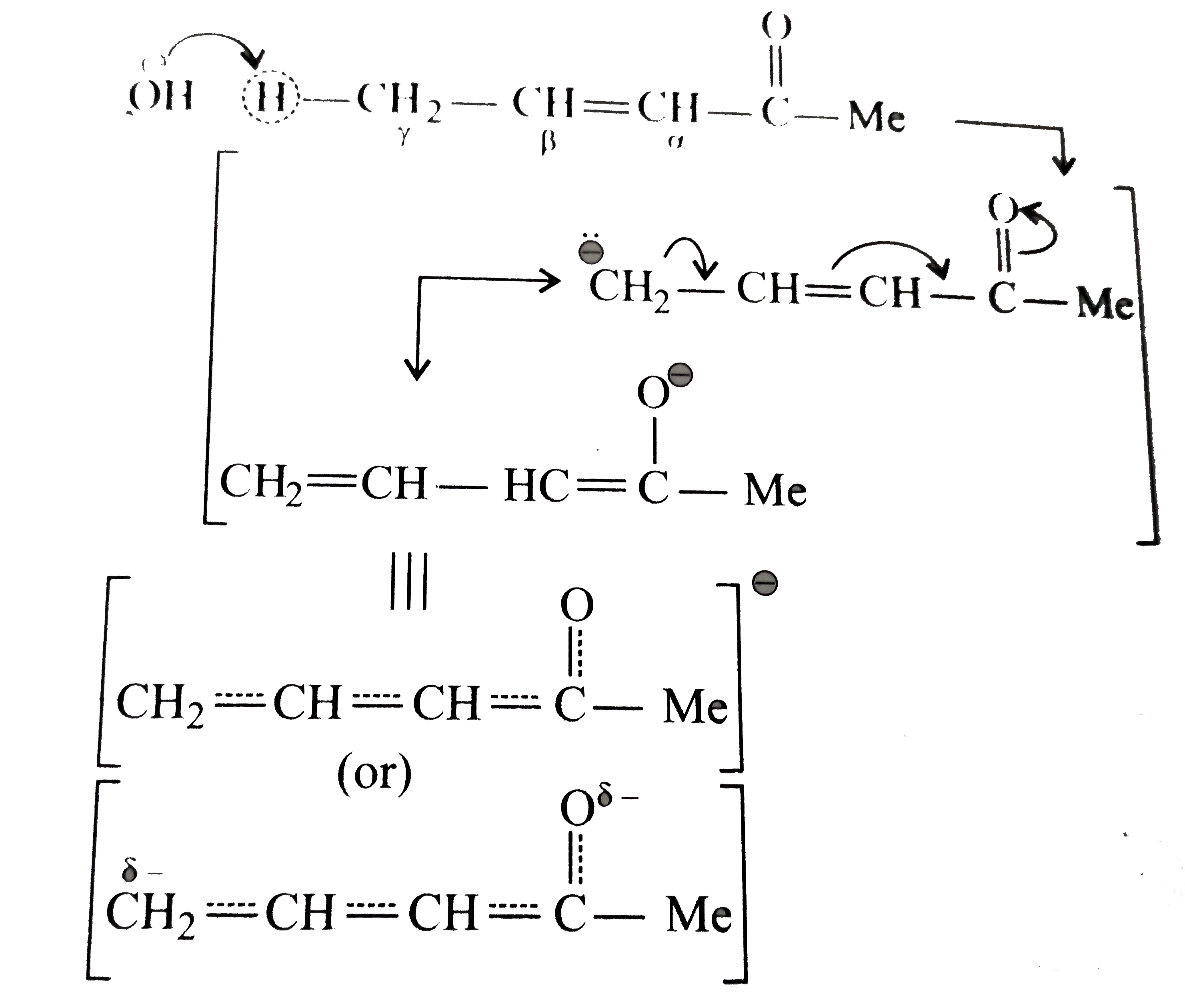 This anion (III) adds to the `(C=O)` of `PhCH=O (I)` to give `delta`-hydroxy alcohol which rapidly loses `H_(2)O` to give the product that is triply conjugated and also is extended-conjugated with Ph group. 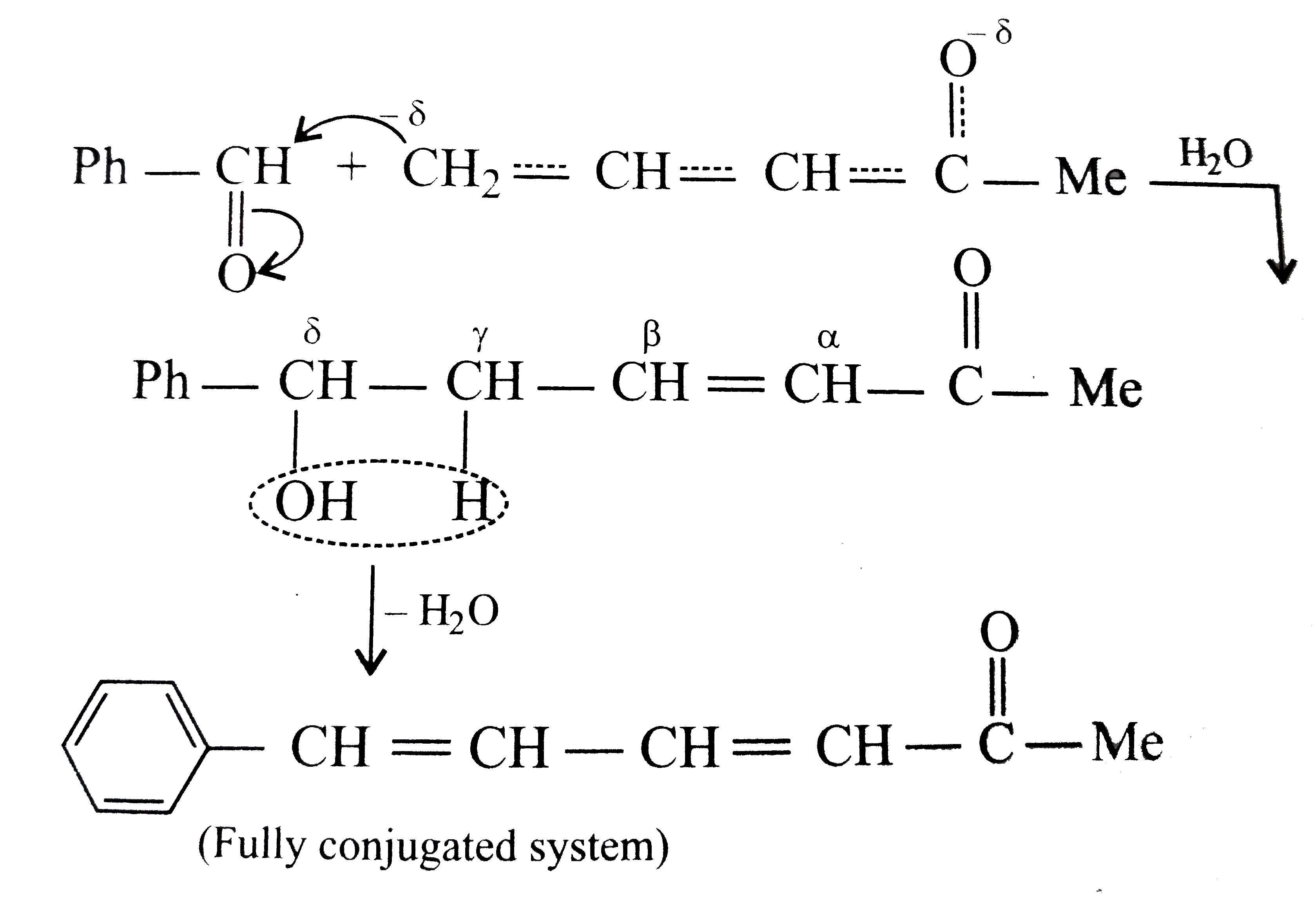 vi. 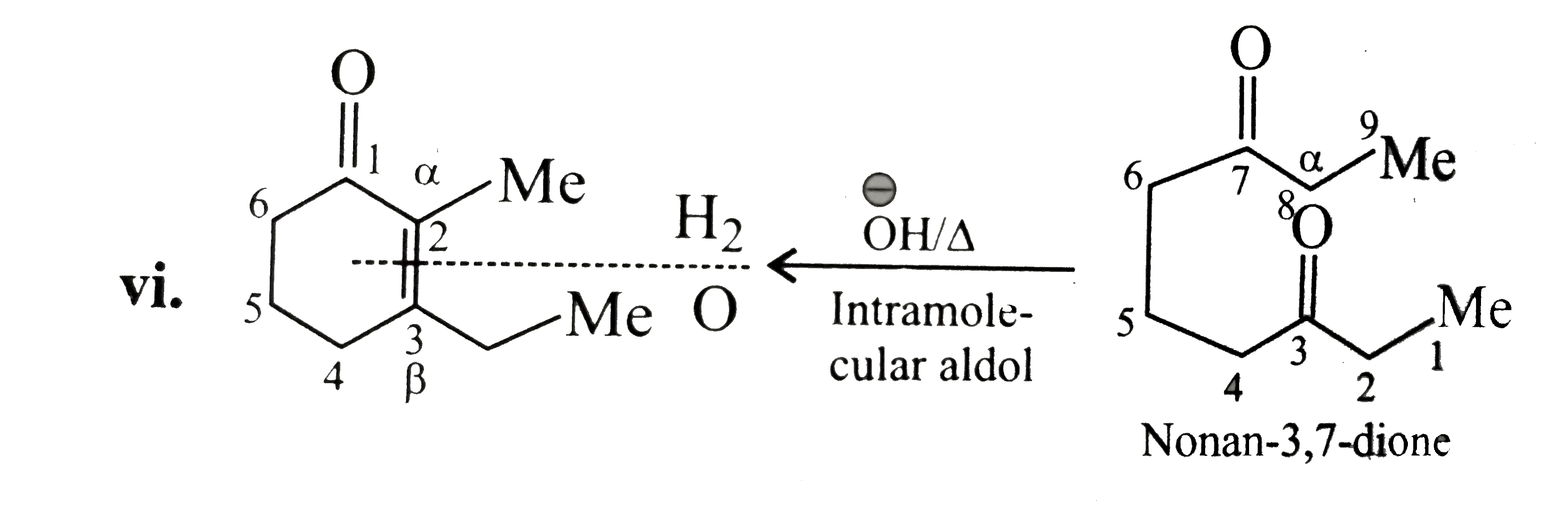 vii. 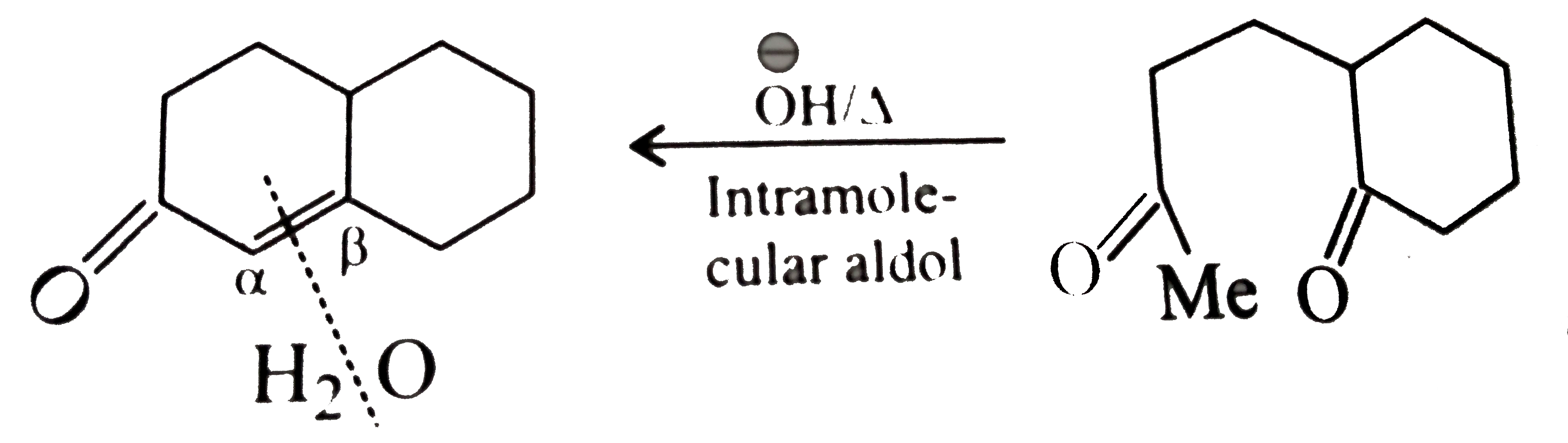 ix. 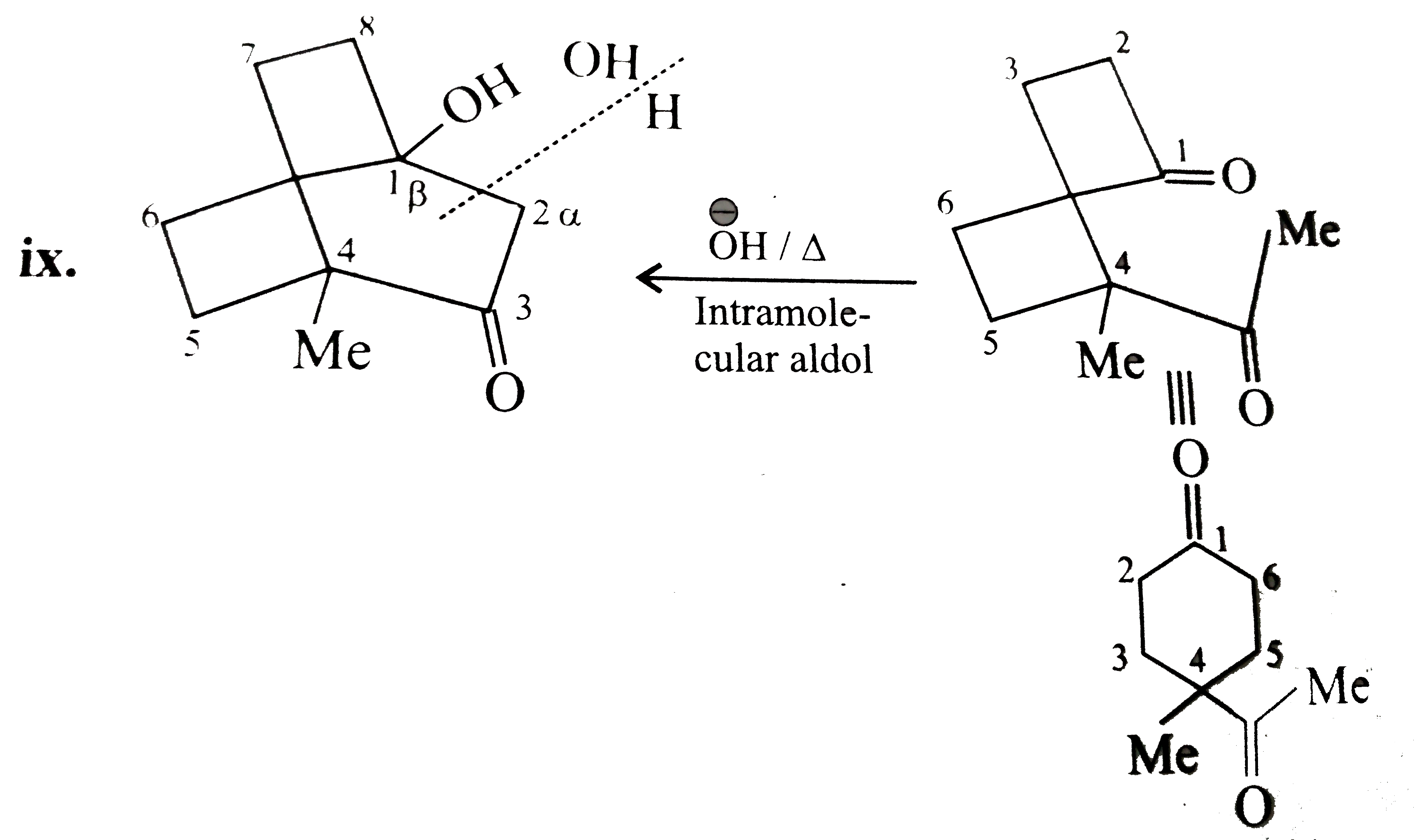 The reactants of the products that cannot be synthesised by aldol condensation: (ii), (iii), and (vii). ii. 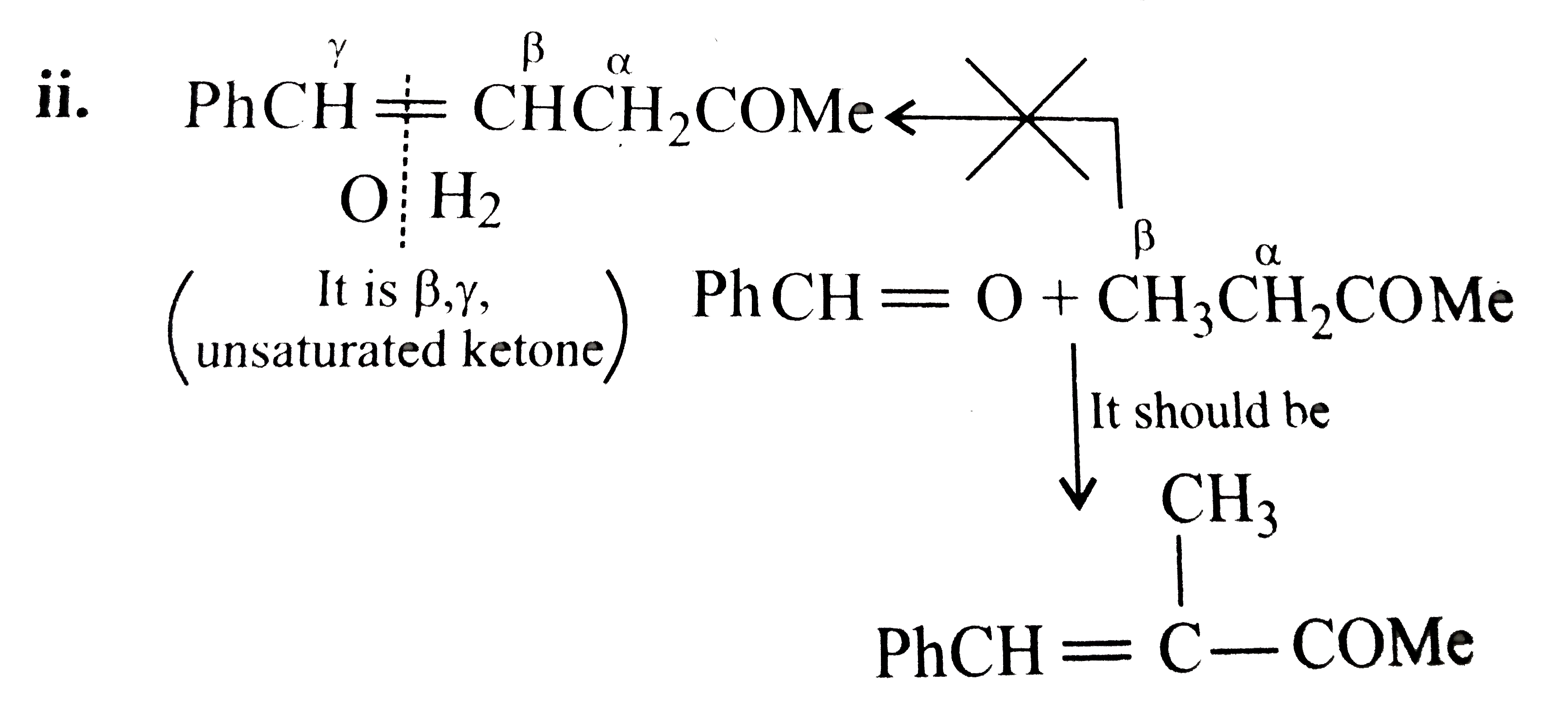 iii. 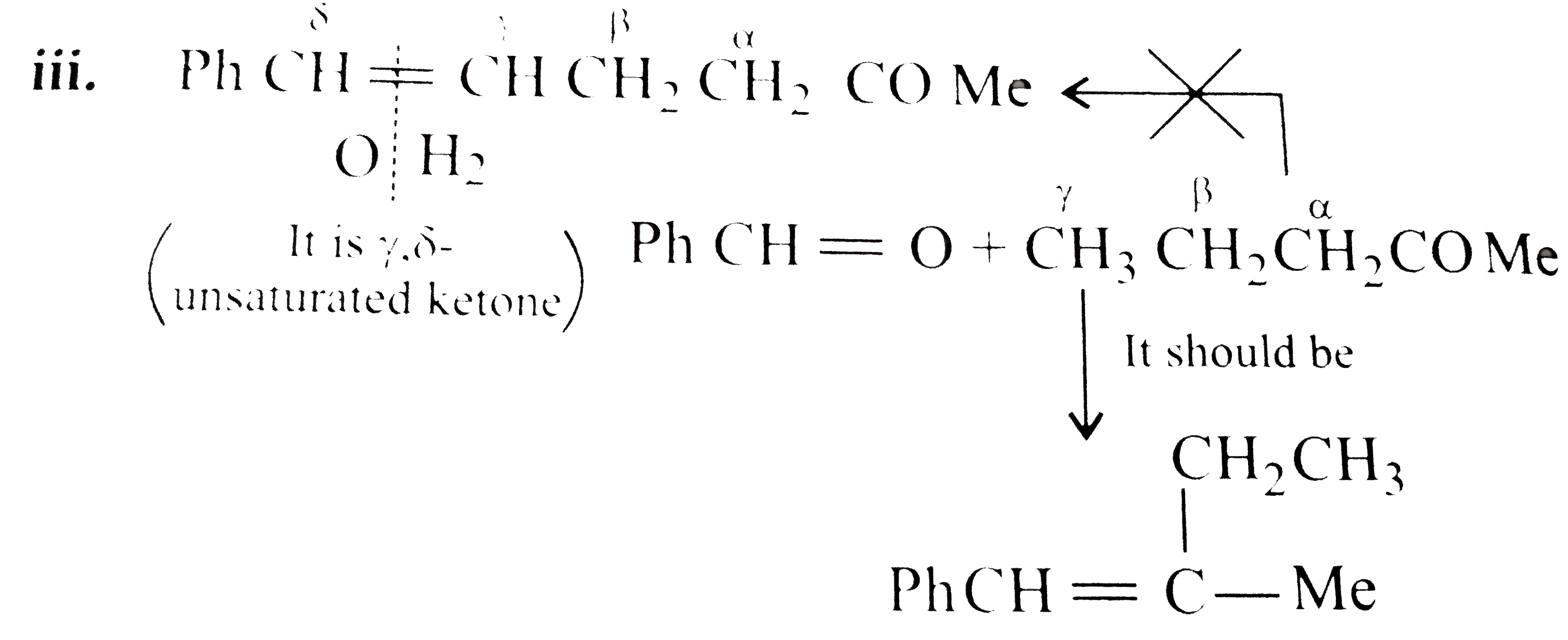 vii. 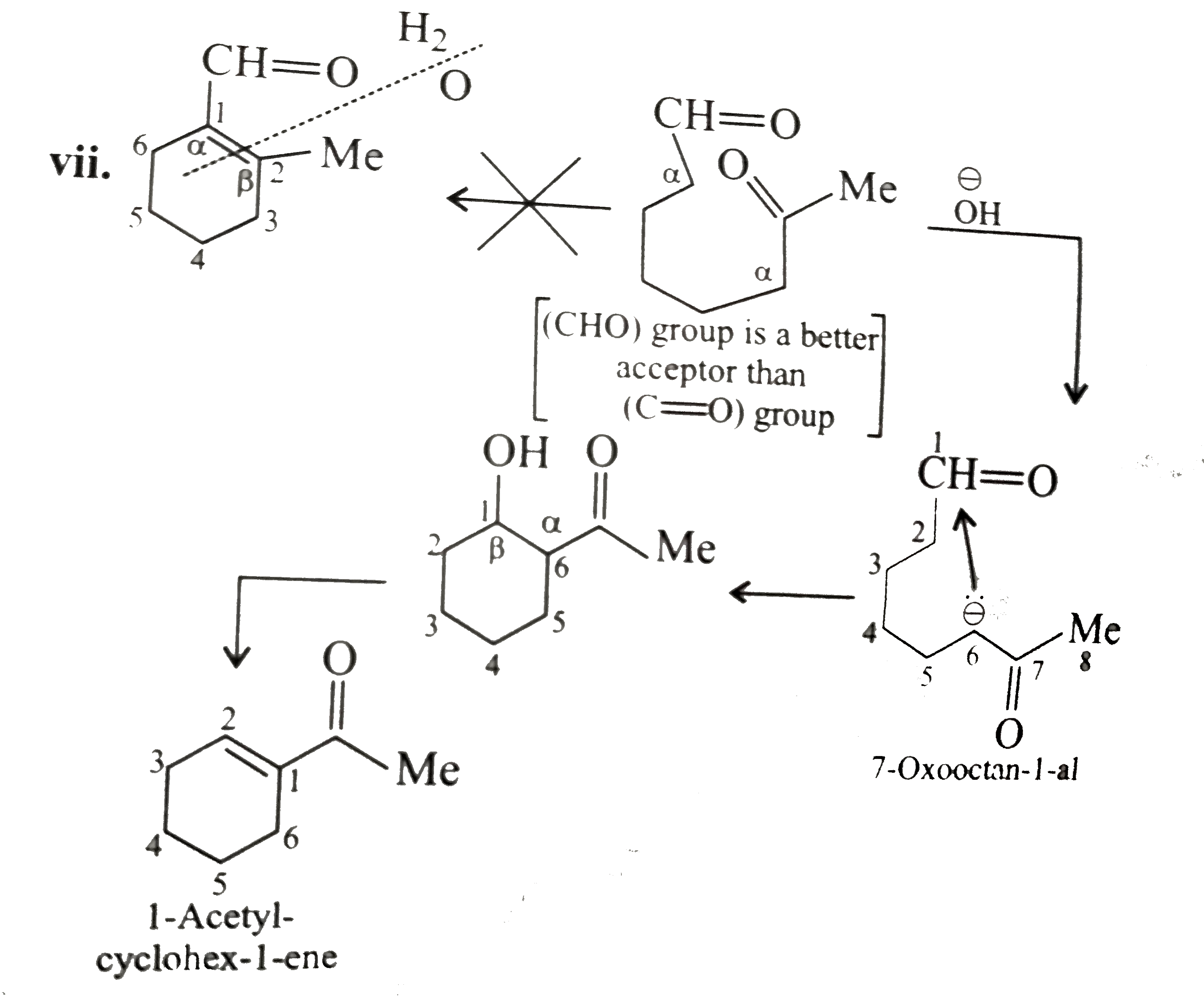 6. 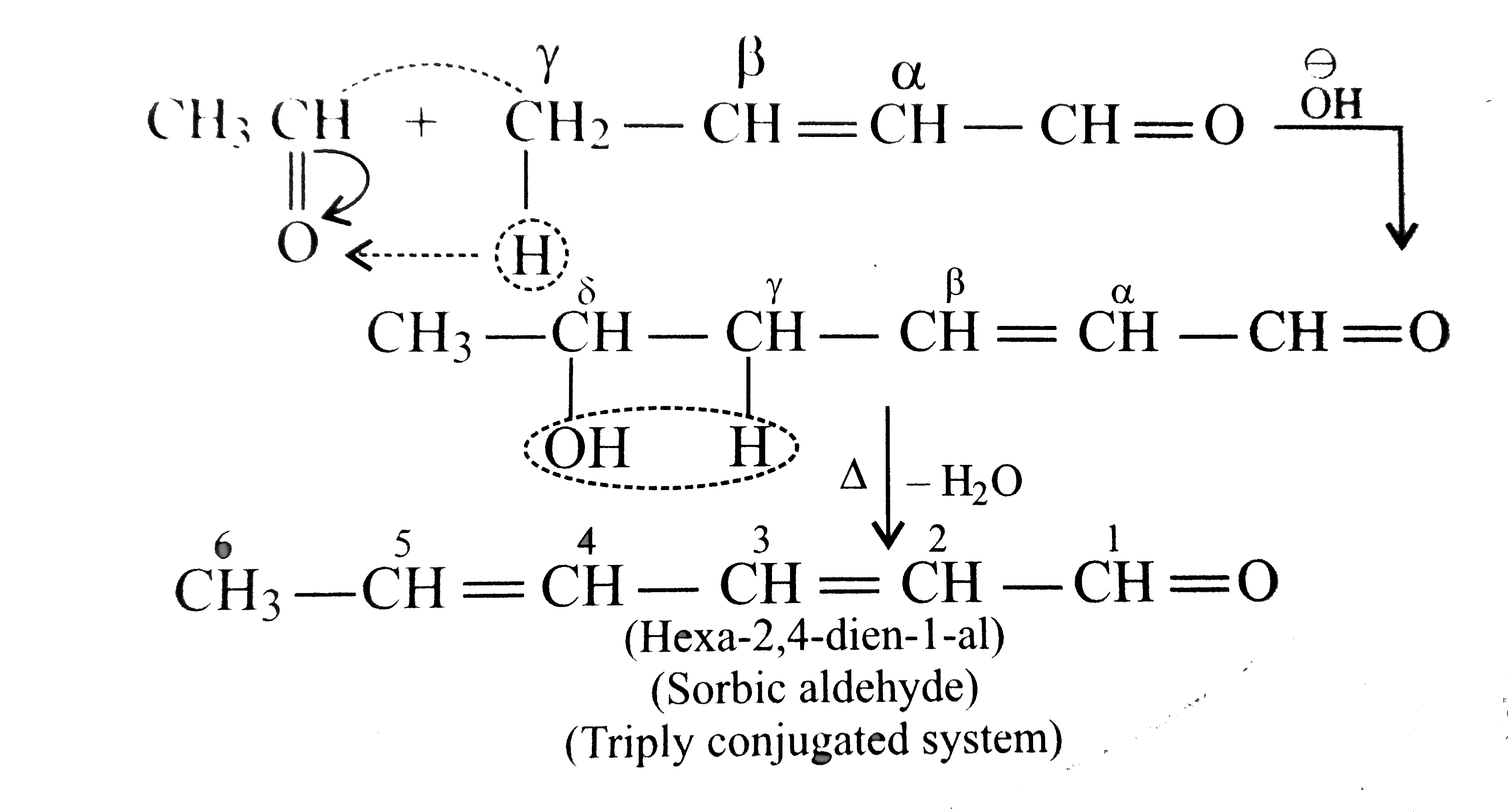
|
|